wiring KIA CARNIVAL 2007 User Guide
[x] Cancel search | Manufacturer: KIA, Model Year: 2007, Model line: CARNIVAL, Model: KIA CARNIVAL 2007Pages: 1575, PDF Size: 44.86 MB
Page 149 of 1575
2007 > 2.7L V6 GASOLINE >
TROUBLE SHOOTING
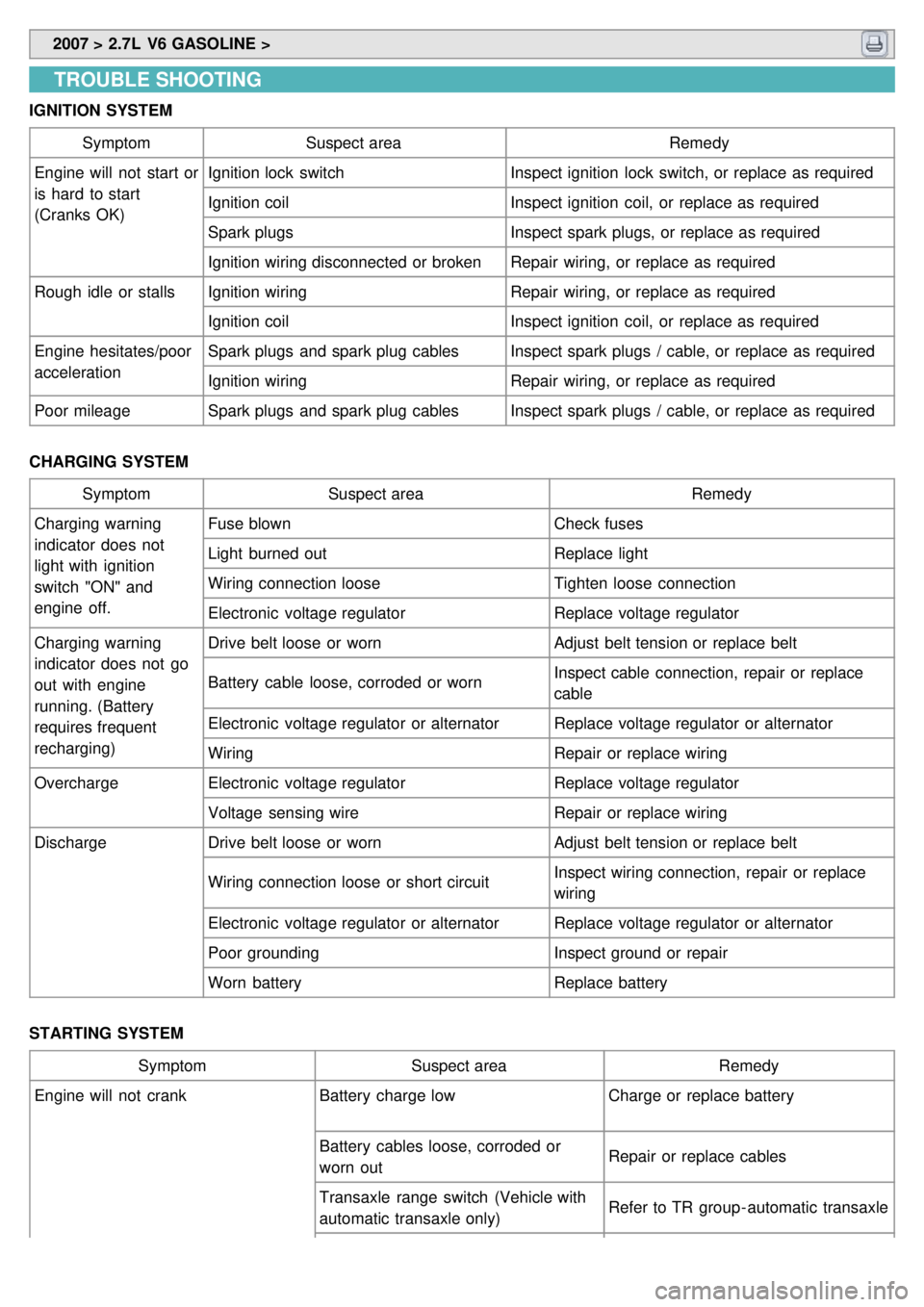
IGNITION SYSTEM
Symptom Suspect area Remedy
Engine will not start or
is hard to start
(Cranks OK) Ignition lock switch
Inspect ignition lock switch, or replace as required
Ignition coil Inspect ignition coil, or replace as required
Spark plugs Inspect spark plugs, or replace as required
Ignition wiring disconnected or broken Repair wiring, or replace as required
Rough idle or stalls Ignition wiring Repair wiring, or replace as required
Ignition coil Inspect ignition coil, or replace as required
Engine hesitates/poor
acceleration Spark plugs and spark plug cables
Inspect spark plugs / cable, or replace as required
Ignition wiring Repair wiring, or replace as required
Poor mileage Spark plugs and spark plug cables Inspect spark plugs / cable, or replace as required
CHARGING SYSTEM Symptom Suspect area Remedy
Charging warning
indicator does not
light with ignition
switch "ON" and
engine off. Fuse blown
Check fuses
Light burned out Replace light
Wiring connection loose Tighten loose connection
Electronic voltage regulator Replace voltage regulator
Charging warning
indicator does not go
out with engine
running. (Battery
requires frequent
recharging) Drive belt loose or worn
Adjust belt tension or replace belt
Battery cable loose, corroded or worn Inspect cable connection, repair or replace
cable
Electronic voltage regulator or alternator Replace voltage regulator or alternator
Wiring Repair or replace wiring
Overcharge Electronic voltage regulator Replace voltage regulator
Voltage sensing wire Repair or replace wiring
Discharge Drive belt loose or worn Adjust belt tension or replace belt
Wiring connection loose or short circuit Inspect wiring connection, repair or replace
wiring
Electronic voltage regulator or alternator Replace voltage regulator or alternator
Poor grounding Inspect ground or repair
Worn battery Replace battery
STARTING SYSTEM Symptom Suspect area Remedy
Engine will not crank Battery charge low Charge or replace battery
Battery cables loose, corroded or
worn out Repair or replace cables
Transaxle range switch (Vehicle with
automatic transaxle only) Refer to TR group - automatic transaxle
Page 150 of 1575
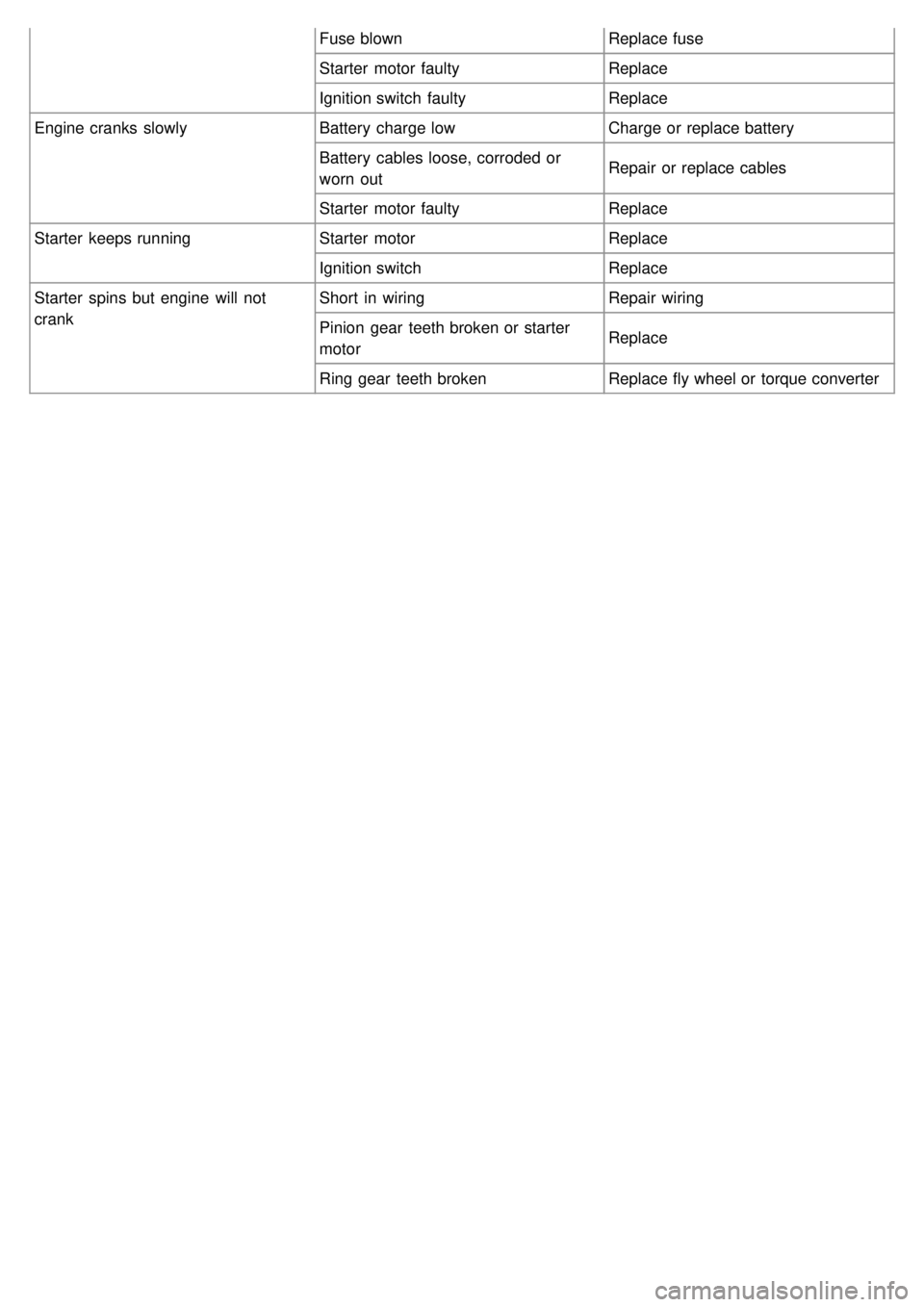
Fuse blownReplace fuse
Starter motor faulty Replace
Ignition switch faulty Replace
Engine cranks slowly Battery charge low Charge or replace battery
Battery cables loose, corroded or
worn out Repair or replace cables
Starter motor faulty Replace
Starter keeps running Starter motor Replace
Ignition switch Replace
Starter spins but engine will not
crank Short in wiring
Repair wiring
Pinion gear teeth broken or starter
motor Replace
Ring gear teeth broken Replace fly wheel or torque converter
Page 160 of 1575
2007 > 2.7L V6 GASOLINE >
ON-VEHICLE INPECTION
a.Check that the battery cables are connected to the correct terminals.
b. Disconnect the battery cables when the battery is given a quick charge.
c. Never disconnect the battery while the engine is running.
CHECK BATTERY VOLTAGE
1.If 20 minutes have not passed since the engine was stopped, turn the ignition switch ON and turn on the electrical
system (headlamp, blower motor, rear defogger etc.) for 60 seconds to remove the surface charge.
2. Turn the ignition switch OFF and turn off the electrical systems.
3. Measure the battery voltage between the negative ( - ) and positive (+) terminals of the battery.
Standard voltage : 12.5 ~ 12.9V at 20°C(68°F)
If the voltage is less than specification, charge the battery.
CHECK THE BATTERY TERMINALS AND FUSES
1.Check that the battery terminals are not loose or corroded.
2. Check the fuses for continuity.
INSPECT DRIVE BELT
Visually check the belt for excessive wear, frayed cords etc.
If any defect has been found, replace the drive belt.
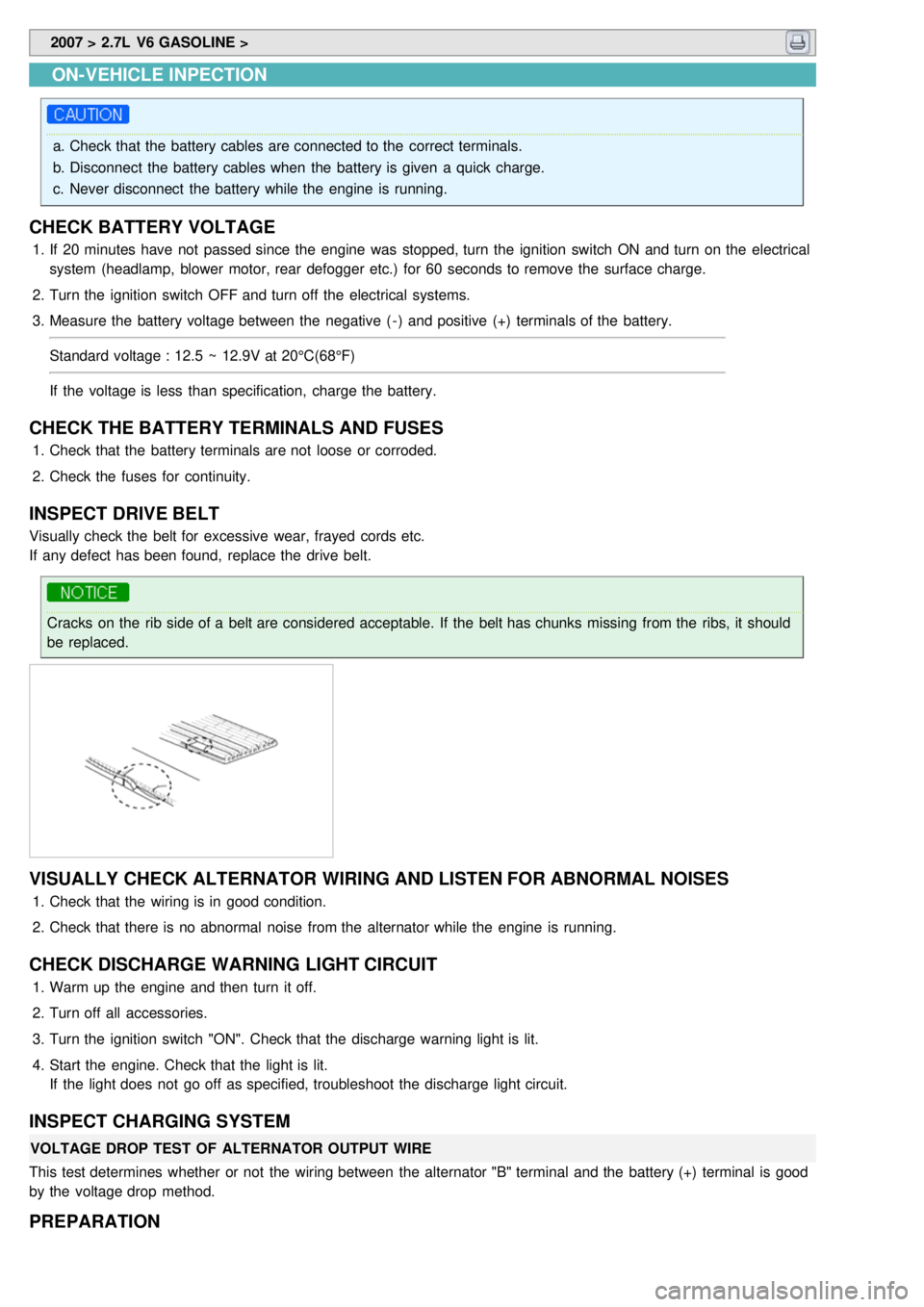
Cracks on the rib side of a belt are considered acceptable. If the belt has chunks missing from the ribs, it should
be replaced.
VISUALLY CHECK ALTERNATOR WIRING AND LISTEN FOR ABNORMAL NOISES
1.Check that the wiring is in good condition.
2. Check that there is no abnormal noise from the alternator while the engine is running.
CHECK DISCHARGE WARNING LIGHT CIRCUIT
1.Warm up the engine and then turn it off.
2. Turn off all accessories.
3. Turn the ignition switch "ON". Check that the discharge warning light is lit.
4. Start the engine. Check that the light is lit.
If the light does not go off as specified, troubleshoot the discharge light circuit.
INSPECT CHARGING SYSTEM
VOLTAGE DROP TEST OF ALTERNATOR OUTPUT WIRE
This test determines whether or not the wiring between the alternator "B" terminal and the battery (+) terminal is good
by the voltage drop method.
PREPARATION
Page 161 of 1575
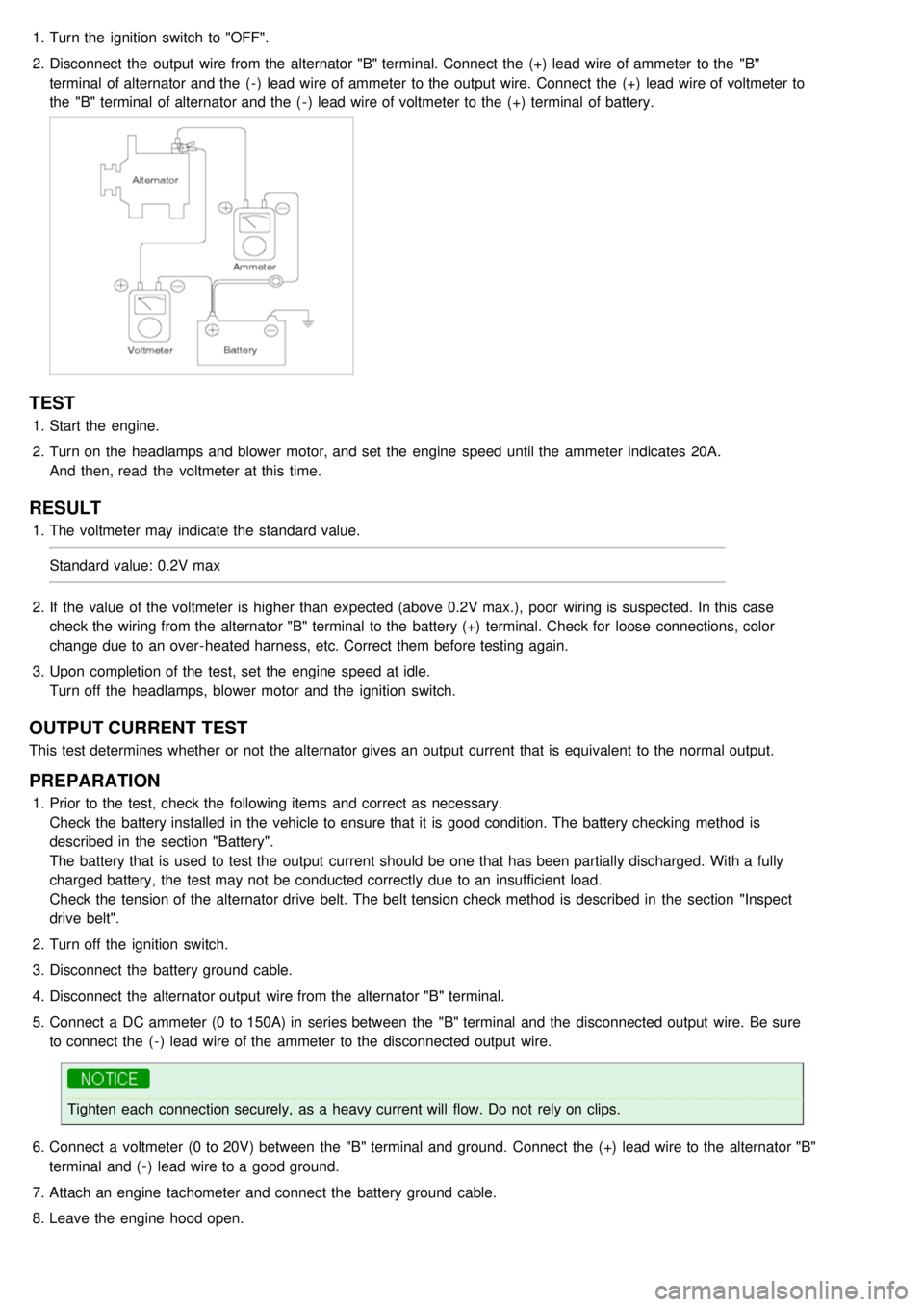
1.Turn the ignition switch to "OFF".
2. Disconnect the output wire from the alternator "B" terminal. Connect the (+) lead wire of ammeter to the "B"
terminal of alternator and the ( - ) lead wire of ammeter to the output wire. Connect the (+) lead wire of voltmeter to
the "B" terminal of alternator and the ( - ) lead wire of voltmeter to the (+) terminal of battery.
TEST
1.Start the engine.
2. Turn on the headlamps and blower motor, and set the engine speed until the ammeter indicates 20A.
And then, read the voltmeter at this time.
RESULT
1.The voltmeter may indicate the standard value.
Standard value: 0.2V max
2. If the value of the voltmeter is higher than expected (above 0.2V max.), poor wiring is suspected. In this case
check the wiring from the alternator "B" terminal to the battery (+) terminal. Check for loose connections, color
change due to an over - heated harness, etc. Correct them before testing again.
3. Upon completion of the test, set the engine speed at idle.
Turn off the headlamps, blower motor and the ignition switch.
OUTPUT CURRENT TEST
This test determines whether or not the alternator gives an output current that is equivalent to the normal output.
PREPARATION
1.Prior to the test, check the following items and correct as necessary.
Check the battery installed in the vehicle to ensure that it is good condition. The battery checking method is
described in the section "Battery".
The battery that is used to test the output current should be one that has been partially discharged. With a fully
charged battery, the test may not be conducted correctly due to an insufficient load.
Check the tension of the alternator drive belt. The belt tension check method is described in the section "Inspect
drive belt".
2. Turn off the ignition switch.
3. Disconnect the battery ground cable.
4. Disconnect the alternator output wire from the alternator "B" terminal.
5. Connect a DC ammeter (0 to 150A) in series between the "B" terminal and the disconnected output wire. Be sure
to connect the ( - ) lead wire of the ammeter to the disconnected output wire.
Tighten each connection securely, as a heavy current will flow. Do not rely on clips.
6. Connect a voltmeter (0 to 20V) between the "B" terminal and ground. Connect the (+) lead wire to the alternator "B"
terminal and ( - ) lead wire to a good ground.
7. Attach an engine tachometer and connect the battery ground cable.
8. Leave the engine hood open.
Page 224 of 1575
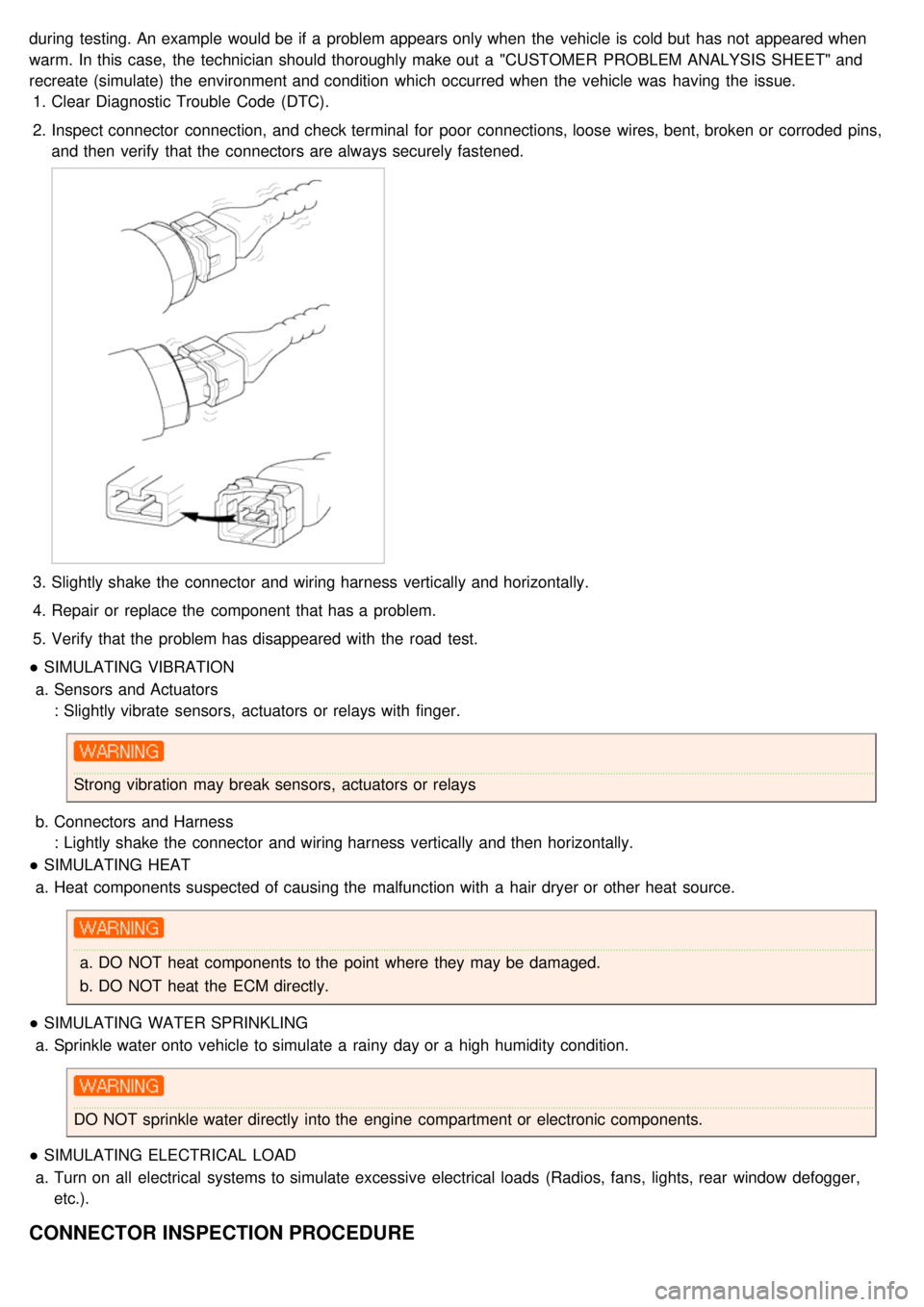
during testing. An example would be if a problem appears only when the vehicle is cold but has not appeared when
warm. In this case, the technician should thoroughly make out a "CUSTOMER PROBLEM ANALYSIS SHEET" and
recreate (simulate) the environment and condition which occurred when the vehicle was having the issue.1. Clear Diagnostic Trouble Code (DTC).
2. Inspect connector connection, and check terminal for poor connections, loose wires, bent, broken or corroded pins,
and then verify that the connectors are always securely fastened.
3.Slightly shake the connector and wiring harness vertically and horizontally.
4. Repair or replace the component that has a problem.
5. Verify that the problem has disappeared with the road test.
● SIMULATING VIBRATION
a. Sensors and Actuators
: Slightly vibrate sensors, actuators or relays with finger.
Strong vibration may break sensors, actuators or relays
b. Connectors and Harness
: Lightly shake the connector and wiring harness vertically and then horizontally.
● SIMULATING HEAT
a. Heat components suspected of causing the malfunction with a hair dryer or other heat source.
a.DO NOT heat components to the point where they may be damaged.
b. DO NOT heat the ECM directly.
● SIMULATING WATER SPRINKLING
a. Sprinkle water onto vehicle to simulate a rainy day or a high humidity condition.
DO NOT sprinkle water directly into the engine compartment or electronic components.
● SIMULATING ELECTRICAL LOAD
a. Turn on all electrical systems to simulate excessive electrical loads (Radios, fans, lights, rear window defogger,
etc.).
CONNECTOR INSPECTION PROCEDURE
Page 225 of 1575
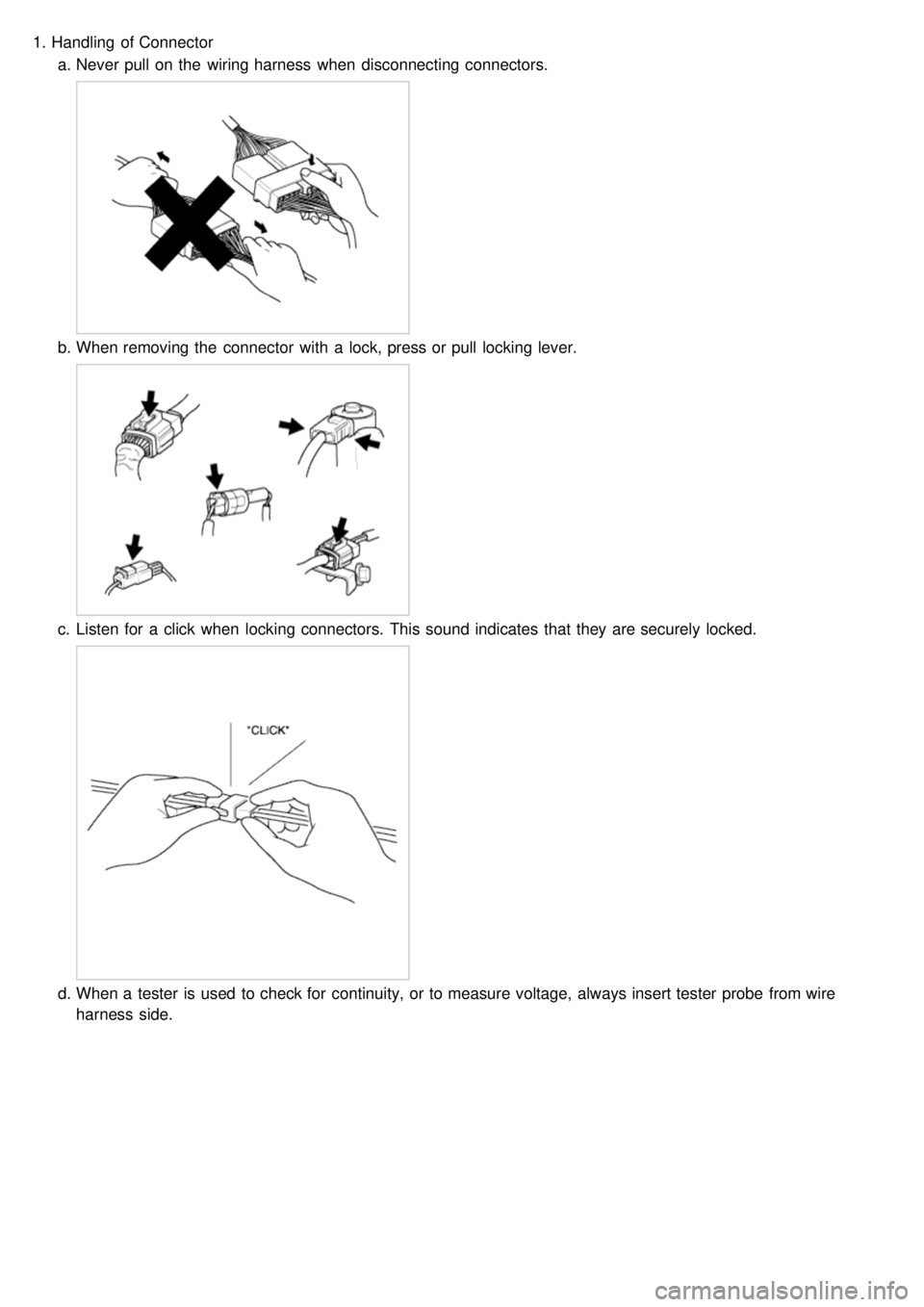
1.Handling of Connector
a. Never pull on the wiring harness when disconnecting connectors.
b.When removing the connector with a lock, press or pull locking lever.
c.Listen for a click when locking connectors. This sound indicates that they are securely locked.
d.When a tester is used to check for continuity, or to measure voltage, always insert tester probe from wire
harness side.
Page 333 of 1575
Sport mode up- shift switchSport mode up- shift signal
Sport mode downshift switch Sport mode downshift signal
Request of torque reduction Send the request of torque reduction to ECM
ABS - ECM, Engine ECM In case of CAN communication
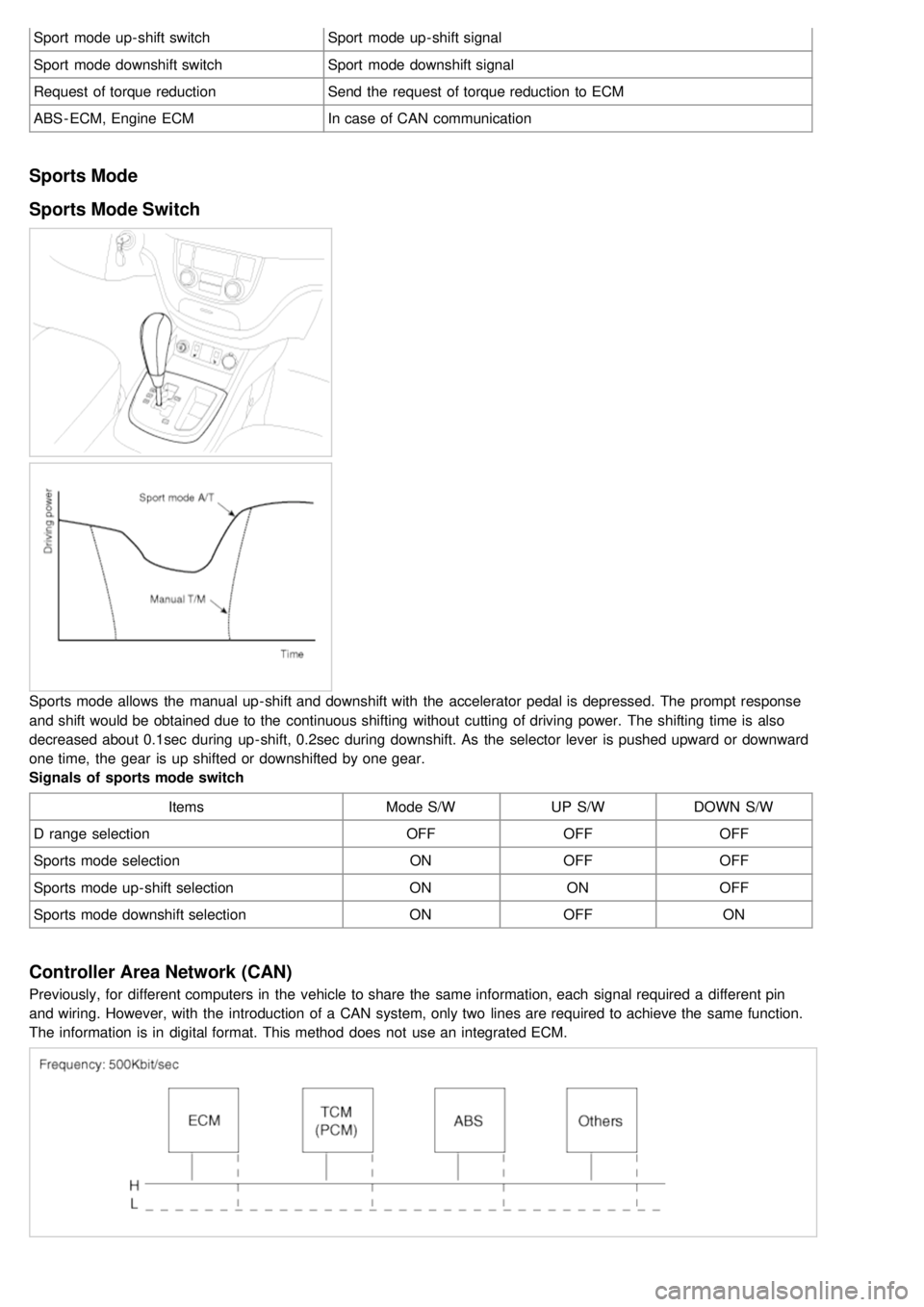
Sports Mode
Sports Mode Switch
Sports mode allows the manual up- shift and downshift with the accelerator pedal is depressed. The prompt response
and shift would be obtained due to the continuous shifting without cutting of driving power. The shifting time is also
decreased about 0.1sec during up- shift, 0.2sec during downshift. As the selector lever is pushed upward or downward
one time, the gear is up shifted or downshifted by one gear.
Signals of sports mode switch
Items Mode S/WUP S/WDOWN S/W
D range selection OFFOFFOFF
Sports mode selection ONOFF OFF
Sports mode up- shift selection ONONOFF
Sports mode downshift selection ONOFF ON
Controller Area Network (CAN)
Previously, for different computers in the vehicle to share the same information, each signal required a different pin
and wiring. However, with the introduction of a CAN system, only two lines are required to achieve the same function.
The information is in digital format. This method does not use an integrated ECM.
Page 792 of 1575

c.Store the removed airbag on secure, flat surface away from any high heat source (exceeding 85°C/185°F).
d. Never perform electrical inspections to the airbags, such as measuring resistance.
e. Do not position yourself in front of the airbag assembly during removal, inspection, or replacement.
f. Refer to the scrapping procedures for disposal of the damaged airbag.
g. Be careful not to bump or impact the SRS unit or the side impact sensors whenever the ignition switch is ON, wait
at least three minutes after the ignition switch is turned OFF before begin work.
h. During installation or replacement, be careful not to bump (by impact wrench, hammer, etc.) the area around the
SRS unit and the side impact sensor. The airbags could accidentally deploy and cause damage or injury.
i. After a collision in which the airbags were deployed, replace the front airbags and the SRS unit. After a collision in
which the side airbag was deployed, replace the side airbag, the front impact sensor and side impact sensor on
the side where the side airbag deployed and the SRS unit. After a collision in which the airbags or the side air
bags did not deploy, inspect for any damage or any deformation on the SRS unit and the side impact sensors. If
there is any damage, replace the SRS unit, the front impact sensor and/or the side impact sensors.
j. Do not disassemble the SRS unit, the front impact sensor or the side impact sensors
k. Turn the ignition switch OFF, disconnect the battery negative cable and wait at least three minutes before
beginning installation or replacement of the SRS unit.
l. Be sure the SRS unit, the front impact sensor and side impact sensors are installed securely with the mounting
bolts.
m. Do not spill water or oil on the SRS unit,or the front impact sensor or the side impact sensors and keep them
away from dust.
n. Store the SRS unit, the front impact sensor and the side impact sensors in a cool (less than 40°C/104°F) and dry
(less than 80% relative humidity, no moisture) area.
Wiring Precautions
SRS wiring can be identified by special yellow outer covering (except the SRS circuits under the front seats).
Observe the instructions described in this section.
a. Never attempt to modify, splice, or repair SRS wiring.
If there is an open or damage in SRS wiring, replace the harness.
Page 796 of 1575
2007 > 2.7L V6 GASOLINE >
SPECIAL SERVICE TOOLS
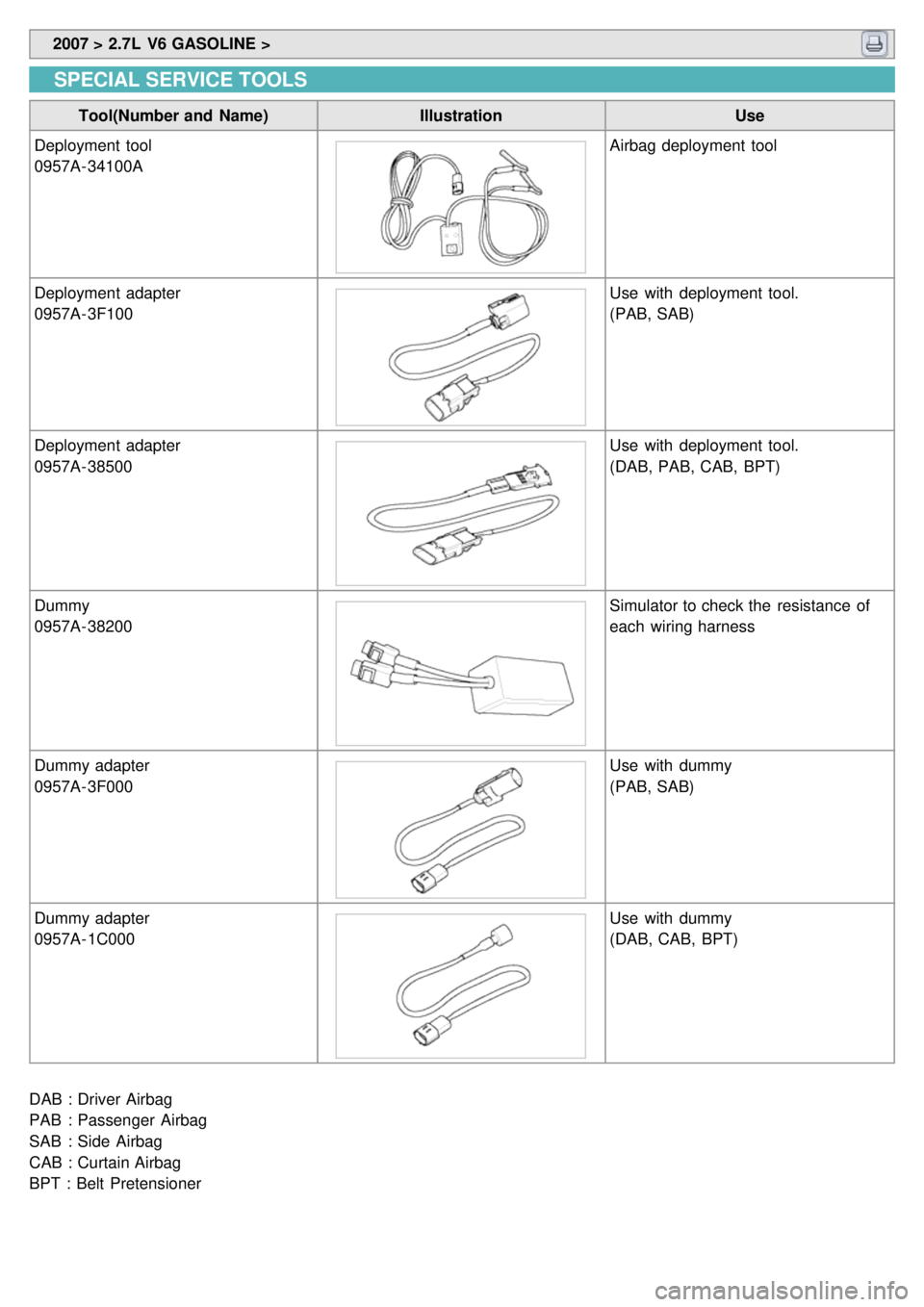
Tool(Number and Name) IllustrationUse
Deployment tool
0957A- 34100A
Airbag deployment tool
Deployment adapter
0957A- 3F100
Use with deployment tool.
(PAB, SAB)
Deployment adapter
0957A- 38500
Use with deployment tool.
(DAB, PAB, CAB, BPT)
Dummy
0957A- 38200
Simulator to check the resistance of
each wiring harness
Dummy adapter
0957A- 3F000
Use with dummy
(PAB, SAB)
Dummy adapter
0957A- 1C000
Use with dummy
(DAB, CAB, BPT)
DAB : Driver Airbag
PAB : Passenger Airbag
SAB : Side Airbag
CAB : Curtain Airbag
BPT : Belt Pretensioner
Page 804 of 1575

2007 > 2.7L V6 GASOLINE >
COMPONENT REPLACEMENT AFTER DEPLOYMENT
Before doing any SRS repairs, use the Hi - Scan Pro to check for DTCs. Refer to the Diagnostic Trouble Code list
for repairing of the related DTCs.
When the front airbag(s) deployed after a collision, replace the following items. a. SRSCM
b. Deployed airbag(s)
c. Seat belt pretensioner(s)
d. Front impact sensors
e. SRS wiring harnesses
f. Inspect the clock spring for heat damage.
If any damage found, replace the clock spring.
When the seat belt pretensioner(s) deployed after a collision, replace the following items. a. Seat belt pretensioner(s)
b. SRSCM (if B1658 detected)
c. Front impact sensors
d. SRS wiring harnesses
When the side/curtain airbag(s) deployed after a collision, replace the following items. a. SRSCM
b. Deployed airbag(s)
c. Side impact sensor(s) for the deployed side(s)
d. SRS wiring harnesses
After the vehicle is completely repaired, confirm the SRS airbag system is OK. a. Turn the ignition switch ON, the SRS indicator should come on for about 6 seconds and then go off.