instrument panel KIA CEED 2016 User Guide
[x] Cancel search | Manufacturer: KIA, Model Year: 2016, Model line: CEED, Model: KIA CEED 2016Pages: 643, PDF Size: 38.19 MB
Page 71 of 643
Safety features of your vehicle
54
3
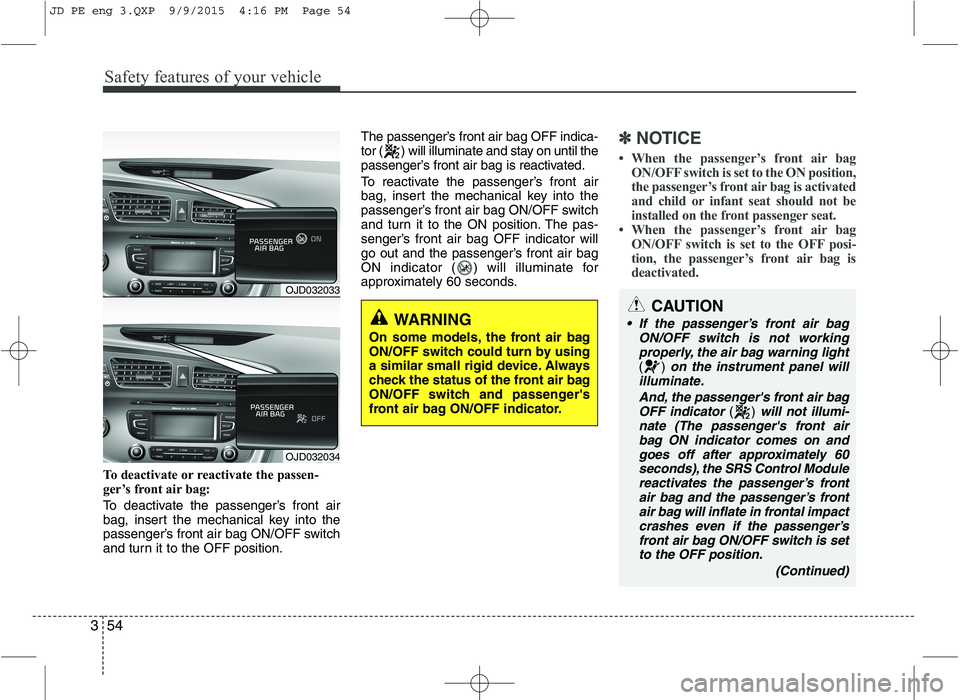
To deactivate or reactivate the passen-
ger’s front air bag:
To deactivate the passenger’s front air
bag, insert the mechanical key into the
passenger’s front air bag ON/OFF switch
and turn it to the OFF position. The passenger’s front air bag OFF indica-
tor ( ) will illuminate and stay on until the
passenger’s front air bag is reactivated.
To reactivate the passenger’s front air
bag, insert the mechanical key into the
passenger’s front air bag ON/OFF switch
and turn it to the ON position. The pas-
senger’s front air bag OFF indicator will
go out and the passenger’s front air bag
ON indicator ( ) will illuminate for
approximately 60 seconds.
✽✽
NOTICE
When the passenger’s front air bag
ON/OFF switch is set to the ON position,
the passenger’s front air bag is activated
and child or infant seat should not be
installed on the front passenger seat.
When the passenger’s front air bag ON/OFF switch is set to the OFF posi-
tion, the passenger’s front air bag is
deactivated.
CAUTION
If the passenger’s front air bag
ON/OFF switch is not workingproperly, the air bag warning light
() on the instrument panel will
illuminate.
And, the passenger's front air bagOFF indicator
() will not illumi-
nate (The passenger's front air bag ON indicator comes on and
goes off after approximately 60 seconds), the SRS Control Modulereactivates the passenger’s front air bag and the passenger’s front
air bag will inflate in frontal impact crashes even if the passenger’sfront air bag ON/OFF switch is setto the OFF position.
(Continued)
WARNING
On some models, the front air bag
ON/OFF switch could turn by using
a similar small rigid device. Always
check the status of the front air bag
ON/OFF switch and passenger's
front air bag ON/OFF indicator.
OJD032033
OJD032034
JD PE eng 3.QXP 9/9/2015 4:16 PM Page 54
Page 81 of 643
Safety features of your vehicle
64
3
SRS Care
The SRS is virtually maintenance-free
and so there are no parts you can safely
service by yourself. If the SRS air bag
warning light does not illuminate, or con-
tinuously remains on, we recommend
that the system be inspected by an
authorized Kia dealer.
WARNING
Modification to SRS components or wiring, including the addition
of any kind of badges to the pad
covers or modifications to the
body structure, can adversely
affect SRS performance and lead
to possible injury.
For cleaning the air bag pad cov- ers, use only a soft, dry cloth or
one which has been moistened
with plain water. Solvents or
cleaners could adversely affect
the air bag covers and proper
deployment of the system.
No objects should be placed over or near the air bag modules on
the steering wheel, instrument
panel, and the front passenger's
panel above the glove box,
because any such object could
cause harm if the vehicle is in a
crash severe enough to cause
the air bags to inflate.
(Continued)(Continued)
If the air bags inflate, we recom-mend that the system be replaced
by an authorized Kia dealer.
Do not tamper with or disconnect SRS wiring, or other components
of the SRS system. Doing so
could result in injury, due to acci-
dental inflation of the air bags or
by rendering the SRS inopera-
tive.
If components of the air bag sys- tem must be discarded, or if the
vehicle must be scrapped, certain
safety precautions must be
observed. An authorized Kia
dealer knows these precautions
and can give you the necessary
information. Failure to follow
these precautions and proce-dures could increase the risk of
personal injury.
If your car was flooded and has soaked carpeting or water on floor-
ing, you shouldn't try to start the
engine; we recommend that you
contact an authorized Kia dealer.
JD PE eng 3.QXP 9/9/2015 4:17 PM Page 64
Page 84 of 643
Features of your vehicle
Keys . . . . . . . . . . . . . . . . . . . . . . . . . . . . . . . . . . . . . . 4-4 Record your key number . . . . . . . . . . . . . . . . . . . . . . . 4-4
Key operations . . . . . . . . . . . . . . . . . . . . . . . . . . . . . . . . 4-4
Immobilizer system . . . . . . . . . . . . . . . . . . . . . . . . . . . . 4-4
Remote keyless entry . . . . . . . . . . . . . . . . . . . . . . . . 4-6 Remote keyless entry system operations . . . . . . . . . . . 4-6
Transmitter precautions . . . . . . . . . . . . . . . . . . . . . . . . 4-8
Battery replacement . . . . . . . . . . . . . . . . . . . . . . . . . . . 4-9
Smart key . . . . . . . . . . . . . . . . . . . . . . . . . . . . . . . . 4-11 Smart key function . . . . . . . . . . . . . . . . . . . . . . . . . . . 4-11
Smart key precautions . . . . . . . . . . . . . . . . . . . . . . . . 4-13
Door lock/unlock in an emergency situation . . . . . . 4-13
Theft-alarm system . . . . . . . . . . . . . . . . . . . . . . . . 4-14 Armed stage . . . . . . . . . . . . . . . . . . . . . . . . . . . . . . . . . 4-14
Theft-alarm stage . . . . . . . . . . . . . . . . . . . . . . . . . . . . 4-15
Disarmed stage. . . . . . . . . . . . . . . . . . . . . . . . . . . . . . . 4-16
Door locks . . . . . . . . . . . . . . . . . . . . . . . . . . . . . . . . 4-17 From outside . . . . . . . . . . . . . . . . . . . . . . . . . . . . . . . . 4-17
From inside . . . . . . . . . . . . . . . . . . . . . . . . . . . . . . . . . 4-18
Deadlocks . . . . . . . . . . . . . . . . . . . . . . . . . . . . . . . . . . . 4-20
Door lock/unlock features. . . . . . . . . . . . . . . . . . . . . . 4-20
Child-protector rear door lock. . . . . . . . . . . . . . . . . . 4-21
Tailgate . . . . . . . . . . . . . . . . . . . . . . . . . . . . . . . . . . 4-22 Opening the tailgate . . . . . . . . . . . . . . . . . . . . . . . . . . 4-22
Closing the tailgate . . . . . . . . . . . . . . . . . . . . . . . . . . . 4-22
Emergency tailgate safety release . . . . . . . . . . . . . . . 4-23
Windows . . . . . . . . . . . . . . . . . . . . . . . . . . . . . . . . . 4-24 Power windows . . . . . . . . . . . . . . . . . . . . . . . . . . . . . . 4-25 Manual windows . . . . . . . . . . . . . . . . . . . . . . . . . . . . . 4-27
Hood. . . . . . . . . . . . . . . . . . . . . . . . . . . . . . . . . . . . . 4-28 Opening the hood . . . . . . . . . . . . . . . . . . . . . . . . . . . . 4-28
Closing the hood . . . . . . . . . . . . . . . . . . . . . . . . . . . . . 4-29
Fuel filler lid . . . . . . . . . . . . . . . . . . . . . . . . . . . . . . 4-30 Opening the fuel filler lid . . . . . . . . . . . . . . . . . . . . . . 4-30
Closing the fuel filler lid . . . . . . . . . . . . . . . . . . . . . . . 4-30
Panorama sunroof . . . . . . . . . . . . . . . . . . . . . . . . . 4-33 Sunroof open warning. . . . . . . . . . . . . . . . . . . . . . . . . 4-33
Sunshade . . . . . . . . . . . . . . . . . . . . . . . . . . . . . . . . . . . 4-34
Sliding the sunroof . . . . . . . . . . . . . . . . . . . . . . . . . . . 4-34
Tilting the sunroof . . . . . . . . . . . . . . . . . . . . . . . . . . . . 4-34
Closing the sunroof . . . . . . . . . . . . . . . . . . . . . . . . . . . 4-35
Resetting the sunroof . . . . . . . . . . . . . . . . . . . . . . . . . 4-36
Steering wheel . . . . . . . . . . . . . . . . . . . . . . . . . . . . . 4-37 Electronic power steering . . . . . . . . . . . . . . . . . . . . . . 4-37
Tilt and telescopic steering . . . . . . . . . . . . . . . . . . . . . 4-38
Heated steering wheel . . . . . . . . . . . . . . . . . . . . . . . . . 4-38
Horn . . . . . . . . . . . . . . . . . . . . . . . . . . . . . . . . . . . . . . . 4-39
Flex steering wheel . . . . . . . . . . . . . . . . . . . . . . . . . . . 4-40
Mirrors . . . . . . . . . . . . . . . . . . . . . . . . . . . . . . . . . . 4-42 Inside rearview mirror . . . . . . . . . . . . . . . . . . . . . . . . 4-42
Outside rearview mirror. . . . . . . . . . . . . . . . . . . . . . . 4-43
Instrument cluster (Normal vision) . . . . . . . . . . . 4-46 Instrument panel illumination . . . . . . . . . . . . . . . . . . 4-47
Gauges . . . . . . . . . . . . . . . . . . . . . . . . . . . . . . . . . . . . . 4-47
Manual transaxle shift indicator . . . . . . . . . . . . . . . . 4-49
Automatic transaxle shift position indicator . . . . . . 4-49
4
JD PE eng 4.QXP 1/28/2016 5:11 PM Page 1
Page 85 of 643
Dual clutch transmission shift indicator . . . . . . . . . . 4-50
Speed limiter indicator . . . . . . . . . . . . . . . . . . . . . . . . 4-51
Odometer . . . . . . . . . . . . . . . . . . . . . . . . . . . . . . . . . . . 4-51
Trip computer . . . . . . . . . . . . . . . . . . . . . . . . . . . . . . . 4-51
Instrument cluster (Super vision) . . . . . . . . . . . . . 4-59 Instrument panel illumination . . . . . . . . . . . . . . . . . . 4-61
Cluster display mode conversion . . . . . . . . . . . . . . . . 4-61
Gauges . . . . . . . . . . . . . . . . . . . . . . . . . . . . . . . . . . . . . 4-61
Manual transaxle shift indicator . . . . . . . . . . . . . . . . 4-64
Automatic transaxle shift position indicator . . . . . . 4-65
Dual clutch transmission shift indicator . . . . . . . . . . 4-65
Speed limiter indicator . . . . . . . . . . . . . . . . . . . . . . . 4-66
Odometer . . . . . . . . . . . . . . . . . . . . . . . . . . . . . . . . . . . 4-66
Trip computer . . . . . . . . . . . . . . . . . . . . . . . . . . . . . . . 4-67
LCD display information . . . . . . . . . . . . . . . . . . . . . . 4-74
Warnings and indicators. . . . . . . . . . . . . . . . . . . . . . . 4-80
LCD display warnings and indicators (instrument panel display) . . . . . . . . . . . . . . . . . 4-91
Rear parking assist system . . . . . . . . . . . . . . . . . . 4-93 Operation . . . . . . . . . . . . . . . . . . . . . . . . . . . . . . . . . . . 4-93
Non-operational conditions . . . . . . . . . . . . . . . . . . . . 4-95
Precautions . . . . . . . . . . . . . . . . . . . . . . . . . . . . . . . . . . 4-95
Self-diagnosis . . . . . . . . . . . . . . . . . . . . . . . . . . . . . . . . 4-96
Parking assist system . . . . . . . . . . . . . . . . . . . . . . . 4-97 Operation . . . . . . . . . . . . . . . . . . . . . . . . . . . . . . . . . . . 4-98
Non-operational conditions . . . . . . . . . . . . . . . . . . . 4-100
Self-diagnosis . . . . . . . . . . . . . . . . . . . . . . . . . . . . . . . 4-101 Smart Parking Assist System (SPAS) . . . . . . . . . 4-102
Operating condition . . . . . . . . . . . . . . . . . . . . . . . . . 4-103
Non-operating condition . . . . . . . . . . . . . . . . . . . . . . 4-104
How the system works (Parking mode) . . . . . . . . . 4-107
How the system works (Exit mode) . . . . . . . . . . . . . 4-113
Additional instructions (messages). . . . . . . . . . . . . . 4-116
System malfunction . . . . . . . . . . . . . . . . . . . . . . . . . . 4-117
Rearview camera . . . . . . . . . . . . . . . . . . . . . . . . . 4-118
Hazard warning flasher . . . . . . . . . . . . . . . . . . . . 4-118
Lighting . . . . . . . . . . . . . . . . . . . . . . . . . . . . . . . . . 4-119 Battery saver function . . . . . . . . . . . . . . . . . . . . . . . . 4-119
Headlamp delay function . . . . . . . . . . . . . . . . . . . . . 4-119
Headlight (Headlamp) welcome function . . . . . . . . 4-119
Static bending light . . . . . . . . . . . . . . . . . . . . . . . . . . 4-120
Lighting control . . . . . . . . . . . . . . . . . . . . . . . . . . . . . 4-120
High - beam operation . . . . . . . . . . . . . . . . . . . . . . . 4-122
Turn signals and lane change signals . . . . . . . . . . . 4-123
Front fog light . . . . . . . . . . . . . . . . . . . . . . . . . . . . . . 4-124
Rear fog light . . . . . . . . . . . . . . . . . . . . . . . . . . . . . . . 4-124
Daytime running light . . . . . . . . . . . . . . . . . . . . . . . . 4-124
Headlight leveling device . . . . . . . . . . . . . . . . . . . . . 4-125
Adaptive Front Lighting System (AFLS) . . . . . . . . 4-126
Wipers and washers . . . . . . . . . . . . . . . . . . . . . . . 4-127 Windshield wipers (front) . . . . . . . . . . . . . . . . . . . . . 4-127
Windshield washers (front) . . . . . . . . . . . . . . . . . . . 4-129
Rear window wiper and washer switch. . . . . . . . . . 4-130
Interior light . . . . . . . . . . . . . . . . . . . . . . . . . . . . . 4-131 Interior lamp AUTO cut . . . . . . . . . . . . . . . . . . . . . . 4-131
4
JD PE eng 4.QXP 1/28/2016 5:11 PM Page 2
Page 130 of 643
447
Features of your vehicle
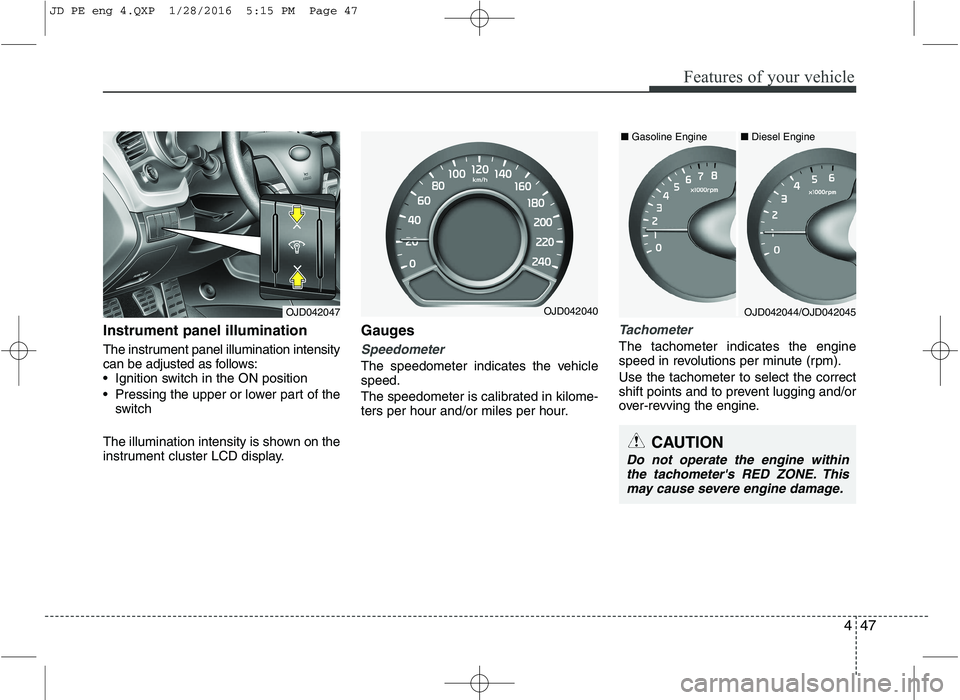
Instrument panel illumination
The instrument panel illumination intensity
can be adjusted as follows:
Ignition switch in the ON position
Pressing the upper or lower part of theswitch
The illumination intensity is shown on the
instrument cluster LCD display. Gauges
Speedometer
The speedometer indicates the vehicle speed.
The speedometer is calibrated in kilome-
ters per hour and/or miles per hour.
Tachometer
The tachometer indicates the engine
speed in revolutions per minute (rpm). Use the tachometer to select the correct
shift points and to prevent lugging and/or
over-revving the engine.
OJD042047OJD042044/OJD042045OJD042040■
Diesel Engine
■ Gasoline Engine
CAUTION
Do not operate the engine within
the tachometer's RED ZONE. This may cause severe engine damage.
JD PE eng 4.QXP 1/28/2016 5:15 PM Page 47
Page 144 of 643
461
Features of your vehicle
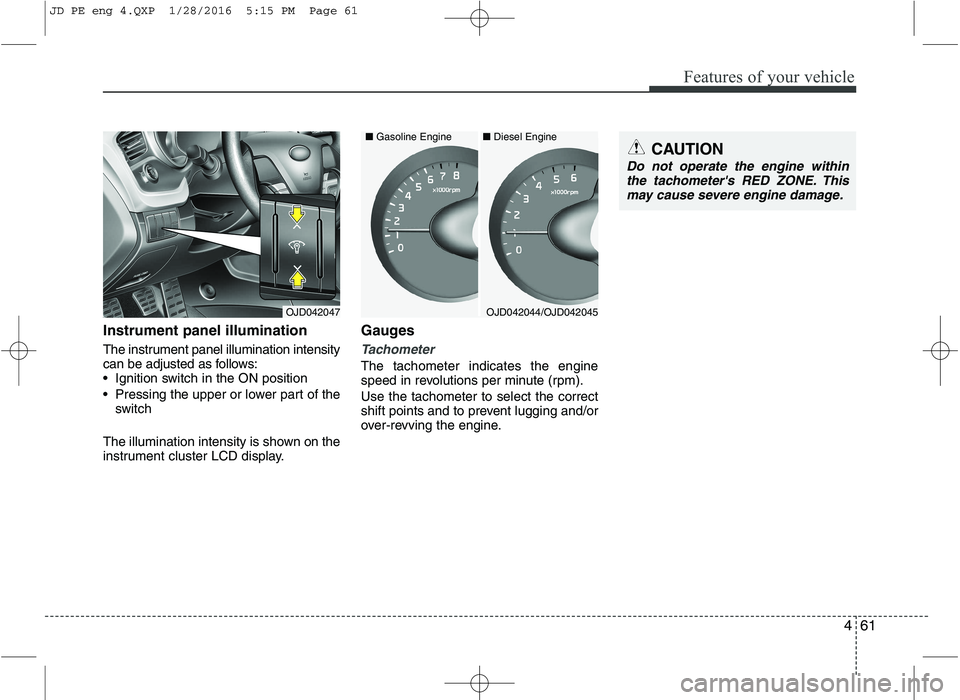
Instrument panel illumination
The instrument panel illumination intensity
can be adjusted as follows:
Ignition switch in the ON position
Pressing the upper or lower part of theswitch
The illumination intensity is shown on the
instrument cluster LCD display. Gauges
Tachometer
The tachometer indicates the engine
speed in revolutions per minute (rpm). Use the tachometer to select the correct
shift points and to prevent lugging and/or
over-revving the engine.
OJD042047
CAUTION
Do not operate the engine within
the tachometer's RED ZONE. Thismay cause severe engine damage.
OJD042044/OJD042045
■
Diesel Engine
■ Gasoline Engine
JD PE eng 4.QXP 1/28/2016 5:15 PM Page 61
Page 157 of 643
Features of your vehicle
74
4
LCD display information
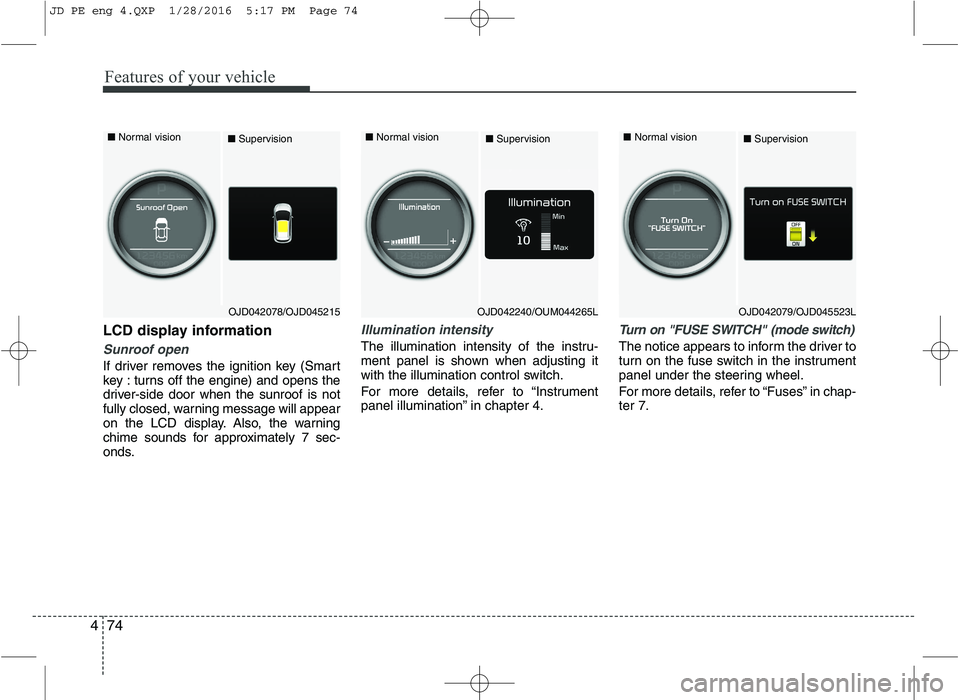
Sunroof open
If driver removes the ignition key (Smart
key : turns off the engine) and opens the
driver-side door when the sunroof is not
fully closed, warning message will appear
on the LCD display. Also, the warning
chime sounds for approximately 7 sec-
onds.
Illumination intensity
The illumination intensity of the instru-
ment panel is shown when adjusting it
with the illumination control switch.
For more details, refer to “Instrument
panel illumination” in chapter 4.
Turn on "FUSE SWITCH" (mode switch)
The notice appears to inform the driver to
turn on the fuse switch in the instrument
panel under the steering wheel.
For more details, refer to “Fuses” in chap- ter 7.
■ Normal vision
■Supervision■ Normal vision
■Supervision■ Normal vision
■Supervision
OJD042240/OUM044265LOJD042079/OJD045523LOJD042078/OJD045215
JD PE eng 4.QXP 1/28/2016 5:17 PM Page 74
Page 174 of 643
491
Features of your vehicle
LCD DISPLAY WARNINGS AND INDICATORS (INSTRUMENT PANEL DISPLAY)Calendar / Clock / Outside ambi-
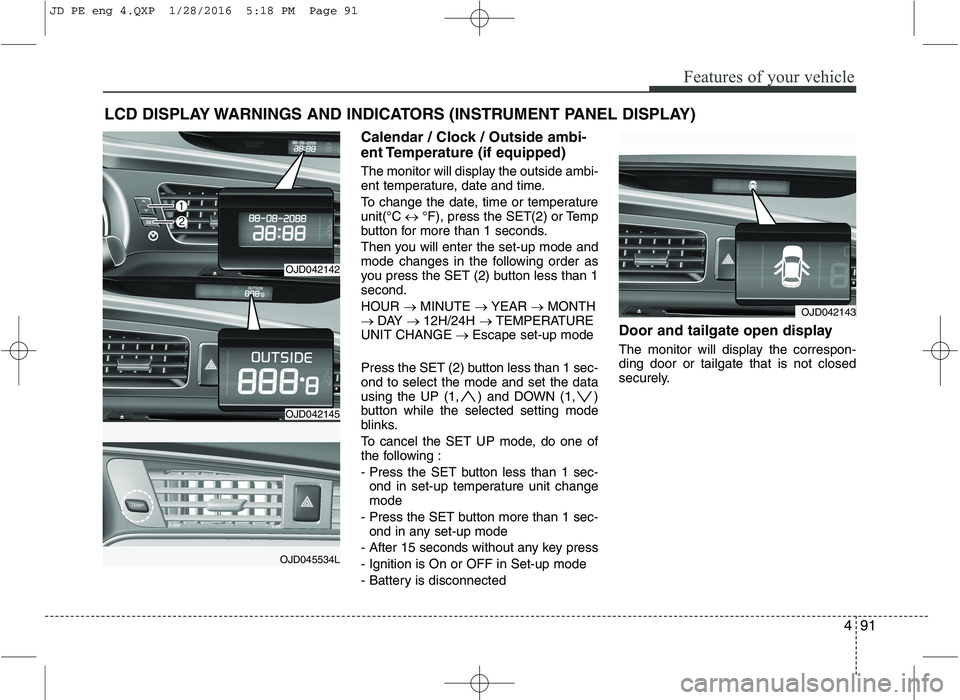
ent Temperature (if equipped)
The monitor will display the outside ambi-
ent temperature, date and time.
To change the date, time or temperature unit(°C °F), press the SET(2) or Temp
button for more than 1 seconds.
Then you will enter the set-up mode and
mode changes in the following order as
you press the SET (2) button less than 1second. HOUR MINUTE YEAR MONTH
DAY 12H/24H TEMPERATURE
UNIT CHANGE Escape set-up mode
Press the SET (2) button less than 1 sec- ond to select the mode and set the data
using the UP (1, ) and DOWN (1, )
button while the selected setting mode
blinks.
To cancel the SET UP mode, do one of
the following :
- Press the SET button less than 1 sec- ond in set-up temperature unit change mode
- Press the SET button more than 1 sec- ond in any set-up mode
- After 15 seconds without any key press
- Ignition is On or OFF in Set-up mode
- Battery is disconnected Door and tailgate open display
The monitor will display the correspon- ding door or tailgate that is not closed
securely.
OJD042143
OJD042142
OJD042145
OJD045534L
JD PE eng 4.QXP 1/28/2016 5:18 PM Page 91
Page 203 of 643
Features of your vehicle
120
4
Static bending light (if equipped)
While driving the corner, for your sight
and safety, the static bending light turns
on automatically. The system will operate
automatically as follows:
When vehicle speed is under 10km/h
and steering wheel angle approximate-
ly 80 degrees.
When vehicle speed is over 10km/h and steering wheel angle approximate-
ly 35 degrees.
When the vehicle is at a standstill.
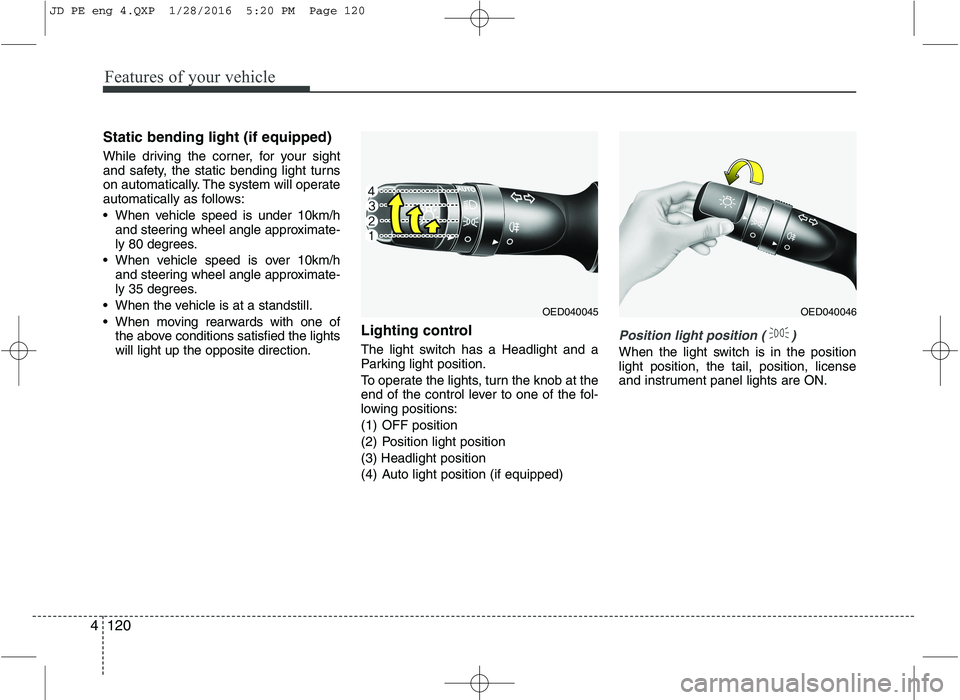
When moving rearwards with one of the above conditions satisfied the lights will light up the opposite direction. Lighting control
The light switch has a Headlight and a
Parking light position.
To operate the lights, turn the knob at the
end of the control lever to one of the fol-
lowing positions:
(1) OFF position
(2) Position light position(3) Headlight position
(4) Auto light position (if equipped)
Position light position ( )
When the light switch is in the position light position, the tail, position, license
and instrument panel lights are ON.
OED040045OED040046
JD PE eng 4.QXP 1/28/2016 5:20 PM Page 120
Page 204 of 643

4121
Features of your vehicle
Headlight position ( )
When the light switch is in the headlight position the head, tail, position, license
and instrument panel lights are ON.
✽✽NOTICE
The ignition switch must be in the ON
position to turn on the headlights.
Auto light/AFLS position (if equipped)
When the light switch is in the AUTO light position, the taillights and headlights will
be turned ON or OFF automaticallydepending on the amount of light outside
the vehicle.
If your vehicle is equipped with the adap-
tive front lighting system (AFLS), it will
also operate when the headlamp is ON.
OYN049201
CAUTION
Never place anything over the sensor (1) located on the instru-ment panel, this will ensure betterauto-light system control.
Do not clean the sensor using a window cleaner, the cleaner mayleave a light film which couldinterfere with sensor operation.
If your vehicle has window tint or other types of coating on the
front windshield, the Auto light system may not work properly.
OED040800
JD PE eng 4.QXP 1/28/2016 5:20 PM Page 121