steering KIA RIO 2017 Repair Manual
[x] Cancel search | Manufacturer: KIA, Model Year: 2017, Model line: RIO, Model: KIA RIO 2017Pages: 449, PDF Size: 14.88 MB
Page 361 of 449
725
Maintenance
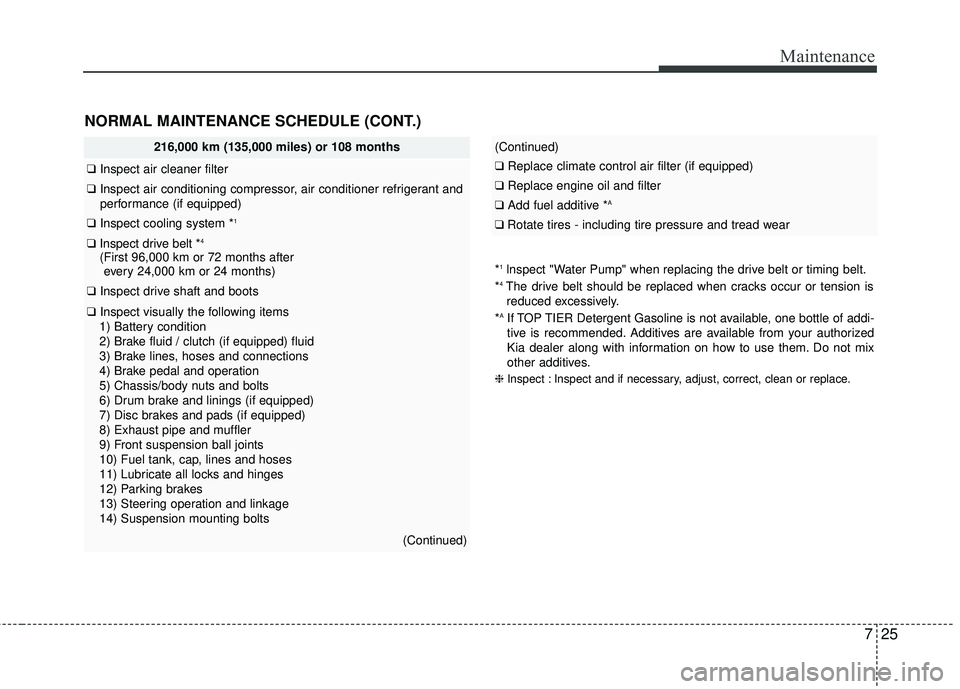
NORMAL MAINTENANCE SCHEDULE (CONT.)
216,000 km (135,000 miles) or 108 months
❑Inspect air cleaner filter
❑Inspect air conditioning compressor, air conditioner refrigerant and
performance (if equipped)
❑ Inspect cooling system *1
❑Inspect drive belt *4
(First 96,000 km or 72 months after
every 24,000 km or 24 months)
❑ Inspect drive shaft and boots
❑ Inspect visually the following items
1) Battery condition
2) Brake fluid / clutch (if equipped) fluid
3) Brake lines, hoses and connections
4) Brake pedal and operation
5) Chassis/body nuts and bolts
6) Drum brake and linings (if equipped)
7) Disc brakes and pads (if equipped)
8) Exhaust pipe and muffler
9) Front suspension ball joints
10) Fuel tank, cap, lines and hoses
11) Lubricate all locks and hinges
12) Parking brakes
13) Steering operation and linkage
14) Suspension mounting bolts
(Continued)
(Continued)
❑ Replace climate control air filter (if equipped)
❑Replace engine oil and filter
❑Add fuel additive *A
❑Rotate tires - including tire pressure and tread wear
*
1lnspect "Water Pump" when replacing the drive belt or timing belt.
*4The drive belt should be replaced when cracks occur or tension is reduced excessively.
*
AIf TOP TIER Detergent Gasoline is not available, one bottle of addi-
tive is recommended. Additives are available from your authorized
Kia dealer along with information on how to use them. Do not mix
other additives.
❈ Inspect : Inspect and if necessary, adjust, correct, clean or replace.
Page 362 of 449
Maintenance
26
7
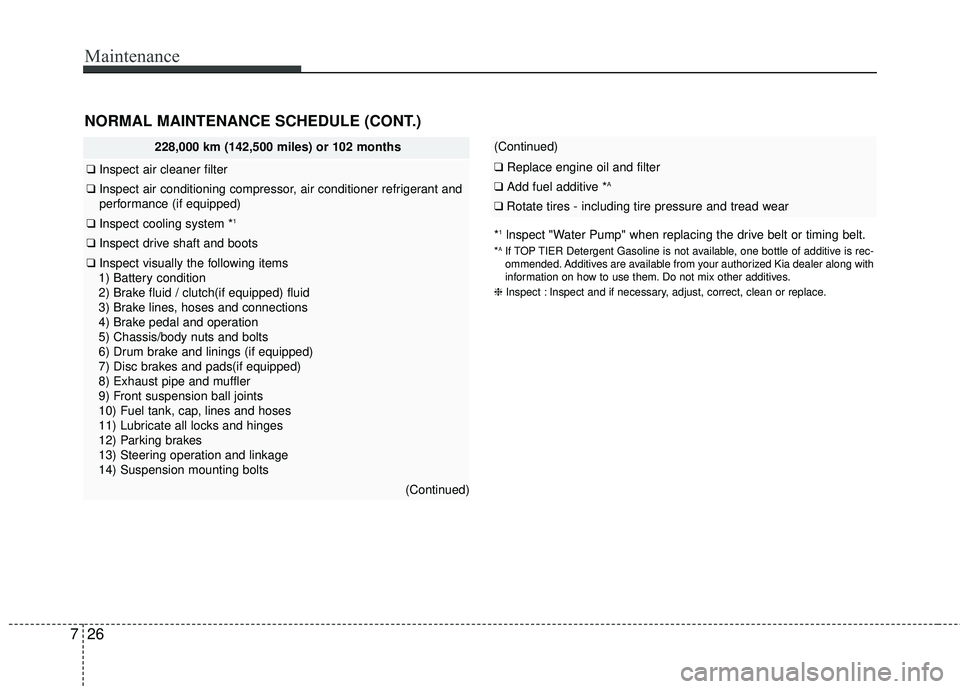
NORMAL MAINTENANCE SCHEDULE (CONT.)
*1lnspect "Water Pump" when replacing the drive belt or timing belt.
*AIf TOP TIER Detergent Gasoline is not available, one bottle of additive is rec-
ommended. Additives are available from your authorized Kia dealer along with
information on how to use them. Do not mix other additives.
❈ Inspect : Inspect and if necessary, adjust, correct, clean or replace.
228,000 km (142,500 miles) or 102 months
❑Inspect air cleaner filter
❑Inspect air conditioning compressor, air conditioner refrigerant and
performance (if equipped)
❑ Inspect cooling system *1
❑Inspect drive shaft and boots
❑Inspect visually the following items
1) Battery condition
2) Brake fluid / clutch(if equipped) fluid
3) Brake lines, hoses and connections
4) Brake pedal and operation
5) Chassis/body nuts and bolts
6) Drum brake and linings (if equipped)
7) Disc brakes and pads(if equipped)
8) Exhaust pipe and muffler
9) Front suspension ball joints
10) Fuel tank, cap, lines and hoses
11) Lubricate all locks and hinges
12) Parking brakes
13) Steering operation and linkage
14) Suspension mounting bolts
(Continued)
(Continued)
❑ Replace engine oil and filter
❑Add fuel additive *A
❑Rotate tires - including tire pressure and tread wear
Page 363 of 449
727
Maintenance
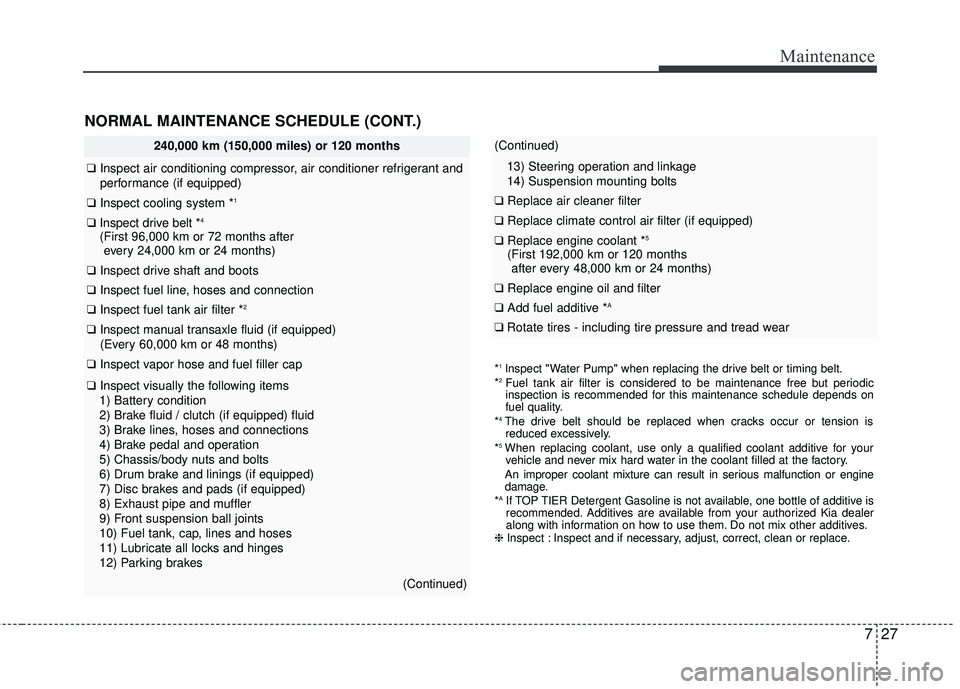
240,000 km (150,000 miles) or 120 months
❑Inspect air conditioning compressor, air conditioner refrigerant and
performance (if equipped)
❑ Inspect cooling system *1
❑Inspect drive belt *4
(First 96,000 km or 72 months after
every 24,000 km or 24 months)
❑ Inspect drive shaft and boots
❑ Inspect fuel line, hoses and connection
❑Inspect fuel tank air filter *2
❑Inspect manual transaxle fluid (if equipped)
(Every 60,000 km or 48 months)
❑ Inspect vapor hose and fuel filler cap
❑Inspect visually the following items
1) Battery condition
2) Brake fluid / clutch (if equipped) fluid
3) Brake lines, hoses and connections
4) Brake pedal and operation
5) Chassis/body nuts and bolts
6) Drum brake and linings (if equipped)
7) Disc brakes and pads (if equipped)
8) Exhaust pipe and muffler
9) Front suspension ball joints
10) Fuel tank, cap, lines and hoses
11) Lubricate all locks and hinges
12) Parking brakes
(Continued)
(Continued)
13) Steering operation and linkage
14) Suspension mounting bolts
❑ Replace air cleaner filter
❑Replace climate control air filter (if equipped)
❑Replace engine coolant *5
(First 192,000 km or 120 months
after every 48,000 km or 24 months)
❑ Replace engine oil and filter
❑Add fuel additive *A
❑Rotate tires - including tire pressure and tread wear
NORMAL MAINTENANCE SCHEDULE (CONT.)
*1lnspect "Water Pump" when replacing the drive belt or timing belt.
*2Fuel tank air filter is considered to be maintenance free but periodic
inspection is recommended for this maintenance schedule depends on
fuel quality.
*
4The drive belt should be replaced when cracks occur or tension is reduced excessively.
*
5When replacing coolant, use only a qualified coolant additive for your vehicle and never mix hard water in the coolant filled at the factory.
An improper coolant mixture can result in serious malfunction or engine
damage.
*
AIf TOP TIER Detergent Gasoline is not available, one bottle of additive is
recommended. Additives are available from your authorized Kia dealer
along with information on how to use them. Do not mix other additives.
❈ Inspect : Inspect and if necessary, adjust, correct, clean or replace.
Page 365 of 449
729
Maintenance
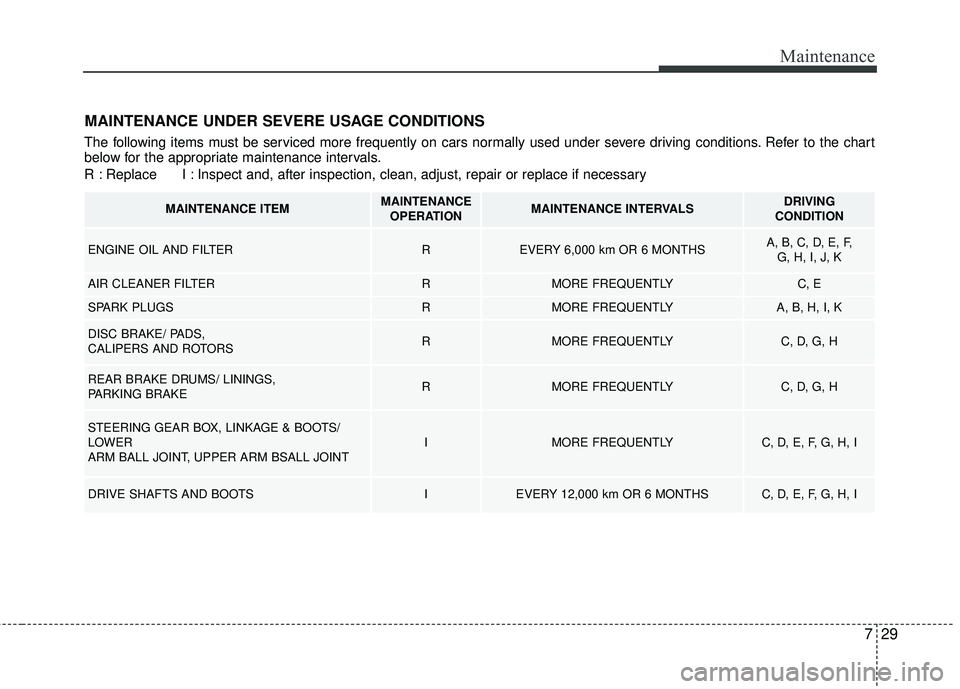
MAINTENANCE UNDER SEVERE USAGE CONDITIONS
The following items must be serviced more frequently on cars normally used under severe driving conditions. Refer to the chart
below for the appropriate maintenance intervals.
R : Replace I : Inspect and, after inspection, clean, adjust, repair or replace if neces\
sary
MAINTENANCE ITEMMAINTENANCEOPERATIONMAINTENANCE INTERVALSDRIVING
CONDITION
ENGINE OIL AND FILTERREVERY 6,000 km OR 6 MONTHSA, B, C, D, E, F, G, H, I, J, K
AIR CLEANER FILTERRMORE FREQUENTLYC, E
SPARK PLUGSRMORE FREQUENTLYA, B, H, I, K
DISC BRAKE/ PADS,
CALIPERS AND ROTORSRMORE FREQUENTLYC, D, G, H
REAR BRAKE DRUMS/ LININGS,
PARKING BRAKERMORE FREQUENTLYC, D, G, H
STEERING GEAR BOX, LINKAGE & BOOTS/
LOWER
ARM BALL JOINT, UPPER ARM BSALL JOINTIMORE FREQUENTLYC, D, E, F, G, H, I
DRIVE SHAFTS AND BOOTSIEVERY 12,000 km OR 6 MONTHSC, D, E, F, G, H, I
Page 369 of 449
733
Maintenance
Rear brake drums and linings
(if equipped)
Check the rear brake drums and linings
for scoring, burning, leaking fluid, broken
parts, and excessive wear.
Brake discs, pads, calipers and
rotors
Check the pads for excessive wear, discs
for run out and wear, and calipers for fluid
leakage.
Suspension mounting bolts
Check the suspension connections for
looseness or damage. Retighten to the
specified torque.
Steering gear box, linkage &
boots/lower arm ball joint
With the vehicle stopped and engine off,
check for excessive free-play in the
steering wheel.
Check the linkage for bends or damage.
Check the dust boots and ball joints for
deterioration, cracks, or damage.
Replace any damaged parts.
Drive shafts and boots
Check the drive shafts, boots and clamps
for cracks, deterioration, or damage.
Replace any damaged parts and, if nec-
essary, repack the grease.
Air conditioning refrigerant
(if equipped)
Check the air conditioning lines and con-
nections for leakage and damage.
Page 404 of 449
Maintenance
68
7
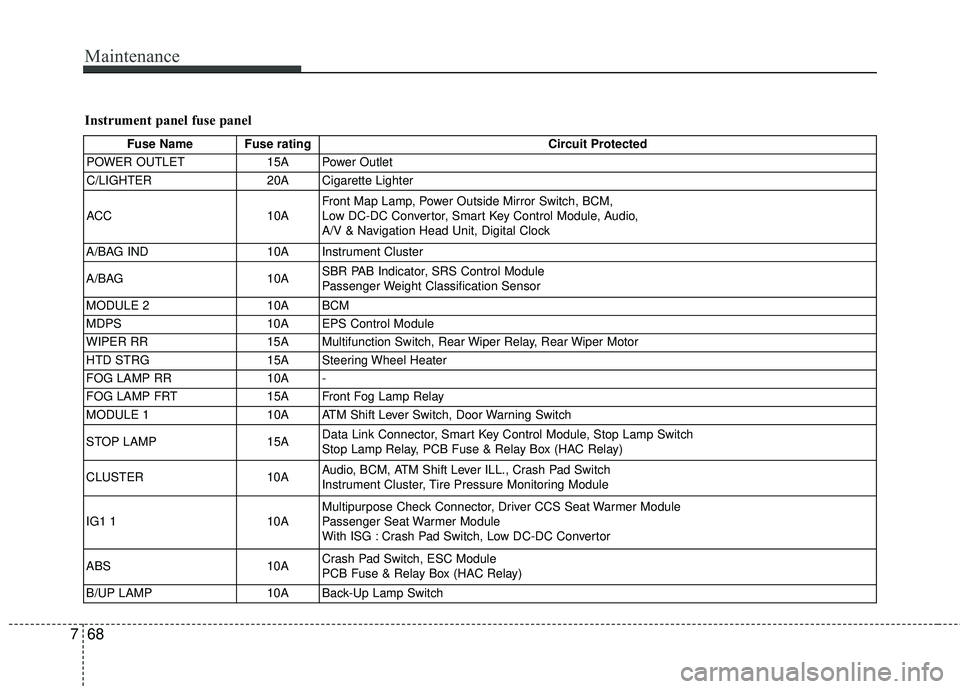
Instrument panel fuse panel
Fuse Name Fuse rating Circuit Protected
POWER OUTLET 15A Power Outlet
C/LIGHTER 20A Cigarette Lighter
ACC 10AFront Map Lamp, Power Outside Mirror Switch, BCM,
Low DC-DC Convertor, Smart Key Control Module, Audio,
A/V & Navigation Head Unit, Digital Clock
A/BAG IND 10A Instrument Cluster
A/BAG 10ASBR PAB Indicator, SRS Control Module
Passenger Weight Classification Sensor
MODULE 2 10A BCM
MDPS 10A EPS Control Module
WIPER RR 15A Multifunction Switch, Rear Wiper Relay, Rear Wiper Motor
HTD STRG 15A Steering Wheel Heater
FOG LAMP RR 10A -
FOG LAMP FRT 15A Front Fog Lamp Relay
MODULE 1 10A ATM Shift Lever Switch, Door Warning Switch
STOP LAMP 15AData Link Connector, Smart Key Control Module, Stop Lamp Switch
Stop Lamp Relay, PCB Fuse & Relay Box (HAC Relay)
CLUSTER 10AAudio, BCM, ATM Shift Lever ILL., Crash Pad Switch
Instrument Cluster, Tire Pressure Monitoring Module
IG1 1 10AMultipurpose Check Connector, Driver CCS Seat Warmer Module
Passenger Seat Warmer Module
With ISG : Crash Pad Switch, Low DC-DC Convertor
ABS 10ACrash Pad Switch, ESC Module
PCB Fuse & Relay Box (HAC Relay)
B/UP LAMP 10A Back-Up Lamp Switch
Page 426 of 449
Maintenance
90
7
Keep paint and trim in good condition
Scratches or chips in the finish should be
covered with "touch-up" paint as soon as
possible to reduce the possibility of cor-
rosion. If bare metal is showing through,
the attention of a qualified body and paint
shop is recommended.
Bird droppings : Bird droppings are high-
ly corrosive and may damage painted
surfaces in just a few hours. Always
remove bird droppings as soon as possi-
ble.
Don't neglect the interior
Moisture can collect under the floor mats
and carpeting and cause corrosion.
Check under the mats periodically to be
sure the carpeting is dry. Use particular
care if you carry fertilizers, cleaning
materials or chemicals in the car.
These should be carried only in proper
containers and any spills or leaks should
be cleaned up, flushed with clean water
and thoroughly dried.Interior care
Interior general precautions
Prevent chemicals such as perfume, cos-
metic oil, sun cream, hand cleaner, and
air freshener from contacting the interior
parts because they may cause damage
or discoloration. If they do contact the
interior parts, wipe them off immediately.
Natural leather seat cover using
precautions (If equipped)
Natural leather has visible pores, scars
or blood vessels, etc. Pressure marks or
wrinkles may be made when used.
Prolonged exposure to sunlight or heat
may cause discoloration. These things
occur due to the natural characteristics of
cowhides. If the leather is exposed to rain
or gets wet, remove water with a dry
cloth and dry the leather in the shade to
minimize damage.
Make sure to keep sharp objects away
from the leather as these can create
scratches on the surface. For light-col-
ored leather, be careful of spots or color
transfer, such as from jeans.
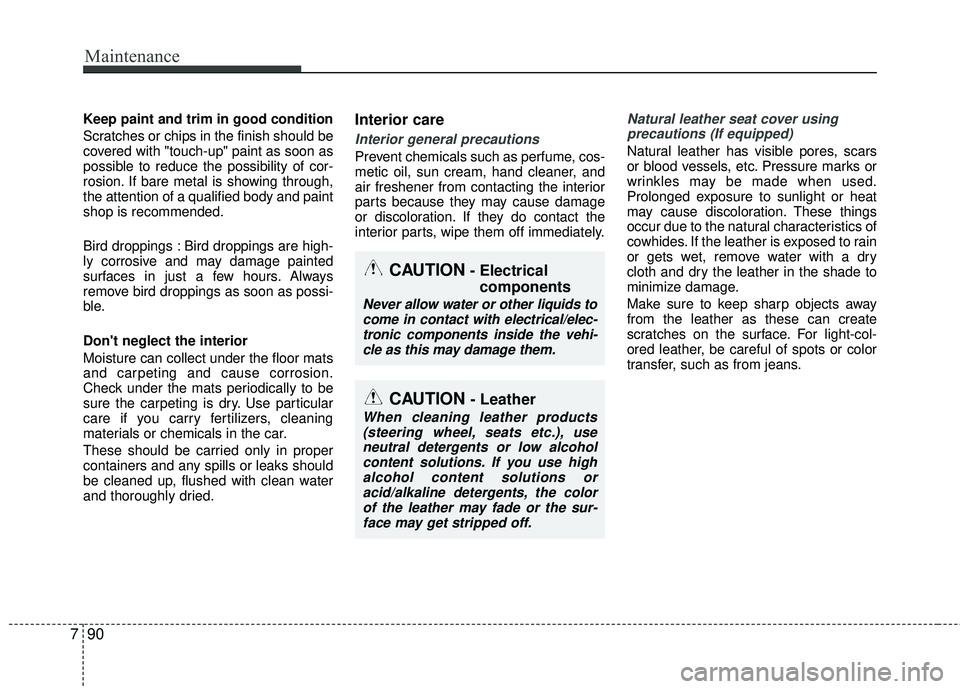
CAUTION- Electrical components
Never allow water or other liquids to
come in contact with electrical/elec-tronic components inside the vehi-cle as this may damage them.
CAUTION - Leather
When cleaning leather products (steering wheel, seats etc.), useneutral detergents or low alcohol content solutions. If you use highalcohol content solutions or acid/alkaline detergents, the colorof the leather may fade or the sur-face may get stripped off.
Page 442 of 449

Index
2I
Active ECO system··················\
··················\
··················\
··5-43Active ECO operation ··················\
··················\
·············5-43
Limitation of Active ECO operation: ··················\
········5-43
AIR BAG - advanced supplemental restraint system ····3-33 Adding equipment to or modifying your airbag-equipped vehicle··················\
··················\
·············3-55
Air bag warning label ··················\
··················\
··············3-56
Air bag warning light ··················\
··················\
··············3-36
Curtain air bag ··················\
··················\
··················\
·······3-49
Driver's and passenger's front air bag··········\
················3-44
How does the air bag system operate ··················\
········3-34
Occupant detection system ··················\
··················\
······3-39
Side impact air bag ··················\
··················\
··················\
3-47
SRS Care ··················\
··················\
··················\
···············3-55
SRS components and functions ··················\
·················3-36\
Why didn’t my air bag go off in a collision? (Inflation and non-inflation conditions of the air bag) ···3-50
Air cleaner ··················\
··················\
··················\
···············7-41 Filter replacement ··················\
··················\
··················\
··7-41
Air conditioning system··················\
··················\
···············8-6
Appearance care··················\
··················\
··················\
·······7-86 Exterior care ··················\
··················\
··················\
··········7-86
Interior care ··················\
··················\
··················\
···········7-90
Audio system ··················\
··················\
··················\
·········4-121 Antenna··················\
··················\
··················\
················4-121
Aux, USB and iPod
®··················\
··················\
·············4-123
Bluetooth
®Wireless Technology ··················\
·············4-122
How vehicle audio works ··················\
··················\
······4-123
Steering wheel audio control ··················\
··················\
·4-122
Automatic climate control system ··················\
···············4-94 Automatic heating and air conditioning ··················\
····4-95
Checking the amount of air conditioner refrigerantand compressor lubricant ··················\
··················\
····4-104
Climate control air filter ··················\
··················\
········4-103
Manual heating and air conditioning··················\
·········4-96
System operation ··················\
··················\
··················\
·4-101
Automatic transaxle brake system ··················\
···············5-16 Automatic transaxle operation··················\
··················\
·5-16
Good driving practices ··················\
··················\
············5-21
Automatic transaxle fluid ··················\
··················\
··········7-40
Battery··················\
··················\
··················\
··················\
····7-45 Battery recharging ··················\
··················\
··················\
·7-46
For best battery service ··················\
··················\
···········7-45
Reset items ··················\
··················\
··················\
············7-47
Before driving ··················\
··················\
··················\
············5-3 Before entering vehicle ··················\
··················\
·············5-3
Before starting ··················\
··················\
··················\
········5-3
Necessary inspections··················\
··················\
················5-3
A
B
Page 447 of 449

I7
Index
Scheduled maintenance service ··················\
··················\
···7-7
Seat··················\
··················\
··················\
··················\
···········3-2Driver’s seat ··················\
··················\
··················\
·············3-2
Front passenger’s seat··················\
··················\
················3-2
Front seat adjustment·············\
··················\
··················\
····3-4
Rear seat ··················\
··················\
··················\
··················\
3-2
Rear seat adjustment··················\
··················\
················3-10
Seat belts ··················\
··················\
··················\
··················\
3-14 Care of seat belts ··················\
··················\
··················\
···3-23
Pre-tensioner seat belt ··················\
··················\
·············3-20
Seat belt precautions··················\
··················\
················3-22
Seat belt restraint system ··················\
··················\
·········3-14
Smart key ··················\
··················\
··················\
··················\
·4-5 Smart key functions ··················\
··················\
··················\
·4-5
Smart key precautions ··················\
··················\
···············4-7
Special driving conditions ··················\
··················\
·········5-46 Driving at night ··················\
··················\
··················\
·····5-47
Driving in flooded areas ··················\
··················\
··········5-48
Driving in the rain ··················\
··················\
··················\
·5-48
Driving off-road ··················\
··················\
··················\
·····5-49
Hazardous driving conditions ··················\
··················\
··5-46
Highway driving ··················\
··················\
··················\
····5-49
Rocking the vehicle ··················\
··················\
·················5-46\
Smooth cornering ··················\
··················\
··················\
··5-47 Starting the engine ··················\
··················\
··················\
···5-10
Starting the engine with a smart key ··················\
·········5-11
Starting the engine with an ignition key ··················\
···5-10
Steering wheel ··················\
··················\
··················\
·········4-37 Electric power steering ··················\
··················\
············4-37
Heated steering wheel ··················\
··················\
·············4-38
Horn ··················\
··················\
··················\
··················\
·····4-39
Tilt and telescoping steering··················\
··················\
····4-38
Storage compartment ··················\
··················\
···············4-110 Center console storage·············\
··················\
················4-110
Cool box ··················\
··················\
··················\
··············4-111
Glove box ··················\
··················\
··················\
············4-110
Increase cargo space ··················\
··················\
··············4-113
Luggage net holder ··················\
··················\
················4-111
Luggage tray (5 Door) ··················\
··················\
···········4-112
Sunroof··················\
··················\
··················\
··················\
···4-33 Resetting the sunroof ··················\
··················\
···············4-36
Sliding the sunroof ··················\
··················\
·················4-34\
Sunshade ··················\
··················\
··················\
················4-36
Tilting the sunroof ··················\
··················\
··················\
·4-35
Tailgate··················\
··················\
··················\
··················\
···4-22 Closing the tailgate ··················\
··················\
··················\
4-23
Emergency tailgate safety release ··················\
·············4-23
Opening the tailgate··················\
··················\
·················4-22\
S
T