clutch LEXUS LS430 2003 Factory Owner's Manual
[x] Cancel search | Manufacturer: LEXUS, Model Year: 2003, Model line: LS430, Model: LEXUS LS430 2003Pages: 4500, PDF Size: 87.45 MB
Page 2682 of 4500
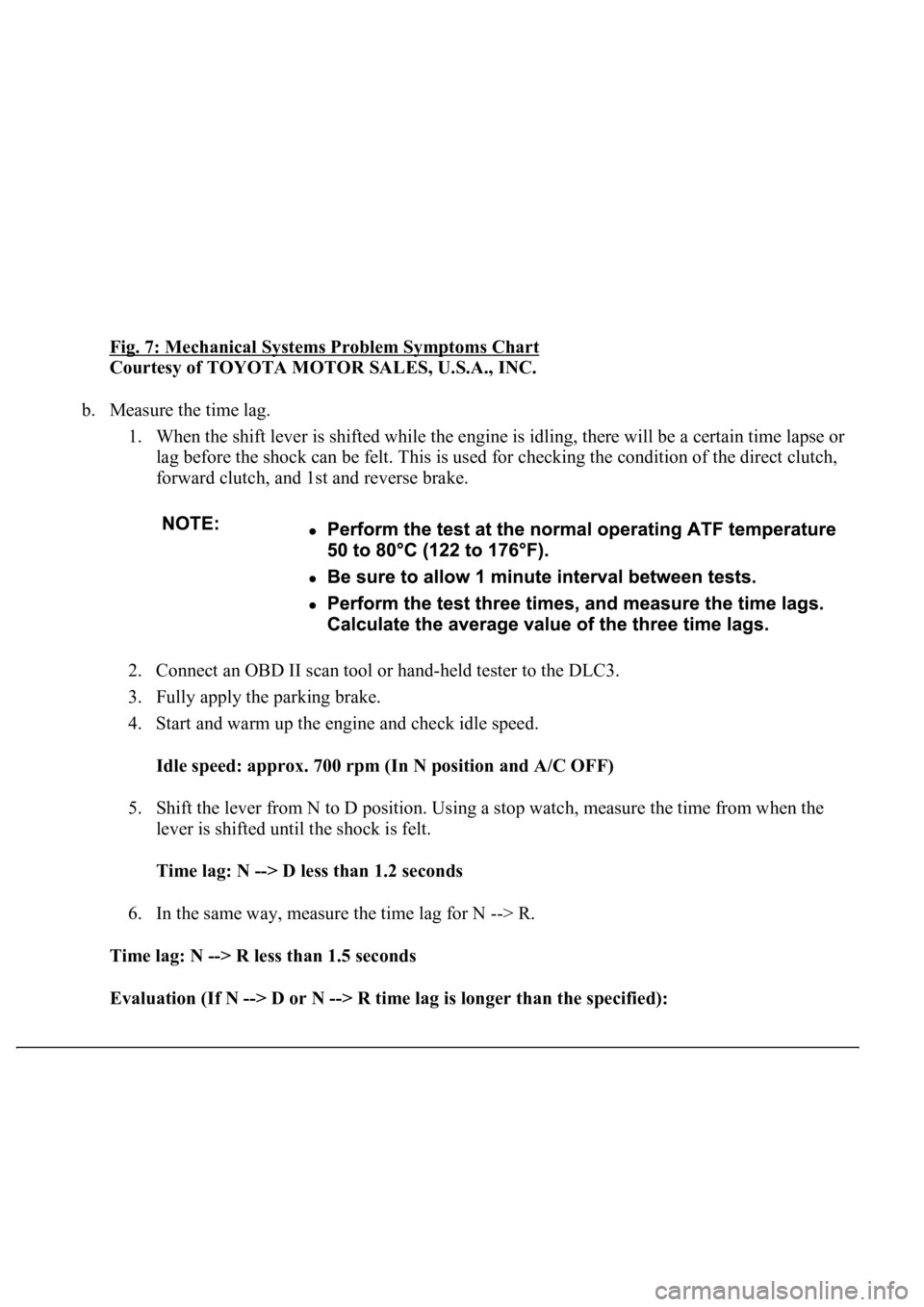
Fig. 7: Mechanical Systems Problem Symptoms Chart
Courtesy of TOYOTA MOTOR SALES, U.S.A., INC.
b. Measure the time lag.
1. When the shift lever is shifted while the engine is idling, there will be a certain time lapse or
lag before the shock can be felt. This is used for checking the condition of the direct clutch,
forward clutch, and 1st and reverse brake.
2. Connect an OBD II scan tool or hand-held tester to the DLC3.
3. Fully apply the parking brake.
4. Start and warm up the engine and check idle speed.
Idle speed: approx. 700 rpm (In N position and A/C OFF)
5. Shift the lever from N to D position. Using a stop watch, measure the time from when the
lever is shifted until the shock is felt.
Time lag: N --> D less than 1.2 seconds
6. In the same way, measure the time lag for N --> R.
Time lag: N --> R less than 1.5 seconds
Evaluation (If N --> D or N --> R time lag is longer than the specified):
Page 2726 of 4500
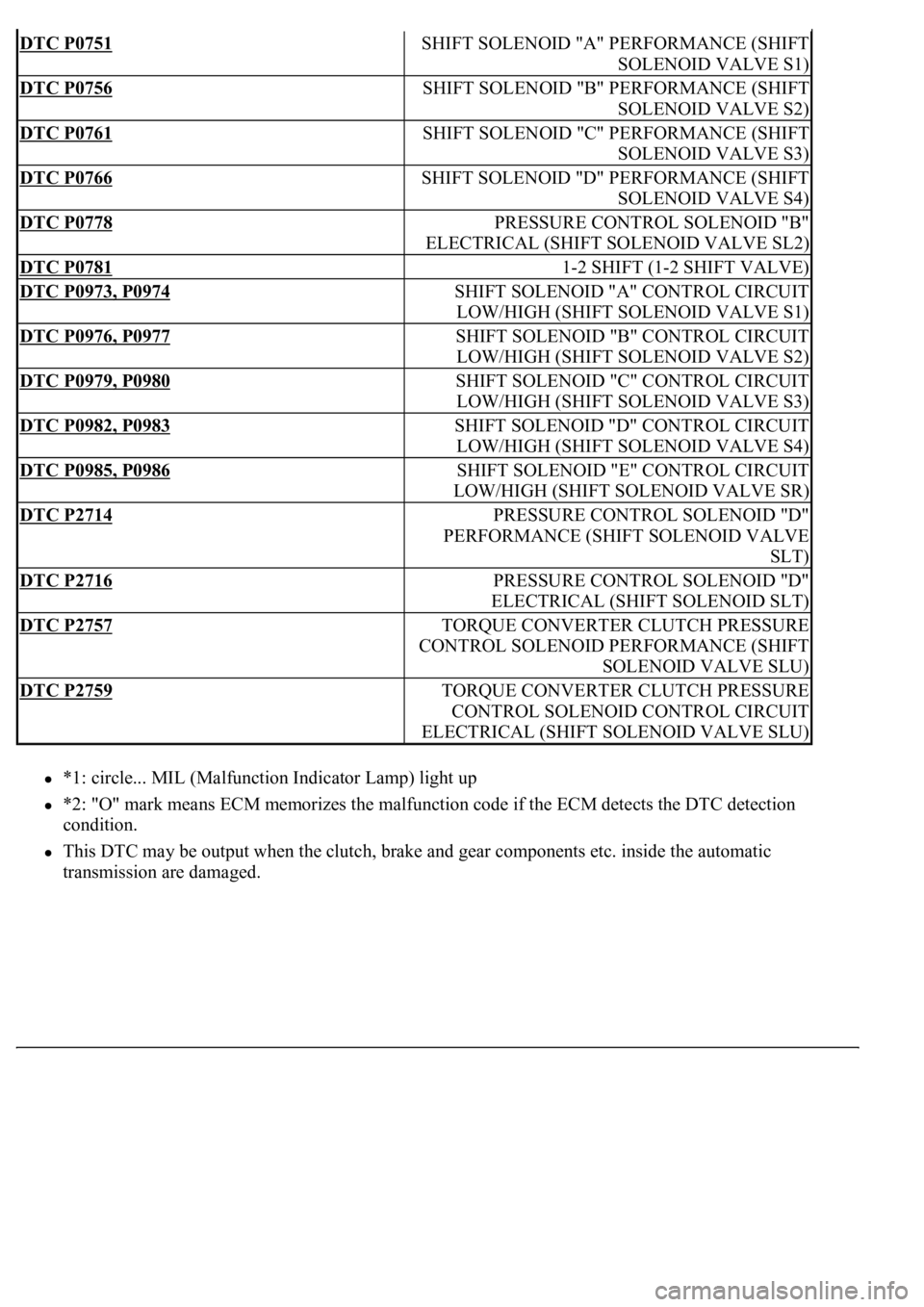
*1: circle... MIL (Malfunction Indicator Lamp) light up
*2: "O" mark means ECM memorizes the malfunction code if the ECM detects the DTC detection
condition.
This DTC may be output when the clutch, brake and gear components etc. inside the automatic
transmission are dama
ged.
DTC P0751SHIFT SOLENOID "A" PERFORMANCE (SHIFT
SOLENOID VALVE S1)
DTC P0756SHIFT SOLENOID "B" PERFORMANCE (SHIFT
SOLENOID VALVE S2)
DTC P0761SHIFT SOLENOID "C" PERFORMANCE (SHIFT
SOLENOID VALVE S3)
DTC P0766SHIFT SOLENOID "D" PERFORMANCE (SHIFT
SOLENOID VALVE S4)
DTC P0778PRESSURE CONTROL SOLENOID "B"
ELECTRICAL (SHIFT SOLENOID VALVE SL2)
DTC P07811-2 SHIFT (1-2 SHIFT VALVE)
DTC P0973, P0974SHIFT SOLENOID "A" CONTROL CIRCUIT
LOW/HIGH (SHIFT SOLENOID VALVE S1)
DTC P0976, P0977SHIFT SOLENOID "B" CONTROL CIRCUIT
LOW/HIGH (SHIFT SOLENOID VALVE S2)
DTC P0979, P0980SHIFT SOLENOID "C" CONTROL CIRCUIT
LOW/HIGH (SHIFT SOLENOID VALVE S3)
DTC P0982, P0983SHIFT SOLENOID "D" CONTROL CIRCUIT
LOW/HIGH (SHIFT SOLENOID VALVE S4)
DTC P0985, P0986SHIFT SOLENOID "E" CONTROL CIRCUIT
LOW/HIGH (SHIFT SOLENOID VALVE SR)
DTC P2714PRESSURE CONTROL SOLENOID "D"
PERFORMANCE (SHIFT SOLENOID VALVE
SLT)
DTC P2716PRESSURE CONTROL SOLENOID "D"
ELECTRICAL (SHIFT SOLENOID SLT)
DTC P2757TORQUE CONVERTER CLUTCH PRESSURE
CONTROL SOLENOID PERFORMANCE (SHIFT
SOLENOID VALVE SLU)
DTC P2759TORQUE CONVERTER CLUTCH PRESSURE
CONTROL SOLENOID CONTROL CIRCUIT
ELECTRICAL (SHIFT SOLENOID VALVE SLU)
Page 2759 of 4500
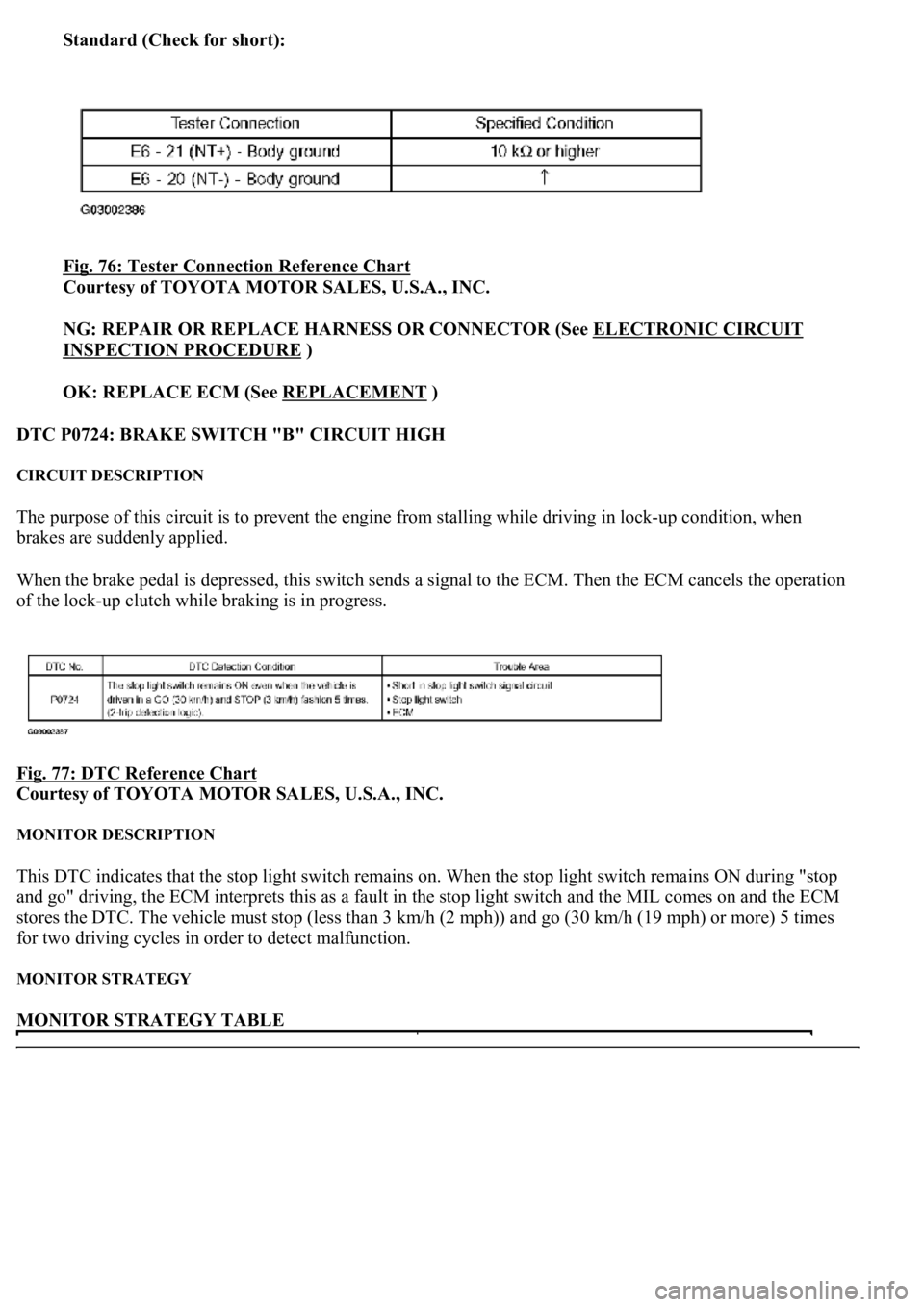
Standard (Check for short):
Fig. 76: Tester Connection Reference Chart
Courtesy of TOYOTA MOTOR SALES, U.S.A., INC.
NG: REPAIR OR REPLACE HARNESS OR CONNECTOR (See ELECTRONIC CIRCUIT
INSPECTION PROCEDURE )
OK: REPLACE ECM (See REPLACEMENT
)
DTC P0724: BRAKE SWITCH "B" CIRCUIT HIGH
CIRCUIT DESCRIPTION
The purpose of this circuit is to prevent the engine from stalling while driving in lock-up condition, when
brakes are suddenly applied.
When the brake pedal is depressed, this switch sends a signal to the ECM. Then the ECM cancels the operation
of the lock-up clutch while braking is in progress.
Fig. 77: DTC Reference Chart
Courtesy of TOYOTA MOTOR SALES, U.S.A., INC.
MONITOR DESCRIPTION
This DTC indicates that the stop light switch remains on. When the stop light switch remains ON during "stop
and go" driving, the ECM interprets this as a fault in the stop light switch and the MIL comes on and the ECM
stores the DTC. The vehicle must stop (less than 3 km/h (2 mph)) and go (30 km/h (19 mph) or more) 5 times
for two driving cycles in order to detect malfunction.
MONITOR STRATEGY
MONITOR STRATEGY TABLE
Page 2764 of 4500
OK: REPLACE ECM (See REPLACEMENT)
DTC P0729: GEAR 6 INCORRECT RATIO
SYSTEM DESCRIPTION
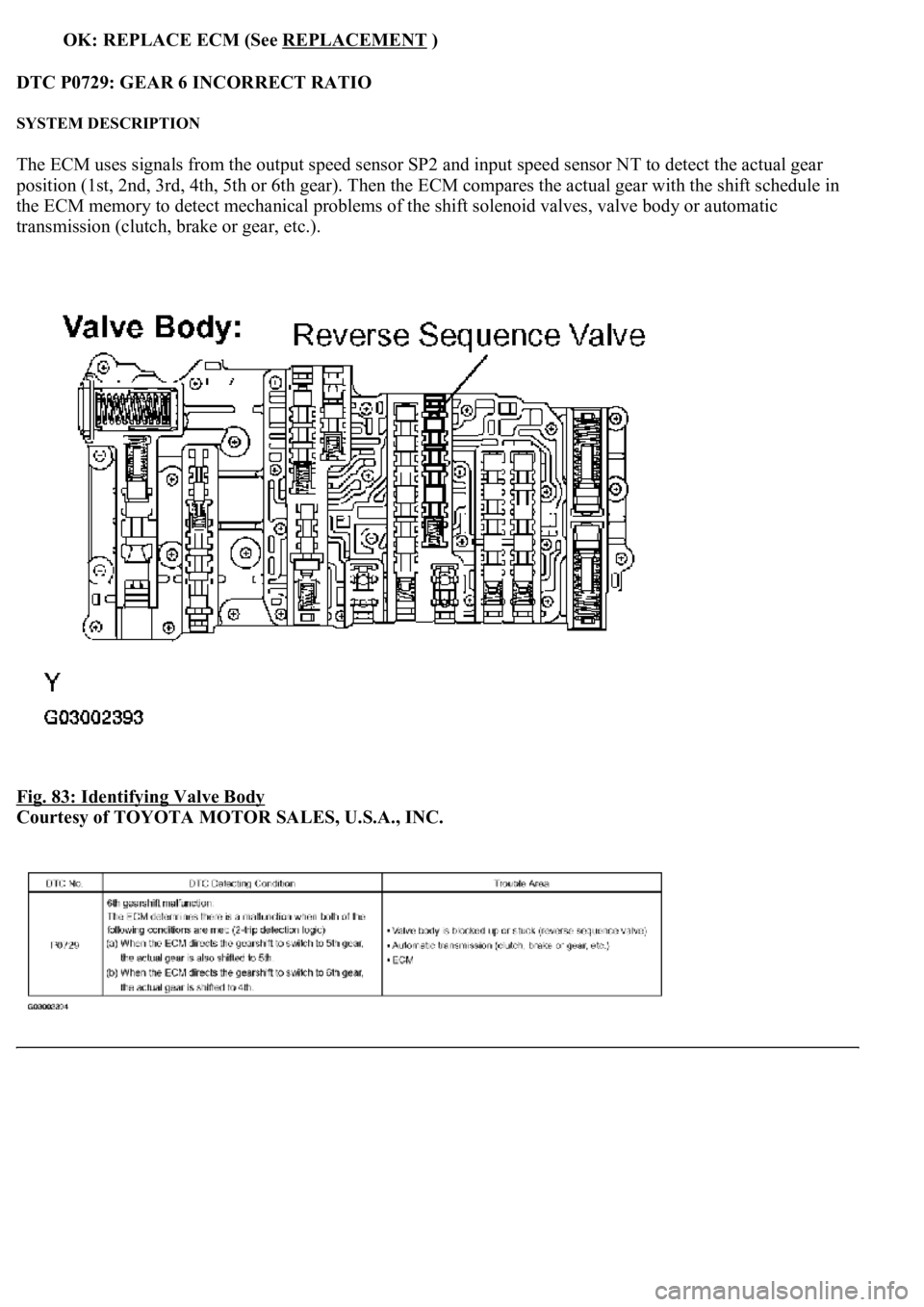
The ECM uses signals from the output speed sensor SP2 and input speed sensor NT to detect the actual gear
position (1st, 2nd, 3rd, 4th, 5th or 6th gear). Then the ECM compares the actual gear with the shift schedule in
the ECM memory to detect mechanical problems of the shift solenoid valves, valve body or automatic
transmission (clutch, brake or gear, etc.).
Fig. 83: Identifying Valve Body
Courtesy of TOYOTA MOTOR SALES, U.S.A., INC.
Page 2783 of 4500
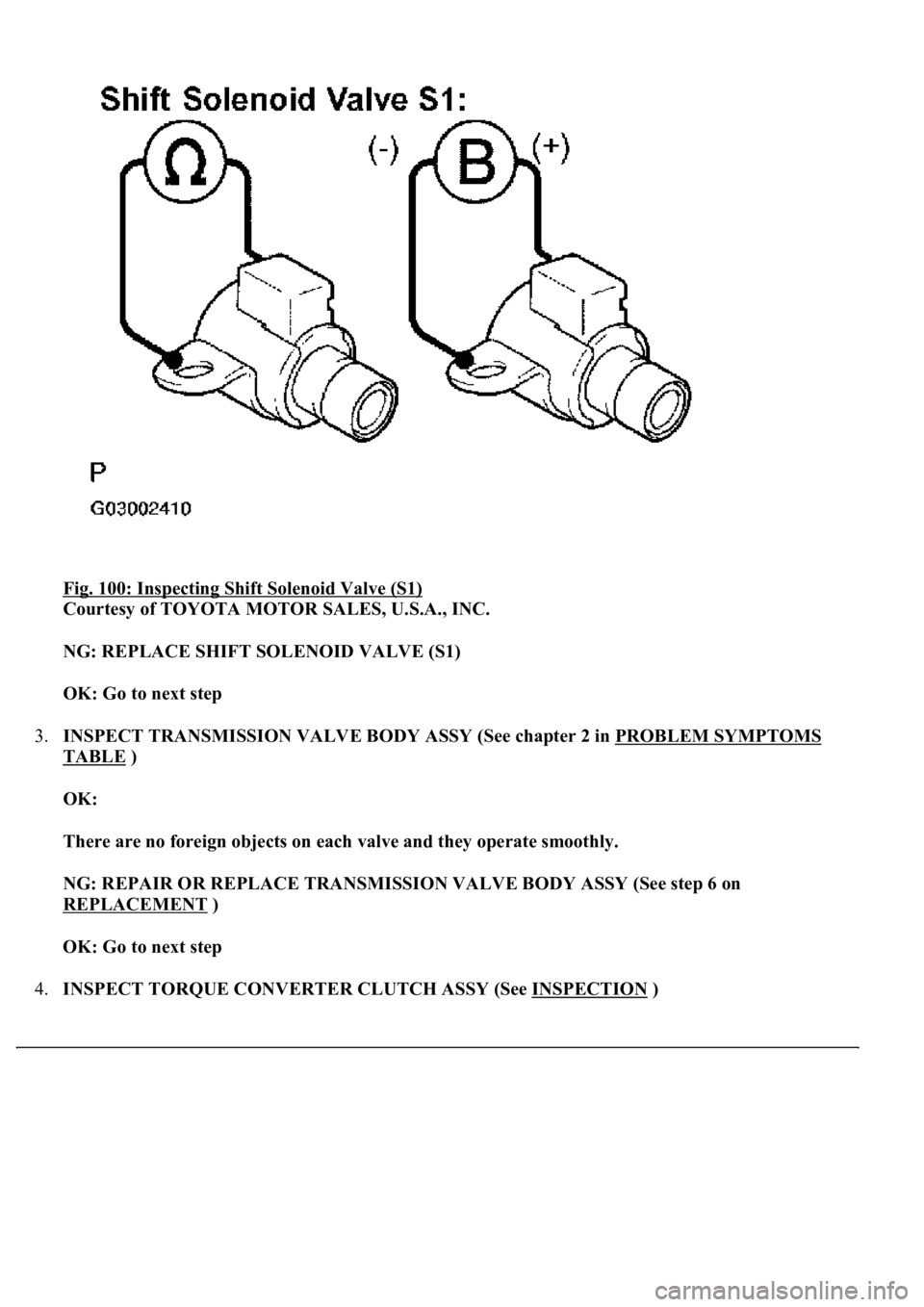
Fig. 100: Inspecting Shift Solenoid Valve (S1)
Courtesy of TOYOTA MOTOR SALES, U.S.A., INC.
NG: REPLACE SHIFT SOLENOID VALVE (S1)
OK: Go to next step
3.INSPECT TRANSMISSION VALVE BODY ASSY (See chapter 2 in PROBLEM SYMPTOMS
TABLE )
OK:
There are no foreign objects on each valve and they operate smoothly.
NG: REPAIR OR REPLACE TRANSMISSION VALVE BODY ASSY (See step 6 on
REPLACEMENT
)
OK: Go to next step
4.INSPECT TORQUE CONVERTER CLUTCH ASSY (See INSPECTION
)
Page 2784 of 4500
OK:
The torque converter clutch operates normally.
NG: REPLACE TORQUE CONVERTER CLUTCH ASSY
OK: REPAIR OR REPLACE AUTOMATIC TRANSMISSION ASSY (See COMPONENTS
)
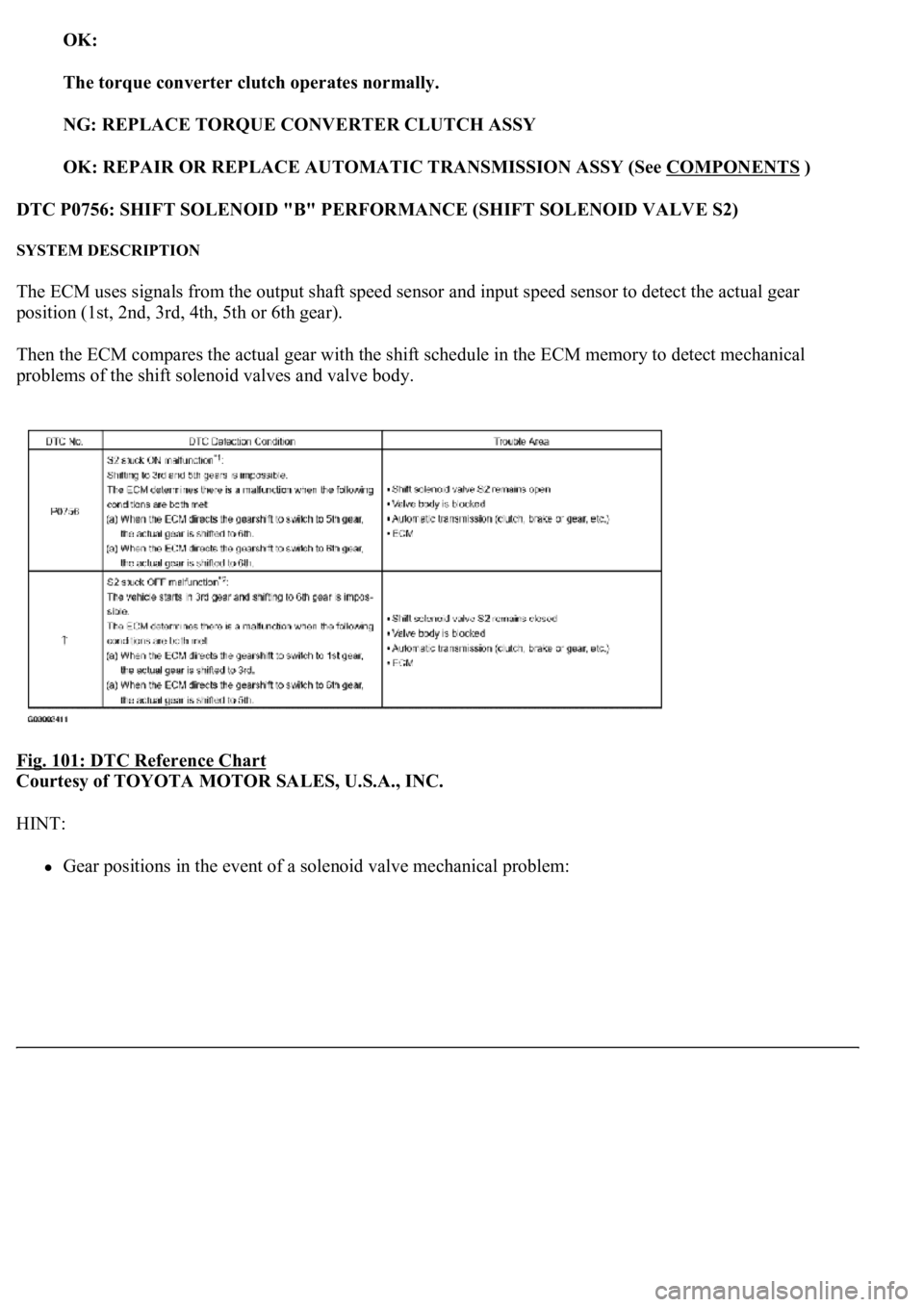
DTC P0756: SHIFT SOLENOID "B" PERFORMANCE (SHIFT SOLENOID VALVE S2)
SYSTEM DESCRIPTION
The ECM uses signals from the output shaft speed sensor and input speed sensor to detect the actual gear
position (1st, 2nd, 3rd, 4th, 5th or 6th gear).
Then the ECM compares the actual gear with the shift schedule in the ECM memory to detect mechanical
problems of the shift solenoid valves and valve body.
Fig. 101: DTC Reference Chart
Courtesy of TOYOTA MOTOR SALES, U.S.A., INC.
HINT:
Gear positions in the event of a solenoid valve mechanical problem:
Page 2791 of 4500
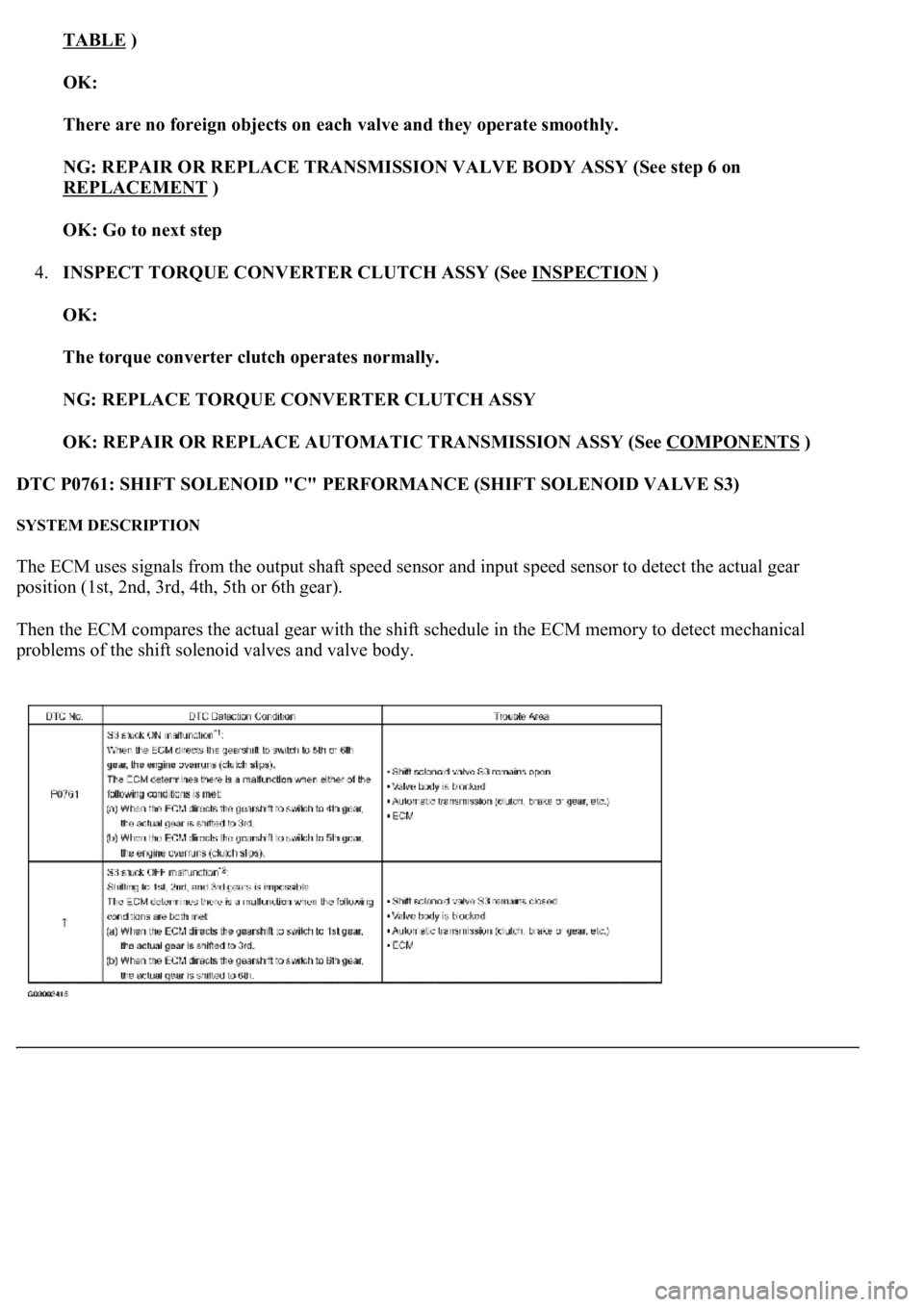
TABLE )
OK:
There are no foreign objects on each valve and they operate smoothly.
NG: REPAIR OR REPLACE TRANSMISSION VALVE BODY ASSY (See step 6 on
REPLACEMENT
)
OK: Go to next step
4.INSPECT TORQUE CONVERTER CLUTCH ASSY (See INSPECTION
)
OK:
The torque converter clutch operates normally.
NG: REPLACE TORQUE CONVERTER CLUTCH ASSY
OK: REPAIR OR REPLACE AUTOMATIC TRANSMISSION ASSY (See COMPONENTS
)
DTC P0761: SHIFT SOLENOID "C" PERFORMANCE (SHIFT SOLENOID VALVE S3)
SYSTEM DESCRIPTION
The ECM uses signals from the output shaft speed sensor and input speed sensor to detect the actual gear
position (1st, 2nd, 3rd, 4th, 5th or 6th gear).
Then the ECM compares the actual gear with the shift schedule in the ECM memory to detect mechanical
problems of the shift solenoid valves and valve body.
Page 2801 of 4500
There are no foreign objects on each valve and they operate smoothly.
NG: REPAIR OR REPLACE TRANSMISSION VALVE BODY ASSY (See step 6 on
REPLACEMENT
)
OK: Go to next step
5.INSPECT TORQUE CONVERTER CLUTCH ASSY (See INSPECTION
)
OK:
The torque converter clutch operates normally.
NG: REPLACE TORQUE CONVERTER CLUTCH ASSY
OK: REPAIR OR REPLACE AUTOMATIC TRANSMISSION ASSY (See COMPONENTS
)
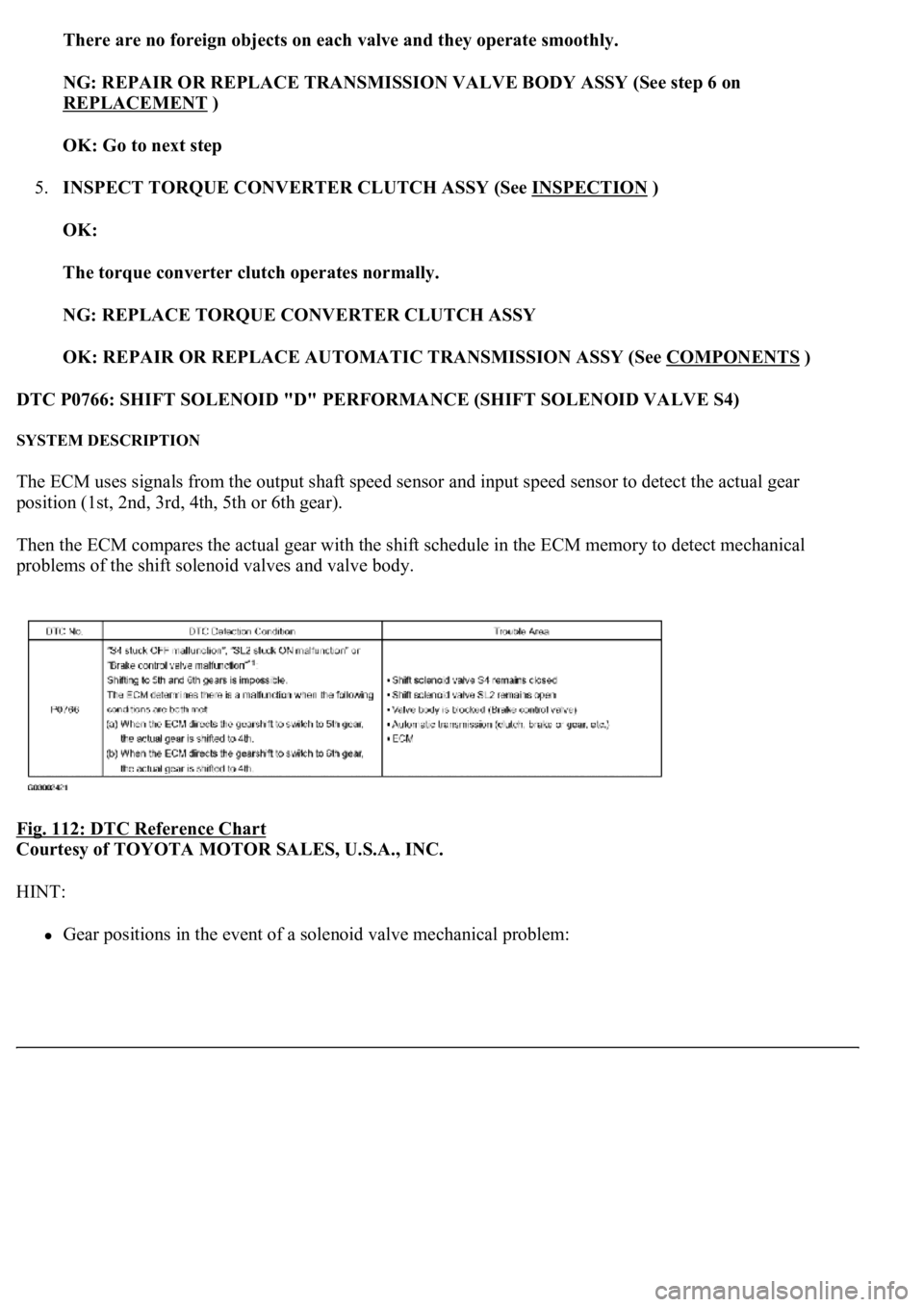
DTC P0766: SHIFT SOLENOID "D" PERFORMANCE (SHIFT SOLENOID VALVE S4)
SYSTEM DESCRIPTION
The ECM uses signals from the output shaft speed sensor and input speed sensor to detect the actual gear
position (1st, 2nd, 3rd, 4th, 5th or 6th gear).
Then the ECM compares the actual gear with the shift schedule in the ECM memory to detect mechanical
problems of the shift solenoid valves and valve body.
Fig. 112: DTC Reference Chart
Courtesy of TOYOTA MOTOR SALES, U.S.A., INC.
HINT:
Gear positions in the event of a solenoid valve mechanical problem:
Page 2811 of 4500
NG: REPLACE SHIFT SOLENOID VALVE (SL2)
OK: Go to next step
5.INSPECT TRANSMISSION VALVE BODY ASSY (See chapter 2 in PROBLEM SYMPTOMS
TABLE )
OK:
There are no foreign objects on each valve and they operate smoothly.
NG: REPAIR OR REPLACE TRANSMISSION VALVE BODY ASSY (See step 6 on
REPLACEMENT
)
OK: Go to next step
6.INSPECT TORQUE CONVERTER CLUTCH ASSY (See INSPECTION
)
OK:
The torque converter clutch operates normally.
NG: REPLACE TORQUE CONVERTER CLUTCH ASSY
OK: REPAIR OR REPLACE AUTOMATIC TRANSMISSION ASSY (See COMPONENTS
)
DTC P0778: PRESSURE CONTROL SOLENOID "B" ELECTRICAL (SHIFT SOLENOID VALVE
SL2)
CIRCUIT DESCRIPTION
Shifting from 1st to 6th is performed in combination with "ON" and "OFF" operation of the shift solenoid
valves SL1, SL2, S1, S2, S3, S4 and SR which is controlled by the ECM. If an open or short circuit occurs in
either of the shift solenoid valves, the ECM controls the remaining normal shift solenoid valve to allow the
vehicle to be operated smoothly (see FAIL
-SAFE CHART ).
Fig. 119: DTC Reference Chart
Courtesy of TOYOTA MOTOR SALES, U.S.A., INC.
MONITOR DESCRIPTION
Page 2820 of 4500
The ECM commands gear shifts by turning the shift solenoid valves "ON/OFF" and switching oil pressure to
the valves in the valve body.
The ECM calculates the "actual" transmission gear by comparing the signals from the input speed sensor (NT)
and the output speed sensor (SP2). The ECM can detect many mechanical problems in the shift solenoids, valve
body, and the transmission clutches, brakes, and gears. If the ECM detects that the actual gear position and the
commanded gear position are different, it will illuminate the MIL and store the DTC.
MONITOR STRATEGY
MONITOR STRATEGY TABLE
TYPICAL ENABLING CONDITIONS
The following items are common to all conditions below.
TYPICAL ENABLING CONDITIONS TABLE
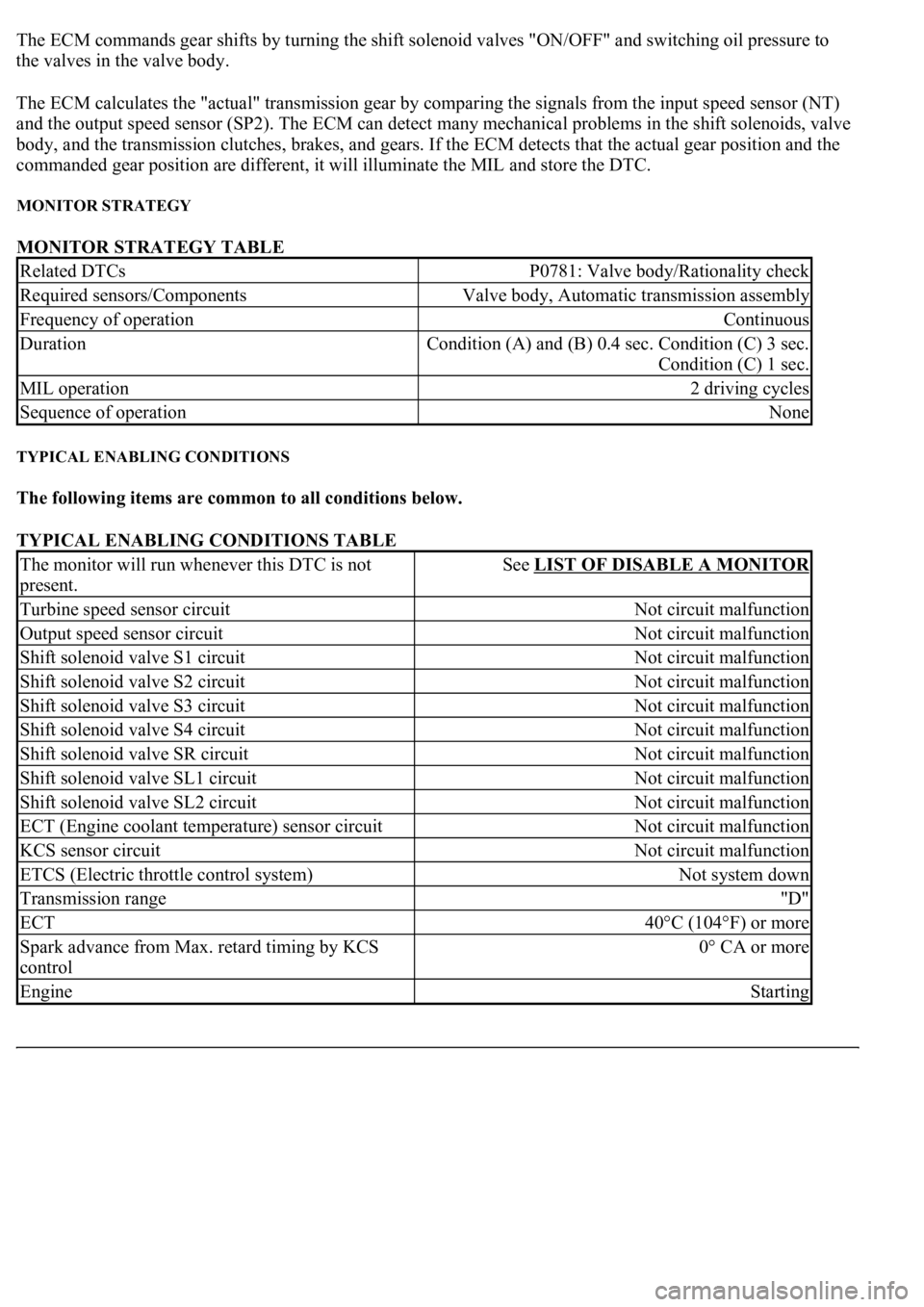
Related DTCsP0781: Valve body/Rationality check
Required sensors/ComponentsValve body, Automatic transmission assembly
Frequency of operationContinuous
Duration<0026005200510047004c0057004c005200510003000b0024000c00030044005100470003000b0025000c00030013001100170003005600480046001100030026005200510047004c0057004c005200510003000b0026000c00030016000300560048004600
110003[
Condition (C) 1 sec.
MIL operation2 driving cycles
Sequence of operationNone
The monitor will run whenever this DTC is not
present.See LIST OF DISABLE A MONITOR
Turbine speed sensor circuitNot circuit malfunction
Output speed sensor circuitNot circuit malfunction
Shift solenoid valve S1 circuitNot circuit malfunction
Shift solenoid valve S2 circuitNot circuit malfunction
Shift solenoid valve S3 circuitNot circuit malfunction
Shift solenoid valve S4 circuitNot circuit malfunction
Shift solenoid valve SR circuitNot circuit malfunction
Shift solenoid valve SL1 circuitNot circuit malfunction
Shift solenoid valve SL2 circuitNot circuit malfunction
ECT (Engine coolant temperature) sensor circuitNot circuit malfunction
KCS sensor circuitNot circuit malfunction
ETCS (Electric throttle control system)Not system down
Transmission range"D"
ECT40°C (104°F) or more
Spark advance from Max. retard timing by KCS
control0° CA or more
EngineStarting