coolant level MERCEDES-BENZ CLS-Class 2014 W218 Owner's Manual
[x] Cancel search | Manufacturer: MERCEDES-BENZ, Model Year: 2014, Model line: CLS-Class, Model: MERCEDES-BENZ CLS-Class 2014 W218Pages: 382, PDF Size: 5.36 MB
Page 21 of 382
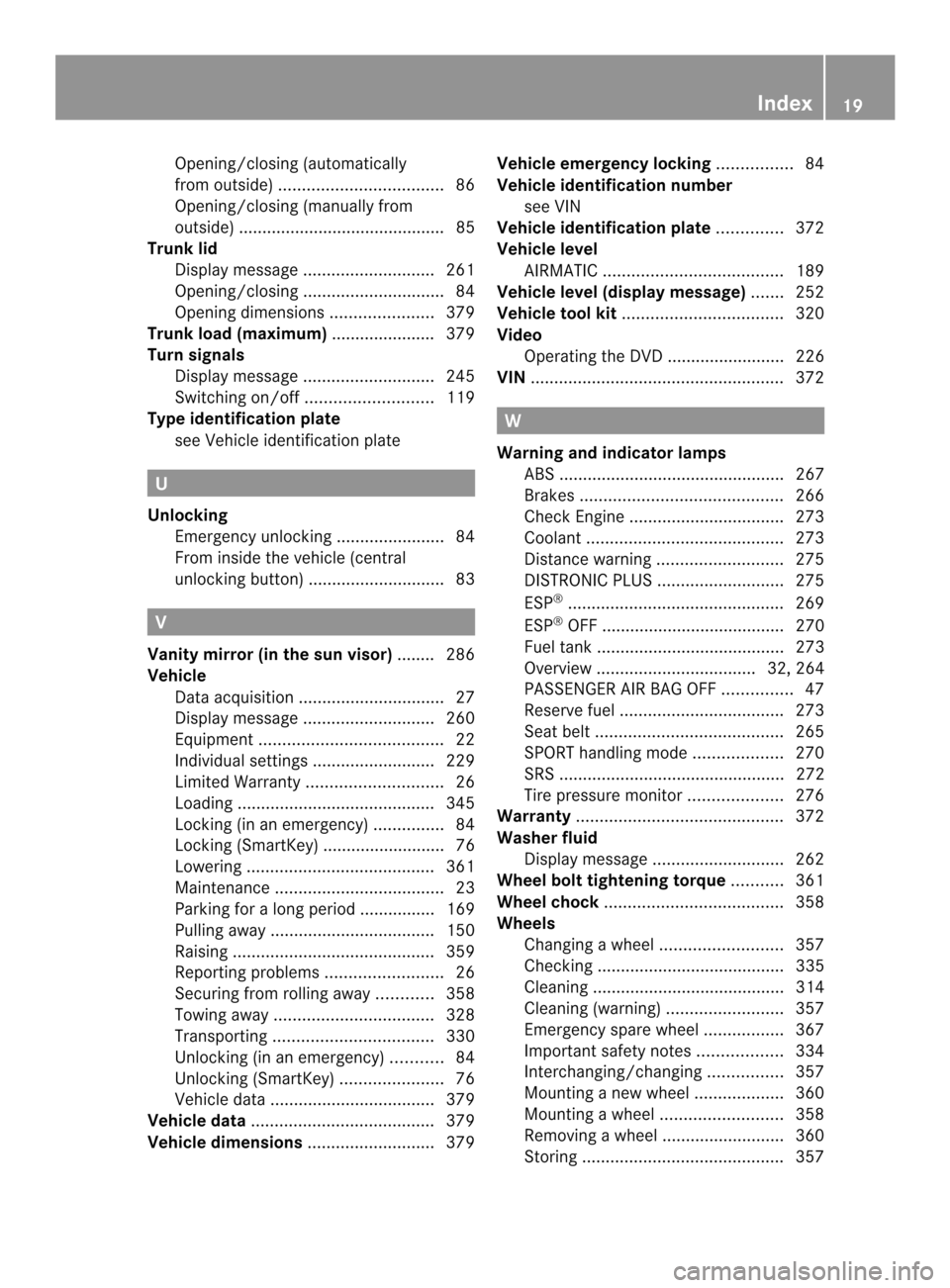
Opening/closing (automatically
from outside)
................................... 86
Opening/closing (manually from
outside) ............................................ 85
Trunk lid
Display message ............................ 261
Opening/closing .............................. 84
Opening dimensions ......................379
Trunk load (maximum) ......................379
Turn signals Display message ............................ 245
Switching on/off ........................... 119
Type identification plate
see Vehicle identification plate U
Unlocking Emergency unlocking .......................84
From insid ethe vehicle (central
unlocking button) ............................. 83 V
Vanity mirror (in the sun visor) ........286
Vehicle Data acquisition ............................... 27
Display message ............................ 260
Equipment ....................................... 22
Individua lsettings .......................... 229
Limited Warranty ............................. 26
Loading .......................................... 345
Locking (in an emergency) ...............84
Locking (SmartKey) .......................... 76
Lowering ........................................ 361
Maintenance .................................... 23
Parking for along period ................ 169
Pulling away ................................... 150
Raising ........................................... 359
Reporting problems .........................26
Securing from rolling away ............358
Towing away .................................. 328
Transporting .................................. 330
Unlocking (in an emergency) ...........84
Unlocking (SmartKey) ......................76
Vehicle data ................................... 379
Vehicle data ....................................... 379
Vehicle dimensions ...........................379Vehicle emergency locking
................84
Vehicle identification number see VIN
Vehicle identification plate ..............372
Vehicle level AIRMATIC ...................................... 189
Vehicle level (display message) .......252
Vehicle tool kit .................................. 320
Video Operating the DVD ......................... 226
VIN ...................................................... 372 W
Warning and indicator lamps ABS ................................................ 267
Brakes ........................................... 266
Check Engine ................................. 273
Coolant .......................................... 273
Distance warning ........................... 275
DISTRONI CPLUS ........................... 275
ESP ®
.............................................. 269
ESP ®
OFF ....................................... 270
Fuel tank ........................................ 273
Overview .................................. 32, 264
PASSENGER AIR BAG OFF ...............47
Reserve fuel ................................... 273
Seat bel t........................................ 265
SPORT handling mode ...................270
SRS ................................................ 272
Tire pressure monitor ....................276
Warranty ............................................ 372
Washer fluid Display message ............................ 262
Whee lboltt ightening torque ...........361
Whee lchock ...................................... 358
Wheels Changing awheel .......................... 357
Checking ........................................ 335
Cleaning ......................................... 314
Cleaning (warning) .........................357
Emergency spare wheel .................367
Important safety notes ..................334
Interchanging/changing ................357
Mounting anew wheel ................... 360
Mounting awheel .......................... 358
Removing awheel .......................... 360
Storing ........................................... 357 Index
19
Page 156 of 382
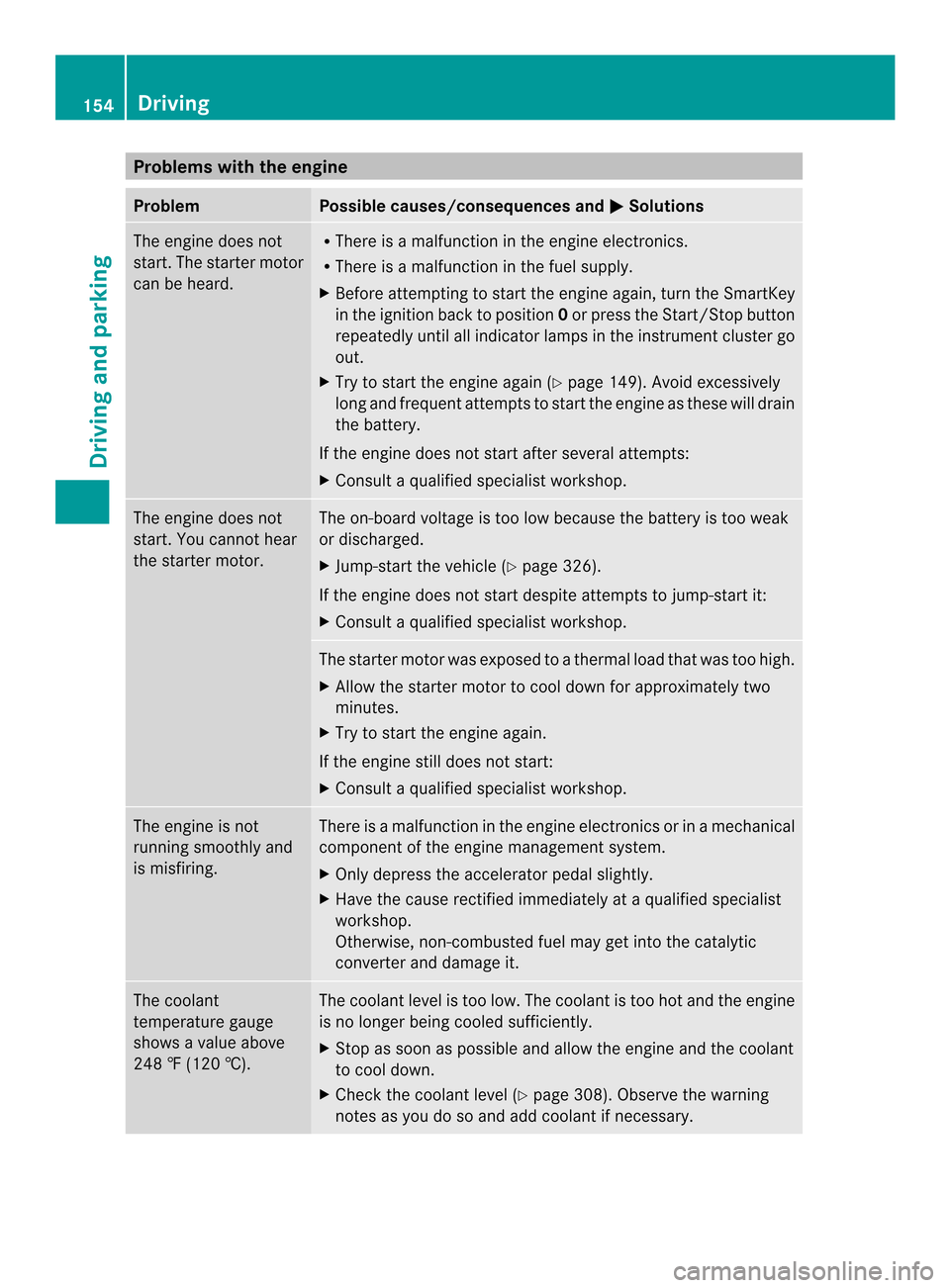
Problems with the engine
Problem Possible causes/consequences and
000B Solutions
The engine does not
start. The starter motor
can be heard. R
There is amalfunction in the engine electronics.
R There is amalfunction in the fuel supply.
X Before attempting to start the engine again, turn the SmartKey
in the ignition back to position 0or press the Start/Stop button
repeatedly until all indicator lamps in the instrumen tcluster go
out.
X Try to start the engine again (Y page 149). Avoid excessively
long and frequent attempt stostart the engine as these will drain
the battery.
If the engine does not start after several attempts:
X Consult aqualified specialist workshop. The engine does not
start
.You cannot hear
the starter motor. The on-board voltage is too low because the battery is too weak
or discharged.
X
Jump-star tthe vehicle (Y page 326).
If the engine does not start despite attemptstoj ump-start it:
X Consult aqualified specialist workshop. The starter motor was exposed to
athermal load that was too high.
X Allow the starter motor to cool down for approximately two
minutes.
X Try to start the engine again.
If the engine still does not start:
X Consult aqualified specialist workshop. The engine is not
running smoothly and
is misfiring. There is
amalfunction in the engine electronics or in amechanical
componentoft he engine management system.
X Only depress the accelerator pedal slightly.
X Have the cause rectified immediately at aqualified specialist
workshop.
Otherwise, non-combusted fuel may get into the catalytic
converter and damage it. The coolant
temperature gauge
shows
avalue above
248 ‡(120 †). The coolant level is too low. The coolant is too hot and the engine
is no longer being cooled sufficiently.
X
Stop as soon as possible and allow the engine and the coolant
to cool down.
X Check the coolant level (Y page 308). Observe the warning
notes as you do so and add coolant if necessary. 154
DrivingDriving and parking
Page 221 of 382
Display
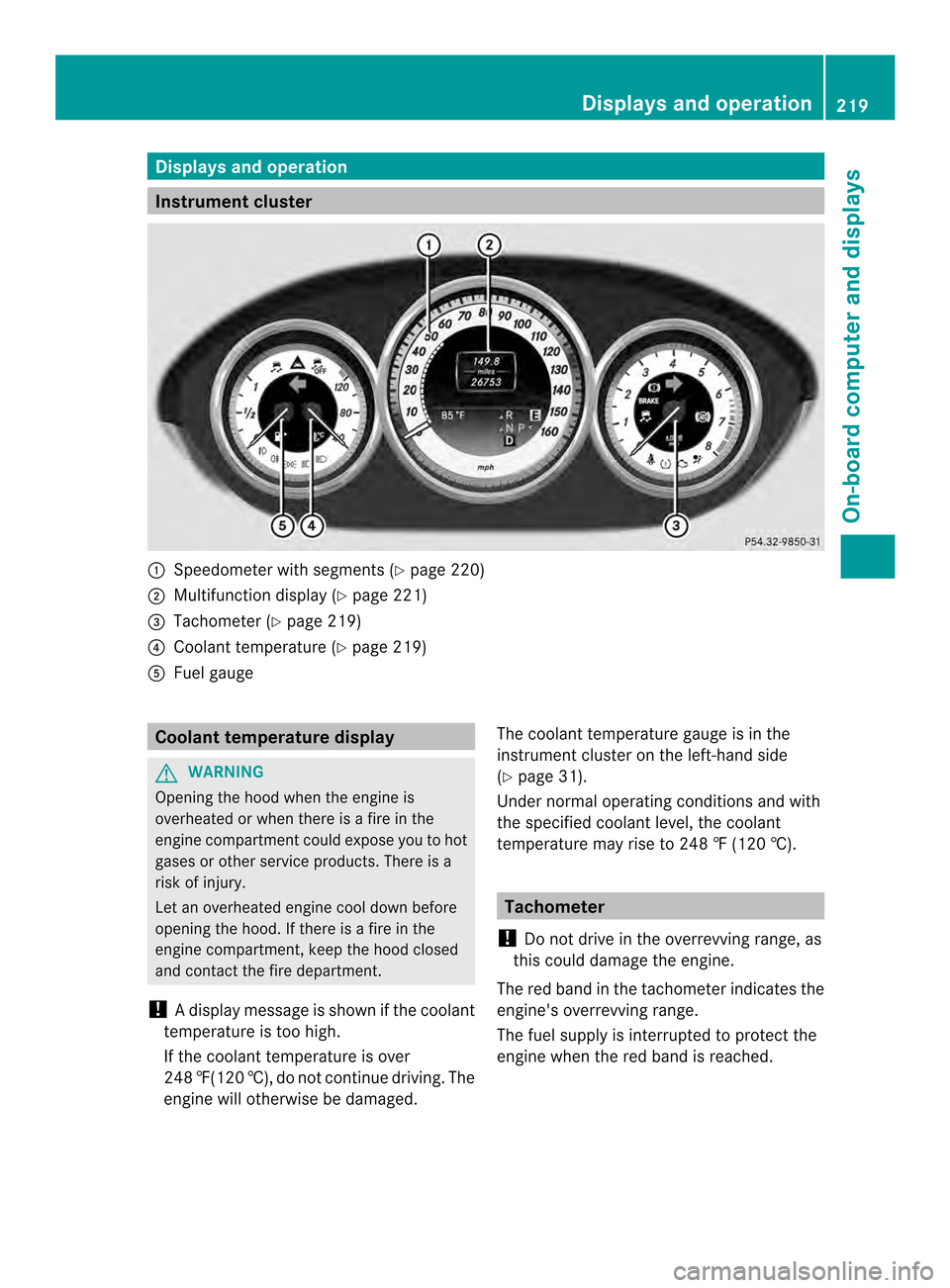
sand operation Instrument cluster
001A
Speedometer wit hsegments (Y page 220)
0010 Multifunction display (Y page 221)
0024 Tachometer (Y page 219)
0021 Coolant temperature ( Ypage 219)
001E Fue lgauge Coolant temperatur
edisplay G
WARNING
Opening th ehoodw hen th eengineis
overheated or when there is afireint he
engin ecom partmen tcould expose you to hot
gases or other service products. There is a
risk of injury.
Let an overheated engine cool down before
opening the hood. If there is afire in the
engine compartment, keep the hood closed
and contact the fire department.
! Adisplay message is shown if the coolant
temperature is too high.
If the coolan ttemperature is over
248 ‡(120 †), do not continue driving. The
engine will otherwise be damaged. The coolan
ttemperature gauge is in the
instrument cluster on the left-hand side
(Y page 31).
Under normal operatin gconditions and with
the specified coolant level, the coolant
temperature may rise to 248 ‡(120 †). Tachometer
! Do not drive in the overrevving range, as
this could damage the engine.
The red band in the tachometer indicates the
engine's overrevving range.
The fuel supply is interrupted to protec tthe
engine when the red band is reached. Displays and operation
219On-board computer and displays Z
Page 250 of 382
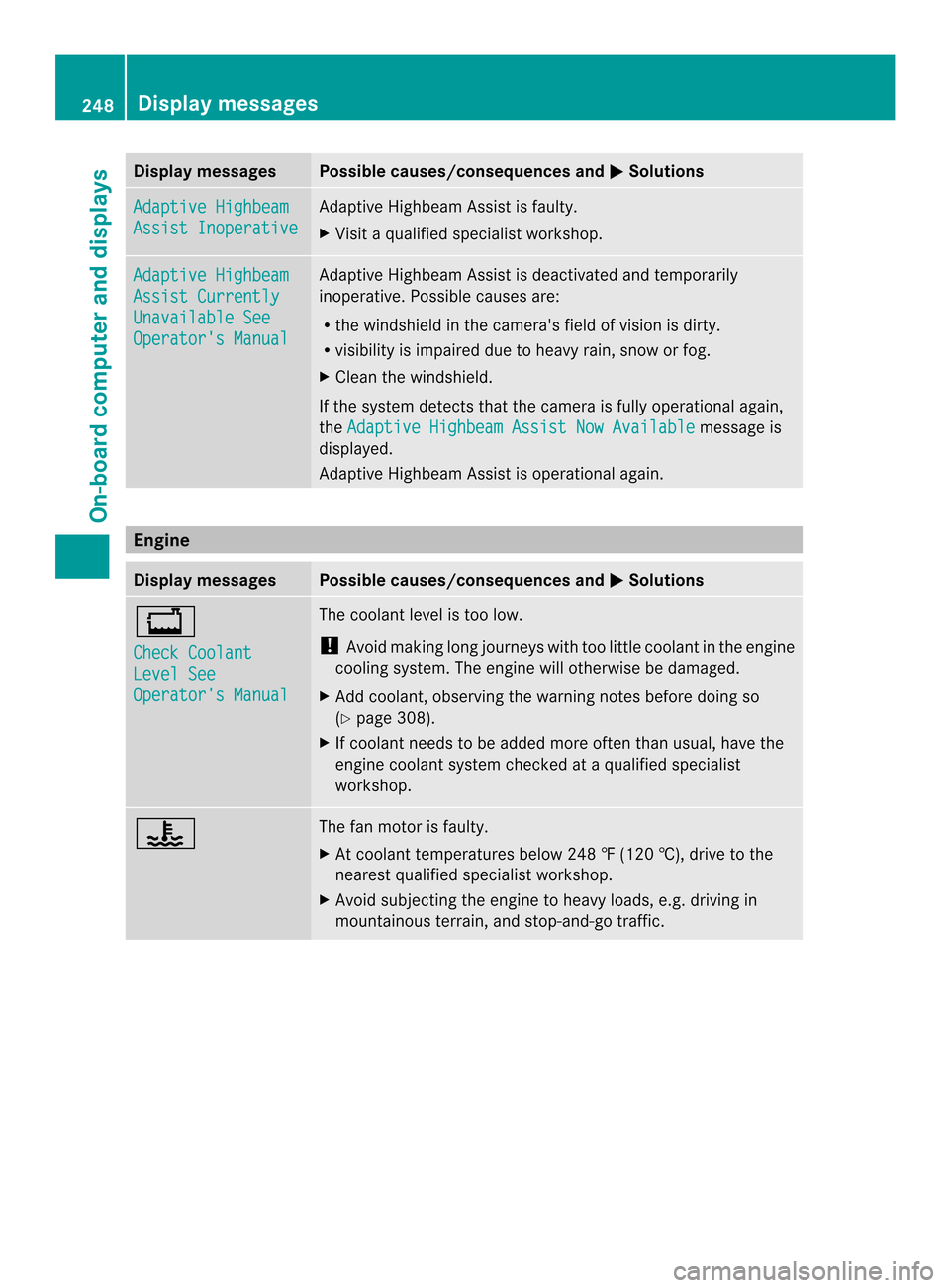
Display messages Possible causes/consequences and
000B Solutions
Adaptive Highbeam
Assist Inoperative Adaptive Highbeam Assis
tisfaulty.
X Visit aqualified specialist workshop. Adaptive Highbeam
Assist Currently
Unavailable See
Operator's Manual Adaptive Highbeam Assist is deactivated and temporarily
inoperative. Possible causes are:
R
the windshieldint he camera's field of vision is dirty.
R visibility is impaired due to heavy rain, snow or fog.
X Cleant he windshield.
If the system detectst hat the camera is fully operational again,
the Adaptive Highbeam Assist Now Available message is
displayed.
Adaptive Highbeam Assist is operational again. Engine
Display messages Possible causes/consequencesa
nd000B Solutions
0016
Check Coolant
Level See
Operator's Manual The coolant level is too low.
!
Avoid making long journeys with too little coolant in the engine
cooling system. The engine will otherwise be damaged.
X Add coolant, observing the warning notes before doing so
(Y page 308).
X If coolant needs to be added more often than usual, have the
engine coolant system checked at aqualified specialist
workshop. 0017 The fan motor is faulty.
X
At coolant temperatures below 248 ‡(120 †), drive to the
nearest qualified specialist workshop.
X Avoid subjecting the engine to heavy loads, e.g. driving in
mountainous terrain, and stop-and-go traffic. 248
Display messagesOn-board computer and displays
Page 251 of 382
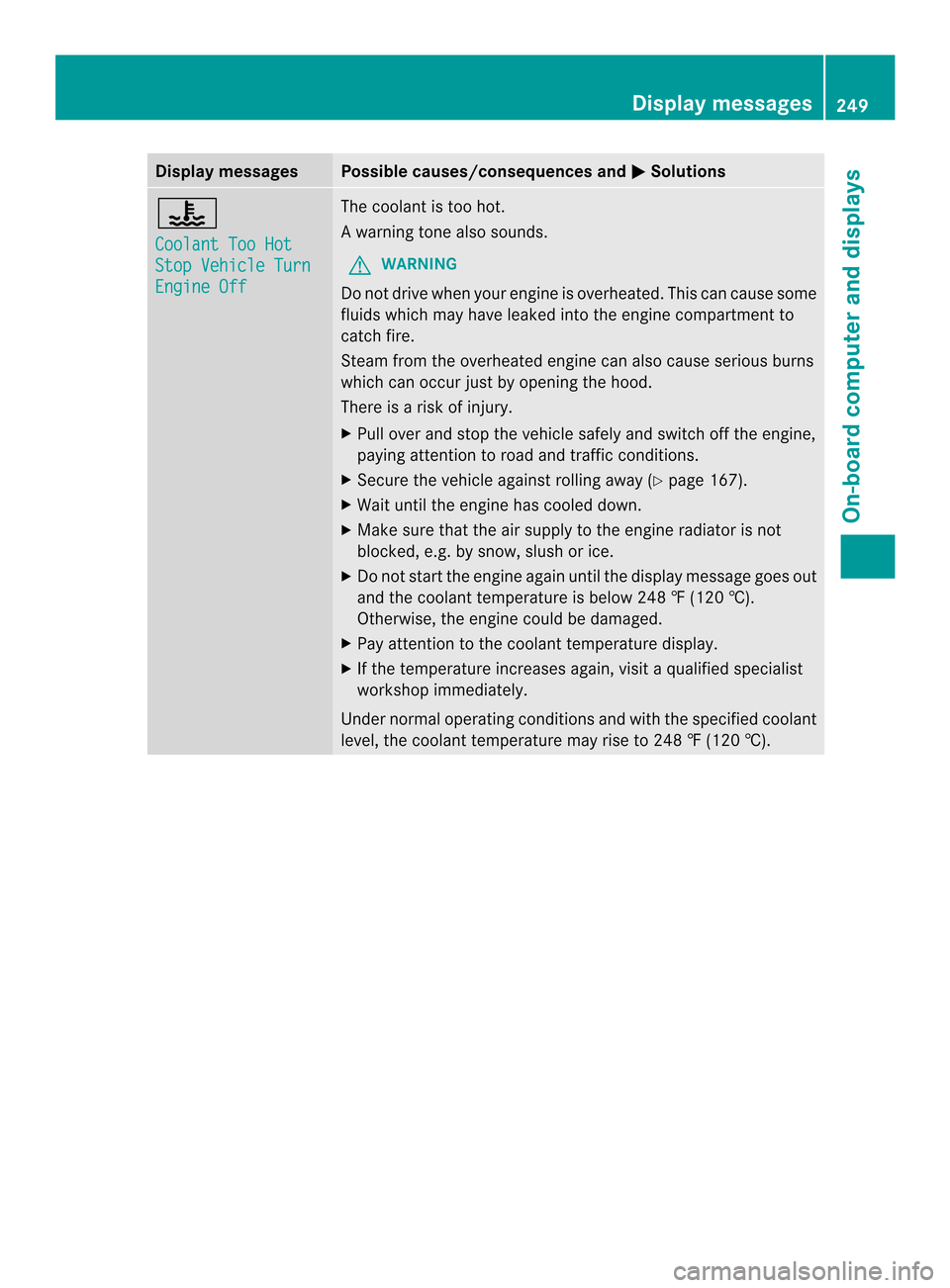
Display messages Possible causes/consequences and
000B Solutions
0017
Coolan
tToo Hot Sto
pV ehicl eTurn Engine Off The coolan
tistoo hot.
Aw arning tone also sounds.
G WARNING
Do no tdrive when youre ngine is overheated. Thi scan caus esome
fluids whic hmay have leaked int othe engin ecom partmen tto
catch fire.
Stea mfrom the overheated engine can alsoc auseserious burns
which can occur just by opening the hood.
There is arisk of injury.
X Pullo ver and stop the vehicl esafel yand switch off the engine,
paying attention to road and traffic conditions.
X Secure the vehicl eagainst rolling away (Y page167).
X Waitu ntil the engine ha scoole ddown.
X Make sure tha tthe air supply to the engine radiator is not
blocked, e.g. by snow, slush or ice.
X Do not start the engine again until the displaym essage goes out
and the coolant temperature is below 248 ‡(120 †).
Otherwise, the engine could be damaged.
X Pay attention to the coolant temperature display.
X If the temperature increases again, visit aqualified specialist
workshop immediately.
Under normal operating conditionsa nd with the specified coolant
level, the coolant temperature may rise to 248 ‡(120 †). Display messages
249On-board computer and displays Z
Page 275 of 382
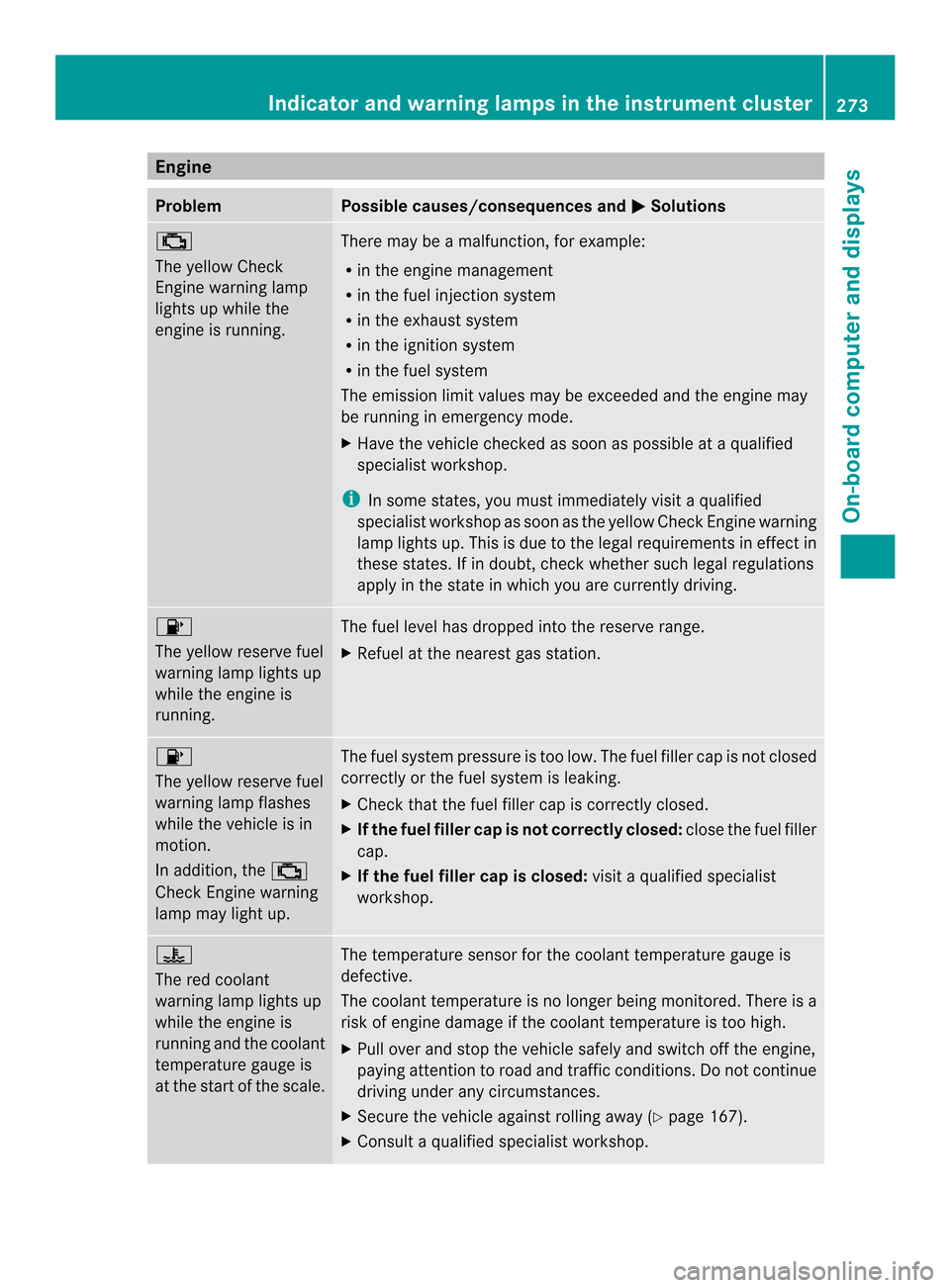
Engine
Problem Possible causes/consequences and
000B Solutions
000A
The yellow Check
Engin
ewarning lamp
light supw hile the
engin eisrunning. Ther
emay be amalfunction, for example:
R in th eenginem anagement
R in th efuel injection system
R in th eexhaust system
R in th eignition system
R in th efuel system
The emission limit values may be exceeded and th eenginem ay
be runnin ginemergenc ymode.
X Hav ethe vehicle checked as soon as possible at aqualified
specialist workshop.
i In som estates, you must immediately visit aqualified
specialist worksho passoon as th eyellow Chec kEngine warning
lamp lights up .This is due to the legal requirements in effect in
these states. If in doubt, check whether such legal regulations
apply in the state in which you are currently driving. 0007
The yellow reserve fuel
warning lamp lights up
while the engine is
running.
The fuel level has dropped into the reserve range.
X
Refuel at the nearest gas station. 0007
The yellow reserve fuel
warning lamp flashes
while the vehicle is in
motion.
In addition, the
000A
Check Enginew arning
lamp may light up. The fuel system pressure is too low. The fuel filler cap is not closed
correctly or the fuel system is leaking.
X
Check that the fuel filler cap is correctly closed.
X If the fuel filler cap is not correctly closed: close the fuel filler
cap.
X If the fuel filler cap is closed: visitaqualified specialist
workshop. 0017
The red coolant
warning lamp lights up
while the engine is
running and the coolant
temperature gauge is
at the start of the scale.
The temperature sensor for the coolant temperature gauge is
defective.
The coolant temperature is no longer being monitored. There is a
risk of engine damage if the coolant temperature is too high.
X Pull over and stop the vehicle safely and switch off the engine,
paying attention to road and traffic conditions. Do not continue
driving under any circumstances.
X Secure the vehicle against rolling away (Y page 167).
X Consult aqualified specialist workshop. Indicator and warning lampsint
he instrument cluster
273On-board computer and displays Z
Page 276 of 382
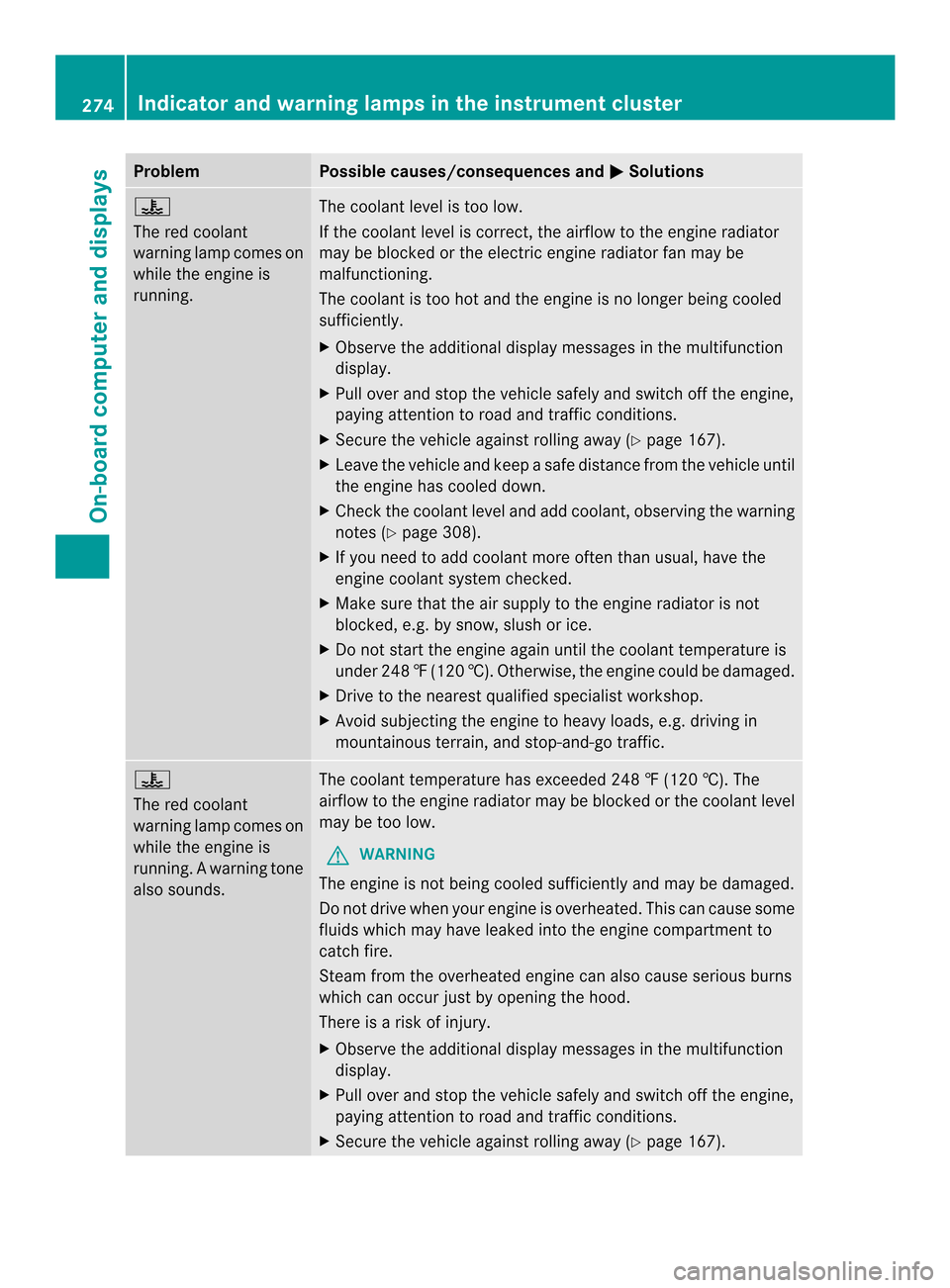
Problem Possible causes/consequences and
000B Solutions
0017
The red coolant
warning lamp comes on
while the engine is
running.
The coolant level is too low.
If the coolant level is correct, the airflow to the engine radiator
may be blocked or the electric engine radiator fan may be
malfunctioning.
The coolant is too hot and the engine is no longer being cooled
sufficiently.
X
Observe the additional display messages in the multifunction
display.
X Pull over and stop the vehicle safely and switch off the engine,
paying attention to road and traffic conditions.
X Secure the vehicle against rolling away (Y page 167).
X Leave the vehicle and keep asafe distance from the vehicle until
the engine has cooled down.
X Check the coolant level and add coolant, observing the warning
notes (Y page 308).
X If you need to add coolant more often than usual, have the
engine coolant system checked.
X Make sure that the air supply to the engine radiator is not
blocked, e.g. by snow, slush or ice.
X Do not start the engine again until the coolant temperature is
under 248 ‡(120 †). Otherwise ,the engine coul dbedamaged.
X Drive to the nearest qualified specialist workshop.
X Avoid subjecting the engine to heavy loads, e.g. driving in
mountainou sterrain, and stop-and-go traffic. 0017
The red coolant
warning lamp comes on
while the engine is
running.
Awarning tone
also sounds. The coolant temperature has exceeded 248
‡(120 †). The
airflow to the engine radiator may be blocked or the coolant level
may be too low.
G WARNING
The engine is not being coole dsufficiently and may be damaged.
Do not drive whe nyour engine is overheated. This can cause some
fluids which may have leaked into the engine compartment to
catchf ire.
Steam from the overheated engine can also cause serious burns
which can occur just by opening the hood.
There is arisk of injury.
X Observe the additional display messages in the multifunction
display.
X Pull over and stop the vehicle safely and switch off the engine,
paying attention to road and traffic conditions.
X Secure the vehicle against rolling away (Y page 167).274
Indicator and warning lampsint
he instrument clusterOn-board computer and displays
Page 277 of 382
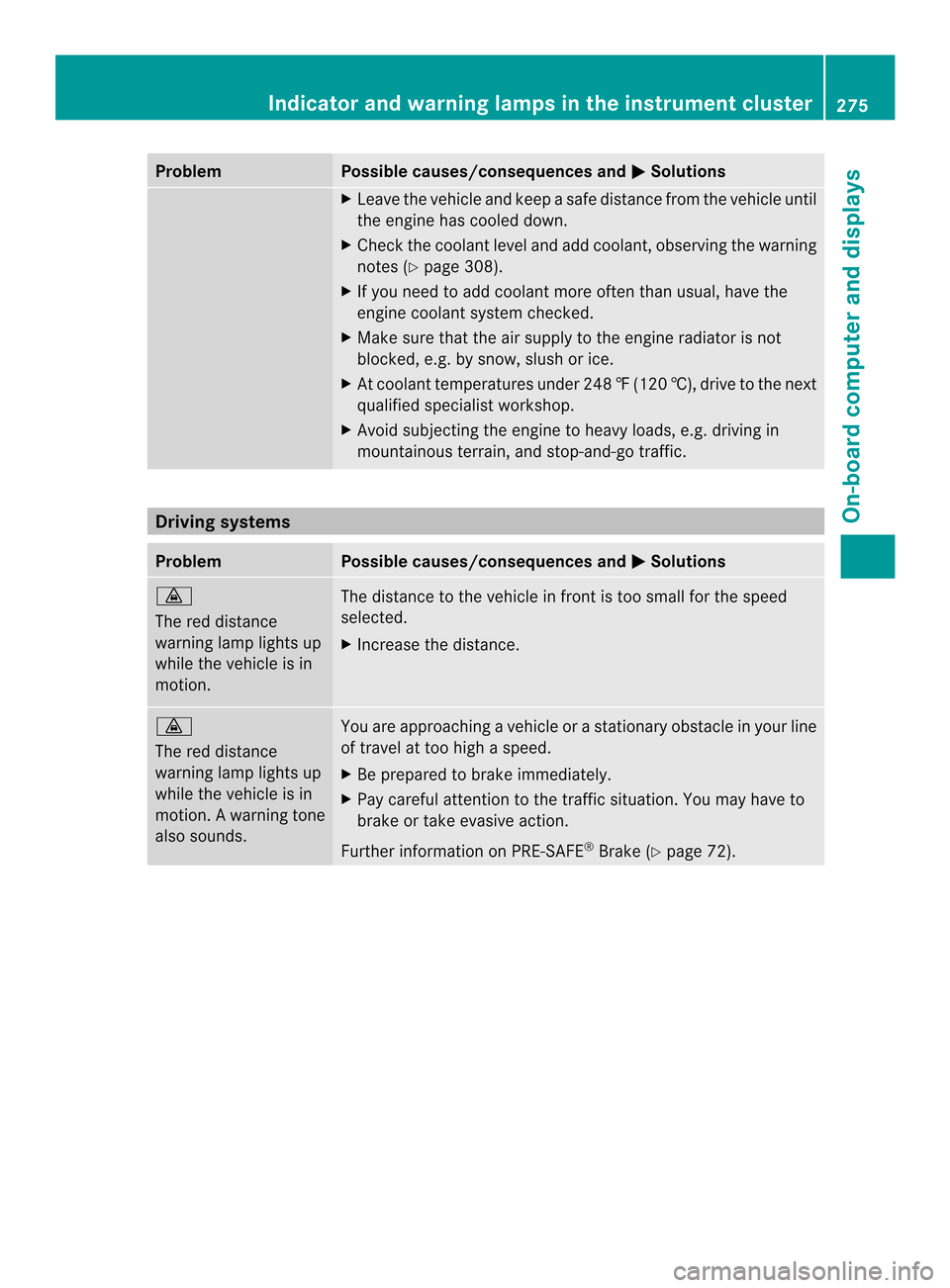
Problem Possible causes/consequences and
000B Solutions
X
Leave the vehicle and keep asafe distance from the vehicle until
the engine has cooled down.
X Check the coolant level and add coolant, observing the warning
notes (Y page 308).
X If you need to add coolant more often than usual, have the
engine coolant system checked.
X Make sure that the air supply to the engine radiator is not
blocked, e.g. by snow, slush or ice.
X At coolant temperatures under 248 ‡(120 †), drive to the next
qualified specialist workshop.
X Avoid subjecting the engine to heavy loads, e.g. driving in
mountainou sterrain, and stop-and-go traffic. Driving systems
Problem Possible causes/consequencesa
nd000B Solutions
0008
The red distance
warning lamp lights up
while the vehicle is in
motion.
The distance to the vehicle in front is too smal
lfor the speed
selected.
X Increase the distance. 0008
The red distance
warning lamp lights up
while the vehicle is in
motion
.Awarning tone
also sounds. You are approaching
avehicle or astationary obstacle in your line
of travel at too high aspeed.
X Be prepared to brake immediately.
X Pay careful attention to the traffic situation. You may have to
brake or take evasive action.
Further information on PRE-SAFE ®
Brake (Y page 72). Indicator and warning lampsint
he instrument cluster
275On-board computer and displays Z
Page 310 of 382
Adding engin
eoil G
WARNING
If engin eoil comes int ocontac twithh ot
component sintheengin ecom partment, it
may ignite. There is ariskoff irea nd injury.
Mak esuret hate ngineo il is no tspilled next
to the filler neck. Let the engin ecool down
and thoroughly clean the engin eoil off the
component sbefore starting the engine. H
Environmental note
When adding oil, take care not to spill any. If
oil enters the soil or waterways, it is harmful
to the environment.
! Only use engin eoils and oil filter sthat
have been approved for vehicles with a
servic esystem. You can obtain alist of the
engin eoils and oil filter stested and
approved in accordance with the
Mercedes-Benz Specification sfor Service
Product satany Mercedes-Benz Service
center.
Damage to the engin eorexhaust system is
caused by the following:
R using engin eoils and oil filter sthat have
not been specifically approved for the
servic esystem
R replacing engin eoil and oil filter safter
the interval for replacemen tspecified by
the servic esystem has been exceeded
R using engin eoil additives.
! Do not add too much oil. adding too much
engin eoil can result in damage to the
engin eortot he catalytic converter. Have
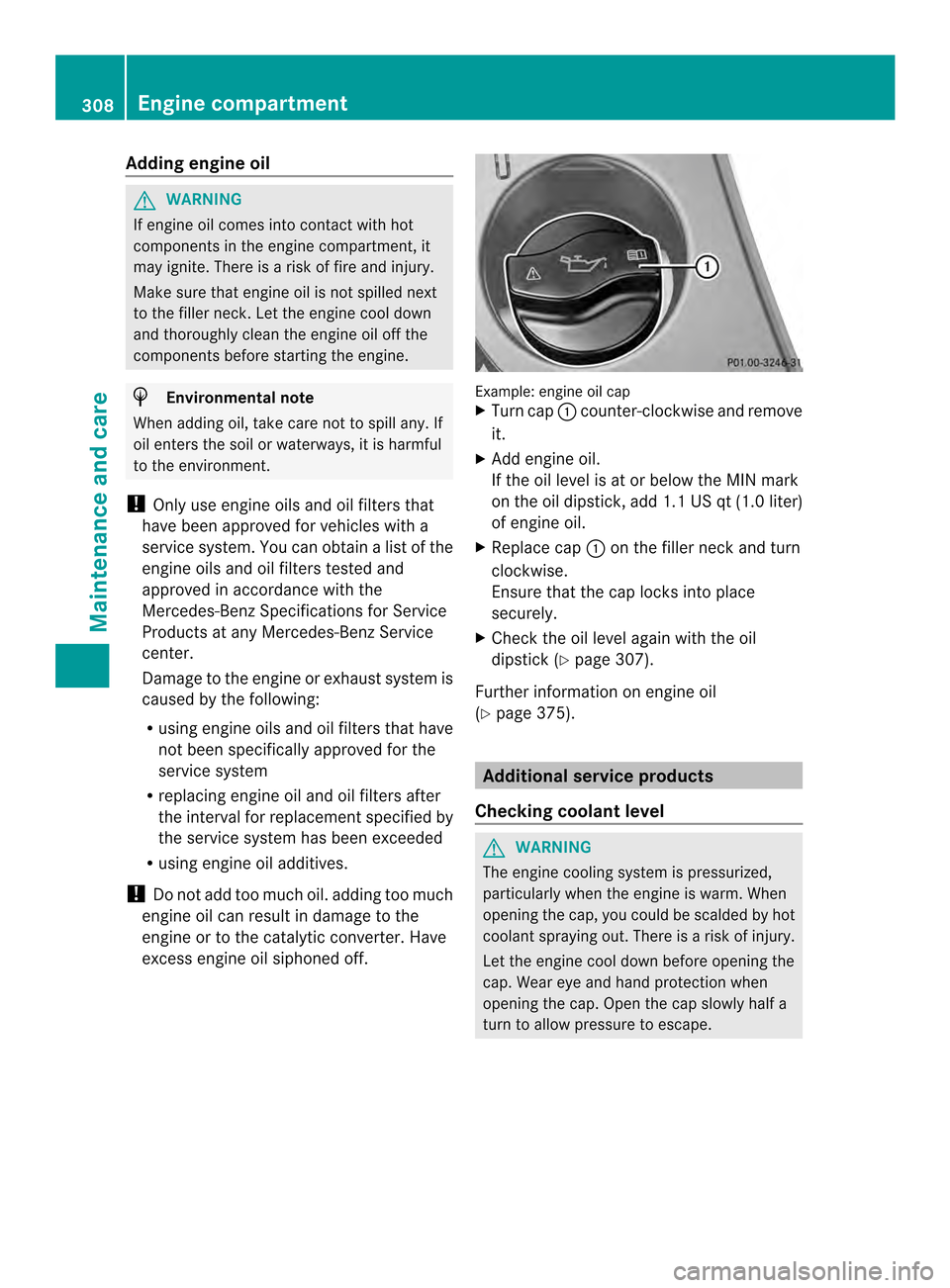
excess engin eoil siphoned off. Example: engin
eoil cap
X Turn cap 001Acounter-clockwise and remove
it.
X Add engin eoil.
If the oil level is at or below the MIN mark
on the oil dipstick, add 1.1 US qt (1.0 liter)
of engine oil.
X Replace cap 001Aon the fille rneck and turn
clockwise.
Ensur ethatthe cap locks into place
securely.
X Check the oi llev el agai nwith the oil
dipstick (Y page 307).
Further information on engine oil
(Y page 375). Additiona
lservice products
Checking coolant level G
WARNING
The engine cooling system is pressurized,
particularly when the engine is warm. When
opening the cap, you could be scalde dbyhot
coolan tspraying out. There is arisk of injury.
Let the engin ecool down before openin gthe
cap. Wear eye and hand protection when
openin gthe cap. Open the cap slowly half a
turn to allow pressure to escape. 308
Engine compartmentMaintenance and care
Page 311 of 382
X
Park the vehicle on alevel surface.
Only check the coolant level when the
vehicle is on alevel surface and the engine
has cooled down.
X Turn the SmartKey to position 2in the
ignition lock (Y page 147).
On vehicles with KEYLESS-GO, press the
Start/Stop button twice (Y page 147).
X Check the coolant temperature display in
the instrument cluster.
The coolant temperature must be below
158 ‡(70 †).
X Turn the SmartKey to position
0(Y page 147) in the ignition lock.
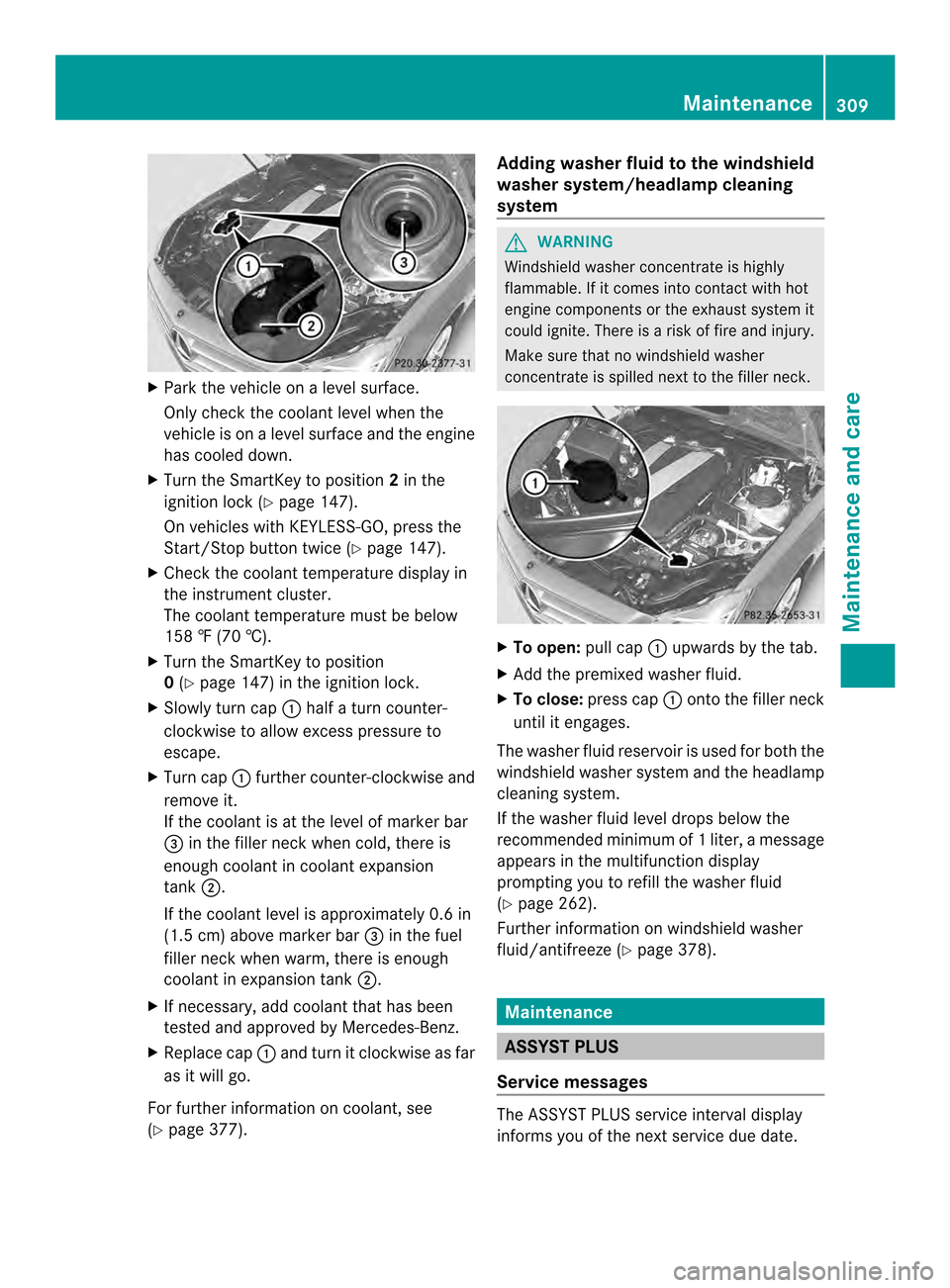
X Slowly turn cap 001Ahalf aturn counter-
clockwise to allow excess pressure to
escape.
X Turn cap 001Afurther counter-clockwise and
remove it.
If the coolant is at the level of marker bar
0024 in the filler neck when cold, there is
enough coolant in coolant expansion
tank 0010.
If the coolant level is approximately 0.6 in
(1.5 cm) above marker bar 0024in the fuel
filler neck when warm, there is enough
coolant in expansion tank 0010.
X If necessary, add coolant that has been
tested and approved by Mercedes-Benz.
X Replace cap 001Aand turn it clockwise as far
as it will go.
For further information on coolant ,see
(Y page 377). Adding washer fluid to the windshield
washer system/headlam
pcleaning
system G
WARNING
Windshield washer concentrate is highly
flammable. If it comes int ocontac twith hot
engin ecomponent sorthe exhaust syste mit
could ignite. There is ariskoff ire and injury.
Make sure that no windshield washer
concentrate is spilled nex ttothe filler neck. X
To open: pull cap001Aupwards by the tab.
X Add the premixed washer fluid.
X To close: press cap 001Aontothe filler neck
until it engages.
The washer fluid reservoir is used for both the
windshield washer system and the headlamp
cleaning system.
If the washer fluid level drops below the
recommended minimum of 1liter ,am essage
appears in the multifunction display
promptin gyou to refill the washer fluid
(Y page 262).
Further information on windshield washer
fluid/antifreeze (Y page 378). Maintenance
ASSYST PLUS
Service messages The ASSYS
TPLUS service interval display
inform syou of the nex tservice due date. Maintenance
309Maintenance and care Z