towing MERCEDES-BENZ SPRINTER 2015 MY15 Operator’s Manual
[x] Cancel search | Manufacturer: MERCEDES-BENZ, Model Year: 2015, Model line: SPRINTER, Model: MERCEDES-BENZ SPRINTER 2015Pages: 334, PDF Size: 5.94 MB
Page 301 of 334
Example 1 Example 2 Example 3
Step 3 Permissible cargo
and trailer load/
noseweight (maxi-
mum gross vehicle
weight rating from
the Tire and Loading
Information placard
minus the gross
weight of all occu-
pants)
1500 lbs
(680 kg)
00F8750 lbs
(340 kg) =
750 lbs (340 kg) 1500 lbs
(680 kg)
00F8540 lbs
(245 kg) =
960 lbs (435 kg) 1500 lbs
(680 kg)
00F8150 lbs (68 kg)
= 1350 lbs
(612 kg) The greater the combined weight of the occupants, the lower the maximum luggage load.
Further information can be found under "Towing a trailer" (Y page 177).Vehicle identification plate
Even if you have calculated the total cargo
carefully, you should still make sure that the
gross vehicle weight rating and the gross axle weight rating are not exceeded. Details about
this can be found on the vehicle identification plate on the driver seat frame of your vehicle
(Y page 316).
Gross vehicle weight: the gross weight of
the vehicle, all passengers, cargo and trailer
load/noseweight (if applicable) must not
exceed the permissible gross vehicle weight.
Gross axle weight rating: the maximum per-
missible load that can be carried by one axle
(front or rear axle).
To ensure that your vehicle does not exceed
the maximum permissible values (gross vehi-
cle weight and maximum gross axle weight
rating), have your loaded vehicle (including
driver, occupants, cargo, and full trailer load if applicable) weighed on a suitable vehicle
weighbridge. Trailer load/noseweight
The trailer load/noseweight affects the gross
weight of the vehicle. If a trailer is attached,
the trailer load/noseweight is included in the
load along with occupants and luggage. The trailer load/noseweight is usually approx-
imately 10% of the gross weight of the trailer
and its load. What you should know about wheels
and tires Tire labeling
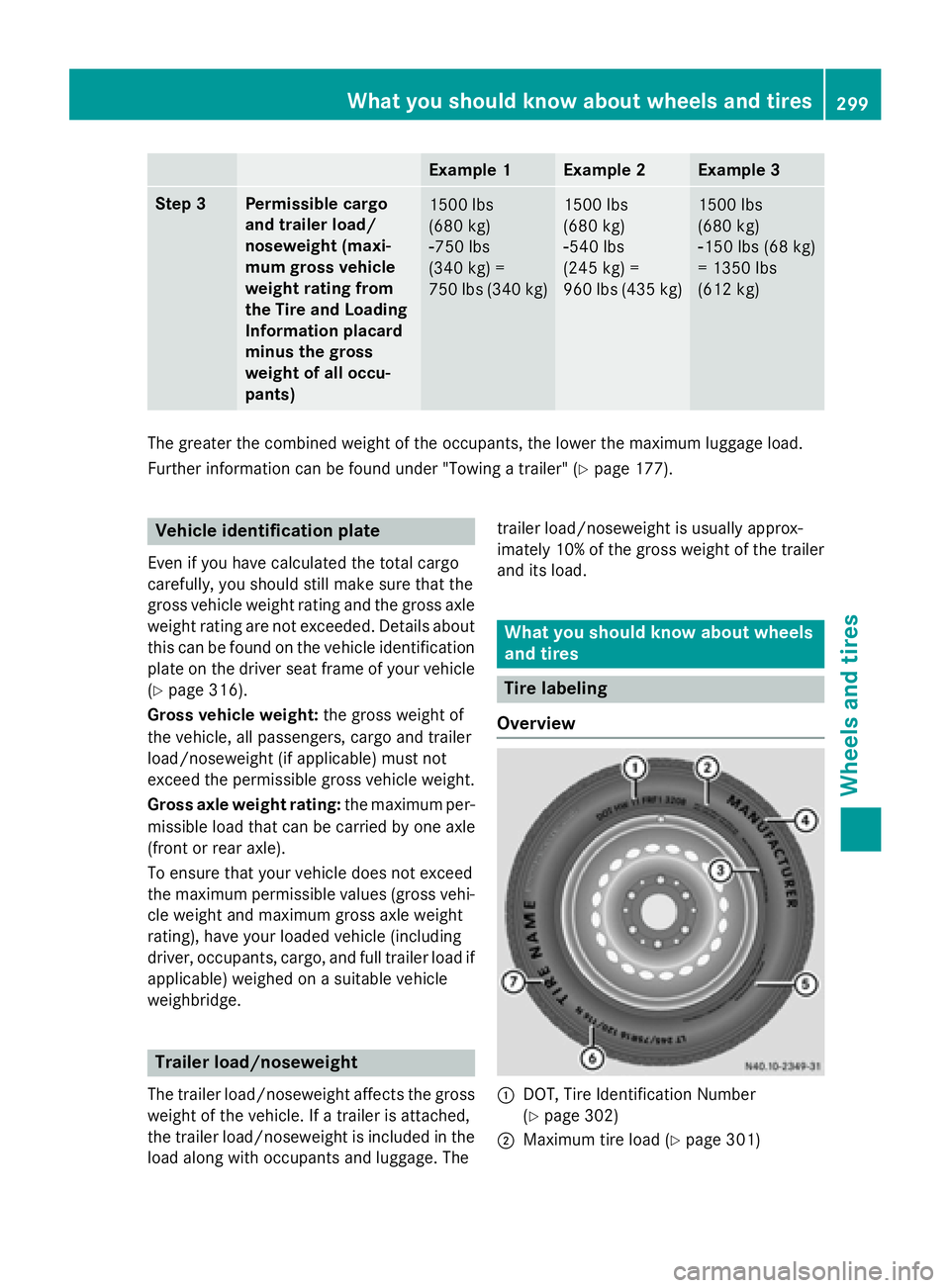
Overview 0043
DOT, Tire Identification Number
(Ypage 302)
0044 Maximum tire load (Y page 301) What you should know about wheels and tires
299Wheels and tires Z
Page 322 of 334
i
Malfunctions resulting from paraffin sep-
aration can only be rectified by heating the
entire fuel system. Park the vehicle in a
heated garage, for example.
To prevent operating problems, diesel with
better flow qualities is available during the
winter months. You can obtain information at the gas station or from your fuel supplier.
Your vehicle is equipped with a fuel preheat-
ing system. This improves the flow properties
of the diesel by approximately 46 ‡ (8 †).
ULTRA-LOW SULFUR DIESEL can be used
without risk of malfunction down to an out-
side temperature of approximately 14 ‡
(00F810 †).
Fuel additives
! Do not add gasoline or kerosene to diesel
fuel to improve its flow characteristics.
Gasoline or kerosene impairs the lubricat-
ing properties of the diesel fuel. This can
result in damage to the fuel injection sys-
tem, for example.
Information on fuel consumption H
Environmental note
CO 2(carbon dioxide) is the gas which scien-
tists believe to be principally responsible for
global warming (the greenhouse effect). Your
vehicle's CO 2emissions are directly related to
fuel consumption and therefore depend on:
R efficient use of the fuel by the engine
R driving style
R other non-technical factors, such as envi-
ronmental influences, road conditions or
traffic flow
You can minimize your vehicle's CO 2emis-
sions by driving carefully and having it serv-
iced regularly.
Fuel consumption depends on: R the vehicle version
R the style of driving R
the operating conditions
R the type or quality of the fuel used
The vehicle will use more fuel than usual in the following situations:
R at very low outside temperatures
R in city traffic
R during short journeys
R on mountainous terrain
R when towing a trailer
To keep fuel consumption low, observe the
advice in the "Protection of the environment" section (Y page 23).
The following components of the different
vehicle versions influence fuel consumption:
R tire sizes, tire tread, tire pressure, tire con-
dition
R body
R transmission ratios for the drive assem-
blies
R additional equipment (e.g. air-conditioning
system, auxiliary heating system)
For these reasons, the actual consumption
figures for your vehicle may deviate from the
consumption figures determined according
to EU Directive 80/1268/EEC.
Data concerning fuel consumption are recor- ded in the on-board computer; use the steer-
ing wheel buttons to call up the Trip com-
puter menu (Y page 195).
Diesel Exhaust Fluid (DEF) General notes
! Only use DEF in accordance with
ISO 22241. The exhaust gas aftertreatment system may otherwise be damaged.
Observe the MB Specifications for Service
Products, Sheet No. 352.0.
Damage caused by the use of other reduc-
ing agents will invalidate the New Vehicle
Limited Warranty. 320
Service products and capacitiesTechnical data
Page 331 of 334
on the identification plate of the trailer tow
hitch.
You can obtain advice from a qualified spe-
cialist workshop. Also observe the informa-
tion on towing a trailer in the "Driving and
parking" section (Y page 173). Vehicle data
329Technical data Z