fog light TOYOTA GR86 2022 Owners Manual (in English)
[x] Cancel search | Manufacturer: TOYOTA, Model Year: 2022, Model line: GR86, Model: TOYOTA GR86 2022Pages: 582, PDF Size: 86.38 MB
Page 4 of 582
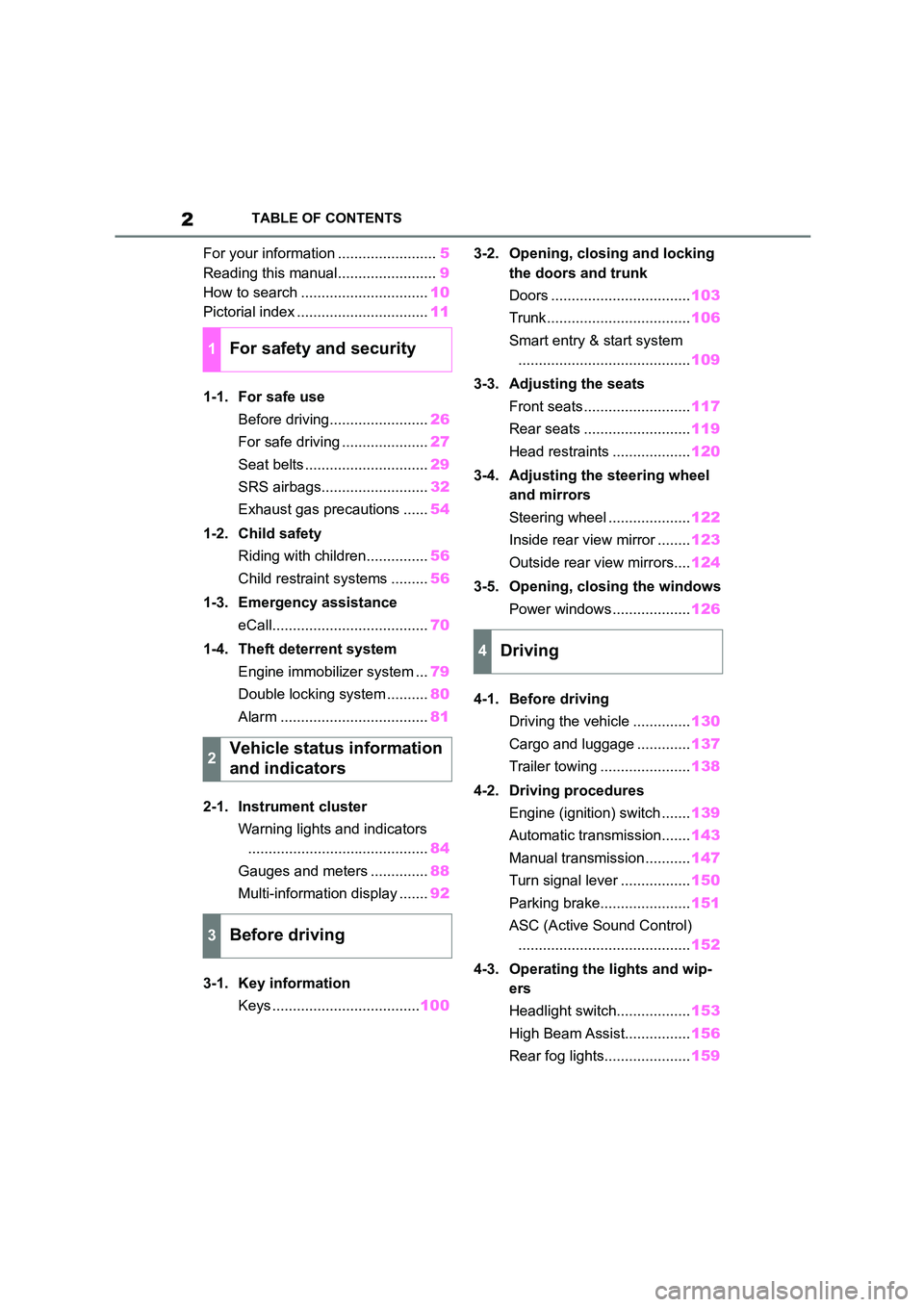
2TABLE OF CONTENTS
For your information ........................5
Reading this manual........................ 9
How to search ............................... 10
Pictorial index ................................ 11
1-1. For safe use
Before driving........................ 26
For safe driving ..................... 27
Seat belts .............................. 29
SRS airbags.......................... 32
Exhaust gas precautions ...... 54
1-2. Child safety
Riding with children............... 56
Child restraint systems ......... 56
1-3. Emergency assistance
eCall...................................... 70
1-4. Theft deterrent system
Engine immobilizer system ... 79
Double locking system .......... 80
Alarm .................................... 81
2-1. Instrument cluster
Warning lights and indicators
............................................ 84
Gauges and meters .............. 88
Multi-information display ....... 92
3-1. Key information
Keys .................................... 100
3-2. Opening, closing and locking
the doors and trunk
Doors .................................. 103
Trunk................................... 106
Smart entry & start system
.......................................... 109
3-3. Adjusting the seats
Front seats .......................... 117
Rear seats .......................... 119
Head restraints ................... 120
3-4. Adjusting the steering wheel
and mirrors
Steering wheel .................... 122
Inside rear view mirror ........ 123
Outside rear view mirrors.... 124
3-5. Opening, closing the windows
Power windows ................... 126
4-1. Before driving
Driving the vehicle .............. 130
Cargo and luggage ............. 137
Trailer towing ...................... 138
4-2. Driving procedures
Engine (ignition) switch ....... 139
Automatic transmission....... 143
Manual transmission ........... 147
Turn signal lever ................. 150
Parking brake...................... 151
ASC (Active Sound Control)
.......................................... 152
4-3. Operating the lights and wip-
ers
Headlight switch.................. 153
High Beam Assist................ 156
Rear fog lights..................... 159
1For safety and security
2Vehicle status information
and indicators
3Before driving
4Driving
Page 13 of 582
11Pictorial index
Pictorial index
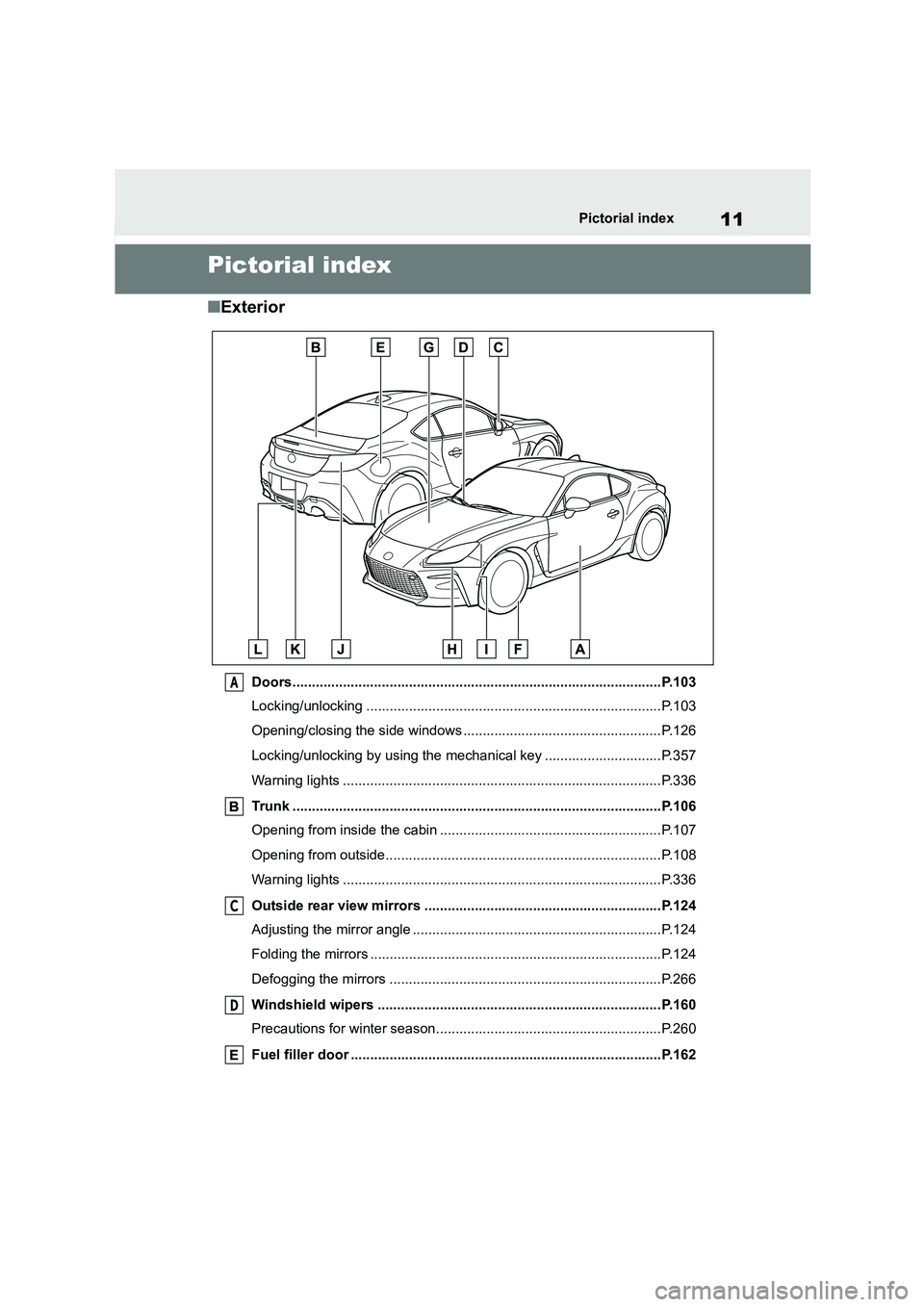
■Exterior
Doors...............................................................................................P.103
Locking/unlocking ............................................................................P.103
Opening/closing the side windows ...................................................P.126
Locking/unlocking by using the mechanical key ..............................P.357
Warning lights ..................................................................................P.336
Trunk ...............................................................................................P.106
Opening from inside the cabin .........................................................P.107
Opening from outside.......................................................................P.108
Warning lights ..................................................................................P.336
Outside rear view mirrors .............................................................P.124
Adjusting the mirror angle ................................................................P.124
Folding the mirrors ...........................................................................P.124
Defogging the mirrors ......................................................................P.266
Windshield wipers .........................................................................P.160
Precautions for winter season..........................................................P.260
Fuel filler door ................................................................................P.162
A
C
D
Page 14 of 582
12Pictorial index
Refueling method .............................................................................P.162
Fuel type/fuel tank capacity .............................................................P.370
Tires ................................................................................................P.301
Tire size/inflation pressure ...............................................................P.375
Winter tires/tire chain .......................................................................P.260
Checking/rotation/tire pressure warn ing system ..............................P.301
Coping with flat tires.........................................................................P.345
Hood ................................................................................................P.293
Opening ...........................................................................................P.293
Engine oil .........................................................................................P.370
Coping with overheating ..................................................................P.362
Warning messages ..........................................................................P.344
Headlights/front position lights/daytime running lights/
turn signal lights ....................................................................P.150, 153
Turn signal lights ...........................................................................P.150
Stop lights/tail lights/turn signal lights................................P.150, 153
License plate lights........................................................................P.153
Rear fog light ..................................................................................P.159
Back up light
Shifting the shift lever to R .......................................................P.144, 147
Light bulbs of the exterior lights for driving
(Replacing method: P.321, Watts: P.375)
Page 16 of 582
14Pictorial index
Parking brake .................................................................................P.151
Applying/releasing............................................................................P.151
Precautions for winter season..........................................................P.261
Warning lights ..................................................................................P.336
Headlight switch ...........................................................................P.153
Turn signal lever ............................................................................P.150
Headlights/front position lights/tail lights/daytime running lights ......P.153
Rear fog light....................................................................................P.159
Windshield wiper and washer switch ..........................................P.160
Usage...............................................................................................P.160
Adding washer fluid..........................................................................P.300
Headlight cleaners ...........................................................................P.160
Emergency flasher switch.............................................................P.326
Hood lock release lever .................................................................P.293
Tilt and telescopic steering lock release lever ............................P.122
Adjustment .......................................................................................P.122
Air conditioning system ................................................................P.264
Usage...............................................................................................P.264
Rear window defogger .....................................................................P.266
Audio system*2
*1: Vehicles with an automatic transmission
*2: Refer to “Multimedia owner’s manual”.
Page 22 of 582
20Pictorial index
Parking brake .................................................................................P.151
Applying/releasing............................................................................P.151
Precautions for winter season..........................................................P.261
Warning lights ..................................................................................P.336
Windshield wiper and washer switch ..........................................P.160
Usage...............................................................................................P.160
Adding washer fluid..........................................................................P.300
Headlight cleaners ...........................................................................P.160
Headlight switch ...........................................................................P.153
Turn signal lever ............................................................................P.150
Headlights/front position lights/tail lights/daytime running lights ......P.153
Rear fog light....................................................................................P.159
Emergency flasher switch.............................................................P.326
Hood lock release lever .................................................................P.293
Tilt and telescopic steering lock release lever ............................P.122
Adjustment .......................................................................................P.122
Air conditioning system ................................................................P.264
Usage...............................................................................................P.264
Rear window defogger .....................................................................P.266
Audio system*2
*1: Vehicles with an automatic transmission
*2: Refer to “Multimedia owner’s manual”.
Page 87 of 582

85
2
2-1. Instrument cluster
Vehicle status information and indicators
*1: These lights turn on when the engine
switch is turned to ON to indicate
that a system check is being per-
formed. They will turn off after the
engine is started, or after a few sec-
onds. There may be a malfunction in
a system if a light does not come on,
or turn off. Have the vehicle
inspected by any authorized Toyota
retailer or Toyota authorized repairer,
or any reliable repairer.
*2: The front passenger’s seat belt
reminder light is located on the over-
head console.
*3: This light illuminates on the over-
head console.
The indicators inform the driver of
the operating state of the vehicle’s
various systems.
Automatic transmission fluid
temperature warning light (if
equipped) ( P.339)
Open door warning light
( P.339)
Low fuel level warning light*1
( P.339)
Driver’s and front passen-
ger’s seat belt reminder
light*1, 2 ( P.339)
Rear passengers’ seat belt
reminder lights*1, 3 ( P.340)
(yellow)
Conventional Cruise Control
indicator (if equipped)
( P.340)
BSD/RCTA warning light (if
equipped) ( P.340)
SRH warning light (if
equipped) ( P.340)
RAB warning light (if
equipped) ( P.341)
LED headlight warning light
( P.341)
Automatic headlight leveling
system warning light
( P.341)
Master warning light*1
( P.341)
EyeSight warning light (if
equipped) ( P.341)
Tire pressure warning light*1
( P.342)
GPF system warning light
( P.342)
WA R N I N G
■If a safety system warning light
does not come on
Should a safety syst em light such as the ABS and SRS warning light not
come on when you start the engine,
this could mean that these systems are not available to help protect you in
an accident, which could result in
death or serious injury. Have the vehi- cle inspected by your Toyota dealer
immediately if this occurs.
Indicators
Turn signal indicator
( P.150)
Tail light indicator ( P.153)
Headlight high beam indica-
tor ( P.154)
High beam assist indicator (if
equipped) ( P.156)
Rear fog light indicator
( P.159)
EyeSight temporary stop indi-
cator (if equipped) ( P.223)
Page 131 of 582
4
129
4
Driving
Driving
.4-1. Before driving
Driving the vehicle ............ 130
Cargo and luggage ........... 137
Trailer towing .................... 138
4-2. Driving procedures
Engine (ignition) switch ..... 139
Automatic transmission .... 143
Manual transmission ......... 147
Turn signal lever ............... 150
Parking brake ................... 151
ASC (Active Sound Control)
....................................... 152
4-3. Operating the lights and wip-
ers
Headlight switch ............... 153
High Beam Assist ............. 156
Rear fog lights .................. 159
Windshield wipers and washer
....................................... 160
4-4. Refueling
Opening the fuel tank cap
....................................... 162
4-5. EyeSight
EyeSight ........................... 165
Pre-Collision Braking System
....................................... 175
Adaptive Cruise Control.... 185
Conventional Cruise Control
....................................... 201
Pre-Collision Throttle Manage-
ment ............................... 209
Lane Departure Warning .. 214
Lane Sway Warning.......... 216
Lead Vehicle Start Alert .... 218
List of alert/notification sounds
........................................ 220
EyeSight malfunction and tem-
porary stop...................... 222
4-6. Using other driving systems
BSD/RCTA ........................ 226
Reverse Automatic Braking
(RAB) system ................. 234
Rear view camera ............. 244
Conventional Cruise Control
........................................ 248
Driving mode select switch
........................................ 252
Hill-start assist control....... 253
Exhaust Gas Filter system
........................................ 255
Driving assist systems ...... 256
4-7. Driving tips
Winter driving tips ............. 260
Page 133 of 582

131
4
4-1. Before driving
Driving
is illuminated.
3 Shift the shift lever to N.
( P.147)
If parking on a hill, shift the shift lever to
1 or R and block the wheels as needed.
4 Press the engine switch to stop
the engine.
5 Slowly release the brake pedal.
6 Lock the door, making sure that
you have the key on your per-
son.
■Starting off on a steep uphill
Automatic transmission
1 Make sure that the parking
brake is set and shift the shift
lever to D.
2 Gently depress the accelerator
pedal.
3 Release the parking brake.
Manual transmission
1 Make sure that the parking
brake is set and shift the shift
lever to 1.
2 Lightly depress the accelerator
pedal at the same time as grad-
ually releasing the clutch pedal.
3 Release the parking brake.
■When starting off on an uphill
The hill-start assist c ontrol will activate.
( P.253)
■Driving in the rain
●Drive carefully when it is raining,
because visibility will be reduced, the windows may become fogged-up, and
the road will be slippery.
●Drive carefully when it starts to rain,
because the road surface will be
especially slippery.
●Refrain from high speeds when driv-
ing on an expressway in the rain, because there may be a layer of water
between the tires and the road sur-
face, preventing the steering and brakes from operating properly.
■Engine speed while driving (vehi-
cles with an automatic transmis-
sion)
In the following conditions, the engine
speed may become high while driving.
This is due to automatic up-shifting con- trol or down-shifting implementation to
meet driving conditions. It does not indi-
cate sudden acceleration.
●The vehicle is judged to be driving
uphill or downhill
●When the accelerator pedal is
released
●When driving on curves
●When the brake pedal is firmly
depressed
■Restraining the engine output
(Brake Override System)
When the accelerator and brake pedals
are depressed at the same time, the
engine output may be restrained.
■New vehicle break-in driving (the first 1600 km [1000 miles])
The performance and long life of your
vehicle are dependent on how you han- dle and care for your vehicle while it is
new. Follow these instructions during
the first 1600 km (1000 miles):
●Do not race the engine. And do not
allow the engine speed to exceed
4000 rpm except in an emergency.
●Do not drive at one constant engine or
vehicle speed for a long time, either fast or slow.
●Avoid starting suddenly and rapid acceleration, except in an emergency.
●Avoid hard braking, except in an emergency.
The same break-in procedures should
Page 159 of 582
157
4
4-3. Operating the lights and wipers
Driving
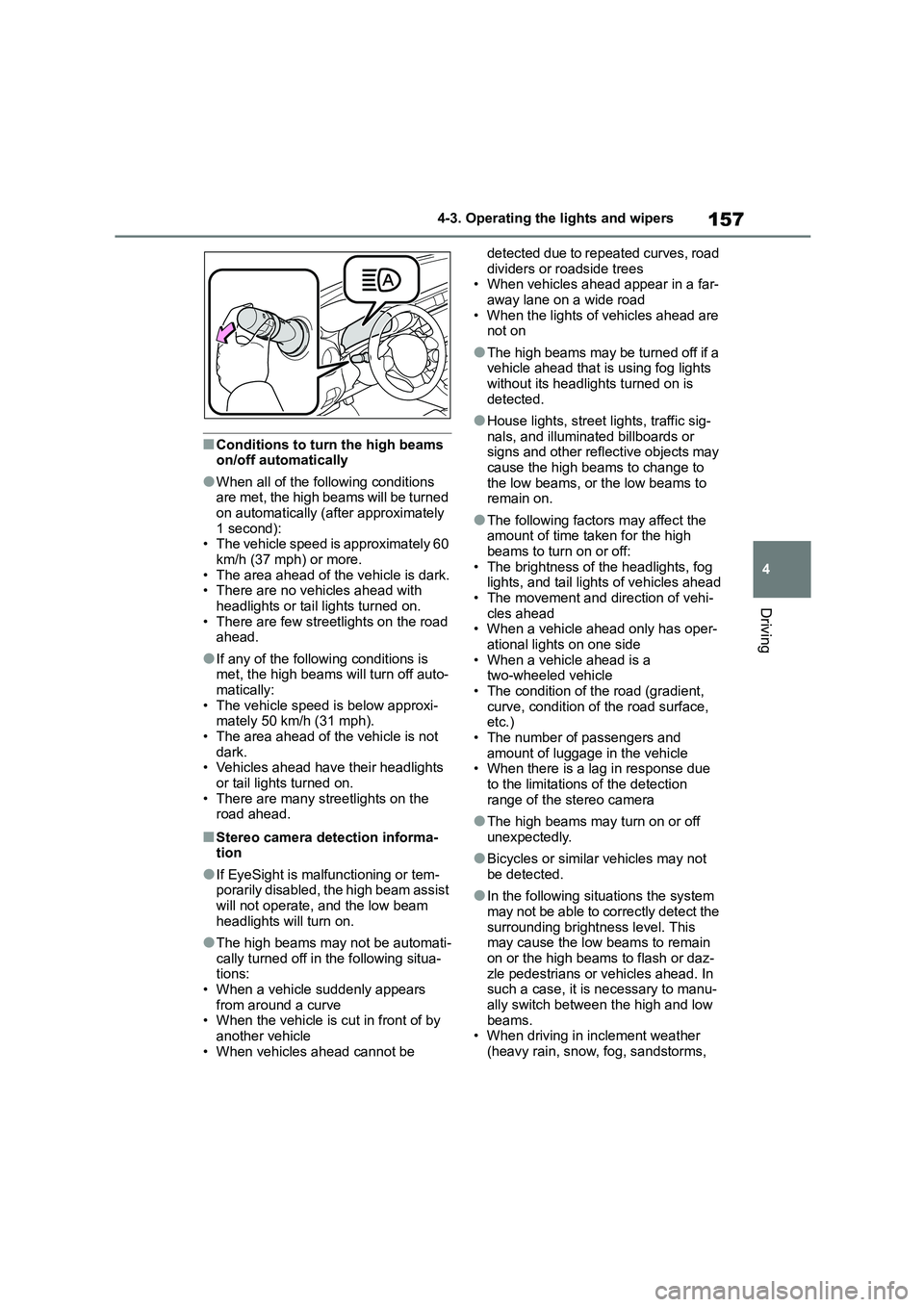
■Conditions to turn the high beams on/off automatically
●When all of the following conditions are met, the high beams will be turned
on automatically (after approximately
1 second): • The vehicle speed is approximately 60
km/h (37 mph) or more.
• The area ahead of the vehicle is dark. • There are no vehicles ahead with
headlights or tail lights turned on.
• There are few streetlights on the road ahead.
●If any of the following conditions is met, the high beams will turn off auto-
matically:
• The vehicle speed is below approxi- mately 50 km/h (31 mph).
• The area ahead of the vehicle is not
dark. • Vehicles ahead have their headlights
or tail lights turned on.
• There are many streetlights on the road ahead.
■Stereo camera detection informa-
tion
●If EyeSight is malfunctioning or tem-
porarily disabled, the high beam assist
will not operate, and the low beam
headlights will turn on.
●The high beams may not be automati-
cally turned off in the following situa- tions:
• When a vehicle suddenly appears
from around a curve • When the vehicle is cut in front of by
another vehicle
• When vehicles ahead cannot be
detected due to repeated curves, road
dividers or roadside trees • When vehicles ahead appear in a far-
away lane on a wide road
• When the lights of vehicles ahead are not on
●The high beams may be turned off if a vehicle ahead that is using fog lights
without its headlights turned on is
detected.
●House lights, street lights, traffic sig-
nals, and illuminated billboards or signs and other reflective objects may
cause the high beams to change to
the low beams, or the low beams to remain on.
●The following factors may affect the amount of time taken for the high
beams to turn on or off:
• The brightness of the headlights, fog lights, and tail lights of vehicles ahead
• The movement and direction of vehi-
cles ahead • When a vehicle ahead only has oper-
ational lights on one side
• When a vehicle ahead is a two-wheeled vehicle
• The condition of the road (gradient,
curve, condition of the road surface, etc.)
• The number of passengers and
amount of luggage in the vehicle • When there is a lag in response due
to the limitations of the detection
range of the stereo camera
●The high beams may turn on or off
unexpectedly.
●Bicycles or similar vehicles may not
be detected.
●In the following si tuations the system
may not be able to correctly detect the
surrounding brightness level. This may cause the low beams to remain
on or the high beams to flash or daz-
zle pedestrians or vehicles ahead. In such a case, it is necessary to manu-
ally switch between the high and low
beams. • When driving in inclement weather
(heavy rain, snow, fog, sandstorms,
Page 160 of 582
1584-3. Operating the lights and wipers
etc.)
• When the windshield is obscured by fog, mist, ice, dirt, etc.
• When the windshield is cracked or
damaged • When the stereo camera is deformed
or dirty
• When the temperature of the stereo camera is extremely high
• When the surrounding brightness
level is equal to that of headlights, tail lights or fog lights
• When headlights or tail lights of vehi-
cles ahead are turned off, dirty, chang- ing color, or not aimed properly
• When the vehicle is hit by water,
snow, dust, etc. from a preceding vehicle
• When driving through an area of inter-
mittently changing brightness and darkness
• When frequently and repeatedly driv-
ing ascending/descending roads, or roads with rough, bumpy or uneven
surfaces (such as stone-paved roads,
gravel roads, etc.) • When frequently and repeatedly tak-
ing curves or driving on a winding
road • When there is a highly reflective
object ahead of the vehicle, such as a
sign or mirror • When the back of a preceding vehicle
is highly reflective, such as a con-
tainer on a truck • When the vehicle’s headlights are
damaged or dirty, or are not aimed
properly • When the vehicle is listing or titling
due to a flat tire, a trailer being towed,
etc. • Immediately after the engine is started
• When the headlights are changed
between the high beams and low
beams repeatedly in an abnormal manner
• When the driver believes that the high
beams may be flashing or dazzling pedestrians or other drivers
• When the vehicle is used in an area in
which vehicles travel on the opposite side of the road of the country for
which the vehicle was designed, for
example using a vehicle designed for
right-hand traffic in a left-hand traffic area, or vice versa
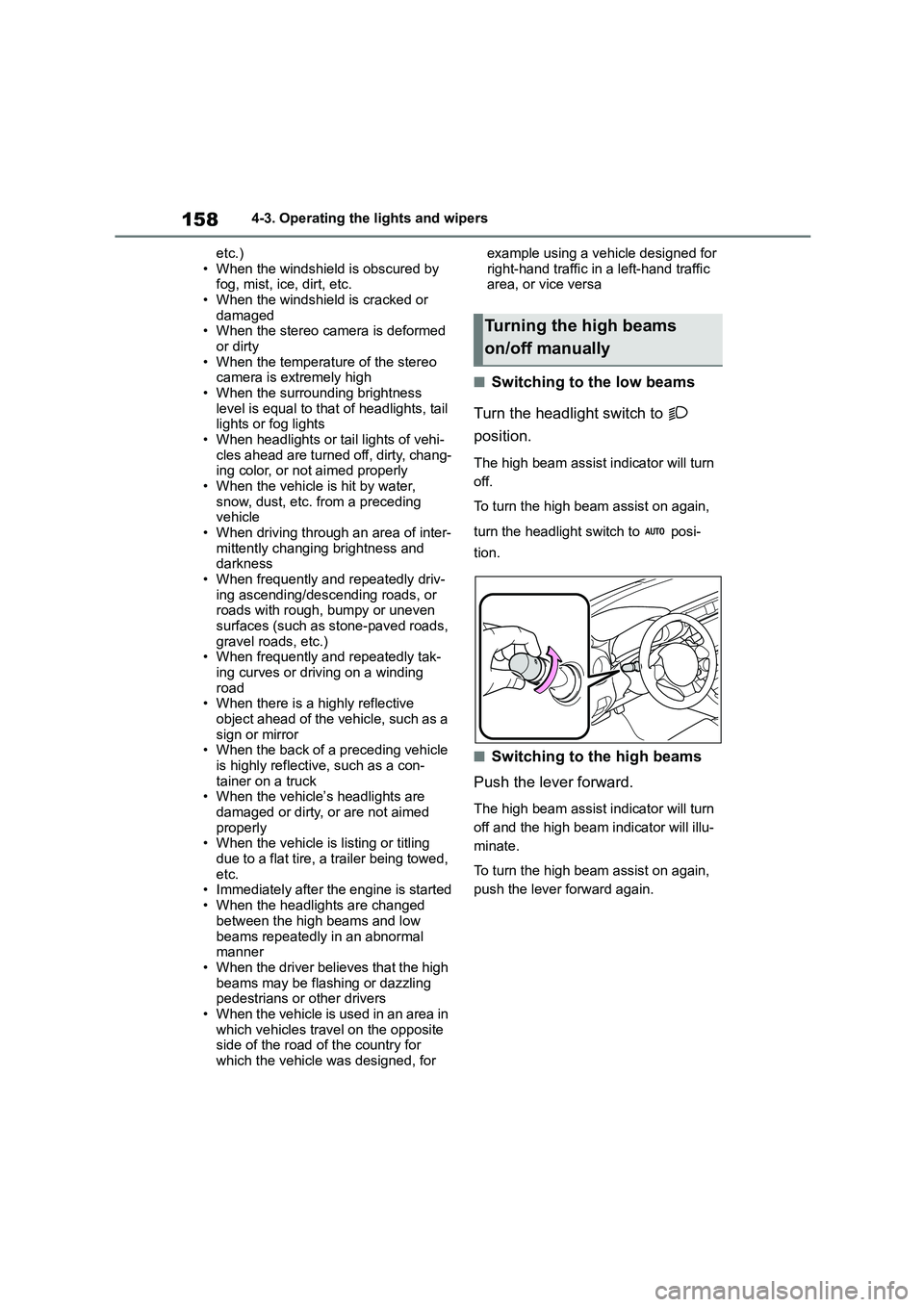
■Switching to the low beams
Turn the headlight switch to
position.
The high beam assist indicator will turn
off.
To turn the high beam assist on again,
turn the headlight switch to posi-
tion.
■Switching to the high beams
Push the lever forward.
The high beam assist indicator will turn
off and the high beam indicator will illu-
minate.
To turn the high beam assist on again,
push the lever forward again.
Turning the high beams
on/off manually