ESP VOLKSWAGEN GOLF PLUS 2004 Owner's Manual
[x] Cancel search | Manufacturer: VOLKSWAGEN, Model Year: 2004, Model line: GOLF PLUS, Model: VOLKSWAGEN GOLF PLUS 2004Pages: 541, PDF Size: 98.86 MB
Page 78 of 541
the colli sio n to help prot ect a n unrestrained front
sea t occ upa nt. The airba g m ay then not pro vide
e nou gh protection fo r an occ upant not wearin g a
s af ety be
lt.
u sc th e safety belt ex te nd er ap proved by Volkswag en for you r vehicl e.
Safety belt extenders offer optimum protec
tion onl y w hen they are prop erl y used.
A driver or passe nger wh o is not properl y
re strain ed ca n be seriou sly injured by strikin g
th e interi or o f t he passe nger compartment or by the s afety be lt itse lf, w hich can be displac ed fro m stron ger parts of the body int o se nsitiv e
area s lik e the abdomen.
usc the extender when the belt is not
lon g eno ugh t o be worn low and snug and th e person is in the correct sea ting po sition . R e m o
ve an d stow extender sa fe ly w hen no t needed.
Never usc the safety belt extender if you can prop erl y attach the safe ty be lt wit hout it. safety belt ex tender when not n eeded can crease the risk of inju ry, especiall y in a co llision.
Never use safety belt ex tender if the dis
tan ce (B ) between the front ed ge of the safe ty
b elt exte nd er buckle (A) and th e ce nterlin e of the perso n using the safety belt exte nde r= page 76, fig. 56 © is less than 6 in ches (15 em ).
Never leave an unused safe ty belt exte nder in the belt bu ckl e. Remo ve and stow the sa fety belt
ex te n d er safely wh en no t n eeded.
Sitti ng p roperly and safely
Always make sur e that the tongue of the
sa fety belt extender is securely inserted into the buckle for the seating position that belongs to
th e sca t where the safety belt extende r i s being
u se d. Attaching the safety belt to th e wrong
bu ckle will reduc e safety belt effec tive ness and can cause se rious perso nal injury.
Never usc more than one sa fe ty bel t extende r
w it h a safety belt. more than on e safety
b elt extender can change the way the sa fety
belt passes over the body a nd can cause seriou s
injury.
Never use the safety be lt ex tender to secure
a child restrai nt.
Never use a sa fety belt ex tend er on your
Neve r usc the safety belt ex tender you ob
t a in ed for your vehicl e for any other ve hicle,
regardless of m ake , model , or model year.
Note
Leaving the extender attached to the s afety be lt buck le when the front seat i s occ upied an d the safe ty belt is not being used w ill sig n al t o th e
a irbag control unit that the fron t passenger sea t
i s occupied and that the saf e ty be lt is be ing used. The electron ic contro l unit for th e a ir b ag system
will the n r eceive incorrect information that will
- ca use th e sa fety belt prete n sioner to deplo y unnecessarily in colli sion s and -ca use the front passe nger airb ag to dep loy
later in colli sion s in whic h th e front airba g
wo uld otherwise be triggered earlier to help
protec t a n unrestrain ed fron t sea t passe nger.
A pre te nsioner that has deployed cannot be p aired. The e ntire safety belt must be replaced.
! Note
If the safety belt extender is left atta ch ed to the
safe ty belt buckle, the safety belt warni ng sys te m
w ill sense that the sa fe ty be lt fo r th at seat is being
used . The w arning light will not come on and th e warning chime will not sound even though the
s cat is occ upie d and the safety belt is not b eing u sed.
76 77
Page 82 of 541
Have repairs and vehicle modification s
rized Volkswagen dealers and authorized swagen Facilities have the required
tool s, dia gnostic equipment, repair tion, and trained personnel.
Never permit salvaged or recycled airbags to be installed in your veh icle.
Never modify any components of the airbag syste m.
During activation of the
The fine dust can irritate the skin and eye muco us membranes and cause breathing lems for people who suffer from asthma or other breathin g conditions. To reduce th e risk of breathing probl em s, those with asthma o r o th er
r es piratory
Be careful no t t o ge t the dust into your eyes or
into any c uts or sc ratches.
Using so lve nts or other improper cleaning
u cts containing so lvents w ill ch ange the ti es of the plastic s and may cause plastic parts to break and fly around when the airbag deploys in a crash, causin g injury.
Never usc so lven ts or cleaners on th e
s teering wheel horn pad or on the instrument pan el b eca use they ca n damage the airbag cover or change the s tiffness or strength of the rial so that the airba g cannot deploy and protect properly. When cleaning the horn pad a n d strument panel, use onl y a soft, dry cloth or a
cloth moistened w ith plain water.
Please first read and note th e introductory informatio n and heed the WARN INGS on
Be sure to read the important inform ation and th e for important detail s about child ren
and Adva nce d Airbags
in you r ve hicl e has
been ce rtifi ed to comply wit h th e requirement s of the Unit ed Federal Moto r Vehicle as well a s Motor Vehicl e as a pplicabl e
at the time your vehicle was manufactured. co rding to req uirement s, th e front Advance d
A ir bag on th e passeng er side h as been tified for for infant s of about 12
months old and you nger and for risk for ch ildren aged 3 to 6 yea rs old {as defined
in the stand ard ).
Even th ough your vehicl e is equipp ed w ith an vance d Air bag mak e ce rtain that all dre n, es pecially 12 years and younge r, a lways ride
o n th e back seat properly restra ined for their a ge
Sitting properly and safely
and size. The airb ag on the front passenge r side m ak es the fron t seat a potentially dangerou s pla ce for a child ride. Th e front seat is no t th e sa fest
p lace for a child in a fo rward -faci ng chil d seat. is
a very dangerous place for an in fant or a child in a
r earward-fac ing sea t.
is in an improp erl y in stall ed for ward-faci ng
child res traint, or
in an y rearward- facing child restraint
will
be se riously injur ed and can be kill ed.
Eve n though your vehicl e is equipped with an Advance d Air bag make certain that aU children, especia lly years and you nger,
a lwa ys rid e o n the back seat properly restrained
for their age and s ize.
Always properly install reanvard-facing child seats or infant carriers and forward -faci ng c hild
s eats on the rear seat-even with an Advanced
81
Page 90 of 541
According to US federal stand ards , an vanced Alrbag System can deploy with the
For their own safety, all children, especially 12 years and younger, must always ride on
When installing a child restraint, always
carefully follow the manufacturer's instruc
tion s.
An infant in a reanvard-facing child restraint on the front passenger seat can be seve rely injured or killed if the airbags deploy.
Never use a reanvard-facing child seat or
The deploying airbagwill impact the ch ild
seat or infant carrier with great force and fling it,
along with child, against the seat backrest,
center armrest, door or roof.
Always properly reanvard-facingchild
sea ts or infant carriers, as well as fonvard-facing
child seats, on
ond
If special circumstances require the use of a
senger seat,
A forward-facing child restraint installed on
ploym ent and severely injure child.
Always make sure the fonvard-facing
child restraint has been designed and certified
for use on a front passenger seat with a front
airbag and a side airbag.
Never install a child safety seat without a
properly installed upper tether strap when the
manufacturer 's instructions require use of an upper
Never install a fonvard-facing chil d restraint
right up
Always set the upper anchorage point of the
safety belt to the highest position.
Always move passenger seat to
rearmost position in seat's fore and aft adjus tment range, as far
away from
stalling
Always make sure that no object prevents tJ1e
front passenger seat from being moved as far
back as possible.
Always make sure that the backrest is in its
mo st upright position.
Always make sure that the chil d sea t is curely installed, even when no child occupies it.
A poorly secured child seat can be thro wn
through the vehicle during sudden braking
88 89
Page 93 of 541
Always make sure nothing is in the front airbag deploym ent zone that could be struck by the airbag when it inflates.
Never hold things or on your lap when the vehicle is in use.
Never place accesso ries or other objects
(such as cup holders, tel ephone brackets, note pads, navigation systems, or things that are large, heavy, or bulky) on the doors; never attach them to the doors or the windshield; never place th em over or near or attach them to the area marked
fig. 59 or 91, fig.
Never attach objects to the windshield above the passenger front airbag, such as accessory navigation units or music player s.
Never recline th e front passenger seat to transport objects. can also move into the deployment area of the side airbags or the front airbag during breaking or in a sudden maneuver. near th e a irbags can fly dangerously through the pass enger compartment and cause injury, particularly when the seat is reclined and the airbags inflate.
Always make sure that there is nothing on the front passe nger seat that will cause the weightsensing mat in the scat to signal to theAirbag that the scat is occupied by a person when it i s not, or to signal that it is occupied by someone who is heav ie r than the person actually
sitting on th e sca t. The weight of th e object could cause the passenger front airbag to be turned on when it should be off, or could cause the airbag to work in a way that is differ ent from the way it
would have worked without the added weight.
Alwa ys make sure that nothing is on the front passenger seat when the backrest is folded
forward. Even light objec ts could be pushed into the seat cu shi on and cause th e weight-sensing mat in the seat to re gister enough weight to turn the airbag on.
Never usc solvents or cleaners on the steering wheel horn pad or instrument panel, because they can damage the
Before driving
airbag cover or change the stiffne ss or strength of the material so that the airbag cannot deploy and protect properly. When cleaning the hom pad and instrumen t p anel, use only a soft, dry cloth or a cloth moist en ed
with plain water.
A front seat passenger, especially an infant or small child, will be seriously injured and could
eve n be killed if he or she is
Although the Advanced Airbag has been designed to switch off when an infant or child is on the front passenger seat in a child seat that was used during the certification
process for the Advanced Airbag no one can guarantee with absolute certainty that the airbag never deploy under these particular conditions in all conceivable situations for the duration of the vehicle 's use.
For their own safety, all children, especially those 12 years and younger, mus t always sit on the back seat, properly restrained for their age and size.
Facility. A lit indicator light means the airbag may not work properly if
activated in a crash.
Page 98 of 541
door and the backre st. T he general locatio n is
s hown b y th e The area s marked in (dotted lin es)=> 62 in dicate the deploy
m ent zones of the s ide airbags.
Durin g a s ide colli sio n , the sid e airbags in the backres t ca n deploy. there by redu cing th e risk of inju ry to ve hicle occupants.
The side airbag system includes :
ele ctroni c control m odule and side impact sensors .
Sid e ai rbags in the fro nt backrests and , where applicable, sid e airbags in the rear backrests .
An airb ag monito rin g sy ste m an d indicator light in the in strumen t clu ste r
W hen a side a irbag deploys in a coll is io n, a gas gene ra tor the side airbag b etween the vehicle occupant and the door. Th e side airbag syste m
supple m ents th e safety belt s and ca n help toreduce the ris k of injury to the occupants' upper torso .
In ord er to help pro v
ide this additio nal protection, the sid e airbag must infl ate w ithin the bl ink of an eye at very hi gh sp ee d and w ith great force. The supplemental side a irbag co uld injure yo u if your seating position is not proper or upright or ifitems are in the area where the supplemental sid e airbag inflate s. Thi s applies especiall y to children
w ill co m e on for a few seconds
(self- d iagnos is).
The airbag syste m i s no t a s ubstitute for your safety be lt. Rather, it is part of the ov era ll occ upant restra int system in your ve hicle=> page 56,
re ad y dep lo ye d.
properly and safe ly
The side airbag sys tem
if the ignition i s sw itched ofT wh en a crash occurs,
in side c o lli sio ns wh en the a cce le rat ion mea
s u re d b y the sensor is to o low,
in front-end collis ion s,
in re a r-end collis ion s,
in rollovers, unless the depl oy men t threshold for deploym ent stored in the control unit is met.
I n s
ome ty pes of accid ent s the front airbags , Sid e
C urtain airbag s and sid e airb ags may
b e triggered together.
A n Inflatin g side a irbag can cause serious or even fatal injury. Improp erly wearing safet y
b elt s and improp er seatin g po siti ons increase
th e risk of se riou s persona l injury and death
whenever vehicle is being used.
To help reduce the risk of injury when the
supplemental sid e a irb ag inflat es,
- Always sit in
an upright po sition and do
not l ea n agai nst th e area where the s ide
airbag is located.
- Neve r le t a c hild or anyo ne e lse rest their
head again st th e s ide trim panel in the area
where the s ide ai rbag inflates.
- Never let anyo ne s itting in the front
seat put their hand out o f window.
betw een yo u and the airba g ca n in
crease the risk of injury in a colli sion by inter
fering with the way the airbag unfolds or by
being pushed into you as th e airbag inflates.
Never pla ce or attach a ccess ories or other ob
je cts (su ch a s cup holders, telephone bracke ts , or eve n large , bulky objects) on the doors or over or ncar th e area mark ed p age 96, fig. 6 1.
Accessories or other object s ca n fly dangerously
throu gh the passe nger compart ment and cau se serio u s injury if the supplemental sid e airbag
Neve r position or hol d any obje cts o r pet s in the
deplo yment space of an airbag or allow any child
r e n or other passenge rs to trave l in s uch a pos ition .
Never use th e built -in coat hook s for any thin g but lightweig ht clothing . Neve r leave
any heavy or sharp- edged objects in the pockets. objects may interfere w ith side airbag de
pl oy ment and cau se seriou s personal injury in a
co llisio n.
96 97
Page 99 of 541
Always make sure that th e side airbag can inflate without interfe re nce :
- Neve r in sta ll
seat covers or replacement uphols tery over th e front seat backs that h ave
not been specifically approved by Volk
swage n. the s ide airbag may not
b e able to deploy fully.
-Neve r put seat c u shi ons, blanke ts , or other cove rings over th e areas where th e s ide ai r
b ags inflate.
Side Curtain Protection ® Airbag
-Damage to th e original seat covers or to the seam in the area of the si de airbag module must a lways be repaired imme di
a te ly by an au thorized Vol kswagen dealer or authorized Volkswage n Service Facility.
Always prevent th e sid e airbags from
b eing damaged b y heavy objects hitting the
s ides of the seat back s or force be ing put on the scat backs, especially in the area w here the
s id e a irbag modul e is located. The air bag sys te m
A lways have work involving the s ide airbag system, including removal, rep lacement, and ins talla ti on of airbag compo n en ts, or other re pairs performed by an authorized Volkswagen deale r o r authorize d Volkswage n
Service Facility. the airbag system may not work correctly. Neve r remove th e front seats from th e vehicl e or modify parts of the front seats. Never attempt to modify a ny components of the air bag system in any way. I f excess ive force is exerted on the seatback bols te rs, the s ide airbags may deploy not at al l o r
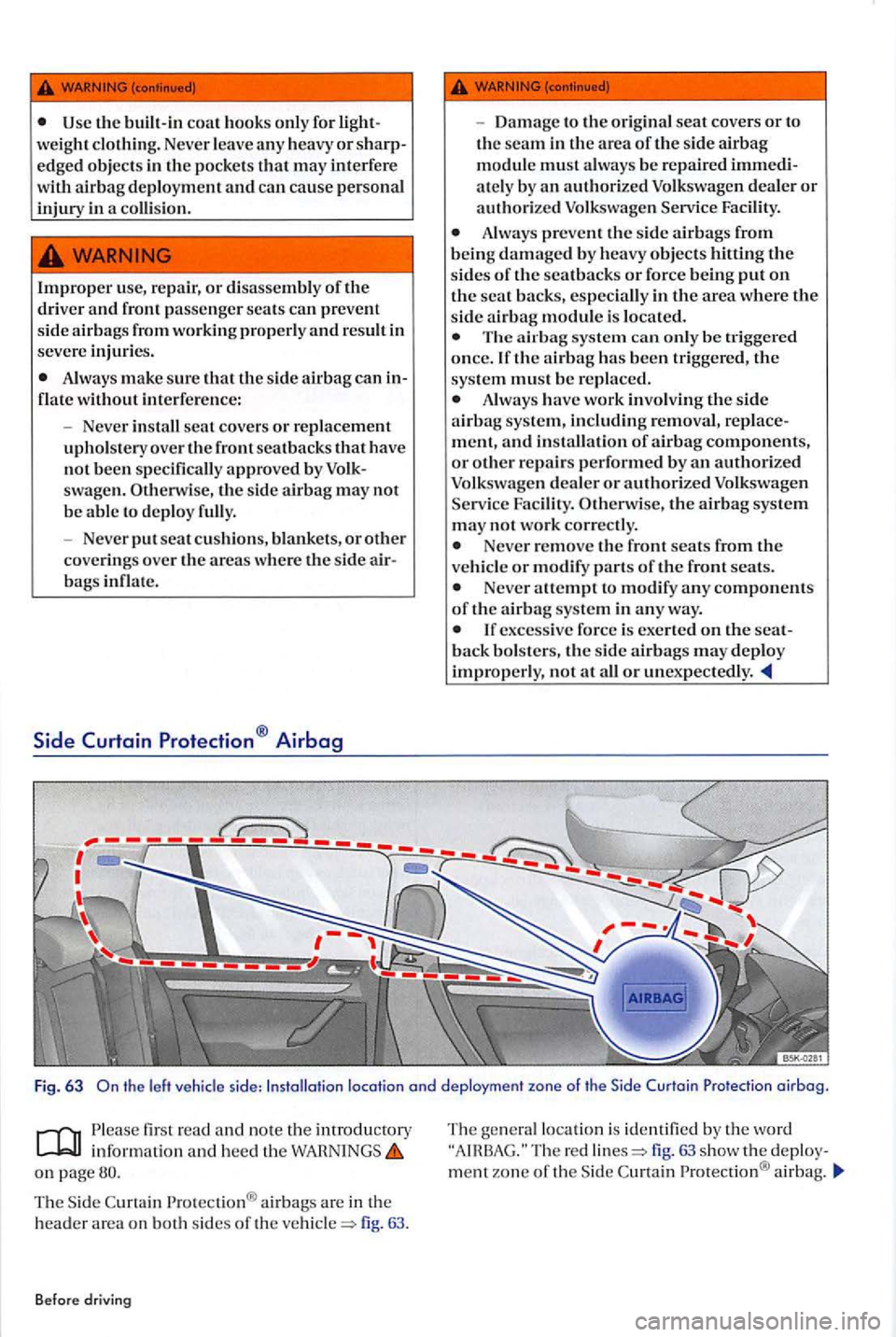
Fig. 63 th e left ve hicle side: In stallation location and deploym ent zone of th e Side in airbag.
information and h eed th e WARNINGS on page
Th e Sid e C urta in ai rbags are in the
h eader are a on bot h sid es of th e fig. 63.
Befo re driv ing
The ge nera l lo ca tion is id entified by the word The red fig. 63 sho w th e deploymen t zo ne of the Sid e Cu rtain airbag .
Page 102 of 541
Introduction
In this sect ion you'll find information on the lowing:
C hild restraints and Advanced front airbag system
Importa nt safety instructions using child seats
Using a child restrain t on the rear seat
Toddler seats
Convertible child seats
. 112
child restraint s with a safety . 114
Secur ing the restraint with LATCH lower universal anchorages
118
Sources of information about chi ld res traints and thei r use 119
The physica l principles of what happens w hen your ve hicle is in a collision o r other accid ent also apply to p age
sig n ed fo r thei r size, weight, and body structure.
Many countries and stat es of the Un ited and provinces of have laws requiring th e
use of approved child restraint syste ms for infant s and sm all childr en.
sp eed mph km /h). the forces actin g o n 13-pound (6 kg) fant will be more than tim es the we ig ht of th e
c hild. This mea ns the effec tive we igh t of the child
wo uld sudd enl y increase to more than pounds kg). Under th ese conditi ons, only an pria te child restraint properly used can reduce the risk of serious injury.
rious injury in an accident.
the child sea t manufacturer 's instructions to b e sure the seat i s rig ht for you r child's size
Sittin g properly and safely
be sure to read and hee d all of the important mation and bags, and the in stallatio n of child restra int s in thi s
Man uaL
Th ere is a lot
you n eed to kno w about th e vanced Airb ags in your ve hicl e and how they wo rk
w he n infant s and children in child restra ints are on the front passe nger seat. Because of the large amount o f information, we cannot peat it all he re. We urg e yo ulO read the detail ed formation in this Manual about a irb ags and the
Advance d Airba g in your vehicle and the very important inf orm atio n about transporting
c hild ren on the front passe nger seat. be
s ure to h eed th e they are ex treme ly for your safety and the safety of your passe ngers, especially in fants and small childr en.
DANGER
on the front seat of any car, even with Advanced Airbags, can be seriously injured or eve n killed when an airbag inflates.
A child in a rearward-facing s talled on the front passenger seat will be
The infl ating airbag
Always install rearward-facing child seats on the rear seat.
you have, in exceptional ci.rcumstance s, decided to ins tall a rearward-facing child seat on the front passenger seat and the
Page 103 of 541
Accident stati sti cs have shown childr en are
generally safer in the rear seat area than in the front restrain any child age 12
All ve hicl e occupants and especially childr en must be restrai ned properly whenever ridin g in vehicle. An unrestrained or improperly strained child could be injured by striking the
interior o r by being ejected from the vehicle during sudden maneuver or impact. An strained or improp erly restrained child is at
airbag.
suitab le child rest raint properl y install ed and used
Forward-facing child seals installed on the front passenge r seat may interfere with the ment of th e a irbag and cause serious personal injury th e c hild .
exceptional circumstances require the u se of fonvard-fac ing child restraint on the front
passenger's seat, the child's safety and being requir e th e following special preca utions to be taken:
- Always
make sure that the fonvard-faci ng seal has bee n designed and certifi ed by its
m anufacturer for use on
ch ild res traint without top tether strap if the child
restraint manufacturer's instructions quire the top tether strap to be u sed.
- Never
putt he fonva rd-facing chil d
ment panel.
Before driving
-Always set the safety bell upper anchorage to the adjustmelll position permits
p roper
in the up and down
position in the seat's fore and aft adjustment range, as far away from the airbag as possib le
before installin g the fonvard -facing child s traint .
- Always
make sure that nothing prevents t h e fro nt passeng er' s scat fr o m being moved
justment range .
- Always
make sure that the backr est is in
th e upri ght position.
- Never place ad dit ional it
ems on the seal
th at can in crease th e total weight registered
b y the weight-se nsing mal cause jury in a crash.
- Always
make sure
BAG light does
not come on and stay on, immediately install
t h e fonvard-facingchi ld seat in rear seating sys tem spected by your authorized dealer or auth ori ze d Se rvice
A lways buckle the child seal in place
even if loose child seat ca n around during a sudd en slop or in a
Always read and heed all WARNINGS ever using child res train t in ve hicl e 67, Safety page 80,Airbagsystem page safety
A lways replace child restraint s that were s talled in cras h. Damage to
a child res traint that is not visib le co uld cause it to fail in another collision situati on
Page 104 of 541
Child restraints and Advanced front airbag system
Please firs t read informatio n and heed the WARNINGS o n page
vehi cle is equipped w ith front complies with United States Federal Motor Vehicle and with Vehicle Safety dard
The Advanced Airbag requirements
for 3 and 6 yea r-old children (a s defined in the
standard) o n the passenger sid e and adults
o n th e side." Low risk" de ployment occurs
in those cras hes place at lower decelerations programmed in the e lectronic control unit. The low risk deployment c riteria are in
t e nded to reduce the risk through int eractio n with the airbag can occur in these colli
sio ns. for example, b y being too close to the steerin g wheel or in strument pan el when the airbag In addition, the system has been certifi ed to comply with the requirements of the Safe ty rd. to turn off the
f ront airbag fo r infant s up to 12 months w ho are restrained on th e front passenger seat in one of the c hild restraint s that a re lis ted in the
Airbag children, especially
those 12 years and younger. mus t a lways ride in the backseat properly re strained for their age and size. The airbag o n the passe nge r sid e makes the front scat potentiall y dangerous place for a child to
ride. The front seat is not the safest place for a child in a forward-facing child seat. la rger child in a rearward -fac ing seat.
The ,\dvanced Airb ag Syste m in your vehicle detects the presence o f a n in fant or child in a child straint on the front passenger seat using th e weight-sen sin g mat in th e scat cushion and the
se nsor in the sa fe ty be lt buckle on the fro nt passenger that measures the tension on the safet y
belt.
The weight-sen sin g measures total weight of the c hild and the child seat and
i.e. the size
pro perly ond safely
and shape of the botto m of the chi ld restraint as it
s it s on the seat. The weight of a chi ld restraint and its vary for different k inds of c hild re
straints and for the diff erent mode ls o f th e same ki nd of child restra int offered by child restraint manufacturers.
The weight ranges for the in div idual types, makes a nd models of child res traint s
the Adva nced Airbag
Syste m compares th e weight measured by the weight-sen sing w ith the information sto re d in the electro ni c cont rol unit.
se nsor in the belt buckle fo r th e front seat
pnssenger measures th e te nsion on th e belt and sends thi s information to the electro ni c control
m odule for the sys tem. The tensio n on the safety belt for the front passenger seat w ill be dif
ferent for an i s properly using the safety
belt, as
w hether th ere is a child res tra int with
restraints and Advanced Airbags
Regnrdlessofthcchild rest raint that yo u u se, make
s u re th at it bee n certifi ed to meet United States Federa l Mo tor Vehicle Standard Motor Vehicl e if you live in sure that the child re
straint yo u arc usin g been cerlifi ed b y its m anufacturer for use w ith airb ag. Always be s ure that th e ch ild restra int is properly installed at one of t h e rear seatin g position s.
of th e information on child
safety and Adva nced
that
th e passenger front is turne d off. that the is light.
Many types have been availn ble over th e years, new models are in-troduced r egularly in corporating new and im-
Page 107 of 541
Alw ays follow the child restraint manufacturer's in stalla tion
tion in th e se at's up and down adjustm ent range and to th e rearmost p osit ion in th e se at's fore and aft adj ustment ra nge, as far away from the air ba g
a s poss ib le before in sta llin g th e forwa rd-facing
chil d res train t a nd mak e sure th e backre st is in th e
upr ig ht
If a te th er str ap is being used to tie the child s traim to th e front passe nger seat, make su re that
it is not so tigh t that it causes the we ight-se nsin g mat to meas u re m ore weig h t than is actu ally on
the seat.
Alway s remember: E ven though your vehicl e is
e qu ipped with an Advanced Airb ag System, all
child re n , es pecially th ose 12 years and younger, mus t a lways ride in the back seat pro pe rly
tion.
All ve hicl e oc cupants and esp ecially childr en must always be restrain ed proper ly w he neve r
ridi ng in a vehicle.
-
An unres tra ined or imp roperly restrained
c hild can be injured or kill ed by being thrown
agai nst th e in sid e of the vehicl e or by bein g
e je cte d f rom it duri ng a sudden maneuver o r impact.
- An
unrestrai ned or improperl y re strained
c hild is also at much grea te r risk of inju ry or death by be ing stru ck by an inflat ing ai rb ag.
Commercially available chil d seats must comply w ith U.S. Federal Motor Vehicle Standard 213).
- When buyin g a restraint, selec t o n e
th at your child and the ve hicle.
-
usc c hil d restra int sys te m s th at m ake
f ull contact with the flat portion of the scat cushion. Th e c hild restraint mus t n ot tip or
l ea n to ei ther side. Volk swa gen docs not ommend using child sea ts res t o n legs o r
t u be-like frame s. They do not prov ide qua te con ta ct wit h the seat.
Befo re driving
- Alwa ys heed all legal requ irement s ta ining to the in sta ll ation and use of child
sea ts and carefully follow the in structi ons
provid ed b y th e manufacturer of th e seat y ou arc using.
For safet y reasons, never allow child re n under 4ft. 9 in (57 in che s /1.45 mete rs) to wear a
normal3-p oint safety belt . They must a lways be r est rain ed b y a proper child rest rain t syste m .
O th erwi se, they could su stain injuries to domen and neck areas during sudden bra kln g
m an euver s or acci dents.
Neve r le t more th an one child occupy a ch ild
se at.
Neve r let babie s or older child ren ride in hicl e whil e sittin g on the lap of another senger.
- Holdin g a ch ild in
your arms is never a
subs titut e fo r child res traint syste m .
-
The stronges t perso n wou ld no t b e able to
hold c hild, give n th e for ces present durin g
a co llision. The c hild will strike th e interior of the ve hicl e and can also be impacte d by ot her pa sse nge r.
-
The c hild and the pass enger ca n als o jure eac h other in an acciden t.
Neve r in sta ll reanvard-facing ch ild sca ts or i n fa nt carri ers on the fron t p assenge r sea t. A
c hild will be se riously injure d and ca n b e kill ed
w he n th e pa sse nger airbag inflates-even with
a n Adva nce d Air bag System.
A lways install reanvard-facin g child scats or infant on th e rear scat.
Fonvard-fac in g child seats in sta ll ed on the
front passenge r's sca t can interfere with the airb ag wh en it inflates and ca use seriou s injury
to the ch ild . Always in stall forward -facin g child
sc ats on th e rear sea t.
fonvard-facing child restraint on th e front passe nger's sea t, th e c hild 's safety an d bein g require the followin g speci al precauti on s
to be take n: