Wheel VOLKSWAGEN T-ROC 2021 Owner´s Manual
[x] Cancel search | Manufacturer: VOLKSWAGEN, Model Year: 2021, Model line: T-ROC, Model: VOLKSWAGEN T-ROC 2021Pages: 502, PDF Size: 9.42 MB
Page 396 of 502
in this condition can result in blown tyres, accidents and serious injuries. Worn or damaged tyres
must be replaced as soon as possible.
grip.
he vehicle pulls to one side when driving, stop the car
immediately and check the wheels and tyres for damage.
injury, never loosen the bolts on wheel rims with bolted-on rim rings.
damaged, even if the damage is not visible.
ally at high
speeds, and thus cause accidents and serious injuries. Avoid using tyres that are more than six years
old. If you have no alternative, drive slowly and with extra care at all times.
WARNING
If the wheels are incorrectly fastened or if wheel bolts are missing, the wheels could come loose,
leading to a loss of control over the vehicle, causing accidents and serious injuries.
type.
available, tighten the wheel bolts with the wheel wrench and have the torque checked without delay
by the nearest qualified workshop.
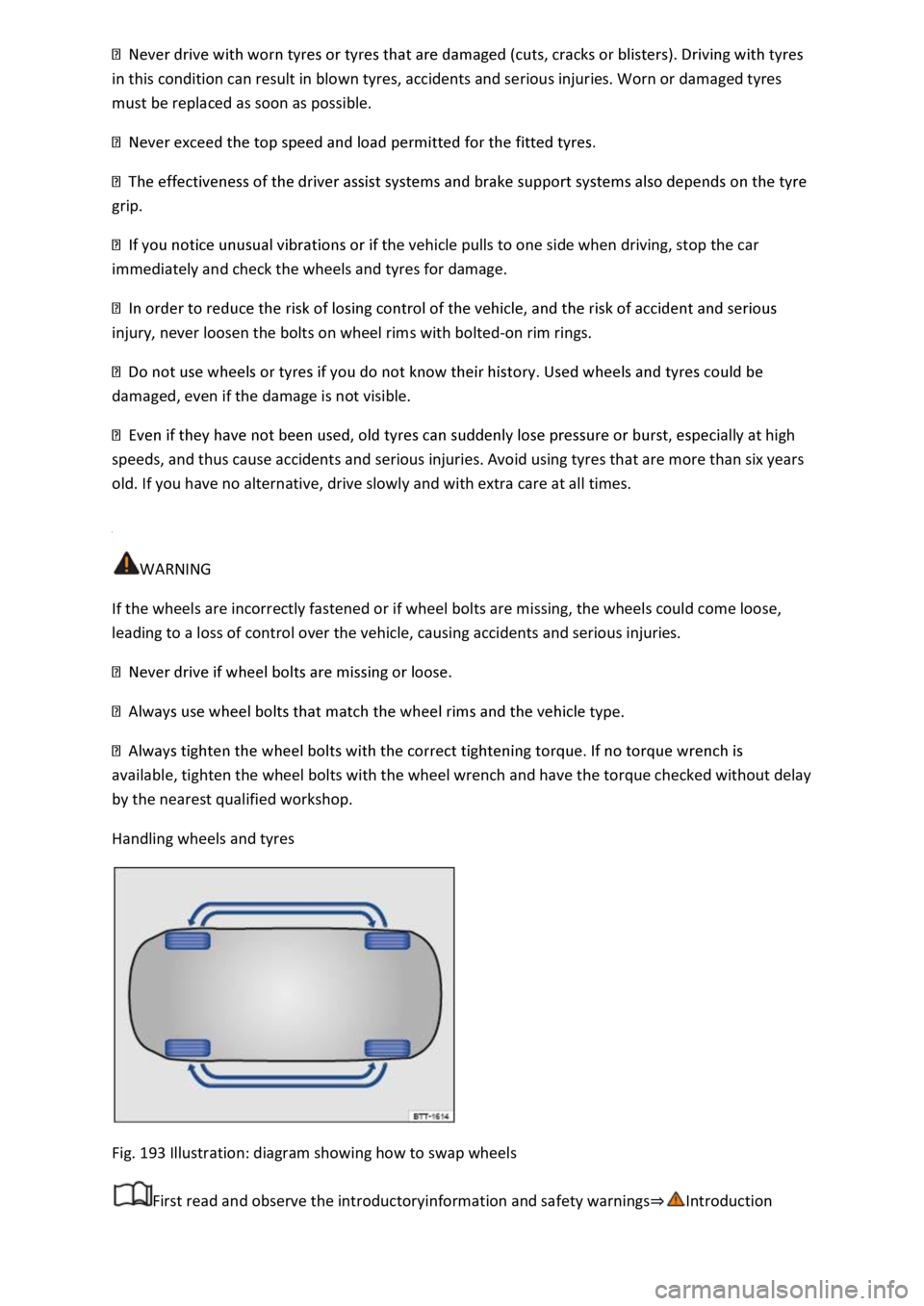
Handling wheels and tyres
Fig. 193 Illustration: diagram showing how to swap wheels
First read and observe the introductoryinformation and safety warnings⇒Introduction
Page 397 of 502

The tyres and wheel rims approved by Volkswagen have been carefully selected.
Rotating wheels
Regularly rotating the wheels as shown in the illustration ⇒ Fig. 193 is recommended to help ensure
that tyres wear evenly. All the tyres will then last for about the same time.
Volkswagen recommends having the wheels changed by a qualified workshop.
Avoiding damage to the wheel rims and tyres
⇒ Tyre lettering and
tyre type .
worn tyres must be replaced immediately ⇒ Tyre damage .
fluid ⇒ .
Tyres that are older than 6 years
Tyres age through physical and chemical processes that can impair their function. Tyres that have
been stored unused for an extended period of time age more quickly than tyres that are used all the
time.
Volkswagen recommends replacing tyres that are older than 6 years with new tyres. This also applies
to tyres which appear to still be in good condition and whose tread depth has not yet reached the
minimum value stipulated by legislation ⇒ .
Winter and all-year tyres also largely lose their effectiveness through ageing – regardless of the
remaining tread depth.
The age of each tyre can be determined using the manufacturing date ⇒ Tyre lettering and tyre
type .
Storing tyres
es mounted on the
wheel rim vertically.
should be stored vertically (standing on the tread).
New tyres
with new tyres as the tyres have to be run in. Tyres
that have not been run in have reduced grip ⇒ and braking efficiency ⇒ .
Page 398 of 502

Replacing tyres
lace tyres at least on an axle-by-axle basis ⇒ .
type.
-approved tyres.
Re-synchronising the Tyre Pressure Loss Indicator
The Tyre Pressure Loss Indicator must be re-synchronised each time one or more wheels is changed.
This also applies if the wheels have been swapped, e.g. from the front to the rear ⇒ Tyre monitoring
system .
WARNING
Aggressive liquids and other substances can cause visible and invisible damage to the tyres, which
can cause the tyre to burst.
from the tyres.
WARNING
Even if they have not been used, old tyres can suddenly lose pressure or burst, especially at high
speeds, and thus cause accidents and serious injuries.
ith
extra care at all times.
WARNING
New tyres must be run in as they initially have reduced grip and braking efficiency.
km in order to prevent accidents and serious injury.
WARNING
Wheels must have the necessary clearance. If the wheels do not have the necessary clearance, the
tyre could rub on parts of the running gear, vehicle body and the brake lines. This can lead to a fault
in the brake system and to tread separation and thus to a tyre bursting.
and must not rub on any vehicle body parts.
Page 399 of 502

NOTICE
Avoid heavy impacts and drive round obstacles whenever possible. Tyres can be deformed by
potholes and kerb edges especially. This can cause damage to the tyres and wheel rims.
Old tyres should be disposed of as required by legislation.
Volkswagen-approved tyres are guaranteed to have the dimensions that are suitable for the vehicle.
In the case of other tyres, the tyre seller must provide a certificate from the tyre manufacturer
stating that the tyre is also suitable for the vehicle. This certificate must be stored in a safe place in
the vehicle.
Wheel rims and wheel bolts
First read and observe the introductoryinformation and safety warnings⇒Introduction
Wheel rims, tyres and wheel bolts are matched to the vehicle type. If different wheel rims are fitted,
the correct wheel bolts with the correct length and correctly shaped bolt heads must be used.
For technical reasons, it is not generally possible to use the wheel rims from other vehicles. This can
also apply to wheel rims of the same vehicle type.
The tightening torque of the wheel bolts must be checked regularly with a properly functioning
torque wrench.
Wheel bolts
The correct wheel bolts must be used for each vehicle type; these bolts must always be tightened
with the correct tightening torque ⇒ Wheel bolts .
Wheel rims with bolted rim rings or trim elements
Rims with bolted-on rings or trim elements consist of several components. These components are
joined together using special bolts. Damaged wheel rims must be replaced and must always be
repaired only by a qualified workshop. Volkswagen recommends using a Volkswagen dealership for
this purpose ⇒ .
Wheel rim identification
In some countries, new wheel rims must contain information on certain properties. The following
information may appear on the wheel rim:
ed (month/year)
Page 400 of 502
WARNING
The use of unsuitable or damaged wheel rims can impair vehicle safety and cause accidents and
serious injuries.
ave been approved for the vehicle.
WARNING
Incorrect loosening and tightening of the bolts on wheel rims with bolted-on rings can cause
accidents and serious injuries.
on wheel rims with bolted-on rings.
-on rings must be carried out by a qualified workshop. Volkswagen
recommends using a Volkswagen dealership for this purpose.
Tyre pressure
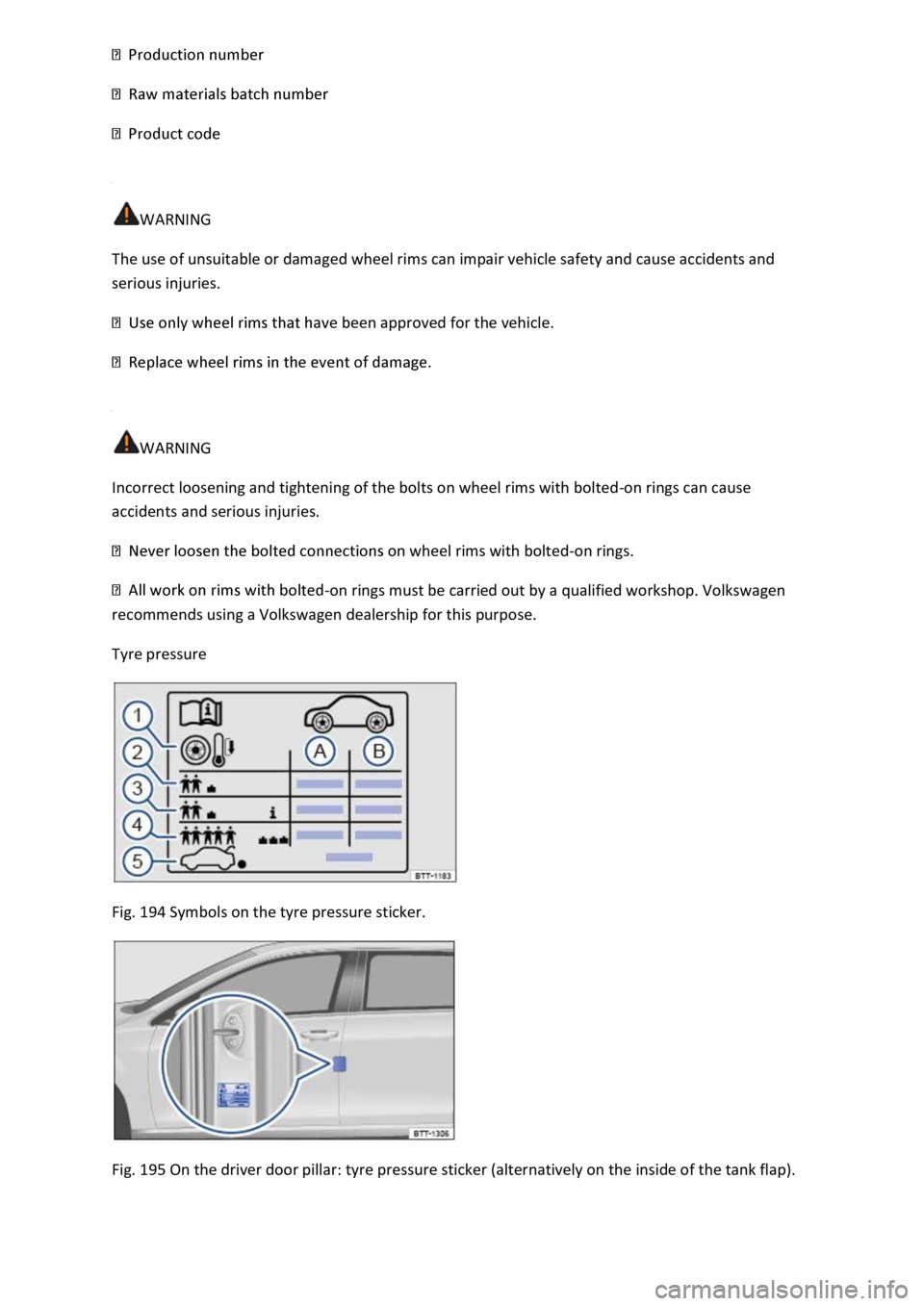
Fig. 194 Symbols on the tyre pressure sticker.
Fig. 195 On the driver door pillar: tyre pressure sticker (alternatively on the inside of the tank flap).
Page 401 of 502

First read and observe the introductoryinformation and safety warnings⇒Introduction
Information on the sticker ⇒ Fig. 194 :
Tyre pressure for the tyres on the front axle.
Tyre pressure for the tyres on the rear axle.
Note: check the tyre pressure when the tyres are cold.
Tyre pressure for partial load.
Vehicle-dependent: comfort tyre pressure for partial load.
Tyre pressure for full load.
Tyre pressure level for the spare or temporary spare wheel.
The sticker provides the correct tyre pressure for approved tyres and is located either on the driver
door pillar ⇒ Fig. 195 or inside the tank flap.
The appearance of the sticker may differ between vehicles. It may include additional tyre sizes.
The wrong tyre pressure will have a negative effect on the vehicle handling and leads to high levels
of wear or even a burst tyre ⇒ . The correct tyre pressure is particularly important at high speeds.
Comfort tyre pressure
Depending on the vehicle, the tyre pressure sticker may show details of a comfort tyre pressure
⇒ Fig. 194③ . The comfort tyre pressure allows increased driving comfort. Fuel consumption may
increase when driving with comfort tyre pressure.
Checking the tyre pressure
tyres. Tyre pressure is always higher in warm tyres than it is in cold tyres. For this reason, never
reduce the pressure in warm tyres to adjust the tyre pressure.
⇒ Fig. 194④ .
and observe the
information on the tyre monitoring system.
which is given on the sidewall of the tyre.
WARNING
Page 403 of 502

Tread wear indicators in tyres
The tread wear indicators show if a tyre is worn down. The tyre must be replaced at the latest when
the tread is worn down to the tread wear indicator.
The bottom of the tyre tread has 1.6 mm high tread wear indicators ⇒ Fig. 196 . Markings on the
tyre sidewall indicate the position of the wear indicators ⇒ Fig. 196 .
WARNING
Worn tyres are a safety risk and can lead to a loss of control over the vehicle and cause serious
injuries.
indicators.
roads, which can cause the vehicle to
float along the road surface (aquaplaning).
situations and increase braking distance and the risk of skidding.
Tyre damage
First read and observe the introductoryinformation and safety warnings⇒Introduction
Damage to tyres and wheel rims is often hidden ⇒ .
and wheel rims for damage.
⇒ Changing a wheel or seal the
tyre with the breakdown set and inflate it ⇒ Breakdown set . Seek expert assistance if necessary.
, drive slowly and carefully to the next qualified workshop in order to
have the vehicle checked.
Foreign bodies in the tyre
between the tyre tread blocks can be removed.
⇒ Changing a wheel or seal the tyre with the breakdown set and
inflate it ⇒ Breakdown set . Seek expert assistance for this if necessary.
olkswagen recommends using a Volkswagen dealership for this
purpose.
Tyre wear
Fast cornering, heavy acceleration and hard braking all increase tyre wear.
Page 404 of 502
Wheel imbalance may develop when the vehicle is driven; you will notice this by nervous steering
response. Unbalanced wheels will affect the level of tyre wear. In this case, the wheels should be
balanced again.
Incorrect wheel alignment impairs driving safety and increases tyre wear. The running gear should
be checked by a qualified workshop if tyres show excessive wear.
WARNING
If you notice unusual vibration or the car pulling to one side while the vehicle is in motion, this may
indicate that one of the tyres is damaged.
Check the tyres and wheel rims for damage.
have the vehicle checked.
Spare wheel or temporary spare wheel
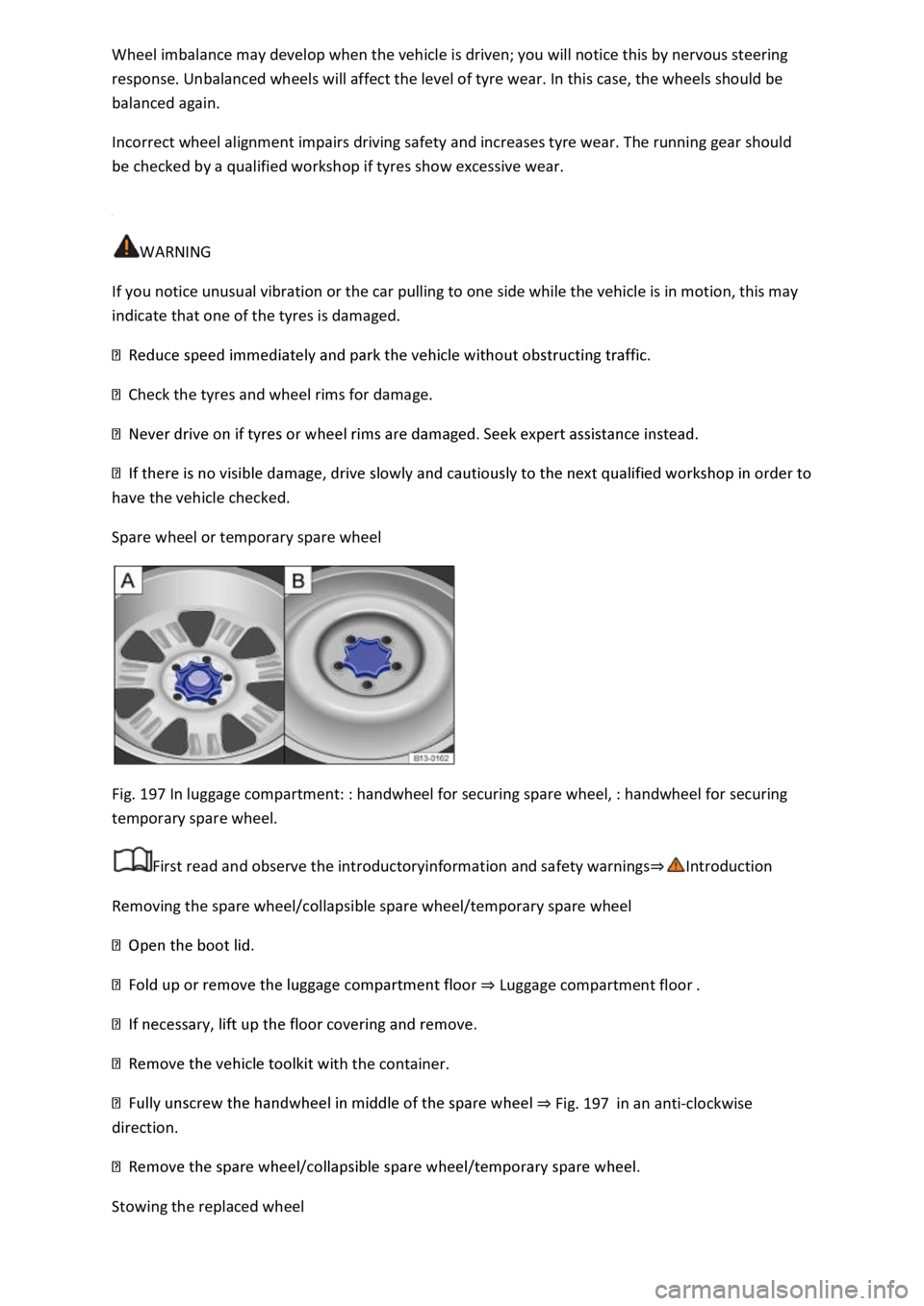
Fig. 197 In luggage compartment: : handwheel for securing spare wheel, : handwheel for securing
temporary spare wheel.
First read and observe the introductoryinformation and safety warnings⇒Introduction
Removing the spare wheel/collapsible spare wheel/temporary spare wheel
⇒ Luggage compartment floor .
th the container.
⇒ Fig. 197 in an anti-clockwise
direction.
Stowing the replaced wheel
Page 405 of 502

r remove the luggage compartment floor ⇒ Luggage compartment floor .
centre hole in the rim is positioned exactly above the hole or threaded pin.
overing in the luggage compartment if necessary.
⇒ Luggage compartment floor .
If the spare wheel tyre is not the same as the tyres on the vehicle
If the spare wheel tyre differs from the other tyres on the vehicle, the spare wheel must be used
only in the event of a tyre failure and for a short time ⇒ .
Observe these driving notes:
km/h (50 mph).
not use snow chains on the temporary spare wheel ⇒ Snow chains .
spare wheel ⇒ Tyre pressure .
WARNING
Incorrect use of the spare wheel or temporary spare wheel can lead to a loss of control over the
vehicle, collisions or other accidents and cause serious injuries.
wear indicators.
ped with a temporary spare wheel instead of a spare wheel. The
temporary spare wheel can be recognised by a sticker and the text 80 km/h or 50 mph. This is the
maximum speed at which you are permitted to drive with this tyre. The sticker must not be covered
during use of the wheel.
km/h (50 mph. Do not accelerate quickly, brake suddenly or drive at
high speed through bends.
km with a temporary spare wheel if it is fitted to the drive axle.
Page 406 of 502
temporary spare wheel should be exchanged for a normal wheel as soon as possible. The
temporary spare wheel is designed for a short period of use only.
-supplied wheel bolts.
ve using more than one spare wheel that differs from the normal tyres.
⇒ Tyre pressure .
ot fit a temporary spare wheel to the rear axle when towing a trailer ⇒ .
Tyre lettering and tyre type
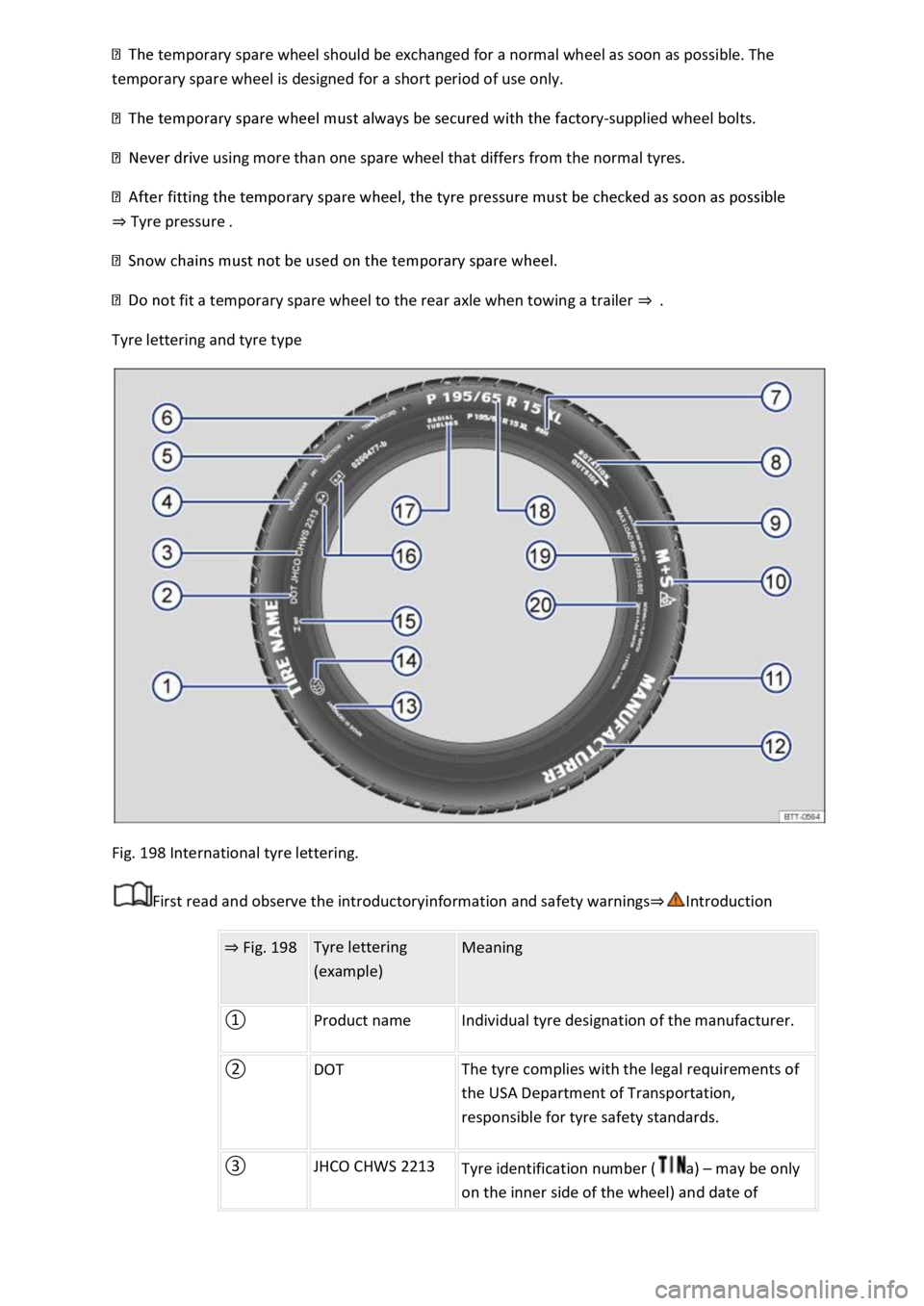
Fig. 198 International tyre lettering.
First read and observe the introductoryinformation and safety warnings⇒Introduction
⇒ Fig. 198 Tyre lettering
(example)
Meaning
① Product name Individual tyre designation of the manufacturer.
② DOT The tyre complies with the legal requirements of
the USA Department of Transportation,
responsible for tyre safety standards.
③ JHCO CHWS 2213 Tyre identification number (a) – may be only
on the inner side of the wheel) and date of