connect VOLKSWAGEN T-ROC 2021 Owner´s Manual
[x] Cancel search | Manufacturer: VOLKSWAGEN, Model Year: 2021, Model line: T-ROC, Model: VOLKSWAGEN T-ROC 2021Pages: 502, PDF Size: 9.42 MB
Page 314 of 502
Removing the ball head
First read and observe the introductoryinformation and safety warnings⇒Introduction
⇒ Electronic parking brake .
ailer and disconnect the electrical connection between the vehicle and the trailer.
If fitted, remove adapters from the trailer socket.
⇒ Fig. 155 ⑧ from the lock in the locking lever and insert the key ⑦ into
the lock.
e key ⑦ anti-clockwise until the part of the key with the hole is at the top.
② with your hand.
⑨ and at the same time press the locking lever ⑥ down as far as it will go
⇒ . The ball head is pre-tensioned.
⑥ and stow the pre-tensioned ball head safely with the vehicle toolkit.
② with your hand.
damage to the mounting.
WARNING
The removable ball head is heavy. The ball head could fall while it is being removed. This could cause
injuries.
Notes on towing a trailer
Page 315 of 502
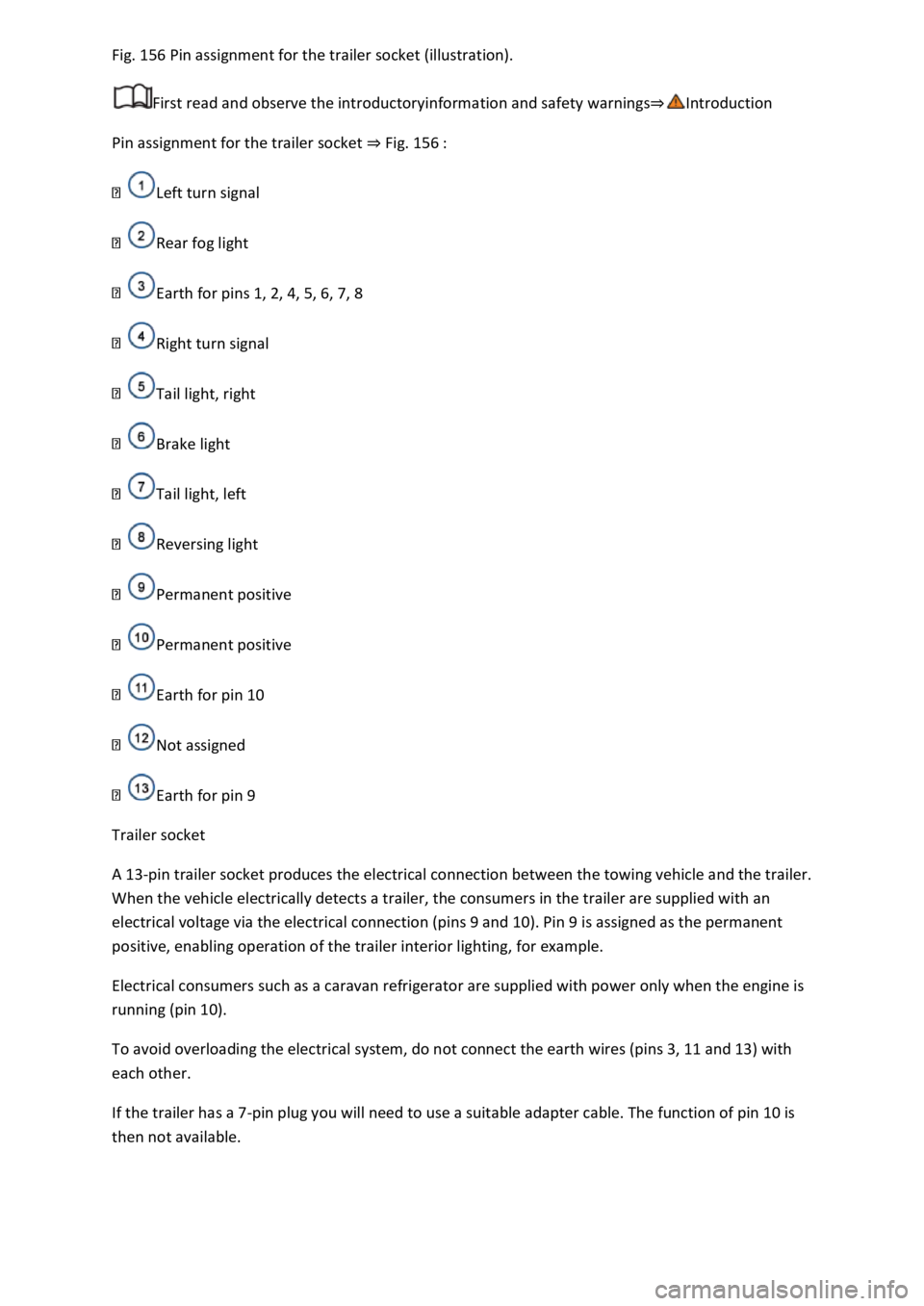
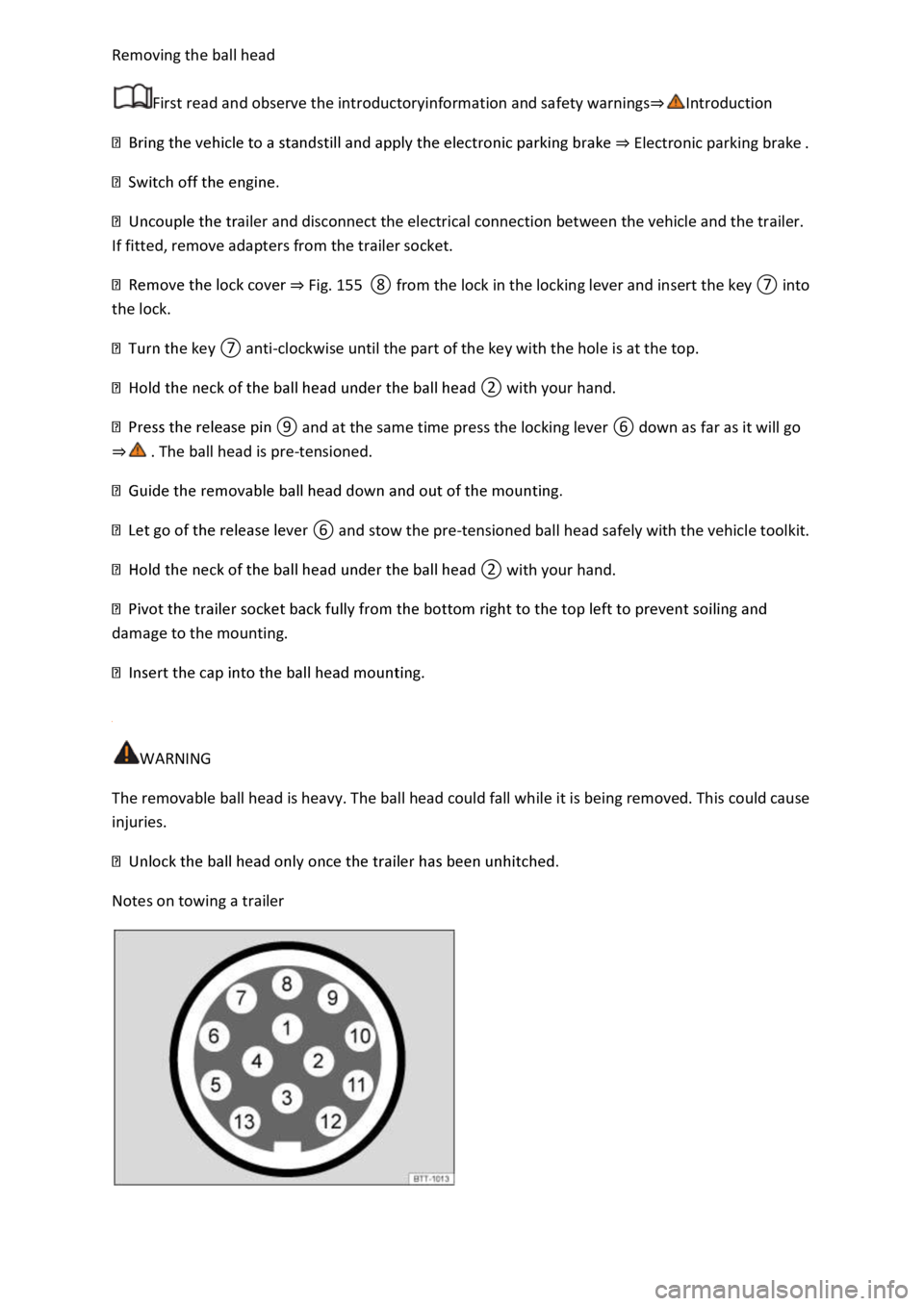
Fig. 156 Pin assignment for the trailer socket (illustration).
First read and observe the introductoryinformation and safety warnings⇒Introduction
Pin assignment for the trailer socket ⇒ Fig. 156 :
Left turn signal
Rear fog light
Earth for pins 1, 2, 4, 5, 6, 7, 8
Right turn signal
Tail light, right
Brake light
Tail light, left
Reversing light
Permanent positive
Permanent positive
Earth for pin 10
Not assigned
Earth for pin 9
Trailer socket
A 13-pin trailer socket produces the electrical connection between the towing vehicle and the trailer.
When the vehicle electrically detects a trailer, the consumers in the trailer are supplied with an
electrical voltage via the electrical connection (pins 9 and 10). Pin 9 is assigned as the permanent
positive, enabling operation of the trailer interior lighting, for example.
Electrical consumers such as a caravan refrigerator are supplied with power only when the engine is
running (pin 10).
To avoid overloading the electrical system, do not connect the earth wires (pins 3, 11 and 13) with
each other.
If the trailer has a 7-pin plug you will need to use a suitable adapter cable. The function of pin 10 is
then not available.
Page 316 of 502

If you are uncertain whether the trailer has been properly electrically connected to the towing
vehicle, please contact a qualified workshop. Volkswagen recommends using a Volkswagen
dealership for this purpose.
Connection to the anti-theft alarm
The trailer is integrated in the anti-theft system if the following conditions are fulfilled:
-fitted anti-theft alarm and a factory-fitted towing bracket.
ult-free and undamaged.
-theft alarm is active.
When the vehicle is locked, the alarm will be triggered as soon as the electrical connection to the
trailer is interrupted.
Connection to the anti-theft alarm (trailer with LED tail light clusters)
For technical reasons, trailers with LED tail light clusters cannot be integrated into the anti-theft
alarm system.
When the vehicle is locked, the alarm is not triggered as soon as the electrical connection to the
trailer with LED tail light clusters is interrupted.
WARNING
Any electrical cables which are not connected properly or are connected incorrectly could cause the
trailer to become live. This could lead to malfunctions in the entire vehicle electronics system and
could also cause accidents and serious injuries.
wing
vehicle's tail light clusters or to other power sources.
WARNING
Contact between the pins in the trailer socket can lead to short circuits, overloading of the electrical
system and failure of the lighting system, thereby causing accidents and serious injuries.
NOTICE
Page 317 of 502
If you park the trailer using the support wheel or other trailer supports, the trailer must be
unhitched from the vehicle. The vehicle could move up and down if the load changes or if there is
damage to the tyres, for example. If this happens, a great deal of force will be exerted on the towing
bracket and trailer, which could lead to damage to the vehicle and trailer.
If there is a fault in the vehicle or trailer electrical systems or in the anti-theft alarm, have the vehicle
checked by a qualified workshop.
If the 12-volt vehicle battery charge level is low, the electrical connection to the trailer will be
interrupted automatically.
Loading the trailer
First read and observe the introductoryinformation and safety warnings⇒Introduction
Trailer weight and drawbar load
The trailer weight is the weight that the vehicle can pull ⇒ .
The drawbar load is the load that is exerted vertically from above onto the ball head of the towing
bracket.
The figures for trailer weights and drawbar weights that are given on the data plate of the towing
bracket are for certification purposes only. The correct values for your specific model, which may be
lower than these figures, are given in the vehicle registration documents. All data in the official
vehicle documents take precedence over these data.
The maximum permitted drawbar load exerted by the trailer drawbar on the ball head of the towing
bracket must not exceed 80 kg.
In the interest of driving safety, Volkswagen recommends that you always use the maximum
drawbar load. The handling of the vehicle combination will be impaired if the drawbar load is too
low.
The drawbar load increases the weight on the rear axle and reduces the maximum payload of the
vehicle as a result.
Gross combination weight
The gross combination weight is made up of the actual weight of the loaded vehicle and of the
loaded trailer.
In some countries, trailers are divided into different classes. Volkswagen recommends that you
contact a qualified workshop to find out about suitable trailers.
Loading the trailer
The weight of the load should be distributed evenly. The maximum permitted drawbar load should
be utilised. Do not place the load only at the front or the rear of the trailer:
Page 320 of 502
trailers than for vehicles
without trailers.
Trailer stabilisation
First read and observe the introductoryinformation and safety warnings⇒Introduction
The trailer stabilisation function can detect if an attached trailer is starting to snake and can
countersteer.
Trailer stabilisation is an extension of the Electronic Stability Control (ESC).
If trailer snaking is detected, the trailer stabilisation function automatically helps to reduce the
snaking motion of the trailer using counter steering assistance.
Requirements for trailer stabilisation
-fitted or a compatible towing bracket has been retrofitted.
or in the instrument cluster is not lit up.
trailer is electrically connected to the towing vehicle via the trailer socket.
mph).
have a mechanical overrun system.
WARNING
Do not let the extra safety afforded by the trailer stabilisation function tempt you into taking any
risks when driving.
conditions.
WARNING
The trailer stabilisation function may not be able to detect all driving situations correctly.
Trailer stabilisation is switched off when ESC is deactivated.
stabilised accordingly in all cases.
Page 322 of 502
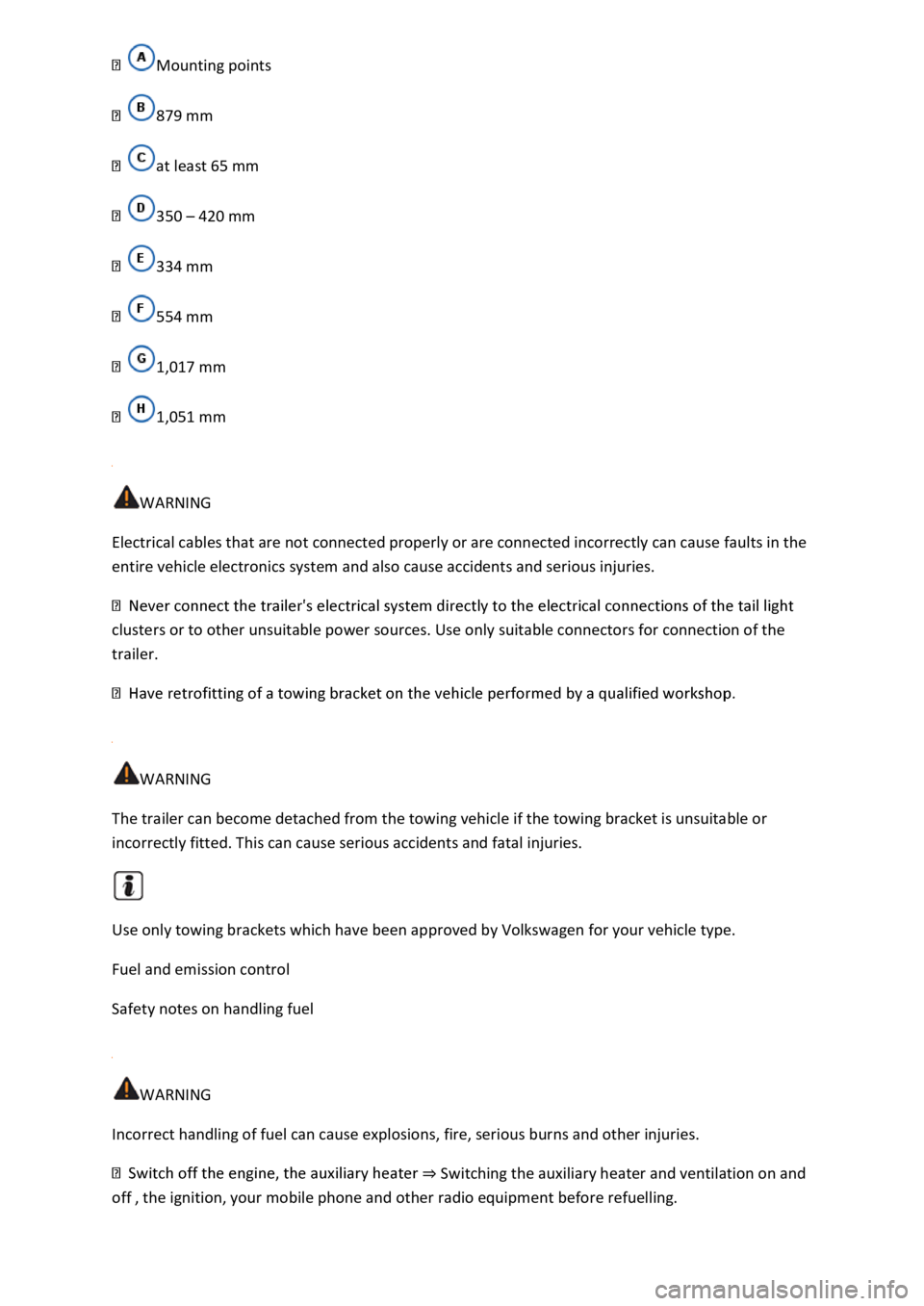
Mounting points
879 mm
at least 65 mm
350 – 420 mm
334 mm
554 mm
1,017 mm
1,051 mm
WARNING
Electrical cables that are not connected properly or are connected incorrectly can cause faults in the
entire vehicle electronics system and also cause accidents and serious injuries.
clusters or to other unsuitable power sources. Use only suitable connectors for connection of the
trailer.
WARNING
The trailer can become detached from the towing vehicle if the towing bracket is unsuitable or
incorrectly fitted. This can cause serious accidents and fatal injuries.
Use only towing brackets which have been approved by Volkswagen for your vehicle type.
Fuel and emission control
Safety notes on handling fuel
WARNING
Incorrect handling of fuel can cause explosions, fire, serious burns and other injuries.
⇒ Switching the auxiliary heater and ventilation on and
off , the ignition, your mobile phone and other radio equipment before refuelling.
Page 341 of 502
Do not touch the glass part of the bulb with unprotected fingers. When switched on, the heat of the
bulb would cause the remaining fingerprint to evaporate and be deposited on the reflector. This will
impair the light output of the headlight.
After changing a bulb, check to ensure that the bulb is working properly. If the bulb is not working
properly, the bulb may not have been inserted properly, may have failed again, or the connector
may have been fitted incorrectly.
Any time you change a bulb at the front of the vehicle, the headlight settings should be checked by a
qualified workshop.
WARNING
Ignoring any of the items on this important safety checklist can lead to accidents and severe injuries.
NOTICE
Always take care when removing or fitting lights to prevent damage to the paintwork or to other
vehicle parts.
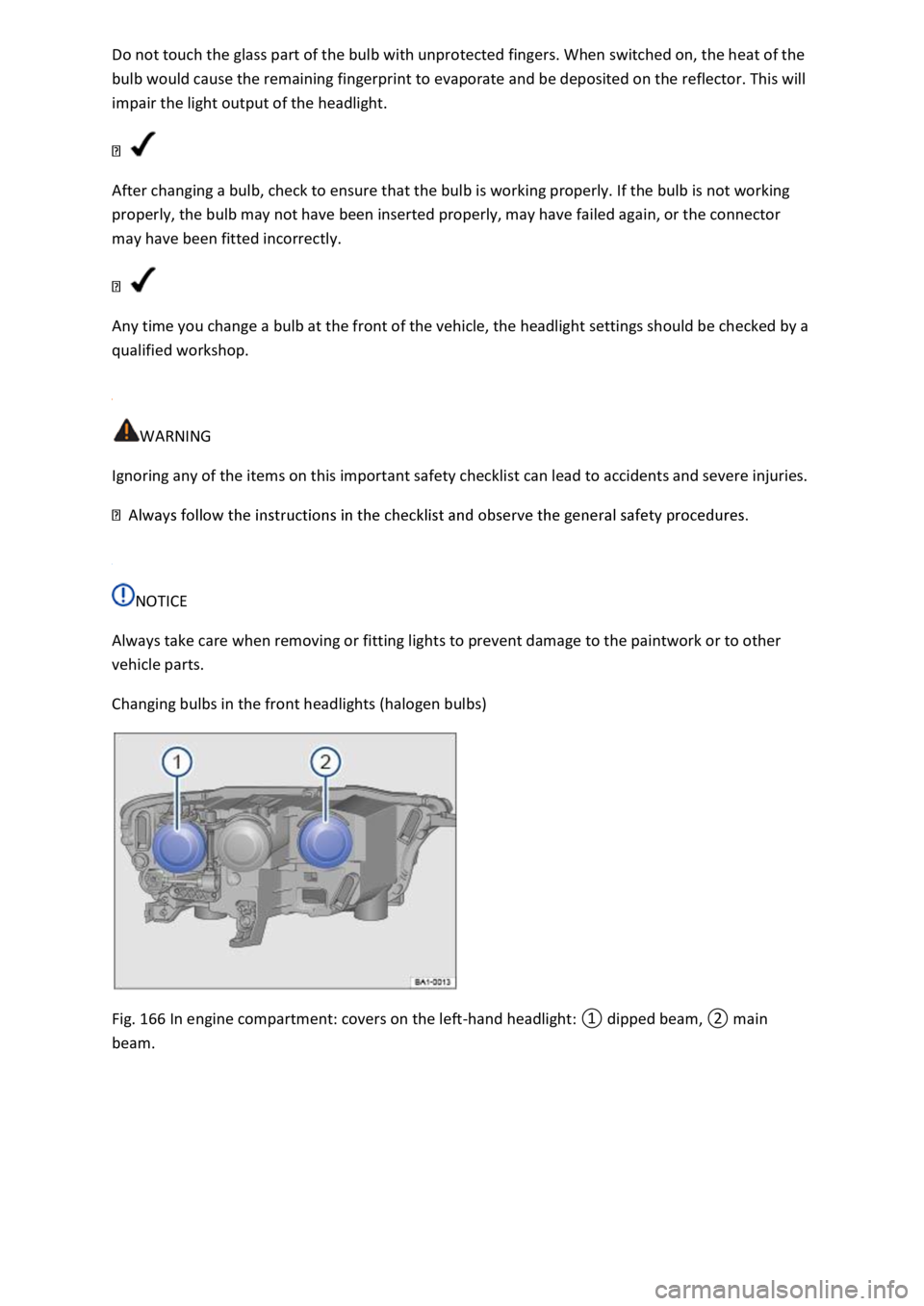
Changing bulbs in the front headlights (halogen bulbs)
Fig. 166 In engine compartment: covers on the left-hand headlight: ① dipped beam, ② main
beam.
Page 342 of 502
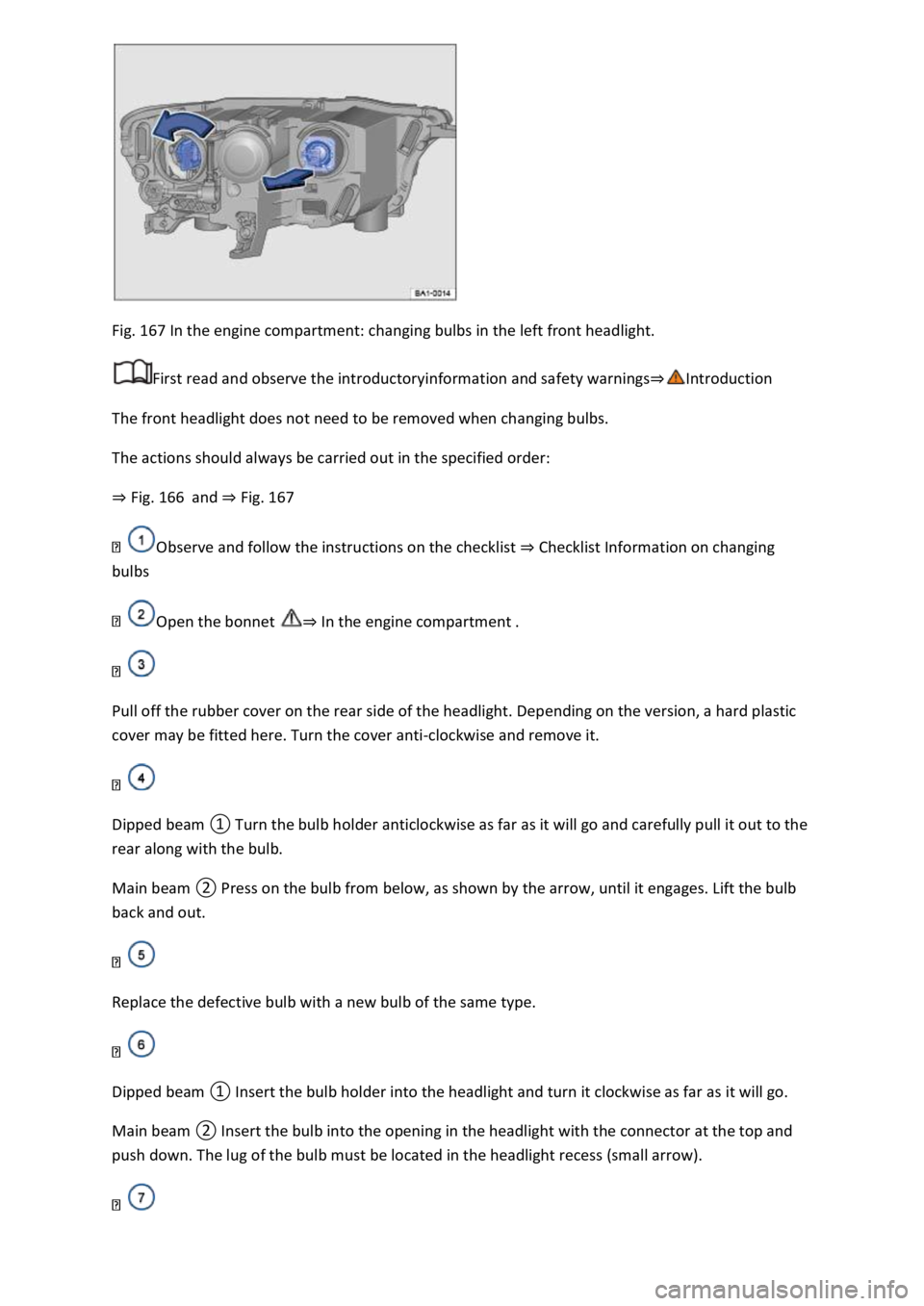
Fig. 167 In the engine compartment: changing bulbs in the left front headlight.
First read and observe the introductoryinformation and safety warnings⇒Introduction
The front headlight does not need to be removed when changing bulbs.
The actions should always be carried out in the specified order:
⇒ Fig. 166 and ⇒ Fig. 167
Observe and follow the instructions on the checklist ⇒ Checklist Information on changing
bulbs
Open the bonnet ⇒ In the engine compartment .
Pull off the rubber cover on the rear side of the headlight. Depending on the version, a hard plastic
cover may be fitted here. Turn the cover anti-clockwise and remove it.
Dipped beam ① Turn the bulb holder anticlockwise as far as it will go and carefully pull it out to the
rear along with the bulb.
Main beam ② Press on the bulb from below, as shown by the arrow, until it engages. Lift the bulb
back and out.
Replace the defective bulb with a new bulb of the same type.
Dipped beam ① Insert the bulb holder into the headlight and turn it clockwise as far as it will go.
Main beam ② Insert the bulb into the opening in the headlight with the connector at the top and
push down. The lug of the bulb must be located in the headlight recess (small arrow).
Page 343 of 502
Attach the rubber cover or hard plastic cover and turn it clockwise as far as it will go.
Close the bonnet ⇒ In the engine compartment .
Changing the bulbs in the headlights (lights with LED technology)
First read and observe the introductoryinformation and safety warnings⇒Introduction
These lamps use LED technology. The LEDs cannot be replaced by customers. If some LEDs fail, this
may be an indication that more elements are on the point of failure. In this case, have the lights
checked and renewed if necessary at a qualified workshop.
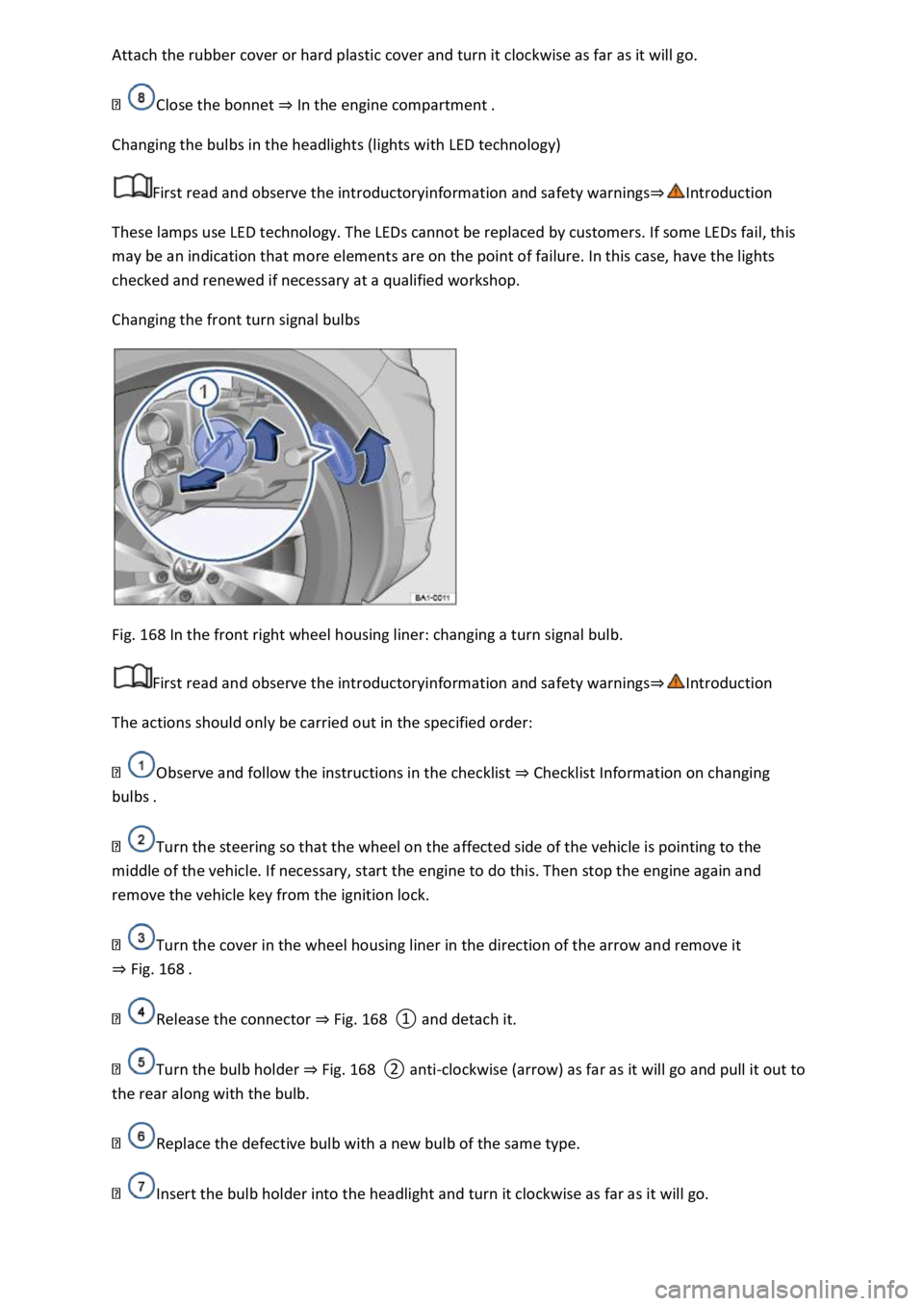
Changing the front turn signal bulbs
Fig. 168 In the front right wheel housing liner: changing a turn signal bulb.
First read and observe the introductoryinformation and safety warnings⇒Introduction
The actions should only be carried out in the specified order:
Observe and follow the instructions in the checklist ⇒ Checklist Information on changing
bulbs .
Turn the steering so that the wheel on the affected side of the vehicle is pointing to the
middle of the vehicle. If necessary, start the engine to do this. Then stop the engine again and
remove the vehicle key from the ignition lock.
Turn the cover in the wheel housing liner in the direction of the arrow and remove it
⇒ Fig. 168 .
Release the connector ⇒ Fig. 168 ① and detach it.
Turn the bulb holder ⇒ Fig. 168 ② anti-clockwise (arrow) as far as it will go and pull it out to
the rear along with the bulb.
Replace the defective bulb with a new bulb of the same type.
Insert the bulb holder into the headlight and turn it clockwise as far as it will go.
Page 344 of 502
Fit the connector ⇒ Fig. 168 ① on the bulb holder ⇒ Fig. 168 ②. The connector should
click into place.
Fit the cover in the wheel housing liner ⇒ Fig. 168 and lock it in position.
NOTICE
the headlight housing is seated properly in order to
prevent damage to the electrical system caused by water entering the system.
damaged.
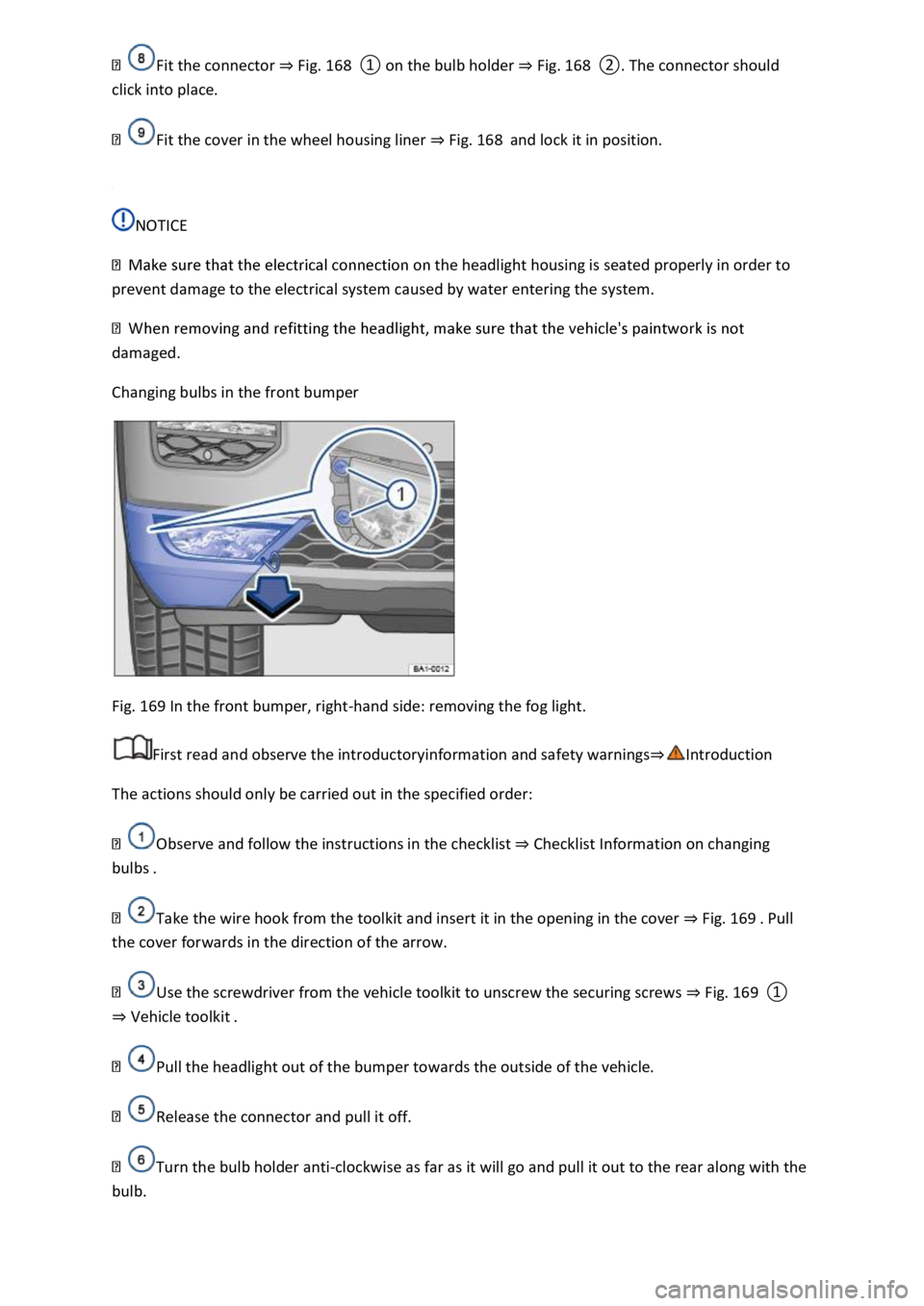
Changing bulbs in the front bumper
Fig. 169 In the front bumper, right-hand side: removing the fog light.
First read and observe the introductoryinformation and safety warnings⇒Introduction
The actions should only be carried out in the specified order:
Observe and follow the instructions in the checklist ⇒ Checklist Information on changing
bulbs .
Take the wire hook from the toolkit and insert it in the opening in the cover ⇒ Fig. 169 . Pull
the cover forwards in the direction of the arrow.
Use the screwdriver from the vehicle toolkit to unscrew the securing screws ⇒ Fig. 169 ①
⇒ Vehicle toolkit .
Pull the headlight out of the bumper towards the outside of the vehicle.
Release the connector and pull it off.
Turn the bulb holder anti-clockwise as far as it will go and pull it out to the rear along with the
bulb.