change wheel VOLKSWAGEN TIGUAN 2017 Owner´s Manual
[x] Cancel search | Manufacturer: VOLKSWAGEN, Model Year: 2017, Model line: TIGUAN, Model: VOLKSWAGEN TIGUAN 2017Pages: 341, PDF Size: 9.14 MB
Page 165 of 341
•Accelerate only to the speed you need to climb the slope. Too much acceleration can cause the
wheels to spin and lead to a loss of control of the vehicle. Too little acceleration increases the
probability of stalling the engine.
•Never attempt to stop or turn on a slope.
•Avoid allowing the engine to stall.
•Do not change gear or engage the clutch when climbing a slope.
•Use the Off-road display ⇒ Off-road display.
If you cannot continue to drive up a hill
•Never turn the vehicle around on an incline.
•If the engine has stalled, depress the footbrake and start the engine again.
•Select the reverse gear and reverse back in a straight line slowly.
•Use the foot brake to keep a constant speed until you have reached a safe place.
Driving downhill
Never exceed the inclination angle of the vehicle! If, in an emergency, you have to traverse the
slope when driving down it and the vehicle threatens to tip over, steer downhill along the maximum
gradient.
There is an increased risk of rolling over when driving downhill. Concentrate on steering the vehicle
in particular when driving downhill.
Use the off-road display on steep downhill stretches ⇒ Off-road display.
•Drive down steep inclines in first gear.
•Use the foot brake sparingly in order not to lose control of the vehicle.
•If it is possible and not dangerous, drive straight down the slope on the maximum gradient (in
the fall line).
•Do not press the clutch and do not select neutral.
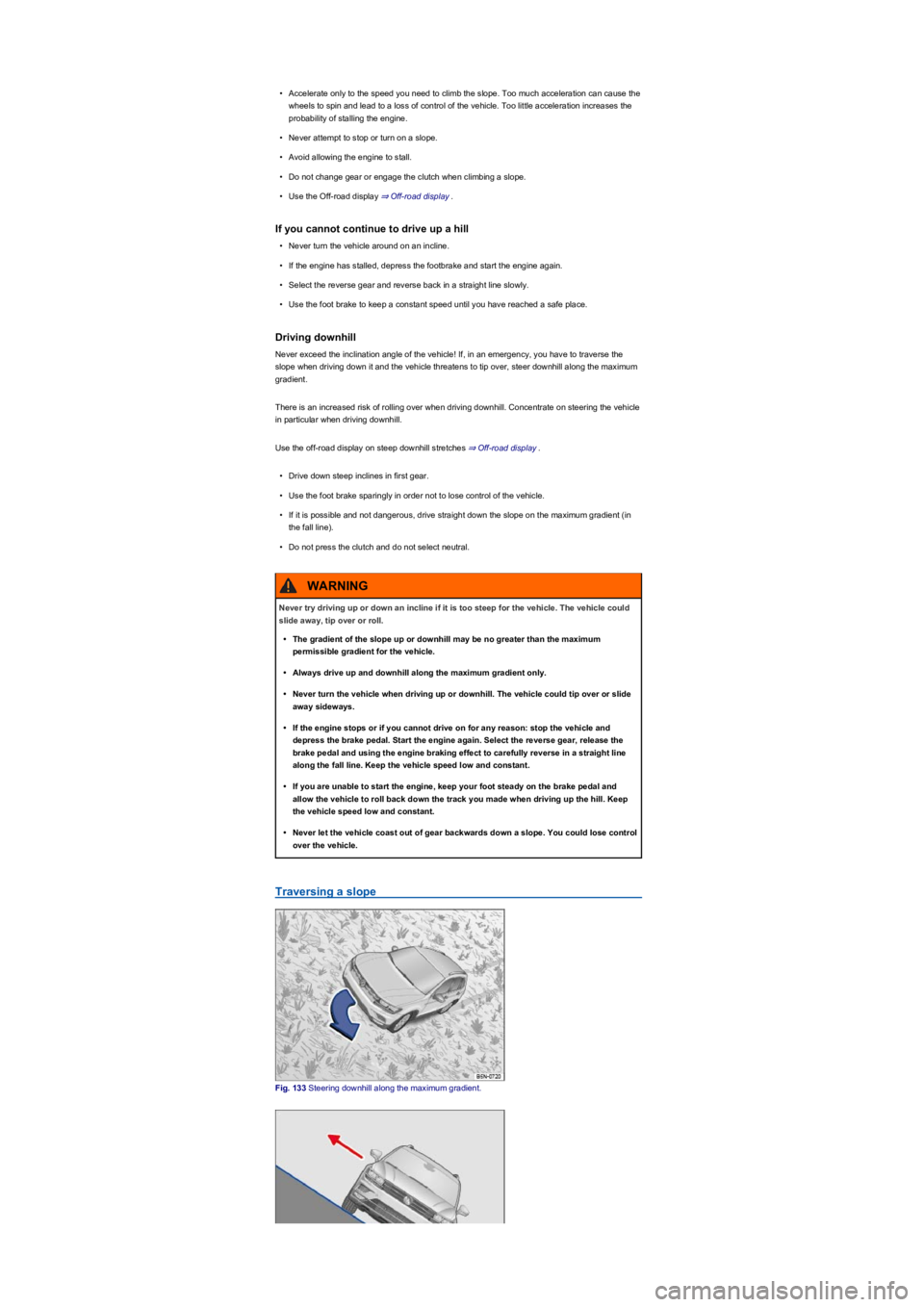
Traversing a slope
Fig. 133 Steering downhill along the maximum gradient.
Never try driving up or down an incline if it is too steep for the vehicle. The vehicle could
slide away, tip over or roll.
•The gradient of the slope up or downhill may be no greater than the maximum
permissible gradient for the vehicle.
•Always drive up and downhill along the maximum gradient only.
•Never turn the vehicle when driving up or downhill. The vehicle could tip over or slide
away sideways.
•If the engine stops or if you cannot drive on for any reason: stop the vehicle and
depress the brake pedal. Start the engine again. Select the reverse gear, release the
brake pedal and using the engine braking effect to carefully reverse in a straight line
along the fall line. Keep the vehicle speed low and constant.
•If you are unable to start the engine, keep your foot steady on the brake pedal and
allow the vehicle to roll back down the track you made when driving up the hill. Keep
the vehicle speed low and constant.
•Never let the vehicle coast out of gear backwards down a slope. You could lose control
over the vehicle.
WARNING
Page 168 of 341
Driver assist systems
Cruise control system (CCS)
Introduction
This chapter contains information on the followingsubjects:
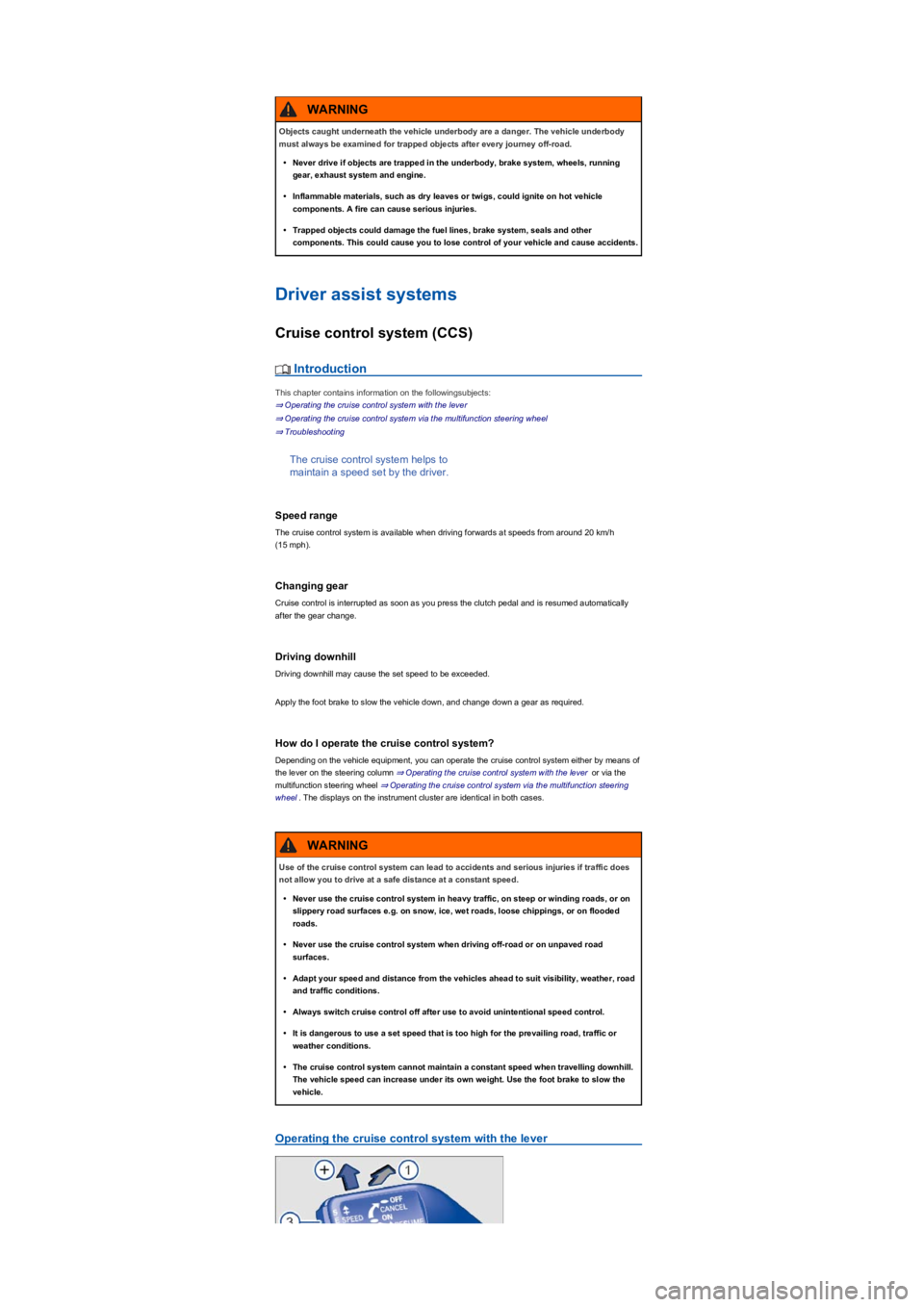
⇒ Operating the cruise control system with the lever
⇒ Operating the cruise control system via the multifunction steering wheel
⇒ Troubleshooting
The cruise control system helps to
maintain a speed set by the driver.
Speed range
The cruise control system is available when driving forwards at speeds from around 20 km/h
(15 mph).
Changing gear
Cruise control is interrupted as soon as you press the clutch pedal and is resumed automatically
after the gear change.
Driving downhill
Driving downhill may cause the set speed to be exceeded.
Apply the foot brake to slow the vehicle down, and change down a gear as required.
How do I operate the cruise control system?
Depending on the vehicle equipment, you can operate the cruise control system either by means of
the lever on the steering column ⇒ Operating the cruise control system with the lever or via the
multifunction steering wheel ⇒ Operating the cruise control system via the multifunction steering
wheel. The displays on the instrument cluster are identical in both cases.
Operating the cruise control system with the lever
Objects caught underneath the vehicle underbody are a danger. The vehicle underbody
must always be examined for trapped objects after every journey off-road.
•Never drive if objects are trapped in the underbody, brake system, wheels, running
gear, exhaust system and engine.
•Inflammable materials, such as dry leaves or twigs, could ignite on hot vehicle
components. A fire can cause serious injuries.
•Trapped objects could damage the fuel lines, brake system, seals and other
components. This could cause you to lose control of your vehicle and cause accidents.
WARNING
Use of the cruise control system can lead to accidents and serious injuries if traffic does
not allow you to drive at a safe distance at a constant speed.
•Never use the cruise control system in heavy traffic, on steep or winding roads, or on
slippery road surfaces e.g. on snow, ice, wet roads, loose chippings, or on flooded
roads.
•Never use the cruise control system when driving off-road or on unpaved road
surfaces.
•Adapt your speed and distance from the vehicles ahead to suit visibility, weather, road
and traffic conditions.
•Always switch cruise control off after use to avoid unintentional speed control.
•It is dangerous to use a set speed that is too high for the prevailing road, traffic or
weather conditions.
•The cruise control system cannot maintain a constant speed when travelling downhill.
The vehicle speed can increase under its own weight. Use the foot brake to slow the
vehicle.
WARNING
Page 170 of 341
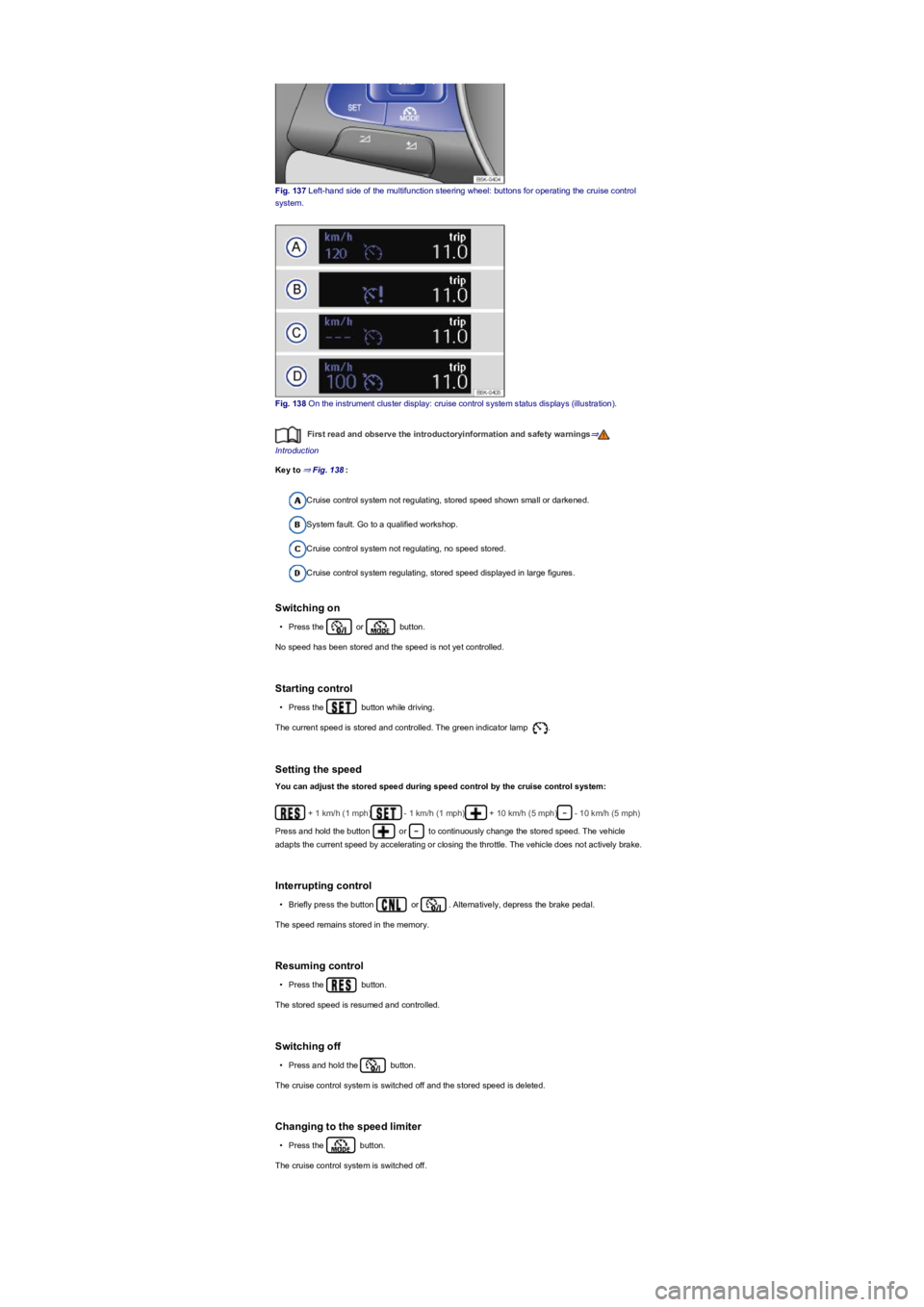
Fig. 137 Left-hand side of the multifunction steering wheel: buttons for operating the cruise control
system.
Fig. 138 On the instrument cluster display: cruise control system status displays (illustration).
First read and observe the introductoryinformation and safety warnings⇒
Introduction
Key to ⇒ Fig. 138:
Cruise control system not regulating, stored speed shown small or darkened.
System fault. Go to a qualified workshop.
Cruise control system not regulating, no speed stored.
Cruise control system regulating, stored speed displayed in large figures.
Switching on
•Press the or button.
No speed has been stored and the speed is not yet controlled.
Starting control
•Press the button while driving.
The current speed is stored and controlled. The green indicator lamp .
Setting the speed
You can adjust the stored speed during speed control by the cruise control system:
+ 1 km/h (1 mph)- 1 km/h (1 mph)+ 10 km/h (5 mph)- 10 km/h (5 mph)
Press and hold the button or to continuously change the stored speed. The vehicle
adapts the current speed by accelerating or closing the throttle. The vehicle does not actively brake.
Interrupting control
•Briefly press the button or . Alternatively, depress the brake pedal.
The speed remains stored in the memory.
Resuming control
•Press the button.
The stored speed is resumed and controlled.
Switching off
•Press and hold the button.
The cruise control system is switched off and the stored speed is deleted.
Changing to the speed limiter
•Press the button.
The cruise control system is switched off.
Page 171 of 341
Troubleshooting
First read and observe the introductoryinformation and safety warnings⇒
Introduction
Regulation is automatically interrupted.
•You have depressed the brake pedal.
•The selector lever of the DSG dual clutch gearbox is not in the selector lever position D.
•The vehicle has exceeded the stored speed for an extended period.
•If regulation related to driving dynamics is taking place, e.g. by TCS and ESC.
•Malfunction. Switch off the cruise control system and have it checked by a qualified workshop.
Volkswagen recommends using a Volkswagen dealership for this purpose.
Speed limiter
Introduction
This chapter contains information on the followingsubjects:
⇒ Operating the speed limiter with the turn signal and main beam lever
⇒ Operating the speed limiter via the multifunction steering wheel
⇒ Troubleshooting
The speed limiter helps to prevent the
vehicle from exceeding a speed that
you have stored.
Speed range
The speed limiter is available when driving forwards at speeds from around 30 km/h (20 mph).
Driving with speed limiter
You can interrupt the speed limiter function at any time by fully depressing the accelerator beyond
the point of resistance. The green warning and indicator lamp flashes as soon as the stored
speed is exceeded. The speed remains stored in the memory.
The speed limiter function is activated again automatically as soon as the speed drops below the
stored speed.
Driving downhill
Driving downhill may cause the set speed to be exceeded. The green warning and indicator lamp
flashes in this case. An acoustic warning may also be given.
Apply the foot brake to slow the vehicle down, and change down a gear as required.
How do I operate the speed limiter?
Depending on the vehicle equipment, you can operate the speed limiter either by means of the turn
signal and main beam lever ⇒ Operating the speed limiter with the turn signal and main beam lever
or via the multifunction steering wheel ⇒ Operating the speed limiter via the multifunction steering
wheel.
The displays on the instrument cluster are identical in both cases ⇒ Fig. 140.
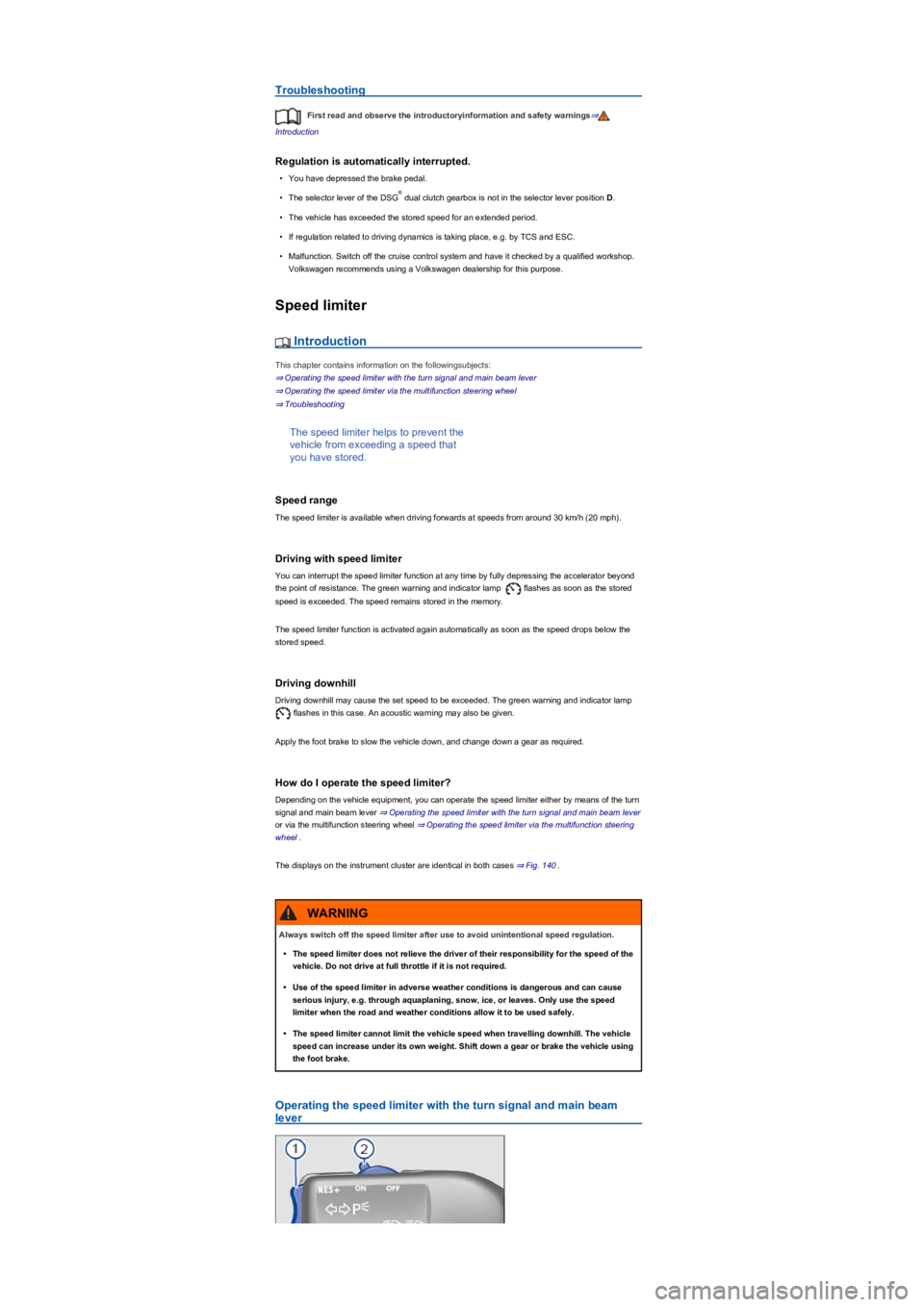
Operating the speed limiter with the turn signal and main beam
lever
®
Always switch off the speed limiter after use to avoid unintentional speed regulation.
•The speed limiter does not relieve the driver of their responsibility for the speed of the
vehicle. Do not drive at full throttle if it is not required.
•Use of the speed limiter in adverse weather conditions is dangerous and can cause
serious injury, e.g. through aquaplaning, snow, ice, or leaves. Only use the speed
limiter when the road and weather conditions allow it to be used safely.
•The speed limiter cannot limit the vehicle speed when travelling downhill. The vehicle
speed can increase under its own weight. Shift down a gear or brake the vehicle using
the foot brake.
WARNING
Page 172 of 341
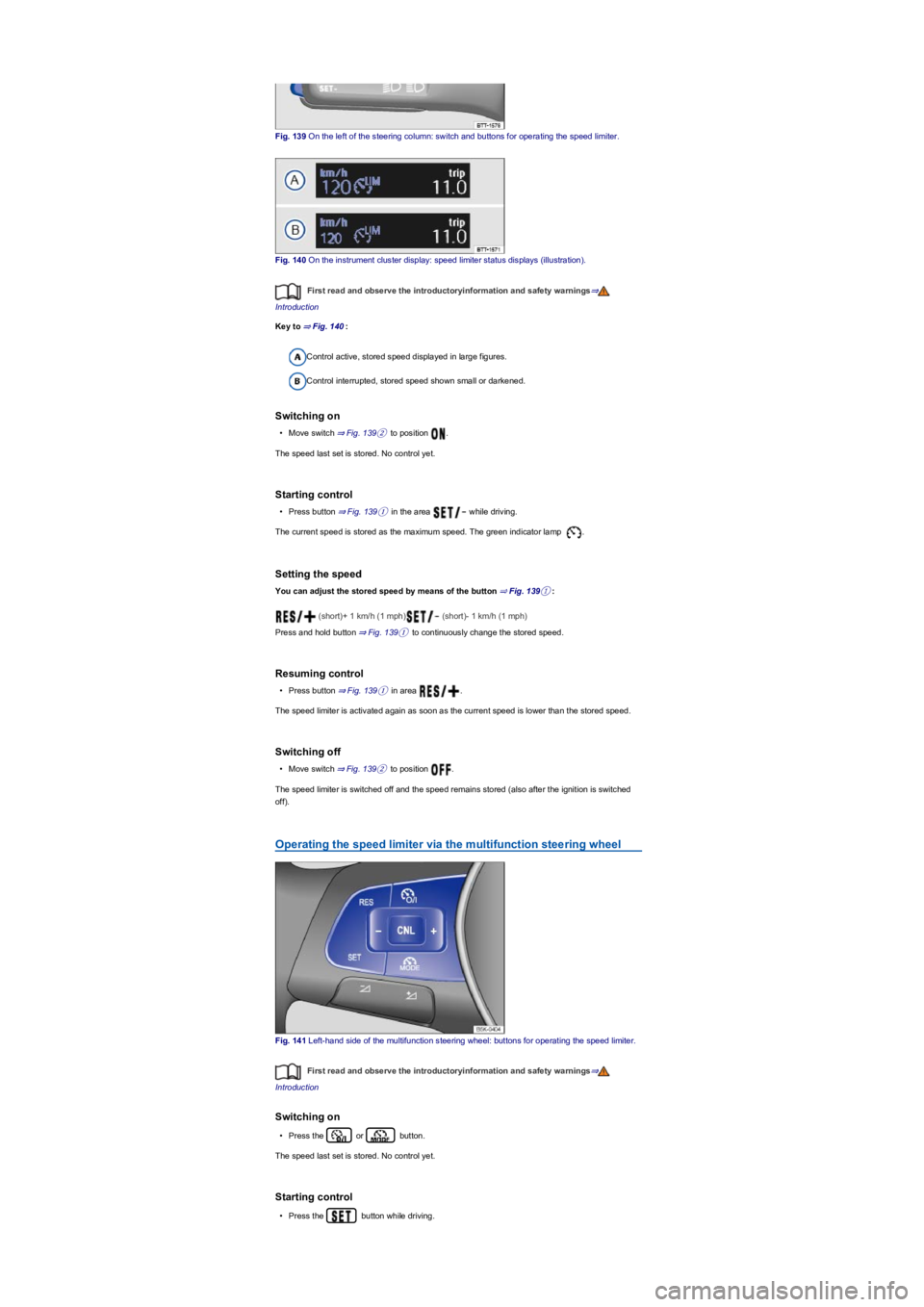
Fig. 139 On the left of the steering column: switch and buttons for operating the speed limiter.
Fig. 140 On the instrument cluster display: speed limiter status displays (illustration).
First read and observe the introductoryinformation and safety warnings⇒
Introduction
Key to ⇒ Fig. 140:
Control active, stored speed displayed in large figures.
Control interrupted, stored speed shown small or darkened.
Switching on
•Move switch ⇒ Fig. 139② to position .
The speed last set is stored. No control yet.
Starting control
•Press button ⇒ Fig. 139① in the area while driving.
The current speed is stored as the maximum speed. The green indicator lamp .
Setting the speed
You can adjust the stored speed by means of the button ⇒ Fig. 139①:
(short)+ 1 km/h (1 mph) (short)- 1 km/h (1 mph)
Press and hold button ⇒ Fig. 139① to continuously change the stored speed.
Resuming control
•Press button ⇒ Fig. 139① in area .
The speed limiter is activated again as soon as the current speed is lower than the stored speed.
Switching off
•Move switch ⇒ Fig. 139② to position .
The speed limiter is switched off and the speed remains stored (also after the ignition is switched
off).
Operating the speed limiter via the multifunction steering wheel
Fig. 141 Left-hand side of the multifunction steering wheel: buttons for operating the speed limiter.
First read and observe the introductoryinformation and safety warnings⇒
Introduction
Switching on
•Press the or button.
The speed last set is stored. No control yet.
Starting control
•Press the button while driving.
Page 176 of 341
If a stationary vehicle is hidden behind a vehicle that has been detected by the adaptive cruise
control and this vehicle turns off the road or changes lane, the ACC will not react to the stationary
vehicle ⇒ Fig. 144.
Bends
The radar sensor always measures straight ahead. For this reason, vehicles may be incorrectly
detected or vehicles driving ahead not detected in tight bends ⇒ Fig. 143.
Vehicles outside the sensor range
•Vehicles that are driving outside the sensor range in close proximity to your vehicle, e.g.
motorbikes ⇒ Fig. 143.
•Vehicles that change into your lane directly in front of your vehicle ⇒ Fig. 144.
•Vehicles with bodies or attachments that project beyond the vehicle.
Switching ACC on and off
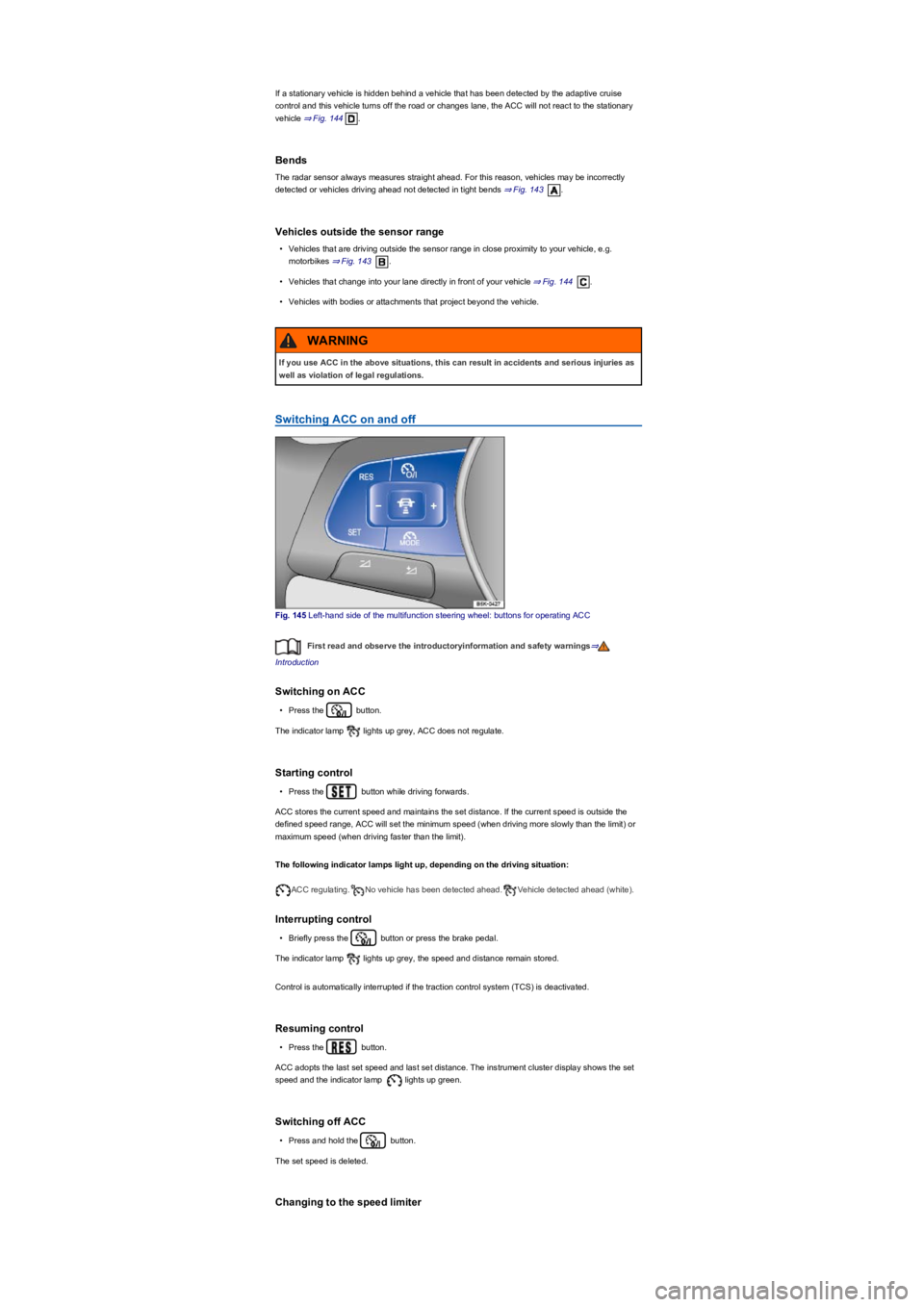
Fig. 145 Left-hand side of the multifunction steering wheel: buttons for operating ACC
First read and observe the introductoryinformation and safety warnings⇒
Introduction
Switching on ACC
•Press the button.
The indicator lamp lights up grey, ACC does not regulate.
Starting control
•Press the button while driving forwards.
ACC stores the current speed and maintains the set distance. If the current speed is outside the
defined speed range, ACC will set the minimum speed (when driving more slowly than the limit) or
maximum speed (when driving faster than the limit).
The following indicator lamps light up, depending on the driving situation:
ACC regulating.No vehicle has been detected ahead.Vehicle detected ahead (white).
Interrupting control
•Briefly press the button or press the brake pedal.
The indicator lamp lights up grey, the speed and distance remain stored.
Control is automatically interrupted if the traction control system (TCS) is deactivated.
Resuming control
•Press the button.
ACC adopts the last set speed and last set distance. The instrument cluster display shows the set
speed and the indicator lamp lights up green.
Switching off ACC
•Press and hold the button.
The set speed is deleted.
Changing to the speed limiter
If you use ACC in the above situations, this can result in accidents and serious injuries as
well as violation of legal regulations.
WARNING
Page 177 of 341
•Press the button.
ACC is switched off.
Setting ACC
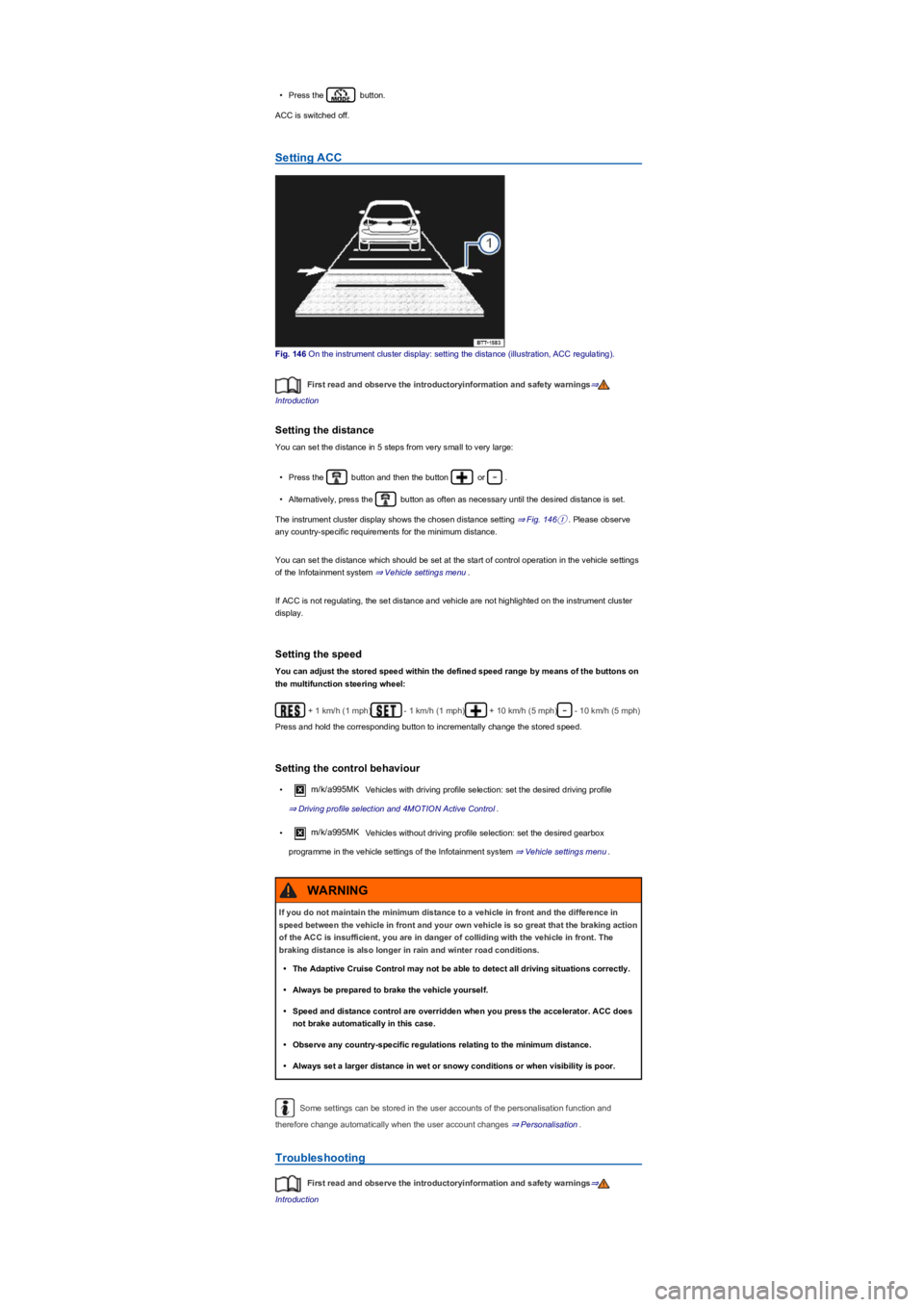
Fig. 146 On the instrument cluster display: setting the distance (illustration, ACC regulating).
First read and observe the introductoryinformation and safety warnings⇒
Introduction
Setting the distance
You can set the distance in 5 steps from very small to very large:
•Press the button and then the button or .
•Alternatively, press the button as often as necessary until the desired distance is set.
The instrument cluster display shows the chosen distance setting ⇒ Fig. 146①. Please observe
any country-specific requirements for the minimum distance.
You can set the distance which should be set at the start of control operation in the vehicle settings
of the Infotainment system ⇒ Vehicle settings menu.
If ACC is not regulating, the set distance and vehicle are not highlighted on the instrument cluster
display.
Setting the speed
You can adjust the stored speed within the defined speed range by means of the buttons on
the multifunction steering wheel:
+ 1 km/h (1 mph)- 1 km/h (1 mph)+ 10 km/h (5 mph)- 10 km/h (5 mph)
Press and hold the corresponding button to incrementally change the stored speed.
Setting the control behaviour
•m/k/a995MK Vehicles with driving profile selection: set the desired driving profile
⇒ Driving profile selection and 4MOTION Active Control.
•m/k/a995MK Vehicles without driving profile selection: set the desired gearbox
programme in the vehicle settings of the Infotainment system ⇒ Vehicle settings menu.
Some settings can be stored in the user accounts of the personalisation function and
therefore change automatically when the user account changes ⇒ Personalisation.
Troubleshooting
First read and observe the introductoryinformation and safety warnings⇒
Introduction
If you do not maintain the minimum distance to a vehicle in front and the difference in
speed between the vehicle in front and your own vehicle is so great that the braking action
of the ACC is insufficient, you are in danger of colliding with the vehicle in front. The
braking distance is also longer in rain and winter road conditions.
•The Adaptive Cruise Control may not be able to detect all driving situations correctly.
•Always be prepared to brake the vehicle yourself.
•Speed and distance control are overridden when you press the accelerator. ACC does
not brake automatically in this case.
•Observe any country-specific regulations relating to the minimum distance.
•Always set a larger distance in wet or snowy conditions or when visibility is poor.
WARNING
Page 184 of 341
If the driver does not respond, the system will give another warning by initiating a quick jolt of the
brake before switching to passive or activating Emergency Assist (depending on the equipment)
⇒ Emergency Assist.
Behaviour when changing lanes
There is no steering intervention when the turn signal is switched on in vehicles without lane
keeping system.
In vehicles with lane keeping system, a steering intervention takes place if the turn signal is
switched on in critical situations ⇒ Lane change system (Side Assist) incl. Rear Traffic Alert.
Steering wheel vibration
If the steering wheel vibrates, the driver must actively take over steering.
Troubleshooting
First read and observe the introductoryinformation and safety warnings⇒
Introduction
No camera visibility, error message, system switches itself off
•Clean the camera or remove stickers or accessories from the camera ⇒ Caring for and cleaning
the vehicle exterior.
•Check whether any damage is visible.
The system is not responding as expected
•The camera is dirty ⇒ Caring for and cleaning the vehicle exterior. The camera visibility may be
impaired by dirt and snow or also residue from cleaning agents or coatings.
•The camera is covered by water.
•The vehicle is damaged in the area of the camera.
•Changes have been made to the paintwork around the camera or the construction has been
modified, e.g. vehicle front end or the running gear.
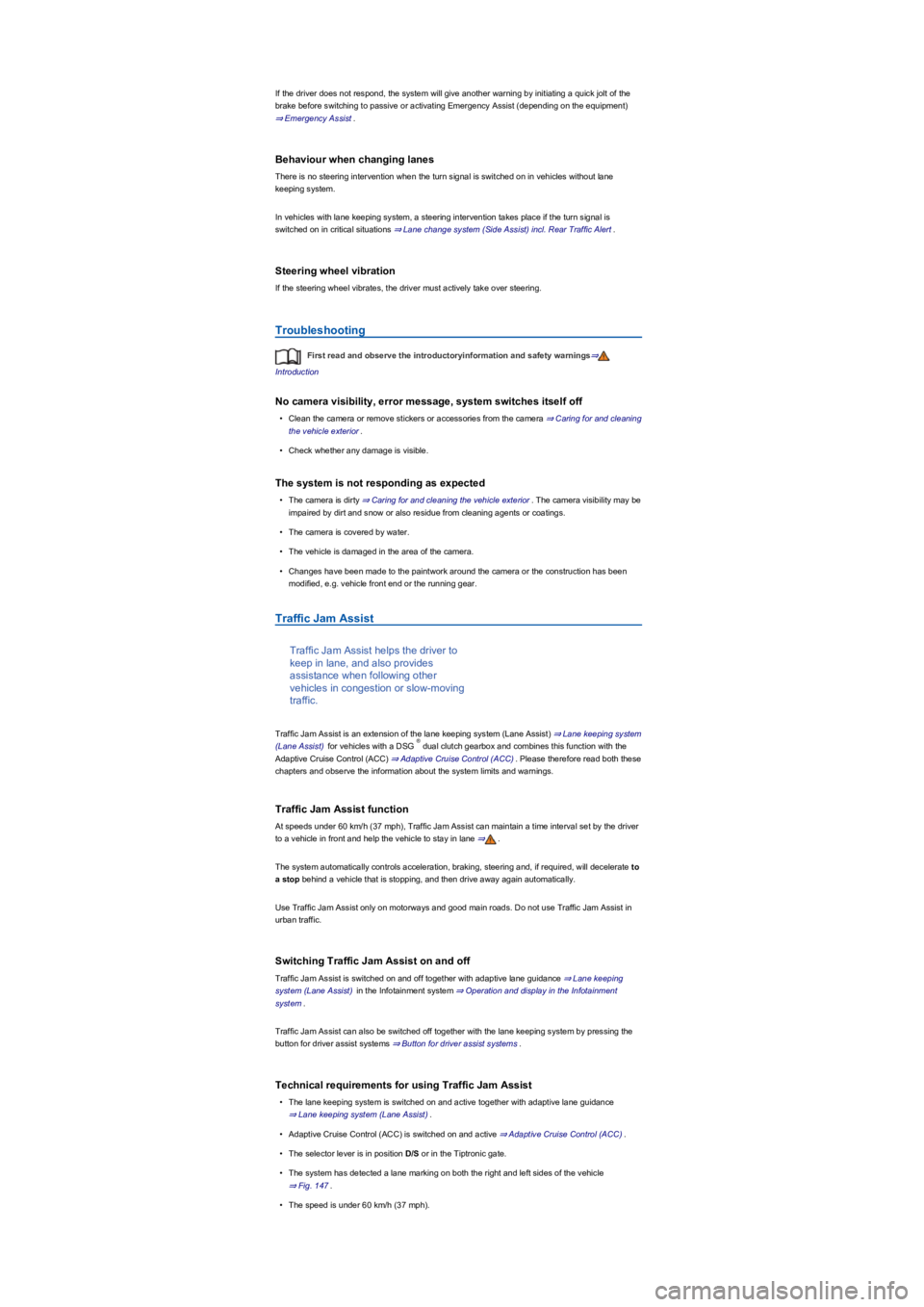
Traffic Jam Assist
Traffic Jam Assist helps the driver to
keep in lane, and also provides
assistance when following other
vehicles in congestion or slow-moving
traffic.
Traffic Jam Assist is an extension of the lane keeping system (Lane Assist) ⇒ Lane keeping system
(Lane Assist) for vehicles with a DSG dual clutch gearbox and combines this function with the
Adaptive Cruise Control (ACC) ⇒ Adaptive Cruise Control (ACC). Please therefore read both these
chapters and observe the information about the system limits and warnings.
Traffic Jam Assist function
At speeds under 60 km/h (37 mph), Traffic Jam Assist can maintain a time interval set by the driver
to a vehicle in front and help the vehicle to stay in lane ⇒.
The system automatically controls acceleration, braking, steering and, if required, will decelerate to
a stop behind a vehicle that is stopping, and then drive away again automatically.
Use Traffic Jam Assist only on motorways and good main roads. Do not use Traffic Jam Assist in
urban traffic.
Switching Traffic Jam Assist on and off
Traffic Jam Assist is switched on and off together with adaptive lane guidance ⇒ Lane keeping
system (Lane Assist) in the Infotainment system ⇒ Operation and display in the Infotainment
system.
Traffic Jam Assist can also be switched off together with the lane keeping system by pressing the
button for driver assist systems ⇒ Button for driver assist systems.
Technical requirements for using Traffic Jam Assist
•The lane keeping system is switched on and active together with adaptive lane guidance
⇒ Lane keeping system (Lane Assist).
•Adaptive Cruise Control (ACC) is switched on and active ⇒ Adaptive Cruise Control (ACC).
•The selector lever is in position D/S or in the Tiptronic gate.
•The system has detected a lane marking on both the right and left sides of the vehicle
⇒ Fig. 147.
•The speed is under 60 km/h (37 mph).
®
Page 186 of 341
system decelerates the vehicle to a complete stop and switches on the electronic parking brake
automatically ⇒ Electronic parking brake.
When Emergency Assist is actively controlling the vehicle, the hazard warning lights are switched
on and the vehicle performs slight snaking movements within its lane to warn other road users.
The hazard warning lights can be deactivated by pressing the accelerator or brake, by making a
steering intervention or, depending on the situation, by pressing the button for the hazard warning
lights.
When Emergency Assist has been triggered, the system is unavailable until after the ignition has
been switched off and then on again.
Prerequisites
•The lane keeping system and ACC are switched on.
•The selector lever is in position D/S or in the Tiptronic gate.
•The system has detected a lane marking on both the right and left sides of the vehicle
⇒ Fig. 147.
Switching Emergency Assist on and off
Emergency Assist is activated automatically when the lane keeping system ⇒ Lane keeping system
(Lane Assist) is switched on.
Conditions for deactivating Emergency Assist
The following conditions can prevent Emergency Assist from reacting, or can cause it to deactivate
automatically:
•If the driver activates the accelerator, brake or steering.
•If one of the prerequisites for operation of the lane keeping system ⇒ Lane keeping system
(Lane Assist) or ACC ⇒ Adaptive Cruise Control (ACC) is no longer fulfilled.
Lane change system (Side Assist) incl. Rear Traffic
Alert
Introduction
This chapter contains information on the followingsubjects:
⇒ Driving with the lane change system
⇒ Rear Traffic Alert
⇒ Troubleshooting
The lane change system with Rear
Traffic Alert provides assistance for the
driver when checking for traffic behind
the vehicle.
Radar sensors monitor the area behind the vehicle ⇒ Vehicle overviews. The system measures the
distance and speed difference in relation to other vehicles and informs the driver by means of visual
signals in the exterior mirrors.
The intelligent technology used in Emergency Assist cannot overcome the laws of
physics, and functions only within the limits of the system. The driver is always
responsible for controlling the vehicle.
•Adapt your speed and distance from the vehicles ahead to suit visibility, weather, road
and traffic conditions.
•Your hands should always be on the steering wheel so that you can steer at any time.
•Emergency Assist cannot prevent accidents and serious injuries on its own.
•If the camera's field of view is dirty, covered or damaged, the function of the lane
keeping system may be impaired.
•Emergency Assist does not react to persons, animals or vehicles crossing or
approaching in the same lane.
WARNING
If Emergency Assist is triggered unexpectedly, it can result in accidents and serious
injuries.
•If there is a malfunction in the Emergency Assist system, switch off the lane keeping
system (Lane Assist). This will also switch off Emergency Assist ⇒ Lane keeping
system (Lane Assist).
•Go to a qualified workshop and have the system checked. Volkswagen recommends
using a Volkswagen dealership for this purpose.
WARNING
Page 187 of 341
The integrated Rear Traffic Alert provides assistance when reversing out of a parking space and
manoeuvring.
System limits
Use the lane keeping system only on paved roads.
The lane change system may interpret the traffic situation incorrectly in the following driving
situations, for example:
•In tight bends.
•When driving in the middle of two lanes.
•When road lanes are of varying width.
•At the brow of a hill.
•In poor weather conditions.
•Where there are special roadside structures, e.g. high or offset crash barriers.
You can save some settings in the user accounts of the personalisation function
⇒ Personalisation.
Driving with the lane change system
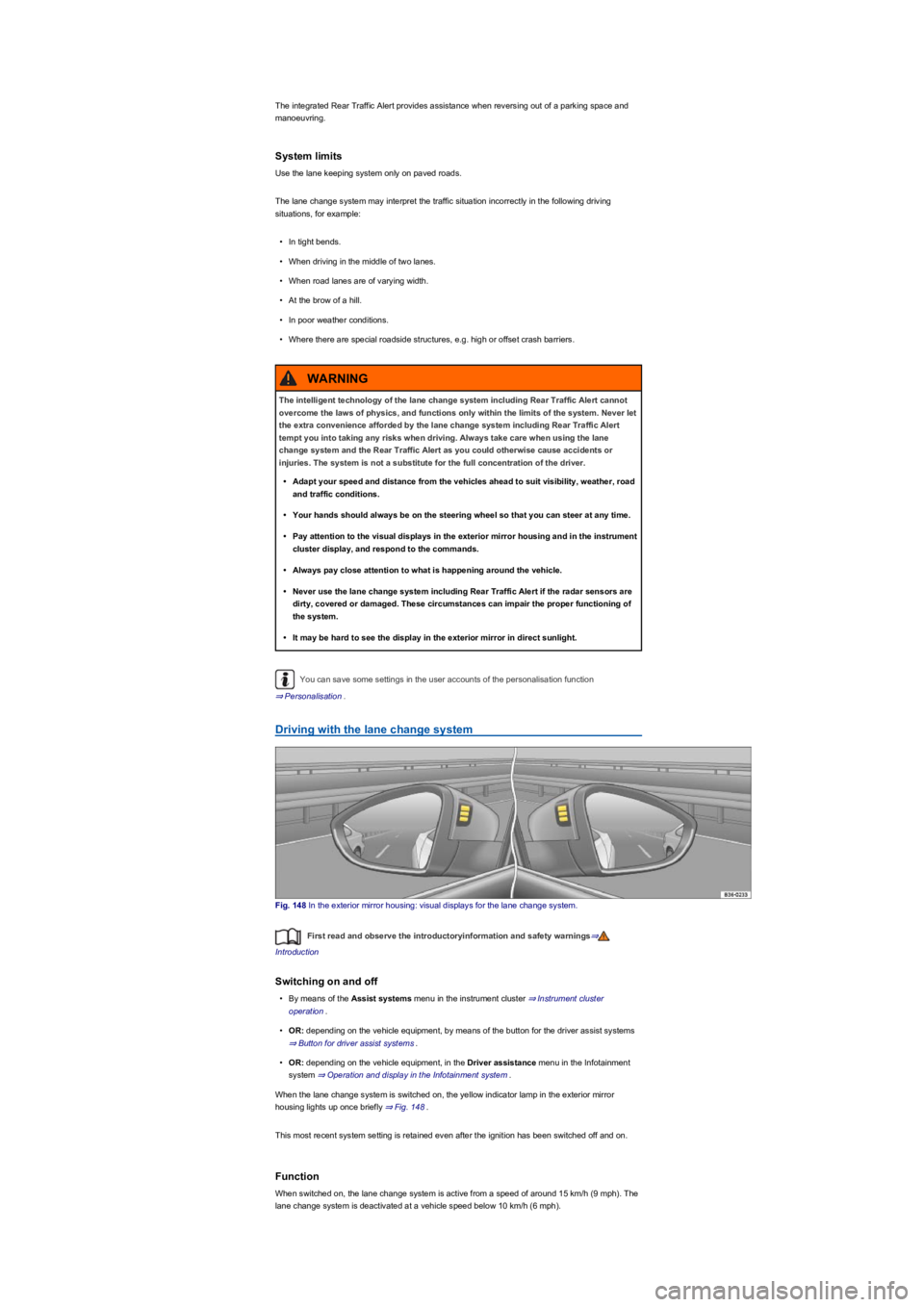
Fig. 148 In the exterior mirror housing: visual displays for the lane change system.
First read and observe the introductoryinformation and safety warnings⇒
Introduction
Switching on and off
•By means of the Assist systems menu in the instrument cluster ⇒ Instrument cluster
operation.
•OR: depending on the vehicle equipment, by means of the button for the driver assist systems
⇒ Button for driver assist systems.
•OR: depending on the vehicle equipment, in the Driver assistance menu in the Infotainment
system ⇒ Operation and display in the Infotainment system.
When the lane change system is switched on, the yellow indicator lamp in the exterior mirror
housing lights up once briefly ⇒ Fig. 148.
This most recent system setting is retained even after the ignition has been switched off and on.
Function
When switched on, the lane change system is active from a speed of around 15 km/h (9 mph). The
lane change system is deactivated at a vehicle speed below 10 km/h (6 mph).
The intelligent technology of the lane change system including Rear Traffic Alert cannot
overcome the laws of physics, and functions only within the limits of the system. Never let
the extra convenience afforded by the lane change system including Rear Traffic Alert
tempt you into taking any risks when driving. Always take care when using the lane
change system and the Rear Traffic Alert as you could otherwise cause accidents or
injuries. The system is not a substitute for the full concentration of the driver.
•Adapt your speed and distance from the vehicles ahead to suit visibility, weather, road
and traffic conditions.
•Your hands should always be on the steering wheel so that you can steer at any time.
•Pay attention to the visual displays in the exterior mirror housing and in the instrument
cluster display, and respond to the commands.
•Always pay close attention to what is happening around the vehicle.
•Never use the lane change system including Rear Traffic Alert if the radar sensors are
dirty, covered or damaged. These circumstances can impair the proper functioning of
the system.
•It may be hard to see the display in the exterior mirror in direct sunlight.
WARNING