braking VOLKSWAGEN UP! 2021 Owner´s Manual
[x] Cancel search | Manufacturer: VOLKSWAGEN, Model Year: 2021, Model line: UP!, Model: VOLKSWAGEN UP! 2021Pages: 211, PDF Size: 5.98 MB
Page 46 of 211
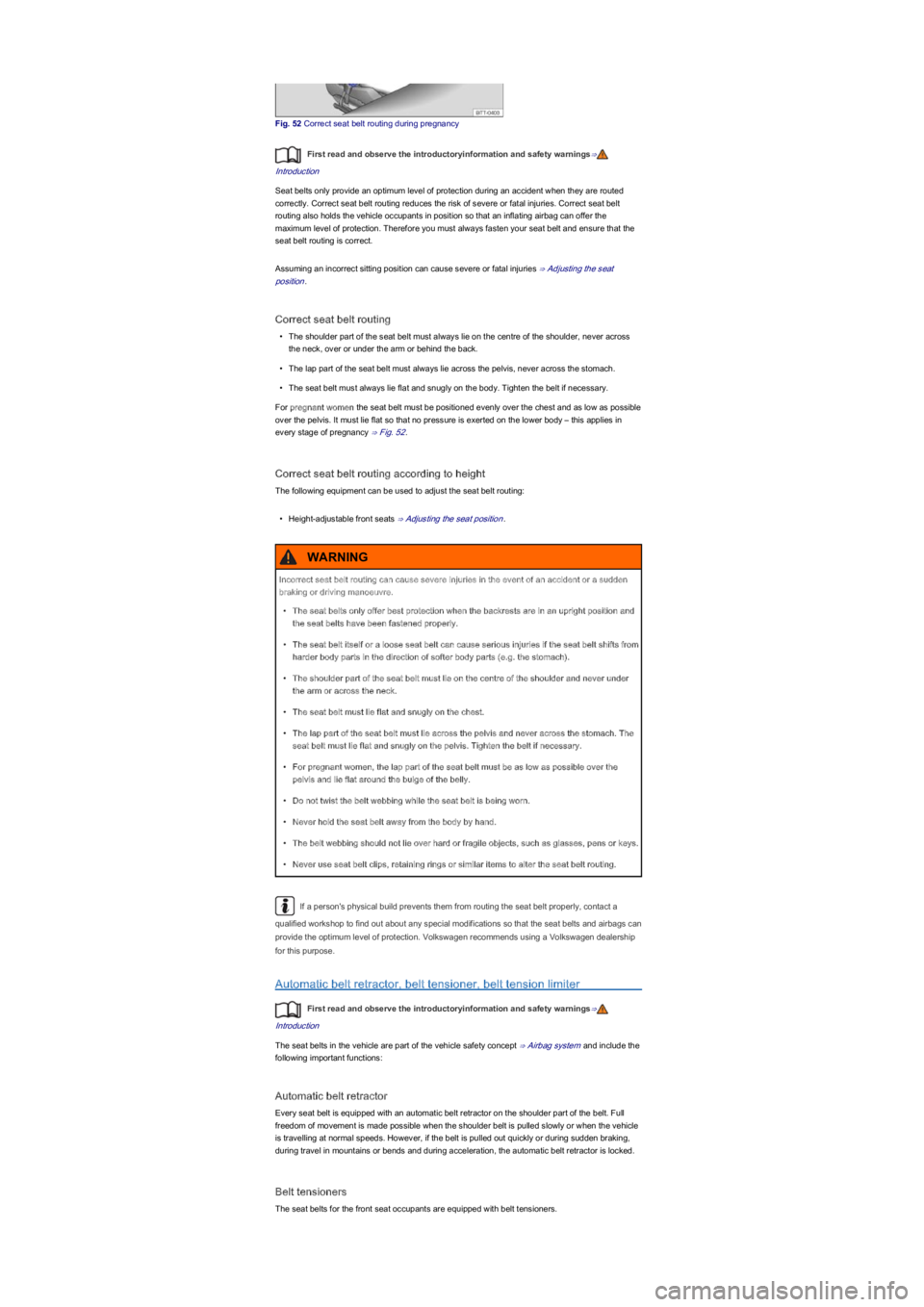
Fig. 52 Correct seat belt routing during pregnancy
First read and observe the introductoryinformation and safety warnings⇒
Introduction
Seat belts only provide an optimum level of protection during an accident when they are routed
correctly. Correct seat belt routing reduces the risk of severe or fatal injuries. Correct seat belt
routing also holds the vehicle occupants in position so that an inflating airbag can offer the
maximum level of protection. Therefore you must always fasten your seat belt and ensure that the
seat belt routing is correct.
Assuming an incorrect sitting position can cause severe or fatal injuries ⇒ Adjusting the seat
position.
Correct seat belt routing
•The shoulder part of the seat belt must always lie on the centre of the shoulder, never across
the neck, over or under the arm or behind the back.
•The lap part of the seat belt must always lie across the pelvis, never across the stomach.
•The seat belt must always lie flat and snugly on the body. Tighten the belt if necessary.
For pregnant women the seat belt must be positioned evenly over the chest and as low as possible
over the pelvis. It must lie flat so that no pressure is exerted on the lower body – this applies in
every stage of pregnancy ⇒ Fig. 52.
Correct seat belt routing according to height
The following equipment can be used to adjust the seat belt routing:
•Height-adjustable front seats ⇒ Adjusting the seat position.
If a person's physical build prevents them from routing the seat belt properly, contact a
qualified workshop to find out about any special modifications so that the seat belts and airbags can
provide the optimum level of protection. Volkswagen recommends using a Volkswagen dealership
for this purpose.
Automatic belt retractor, belt tensioner, belt tension limiter
First read and observe the introductoryinformation and safety warnings⇒
Introduction
The seat belts in the vehicle are part of the vehicle safety concept ⇒ Airbag system and include the
following important functions:
Automatic belt retractor
Every seat belt is equipped with an automatic belt retractor on the shoulder part of the belt. Full
freedom of movement is made possible when the shoulder belt is pulled slowly or when the vehicle
is travelling at normal speeds. However, if the belt is pulled out quickly or during sudden braking,
during travel in mountains or bends and during acceleration, the automatic belt retractor is locked.
Belt tensioners
The seat belts for the front seat occupants are equipped with belt tensioners.
Incorrect seat belt routing can cause severe injuries in the event of an accident or a sudden
braking or driving manoeuvre.
•The seat belts only offer best protection when the backrests are in an upright position and
the seat belts have been fastened properly.
•The seat belt itself or a loose seat belt can cause serious injuries if the seat belt shifts from
harder body parts in the direction of softer body parts (e.g. the stomach).
•The shoulder part of the seat belt must lie on the centre of the shoulder and never under
the arm or across the neck.
•The seat belt must lie flat and snugly on the chest.
•The lap part of the seat belt must lie across the pelvis and never across the stomach. The
seat belt must lie flat and snugly on the pelvis. Tighten the belt if necessary.
•For pregnant women, the lap part of the seat belt must be as low as possible over the
pelvis and lie flat around the bulge of the belly.
•Do not twist the belt webbing while the seat belt is being worn.
•Never hold the seat belt away from the body by hand.
•The belt webbing should not lie over hard or fragile objects, such as glasses, pens or keys.
•Never use seat belt clips, retaining rings or similar items to alter the seat belt routing.
WARNING
Page 48 of 211
Types of front passenger front airbag system
First read and observe the introductoryinformation and safety warnings⇒
Introduction
Never rely solely on the airbag system for your protection.
•Even if an airbag is triggered, it only offers auxiliary protection.
•The airbag system offers the best level of protection, and reduces the risk of injury, when
seat belts are properly worn ⇒ Seat belts.
•Before every trip, each vehicle occupant must adopt the correct sitting position, correctly
fasten the seat belt belonging to their seat and keep it fastened properly throughout the
trip. This applies to all vehicle occupants.
WARNING
The risk of injury increases if there are any objects located between the vehicle occupants
and the deployment area of the airbag when it is triggered. This will alter the deployment zone
of the airbag, or the objects will be flung against the body.
•Never hold any objects in your hand or on your lap while the vehicle is in motion.
•Never transport any objects on the front passenger seat. The objects could enter the
deployment zone of the airbag during sudden braking or driving manoeuvres and then be
flung dangerously through the vehicle interior if the airbag is activated.
•Occupants of the front seats and rear seats must never carry any people, pets or objects
in the deployment space between them and the airbags. Ensure that children and
passengers keep to this rule.
WARNING
The airbag system can only be triggered once. The system will have to be replaced if the
airbags have been triggered.
•Airbags that have been triggered, and any affected system parts, must immediately be
replaced with new parts that are approved by Volkswagen for the vehicle.
•Repairs and modifications to your vehicle should only be carried out by a qualified
workshop. Qualified workshops have the necessary tools, diagnostic equipment, repair
information and qualified personnel.
•Never use recycled airbag components or components that have been taken from end-of-
life vehicles in your vehicle.
•Never alter any components of the airbag system.
WARNING
A fine dust may develop when the airbags trigger. This is normal and does not mean that
there is a fire in the vehicle.
•The fine dust can cause irritation to the skin and eye membranes and cause breathing
difficulties, particularly for people suffering from asthma or people who have (had) other
respiratory problems. To help reduce breathing difficulties, get out of the vehicle or open
the windows or doors for more fresh air.
•If you come into contact with the dust, you should wash your hands and face with a mild
soap and water before eating.
•Do not let the dust get into your eyes or into open wounds.
•If dust has entered your eyes, rinse them with water.
WARNING
Cleaning agents that contain solvents cause the surface of the airbag modules to become
porous. In an accident that triggers the airbag, loose plastic parts can cause serious injury.
•Never clean the dash panel or the airbag covers with cleansers that contain solvents.
WARNING
Page 50 of 211
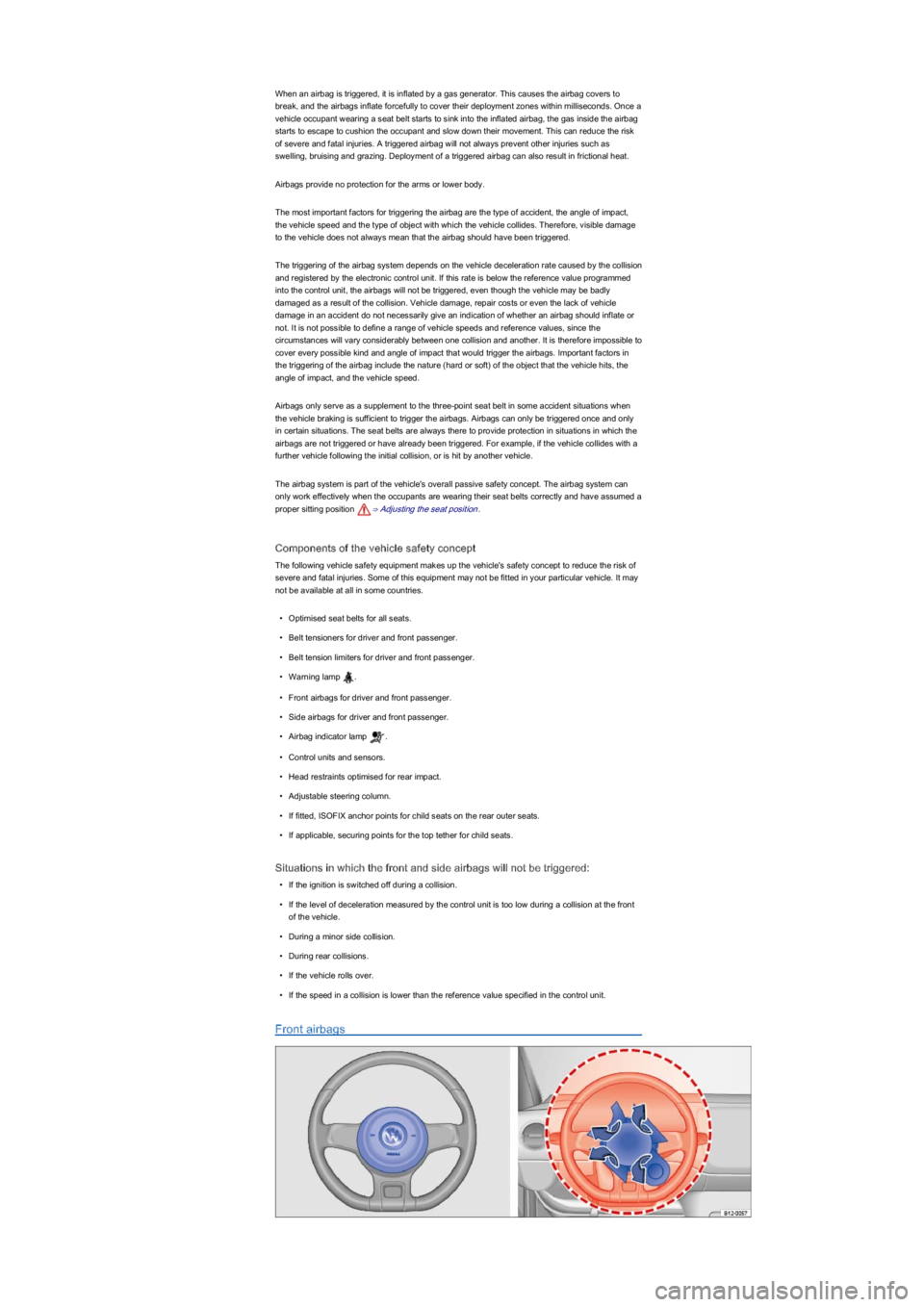
When an airbag is triggered, it is inflated by a gas generator. This causes the airbag covers to
break, and the airbags inflate forcefully to cover their deployment zones within milliseconds. Once a
vehicle occupant wearing a seat belt starts to sink into the inflated airbag, the gas inside the airbag
starts to escape to cushion the occupant and slow down their movement. This can reduce the risk
of severe and fatal injuries. A triggered airbag will not always prevent other injuries such as
swelling, bruising and grazing. Deployment of a triggered airbag can also result in frictional heat.
Airbags provide no protection for the arms or lower body.
The most important factors for triggering the airbag are the type of accident, the angle of impact,
the vehicle speed and the type of object with which the vehicle collides. Therefore, visible damage
to the vehicle does not always mean that the airbag should have been triggered.
The triggering of the airbag system depends on the vehicle deceleration rate caused by the collision
and registered by the electronic control unit. If this rate is below the reference value programmed
into the control unit, the airbags will not be triggered, even though the vehicle may be badly
damaged as a result of the collision. Vehicle damage, repair costs or even the lack of vehicle
damage in an accident do not necessarily give an indication of whether an airbag should inflate or
not. It is not possible to define a range of vehicle speeds and reference values, since the
circumstances will vary considerably between one collision and another. It is therefore impossible to
cover every possible kind and angle of impact that would trigger the airbags. Important factors in
the triggering of the airbag include the nature (hard or soft) of the object that the vehicle hits, the
angle of impact, and the vehicle speed.
Airbags only serve as a supplement to the three-point seat belt in some accident situations when
the vehicle braking is sufficient to trigger the airbags. Airbags can only be triggered once and only
in certain situations. The seat belts are always there to provide protection in situations in which the
airbags are not triggered or have already been triggered. For example, if the vehicle collides with a
further vehicle following the initial collision, or is hit by another vehicle.
The airbag system is part of the vehicle's overall passive safety concept. The airbag system can
only work effectively when the occupants are wearing their seat belts correctly and have assumed a
proper sitting position ⇒ Adjusting the seat position.
Components of the vehicle safety concept
The following vehicle safety equipment makes up the vehicle's safety concept to reduce the risk of
severe and fatal injuries. Some of this equipment may not be fitted in your particular vehicle. It may
not be available at all in some countries.
•Optimised seat belts for all seats.
•Belt tensioners for driver and front passenger.
•Belt tension limiters for driver and front passenger.
•Warning lamp .
•Front airbags for driver and front passenger.
•Side airbags for driver and front passenger.
•Airbag indicator lamp .
•Control units and sensors.
•Head restraints optimised for rear impact.
•Adjustable steering column.
•If fitted, ISOFIX anchor points for child seats on the rear outer seats.
•If applicable, securing points for the top tether for child seats.
Situations in which the front and side airbags will not be triggered:
•If the ignition is switched off during a collision.
•If the level of deceleration measured by the control unit is too low during a collision at the front
of the vehicle.
•During a minor side collision.
•During rear collisions.
•If the vehicle rolls over.
•If the speed in a collision is lower than the reference value specified in the control unit.
Front airbags
Page 54 of 211
Comply with any country-specific legal regulations.
Volkswagen recommends that children under 12 years of age are always transported on
the rear seats.
A child should only be transported on the front passenger seat in exceptional
circumstances Using a child seat on the front passenger seat. The safest seat in the
vehicle is on the rear seat behind the front passenger seat.
Always secure any children in the vehicle in a restraint system. The restraint system must
be suitable for the child's height, weight and build.
Transport only one child per child seat.
Observe the instructions from the manufacturer of the child seat and always keep them in
the vehicle.
When securing a child seat using the seat belt, always guide the belt through or around
the child seat as described in the instructions from the child seat manufacturer.
Always ensure that the seat belt routing is correct for children and that they are sitting in
the correct position.
Whenever possible, fit the child seat on the rear bench seat behind the front passenger
seat so that children can exit the vehicle on the kerb side.
Replace child seats that withstand any force during an accident as they could have
sustained damage that may not be visible.
General information on transporting children in the vehicle
First read and observe the introductoryinformation and safety warnings⇒
Introduction
Legislation and legal requirements take precedence over the descriptions in this owner's manual.
Various standards and regulations govern the use of child seats and methods for securing them ().
For example, this could mean that in some countries you are not allowed to use child seats on
certain seats in the vehicle.
The laws of physics, which come into force on a vehicle during a collision or any other kind of
accident, also apply to children ⇒ Seat belts. In contrast to adults and teenagers, however,
children's muscles and bones are not yet fully developed. There is a higher risk for children than for
adults of sustaining serious injuries in an accident.
Children must be transported using child restraint systems that are specifically suited to their size,
weight and physical build, as children's bodies are not yet fully developed. In many countries there
are laws that require the use of approved child restraint systems for babies and small children.
Only use suitable, approved and authorised child seats in your vehicle. If you are unsure, always
speak to your Volkswagen dealership or a qualified workshop.
Checklist
Transporting children in the vehicle ⇒:
Children who are not strapped in or who are not strapped in properly could sustain severe or
fatal injuries while the vehicle is in motion.
•Never use a rear-facing child seat on the front passenger seat when the front passenger
front airbag is switched on.
•Children up to 12 years of age should always be transported on the rear seat.
•Always secure children in the vehicle in an authorised restraint system suitable for their
height and weight.
•Always fasten children's seat belts correctly and ensure that they assume a correct sitting
position.
•Adjust the seat backrest to an upright position if a child seat is to be used on this seat.
•Do not allow children to sit with their heads or any other body parts in the deployment
zone of the side airbag.
•Ensure that the seat belt routing is correct.
•Never allow children or babies to be transported on someone's lap, or while being held.
•Only ever fasten one child into each child seat.
•Read and follow the instructions by the manufacturer of the child seat.
WARNING
An unsecured, unoccupied child seat can be flung through the vehicle interior in the event of a
sudden braking manoeuvre or accident and cause injuries.
•Always secure child seats safely or stow them in the luggage compartment if they are not
being used while the vehicle is in motion.
WARNING
Page 58 of 211
Removing child seats
Unfasten seat belts only when the vehicle is stationary ⇒.
•Press the red button in the buckle. The latch plate is released and springs out.
•Guide the belt back by hand so that it rolls up easily, without twisting the seat belt and without
damaging the trim.
•Remove the child seat from the vehicle.
Securing child seats using lower anchoring points (ISOFIX, LATCH)
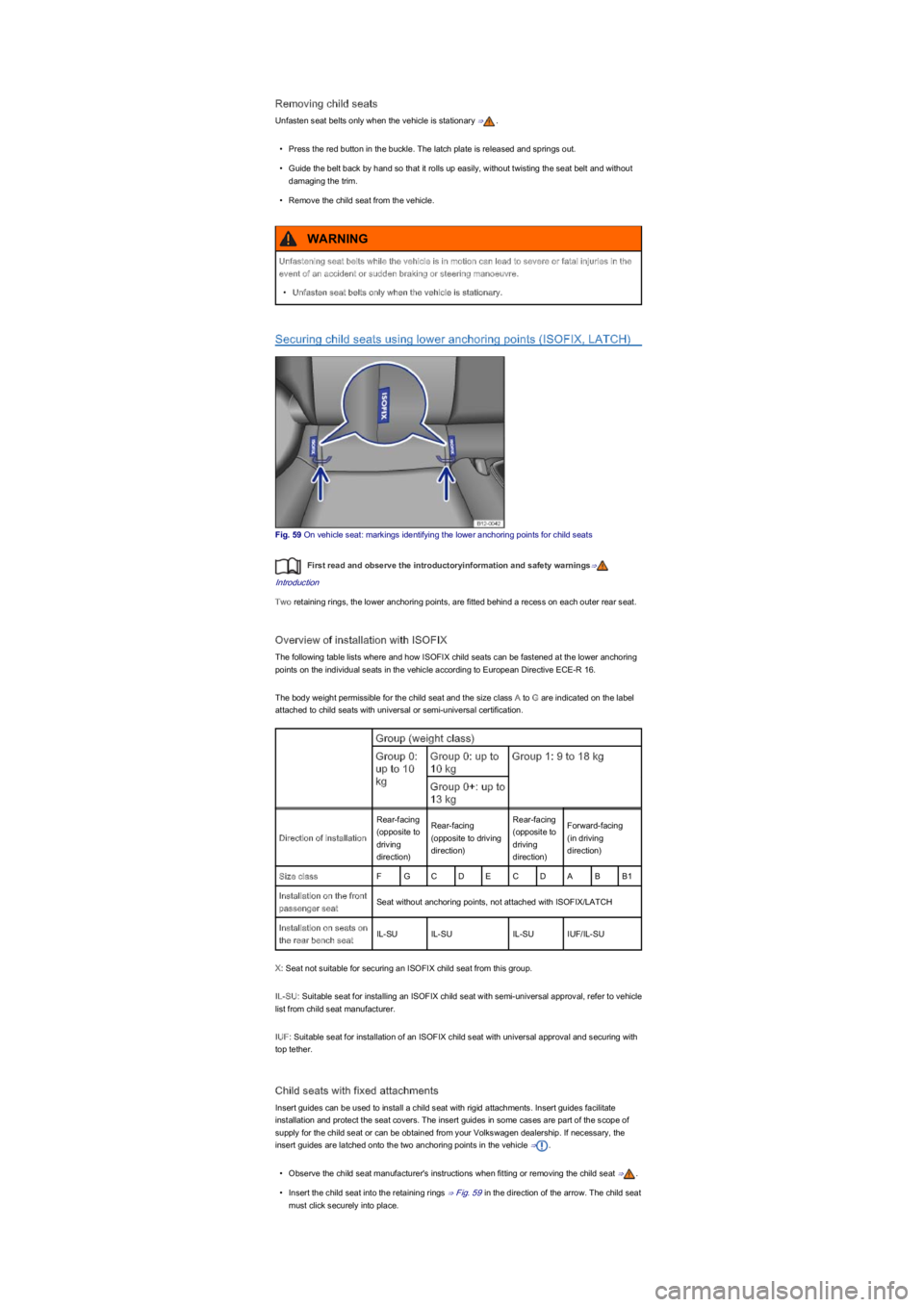
Fig. 59 On vehicle seat: markings identifying the lower anchoring points for child seats
First read and observe the introductoryinformation and safety warnings⇒
Introduction
Two retaining rings, the lower anchoring points, are fitted behind a recess on each outer rear seat.
Overview of installation with ISOFIX
The following table lists where and how ISOFIX child seats can be fastened at the lower anchoring
points on the individual seats in the vehicle according to European Directive ECE-R 16.
The body weight permissible for the child seat and the size class A to G are indicated on the label
attached to child seats with universal or semi-universal certification.
Group (weight class)
Group 0:
up to 10
kg
Group 0: up to
10 kg
Group 1: 9 to 18 kg
Group 0+: up to
13 kg
Direction of installation
Rear-facing
(opposite to
driving
direction)
Rear-facing
(opposite to driving
direction)
Rear-facing
(opposite to
driving
direction)
Forward-facing
(in driving
direction)
Size classFGCDECDABB1
Installation on the front
passenger seatSeat without anchoring points, not attached with ISOFIX/LATCH
Installation on seats on
the rear bench seatIL-SUIL-SUIL-SUIUF/IL-SU
X: Seat not suitable for securing an ISOFIX child seat from this group.
IL-SU: Suitable seat for installing an ISOFIX child seat with semi-universal approval, refer to vehicle
list from child seat manufacturer.
IUF: Suitable seat for installation of an ISOFIX child seat with universal approval and securing with
top tether.
Child seats with fixed attachments
Insert guides can be used to install a child seat with rigid attachments. Insert guides facilitate
installation and protect the seat covers. The insert guides in some cases are part of the scope of
supply for the child seat or can be obtained from your Volkswagen dealership. If necessary, the
insert guides are latched onto the two anchoring points in the vehicle ⇒.
•Observe the child seat manufacturer's instructions when fitting or removing the child seat ⇒.
•Insert the child seat into the retaining rings ⇒ Fig. 59 in the direction of the arrow. The child seat
must click securely into place.
Unfastening seat belts while the vehicle is in motion can lead to severe or fatal injuries in the
event of an accident or sudden braking or steering manoeuvre.
•Unfasten seat belts only when the vehicle is stationary.
WARNING
Page 68 of 211
allow the driver to see the entre side and rear area of the vehicle. The area that cannot be seen is
known as the blind spot. Objects and other road users may also be located in the blind spot.
Additional information and warnings:
•Exterior views ⇒ Exterior views
•Adjusting the seat position ⇒ Adjusting the seat position
•Changing gear ⇒ Changing gear
•Braking, stopping and parking ⇒ Braking, stopping and parking
Interior mirror
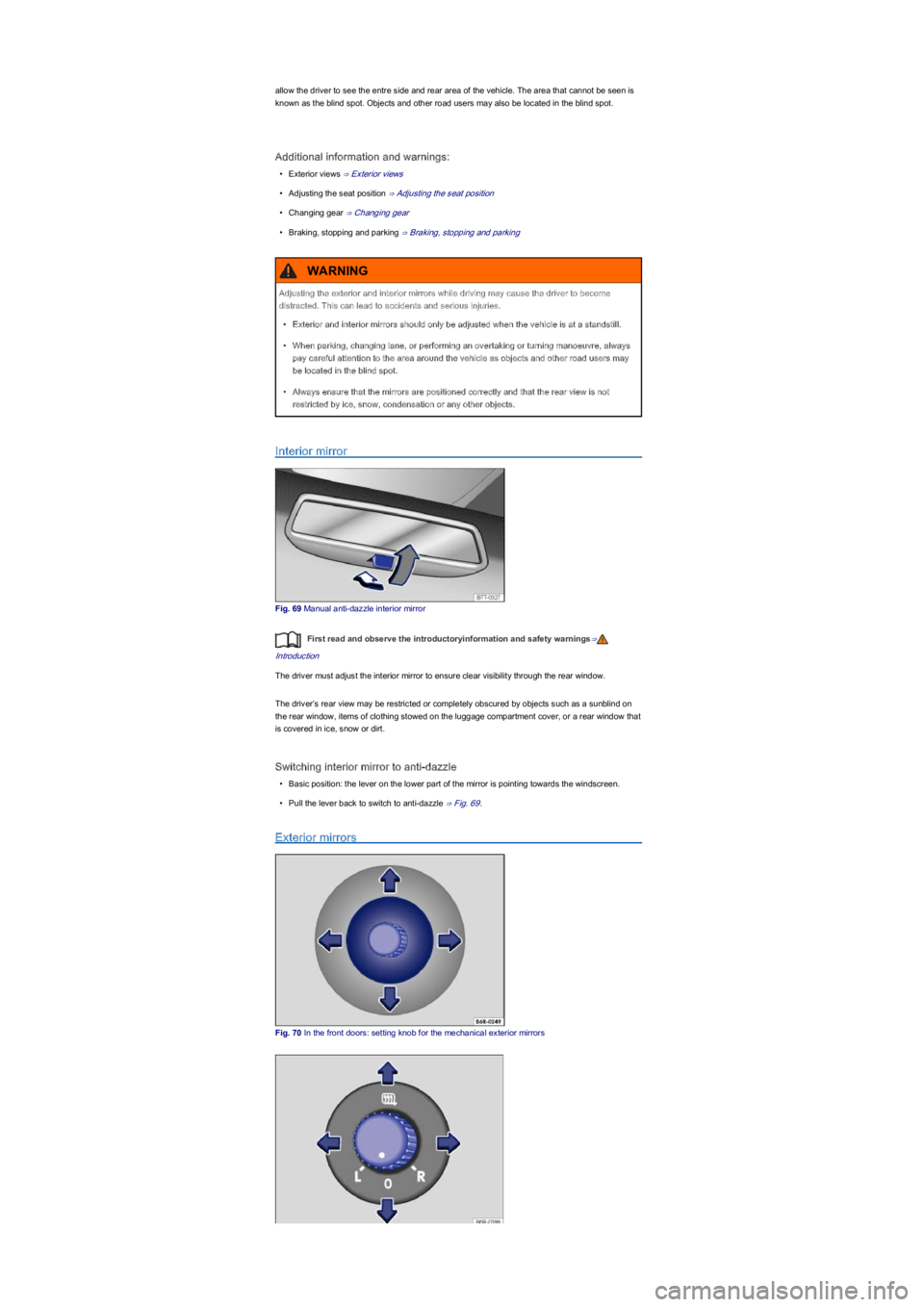
Fig. 69 Manual anti-dazzle interior mirror
First read and observe the introductoryinformation and safety warnings⇒
Introduction
The driver must adjust the interior mirror to ensure clear visibility through the rear window.
The driver’s rear view may be restricted or completely obscured by objects such as a sunblind on
the rear window, items of clothing stowed on the luggage compartment cover, or a rear window that
is covered in ice, snow or dirt.
Switching interior mirror to anti-dazzle
•Basic position: the lever on the lower part of the mirror is pointing towards the windscreen.
•Pull the lever back to switch to anti-dazzle ⇒ Fig. 69.
Exterior mirrors
Fig. 70 In the front doors: setting knob for the mechanical exterior mirrors
Adjusting the exterior and interior mirrors while driving may cause the driver to become
distracted. This can lead to accidents and serious injuries.
•Exterior and interior mirrors should only be adjusted when the vehicle is at a standstill.
•When parking, changing lane, or performing an overtaking or turning manoeuvre, always
pay careful attention to the area around the vehicle as objects and other road users may
be located in the blind spot.
•Always ensure that the mirrors are positioned correctly and that the rear view is not
restricted by ice, snow, condensation or any other objects.
WARNING
Page 69 of 211
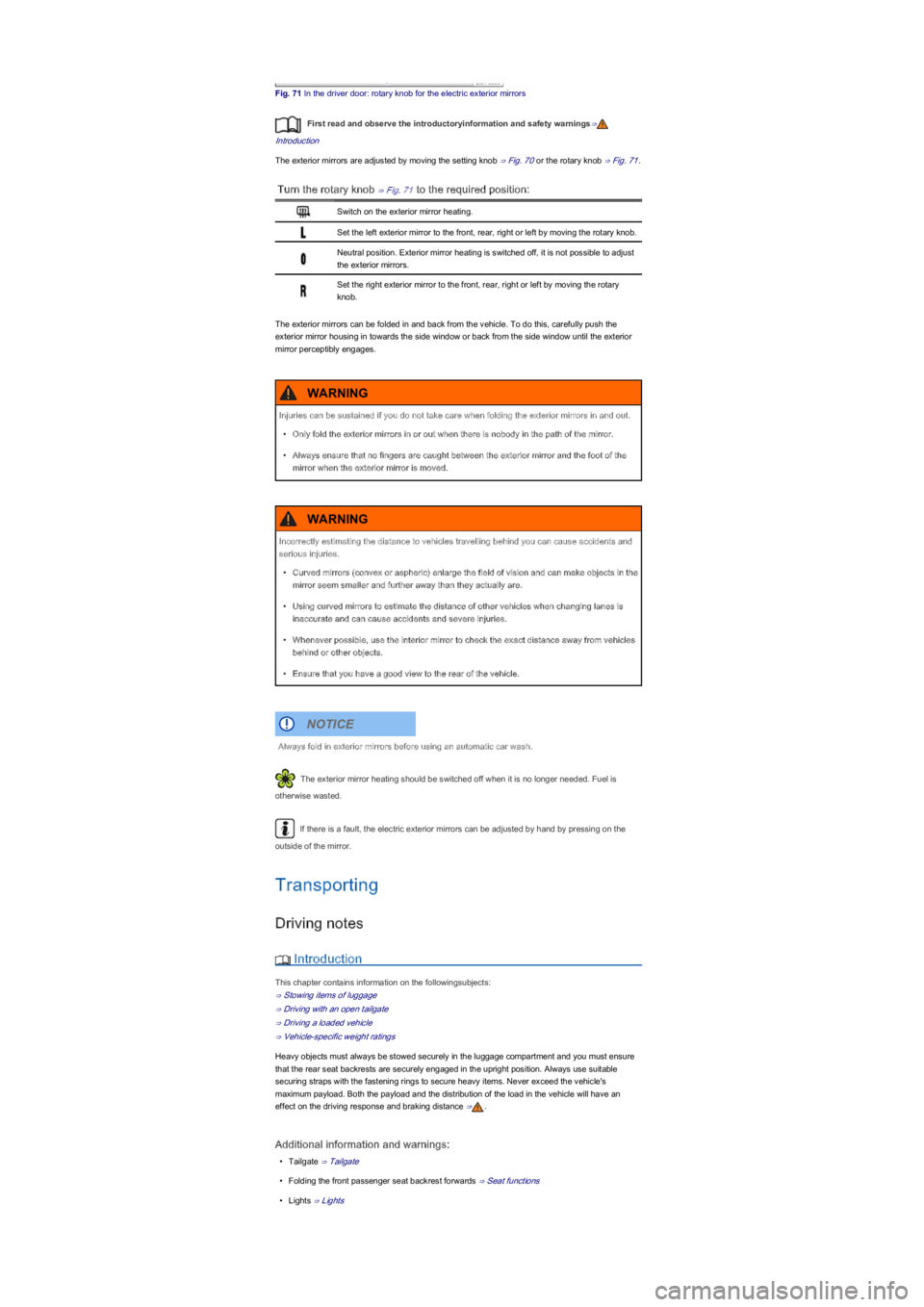
Fig. 71 In the driver door: rotary knob for the electric exterior mirrors
First read and observe the introductoryinformation and safety warnings⇒
Introduction
The exterior mirrors are adjusted by moving the setting knob ⇒ Fig. 70 or the rotary knob ⇒ Fig. 71.
Turn the rotary knob ⇒ Fig. 71 to the required position:
Switch on the exterior mirror heating.
Set the left exterior mirror to the front, rear, right or left by moving the rotary knob.
Neutral position. Exterior mirror heating is switched off, it is not possible to adjust
the exterior mirrors.
Set the right exterior mirror to the front, rear, right or left by moving the rotary
knob.
The exterior mirrors can be folded in and back from the vehicle. To do this, carefully push the
exterior mirror housing in towards the side window or back from the side window until the exterior
mirror perceptibly engages.
The exterior mirror heating should be switched off when it is no longer needed. Fuel is
otherwise wasted.
If there is a fault, the electric exterior mirrors can be adjusted by hand by pressing on the
outside of the mirror.
Transporting
Driving notes
Introduction
This chapter contains information on the followingsubjects:
⇒ Stowing items of luggage
⇒ Driving with an open tailgate
⇒ Driving a loaded vehicle
⇒ Vehicle-specific weight ratings
Heavy objects must always be stowed securely in the luggage compartment and you must ensure
that the rear seat backrests are securely engaged in the upright position. Always use suitable
securing straps with the fastening rings to secure heavy items. Never exceed the vehicle's
maximum payload. Both the payload and the distribution of the load in the vehicle will have an
effect on the driving response and braking distance ⇒.
Additional information and warnings:
•Tailgate ⇒ Tailgate
•Folding the front passenger seat backrest forwards ⇒ Seat functions
•Lights ⇒ Lights
Injuries can be sustained if you do not take care when folding the exterior mirrors in and out.
•Only fold the exterior mirrors in or out when there is nobody in the path of the mirror.
•Always ensure that no fingers are caught between the exterior mirror and the foot of the
mirror when the exterior mirror is moved.
WARNING
Incorrectly estimating the distance to vehicles travelling behind you can cause accidents and
serious injuries.
•Curved mirrors (convex or aspheric) enlarge the field of vision and can make objects in the
mirror seem smaller and further away than they actually are.
•Using curved mirrors to estimate the distance of other vehicles when changing lanes is
inaccurate and can cause accidents and severe injuries.
•Whenever possible, use the interior mirror to check the exact distance away from vehicles
behind or other objects.
•Ensure that you have a good view to the rear of the vehicle.
WARNING
Always fold in exterior mirrors before using an automatic car wash.
NOTICE
Page 70 of 211
•Luggage compartment ⇒ Luggage compartment
•Roof carrier ⇒ Roof carrier
•Wheels and tyres ⇒ Wheels and tyres
Stowing items of luggage
First read and observe the introductoryinformation and safety warnings⇒
Introduction
Always stow all items of luggage in the vehicle securely.
•Always distribute any loads in the vehicle and on the roof as evenly as possible.
•Place heavy objects as far forward in the luggage compartment as possible. Position the rear
seat backrests securely in the upright position.
•Secure luggage in the luggage compartment to the fastening rings with suitable straps
⇒ Luggage compartment.
•Adjust the headlight range ⇒ Lights.
•Adjust the tyre pressure according to the vehicle load. Please read the tyre pressure sticker
⇒ Wheels and tyres.
Observe any information concerning the loading of a roof carrier ⇒ Roof carrier.
Driving with an open tailgate
First read and observe the introductoryinformation and safety warnings⇒
Introduction
Driving with an open tailgate is particularly dangerous. Ensure that the open tailgate and any
objects are secured properly, and take appropriate measures to reduce the quantity of toxic
exhaust fumes entering the vehicle.
Objects that are not secured, or are secured incorrectly, can cause serious injuries in the
event of a sudden driving or braking manoeuvre or accident. This applies particularly if
objects are struck by the airbag when activated and then flung through the vehicle interior.
Please apply the following rules to reduce the risk of accidents:
•Always stow all objects in the vehicle securely. Always stow luggage and heavy objects in
the luggage compartment.
•Always use suitable straps to prevent luggage from entering the deployment zones of the
side airbag or the front airbag in the event of a sudden driving or braking manoeuvre or an
accident.
•Objects should be stowed in the vehicle interior in such a way that they can never enter
the airbag deployment zones while the vehicle is in motion.
•Always keep stowage compartments closed while the vehicle is in motion.
•All objects must be removed from the seat cushion of the front passenger seat if the front
passenger backrest is folded forward. Even light and small objects could be pressed into
the weight detection mat underneath the seat cushion by the backrest when it is folded
forwards and thus send incorrect information to the airbag control units.
•The front airbag must be switched off and the indicator lamp PASSENGER AIR BAG OFF
must light up for as long as the front passenger seat backrest is folded forwards.
•Stowed objects must never cause passengers to assume an incorrect sitting position.
•Any seat blocked by stowed objects must not be used by any passengers.
WARNING
The vehicle handling and braking effect may alter significantly if large or heavy objects are
being transported.
•Adapt your speed and driving style to suit visibility, weather, road and traffic conditions.
•Accelerate carefully and gently.
•Avoid sudden braking and driving manoeuvres.
•Brake earlier than in normal driving.
WARNING
Hard objects on the shelf can chafe against the wires of the heating element in the rear
window and cause damage.
NOTICE
Page 71 of 211
Driving a loaded vehicle
First read and observe the introductoryinformation and safety warnings⇒
Introduction
For good vehicle handling when driving a loaded vehicle, please observe the following:
•Stow all items of luggage securely ⇒ Stowing items of luggage.
•Accelerate carefully and gently.
•Avoid sudden braking and driving manoeuvres.
•Brake earlier than in normal driving.
•If applicable, heed the information about driving with a roof carrier ⇒ Roof carrier.
Vehicle-specific weight ratings
First read and observe the introductoryinformation and safety warnings⇒
Introduction
All data in the official vehicle documents take precedence over these data. All data in this manual
apply to the basic model. The vehicle data sticker in the service schedule and the official vehicle
documents show which engine is installed in your vehicle.
The values quoted here may differ if additional equipment is fitted, for different models or for special
vehicles.
The values for the kerb weight in the following table apply for the road-ready vehicle with driver
(75 kg), service fluids including fuel tank carrying 90% of its capacity and, if applicable, tools and
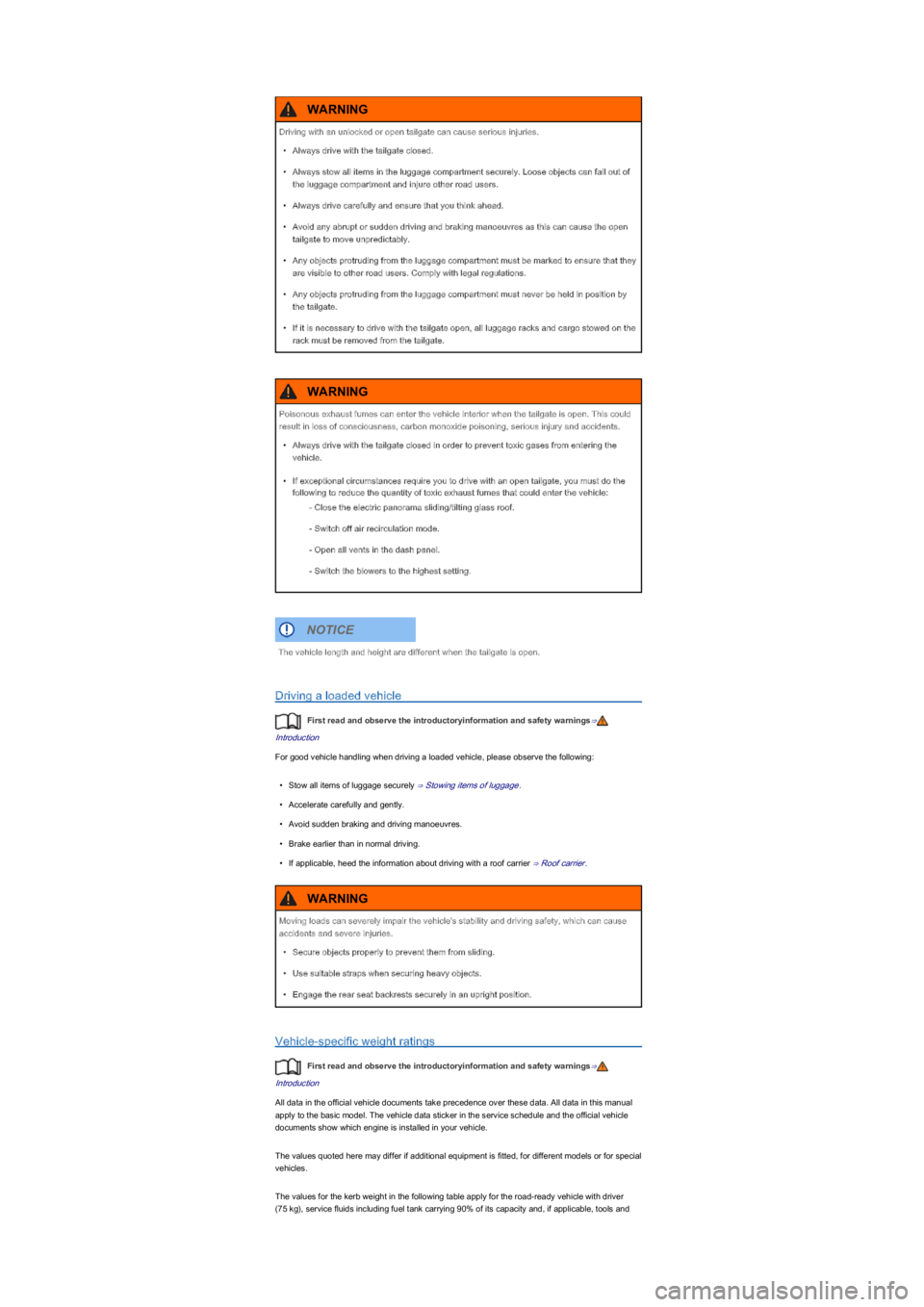
Driving with an unlocked or open tailgate can cause serious injuries.
•Always drive with the tailgate closed.
•Always stow all items in the luggage compartment securely. Loose objects can fall out of
the luggage compartment and injure other road users.
•Always drive carefully and ensure that you think ahead.
•Avoid any abrupt or sudden driving and braking manoeuvres as this can cause the open
tailgate to move unpredictably.
•Any objects protruding from the luggage compartment must be marked to ensure that they
are visible to other road users. Comply with legal regulations.
•Any objects protruding from the luggage compartment must never be held in position by
the tailgate.
•If it is necessary to drive with the tailgate open, all luggage racks and cargo stowed on the
rack must be removed from the tailgate.
WARNING
Poisonous exhaust fumes can enter the vehicle interior when the tailgate is open. This could
result in loss of consciousness, carbon monoxide poisoning, serious injury and accidents.
•Always drive with the tailgate closed in order to prevent toxic gases from entering the
vehicle.
•If exceptional circumstances require you to drive with an open tailgate, you must do the
following to reduce the quantity of toxic exhaust fumes that could enter the vehicle:
- Close the electric panorama sliding/tilting glass roof.
- Switch off air recirculation mode.
- Open all vents in the dash panel.
- Switch the blowers to the highest setting.
WARNING
The vehicle length and height are different when the tailgate is open.
NOTICE
Moving loads can severely impair the vehicle's stability and driving safety, which can cause
accidents and severe injuries.
•Secure objects properly to prevent them from sliding.
•Use suitable straps when securing heavy objects.
•Engage the rear seat backrests securely in an upright position.
WARNING
Page 72 of 211
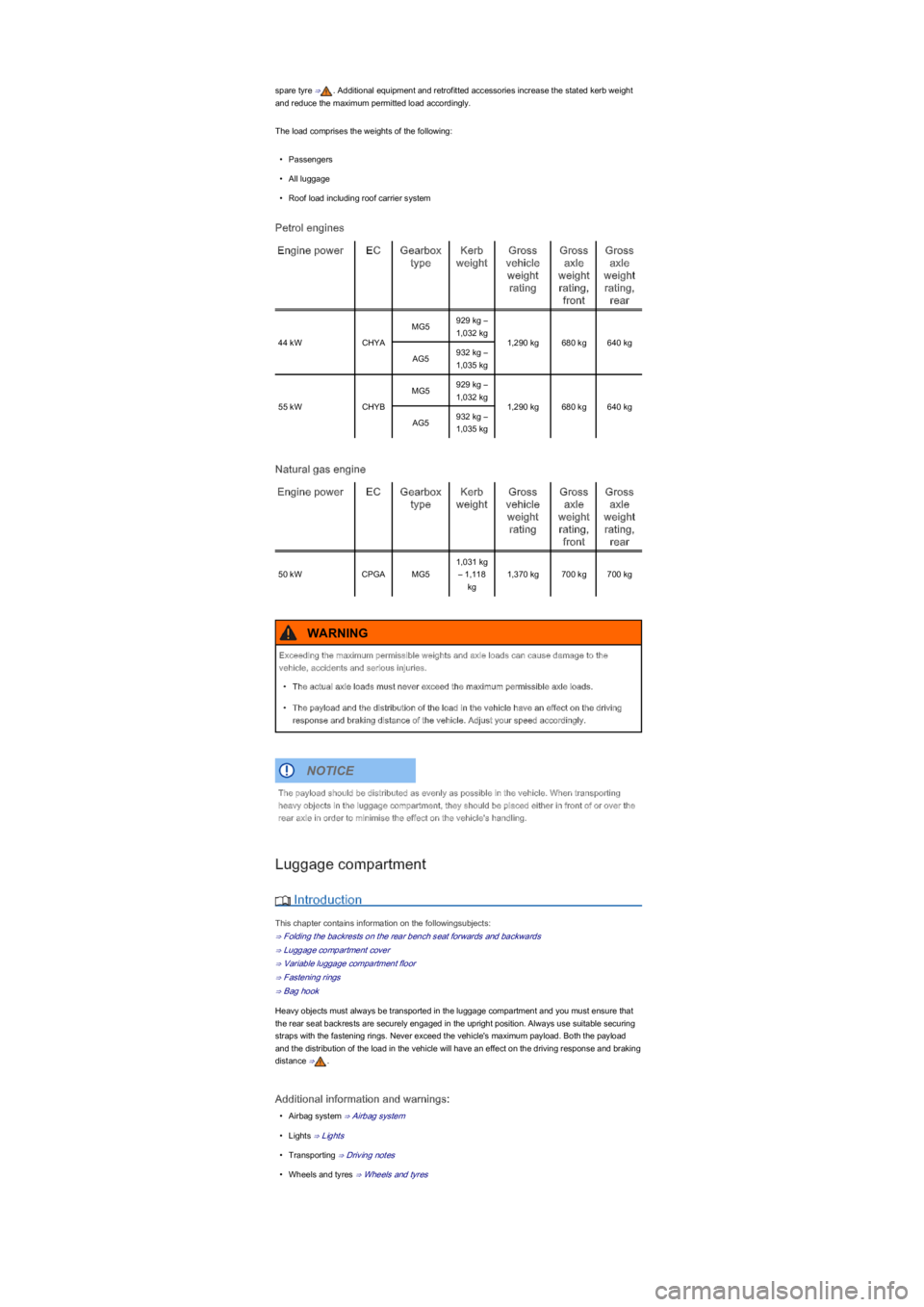
spare tyre ⇒. Additional equipment and retrofitted accessories increase the stated kerb weight
and reduce the maximum permitted load accordingly.
The load comprises the weights of the following:
•Passengers
•All luggage
•Roof load including roof carrier system
Petrol engines
Engine powerECGearbox
type
Kerb
weight
Gross
vehicle
weight
rating
Gross
axle
weight
rating,
front
Gross
axle
weight
rating,
rear
44 kWCHYA
MG5929 kg –
1,032 kg
1,290 kg680 kg640 kg
AG5932 kg –
1,035 kg
55 kWCHYB
MG5929 kg –
1,032 kg
1,290 kg680 kg640 kg
AG5932 kg –
1,035 kg
Natural gas engine
Engine powerECGearbox
type
Kerb
weight
Gross
vehicle
weight
rating
Gross
axle
weight
rating,
front
Gross
axle
weight
rating,
rear
50 kWCPGAMG5
1,031 kg
– 1,118
kg
1,370 kg700 kg700 kg
Luggage compartment
Introduction
This chapter contains information on the followingsubjects:
⇒ Folding the backrests on the rear bench seat forwards and backwards
⇒ Luggage compartment cover
⇒ Variable luggage compartment floor
⇒ Fastening rings
⇒ Bag hook
Heavy objects must always be transported in the luggage compartment and you must ensure that
the rear seat backrests are securely engaged in the upright position. Always use suitable securing
straps with the fastening rings. Never exceed the vehicle's maximum payload. Both the payload
and the distribution of the load in the vehicle will have an effect on the driving response and braking
distance ⇒.
Additional information and warnings:
•Airbag system ⇒ Airbag system
•Lights ⇒ Lights
•Transporting ⇒ Driving notes
•Wheels and tyres ⇒ Wheels and tyres
Exceeding the maximum permissible weights and axle loads can cause damage to the
vehicle, accidents and serious injuries.
•The actual axle loads must never exceed the maximum permissible axle loads.
•The payload and the distribution of the load in the vehicle have an effect on the driving
response and braking distance of the vehicle. Adjust your speed accordingly.
WARNING
The payload should be distributed as evenly as possible in the vehicle. When transporting
heavy objects in the luggage compartment, they should be placed either in front of or over the
rear axle in order to minimise the effect on the vehicle's handling.
NOTICE