ignition VOLKSWAGEN UP! 2021 Owner´s Manual
[x] Cancel search | Manufacturer: VOLKSWAGEN, Model Year: 2021, Model line: UP!, Model: VOLKSWAGEN UP! 2021Pages: 211, PDF Size: 5.98 MB
Page 30 of 211
Windows
Introduction
This chapter contains information on the followingsubjects:
⇒ Opening or closing the windows electrically
⇒ Opening and closing the rear hinged windows
Additional information and warnings:
•Volkswagen information system ⇒ Volkswagen information system
•Central locking system ⇒ Central locking system
Opening or closing the windows electrically
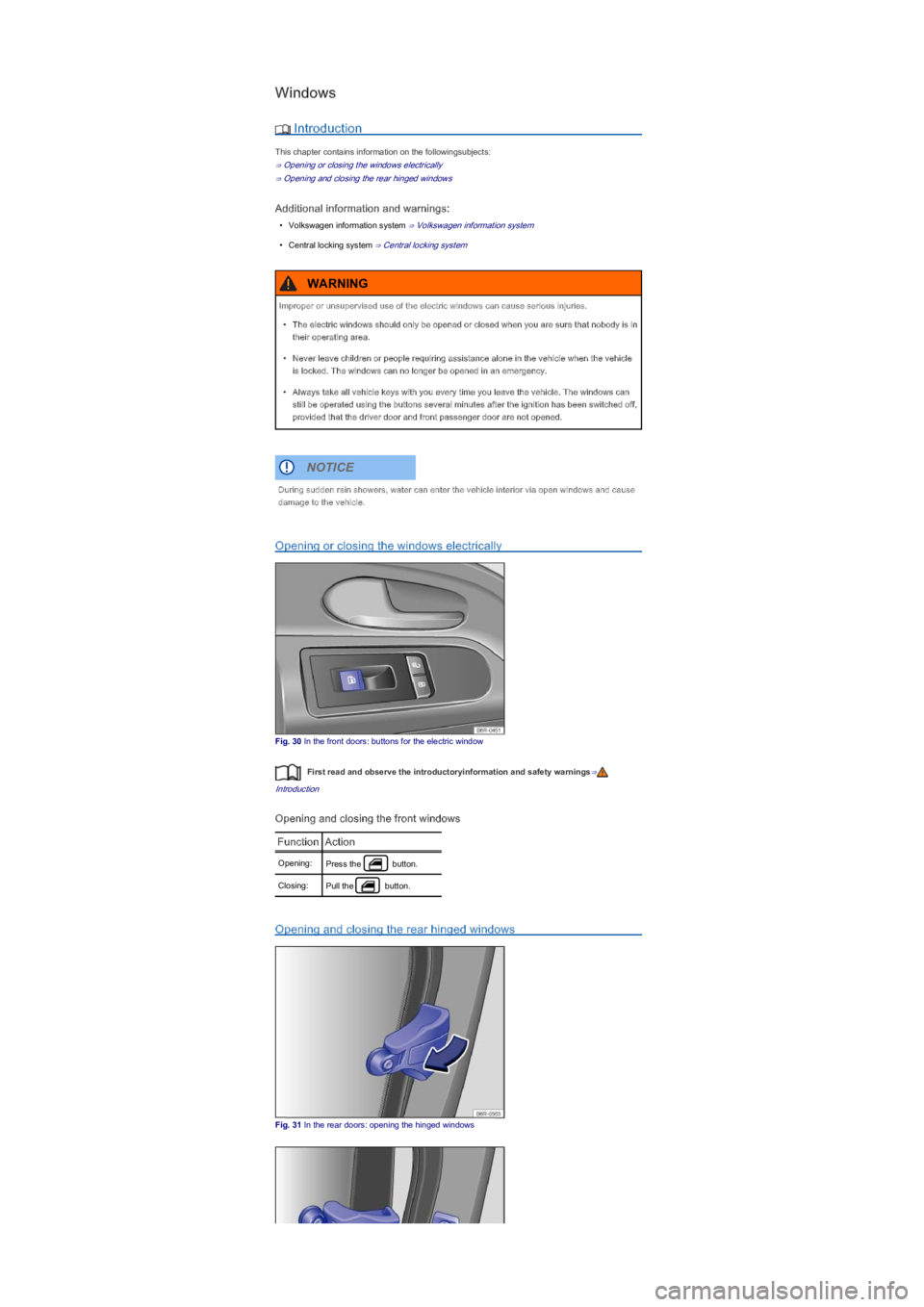
Fig. 30 In the front doors: buttons for the electric window
First read and observe the introductoryinformation and safety warnings⇒
Introduction
Opening and closing the front windows
FunctionAction
Opening:Press the button.
Closing:Pull the button.
Opening and closing the rear hinged windows
Fig. 31 In the rear doors: opening the hinged windows
Improper or unsupervised use of the electric windows can cause serious injuries.
•The electric windows should only be opened or closed when you are sure that nobody is in
their operating area.
•Never leave children or people requiring assistance alone in the vehicle when the vehicle
is locked. The windows can no longer be opened in an emergency.
•Always take all vehicle keys with you every time you leave the vehicle. The windows can
still be operated using the buttons several minutes after the ignition has been switched off,
provided that the driver door and front passenger door are not opened.
WARNING
During sudden rain showers, water can enter the vehicle interior via open windows and cause
damage to the vehicle.
NOTICE
Page 31 of 211
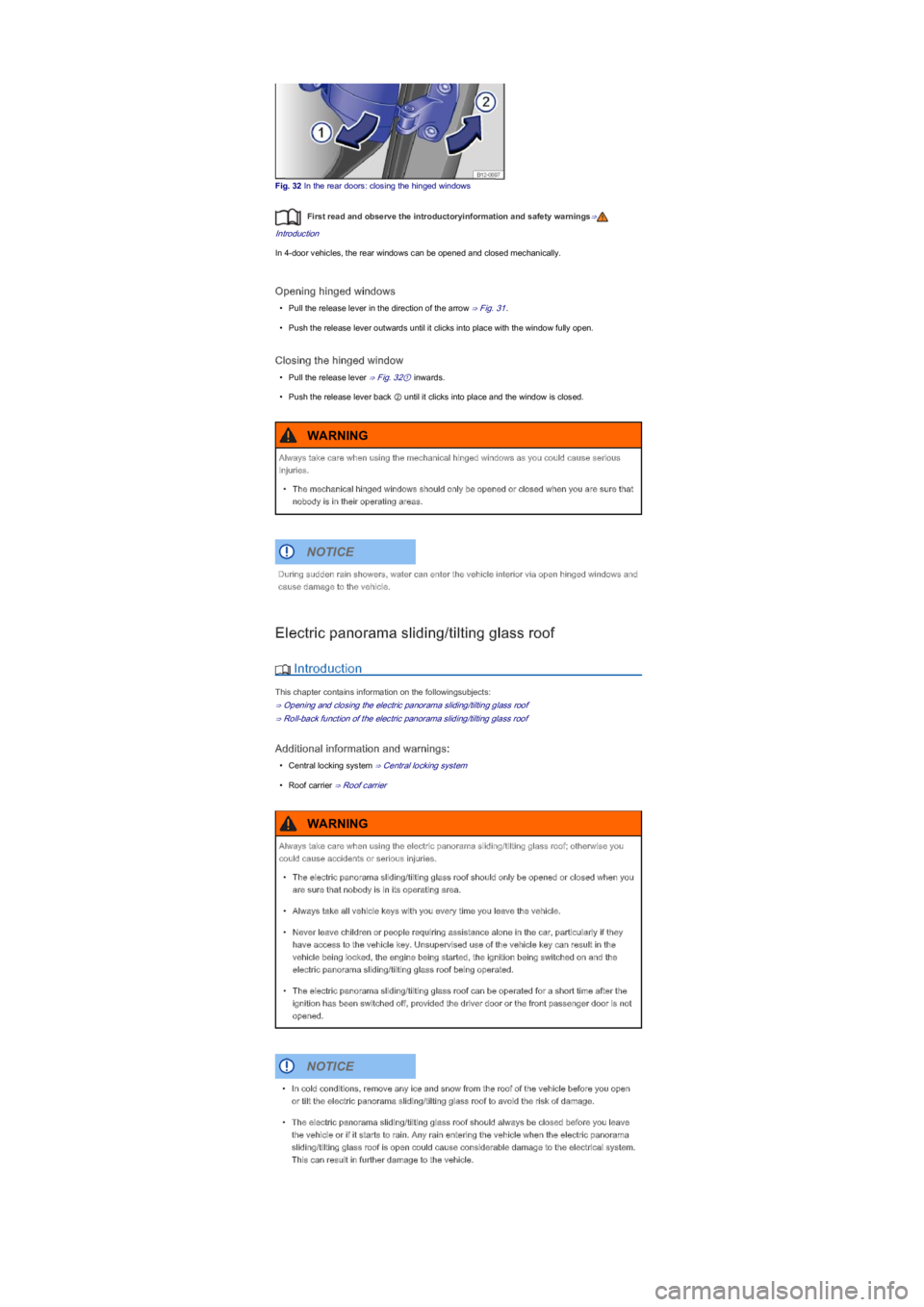
Fig. 32 In the rear doors: closing the hinged windows
First read and observe the introductoryinformation and safety warnings⇒
Introduction
In 4-door vehicles, the rear windows can be opened and closed mechanically.
Opening hinged windows
•Pull the release lever in the direction of the arrow ⇒ Fig. 31.
•Push the release lever outwards until it clicks into place with the window fully open.
Closing the hinged window
•Pull the release lever ⇒ Fig. 32① inwards.
•Push the release lever back ② until it clicks into place and the window is closed.
Electric panorama sliding/tilting glass roof
Introduction
This chapter contains information on the followingsubjects:
⇒ Opening and closing the electric panorama sliding/tilting glass roof
⇒ Roll-back function of the electric panorama sliding/tilting glass roof
Additional information and warnings:
•Central locking system ⇒ Central locking system
•Roof carrier ⇒ Roof carrier
Always take care when using the mechanical hinged windows as you could cause serious
injuries.
•The mechanical hinged windows should only be opened or closed when you are sure that
nobody is in their operating areas.
WARNING
During sudden rain showers, water can enter the vehicle interior via open hinged windows and
cause damage to the vehicle.
NOTICE
Always take care when using the electric panorama sliding/tilting glass roof; otherwise you
could cause accidents or serious injuries.
•The electric panorama sliding/tilting glass roof should only be opened or closed when you
are sure that nobody is in its operating area.
•Always take all vehicle keys with you every time you leave the vehicle.
•Never leave children or people requiring assistance alone in the car, particularly if they
have access to the vehicle key. Unsupervised use of the vehicle key can result in the
vehicle being locked, the engine being started, the ignition being switched on and the
electric panorama sliding/tilting glass roof being operated.
•The electric panorama sliding/tilting glass roof can be operated for a short time after the
ignition has been switched off, provided the driver door or the front passenger door is not
opened.
WARNING
•In cold conditions, remove any ice and snow from the roof of the vehicle before you open
or tilt the electric panorama sliding/tilting glass roof to avoid the risk of damage.
•The electric panorama sliding/tilting glass roof should always be closed before you leave
the vehicle or if it starts to rain. Any rain entering the vehicle when the electric panorama
sliding/tilting glass roof is open could cause considerable damage to the electrical system.
This can result in further damage to the vehicle.
NOTICE
Page 32 of 211
Leaves and other loose objects must be removed from the guide rails of the electric
panorama sliding/tilting glass roof at regular intervals, using a vacuum cleaner or by hand.
If there is a fault in the electric panorama sliding/tilting roof, the roll-back function will not
work properly. Go to a qualified workshop
Opening and closing the electric panorama sliding/tilting glass roof
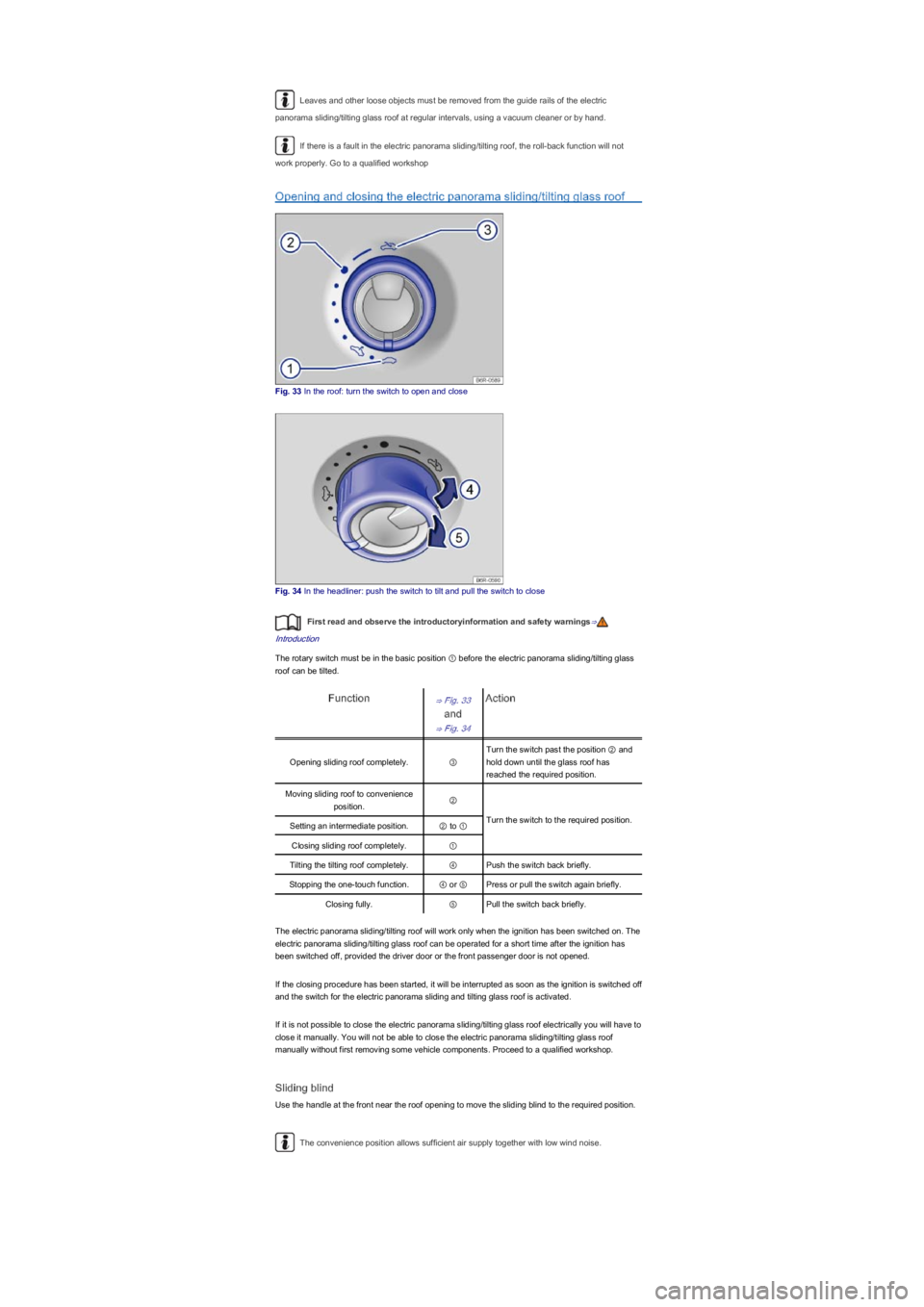
Fig. 33 In the roof: turn the switch to open and close
Fig. 34 In the headliner: push the switch to tilt and pull the switch to close
First read and observe the introductoryinformation and safety warnings⇒
Introduction
The rotary switch must be in the basic position ① before the electric panorama sliding/tilting glass
roof can be tilted.
Function⇒ Fig. 33
and
⇒ Fig. 34
Action
Opening sliding roof completely.③
Turn the switch past the position ② and
hold down until the glass roof has
reached the required position.
Moving sliding roof to convenience
position.②
Turn the switch to the required position.Setting an intermediate position.② to ①
Closing sliding roof completely.①
Tilting the tilting roof completely.④Push the switch back briefly.
Stopping the one-touch function.④ or ⑤Press or pull the switch again briefly.
Closing fully.⑤Pull the switch back briefly.
The electric panorama sliding/tilting roof will work only when the ignition has been switched on. The
electric panorama sliding/tilting glass roof can be operated for a short time after the ignition has
been switched off, provided the driver door or the front passenger door is not opened.
If the closing procedure has been started, it will be interrupted as soon as the ignition is switched off
and the switch for the electric panorama sliding and tilting glass roof is activated.
If it is not possible to close the electric panorama sliding/tilting glass roof electrically you will have to
close it manually. You will not be able to close the electric panorama sliding/tilting glass roof
manually without first removing some vehicle components. Proceed to a qualified workshop.
Sliding blind
Use the handle at the front near the roof opening to move the sliding blind to the required position.
The convenience position allows sufficient air supply together with low wind noise.
Page 39 of 211
•Adjust the steering wheel so that you can hold it on the outside of the ring (at the 9 o'clock and
3 o'clock positions) with both hands and slightly bent arms.
•Push the lever up firmly until it lines up with the steering column ⇒.
Adjust the correct distance between the driver and the steering wheel ⇒ Fig. 35 using the control
elements on the driver seat ⇒ Controls on the front seats.
Seat functions
Introduction
This chapter contains information on the followingsubjects:
⇒ Seat heating
Additional information and warnings:
•Adjusting the seat position ⇒ Adjusting the seat position
•Seat belts ⇒ Seat belts
•Airbag system ⇒ Airbag system
•Child seats (accessories) ⇒ Child seats (accessories)
•Exterior mirrors ⇒ Mirrors
Seat heating
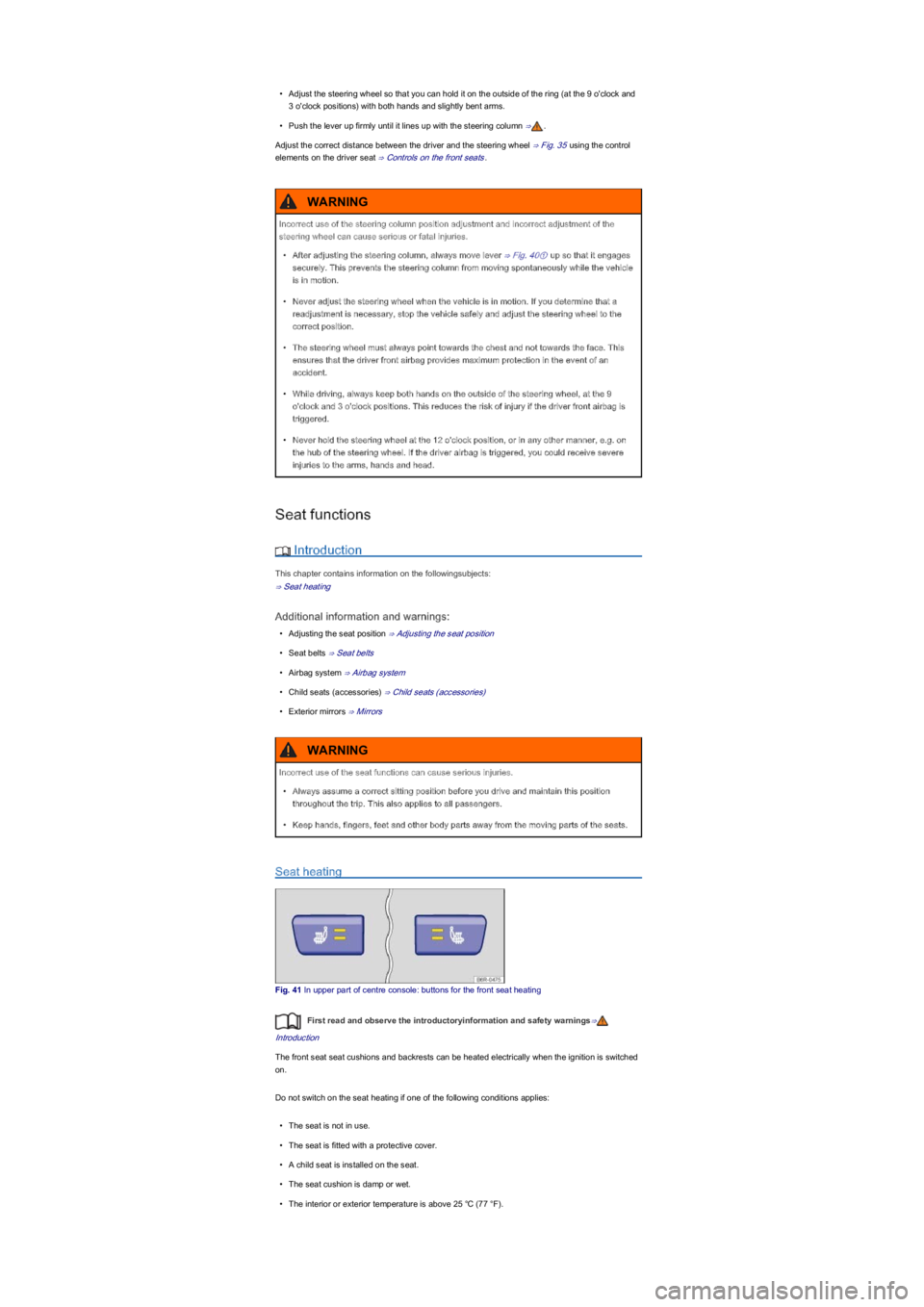
Fig. 41 In upper part of centre console: buttons for the front seat heating
First read and observe the introductoryinformation and safety warnings⇒
Introduction
The front seat seat cushions and backrests can be heated electrically when the ignition is switched
on.
Do not switch on the seat heating if one of the following conditions applies:
•The seat is not in use.
•The seat is fitted with a protective cover.
•A child seat is installed on the seat.
•The seat cushion is damp or wet.
•The interior or exterior temperature is above 25 ℃ (77 °F).
Incorrect use of the steering column position adjustment and incorrect adjustment of the
steering wheel can cause serious or fatal injuries.
•After adjusting the steering column, always move lever ⇒ Fig. 40① up so that it engages
securely. This prevents the steering column from moving spontaneously while the vehicle
is in motion.
•Never adjust the steering wheel when the vehicle is in motion. If you determine that a
readjustment is necessary, stop the vehicle safely and adjust the steering wheel to the
correct position.
•The steering wheel must always point towards the chest and not towards the face. This
ensures that the driver front airbag provides maximum protection in the event of an
accident.
•While driving, always keep both hands on the outside of the steering wheel, at the 9
o'clock and 3 o'clock positions. This reduces the risk of injury if the driver front airbag is
triggered.
•Never hold the steering wheel at the 12 o'clock position, or in any other manner, e.g. on
the hub of the steering wheel. If the driver airbag is triggered, you could receive severe
injuries to the arms, hands and head.
WARNING
Incorrect use of the seat functions can cause serious injuries.
•Always assume a correct sitting position before you drive and maintain this position
throughout the trip. This also applies to all passengers.
•Keep hands, fingers, feet and other body parts away from the moving parts of the seats.
WARNING
Page 42 of 211
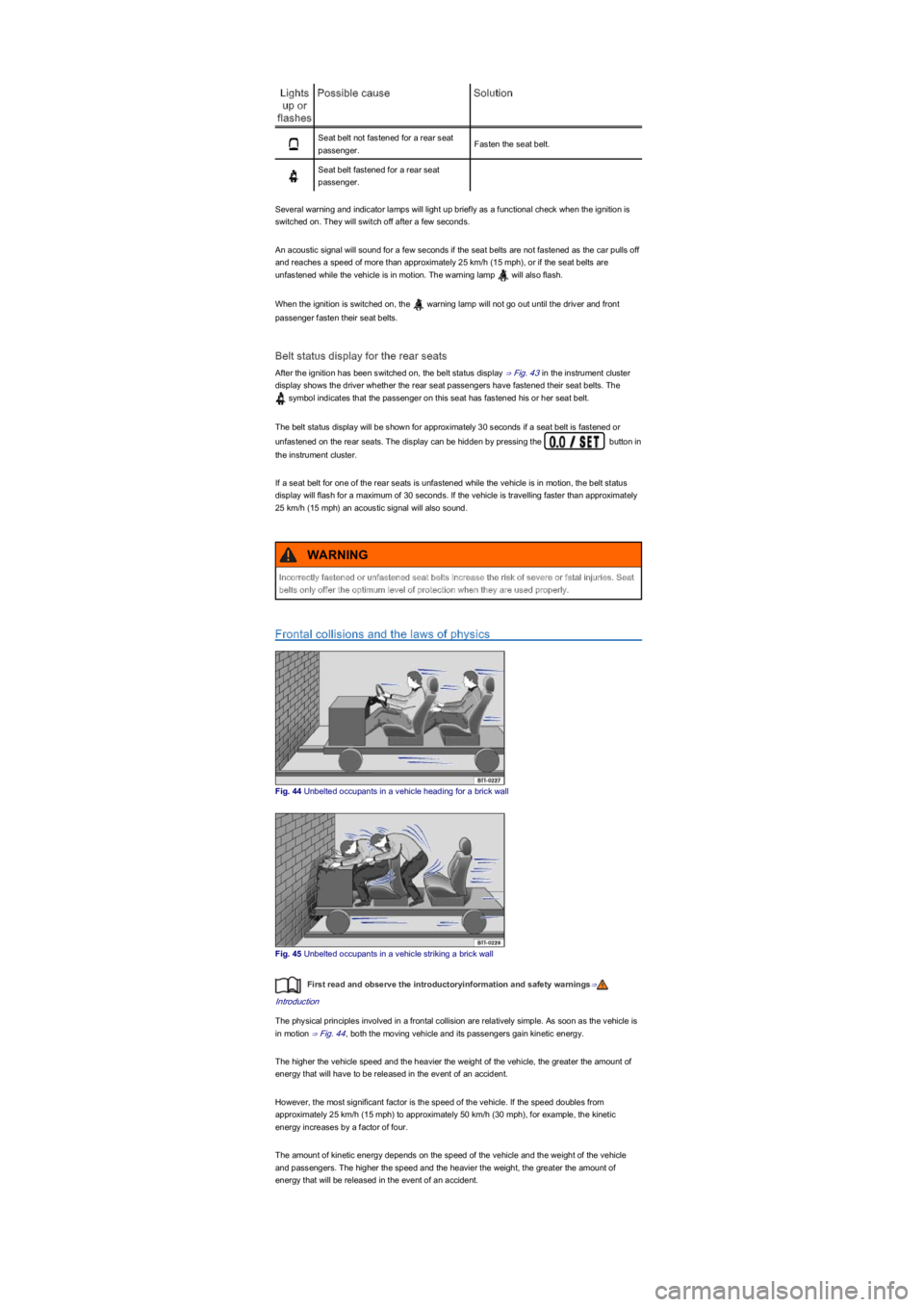
Lights
up or
flashes
Possible causeSolution
Seat belt not fastened for a rear seat
passenger.Fasten the seat belt.
Seat belt fastened for a rear seat
passenger.
Several warning and indicator lamps will light up briefly as a functional check when the ignition is
switched on. They will switch off after a few seconds.
An acoustic signal will sound for a few seconds if the seat belts are not fastened as the car pulls off
and reaches a speed of more than approximately 25 km/h (15 mph), or if the seat belts are
unfastened while the vehicle is in motion. The warning lamp will also flash.
When the ignition is switched on, the warning lamp will not go out until the driver and front
passenger fasten their seat belts.
Belt status display for the rear seats
After the ignition has been switched on, the belt status display ⇒ Fig. 43 in the instrument cluster
display shows the driver whether the rear seat passengers have fastened their seat belts. The
symbol indicates that the passenger on this seat has fastened his or her seat belt.
The belt status display will be shown for approximately 30 seconds if a seat belt is fastened or
unfastened on the rear seats. The display can be hidden by pressing the button in
the instrument cluster.
If a seat belt for one of the rear seats is unfastened while the vehicle is in motion, the belt status
display will flash for a maximum of 30 seconds. If the vehicle is travelling faster than approximately
25 km/h (15 mph) an acoustic signal will also sound.
Frontal collisions and the laws of physics
Fig. 44 Unbelted occupants in a vehicle heading for a brick wall
Fig. 45 Unbelted occupants in a vehicle striking a brick wall
First read and observe the introductoryinformation and safety warnings⇒
Introduction
The physical principles involved in a frontal collision are relatively simple. As soon as the vehicle is
in motion ⇒ Fig. 44, both the moving vehicle and its passengers gain kinetic energy.
The higher the vehicle speed and the heavier the weight of the vehicle, the greater the amount of
energy that will have to be released in the event of an accident.
However, the most significant factor is the speed of the vehicle. If the speed doubles from
approximately 25 km/h (15 mph) to approximately 50 km/h (30 mph), for example, the kinetic
energy increases by a factor of four.
The amount of kinetic energy depends on the speed of the vehicle and the weight of the vehicle
and passengers. The higher the speed and the heavier the weight, the greater the amount of
energy that will be released in the event of an accident.
Incorrectly fastened or unfastened seat belts increase the risk of severe or fatal injuries. Seat
belts only offer the optimum level of protection when they are used properly.
WARNING
Page 49 of 211
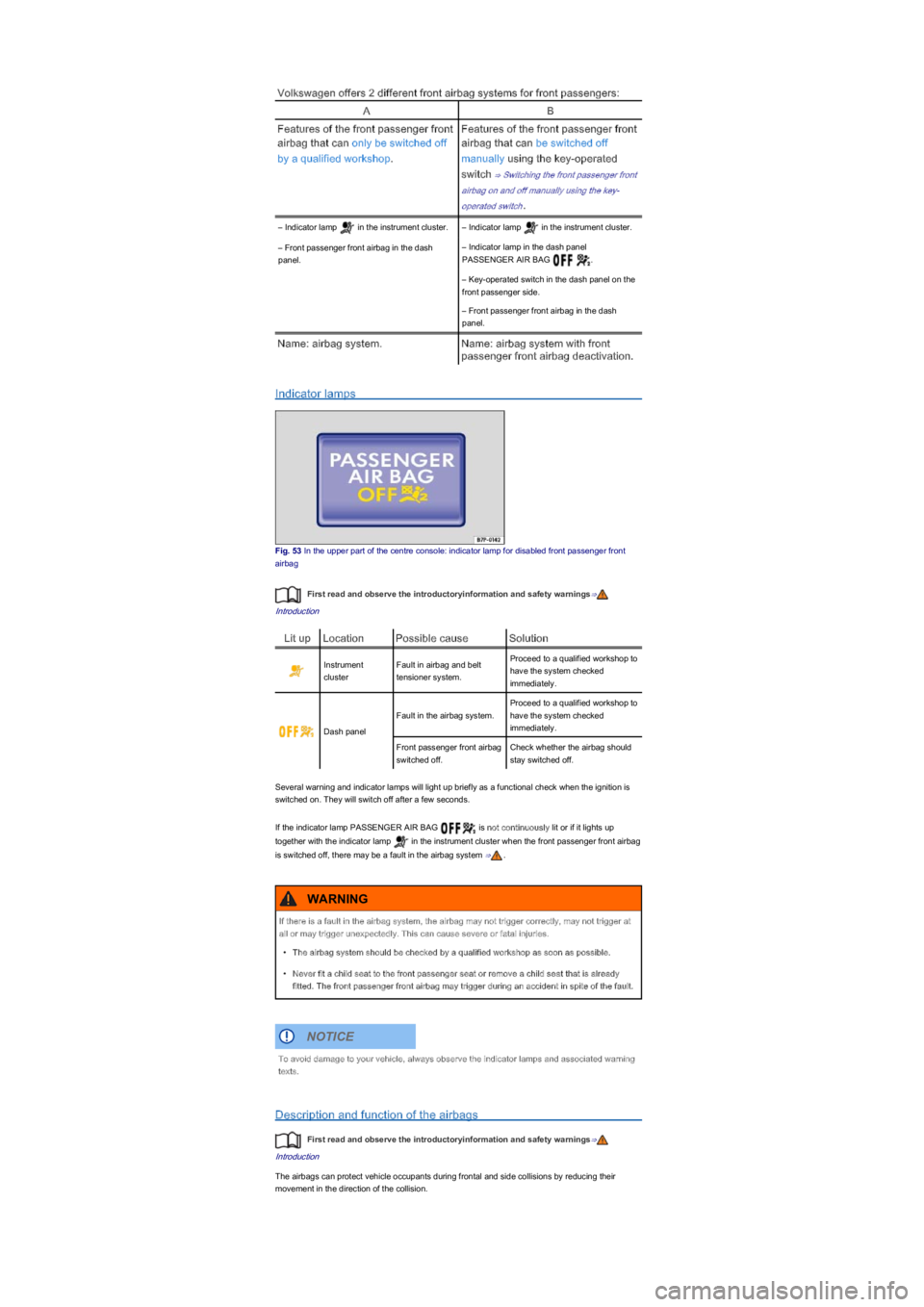
Volkswagen offers 2 different front airbag systems for front passengers:
AB
Features of the front passenger front
airbag that can only be switched off
by a qualified workshop.
Features of the front passenger front
airbag that can be switched off
manually using the key-operated
switch ⇒ Switching the front passenger front
airbag on and off manually using the key-
operated switch.
– Indicator lamp in the instrument cluster.– Indicator lamp in the instrument cluster.
– Front passenger front airbag in the dash
panel.
– Indicator lamp in the dash panel
PASSENGER AIR BAG .
– Key-operated switch in the dash panel on the
front passenger side.
– Front passenger front airbag in the dash
panel.
Name: airbag system.Name: airbag system with front
passenger front airbag deactivation.
Indicator lamps
Fig. 53 In the upper part of the centre console: indicator lamp for disabled front passenger front
airbag
First read and observe the introductoryinformation and safety warnings⇒
Introduction
Lit upLocationPossible causeSolution
Instrument
cluster
Fault in airbag and belt
tensioner system.
Proceed to a qualified workshop to
have the system checked
immediately.
Dash panel
Fault in the airbag system.
Proceed to a qualified workshop to
have the system checked
immediately.
Front passenger front airbag
switched off.
Check whether the airbag should
stay switched off.
Several warning and indicator lamps will light up briefly as a functional check when the ignition is
switched on. They will switch off after a few seconds.
If the indicator lamp PASSENGER AIR BAG is not continuously lit or if it lights up
together with the indicator lamp in the instrument cluster when the front passenger front airbag
is switched off, there may be a fault in the airbag system ⇒.
Description and function of the airbags
First read and observe the introductoryinformation and safety warnings⇒
Introduction
The airbags can protect vehicle occupants during frontal and side collisions by reducing their
movement in the direction of the collision.
If there is a fault in the airbag system, the airbag may not trigger correctly, may not trigger at
all or may trigger unexpectedly. This can cause severe or fatal injuries.
•The airbag system should be checked by a qualified workshop as soon as possible.
•Never fit a child seat to the front passenger seat or remove a child seat that is already
fitted. The front passenger front airbag may trigger during an accident in spite of the fault.
WARNING
To avoid damage to your vehicle, always observe the indicator lamps and associated warning
texts.
NOTICE
Page 50 of 211
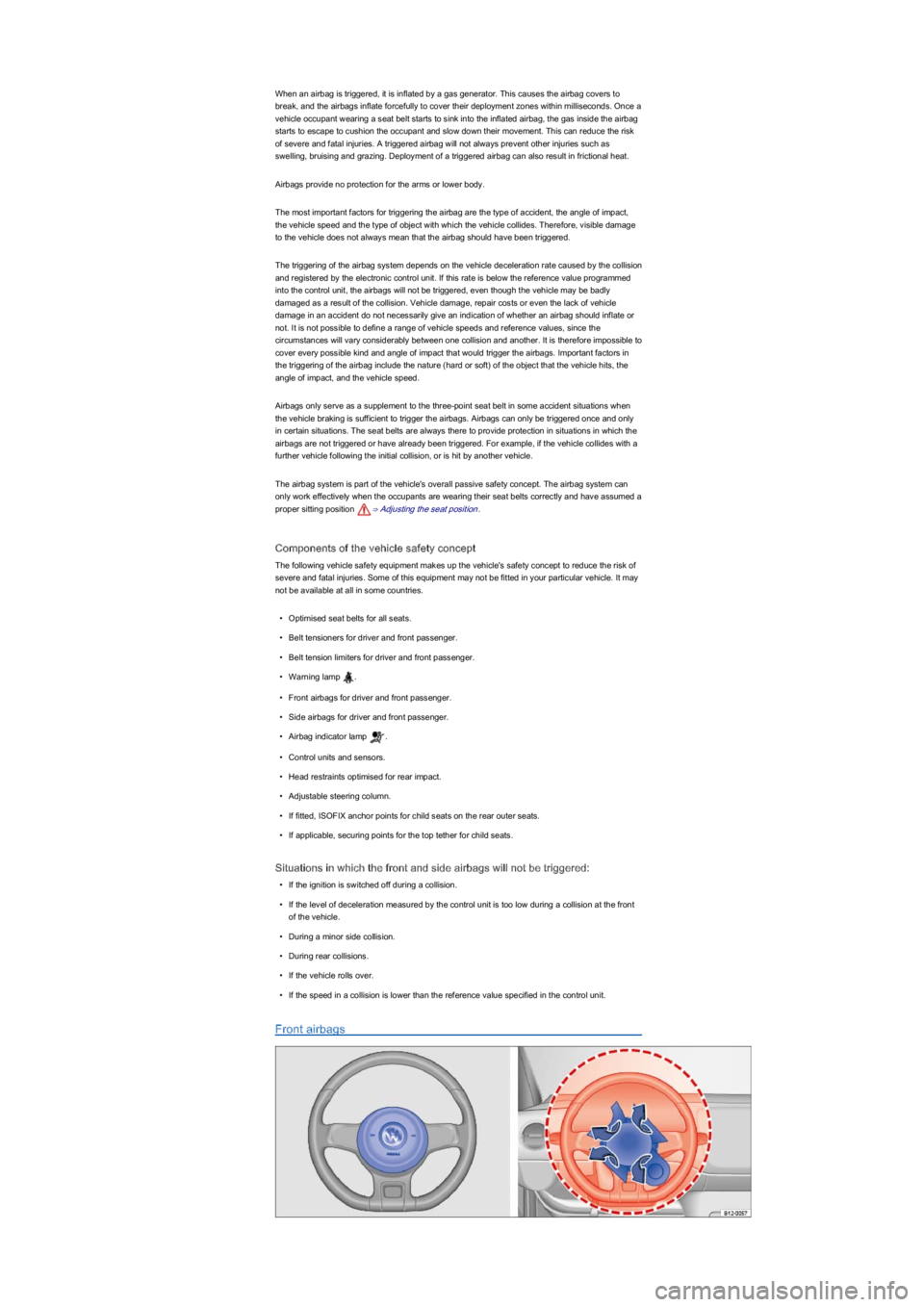
When an airbag is triggered, it is inflated by a gas generator. This causes the airbag covers to
break, and the airbags inflate forcefully to cover their deployment zones within milliseconds. Once a
vehicle occupant wearing a seat belt starts to sink into the inflated airbag, the gas inside the airbag
starts to escape to cushion the occupant and slow down their movement. This can reduce the risk
of severe and fatal injuries. A triggered airbag will not always prevent other injuries such as
swelling, bruising and grazing. Deployment of a triggered airbag can also result in frictional heat.
Airbags provide no protection for the arms or lower body.
The most important factors for triggering the airbag are the type of accident, the angle of impact,
the vehicle speed and the type of object with which the vehicle collides. Therefore, visible damage
to the vehicle does not always mean that the airbag should have been triggered.
The triggering of the airbag system depends on the vehicle deceleration rate caused by the collision
and registered by the electronic control unit. If this rate is below the reference value programmed
into the control unit, the airbags will not be triggered, even though the vehicle may be badly
damaged as a result of the collision. Vehicle damage, repair costs or even the lack of vehicle
damage in an accident do not necessarily give an indication of whether an airbag should inflate or
not. It is not possible to define a range of vehicle speeds and reference values, since the
circumstances will vary considerably between one collision and another. It is therefore impossible to
cover every possible kind and angle of impact that would trigger the airbags. Important factors in
the triggering of the airbag include the nature (hard or soft) of the object that the vehicle hits, the
angle of impact, and the vehicle speed.
Airbags only serve as a supplement to the three-point seat belt in some accident situations when
the vehicle braking is sufficient to trigger the airbags. Airbags can only be triggered once and only
in certain situations. The seat belts are always there to provide protection in situations in which the
airbags are not triggered or have already been triggered. For example, if the vehicle collides with a
further vehicle following the initial collision, or is hit by another vehicle.
The airbag system is part of the vehicle's overall passive safety concept. The airbag system can
only work effectively when the occupants are wearing their seat belts correctly and have assumed a
proper sitting position ⇒ Adjusting the seat position.
Components of the vehicle safety concept
The following vehicle safety equipment makes up the vehicle's safety concept to reduce the risk of
severe and fatal injuries. Some of this equipment may not be fitted in your particular vehicle. It may
not be available at all in some countries.
•Optimised seat belts for all seats.
•Belt tensioners for driver and front passenger.
•Belt tension limiters for driver and front passenger.
•Warning lamp .
•Front airbags for driver and front passenger.
•Side airbags for driver and front passenger.
•Airbag indicator lamp .
•Control units and sensors.
•Head restraints optimised for rear impact.
•Adjustable steering column.
•If fitted, ISOFIX anchor points for child seats on the rear outer seats.
•If applicable, securing points for the top tether for child seats.
Situations in which the front and side airbags will not be triggered:
•If the ignition is switched off during a collision.
•If the level of deceleration measured by the control unit is too low during a collision at the front
of the vehicle.
•During a minor side collision.
•During rear collisions.
•If the vehicle rolls over.
•If the speed in a collision is lower than the reference value specified in the control unit.
Front airbags
Page 52 of 211
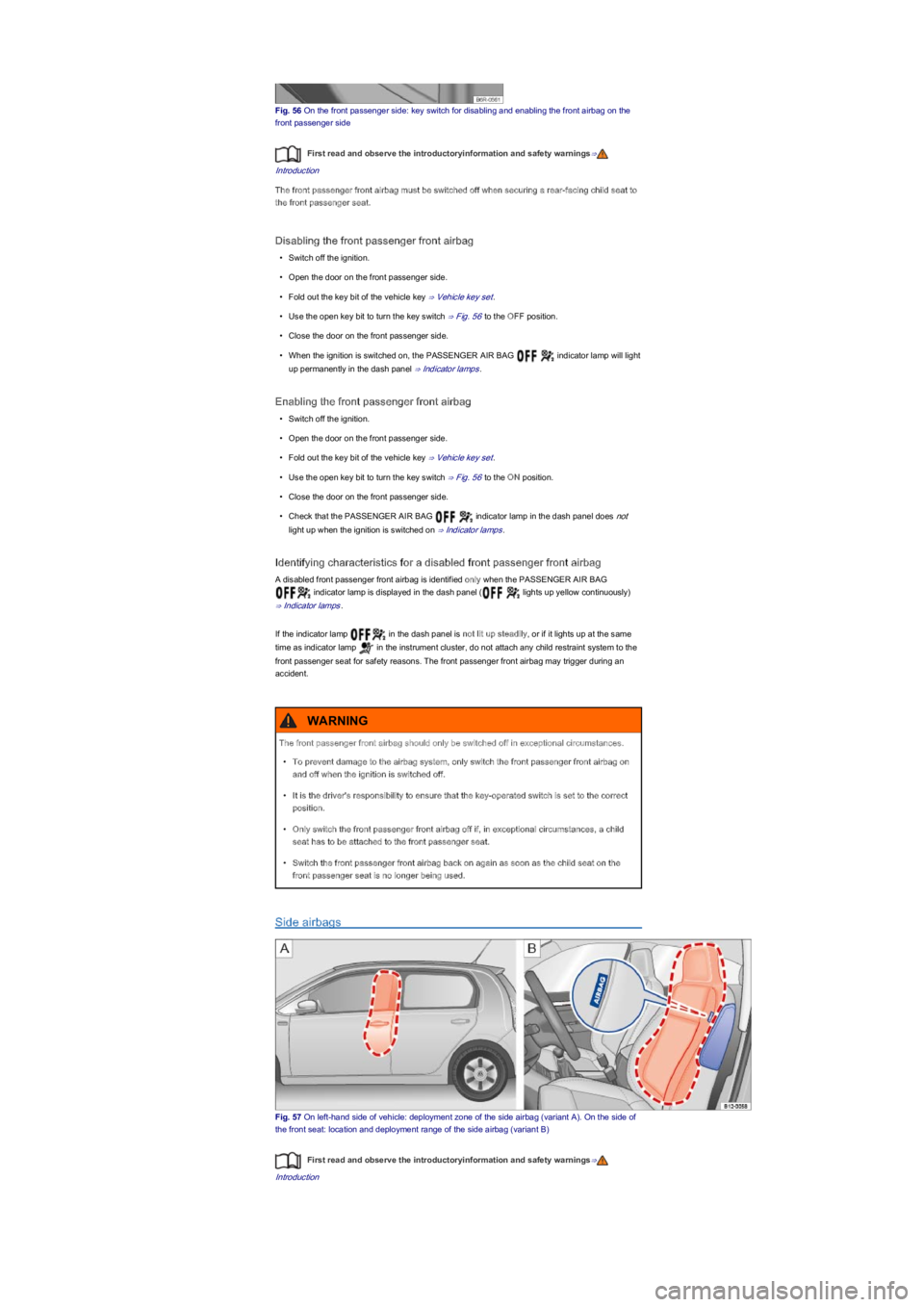
Fig. 56 On the front passenger side: key switch for disabling and enabling the front airbag on the
front passenger side
First read and observe the introductoryinformation and safety warnings⇒
Introduction
The front passenger front airbag must be switched off when securing a rear-facing child seat to
the front passenger seat.
Disabling the front passenger front airbag
•Switch off the ignition.
•Open the door on the front passenger side.
•Fold out the key bit of the vehicle key ⇒ Vehicle key set.
•Use the open key bit to turn the key switch ⇒ Fig. 56 to the OFF position.
•Close the door on the front passenger side.
•When the ignition is switched on, the PASSENGER AIR BAG indicator lamp will light
up permanently in the dash panel ⇒ Indicator lamps.
Enabling the front passenger front airbag
•Switch off the ignition.
•Open the door on the front passenger side.
•Fold out the key bit of the vehicle key ⇒ Vehicle key set.
•Use the open key bit to turn the key switch ⇒ Fig. 56 to the ON position.
•Close the door on the front passenger side.
•Check that the PASSENGER AIR BAG indicator lamp in the dash panel does not
light up when the ignition is switched on ⇒ Indicator lamps.
Identifying characteristics for a disabled front passenger front airbag
A disabled front passenger front airbag is identified only when the PASSENGER AIR BAG
indicator lamp is displayed in the dash panel ( lights up yellow continuously)
⇒ Indicator lamps.
If the indicator lamp in the dash panel is not lit up steadily, or if it lights up at the same
time as indicator lamp in the instrument cluster, do not attach any child restraint system to the
front passenger seat for safety reasons. The front passenger front airbag may trigger during an
accident.
Side airbags
Fig. 57 On left-hand side of vehicle: deployment zone of the side airbag (variant A). On the side of
the front seat: location and deployment range of the side airbag (variant B)
First read and observe the introductoryinformation and safety warnings⇒
Introduction
The front passenger front airbag should only be switched off in exceptional circumstances.
•To prevent damage to the airbag system, only switch the front passenger front airbag on
and off when the ignition is switched off.
•It is the driver's responsibility to ensure that the key-operated switch is set to the correct
position.
•Only switch the front passenger front airbag off if, in exceptional circumstances, a child
seat has to be attached to the front passenger seat.
•Switch the front passenger front airbag back on again as soon as the child seat on the
front passenger seat is no longer being used.
WARNING
Page 60 of 211
Introduction
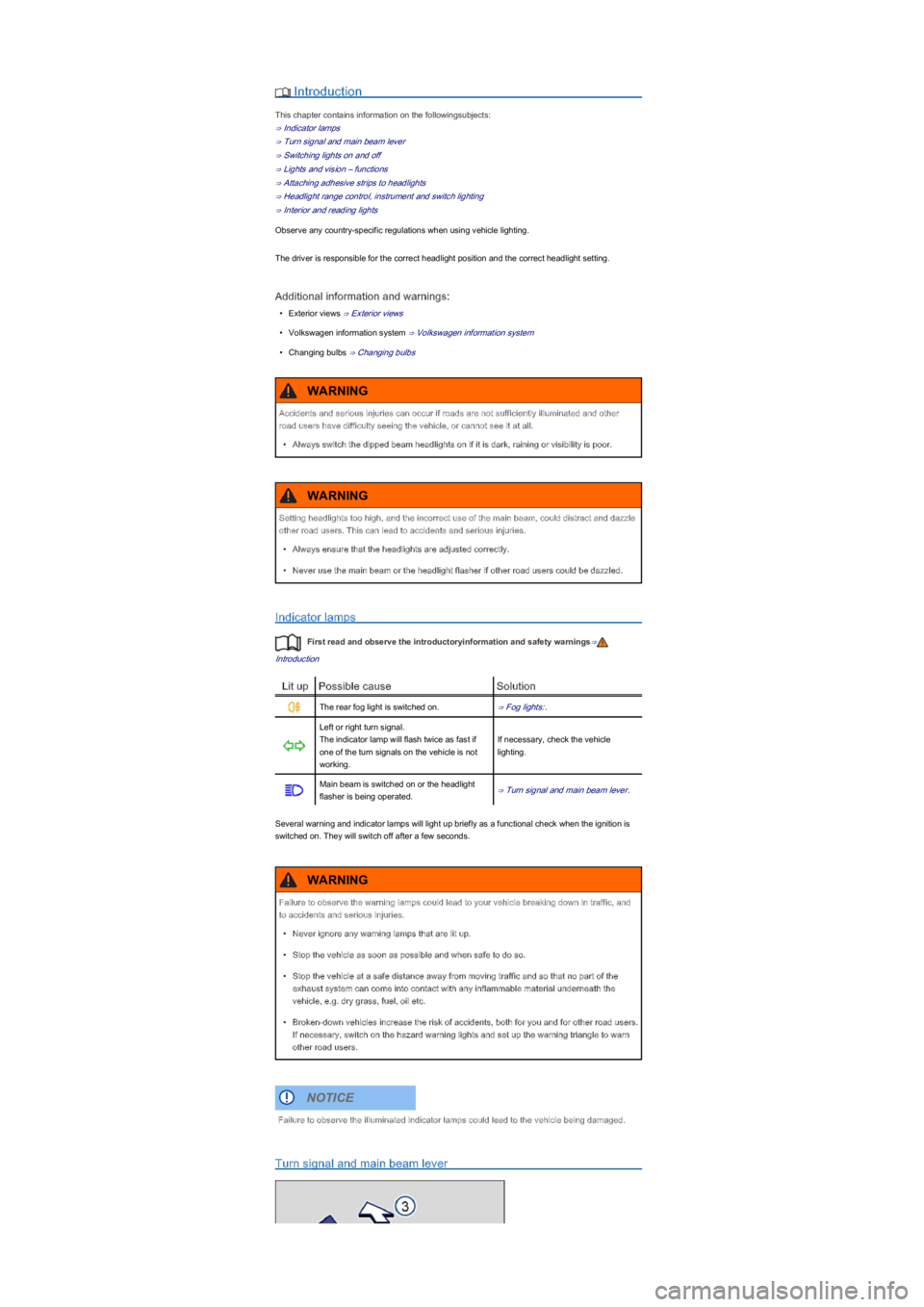
This chapter contains information on the followingsubjects:
⇒ Indicator lamps
⇒ Turn signal and main beam lever
⇒ Switching lights on and off
⇒ Lights and vision – functions
⇒ Attaching adhesive strips to headlights
⇒ Headlight range control, instrument and switch lighting
⇒ Interior and reading lights
Observe any country-specific regulations when using vehicle lighting.
The driver is responsible for the correct headlight position and the correct headlight setting.
Additional information and warnings:
•Exterior views ⇒ Exterior views
•Volkswagen information system ⇒ Volkswagen information system
•Changing bulbs ⇒ Changing bulbs
Indicator lamps
First read and observe the introductoryinformation and safety warnings⇒
Introduction
Lit upPossible causeSolution
The rear fog light is switched on.⇒ Fog lights:.
Left or right turn signal.
The indicator lamp will flash twice as fast if
one of the turn signals on the vehicle is not
working.
If necessary, check the vehicle
lighting.
Main beam is switched on or the headlight
flasher is being operated.⇒ Turn signal and main beam lever.
Several warning and indicator lamps will light up briefly as a functional check when the ignition is
switched on. They will switch off after a few seconds.
Turn signal and main beam lever
Accidents and serious injuries can occur if roads are not sufficiently illuminated and other
road users have difficulty seeing the vehicle, or cannot see it at all.
•Always switch the dipped beam headlights on if it is dark, raining or visibility is poor.
WARNING
Setting headlights too high, and the incorrect use of the main beam, could distract and dazzle
other road users. This can lead to accidents and serious injuries.
•Always ensure that the headlights are adjusted correctly.
•Never use the main beam or the headlight flasher if other road users could be dazzled.
WARNING
Failure to observe the warning lamps could lead to your vehicle breaking down in traffic, and
to accidents and serious injuries.
•Never ignore any warning lamps that are lit up.
•Stop the vehicle as soon as possible and when safe to do so.
•Stop the vehicle at a safe distance away from moving traffic and so that no part of the
exhaust system can come into contact with any inflammable material underneath the
vehicle, e.g. dry grass, fuel, oil etc.
•Broken-down vehicles increase the risk of accidents, both for you and for other road users.
If necessary, switch on the hazard warning lights and set up the warning triangle to warn
other road users.
WARNING
Failure to observe the illuminated indicator lamps could lead to the vehicle being damaged.
NOTICE
Page 61 of 211
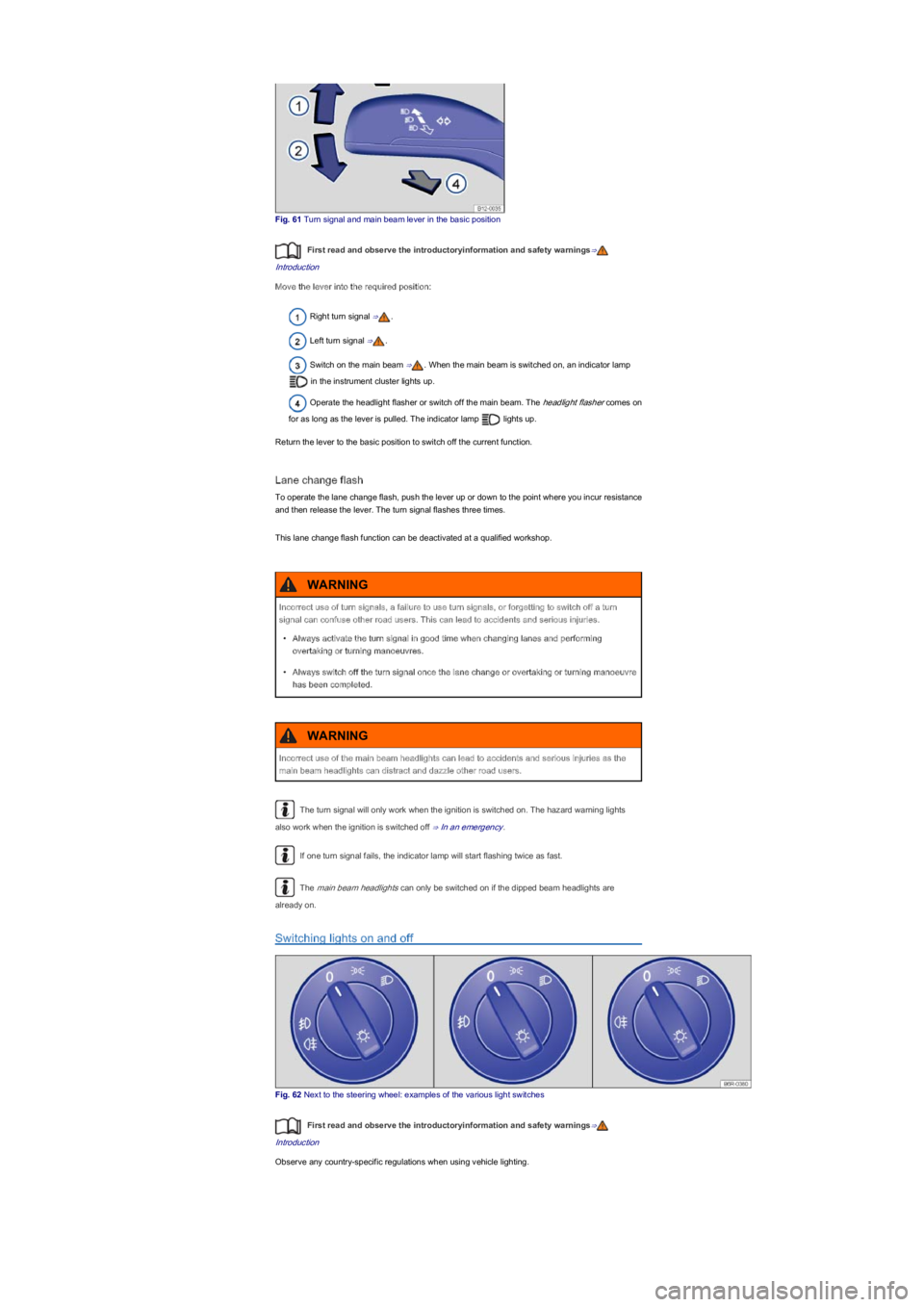
Fig. 61 Turn signal and main beam lever in the basic position
First read and observe the introductoryinformation and safety warnings⇒
Introduction
Move the lever into the required position:
Right turn signal ⇒.
Left turn signal ⇒.
Switch on the main beam ⇒. When the main beam is switched on, an indicator lamp
in the instrument cluster lights up.
Operate the headlight flasher or switch off the main beam. The headlight flasher comes on
for as long as the lever is pulled. The indicator lamp lights up.
Return the lever to the basic position to switch off the current function.
Lane change flash
To operate the lane change flash, push the lever up or down to the point where you incur resistance
and then release the lever. The turn signal flashes three times.
This lane change flash function can be deactivated at a qualified workshop.
The turn signal will only work when the ignition is switched on. The hazard warning lights
also work when the ignition is switched off ⇒ In an emergency.
If one turn signal fails, the indicator lamp will start flashing twice as fast.
The main beam headlights can only be switched on if the dipped beam headlights are
already on.
Switching lights on and off
Fig. 62 Next to the steering wheel: examples of the various light switches
First read and observe the introductoryinformation and safety warnings⇒
Introduction
Observe any country-specific regulations when using vehicle lighting.
Incorrect use of turn signals, a failure to use turn signals, or forgetting to switch off a turn
signal can confuse other road users. This can lead to accidents and serious injuries.
•Always activate the turn signal in good time when changing lanes and performing
overtaking or turning manoeuvres.
•Always switch off the turn signal once the lane change or overtaking or turning manoeuvre
has been completed.
WARNING
Incorrect use of the main beam headlights can lead to accidents and serious injuries as the
main beam headlights can distract and dazzle other road users.
WARNING