instrument VOLKSWAGEN UP! 2021 Owner´s Manual
[x] Cancel search | Manufacturer: VOLKSWAGEN, Model Year: 2021, Model line: UP!, Model: VOLKSWAGEN UP! 2021Pages: 211, PDF Size: 5.98 MB
Page 41 of 211
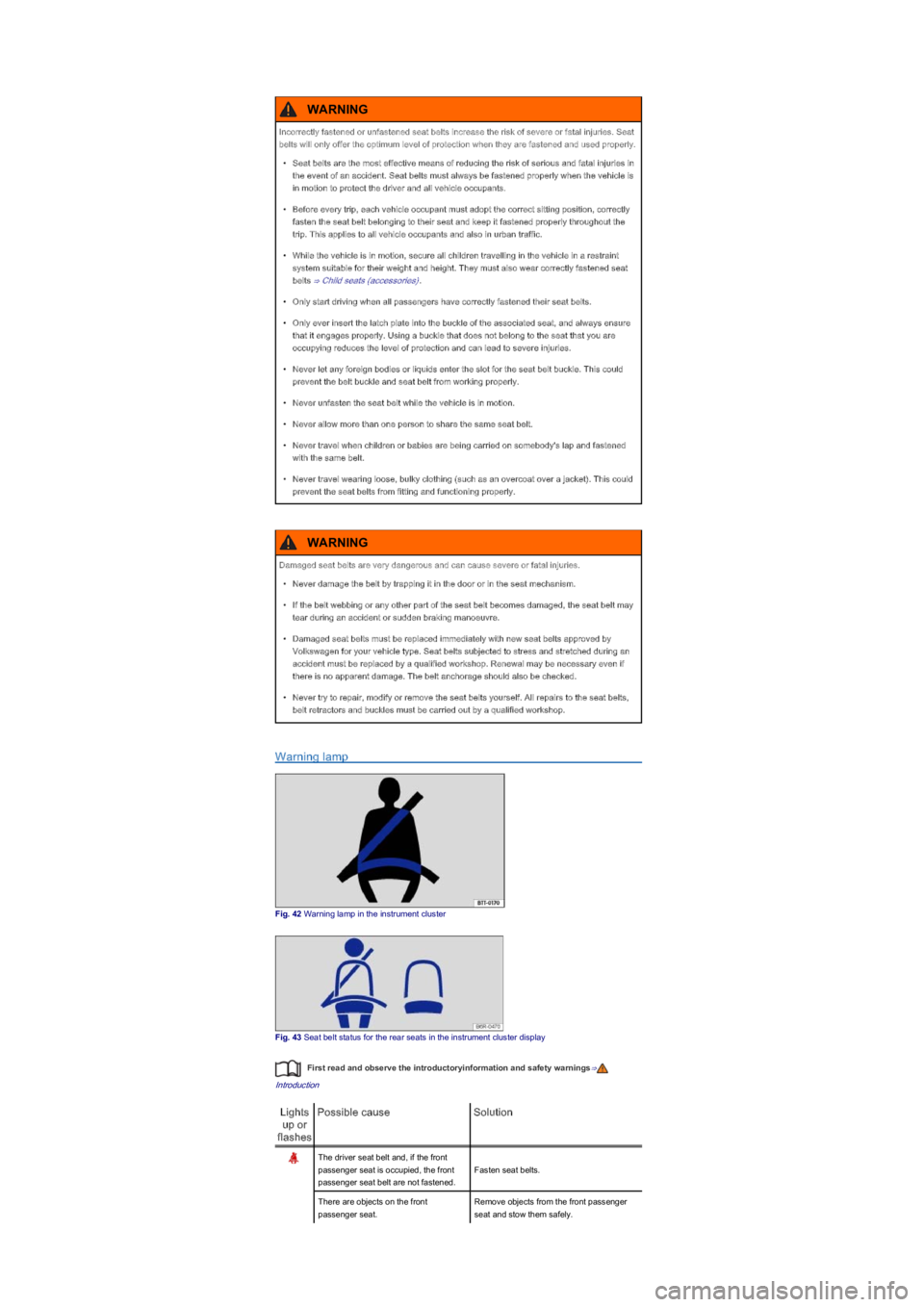
Warning lamp
Fig. 42 Warning lamp in the instrument cluster
Fig. 43 Seat belt status for the rear seats in the instrument cluster display
First read and observe the introductoryinformation and safety warnings⇒
Introduction
Lights
up or
flashes
Possible causeSolution
The driver seat belt and, if the front
passenger seat is occupied, the front
passenger seat belt are not fastened.
Fasten seat belts.
There are objects on the front
passenger seat.
Remove objects from the front passenger
seat and stow them safely.
Incorrectly fastened or unfastened seat belts increase the risk of severe or fatal injuries. Seat
belts will only offer the optimum level of protection when they are fastened and used properly.
•Seat belts are the most effective means of reducing the risk of serious and fatal injuries in
the event of an accident. Seat belts must always be fastened properly when the vehicle is
in motion to protect the driver and all vehicle occupants.
•Before every trip, each vehicle occupant must adopt the correct sitting position, correctly
fasten the seat belt belonging to their seat and keep it fastened properly throughout the
trip. This applies to all vehicle occupants and also in urban traffic.
•While the vehicle is in motion, secure all children travelling in the vehicle in a restraint
system suitable for their weight and height. They must also wear correctly fastened seat
belts ⇒ Child seats (accessories).
•Only start driving when all passengers have correctly fastened their seat belts.
•Only ever insert the latch plate into the buckle of the associated seat, and always ensure
that it engages properly. Using a buckle that does not belong to the seat that you are
occupying reduces the level of protection and can lead to severe injuries.
•Never let any foreign bodies or liquids enter the slot for the seat belt buckle. This could
prevent the belt buckle and seat belt from working properly.
•Never unfasten the seat belt while the vehicle is in motion.
•Never allow more than one person to share the same seat belt.
•Never travel when children or babies are being carried on somebody's lap and fastened
with the same belt.
•Never travel wearing loose, bulky clothing (such as an overcoat over a jacket). This could
prevent the seat belts from fitting and functioning properly.
WARNING
Damaged seat belts are very dangerous and can cause severe or fatal injuries.
•Never damage the belt by trapping it in the door or in the seat mechanism.
•If the belt webbing or any other part of the seat belt becomes damaged, the seat belt may
tear during an accident or sudden braking manoeuvre.
•Damaged seat belts must be replaced immediately with new seat belts approved by
Volkswagen for your vehicle type. Seat belts subjected to stress and stretched during an
accident must be replaced by a qualified workshop. Renewal may be necessary even if
there is no apparent damage. The belt anchorage should also be checked.
•Never try to repair, modify or remove the seat belts yourself. All repairs to the seat belts,
belt retractors and buckles must be carried out by a qualified workshop.
WARNING
Page 42 of 211
Lights
up or
flashes
Possible causeSolution
Seat belt not fastened for a rear seat
passenger.Fasten the seat belt.
Seat belt fastened for a rear seat
passenger.
Several warning and indicator lamps will light up briefly as a functional check when the ignition is
switched on. They will switch off after a few seconds.
An acoustic signal will sound for a few seconds if the seat belts are not fastened as the car pulls off
and reaches a speed of more than approximately 25 km/h (15 mph), or if the seat belts are
unfastened while the vehicle is in motion. The warning lamp will also flash.
When the ignition is switched on, the warning lamp will not go out until the driver and front
passenger fasten their seat belts.
Belt status display for the rear seats
After the ignition has been switched on, the belt status display ⇒ Fig. 43 in the instrument cluster
display shows the driver whether the rear seat passengers have fastened their seat belts. The
symbol indicates that the passenger on this seat has fastened his or her seat belt.
The belt status display will be shown for approximately 30 seconds if a seat belt is fastened or
unfastened on the rear seats. The display can be hidden by pressing the button in
the instrument cluster.
If a seat belt for one of the rear seats is unfastened while the vehicle is in motion, the belt status
display will flash for a maximum of 30 seconds. If the vehicle is travelling faster than approximately
25 km/h (15 mph) an acoustic signal will also sound.
Frontal collisions and the laws of physics
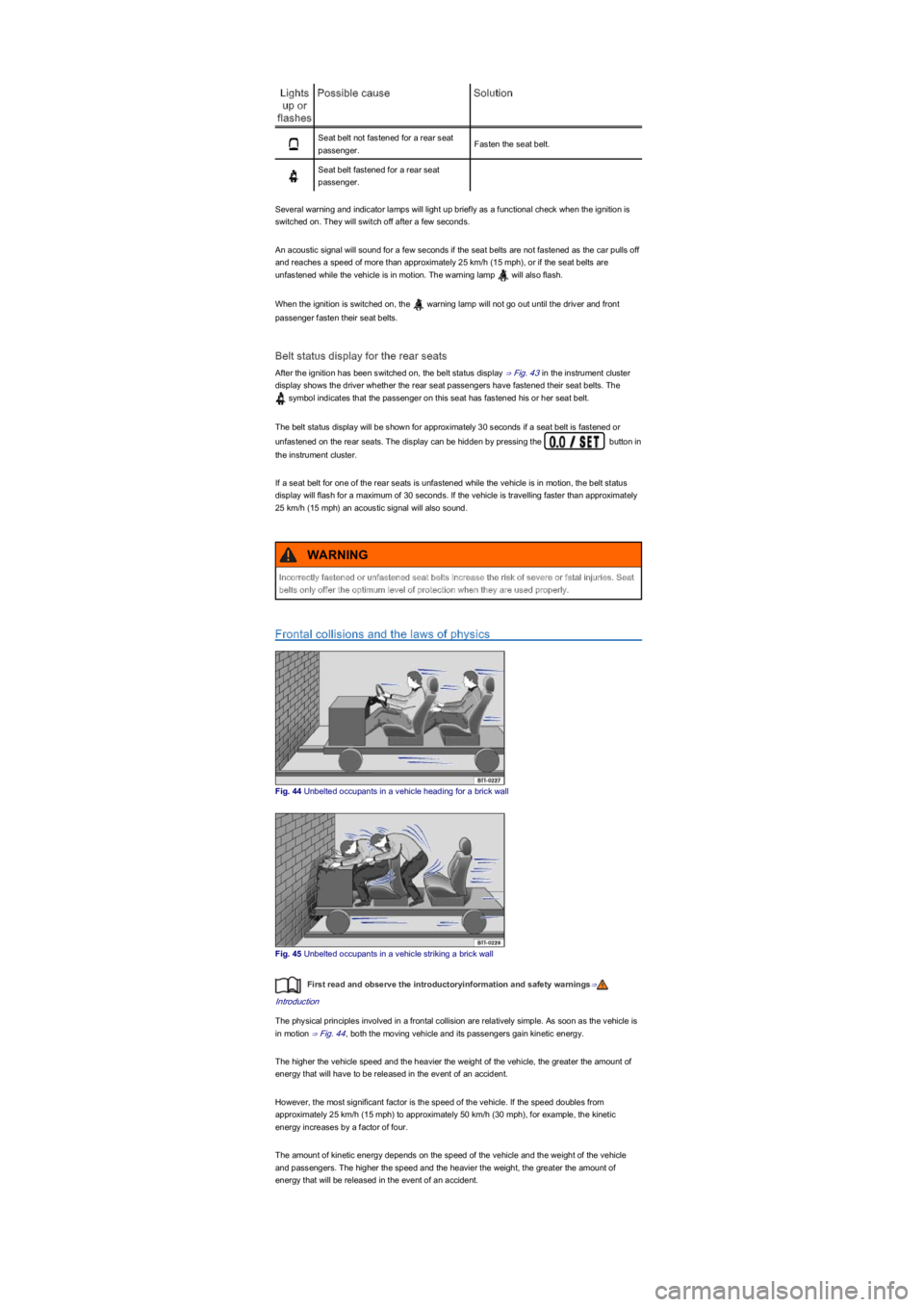
Fig. 44 Unbelted occupants in a vehicle heading for a brick wall
Fig. 45 Unbelted occupants in a vehicle striking a brick wall
First read and observe the introductoryinformation and safety warnings⇒
Introduction
The physical principles involved in a frontal collision are relatively simple. As soon as the vehicle is
in motion ⇒ Fig. 44, both the moving vehicle and its passengers gain kinetic energy.
The higher the vehicle speed and the heavier the weight of the vehicle, the greater the amount of
energy that will have to be released in the event of an accident.
However, the most significant factor is the speed of the vehicle. If the speed doubles from
approximately 25 km/h (15 mph) to approximately 50 km/h (30 mph), for example, the kinetic
energy increases by a factor of four.
The amount of kinetic energy depends on the speed of the vehicle and the weight of the vehicle
and passengers. The higher the speed and the heavier the weight, the greater the amount of
energy that will be released in the event of an accident.
Incorrectly fastened or unfastened seat belts increase the risk of severe or fatal injuries. Seat
belts only offer the optimum level of protection when they are used properly.
WARNING
Page 49 of 211
Volkswagen offers 2 different front airbag systems for front passengers:
AB
Features of the front passenger front
airbag that can only be switched off
by a qualified workshop.
Features of the front passenger front
airbag that can be switched off
manually using the key-operated
switch ⇒ Switching the front passenger front
airbag on and off manually using the key-
operated switch.
– Indicator lamp in the instrument cluster.– Indicator lamp in the instrument cluster.
– Front passenger front airbag in the dash
panel.
– Indicator lamp in the dash panel
PASSENGER AIR BAG .
– Key-operated switch in the dash panel on the
front passenger side.
– Front passenger front airbag in the dash
panel.
Name: airbag system.Name: airbag system with front
passenger front airbag deactivation.
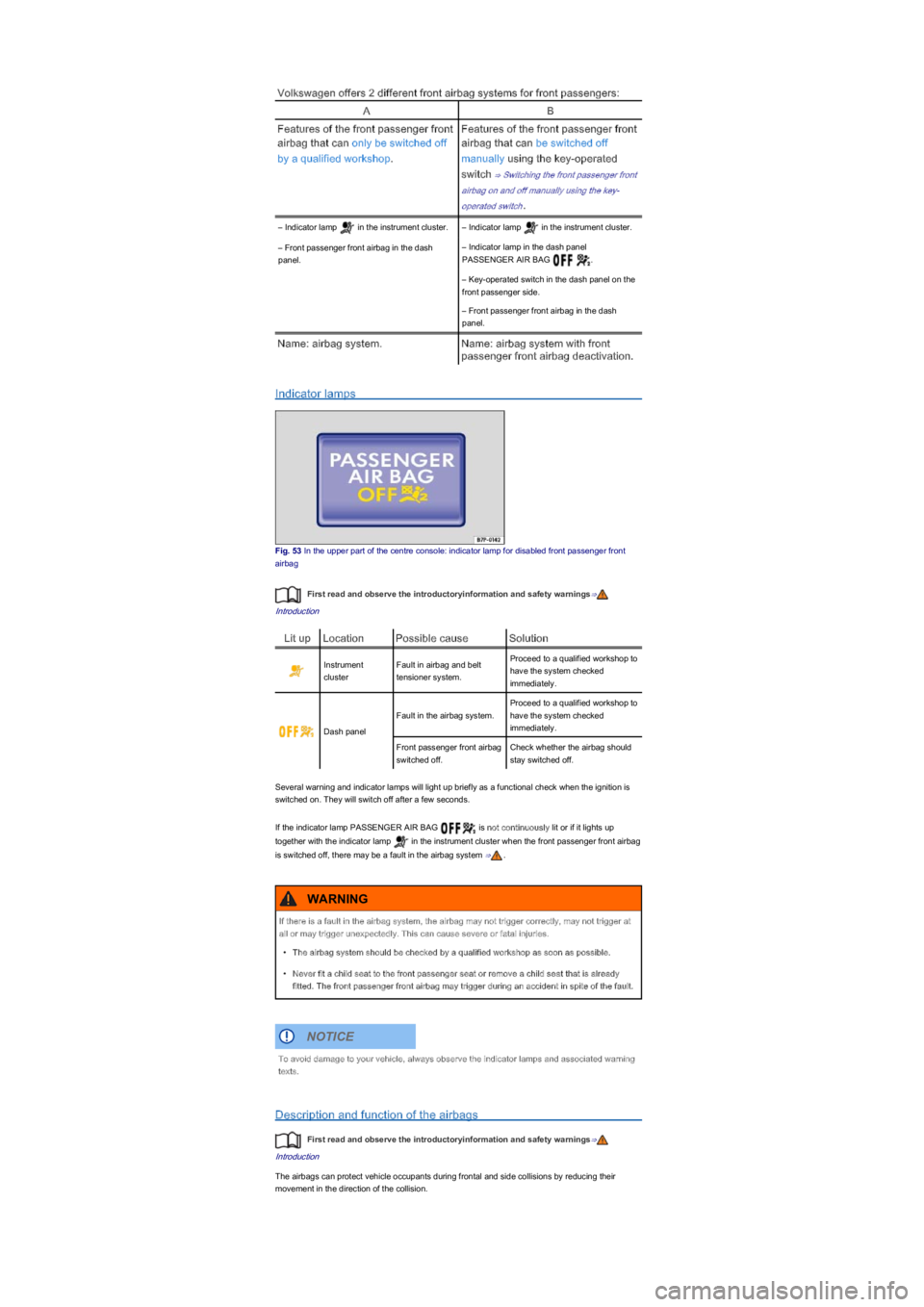
Indicator lamps
Fig. 53 In the upper part of the centre console: indicator lamp for disabled front passenger front
airbag
First read and observe the introductoryinformation and safety warnings⇒
Introduction
Lit upLocationPossible causeSolution
Instrument
cluster
Fault in airbag and belt
tensioner system.
Proceed to a qualified workshop to
have the system checked
immediately.
Dash panel
Fault in the airbag system.
Proceed to a qualified workshop to
have the system checked
immediately.
Front passenger front airbag
switched off.
Check whether the airbag should
stay switched off.
Several warning and indicator lamps will light up briefly as a functional check when the ignition is
switched on. They will switch off after a few seconds.
If the indicator lamp PASSENGER AIR BAG is not continuously lit or if it lights up
together with the indicator lamp in the instrument cluster when the front passenger front airbag
is switched off, there may be a fault in the airbag system ⇒.
Description and function of the airbags
First read and observe the introductoryinformation and safety warnings⇒
Introduction
The airbags can protect vehicle occupants during frontal and side collisions by reducing their
movement in the direction of the collision.
If there is a fault in the airbag system, the airbag may not trigger correctly, may not trigger at
all or may trigger unexpectedly. This can cause severe or fatal injuries.
•The airbag system should be checked by a qualified workshop as soon as possible.
•Never fit a child seat to the front passenger seat or remove a child seat that is already
fitted. The front passenger front airbag may trigger during an accident in spite of the fault.
WARNING
To avoid damage to your vehicle, always observe the indicator lamps and associated warning
texts.
NOTICE
Page 52 of 211
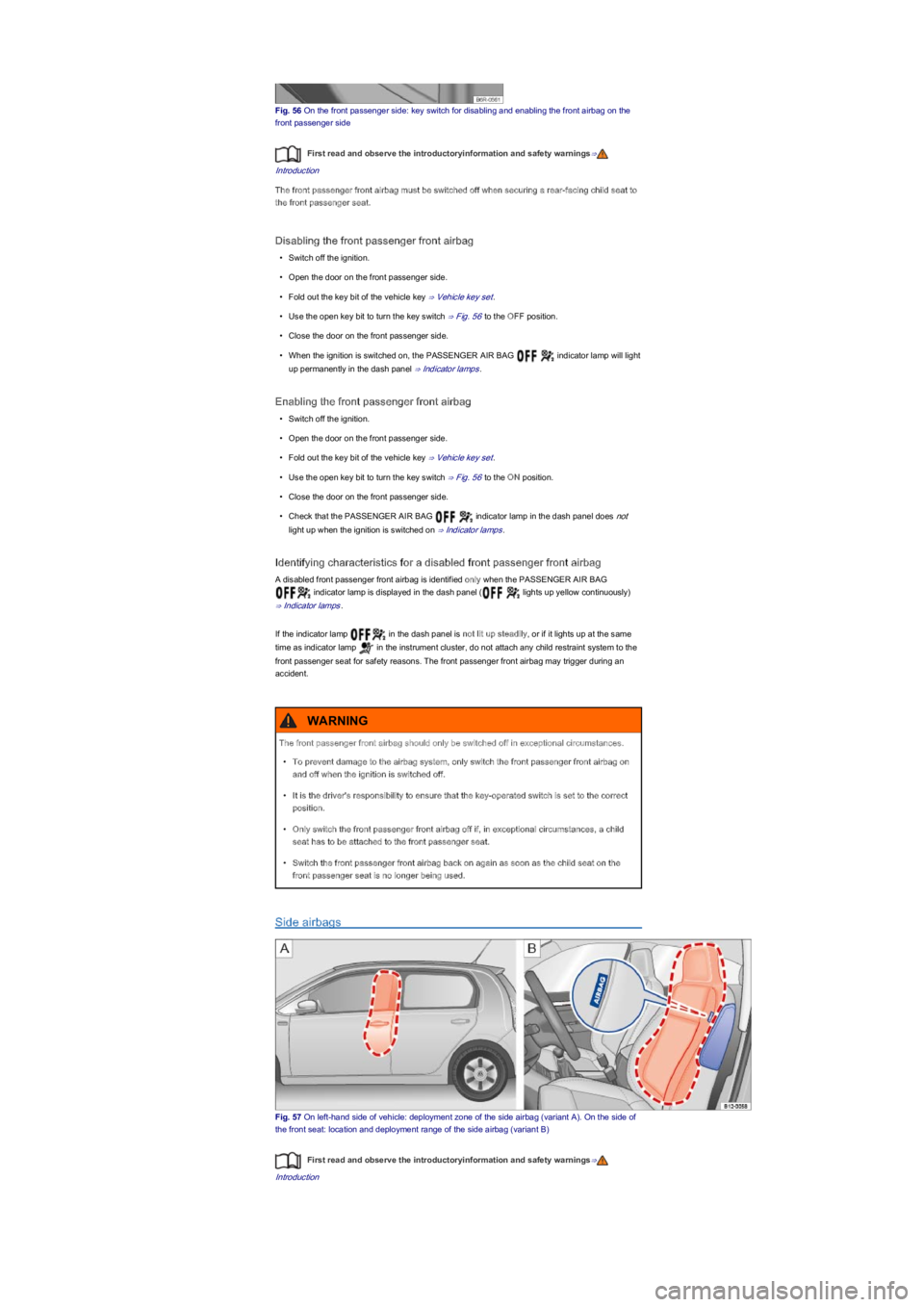
Fig. 56 On the front passenger side: key switch for disabling and enabling the front airbag on the
front passenger side
First read and observe the introductoryinformation and safety warnings⇒
Introduction
The front passenger front airbag must be switched off when securing a rear-facing child seat to
the front passenger seat.
Disabling the front passenger front airbag
•Switch off the ignition.
•Open the door on the front passenger side.
•Fold out the key bit of the vehicle key ⇒ Vehicle key set.
•Use the open key bit to turn the key switch ⇒ Fig. 56 to the OFF position.
•Close the door on the front passenger side.
•When the ignition is switched on, the PASSENGER AIR BAG indicator lamp will light
up permanently in the dash panel ⇒ Indicator lamps.
Enabling the front passenger front airbag
•Switch off the ignition.
•Open the door on the front passenger side.
•Fold out the key bit of the vehicle key ⇒ Vehicle key set.
•Use the open key bit to turn the key switch ⇒ Fig. 56 to the ON position.
•Close the door on the front passenger side.
•Check that the PASSENGER AIR BAG indicator lamp in the dash panel does not
light up when the ignition is switched on ⇒ Indicator lamps.
Identifying characteristics for a disabled front passenger front airbag
A disabled front passenger front airbag is identified only when the PASSENGER AIR BAG
indicator lamp is displayed in the dash panel ( lights up yellow continuously)
⇒ Indicator lamps.
If the indicator lamp in the dash panel is not lit up steadily, or if it lights up at the same
time as indicator lamp in the instrument cluster, do not attach any child restraint system to the
front passenger seat for safety reasons. The front passenger front airbag may trigger during an
accident.
Side airbags
Fig. 57 On left-hand side of vehicle: deployment zone of the side airbag (variant A). On the side of
the front seat: location and deployment range of the side airbag (variant B)
First read and observe the introductoryinformation and safety warnings⇒
Introduction
The front passenger front airbag should only be switched off in exceptional circumstances.
•To prevent damage to the airbag system, only switch the front passenger front airbag on
and off when the ignition is switched off.
•It is the driver's responsibility to ensure that the key-operated switch is set to the correct
position.
•Only switch the front passenger front airbag off if, in exceptional circumstances, a child
seat has to be attached to the front passenger seat.
•Switch the front passenger front airbag back on again as soon as the child seat on the
front passenger seat is no longer being used.
WARNING
Page 60 of 211
Introduction
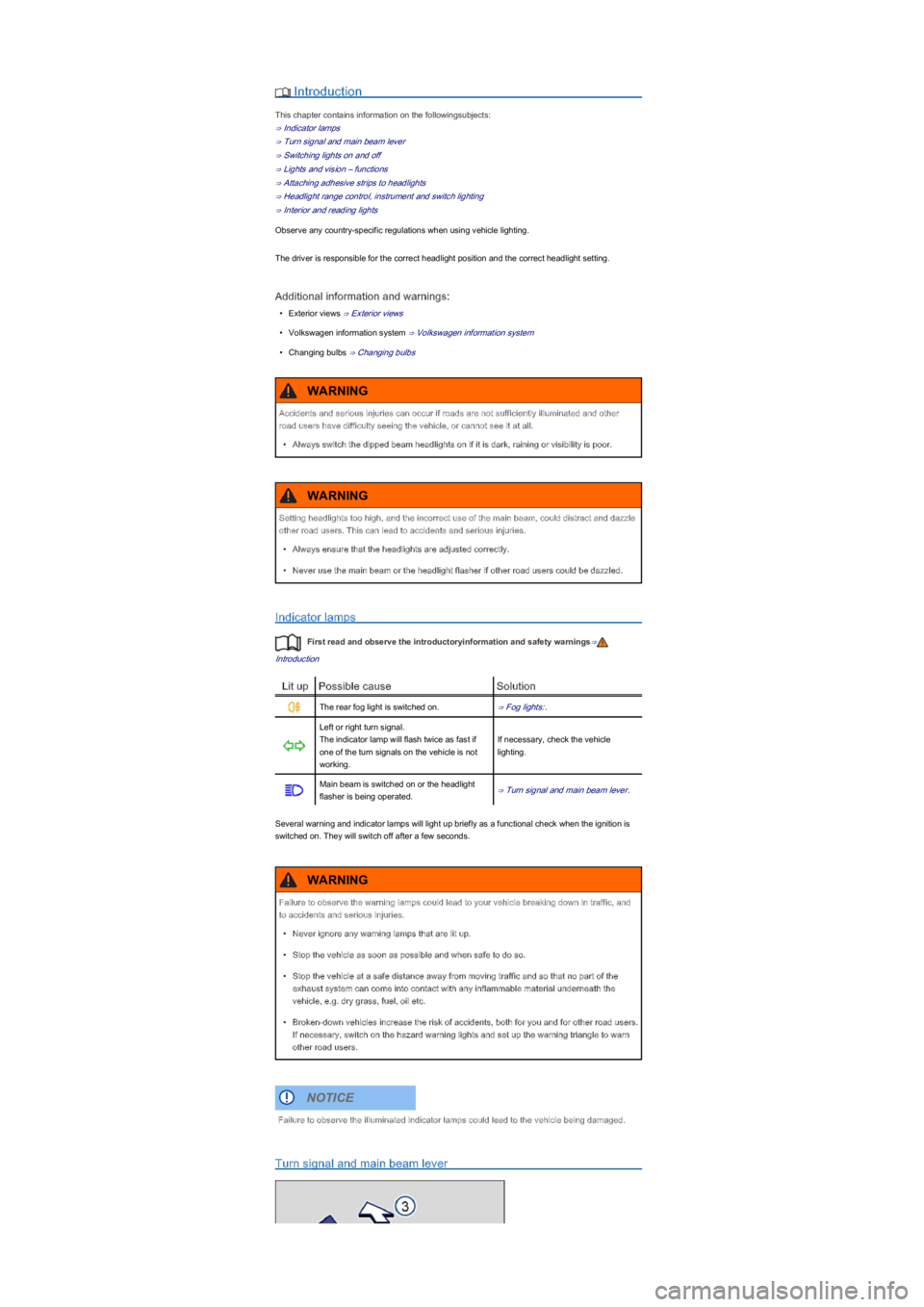
This chapter contains information on the followingsubjects:
⇒ Indicator lamps
⇒ Turn signal and main beam lever
⇒ Switching lights on and off
⇒ Lights and vision – functions
⇒ Attaching adhesive strips to headlights
⇒ Headlight range control, instrument and switch lighting
⇒ Interior and reading lights
Observe any country-specific regulations when using vehicle lighting.
The driver is responsible for the correct headlight position and the correct headlight setting.
Additional information and warnings:
•Exterior views ⇒ Exterior views
•Volkswagen information system ⇒ Volkswagen information system
•Changing bulbs ⇒ Changing bulbs
Indicator lamps
First read and observe the introductoryinformation and safety warnings⇒
Introduction
Lit upPossible causeSolution
The rear fog light is switched on.⇒ Fog lights:.
Left or right turn signal.
The indicator lamp will flash twice as fast if
one of the turn signals on the vehicle is not
working.
If necessary, check the vehicle
lighting.
Main beam is switched on or the headlight
flasher is being operated.⇒ Turn signal and main beam lever.
Several warning and indicator lamps will light up briefly as a functional check when the ignition is
switched on. They will switch off after a few seconds.
Turn signal and main beam lever
Accidents and serious injuries can occur if roads are not sufficiently illuminated and other
road users have difficulty seeing the vehicle, or cannot see it at all.
•Always switch the dipped beam headlights on if it is dark, raining or visibility is poor.
WARNING
Setting headlights too high, and the incorrect use of the main beam, could distract and dazzle
other road users. This can lead to accidents and serious injuries.
•Always ensure that the headlights are adjusted correctly.
•Never use the main beam or the headlight flasher if other road users could be dazzled.
WARNING
Failure to observe the warning lamps could lead to your vehicle breaking down in traffic, and
to accidents and serious injuries.
•Never ignore any warning lamps that are lit up.
•Stop the vehicle as soon as possible and when safe to do so.
•Stop the vehicle at a safe distance away from moving traffic and so that no part of the
exhaust system can come into contact with any inflammable material underneath the
vehicle, e.g. dry grass, fuel, oil etc.
•Broken-down vehicles increase the risk of accidents, both for you and for other road users.
If necessary, switch on the hazard warning lights and set up the warning triangle to warn
other road users.
WARNING
Failure to observe the illuminated indicator lamps could lead to the vehicle being damaged.
NOTICE
Page 61 of 211
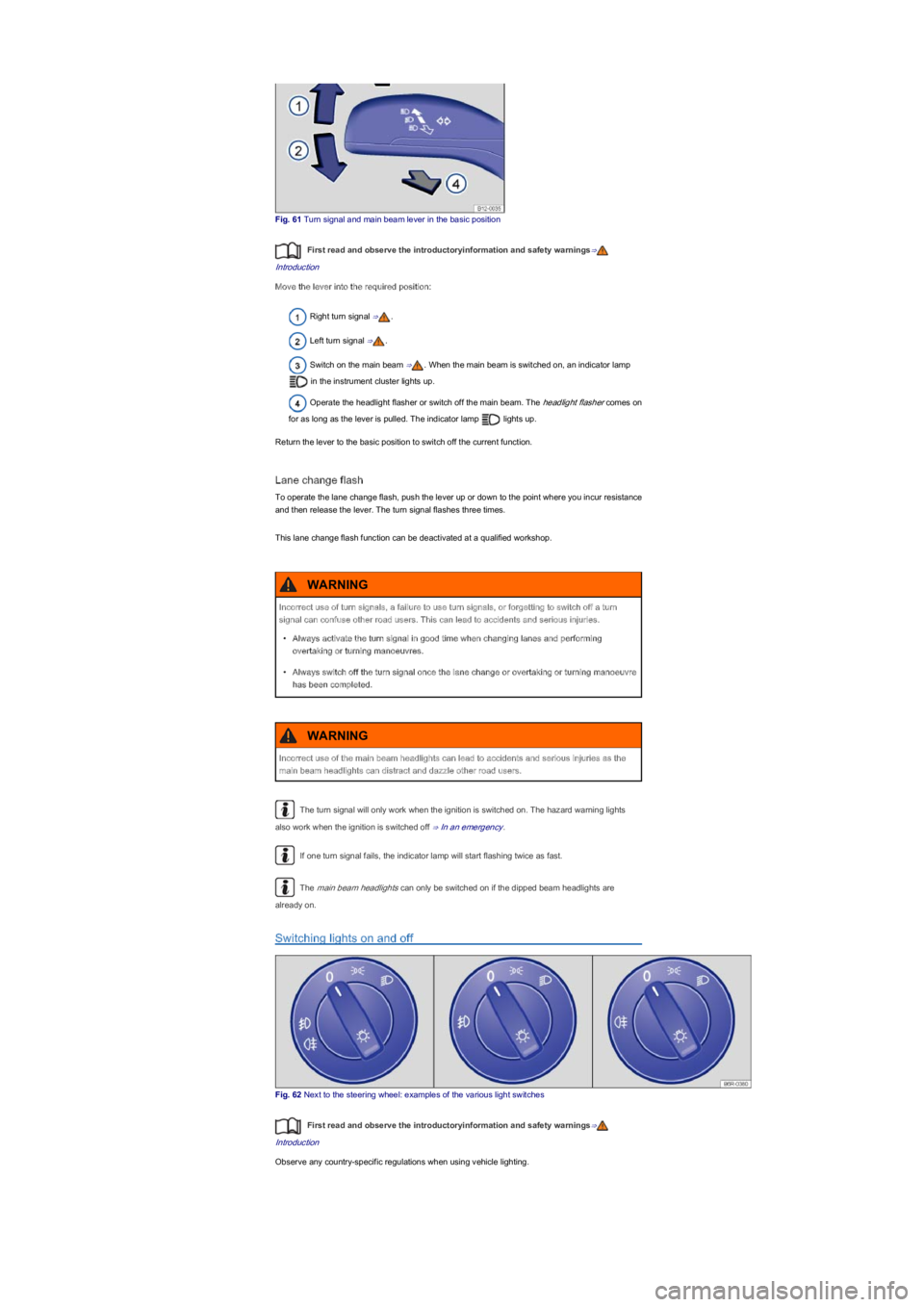
Fig. 61 Turn signal and main beam lever in the basic position
First read and observe the introductoryinformation and safety warnings⇒
Introduction
Move the lever into the required position:
Right turn signal ⇒.
Left turn signal ⇒.
Switch on the main beam ⇒. When the main beam is switched on, an indicator lamp
in the instrument cluster lights up.
Operate the headlight flasher or switch off the main beam. The headlight flasher comes on
for as long as the lever is pulled. The indicator lamp lights up.
Return the lever to the basic position to switch off the current function.
Lane change flash
To operate the lane change flash, push the lever up or down to the point where you incur resistance
and then release the lever. The turn signal flashes three times.
This lane change flash function can be deactivated at a qualified workshop.
The turn signal will only work when the ignition is switched on. The hazard warning lights
also work when the ignition is switched off ⇒ In an emergency.
If one turn signal fails, the indicator lamp will start flashing twice as fast.
The main beam headlights can only be switched on if the dipped beam headlights are
already on.
Switching lights on and off
Fig. 62 Next to the steering wheel: examples of the various light switches
First read and observe the introductoryinformation and safety warnings⇒
Introduction
Observe any country-specific regulations when using vehicle lighting.
Incorrect use of turn signals, a failure to use turn signals, or forgetting to switch off a turn
signal can confuse other road users. This can lead to accidents and serious injuries.
•Always activate the turn signal in good time when changing lanes and performing
overtaking or turning manoeuvres.
•Always switch off the turn signal once the lane change or overtaking or turning manoeuvre
has been completed.
WARNING
Incorrect use of the main beam headlights can lead to accidents and serious injuries as the
main beam headlights can distract and dazzle other road users.
WARNING
Page 62 of 211
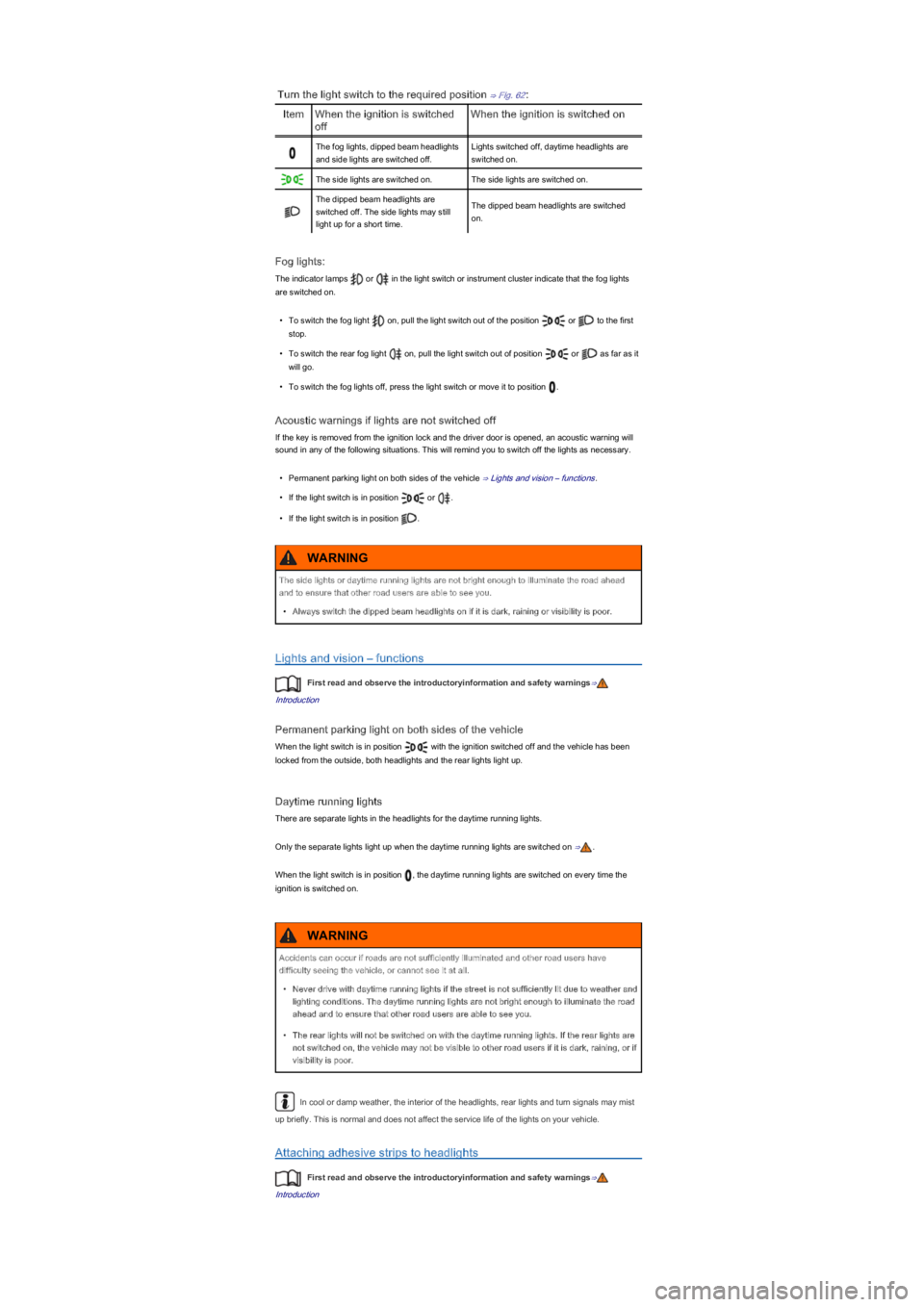
Turn the light switch to the required position ⇒ Fig. 62:
ItemWhen the ignition is switched
off
When the ignition is switched on
The fog lights, dipped beam headlights
and side lights are switched off.
Lights switched off, daytime headlights are
switched on.
The side lights are switched on.The side lights are switched on.
The dipped beam headlights are
switched off. The side lights may still
light up for a short time.
The dipped beam headlights are switched
on.
Fog lights:
The indicator lamps or in the light switch or instrument cluster indicate that the fog lights
are switched on.
•To switch the fog light on, pull the light switch out of the position or to the first
stop.
•To switch the rear fog light on, pull the light switch out of position or as far as it
will go.
•To switch the fog lights off, press the light switch or move it to position .
Acoustic warnings if lights are not switched off
If the key is removed from the ignition lock and the driver door is opened, an acoustic warning will
sound in any of the following situations. This will remind you to switch off the lights as necessary.
•Permanent parking light on both sides of the vehicle ⇒ Lights and vision – functions.
•If the light switch is in position or .
•If the light switch is in position .
Lights and vision – functions
First read and observe the introductoryinformation and safety warnings⇒
Introduction
Permanent parking light on both sides of the vehicle
When the light switch is in position with the ignition switched off and the vehicle has been
locked from the outside, both headlights and the rear lights light up.
Daytime running lights
There are separate lights in the headlights for the daytime running lights.
Only the separate lights light up when the daytime running lights are switched on ⇒.
When the light switch is in position , the daytime running lights are switched on every time the
ignition is switched on.
In cool or damp weather, the interior of the headlights, rear lights and turn signals may mist
up briefly. This is normal and does not affect the service life of the lights on your vehicle.
Attaching adhesive strips to headlights
First read and observe the introductoryinformation and safety warnings⇒
Introduction
The side lights or daytime running lights are not bright enough to illuminate the road ahead
and to ensure that other road users are able to see you.
•Always switch the dipped beam headlights on if it is dark, raining or visibility is poor.
WARNING
Accidents can occur if roads are not sufficiently illuminated and other road users have
difficulty seeing the vehicle, or cannot see it at all.
•Never drive with daytime running lights if the street is not sufficiently lit due to weather and
lighting conditions. The daytime running lights are not bright enough to illuminate the road
ahead and to ensure that other road users are able to see you.
•The rear lights will not be switched on with the daytime running lights. If the rear lights are
not switched on, the vehicle may not be visible to other road users if it is dark, raining, or if
visibility is poor.
WARNING
Page 63 of 211
If you have to drive a right-hand drive vehicle in a left-hand drive country, or vice versa, the
asymmetric dipped beam headlights may dazzle oncoming traffic.
Therefore you may have to apply stickers to certain parts of the headlight lenses if you are driving
abroad. A qualified workshop can provide you with further information. Volkswagen recommends
using a Volkswagen dealership for this purpose.
Stickers may only be used on the headlights for a limited period. Please contact a qualified
workshop for a permanent alteration. Volkswagen recommends using a Volkswagen dealership for
this purpose.
Headlight range control, instrument and switch lighting
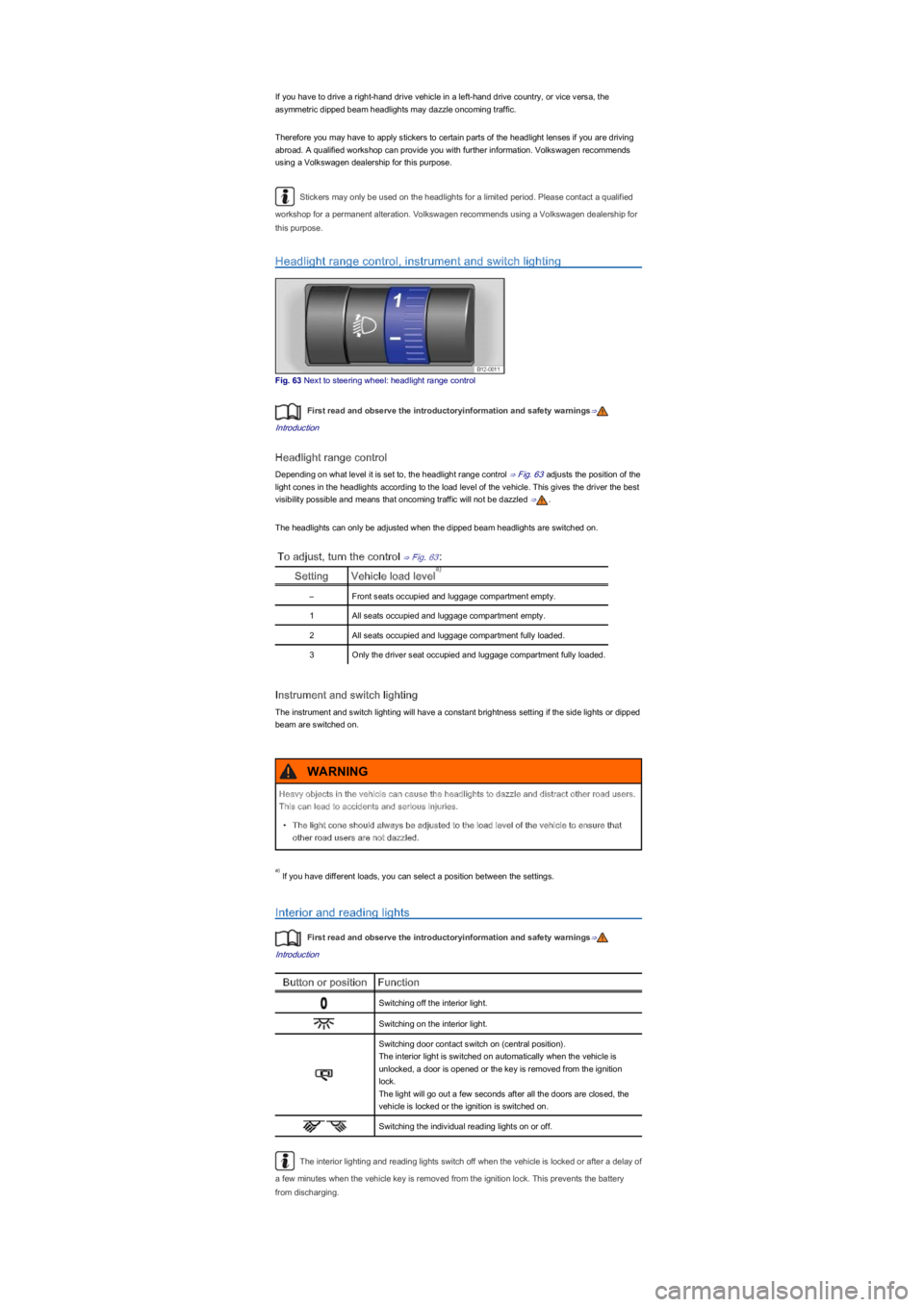
Fig. 63 Next to steering wheel: headlight range control
First read and observe the introductoryinformation and safety warnings⇒
Introduction
Headlight range control
Depending on what level it is set to, the headlight range control ⇒ Fig. 63 adjusts the position of the
light cones in the headlights according to the load level of the vehicle. This gives the driver the best
visibility possible and means that oncoming traffic will not be dazzled ⇒.
The headlights can only be adjusted when the dipped beam headlights are switched on.
To adjust, turn the control ⇒ Fig. 63:
SettingVehicle load level
–Front seats occupied and luggage compartment empty.
1All seats occupied and luggage compartment empty.
2All seats occupied and luggage compartment fully loaded.
3Only the driver seat occupied and luggage compartment fully loaded.
Instrument and switch lighting
The instrument and switch lighting will have a constant brightness setting if the side lights or dipped
beam are switched on.
If you have different loads, you can select a position between the settings.
Interior and reading lights
First read and observe the introductoryinformation and safety warnings⇒
Introduction
Button or positionFunction
Switching off the interior light.
Switching on the interior light.
Switching door contact switch on (central position).
The interior light is switched on automatically when the vehicle is
unlocked, a door is opened or the key is removed from the ignition
lock.
The light will go out a few seconds after all the doors are closed, the
vehicle is locked or the ignition is switched on.
Switching the individual reading lights on or off.
The interior lighting and reading lights switch off when the vehicle is locked or after a delay of
a few minutes when the vehicle key is removed from the ignition lock. This prevents the battery
from discharging.
a)
Heavy objects in the vehicle can cause the headlights to dazzle and distract other road users.
This can lead to accidents and serious injuries.
•The light cone should always be adjusted to the load level of the vehicle to ensure that
other road users are not dazzled.
WARNING
a)
Page 87 of 211
Starting the engine, changing gear and
parking
Starting and stopping the engine
Introduction
This chapter contains information on the followingsubjects:
⇒ Ignition lock
⇒ Starting the engine
⇒ Stopping the engine
⇒ Electronic immobilizer
Immobilizer display
If the vehicle key is not valid or there is a fault in the system, then may be displayed in the
instrument cluster. The engine cannot be started ⇒ Electronic immobilizer.
Push-starting or towing
For technical reasons, your vehicle must not be push-started or tow-started. Use jump leads to
start the engine instead.
Additional information and warnings:
•Vehicle key set ⇒ Vehicle key set
•Changing gear ⇒ Changing gear
•Braking, stopping and parking ⇒ Braking, stopping and parking
•Steering ⇒ Steering
•Pull-away assist systems ⇒ Pull-away assist systems
•Filling the tank ⇒ Filling the tank
•Fuel ⇒ Fuel
•Manual opening and closing ⇒ Manual opening and closing
•Starting the engine with jump leads ⇒ Starting the engine with jump leads
•Tow starting and towing ⇒ Tow-starting and towing
•Observe the operating instructions for any device that you plug into the socket.
•Never exceed the maximum power rating as this could damage the whole vehicle electrical
system.
•12-volt socket:
- Only use accessories that have been approved in accordance with the relevant
guidelines on electromagnetic compatibility.
- Never feed electricity into the socket.
NOTICE
While driving
Page 90 of 211
After the engine is switched off, the radiator fan in the engine compartment may run on for
some minutes, even if the ignition is switched off or the vehicle key has been removed. The radiator
fan will switch itself off automatically.
Electronic immobilizer
First read and observe the introductoryinformation and safety warnings⇒
Introduction
The immobilizer helps to prevent the engine from being started and driven with an unauthorised
vehicle key.
There is a chip in the key. It automatically deactivates the immobilizer when the vehicle key is
inserted into the ignition lock.
The electronic immobilizer is automatically activated when the vehicle key is removed from the
ignition lock.
The engine can only be started using a genuine Volkswagen vehicle key with the correct code.
Coded vehicle keys are available from a Volkswagen dealership ⇒ Vehicle key set.
If a non-authorised vehicle key has been used, the display in the instrument cluster will show
. The vehicle cannot be used if this occurs. Remove the non-authorised vehicle key from
the ignition lock and used an authorised vehicle key.
The vehicle cannot be operated properly if you do not have a genuine Volkswagen key.
Changing gear
Introduction
This chapter contains information on the followingsubjects:
⇒ Warning and indicator lamp
⇒ Pedals
⇒ Manual gearbox: selecting a gear
⇒ Automated manual gearbox: selecting a gear
⇒ Changing gear with Tiptronic
⇒ Driving with an automated manual gearbox
⇒ Fault in the automated manual gearbox
⇒ Gear-change indicator (manual gearbox)
The following will occur if reverse gear is selected and the ignition is
switched on:
•The reverse light comes on.
•The rear window wiper will move once when the windscreen wipers are switched on.
•The ParkPilot may switch on.
Additional information and warnings:
•Overview of the centre console ⇒ Overview of the centre console
•Instruments ⇒ Instruments
•Braking, stopping and parking ⇒ Braking, stopping and parking
•Pull-away assist systems ⇒ Pull-away assist systems
•ParkPilot ⇒ ParkPilot
•Engine management system and exhaust purification system ⇒ Engine management system
and exhaust purification system
Never switch off the engine while the vehicle is in motion. This can lead to a loss of vehicle
control, accidents and serious injuries.
•The airbags and belt tensioners will not work if the ignition is switched off.
•The brake servo will not work when the engine is switched off. More force is required on
the brake pedal to stop the vehicle.
•The power steering will not function if the engine is switched off, and more force will be
required to steer the vehicle.
•If the vehicle key is removed from the ignition, the steering lock can activate and you will
no longer be able to steer the vehicle.
WARNING
If the vehicle has been driven at high load for a long period, the engine could overheat when it
is switched off. In order to avoid damage to the engine, allow the engine to run in neutral for
approximately 2 minutes before switching it off.
NOTICE