ignition AUDI A5 COUPE 2012 Repair Manual
[x] Cancel search | Manufacturer: AUDI, Model Year: 2012, Model line: A5 COUPE, Model: AUDI A5 COUPE 2012Pages: 316, PDF Size: 78.59 MB
Page 193 of 316
-Always buck le the child safety seat firmly
in place even if a child is not s itting in it.
A loose ch ild safety seat can fly around
dur ing a sudden stop or in a col lision .
- Always read and heed all WARNINGS
whenever using a child restrained in ave
hicle is being used
<=> page 154, Safety
belts,
<=) page 162, Airbag system and
¢ page 186, Child Safety.
A WARNING
To reduce the risk of serious injury, make
sure that the
PA SSENGER AIR BAG OFF
light comes on and stays on whe never a
child restraint is installed on the front pas
senger seat and the ignition is switched
on.
- Take the child restraint off t he fro nt pas
senger seat and install it proper ly at one
of the rear seat positions if the
PASSEN
G ER AIR BAG OFF
light does not stay on.
- Have the airbag system inspected by
your authorized Aud i dealer immediate
ly.
A WARNING
- A child in a child restraint installed with
the LATCH lowe r anchorages or with the
standard safety belt on the rear seat may
play with unused rear seat safety be lts
and become entang led resu lting in ser i
o us personal injury and even death.
- Always buck le unused rear seat safety
bel ts out of reach of chi ld ren in ch ild
sea ts and p roperly activ ate the converti
ble locking retracto r so that the child
cannot unreel the safety belt from the
retractor .
.
Child S afety 191
Child safety seats
Infant seats
Babies and infants up to about one year old
and 20 lbs. or 9 kg need special rearward -fac
ing child restraints that support the back,
neck and head in a crash .
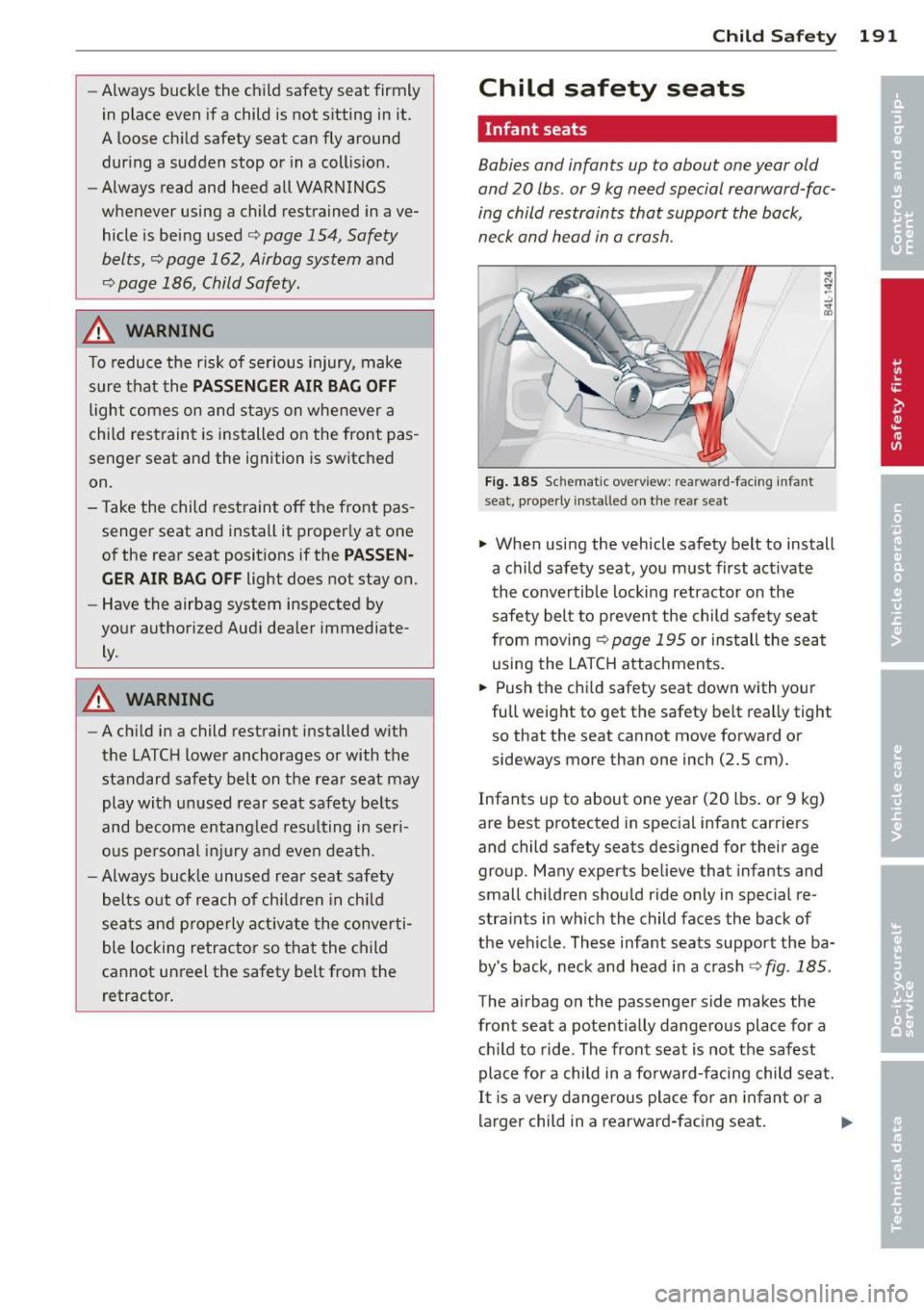
Fig. 185 Schem atic ove rvi ew : re arward-fac ing in fant
se at, p rope rly insta lled on the re ar seat
.. When using the vehicle safety belt to install
a child safety seat, you must first activate
the convertib le locking retractor on the
safety belt to prevent the child safety seat
from mov ing
c> page 195 or install the seat
using the LATCH attachments .
.. Push the chi ld safety seat down w ith your
full weight to get the safety be lt really tight
so that the seat cannot move forward or
sideways more than one inch (2.5 cm).
Infants up to about one year (20 lbs. or 9 kg)
are best protected in special infant carriers
and child safety sea ts designed for their age
group. Many experts believe that infan ts and
small children should r ide only in special re
stra ints in wh ich the child faces the back of
the vehicle. These infant seats support the ba
by 's back, neck and head in a crash ¢
fig. 185.
The airbag on the passenger side makes the
front seat a potentially dangerous place for a
ch ild to ride . The front seat is not the safest
place for a child in a forward-facing child seat.
It is a very dangerous place fo r an in fant or a
larger child in a rearward-facing seat. .._
Page 195 of 316
than 20 lbs. (9 kg) up to 40 lbs. (18 kg) must
always be properly restrained in a child safety
seat certified for their size and weight
¢
fig. 186 and¢ fig. 187.
The airbag on the passenger side makes the
front seat a potentially dangerous place for a
child to ride. The front seat is not the safest
place for a child in a forward-facing child safe
ty seat.
It is a very dangerous place for an in
fant or a larger child in a rearward -facing seat .
_A WARNING
Not using a child safety seat, using the
wrong child safety seat or improperly in
stalling a child restraint increases the risk
of serious personal injury and death in a
collision or other emergency situation.
- Children on the front seat of any car,
even with Advanced Airbags, can be seri
ously injured or even killed when an air
bag inflates. A child in a rearward-facing
child safety seat installed on the front
passenger seat will be seriously injured
and can be killed if the front airbag in
flates -even with an Advanced Airbag
System.
- The inflating airbag will hit the child
safety seat or infant carrier with great
force and will smash the child safety seat
and child against the backrest, center
armrest, door or roof.
- Always install rearward-facing child safe
ty seats on the rear seat .
-If you must install a rearward facing
child safety seat on the front passenger
seat because of exceptional circumstan
ces and the
PASSENGER AIR BAG OFF
light does not come on and stay on, im
mediately install the rearward-facing
child safety seat in a rear seating posi
tion and have the airbag system inspect
ed by your authorized Audi dealer.
- Always read and heed all WARNINGS
whenever using a child restrained in ave
hicle is being used¢
page 154, Safety
belts,¢ page 162, Airbag system
and
¢ page 186, Important things to know.
Child Safety 193
_A WARNING
If exceptional circumstances require the
use of a forward-facing child restraint on
the front passenger's seat, the child's safe
ty and well-being require that the follow
ing special precautions be taken:
- Make sure the forward-facing seat has
been designed and certified by its manu
facturer for use on a front seat with a
passenger front and side airbag.
- Always follow the manufacturer's in
structions provided with the child safety
seat or infant carrier.
- Always move the front passenger seat in
to the rearmost position of the passen
ger seat's fore and aft adjustment range,
and as far away from the airbag as possi
ble before installing the child restraint.
- Always make sure that nothing prevents the front passenger's seat from being
moved to the rearmost position in its
fore and aft adjustment range.
- Always make sure the backrest is in an
upright position.
- Make sure that the
PASSENGER AIR BAG
OFF
light comes on and stays on all the
time whenever the ignition is switched
on.
- If the light does not stay on, perform the checks¢
page 173, Monitoring the Ad
vanced Airbag System.
- Take the child restraint off the front pas senger seat and install it properly at one
of the rear seat positions if the
PASSEN
GER AIR BAG OFF
light does not stay on
whenever the ignition is switched on. •
-
•
Page 197 of 316
the child's body and the front of the passen
ger compartment, the airbag can inflat e com
p letely and provide supplemental protection
in certa in frontal col lisions .
_&. WARNING
Not using a booster seat, us ing the boos
ter seat improperly, incorrect ly installing a
booster seat or using the vehicle safety
belt improperly increases the risk of seri
ous personal injury and death in a collision
or ot her eme rgency s ituation. To help re
duce t he risk of ser ious persona l injury
and/or death:
- Always make sure to position the should
er port ion of the three -po int bel t over
the middle of chi ld's sho ulder.
- Never let the shoulder port ion of the be lt
rest against or across the neck , face,
chin, or throat of the child .
- Always make sure the lap belt portion o f
the three-po int be lt is worn sn ug and
passes as low as possib le across the
child's pelvis. Never let the belt pass over
the soft abdomen.
- Failure to properly route sa fety belts
over a ch ild's body will cause severe inju
ries in an acc ident or other emergency
situation
¢page 154.
-The rear s ide of the booster seat should
be pos it ioned as close as poss ible to the
backrest on the vehicle seat . Adjust or re
move the rear seat head rest raint if it is
difficult to install the child seat w it h the
head restraint in place¢
page 67. Insta ll
the head res train t again immedia tely
once the child seat is removed . Dr iving
without head rest raints or with head re
straints that are not properly adj usted
increases the risk of ser ious o r fatal neck
injury dramat ically.
- Children on the front seat of any car,
even with Advanced A irbags, can be seri
o usly injured or even killed when an a ir
bag inf lates.
- Never let a child stand or knee l on any
seat.
Child Sa fet y 195
-Never let a chi ld r ide in the cargo area of
your veh icle.
- Always remembe r th at a c hild leaning
forward, sitting sideways or out of posi
tion in any way d uring an accident can be
struck by a dep loying a irbag. This will re
sult in ser ious personal inju ry or death .
- If you must install a booster seat on the
front passenger seat because of excep
tional ci rcumstances the
PASSENGER
AIR BAG OFF
li ght m ust come o n and
s tay on, whenever the ignition is switch
ed on .
- I f the
PASSENGER AIR BAG OFF light
does not come on and stay on, pe rform
the c heck s descr ibed
¢ page 173, Moni
toring the Advanced Airbag System .
- Take the chi ld restraint off the fron t pas
senger sea t and inst all it prope rly at one
of the rear sea t positions if the
PASSEN
GER AIR BAG OFF
li ght does not stay on
whenever the ignit ion is switched on .
-A lways read an d heed a ll WAR NIN GS
wheneve r us ing a chi ld restrained in ave
hicle is being used
¢ page 154, Safety
belts,
¢ page 162, Airbag system and
¢ page 186, Important things to know.
Installing a child safety
seat
Securing a child safety seat using a
safety belt
Safety belts for the rear seats and the front
passenger's sea t con be locked w ith the con
ver tible locking re tractor to properly secure
child safety seats .
The safety belts emergency locking ret ractors
for the rear seats safety bel ts and for the
front passenger's seat safety be lt have a co n
vertib le locking retractor for child rest raints.
T he safety belt must be locked so that be lt
webb ing cannot unreel. The retractor can be
activated to lo ck the safe ty belt and prevent
t h e safety be lt webbing from looseni ng up
during norma l dr iving . A chi ld safety seat can
o nl y be properly installed when the safety belt...,
•
•
Page 198 of 316
196 Child Safety
is locked so that the child and child safety
seat will stay in place.
Always remember: Even though your vehicle is
equipped with an Advanced Airbag system, all
children, especially those 12 years and young
er, should always ride in the back seat proper ly restrained fo r their age and weight.
.&_ WARNING
Improperly installed child safety seats in
crease the risk of serious personal injury
and death in a collision.
- Always make sure that the safety belt re
tractor is locked when installing a child
safety seat . An unlocked safety belt re
tractor cannot hold the child safety seat in place during normal driving or in a
crash .
- Always buckle the child safety seat firmly
in place even if a child is not sitting in it.
A loose child safety seat can fly around
during a sudden stop or in a collision.
- Always make sure that the rear seat
backrest to which the center rear safety
belt is attached is securely latched when
ever the rear center safety belt is being
used to secure a child restraint.
- If the backrest is not securely latched, the child and the child restraint will be
thrown forward together with the back
rest and will strike parts of the vehicle
interior. The child can be seriously in
jured or killed.
- Never install rearward-facing child safety
seats or infant carriers on the front pas
senger seat . A child will be seriously in
jured and can be killed when the passen
ger airbag inflates.
- The inflating airbag will hit the child
safety seat or infant carrier with great
force and will smash the child safety seat
and child against the backrest, center
armrest, door or roof.
- Always install rearward-facing child safe
ty seats or infant carriers on the rear
seat. -
Forward-facing child safety seats or in
fant carriers installed on the front pas
senger 's seat may interfere with the de
ployment of the airbag and cause serious
injury to the child .
- It is safer to install a forward-facing
child safety seat on the rear seat.
- Always read and heed all WARNINGS
whenever using a child restrained in ave
hicle is being used
~ page 186. Special
precautions apply when installing a child
safety seat on the front passenger seat
~ page 163, Child restraints on the front
seat -some important things to know.
.&_ WARNING
-
Always take special precautions if you
must install a forward or rearward-facing
child restraint on the front passenger's
seat in exceptional situations:
- Whenever a forward or rearward-facing
child restraint is installed on the front
passenger seat, the
PASSENGER AIR
BAG OFF light must come on and stay on
whenever the ignition is switched on.
- If the
PASSENGER AIR BAG OFF light
does not come on and stay on, perform
the checks described
~ page 173, Moni
toring the Advanced Airbag System.
- Take the child restraint off the front pas
senger seat and install it properly at one
of the rear seat positions if the
PASSEN
GER AIR BAG OFF
light does not stay on
whenever the ignition is switched on.
- Improper installation of child restraints
can reduce their effectiveness or even
prevent them from providing any protec
tion.
- An improperly installed child restraint
can interfere with the airbag as it de
ploys and seriously injure or even kill the
child.
- Always carefully follow the manufactur
er's instructions provided with the child
safety seat or carrier.
Page 199 of 316
-Never place additional items on the seat
that can increase the total weight regis
tered by the weight-sensing mat and can
cause injury in a crash .
_&. WARNING
Forward-facing child restraints:
- Always make sure the forward-facing
seat has been designed and certified by
its manufacturer for use on a front seat
with a passenger front and side airbag .
- Never put the forward-facing child re
straint up, against or very near the in
strument panel.
-Always move the passenger seat into its
rearmost position in the seat's fore and
aft adjustment range, as far away from
the airbag as possible before installing
the forward-facing child restraint. The
backrest must be adjusted to an upright
position.
- Make sure that the
PASSENGER AIR BAG
OFF
light comes on and stays on all the
time whenever the ignition is switched
on.
_&. WARNING
Rearward-facing child restraints:
- A child in a rearward-facing child safety
seat installed on the front passenger
seat will be seriously injured and can be
killed if the front airbag inflates -even
with an Advanced Airbag System.
- The inflating airbag will hit the child
safety seat or infant carrier with great
force and will smash the child safety seat
and child against the backrest, center
armrest, door or roof.
- Always be especially careful if you must
install a rearward facing child safety seat
on the front passenger seat in exception
al circumstances.
-A tight tether strap on a rearward-facing
child restraint attached to the front pas
senger seat can put too much pressure
on the weight-mat in the seat and regis
ter a heavier weight in the Advanced Air-
Child Safety 197
bag System. The heavier weight regis
tered can make the system work as
though an adult were on the seat and de ploy the Advanced Airbag when it must
be suppressed causing serious or even
fatal injury to the child.
- Make sure that the
PASSENGER AIR BAG
OFF
light comes on and stays on all the
time whenever the ignition is switched
on .
- If the
PASSENGER AIR BAG OFF light
does not come on and stay on, immedi
ately install the rearward-facing child
safety seat in a rear seating position and
have the airbag system inspected by your
authorized Audi dealer.
Activating the convertible locking
retractor
Use the convertible locking retractor to se
cure a child restraint.
Always heed the child safety seat manufactur er 's instructions when installing a child re
straint in your vehicle. To activate the conver
tible locking retractor:
.. Place the child restraint on a seat, prefera
bly on the rear seat.
.. Slowly pull the belt
all the way out.
.. Route it around or through the child re
straint belt path
c:> ,&. .
.. Push the child safety seat down with your
full weight to get the safety belt really tight.
.. Insert the belt tongue into the buckle for
that seating position .
.. Guide the safety belt back into the retractor
until the belt lies flat and snug on the child
safety seat.
.. You should hear a "clicking" noise as the
belt winds back into the inertia reel. Test the
convertible locking retractor by pulling on
the belt. You should no longer be able to
pull the belt out of the retractor. The con
vertible locking retractor is now activated .
.. Make sure that the red release button is fac
ing away from the child restraint so that it
can be unbuckled quickly. .,. •
•
Page 213 of 316
Energy management
Starting ability is optimized
Energy management controls the distribution
of electrical energy and thus optimizes the
availability of electrical energy for starting the engine .
If a vehicle with a conventional energy system
is not driven for a long period of time , the bat
tery is discharged by idling current consumers
(e.g. immobilizer). In ce rtain c ircumstances it
can result in there being insuff icient ene rgy
avai lab le to start the engine .
Intell igent energy management in your vehi
cle hand les the d istribution of electrical ener
gy. Starting ab il ity is markedly improved and
the life of the battery is extended.
Basically, energy management consists of
batt ery di ag nosis, idlin g current man ag e
m ent
and dyn ami c en ergy manage ment .
Batter y diagnosis
Battery diagnosis continuously determines
the state of the battery . Sensors determ ine
battery vo ltage, battery current and battery
temperature. This determ ines the current
state of charge and the powe r of the battery.
Idling curr ent man agement
Idling current management reduces ene rgy
consumption while the vehicle is stand ing .
W ith the ignition switched off, it cont ro ls the
energy supply to the va rious electr ical compo
nents . Data from battery diagnosis is consid
ered.
Depending on the battery's state of charge,
i nd ividua l consumers are gradual ly t urned off
to prevent excess ive d ischarge of the bat tery
and thus maintain starting capability .
Dynam ic en ergy management
While the vehicle is being driven, dynamic en
e rgy management dist ributes the energy gen
e rated according to the needs of the individu
a l components.
It reg ulates cons umption, so
that more electrical energy is not being used
Int ellig ent technolog y 211
than is being generated and ensures an opti
mal state of charge for the battery.
(0 Tips
- But even energy management canno t
negate the limits of physics . Consider
that the power and life of a battery are
limited .
- If starting ability is threatened, you are
informed by a warning
r:!) page 212,
Driver notification in the instrument
cluster display.
What you should know
The highest priority is given to maintaining
starting capability.
The battery is severe ly taxed in short -distance
driving, in city traffic and during the cold time
of year. Abundant electrical energy is re quired, but only a little is generated .
It is also
critical if the engine is not running and electri
cal components are turned on . In this in
stance energy is be ing consumed but none is
being generated.
It is in precisely these situations that you will
notice energy management actively regulat
ing the d istribution of energy .
Vehicle stands for an e xtended peri od
If you do not drive your vehicle over a period
of several days or weeks, e lectr ical compo
nents are gradually cut back or switched off.
This reduces energy consumption and ma in
ta ins start ing capability over a longer period .
Some of the convenience functions may not
operate, such as the interior lights or the power seat adjustment . The convenience
funct ions w ill be available again when you
tu rn o n the ign ition and start the engine.
With the eng ine tu rned off
If you listen to the radio, for examp le, w ith
the engine turned off or use other MMI func -
tions, the battery is be ing discharged.
IJJ,-
•
•
Page 217 of 316
the exhaust system and this could cause
the catalytic converter to overheat.
- Do not turn off the ignition while the ve
hicle is moving .
- Do not continue to operate yo ur vehicle
under these conditions, as otherwise fuel
can reach the cata lytic converter. This
could result in overheating of the con
verter, requ iring its replacement.
- To assure efficient operation of the Emis
sion Control System:
- Have your veh icle ma inta ined properly
and in acco rdance with the service rec
ommendations in your Warranty
&
Ma intenance booklet.
- Lac k of proper maintenance as well as
improper use of the vehicle will impa ir
t he funct ion of the emission control
system and cou ld lead to damage.
@ For the sake of the environment
Even when the Emission Contro l System is
operating p roperly, the exhaust gas can
have a s ulfu r- like exhaust gas smell under
some operating states. This depends on
the s ulfur content of the fue l being used.
Using a different brand of fuel may help,
or filling the tank w ith lead-free super
grade gasoline .
Operate your vehicle
economically and
minimize pollution
General
Your personal style of driving will determine
the economy of your vehicle, as well as ex
haust and noise levels .
Fuel economy, environmental impact, and
wear on your engine, brakes and t ires largely
depend on three factors :
- your personal driving style
- operating conditions
- technical lim itations
I f you anticipate what you need to do nex t and
d rive economically, you can eas ily cut your
Dri vin g and en vironm ent 215
fuel consumption by 10 -15 percent. Th is sec
tion w ill give you some tips on how you can
help the env ironment and your pocketbook .
(D Tips
The cons umption estimates as published
by ENVIRONME NTAL PROTEC TION AGENCY
(EPA) and Transport Canada may not corre
spond to your actual consumption on the road, which will vary depending upon vehi
cle load and speed, road and weather con
dit ions, trip length, etc.
Drive smoothly and keep a lookout
ahead
Vehicles use the most fuel when they are ac
celerating.
.. Avo id unnecessary accelerating and brak ing .
Vehicles use the most fuel when they are ac
ce lerat ing . If you ant icipate what is going to
happe n next, you will need to brake less and,
t hu s, accele rate less . Let the vehicle coast
whenever possible -for examp le when you see
that the next t raff ic light is red.
Avoid full throttle
Driving at moderate speeds saves fuel and
improves your mileage.
.. Try and keep well below your car's maxi -
mum speed .
Accelerat ing gently reduces fuel consump
tion, eng ine wear, and does not disturb the
environment.
Fuel consumpt ion, exhaust emiss ions and en
gine noise increase disproportionately at high
speeds. If you drive at approximately three
quarte rs of top speed, fuel consumption w ill
be reduced by one half. Never drive faster
t h an the posted speed limit and weathe r con
ditions perm it.
•
•
Page 218 of 316

216 Driving and environment
Reducing unnecessary idling
Even when your car is just idling it burns up
fuel.
.,. Shut the engine off when you are not driv
ing the vehicle.
.,. Do not warm up the vehicle by letting the
engine run at idle .
It makes sense to shut off the engine in traffic
jams, when waiting for trains to pass at rail
road crossings, or at traff ic lights that have
l ong wa its on red. Turning the engine off for
just 30-40 seconds saves more fue l than is
burned starting the eng ine again .
It takes a long time for the engine to warm up
fully when it is running at idle. However , wear
and noxious emissions are especially high
when the engine is warming up. So you should
drive away as soon as you start the engine and
avoid running at high rpms while the engine is
still warming up .
(D Note
Do not leave engine idling unattended af
ter starting . If warning lights should come
on to indicate improper operation, they
wou ld go unheeded. Extended idling also
produces heat, which cou ld result in over
heating or other damage to the vehicle or
other property .
Regular maintenance
A badly tuned engine unnecessarily wastes a
lot of fuel .
... Have your vehicle serviced at regular inter-
vals.
By having your vehicle regularly serviced by an
authorized Audi dealer helps to ensure that it runs properly and economically . The condition
of your vehicle not only affects its safety and
ability to hold its value, it also affects
fuel
consumption .
Check your oil each time you fill your tank.
The amount of oi l used is re lated to engine
load and speed.
It is normal for the oil consumption of a new
engine to reach its lowest value after a certa in
mileage has been driven.
You must drive your veh icle about 3,000 m iles
(5,000 kilometers) before you can properly
assess oil consumpt ion.
This also app lies to fue l consumption and en
gine output.
(D Note
- Have your veh icle ma inta ined properly
and in accordance with the service rec
ommendations in your Warranty
& Main
tenance booklet . Lack of proper mainte
nance as well as improper use of the ve
hicle will impair the function of the
emission contro l system and cou ld lead
to damage.
- Do not alter or remove any component of
the Emission Control System unless ap
proved by the manufacturer.
- Do not alter or remove any device, such
as heat shields, switches, ignition wires,
valves, which are designed to protect
your vehicle's Emission Control System and other important vehicle compo
nents.
Fewer short trips
Fuel consumption will always be relatively
high on short trips .
.,. Try to avoid driv ing short distances with a
cold engine .
The engine and cata lytic converter have to
reach their optimal
operating temperature to
reduce fuel consumpt ion and noxious emis
s ions effectively .
Just after starting, a co ld engine in a mid-size
car only achieves a fuel economy of 6-8 mi les
per gallon (30-40 l/100 km). After about a
half a mile, fuel economy cl imbs to 12 mpg
(20 l/100 km) . After about
2 .5 miles (4 km), ll>
Page 233 of 316
If the engine compartment is cleaned at any
time with grease removing solutions
1>, or if
you have the engine washed, the anti-corro
sion treatment is almost always removed as
well. It is therefore essential to have a long
lasting corrosion protection reapplied to all
surfaces , seams, joints and components in the
engine compartment .
.8, WARNING
Be aware: The engine compa rtment of any
motor vehicle is a potentially hazardous
area .
- Before working in the engine compart
ment, be s ure to read the informat ion
~ page 237 .
-Before reaching into the front plenum
pane l, always remove the ignition key .
Otherwise, the windshield wiper system
cou ld unintentiona lly be switched on,
poss ibly causing personal injury from the
moving wiper linkage.
- Never reach into the area around or
touch the radiator fan. The auxiliary fan
is temperature controlled and can switch
on suddenly- even when the ign it ion is
off .
- Do not wash, wax or dry the engine w ith
the engine running . Moving or hot parts
could inju re you .
- Do not clean the underside of the chas
sis, fenders, wheel covers, or other hard
to reach parts w ithout protecting your
hands and arms. You may cut yourse lf on
s harp-edged metal parts .
- Always read and heed all WARN INGS and
othe r information ~
page 221.
l) Use o nly the co rr ect clean in g s olu tio ns. Ne ve r use ga s
o line or d ie sel fuel.
Cleaning and protec tion 23 1
•
•
Page 236 of 316
234 Fuel supply and filling your fuel tank
transport fuel to use for your lawn mower,
snow blower, etc., be very careful and al
ways observe local and state laws regard
ing the use, transportat ion and storage of
such fuel containers . Make certain the con
tainer meets industry standards (ANSI/
AS TM F852 -86) .
(D Note
Never drive your vehicle until the fuel tank
is completely empty. The irregular supply
of fuel can cause misfiring . Gasoline could
enter the exhaust system and damage the
catalyt ic converter.
Refuelling
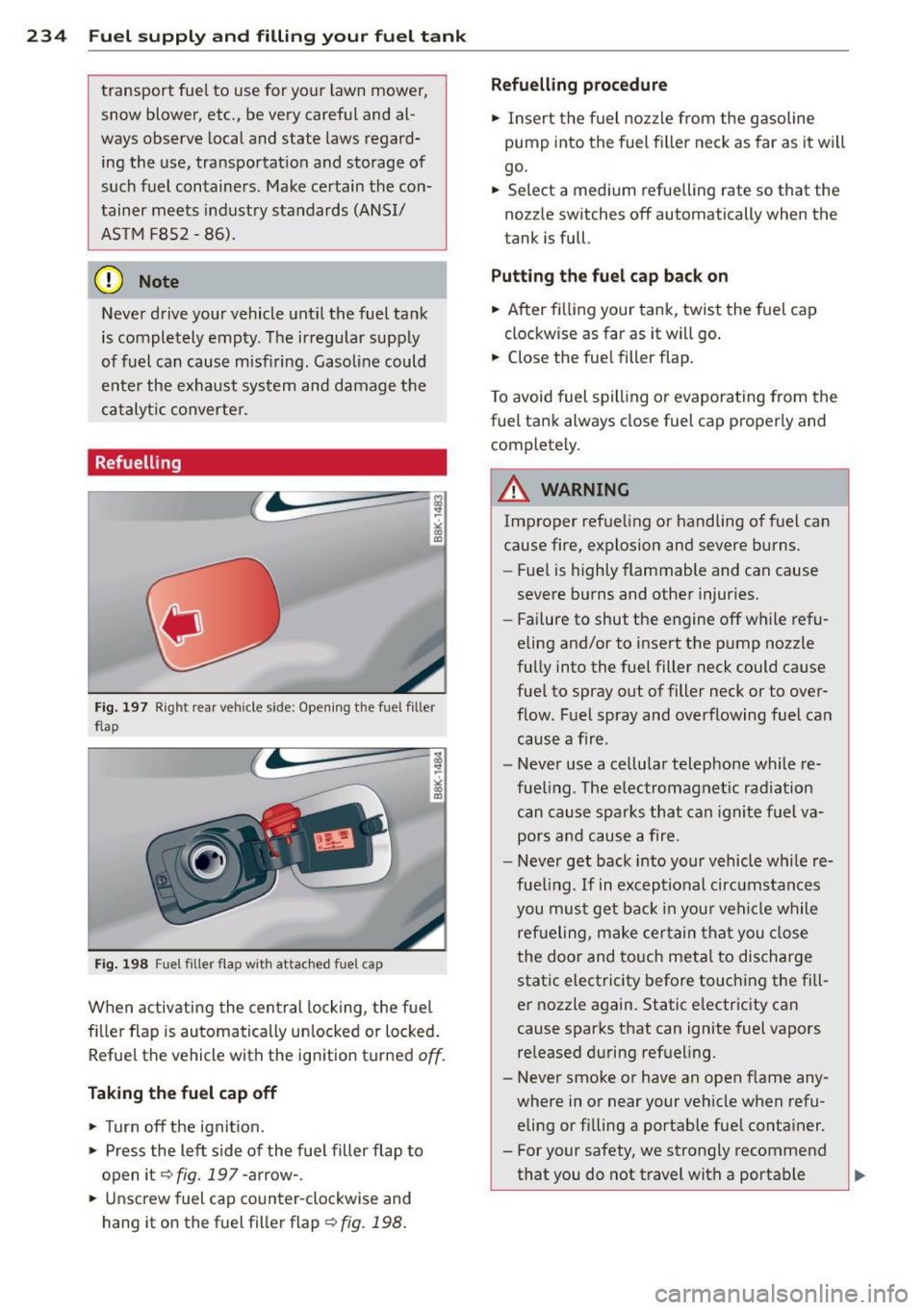
Fig. 197 Rig ht rear vehicle s ide: Opening th e fuel filler
f lap
Fig . 198 Fu el filler fla p with attached fuel c ap
When activating the central locking, the fuel
fi ller flap is automatically un locked or locked.
Refuel the vehicle with the ignition turned
off.
Taking the fuel cap off
,.. Turn off the ignit io n.
,.. Press the left side of the fue l filler flap to
open it
.?) fig . 197-a rrow -.
,.. Unscrew fuel cap counter-clockw ise and
hang it on the fuel filler flap
~ fig. 198.
Refuelling procedure
,.. Insert the fu el nozzle from the gasoline
pump into the fuel filler neck as far as it will
go .
,.. Select a medium r efuelling rate so that the
no zzle switches off automatically when the
tank is full.
Putting the fuel cap back on
,.. After fi lling your tank, tw ist the fuel cap
clockwise as far as it will go .
,.. Close the fue l fill er flap.
T o avoid fuel spilling or evaporating from the
fuel tank always close fuel cap properly and
complete ly.
A WARNING
-
Improper refue ling or handling of fuel can
cause fire, explosion and severe burns.
- Fue l is highly flammable and can cause
severe burns and other injuries.
- Failure to shut the engine off while refu
eling and/or to insert the pump nozzle
fully into the fuel filler neck could cause
fuel to spray out of filler neck or to over
flow . Fuel spray and overflowing fuel can
cause a fire .
- Never use a cellular telephone while re
fueling . The electromagnet ic rad iat ion
can cause sparks that can ignite fuel va
pors and cause a fire.
- Never get back into your vehicle white re
fueling .
If in exceptional circumstances
you must get back in your vehicle while
refueling, make certain that you close
the door and touch metal to discharge
static electricity before touching the fill
er nozzle again. Static e lectricity can
cause sparks that can ignite fuel vapors
released during refueling .
- Never smoke or have an open f lame any
where in or near your veh icle when refu
eling or filling a portab le fuel conta iner.
- For your safety, we strongly recommend
that you do not travel with a portable