tow AUDI A6 2020 User Guide
[x] Cancel search | Manufacturer: AUDI, Model Year: 2020, Model line: A6, Model: AUDI A6 2020Pages: 316, PDF Size: 86.41 MB
Page 66 of 316

Sitting correctly and safely
> To move the steering wheel forward or back-
ward, press the switch forward or backward.
The steering wheel can also be adjusted when the
ignition is switched off.
In vehicles with memory function, the steering
column settings are stored together with the
seat position.
@) Tips
Entry assistance makes it easier to enter or
exit the vehicle by moving the steering wheel
=> page 63, Driver seat entry assistance/
Front passenger seat entry assistance.
Head restraints
(eT re eur lela)
Applies to: vehicles with adjustable head restraints
B4G-0454
Fig. 54 Correctly adjusted head restraints
Make sure that:
— The upper edge of the head restraint is as even
as possible with the top of your head
— The head restraint is as close as possible to the
back of the head
— The head restraints on the occupied rear seats
are positioned as high as possible.
ZA\ WARNING
— There is one head restraint for each seat. All
vehicle occupants must adjust the head re-
straint correctly before every trip. Having
head restraints that are not adjusted cor-
rectly or not installed in the vehicle increas-
es the risk of a neck injury during sudden or
unexpected driving or braking maneuvers or
in a collision.
64
— Only remove the rear seat head restraints if
it
is necessary to install a child safety seat
= page 73. Stow the removed head re-
straints securely, for example in the luggage
compartment. Reinstall the head restraints
immediately once the child safety seat has
been removed. Driving without head re-
straints increases the risk of serious neck in-
juries.
Front head restraints
Applies to: vehicles with adjustable head restraints
[RAZ-0683
Fig. 55 Front seat: adjusting the head restraint
Adjusting the head restraints
> To adjust the head restraint upward or forward,
slide it until it locks into place.
> To adjust the head restraint downward or back-
ward, press the button on the side and slide the
head restraint. Release the button and slide the
head restraint farther until it locks into place.
Rear head restraints
Applies to: vehicles with adjustable head restraints
Fig. 56 Rear seat: adjusting or removing the head restraint >
Page 75 of 316

4K0012721BD
Sitting correctly and safely
PASSENGER AIR BAG OFF #; must remain
on.
— Front passenger's seat not occupied: the front
passenger's airbag must be deactivated, so
PASSENGER AIR BAG OFF #¥; must remain
on.
ZA WARNING
— An adult or a person with a small stature
(such as a young person or small adult) seat-
ed on the front passenger's seat will not be
protected by the passenger's airbag in the
event of a collision if the passenger's airbag
is deactivated. This increases the risk of in-
jury and death. Always make sure that
PASSENGER AIR BAG ON @ remains on
while driving. If
PASSENGER AIR BAG ON @ does not
turn on, make sure the front passenger is
sitting correctly in the seat > page 60 and
that there are no objects covering the front
passenger's seat (such as blankets or pil-
lows). If PASSENGER AIR BAG ON @
still does not turn on, the front passenger's
seat must not be used. Drive to an author-
ized Audi dealer or authorized Audi Service
Facility and have the airbag system inspect-
ed.
—Achild ina child safety seat on the front
passenger's seat - especially in a rear-facing
child safety seat - can receive a severe im-
pact if the front passenger's airbag deploys,
which increases the risk of serious or fatal
injury. Always secure child safety seats on
the rear seats. If special circumstances re-
quire the use of a child safety seat on the
front passenger's seat, always make sure
that PASSENGER AIR BAG OFF 3%; re-
mains on while driving. If
PASSENGER AIR BAG OFF #¥; does not
turn on, remove the child safety seat and in-
stall it again according to the child safety
seat manufacturer instructions. If
PASSENGER AIR BAG OFF &%; still does
not turn on, the front passenger's seat must
not be used. Drive to an authorized Audi
dealer or authorized Audi Service Facility
and have the airbag system inspected.
— Fluids, electronic devices, or mechanical
damage on the front passenger's seat may
cause the front passenger seat occupant de-
tection to malfunction. The system may
then incorrectly detect if the front passeng-
er's seat is occupied. As a result, it could de-
ploy the front passenger’s airbag incorrectly
or fail to deploy it, which increases the risk
of serious or fatal injury. Make sure that no
wet objects (such as a wet hand towel) and
no fluids come into contact with the front
passenger's seat cushion. If the front pas-
senger's seat becomes wet, dry it immedi-
ately. Make sure no electronic devices (such
as a laptop or a retrofitted seat heater) are
on the front passenger's seat. Do not trans-
port any objects on or under the front pas-
senger's seat.
— Seat covers or protective covers may prevent
the advanced airbag system from correctly
detecting child safety seats or passengers in
the front passenger's seat. You must not use
seat covers or protective covers on the front
passenger's seat that are not specifically ap-
proved for use on Audi seats with an ad-
vanced airbag system.
Child safety seats
General information
When installing and using child safety seats, fol-
low the information in this Owner's Manual, the
applicable state and federal regulations, and the
manufacturer instructions for the child safety
seat.
You can also obtain useful and current informa-
tion from the following sources:
U.S. National Highway Traffic Safety Adminis-
tration
http://www.nhtsa.gov
http://www. safercar.gov
National SAFE KIDS Campaign
http://www. safekids.org
SafetyBeltSafe U.S.A.
http://www.carseat.org
73
Page 80 of 316
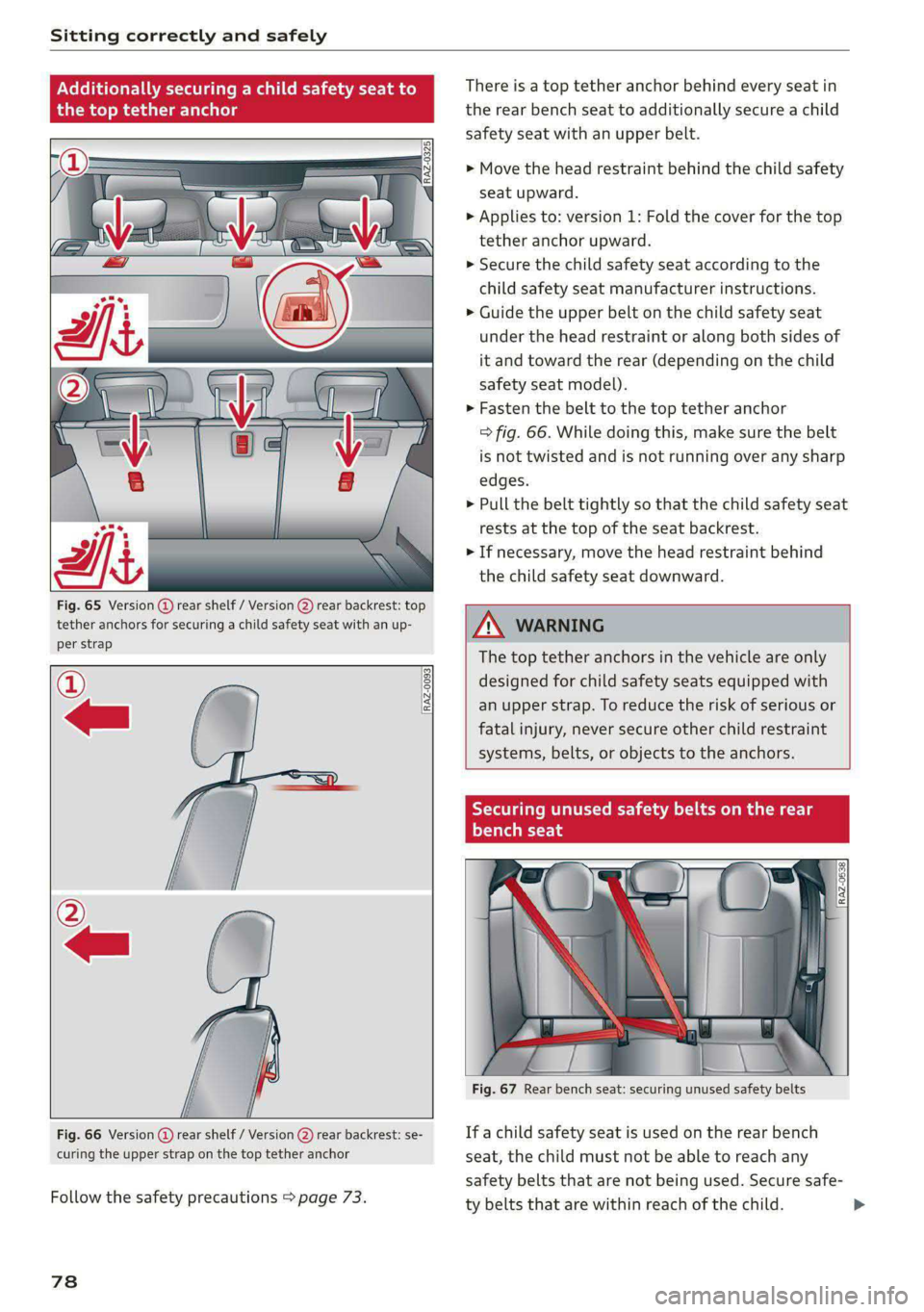
Sitting correctly and safely
Add nally securing a child safety seat to
the top tethe
RAZ-0325)
Fig. 65 Version @) rear shelf / Version @) rear backrest: top
tether anchors for securing a child safety seat with an up-
per strap
RAZ-0093
Fig. 66 Version (@) rear shelf / Version @) rear backrest: se-
curing the upper strap on the top tether anchor
Follow the safety precautions > page 73.
78
There is a top tether anchor behind every seat in
the rear bench seat to additionally secure a child
safety seat with an upper belt.
> Move the head restraint behind the child safety
seat upward.
> Applies to: version 1: Fold the cover for the top
tether anchor upward.
>» Secure the child safety seat according to the
child safety seat manufacturer instructions.
> Guide the upper belt on the child safety seat
under the head restraint or along both sides of
it and toward the rear (depending on the child
safety seat model).
> Fasten the belt to the top tether anchor
=> fig. 66. While doing this, make sure the belt
is not twisted and is not running over any sharp
edges.
> Pull the belt tightly so that the child safety seat
rests at the top of the seat backrest.
> If necessary, move the head restraint behind
the child safety seat downward.
The top tether anchors in the vehicle are only
designed for child safety seats equipped with
an upper strap. To reduce the risk of serious or
fatal injury, never secure other child restraint
systems, belts, or objects to the anchors.
Yate em tei Liam oly
TT eth 4
Fig. 67 Rear bench seat: securing unused safety belts
If a child safety seat is used on the rear bench
seat, the child must not be able to reach any
safety belts that are not being used. Secure safe-
ty belts that are within reach of the child. >
Page 82 of 316
Stowing and using
Stowing and using
Power sources
When the ignition is switched on, you may be
able to use multiple power sources for external
devices, depending on the vehicle equipment.
12 volt sockets
You can connect electrical accessories to the 12
volt sockets. The power usage must not exceed
120 watts.
The 12 volt sockets are labeled with the 12V
symbol. They are located in the front center con-
sole, in the rear* and on the side trim panel in the
luggage compartment*.
USB ports
Applies to: vehicles with USB input
You can charge mobile devices using the USB
ports. The USB ports are labeled with the «> or
(4 symbol or CHARGE ONLY.
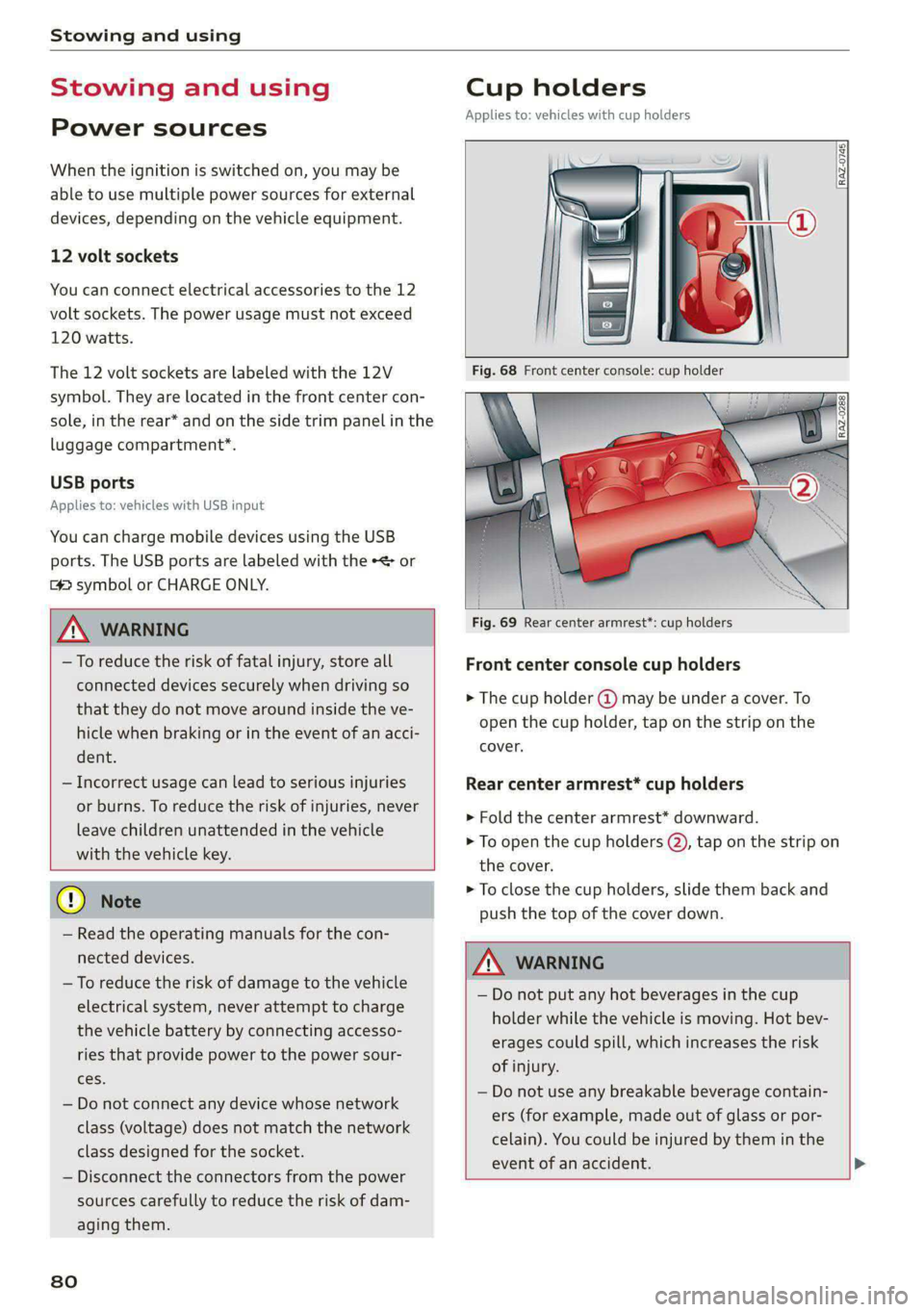
Cup holders
Applies to: vehicles with cup holders
[RAz-0745
ZA\ WARNING
—To reduce the risk of fatal injury, store all
connected devices securely when driving so
that they do not move around inside the ve-
hicle when braking or in the event of an acci-
dent.
— Incorrect usage can lead to serious injuries
or burns. To reduce the risk of injuries, never
leave children unattended in the vehicle
with the vehicle key.
@) Note
— Read the operating manuals for the con-
nected devices.
—To reduce the risk of damage to the vehicle
electrical system, never attempt to charge
the vehicle battery by connecting accesso-
ries that provide power to the power sour-
ces.
— Do not connect any device whose network
class (voltage) does not match the network
class designed for the socket.
— Disconnect the connectors from the power
sources carefully to reduce the risk of dam-
aging them.
80
Fig. 69 Rear center armrest*: cup holders
Front center console cup holders
> The cup holder @ may be under a cover. To
open the cup holder, tap on the strip on the
cover.
Rear center armrest* cup holders
> Fold the center armrest* downward.
> To open the cup holders @), tap on the strip on
the cover.
> To close the cup holders, slide them back and
push the top of the cover down.
Z\ WARNING
— Do not put any hot beverages in the cup
holder while the vehicle is moving. Hot bev-
erages could spill, which increases the risk
of injury.
— Do not use any breakable beverage contain-
ers (for example, made out of glass or por-
celain). You could be injured by them in the
event of an accident.
Page 83 of 316
4K0012721BD
Stowing and using
@) Note
Beverage containers in the cup holders should
always
have a lid. Otherwise, the liquid inside
could spill and cause damage to vehicle
equipment.
Storage and
compartments
Storage area behind the rear head
eel ey
Applies to: vehicles with storage area behind the rear head re-
straints
The storage area can be used to carry light pieces
of clothing.
Z\ WARNING
The storage compartment must not be used
to transport heavy objects, hard objects, or
animals. Such objects endanger vehicle occu-
pants and increase the risk of injury during
sudden driving or braking maneuvers or in an
accident.
@) Note
Make sure that the heating grid strips for the
rear window defogger are not damaged by
abrasive objects.
@ Tips
To ensure the ventilation functions correctly,
the ventilation slots between the rear window
and the storage area must not be covered.
Additional storage
Depending on the vehicle equipment, there may
be a variety of storage areas, compartments, and
retainers at various locations in the vehicle.
— Glove compartment: the glove compartment
can be locked using the mechanical key
=> page 36.
— Holders for a notepad and a pen in the glove
compartment
— Storage compartment in the cockpit on the
driver's side
— Storage compartments in the door trim panel
— Net in the front passenger's footwell
— Key compartment in the front center console
— Storage compartment under the front center
armrest
— Nets on the back of the front seats
— Garment hooks in the rear
— Storage compartment in the rear center arm-
rest
— Bag hooks in the luggage compartment
— Net in luggage compartment
ZA\ WARNING
—To reduce the risk of injury, make sure all
storage compartments are always closed
while driving.
— Loose objects can be thrown around the ve-
hicle interior during sudden driving or brak-
ing maneuvers, which increases the risk of
an accident. Store objects securely while
driving.
— Only use the storage compartments in the
door trim panels to store small objects that
will not stick out of the compartment and
impair the function of the side airbags.
— Only lightweight clothing should be hung
from the garment hooks in the vehicle. Do
not use clothes hangers to hang clothing.
The pockets of the clothing must not con-
tain any heavy, breakable, or sharp-edged
objects. This could impair the effectiveness
of the side curtain airbags.
— Make sure your view toward the rear is not
blocked, for example by hanging clothing or
objects in the vehicle.
Luggage compartment
General information
All pieces of luggage or objects must be securely
fastened in the luggage compartment. Note the
following to maintain good vehicle handling:
> Distribute the load evenly in the luggage com-
partment.
> Stow heavy luggage as far forward in the lug-
gage compartment as possible.
81
>
Page 84 of 316
Stowing and using
> Use non-elastic cords attached to the tie-downs
to secure objects.
ZA WARNING
— Applies to: vehicles with luggage compart-
ment cover: The luggage compartment cov-
er is not a surface for storing objects. Ob-
jects placed on the cover increase the risk of
injury to all vehicle occupants during sudden
driving or braking maneuvers or in the event
of an accident.
— Loose objects can be thrown around the ve-
hicle interior during sudden driving or brak-
ing maneuvers, which increases the risk of
an accident. Always stow objects securely in
the luggage compartment and secure them
at the tie-downs. Use straps suitable for
heavy objects.
— If pieces of luggage or objects are secured
to the tie-downs with unsuitable or dam-
aged straps, this can increase the risk of in-
jury during braking maneuvers or accidents.
— When transporting heavy objects, the vehi-
cle characteristics will change due to the
shift in the center of gravity, which increases
the risk of an accident. You may need to
adapt your driving style and speed to the
current conditions.
— The cargo net is only strong enough to se-
cure light objects. Heavy objects are not ade-
quately secured. Attempting to secure heavy
objects increases the risk of injury.
— Never exceed the permitted axle and load
and vehicle weight > page 299.
— Never secure a child safety seat to the tie-
downs.
— Never leave your vehicle unattended, espe-
cially if the luggage compartment lid is
open. Children could enter the luggage com-
partment and close the luggage compart-
ment lid from the inside. This creates the
risk of fatal injury, since the children would
be locked in and may not be able to escape
by themselves.
— Do not allow children to play in or on the ve-
hicle. Close and lock the luggage compart-
ment lid as well as all other doors when you
leave the vehicle.
— Never transport passengers in the luggage
compartment. Every passenger must be cor-
rectly secured with the safety belts in the
vehicle > page 65.
— Be careful when releasing the backrest and
folding
it forward. To reduce the risk of be-
ing pinched, pay attention and check when
folding backrests forward.
— The backrest must be securely latched so
objects cannot slide forward out of the lug-
gage compartment during sudden braking.
— The backrest must be latched securely to en-
sure that the safety belt is protecting the
center seating position.
— Always pull forward on the backrest to make
sure it is check if it is correctly locked in
place.
82
@) Note
—To reduce the risk of damage, move the rear
head restraints down > page 64 before fold-
ing the rear backrests forward.
— When folding the backrest forward, make
sure the outer safety belts are in the belt
guide recess so that they do not get pinched
in the backrest lock and damaged. Other ob-
jects should be removed from the rear
bench seat to protect the backrest from
damage.
— If you move the front seat back when the
rear seat backrest is folded forward, you
could damage the head restraints on the
rear seat.
— Make sure that the heating grid strips for
the rear window defogger are not damaged
by abrasive objects.
— Let the luggage compartment cover roll up
slowly to reduce the risk of damage.
— Let the partition net roll up slowly to pre-
vent damage.
@ Tips
— The tire pressure must be adapted to the
load > page 255.
— You can purchase straps at specialty stores.
Page 85 of 316
4K0012721BD
Stowing and using
Power luggage compartment cover
Applies to: vehicles with power luggage compartment cover
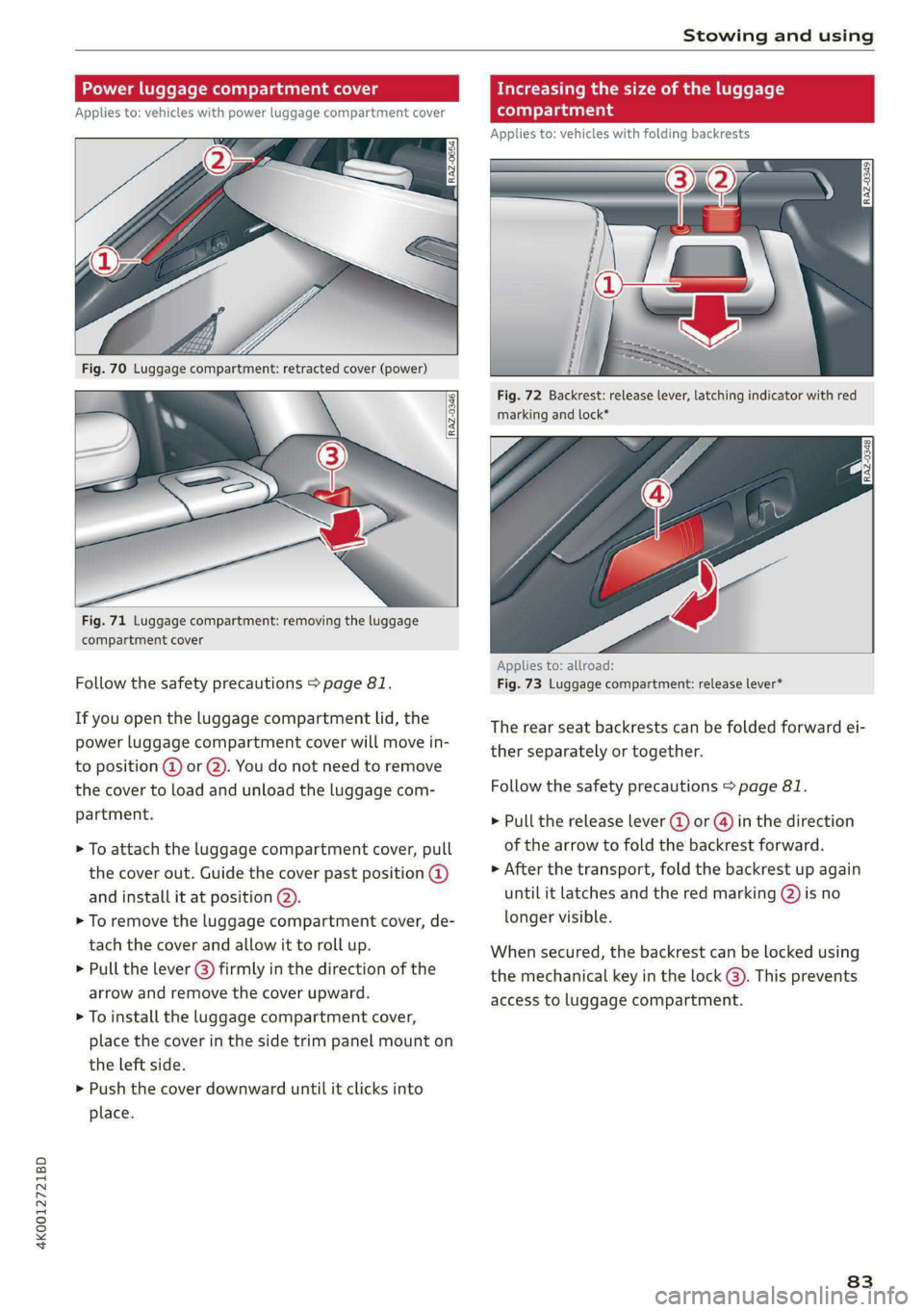
Fig. 71 Luggage compartment: removing the luggage
compartment cover
Follow the safety precautions > page 81.
If you open the luggage compartment lid, the
power luggage compartment cover will move in-
to position @ or @). You do not need to remove
the cover to load and unload the luggage com-
partment.
> To attach the luggage compartment cover, pull
the cover out. Guide the cover past position @
and install it at position (2).
> To remove the luggage compartment cover, de-
tach the cover and allow it to roll up.
> Pull the lever () firmly in the direction of the
arrow and remove the cover upward.
> To install the luggage compartment cover,
place the cover in the side trim panel mount on
the left side.
> Push the cover downward until it clicks into
place.
Increasing the size of the luggage
compartment
Applies to: vehicles with folding backrests
Fig. 72 Backrest: release lever, latching indicator with red
marking and lock*
Applies to: allroad:
Fig. 73 Luggage compartment: release lever*
The rear seat backrests can be folded forward ei-
ther separately or together.
Follow the safety precautions > page 81.
> Pull the release lever (@) or @) in the direction
of the arrow to fold the backrest forward.
> After the transport, fold the backrest up again
until it latches and the red marking @) is no
longer visible.
When secured, the backrest can be locked using
the mechanical key in the lock @). This prevents
access to luggage compartment.
83
Page 86 of 316
Stowing and using
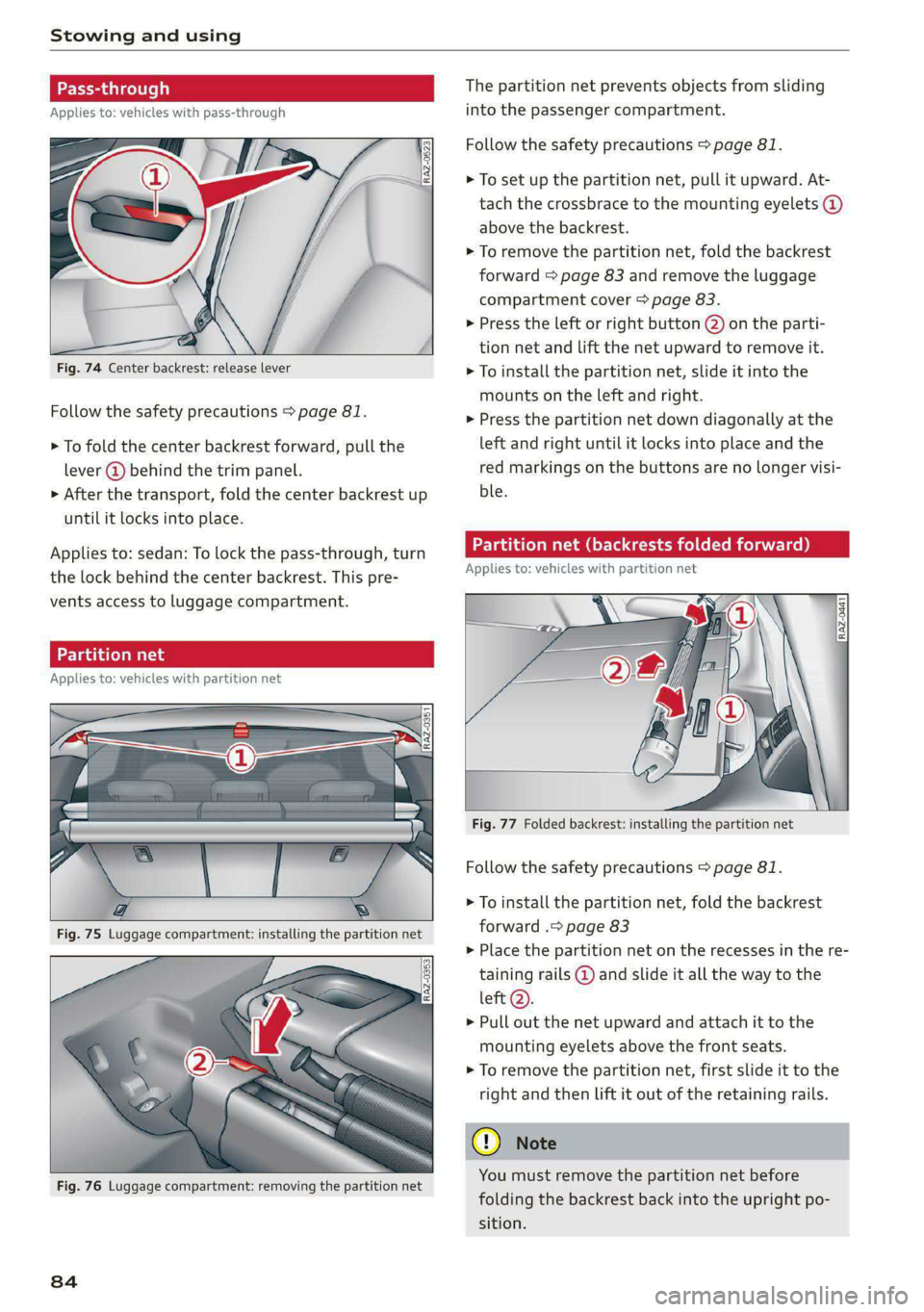
Fig. 74 Center backrest: release lever
Follow the safety precautions > page 81.
> To fold the center backrest forward, pull the
lever @ behind the trim panel.
> After the transport, fold the center backrest up
until
it locks into place.
Applies to: sedan: To lock the pass-through, turn
the lock behind the center backrest. This pre-
vents access to luggage compartment.
Applies to: vehicles with partition net
Fig. 76 Luggage compartment: removing the partition net
84
The partition net prevents objects from sliding
into the passenger compartment.
Follow the safety precautions > page 81.
> To set up the partition net, pull it upward. At-
tach the crossbrace to the mounting eyelets (@)
above the backrest.
> To remove the partition net, fold the backrest
forward > page 83 and remove the luggage
compartment cover > page 83.
> Press the left or right button @) on the parti-
tion net and lift the net upward to remove it.
> To install the partition net, slide it into the
mounts on the left and right.
> Press the partition net down diagonally at the
left and right until it locks into place and the
red markings on the buttons are no longer visi-
ble.
Lr) on net (backrests folded forward)
Applies to: vehicles with partition net
Fig. 77 Folded backrest: installing the partition net
Follow the safety precautions > page 81.
> To install the partition net, fold the backrest
forward .> page 83
> Place the partition net on the recesses in the re-
taining rails @ and slide it all the way to the
left @.
> Pull out the net upward and attach it to the
mounting eyelets above the front seats.
> To remove the partition net, first slide it to the
right and then lift it out of the retaining rails.
You must remove the partition net before
folding the backrest back into the upright po-
sition.
Page 87 of 316
4K0012721BD
Stowing and using
Tie-downs and cargo net
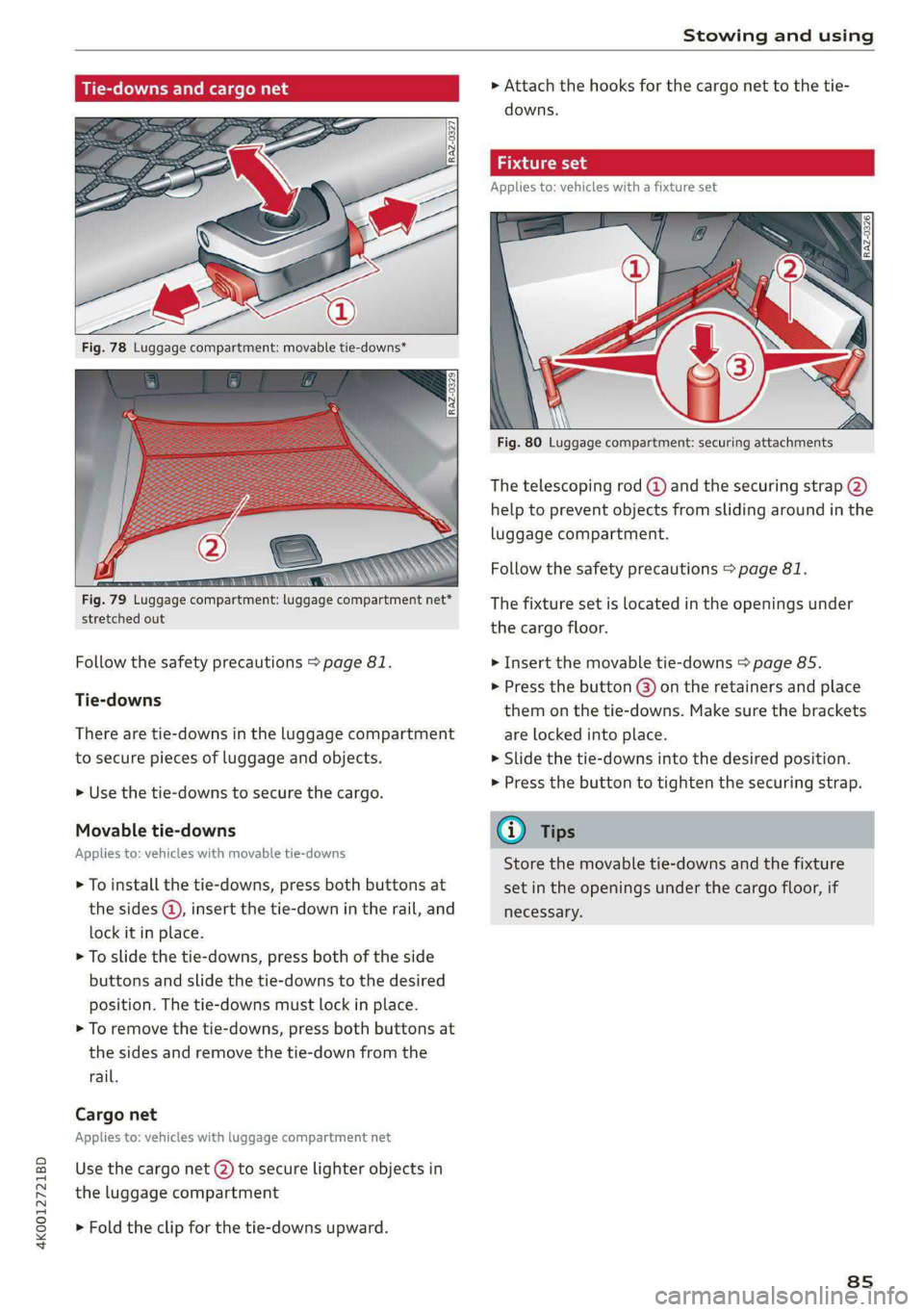
Fig. 78 Luggage compartment: movable tie-downs*
stretched out
Follow the safety precautions > page 81.
Tie-downs
There are tie-downs in the luggage compartment
to secure pieces of luggage and objects.
> Use the tie-downs to secure the cargo.
Movable tie-downs
Applies to: vehicles with movable tie-downs
> To install the tie-downs, press both buttons at
the sides @, insert the tie-down in the rail, and
lock it in place.
> To slide the tie-downs, press both of the side
buttons and slide the tie-downs to the desired
position. The tie-downs must lock in place.
> To remove the tie-downs, press both buttons at
the sides and remove the tie-down from the
rail.
Cargo net
Applies to: vehicles with luggage compartment net
Use the cargo net (2) to secure lighter objects in
the luggage compartment
> Fold the clip for the tie-downs upward.
> Attach the hooks for the cargo net to the tie-
downs.
Fixture set
Applies to: vehicles with a fixture set
Fig. 80 Luggage compartment: securing attachments
The telescoping rod @ and the securing strap (2)
help to prevent objects from sliding around in the
luggage compartment.
Follow the safety precautions > page 81.
The fixture set is located in the openings under
the cargo floor.
> Insert the movable tie-downs > page 85.
> Press the button @) on the retainers and place
them on the tie-downs. Make sure the brackets
are locked into place.
> Slide the tie-downs into the desired position.
> Press the button to tighten the securing strap.
Store the movable tie-downs and the fixture
set in the openings under the cargo floor, if
necessary.
8s
Page 88 of 316
Stowing and using
ble cargo floor
Applies to: vehicles with double cargo floor
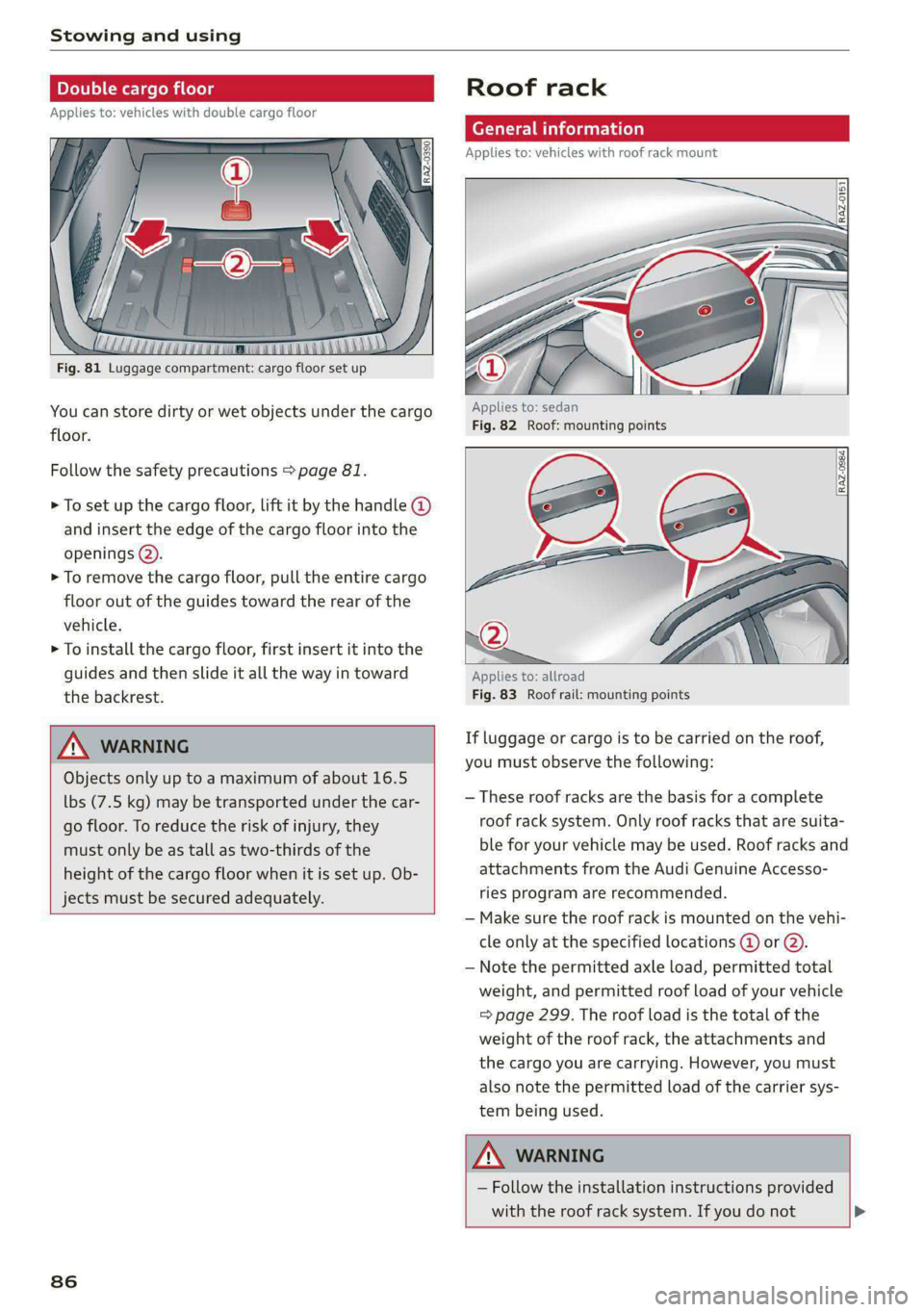
Fig. 81 Luggage compartment: cargo floor set up
You can store dirty or wet objects under the cargo
floor.
Follow the safety precautions > page 81.
> To set up the cargo floor, lift it by the handle @
and insert the edge of the cargo floor into the
openings @).
> To remove the cargo floor, pull the entire cargo
floor out of the guides toward the rear of the
vehicle.
> To install the cargo floor, first insert it into the
guides and then slide it all the way in toward
the backrest.
Objects only up to a maximum of about 16.5
lbs (7.5 kg) may be transported under the car-
go floor. To reduce the risk of injury, they
must only be as tall as two-thirds of the
height of the cargo floor when it is set up. Ob-
jects must be secured adequately.
86
Roof rack
General information
Applies to: vehicles with roof rack mount
Applies to: sedan
Fig. 82 Roof: mounting points
Applies to: allroad
Fig. 83 Roof rail: mounting points
If luggage or cargo is to be carried on the roof,
you must observe the following:
— These roof racks are the basis for a complete
roof rack system. Only roof racks that are suita-
ble for your vehicle may be used. Roof racks and
attachments from the Audi Genuine Accesso-
ries program are recommended.
— Make sure the roof rack is mounted on the vehi-
cle only at the specified locations @ or @).
— Note the permitted axle load, permitted total
weight, and permitted roof load of your vehicle
=> page 299. The roof load is the total of the
weight of the roof rack, the attachments and
the cargo you are carrying. However, you must
also note the permitted load of the carrier sys-
tem being used.
— Follow the installation instructions provided
with the roof rack system. If you do not