lock AUDI Q3 2015 Workshop Manual
[x] Cancel search | Manufacturer: AUDI, Model Year: 2015, Model line: Q3, Model: AUDI Q3 2015Pages: 258, PDF Size: 64.9 MB
Page 160 of 258
158 Intellig ent technolog y
brake discs and pa ds with a few caref ul
brake a pplicat ions.
- If you damage the front s poiler, or if you
insta ll a different spoiler, be su re the air
flow to the front brakes is not obstruct ed. Otherwise the brake system could
ov erhe at r educi ng the eff ect iveness of
t h e enti re brak e system.
- Failure of one brake ci rcuit will impair
the braking capability resulting in an in creased stopp ing distance. Avoid driv ing
the vehicle and have it towed to the near
est author ized Audi dealer or qualif ied
wor kshop.
- Never let the vehicle rol l to a stop w ith
the engine shu t off.
- If the brake booster is not working, the
brake pedal must be pressed conside ra
bly harder to make up for the lac k of
booster assistance.
Electromechanical
steering
The electromechanical steering supports the
driver 's steering movements .
Power steering adapts electronically based on
the vehicle speed.
Ind icator light s and messages
• Steering fault! Do not drive vehicle !
If this indicator light tu rns on and stays on
and this message appears, t he power steering
may have fa iled.
Stop the vehicle in a safe locat ion as soon as
possib le . Do
not continue driving . See your
author ized Audi dealer or other qua lified re
pa ir facility for assistance .
If the indicator light turns on, the steer ing
may be more d ifficu lt to move or more sensi
tive than usual. The steer ing may also be at an
angle when dr iving st raight . Drive slowly to you
r authorized Audi dea ler or
qualified workshop to have the ma lf u nction
corrected.
l ;:!" ij Steering lock : S ys tem fault! Please con
tact de aler.
The re is an elect ron ic steering column lo ck
malfunction .
Drive to an author ized Audi dealer or qualified
r epair fac il ity immediate ly to have the mal
funct ion corrected.
(D Tips
If the . or ,To n ind icator light only stays
on for a short t ime, yo u may continue dr iv
i ng.
Driving with your
quattro
Applies to veh icles: w ith all-w hee l d ri ve
With all-wheel drive, all four wheels are driv
en.
General information
Wi th a ll-w heel d rive, power is dis trib ute d to
all four wheels . This happens automatically
depending on your driving style and the road
conditions at the time . See a lso
¢ page 153.
The all -whee l dr ive concept is des igned for
high eng ine power. Your veh icle is except ion
ally powerfu l and has excellent d riving charac
terist ics both under normal driving conditions
and on snow and ice. Always read and follow
safety precaut ions¢ .&..
Winter tires
When driving in the winter, yo ur vehicle with
all-wheel drive has an advantage, eve n wit h
regular tires. In winter road conditions it may
be advisable to mount winter tires (or all-sea
son tires) for improved driveability and brak
ing: these tires must be mounted on
all four
wheel s.
See also ¢ page 210, Winter tires.
Tire chains
Where tire chains are mandatory on certain
roads, this norma lly also app lies to ve hicles
Page 166 of 258
164 Driving and en vironm ent
The amount of oil used is related to eng ine
load and speed.
I t is normal for the oil consumption of a new
engine to reach its lowest val ue after a certain
mileage has been driven.
You must drive your vehicle about 3 ,000 miles
(5,000 kilometers) before you can properly
assess o il cons umption .
This a lso applies to fuel consumption and en
g ine output .
0 Note
-Have your vehicle maintained properly
and in accordance with the service rec
ommendations in your War ranty
& Main
tenance booklet. Lack of proper mainte
nance as well as imp roper use of the ve
hicle will impair the function of the
emission control system and could lead
to damage.
- Do not a lter or remove any component of
the Emi ssion Contro l System unless ap
proved
by the manufacturer.
- Do not a lter or remove any device, such
as heat shields, switches, ignition wires,
va lves, which are designed to protect
your vehicle's Emiss ion Control System
and other important veh icle compo
nents .
Fewer short trips
Fuel consumption will always be relatively
high on short trips .
• Try to avo id driving sho rt distances with a
cold eng ine.
The engine and catalytic converter have to reach their optimal
ope rating tempe ratu re to
reduce fuel con sumption and noxious emis
sions effect ively.
Just after starting, a cold engine in a mid-size car on ly achieves a fuel economy of 6-8 miles
per gallon (30-40 l/100 km) . After about a
half a m ile, fuel economy climbs to 12 mpg
(20 l/100 km) . After about
2. 5 miles (4 km), the engine is at its proper operating tempera
ture and fuel economy has reached a normal
l evel. So you can see that you should avo id
short trips whenever possible.
T he
out sid e tempe rature is also critical in this
regard . Your car consumes more fue l in the
winter than in the s ummer.
Driving offroad
General information
When driving off road, the functions fo r the
electron ic stabiliza tion control ( ESC) are ex
panded . The ESC-Offroad-Mode can be activat
ed in driving situations in which a wheel lock
or a differential lock function is needed
c> page 155.
Your Audi i s howev er, n ot an offroad vehicle.
Ne ver dri ve the vehicle in te rrain wh ich i s n ot
suitable for the vehicle , o r w hich ex ceeds
y ou r driv ing skill s. Ne ver tak e an y u nneces
s ar y risk s!
Aft er d riving offroad
-After driving offroad, remove branches and
other debris from the radiator gri lle, under
body, and wheels. Look especially for objects
(stones) that have been caught in the tire
tread.
- Clean the body and the vehicle underbody
and inspect the vehicle for possible damag
es.
- Clean off the dirty windows, headlights, tail
lights and the license plate .
- Pe rform a brake test (especially after driving
through water).
A WARNING
- Be especially aware and attent ive when
driving under difficult condit ions . Dam
ages to the vehicle and injur ies may oc
cur when driv ing at an excessively high
speed or with incor rect driving maneu
vers.
- Always adjust you r speed and hand ling
to the roads, terrain, t raff ic and weather
~
Page 171 of 258
M N
M N
0 ::i co ,...., \!) 1.1'1 ,...., 1.1'1 ,....,
@ Tips
-Do not tow a traile r during the break-in
period o f your vehicle .
- If you tow a t railer, your A udi may re
quire more frequent maintenance due to
the extra load
¢ page 23 7.
Parking on a slope
Do not park on a slope with a trailer. If it can
not be avoided, do so only after doing the fol
lowing:
When parking:
.,. Apply the foo t brake .
.,. Have someone place chocks under bo th t he
vehicle and the trai ler whee ls .
.,. With chocks in p lace, slowly re lease the
brakes unti l th e wheel chocks abso rb the
load .
.,. Turn the wheels towards the curb .
.,. Apply the parking brake .
.,. Move t he se lecto r leve r to P.
When restarting after parking:
.,. Apply the foot brake .
.,. Start the eng ine .
.,. Move t he selector lever to D/S .
.,. Re lease the park ing brake and slowly pull
out and away from the whee l choc ks .
.,. Stop and have someone retrieve the w heel
chocks.
(D Tips
If you move the sele ctor lever of t he a uto
mat ic t ransm ission to P before app lying
t he p ark ing brake an d befo re blocking the
wheels, you may have to use mo re force
later to move the lever out of the P posi
tion.
Trailer towin g 169
•
•
Page 174 of 258
172 Vehicle care and cleaning
Component Situation Solution
Decorative
Dirty Mild soap solutional, a cleaning solution suitab le for
parts/ sta inless steel, if necessary
trim
Paint
Paint damage Refer to the paint number on the vehicle data label, re-
pair with touch up paint¢
page 234
Spilled fuel Rinse with water immediately
Rust film Rust
film remover, then protect with hard wax; for ques-
tions, refer to an authorized Audi dea ler or qualified
workshop
Corrosion Have it removed by an autho rized Aud i dealer or quali-
fied workshop
Water no longer Protect with hard wax (at least twice per year)
beads on the surface
of clean paint
No shine even T
reat with suitable polish; then app ly paint protectant if
though paint has the polish that was used does not contain any protec-
been protected/
tant
pa int looks poor
Desposits such as in- Dampen with water immed iate ly and remove with a mi-
sects, bird drop- crofiber cloth
pings, tree sap and
road salt
Grease-based con- Remove immediately with a mild soap solutiona> and a
taminants such as soft cloth
cosmetics or sun-
block
Carbon parts Dirty Clean tlhe same way as pa inted parts ¢ page 170, Car
washes
a l Mi ld soap so lution: maximum two tab lespoons neut ra l soap in 1 quart (1 lite r) of water
Cleaning interior
Component Situation Solution
Windows
Dirty Glass cleaner, then wipe dry
Decorative Dirty Mild soap solutional
parts/
trim
Plastic parts
Dirty Damp cloth
Heavily soiled Mild soap solutional, solvent-free plast ic cleaning solu-
t ion, if necessary
Displays Dirty Soft cloth with LCD cleaner
Controls Dirty Soft brush, then a soft cloth with a mild soap solutiona>
Safety belts Dirty Mild soap solutional, allow to dry before letting them re-
tract
Page 176 of 258
174 Vehicle care and cleaning
- Never use abrasive cleaning materials
or alcohol to clean the camera lens.
This could cause scratches and cracks.
- Windows
- Remove snow and ice on windows and
exterior mirrors with a plastic scraper.
To avoid scratches, move the scraper only in one direction and not back and
forth.
- Never remove snow or ice from win
dows and mirrors using warm or hot
water because this could cause cracks
to form .
- To avoid damage to the rear window
defogger, do not apply any stickers on
the heating wires on the inside of the
window.
- Decorative parts/trim
- Never use chrome care or cleaning
products.
- Paint
-To reduce the risk of scratches, the ve-
hicle must be free of dirt and dust be
fore polishing or waxing.
- To prevent paint damage, do not polish
or wax the vehicle in direct sunlight.
- To reduce the risk of paint damage, do
not polish away rust film .
- Remove cosmetics and sunblock imme
diately . Otherwise, the paint could be
damaged.
- Displays
- To avoid scratches, do not use dry
cleaning methods on displays.
- Controls
- Make sure that no fluids enter the con-
trols, because this could cause dam
age.
-Safety belts
- Do not remove the safety belts to clean
them.
- Never clean safety belts or their com
ponents chemically or with corrosive
fluids or solvents and never allow sharp objects to come into contact
with the safety belts. This could cause
damage to the belt webbing. - If there is damage to the webbing, the
connections, the retractors or the buckles, have them replaced by an author
ized Audi dealer or qualified workshop.
- Textiles/Vinyl/Alcantara
- Never treat Vinyl/Alcantara with leath-
er care products , solvents, floor polish,
shoe polish, stain remover or similar
products.
- To avoid damage, have stubborn stains
removed by an authorized Audi dealer
or qualified workshop.
- Never use steam cleaners, brushes,
hard sponges, etc. when cleaning.
- Do not turn on the seat heating* to dry
the seat.
- Objects with sharp edges such as zip
pers, rivets on clothing or belts can
cause damage to the surface .
- Open hook and loop fasteners, for ex
ample on clothing, can damage seat
covers . Make sure hook and loop fas
teners are closed.
- Natural leather
- Never treat leather with solvents, floor
polish, shoe polish, stain remover or
similar products.
- Objects with sharp edges such as zip
pers, rivets on clothing or belts can
cause damage to the surface.
- Never use steam cleaners, brushes,
hard sponges, etc. when cleaning.
- Do not turn on the seat heating* to dry
the seat.
- To help prevent the leather from fad
ing, do not leave the vehicle in direct
sunlight for long periods of time. If leaving the vehicle parked for long pe
riods of time, you should cover the
leather to protect it from direct sun
light.
(D Tips
- Insects are easier to remove from paint
that has been freshly waxed.
- Regular waxing can prevent rust film
from forming.
Page 178 of 258
176 Fuel suppl y and fillin g your fu el tank
Many gaso line grades are blended to perform
especially we ll for winter or summer driving.
During seasonal change-over, we suggest that
you fill up at busy gas stations where the sea sonal adjustment is more likely to be made in
time.
@ Note
- Methanol fuels which do not meet these
requirements may cause corrosion and
damage to plastic and rubber compo
nents in the fuel system.
- Do not use fuels that fail to meet the
spec ified criter ia in this chapter .
- If you are unable to determine whether
or not a particular fuel blend meets the
spec ificat ions, ask your service station o r
i ts fuel supplier .
- Do not use fuel for wh ich the contents
cannot be identified .
- Fuel system damage and performance
problems resulting from the use of fuels
different from those specified are not
the respons ibility of Audi and are not
covered under the New Ve hicle or the
Emission Control System Warranties.
- If you experience a loss of fue l economy
or driveabil ity and performance prob
l ems due to the use o f one of these fuel
blends, we recommend that you switch
to unblended fuel.
Gasoline additives
A major concern among many auto manufac
turers is carbon deposit build-up caused by
the type of gasoline you use .
A lthough gasoline grades diffe r from one
manufac turer to another, they have certa in
things in common. All gasoline grades contain
substances that can cause depos its to collect
on vital engine parts, such as fuel injectors
and intake valves . Although most gasoline
b rands include additives to keep eng ine and
fuel systems clean , they are not eq ua lly effec
tive. Audi recommends using
TOP TIER Detergent
Gasoline . For more information on TOP TIER
Detergent Gasoline, please go to the official
website (www.toptiergas .com) .
After an extended period o f using inadeq uate
fuels, built-up carbon deposits can rob your engine of peak performance.
(D Note
- Damage or malfunction due to poor fuel
quality is not covered by the Audi New
Vehicle Limited Warranty .
- Do not add afte rmarket fuel additive
produc ts to your f uel tank .
Fuel tank
Fuel filler neck
The fuel filler neck is located on the right rear
s ide panel behind the fuel filler flap.
If the power locking system should fail, you
can still open the flap manually -for detailed
instruct ions see o page 178.
You can find the fuel tank capacity of your ve
hicle in
o page 235 .
The label on the inside of the f uel fi ller flap
te lls you the correct fue l for your vehicle. For
more information about fue l specifications,
see
c:;, poge 175.
Your vehicle fue l tank has an on -board refuel
ing vapor recovery system . This feature helps
to prevent fuel vapors from escaping from the
tank and pollut ing the environment while you
refuel your vehicle. In order to fill the tank
properly while protecting the environment,
please follow this refueling procedure careful
ly.
.&_ WARNING
Under normal operating cond itions, never
carry addit ional fue l conta iners in your car .
Gas canisters and other conta iners used to
transport f uel can be dangero us. Such con-
tainers, fu ll or empty, may leak and could ..,.
Page 179 of 258

M N M N
0 :::i co
rl I.O
"' rl
"' rl
cause a fire in a co llision. If you must
transport fue l to use for yo ur lawn mowe r,
snow blower, etc., be very careful and al
ways observe local and state laws regard
ing the use, transportat ion and storage of
such fuel containers . Make certain the con
t ainer meets industry standards (ANSI/
AS TM F 852 -86).
(D Note
Never drive yo ur vehicle unt il the fuel tank
is completely empty . The irregular supp ly
of fuel can cause misfi ring. Gasoline could
enter the exhaust system and damage the
catalyt ic converte r.
Refueling
Fig. 140 Rig ht rea r veh icle s ide: Opening t he fuel f iller
fl ap
Fi g. 14 1 Fu el filler fla p with attach ed fu el c ap
When activating the central locking, the fuel
f ill er flap is automatically unlocked or locked .
Refue l the vehicle with the ignition turned
off.
Tak ing th e fuel cap off
• Press the left side of the fue l filler flap to
open it ¢
fig . 140 -arrow- .
• Unscrew fuel cap counter-clockwise and
hang it on the fuel f iller flap ¢
fig. 141.
Fuel suppl y and filling your fuel t ank 17 7
Refueling procedure
• Insert the fuel nozzle from the gasoline
pump into the fuel fi ller neck as far as it wi ll
go .
• Select a medium refueling rate so that the
no zz le switches off automatically when the
tank i s full .
Putting th e fuel cap bac k on
• After filling your tank, twist the fuel cap
clockw ise as far as it will go .
• Close the fue l filler flap.
T o avoid fuel spill ing or evaporating from the
fuel tank always close fuel cap properly and
completely . An improper ly closed fuel filler
cap may also cause the MIL lamp ¢
page 26
to come on.
A WARNING
Improper refue ling or handling of fuel can
cause fire, explosion and severe burns.
- Fuel is highly flammable and can cause
severe burns and other injur ies .
- Failure to shut the engine off while refu
eling and/or to insert the pump nozzle
fully into the fuel filler neck could cause
fue l to spray out of filler neck or to over
flow. Fue l spray and overflowing fuel can
cause a fire .
- Never use a ce llu lar telephone while re
fue ling. The electromagnet ic rad iation
can cause sparks that can ignite f uel va
pors and cause a fire.
- Never get back into yo ur vehicle while re
fuel ing.
If in excep tional circumstances
you must get back in your vehicle while refueling, make certain that you close
the door and touch metal to discharge static electricity before touching the fill
er nozzle again . Static electr icity can
cause sparks that can ignite fuel vapors
released during refueling.
- Never smoke or have an open f lame any
where in or near your veh icle when refu
eling or filling a portab le fuel conta iner .
- For your safety, we strongly recommend
that you do not t ravel with a portable
Page 180 of 258
1 78 Fuel supply and filling your fuel tank
fuel container in your vehicle. The con
tainer, full or empty may leak and could
cause a fire, especially in a crash.
- If, under exceptional circumstances, you
must transport a portable fuel container,
please observe the following:
- Never fill a portable fuel container
while it is anywhere in or on the vehicle
(for example, in the luggage compart
ment, or on the trunk). Static electrici
ty can build up while filling and can ig nite fuel vapors causing a fire .
- Always place a portable fuel container
on the ground before filling.
- Always keep the filler nozzle complete
ly inside the portable container before
and during filling.
- If filling a portable container made of
metal, the filler nozzle must always be in contact with the container. This will
help prevent static electricity from dis
charging and cause a fire.
- Never spill fuel inside the vehicle or
luggage compartment. Fuel vapors are
highly flammable.
- Always observe local and state/provin
cial laws regarding the use, storage
and transportation of fuel containers .
- Make certain the fuel container meets
industry standards (ANSI/ ASTM
F8S2 -86) .
d) Note
If any fuel has spilled onto the car, it
should be removed immediately to prevent
damage to the paint .
@ For the sake of the environment
As soon as the correctly operated nozzle
switches off automatically for the first
time, the tank is full. Do not try to add more fuel because fuel may spill out. In
addition, the expansion space in the fuel
tank will be filled -causing the fuel to
overflow when it becomes warm and pol
lute the environment.
(D Tips
- Running your engine while refueling may
cause vapors to escape or even cause
fuel to spill out of the tank. This would
then shut off the fuel nozzle before the
tank is full .
- Do not refuel your vehicle with the igni
tion turned on. The fuel gauge may oth erwise not indicate the correct fuel level
after refueling .
- The fuel filler flap of your vehicle is not
locked when you lock the vehicle from
the inside .
Unlocking the fuel filler flap
by hand
You can open the fuel filler flap by hand if the
power locking system should fail.
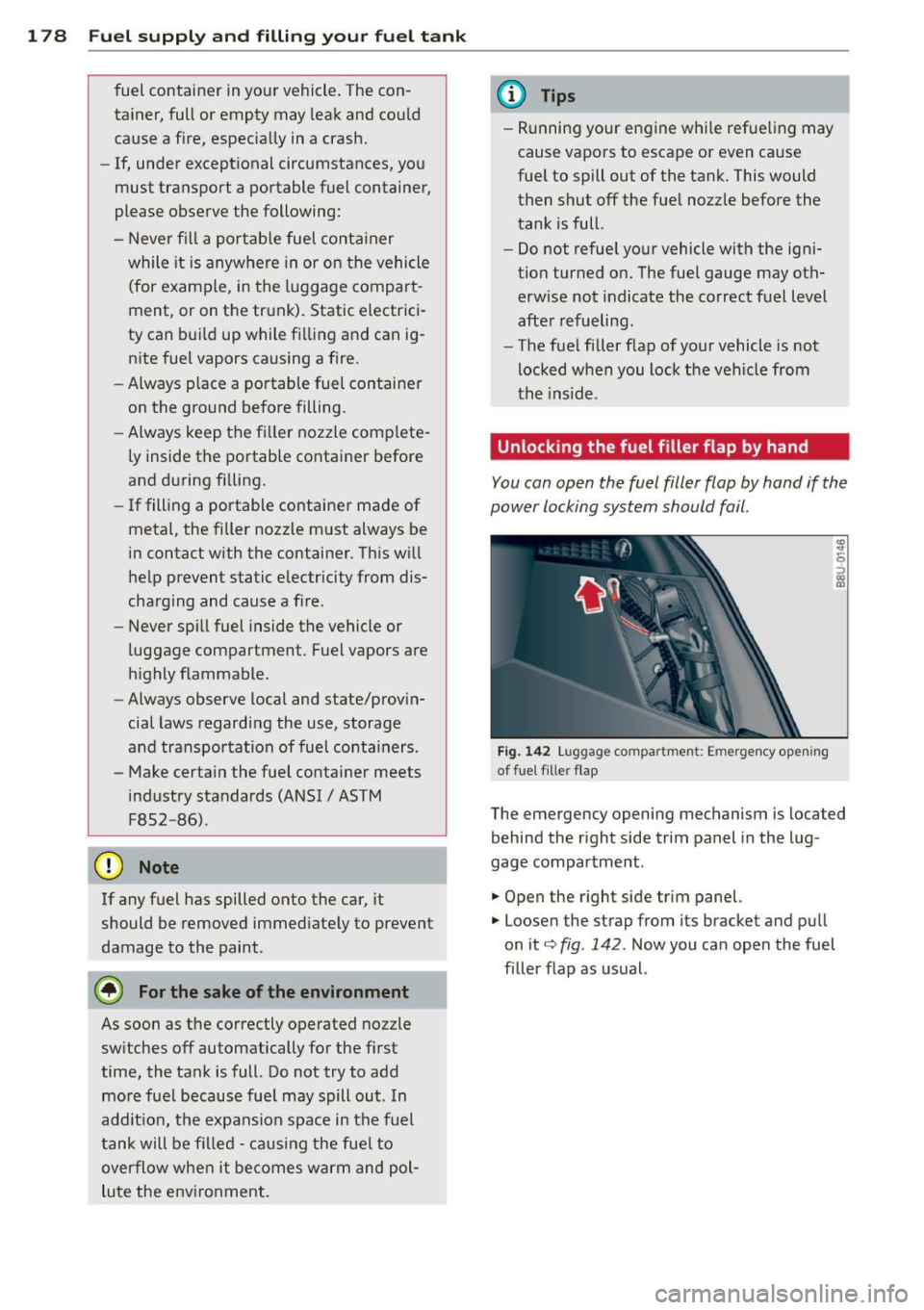
Fig. 142 L uggage compart men t: E mergency opening
o f fuel fille r flap
The emergency opening mechanism is located
behind the right side trim panel in the lug
gage compartment .
.,. Open the right side trim panel.
.,. Loosen the strap from its bracket and pull
on it
r::';> fig. 142 . Now you can open the fuel
filler flap as usual.
Page 181 of 258
M N M N
0 ::i co
rl I.O
"' rl
"' rl
Checking and filling Engine hood
Releasing and opening the engine hood
The engine hood is released from inside the
vehicle .
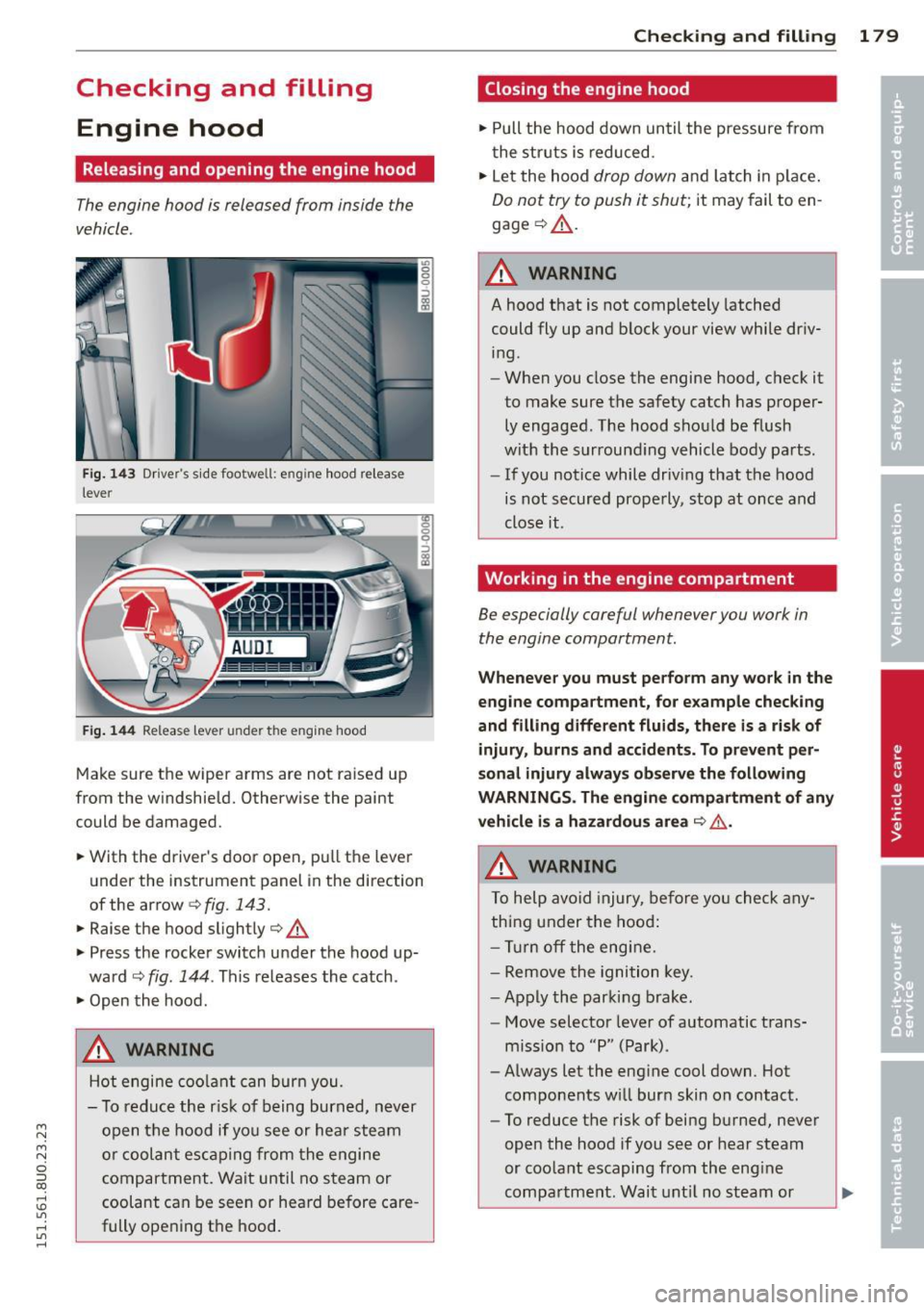
Fig. 1 43 Dr iver's side footwell: eng ine hood release
lever
F ig . 144 Re lease lever un der the engine hood
Make sure the wiper arms are not raised up
from the w indshield. Otherw ise the paint
could be damaged .
.. With the driver's door open, pu ll the lever
under the instrument panel in the direction
of the arrow
c> fig. 143.
.. Raise the hood slightly c> .&,
.. Press the rocker switch under the hood up
ward
c> fig. 144 . This releases the catch .
.. Open the hood.
A WARNING
Hot engine coo lant can burn you.
- T o reduce the r is k of being burned, never
open the hood if you see or hear steam
or coolan t escaping from the engine
compartment. Wait until no steam or
coolant can be seen or heard be fore care
fully opening t he hood.
Checkin g and fillin g 179
Closing the engine hood
.. Pull the hood down un til the pressure from
t he stru ts is reduced.
.. Let the hood
drop down and latch in p lace .
Do not try to push it shut; it may fail to en
gage¢ .&,.
A WARNING
-
A hood that is not completely latched
could fly up and b lock your view while dr iv
ing.
- When you close the engine hood , check it
to make sure the safety catch has proper
ly engaged. The hood shou ld be flush
with the surround ing vehicle body parts.
- If you notice while dr iving that the hood
is not secured properly, stop at once and
close it.
Working in the engine compartment
Be especially careful whenever you work in
the engine compartment.
Whene ve r you must pe rform an y wo rk in the
eng ine compa rtment , for e xample check ing
and filling different fluids, there is a risk of
injury , burns and accidents. To prevent per
so nal injury alway s observe th e foll owing
WARNINGS . Th e engin e compartm ent of an y
v e hicle i s a ha zardou s area
c> .&, .
A WARNING
To help avoid injury, be fore yo u check any
thing under the hood:
- Tu rn off the engi ne .
- Remove the ignition key.
- Apply the parking brake .
- Move selector leve r of automatic trans-
miss ion to "P" (Park) .
- Always let the engine cool down. Hot
components w ill bur n skin on contact.
- To reduce the risk of being burned, never
open the hood if you see or hear steam
or coo la nt escaping from the eng ine
compa rtment. Wait unt il no steam or
Page 189 of 258
M N
M N
0 ::i co ,...., \!) ..,.,
,...., ..,., ,....,
level should be between the "MIN" and
"MAX" markings. When the engine is warm,
the level may be slightly above the "MAX"
marking .
The location of the coolant expansion tank
can be seen in the engine compartment illus
tration
<=> page 181.
To obtain an accurate reading , the engine
must be switched
off.
The expansion tank in your vehicle is equipped
with an electric coolant level sensor.
When the coolant level is too low, the warning
light in the Auto-Check System <=>
page 14 will
blink until you add coolant and the level has
been restored to normal. Even though there is
an electric coolant level sensor, we still rec
ommend you check the coolant level from
time to time.
Coolant loss
Coolant loss may indicate a leak in the cooling
system. In the event of coolant loss, the cool
ing system should be inspected immediately
by your authorized Audi dealer.
It is not
enough merely to add coolant.
In a
sealed system, losses can occur only if
the boiling point of the coolant is exceeded as
a result of overheating.
A WARNING
The cooling system is under pressure and
can get very hot. Reduce the risk of scald
ing from hot coolant by following these
steps.
- Turn
off the engine and allow it to cool
down.
- Protect your face, hands and arms from escaping fluid and steam by covering the
cap with a large, thick rag .
- Turn the cap slowly and very carefully in
a counter-clockwise direction while ap
plying light, downward pressure on the
top of the cap .
- To avoid being burned, do not spill anti
freeze or coolant on the exhaust system
Checking and filling 187
or hot engine parts. Under certain condi
tions, the ethylene glycol in engine cool
ant can catch fire.
([) Note
Do not add any type of radiator leak seal
ant to your vehicle's engine coolant. Add- ing radiator repair fluid may adversely af
fect the function and performance of your
cooling system and could result in damage
not covered by your New Vehicle limited
Warranty .
Adding coolant
Be very careful when adding engine coolant.
Before you check anything in the engine com
partment ,
always read and heed all WARN
INGS <=>
A in Working in the engine compart
ment on page 179 .
Requirement: There must be a residual
amount of coolant in the expansion tank
<=> (D.
.,. Turn off the engine.
.,. Let the engine cool down.
.,. Place a thick rag over the coolant expansion
tank
<=> page 186, fig . 148 and carefully turn
the cap counter-clockwise
<=> .&_ .
.,. Add coolant mixed in the correct ratio
<=> page 186, Coolant up to the MAX mark
ing.
.,. Make sure that the fluid level remains sta-
ble. Add more coolant if necessary.
.,. Twist the cap on again
tightly.
Replacement engine coolant must conform to
exact specifications
<=> page 186, Coolant.
We recommend using only coolant additive
G12 ++, G13 or in an emergency G12 +. Do
not
use a different additive. In an emergency use
plain water until you can get the correct addi
tive and can restore the correct ratio. This
should be done as soon as possible.
If you have lost a considerable amount of
coolant , then you should add cold antifreeze
and cold water only when the engine is cold.
Always use
new engine coolant when refilling . .,.
•
•