lock AUDI Q3 2015 Repair Manual
[x] Cancel search | Manufacturer: AUDI, Model Year: 2015, Model line: Q3, Model: AUDI Q3 2015Pages: 258, PDF Size: 64.9 MB
Page 190 of 258
188 Checking and filling
Do not fill coolant above the "MAX" mark. Ex
cess coolant will be forced out through the pressure re lief valve in the cap when the en
g ine becomes hot.
A WARNING
- The coo ling system is under pressure and
can get very hot. Reduce the risk of
scalding from hot coolant by following
these steps.
- Turn
off the eng ine and a llow it to cool
down.
- Protect your face, hands and arms from
escaping fluid and steam by covering
the cap with a large, thick rag.
- Turn the cap slowly and very ca refully
i n a co unte r-clockwise d irection while
apply ing light, downward press ure on
the top of the cap.
- To avoid being burned, do not spi ll an
tifreeze or coolant on the exhaust sys
tem or hot engine parts. Under certa in
conditions, the ethylene glyco l in en
g ine coolant can ca tch f ire.
- Antifreeze is poisonous. Always store an
t ifreeze in its original container and we ll
o ut of the reac h of children.
- If you drain the coolant, it must be
caught and safely stored in a p roper con
ta iner clear ly ma rked "poison".
(D Note
- Do not add coolant if the expansion tan k
i s empty. A ir could enter the cooling sys
tem and damage the eng ine. If this is
the case, do not continue driving. Seek
professional assistance.
- Coolant po llutes the e nv ironment and
could cause an engine fire. Excess coo l
ant will be forced ou t through the pres
su re re lief v alve in the ca p when the en
gine becomes hot .
- If, in an emergen cy, only water can be
added, the corre ct ratio be twee n wa te r
and antifr eeze¢
page 186 must be re
stored as soon as possib le .
{® For the sake of the environment
D rained coo lant should not be reused . A l
ways d ispose of used coolant whi le observ
i ng a ll environmental regulations.
Radiator fan
The radiator fan switches on automatically by
itself
T he rad iator fan is driven by the engine v ia the
V-belt. The viscous clutch regulates the spee d
of the fan acco rding to the temperature of the
coolant.
An a uxiliary electric radiator fan* sw itches on
and
off depending on coolant temperature
and othe r vehicle ope rat ing condit ions .
A ft er yo u sw itc h t he eng ine
off, the aux iliary
f an can continue running for up to 10 m inutes
- even wit h the ignition
off. It can even switc h
on again later by itself¢.&. , if
- t he tempe rature of the engine coo lant rises
due to the heat build -up from the engine in
the engine compa rtment, or
- the engine compa rtment heats up because
the vehicle is parked in i ntense sunlig ht.
A WARNING ~
- To reduce the risk of perso na l inj ury nev -
er touch the radiator fan.
- The a uxiliary electric fan is tempe rat ure
contro lled and can sw itch on sud denly
even when the engine is not running.
- The a uxiliary radiator fan sw itches on a u
tomatically when the engine coo lant
reac hes a certa in temperature and will
continue to ru n until the coolant temper
ature drops.
Page 191 of 258
M N M N
0 ::i co
rl I.O
"' rl
"' rl
Brake fluid
Checking brake fluid level
The brake fluid level can be checked with a
quick glance.
N
N
;:;;
" 03
"'
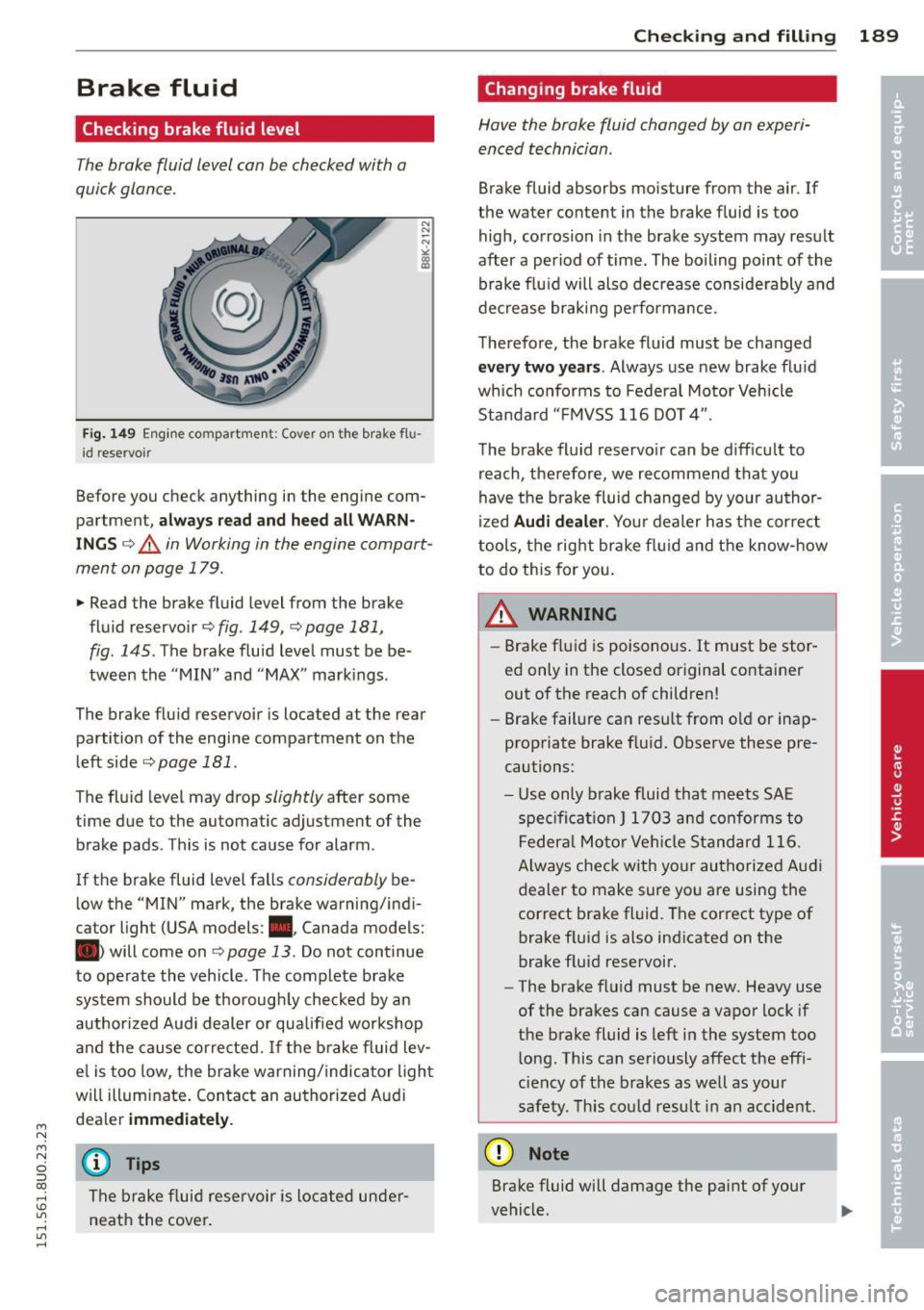
Fi g. 149 Eng ine compartment: Cover on the brake flu
id reservoir
Before you check anything in the engine com
partment,
a lwa ys read and heed all WARN
ING S c:> .&.. in Working in the engine compart
ment on page 179 .
~ Read the brake fluid level from the brake
fluid reservoir
c:> fig. 149, <=> page 181,
fig . 145.
The brake flu id level must be be
tween the "MIN" and "MAX" markings.
The brake fluid reservoir is located at the rear
partition of the engine compartment on the
left side <::;>
page 181 .
The fluid level may drop slightly after some
time due to the automatic adjustment of the
brake pads . This is not cause for alarm .
If the brake fluid level falls
considerably be
low the "MIN" mark, the brake warning/indi
cator light (USA models: ., Canada models:
• will come on
<::;> page 13. Do not continue
to operate the vehicle . The complete brake
system should be thorough ly checked by an
author ized Audi dealer or qua lified workshop
and the cause corrected.
If the brake fluid lev
e l is too low, the brake warning/indicator ligh t
will illuminate . Contact an authorized A ud i
dealer
immediately.
@ Tips
The brake f luid reservoir is located under
neath the cover .
Checking and fillin g 189
Changing brake fluid
Have the brake fluid changed by on experi
enced technician.
Brake fluid absorbs moisture from the air. If
the water content in the brake fluid is too
high, corrosion in the brake system may result
after a period of time . The boiling point of the
brake flu id will also dec rease considerably and
decrease braking pe rformance.
Therefore, the brake fluid must be changed
ev ery two years. Always use new brake flu id
which conforms to Federal Motor Vehicle
Standard "F MVSS 116 DOT 4".
The brake fluid reservo ir can be d iff icult to
reach, the refore, we recommend that you
have the brake fluid changed by your author
i zed
Audi d ealer. Your dealer has t he correct
tools, the right brake fl uid and t he know-how
to do this for you .
A WARNING -.
-Brake fluid is poisonous . It must be stor
ed only in the closed original container
out of the reach of children!
- Brake failure can resu lt from o ld or inap
propriate brake f luid. Observe these pre
cautions:
- Use only brake fluid that meets SAE
spe cificat ion
J 1 7 03 and conforms to
Federa l Moto r Ve hicl e Standard 116.
Always check with yo ur authorized Audi
dealer to make sure yo u are using the
correct bra ke fluid. The correct type of
brake f luid is also indicated on the
brake f luid reservoir.
- The brake fluid must be new. Heavy use
of the brakes can cause a vapor lock if
the brake fluid is left in the system too
l ong . This can seriously affect the effi
c iency of the brakes as well as your
safety. This cou ld resu lt in an accident.
(D Note
Brake fluid will damage the paint of your
vehicle .
Page 204 of 258
202 Tire s and whee ls
your veh icle and in this manua l and the kind
of driving you p lan to do .
Neve r e xcee d the m ax imum inflati on pres
s u re list e d on th e tir e s ide wall f or a ny r ea
s on.
Remember that the vehicle manufacturer, not
the tire manufacturer , determ ines the co rrect
tire pressure for the t ires on your veh icle .
It is important to check the tire pressure when
the tires a re cold .
- Read the required t ire pres sure from the tire
pressure label. The ti re pressure label is lo
cated on the driver's side 8-p illar . The t ire
pressure label lists the recommended cold
t ire inflat ion p ressu res for the veh icle at its
maximum capacity we ight and the tires that
were on you r vehicle at the time it was man
ufactured . For recommended tire pressures
for normal load condit ions, please see chap
ter
9 page 199.
-Turn the valve stem cap counter-clockwise
to remove it from the tire valve.
- Place the a ir pressure gauge on the valve.
- T he tire pressures should on ly be checked
and adjusted when the tires are cold. The
s li ghtly raised pressures of warm tires must
not be reduced.
- Adjust the tire pressure to the load you are
carrying .
- Reinsta ll the va lve stem cap on the valve.
When should I check the tire pressur e?
The correct tire pressure is especially impor
tant at high speeds. The pressure should
therefore be checked at least once a month
and always befo re starting a journey. Do not
forget to check the tire pressure for the spare wheel.
When should I ad ju st th e tire p re ss ures?
Adj ust the tire p ressure to the load you are
carry ing . After chang ing a wheel
or replacing
wheels you have to adjust the tire pressures
on all wheels . In addition, you must then in iti
alize the new tire pressures in th e tire pres
sure monito ring system*
c> page 213.
A WARNING
Incorrect tire pressures and/or underinfla
tion can lead sudden tire fa ilure, loss of
control, collision, serious personal injury
or even death.
- When the
Rt] warning symbol appears in
the instrument cluster, stop and inspect
the t ires.
- Incorrect tire pressure and/or underinfla
tion can cause increased tire wear and
can affect the hand ling of the vehicle and
stopping abi lity.
- I nco rrect tire pressures and/or underin
f lation can also lead to sudden t ire fail
ure, including a blowout and sudden de
flation, ca using loss of vehicle contro l.
- The driver is responsible for the co rrect
tire pressures for all tires on the veh icle.
The applicable pressure values are locat
ed on a sticker on the driver's side B -pil
lar.
- Only when all tires on the vehicle are fil
led to the correct pressure, the tire pres
sure monitoring system * can work cor
rectly.
- The use of incorrect tire pressure va lues
can lead to acc idents or other damage.
Therefore it is essential that the driver
observe the spec ified t ire pressure values
for the tires and the correct pressures for
the function of the t i re pressure monitor
ing system*.
- Always inflate t ires to the recommended
and correct t ire p ressure before dr iving
off.
- Driving with underinf lated tires bend
mo re, letting them get too hot resulting
in tread sepa ration, s udden tire failure
and loss of cont ro l.
- E xcessive speed and/overloadi ng can
cause heat b uild- up, sudden tire failure
and loss of cont ro l.
- I f the tire pressure is too low or too high,
the t ires will wear prema turely and the
vehicle wi ll not handle well. ..,
Page 211 of 258
M N
M N
0 ::i co ,...., \!) 1.1'1 ,...., 1.1'1 ,....,
-All four wheels must be fitted with radia l
t ires of the same type, size (roll ing cir
cumference) and the same tread pattern .
Driv ing with different tires reduces veh i
cle handling and can lead to a loss of
control.
- If the spare tire is not the same as the
t ir es that are mounted on the veh icle -
for example with winte r tires -o nl y use
the spare tire for a short period of time and dr ive wi th extra care. Refit the nor
ma l road whee l as soon as safely possi
ble.
- Never drive faster than the maxim um
speed for which the tires on your vehicle
are rated because tires that are driven
faster than their rated speed can fail
sudden ly.
- Overloading tires cause heat build- up,
sudden tire failure, including a blowout
and sudden deflation and loss of control.
- Temperature grades app ly to tires that
are properly inflated and not over or un
der inflated .
- For technical reasons it is not a lways
poss ible to use wheels from other
vehicles -in some cases not even wheels
from the same vehicle model.
- If you install wheel tr im discs on the ve
hicle wheels, make sure that the air flow
to the brakes is not blocked. Reduced air
flow to the brakes can them to overheat,
increasing stopping distances and ca us
ing a collision.
- Run flat t ires may on ly be used on
vehicles that we re equ ipped w ith them
at the facto ry. The vehicle must have a
chassis des igned for run flat t ires and a
facto ry-installed tire p ress ure monito r
ing system* that indicates a loss of tire
pressure. Incorrect use of run flat tires
can lead to vehicle damage or accidents.
Check with an authorized Audi dea ler or
t ire spec ia list to see if your vehicle can be
equipped with run flat tires .
If run flat
t ir es a re used, they must be insta lled on
all four wheels. M ixing tire types is not
permitted.
Tire s an d wheel s 209
@ Note
-For technical reasons, it is not generally
possible to use the wheel rims from oth
er veh icles. Th is can hold tr ue for wheels
of the same vehicle type.
- If the spare tire is d ifferent from the
tires that you have mounted on your ve
hicle (for example winter tires or wide
profi le tires), then use the spare tire for a
short per iod of time only and drive w ith
extra care. Replace the flat tire w ith the
tire matching the othe rs on your vehicle
as soon as possib le.
- Never d rive without the valve stem cap .
T he va lves co uld get d amaged.
(® For the sake of the environment
D ispose of o ld tires in accordance with the
l ocal requirements.
Uniform tire quality grading
- Tread wea r
- Traction AA A B C
- Temperature ABC
Quality grades can be found where applicable
o n the t ire s ide wall between tread shoulder
and maximum section width
c:> page 206,
fig. 156 .
For e xample : Tread wear 200 , Traction AA,
Temperature A.
All passenger car t ires must conform to Feder
al Safety Requirements in addition to these
grades .
Tread w ear
T he tread wear grade is a comparative rating
based on the wear rate of the tire when tested
under contro lled conditions on a specified
government test course.
For example, a tire graded 1S0 wo uld wear
one and one ha lf (1 1/2) times as well on the
government course as a tire graded 100.
1JJ>
•
•
Page 213 of 258
M N
M N
0 ::i co ,...., \!) ..,.,
,...., ..,., ,....,
was manufactured. Please see ¢ page 207,
Speed rating (letter code) for a listing of the
speed rat ing letter codes and the maximum
speed at which the tires can be driven .
The speed rating letter code(¢
page 198) is
on the side wall of the tire
c::> page 206.
A WARNING
Winter tires have maximum speed limits
that may be lower than your vehicle's max
imum speed. Always know the maximum
speed before driving off . Never drive faster
than the speed permitted for your specific
w inte r tires . This will cause damage to the
tires leading to an ac cident and serious
pe rsonal inj ury to you and yo ur passen
gers .
A WARNING
Driving faster than the maximum speed
for which the winter tires on your vehicle
were designed can ca use tire fai lure in
cluding a blowout and sudden deflat ion,
loss of control, crashes and serious per
sonal injuries . Have worn or damaged tires
rep laced immed iate ly.
- Winter tires have maximum speed rat ing
that may be lower than your veh icle's
maximum speed .
- Never drive faster than the speed for
w hich the winter or other tires installed
on your veh icle are rated .
A WARNING
Always adjust your d rivi ng to the road and
traffic conditions. Neve r let the good ac
c eleration of the w inte r ti res and all whee l
drive temp t you in to taking extra r is k s . A l
ways remember:
- When bra king, an a ll whee l dr ive vehicle
hand les in the s ame way as a front drive
vehicle.
- Drive carefu lly and reduce your speed on
icy and slippery roads, even winter tires
cannot he lp under blac k ice conditions.
Tire s an d wheel s 211
'
@) For the sake of the environment
Use summer tires when weather condi
tions permit. They are qu ieter, do not wear
as quickly and reduce fuel consumpt ion.
Snow chains
Snow cha ins may be fitted only to the front
wheels, and o nly to certain tire sizes . Ask your
autho rized Aud i deale r on which tire sizes
snow cha ins can be used .
The snow chains must have low-prof ile links
and must not be th icker than 0.53 inch
(13.5 mm) , includ ing the lock .
Remove wheel center covers and trim discs
before putt ing snow cha ins on your vehicle
c::> Q) . For safety reasons cover caps must then
be fitted over the wheel bolts. These are ava il
able from autho rized Aud i dealers.
A WARNING
Using the wrong snow chai ns for your vehi
cle o r insta lling them incorrect ly can in
crease the risk of loss of cont ro l leading to
serious personal injury.
- Snow chains are available in different
sizes. A lways make sure to follow the in
structions p rov ided by the snow chain
manufacturer.
- When driving with snow chains never
drive faster than the speed permitted for
your specif ic snow chains.
- Always observe local regulations .
(D Note
-Remove snow chains before dr iv ing o n
roads not covered with snow to avoid
damaging tires and wea ring the snow
chains down unnecessarily.
- Snow chains, which come into direct con
tact with the whee l rim , can scratch or
damage it . Therefore, make sure that the
snow chains are suitably covered. Check
the pos ition of the snow chains after
•
•
Page 219 of 258
M N M N
0 ::i co
rl I.O
"' rl
"' rl
-Never start the engine when the veh icle
is raised, which cou ld cause an accident.
- Support the vehicle secure ly with appro
priate stands if work is to be performed
underneath the vehicle; otherwise, there
is a potential risk for injury.
Folding chocks
Applies to vehicles: with fold ing chocks
The folding chocks are part of the on board
tool kit.
------ - --
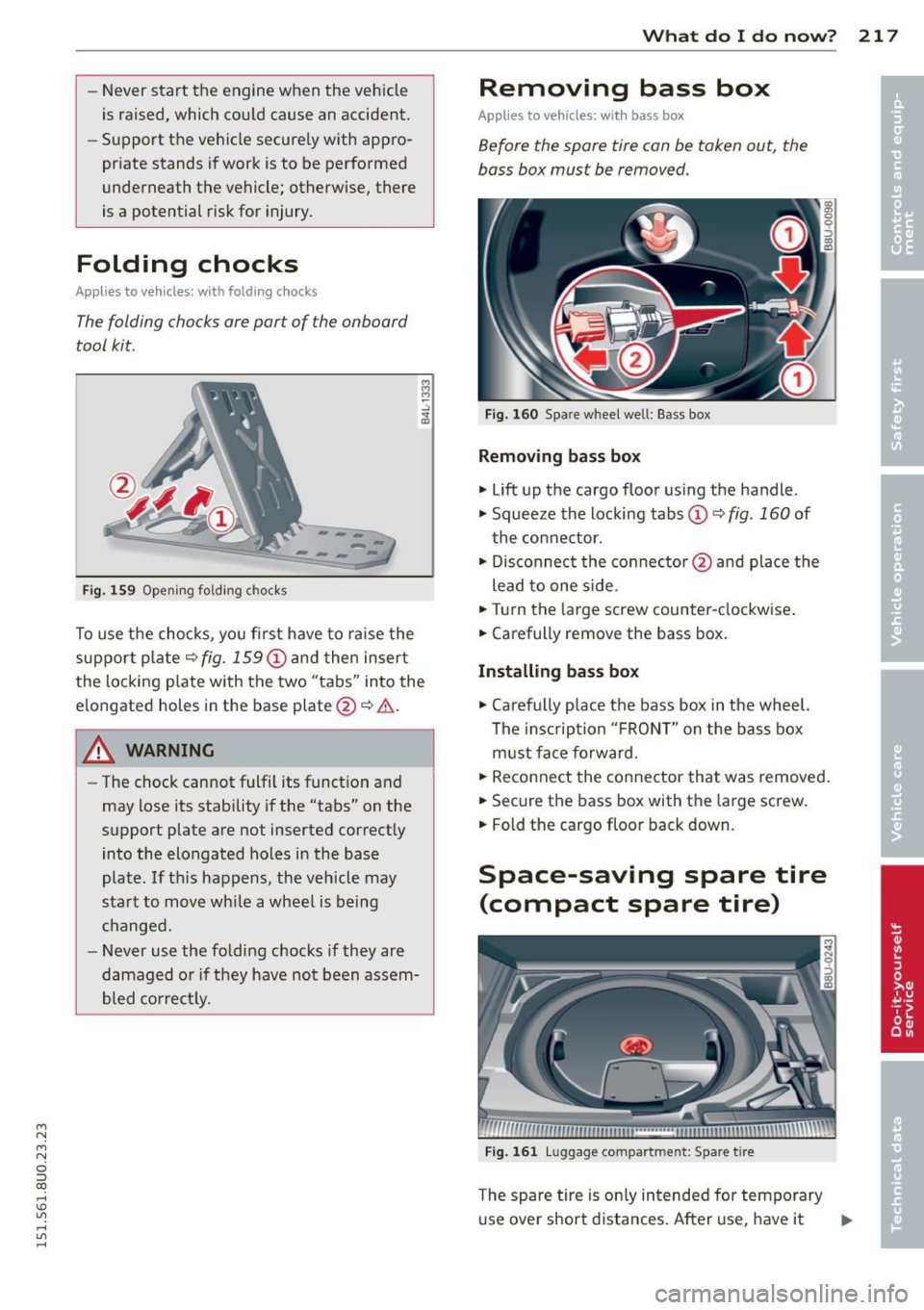
Fi g. 159 Opening foldi ng chocks
To use the chocks, you fi rst have to ra ise the
suppor t plate~
fig . 159 CD and then insert
the locking p late with the two "tabs" into the
e longated holes in the base plate@~&. .
&_ WARNING
-The chock cannot fulfil its function and
may lose its stability if the "tabs" on the
support plate are not inserted correctly into the elongated holes in the base
plate. If t his happens , the veh icle may
sta rt to move whi le a wheel is being
changed.
- Never use the folding chocks if they are
damaged or if they have not been assem
bled correct ly.
What do I d o now ? 217
Removing bass box
App lies to vehicles: wit h bass box
Before the spare tire can be taken out, the
bass box must be removed.
Fi g. 160 Spa re whee l well: Bass box
Removing bass box
.,. Lift up the cargo floor us ing the handle .
.,. Squeeze the locking tabs
CD ~ fig. 160 of
the connector .
.,. Disconnec t the conne ctor @and place the
le ad to one side .
.. Tur n the large screw counter-clockwise .
.. Carefully remove the bass box.
Installing bass box
.,. Carefully place the bass box in the wh eel.
The ins cription "FRO NT' ' on the bas s box
m ust face forward .
.. Reco nnect the connector that was removed .
.. Secure the bass box with the large screw.
.. Fold the cargo floor back down.
Space-saving spare tire
(compact spare tire)
.'II If Ill llf 1111 11
Fig . 16 1 Lu ggage compartme nt: Spa re tire
T he spare tire is on ly in tended for tempo rary
u se over short distances. After use, have it ...,
Page 221 of 258
M N
M N
0 ::i co ,...., \!) ..,.,
,...., ..,., ,....,
A WARNING 1=
You or your passengers could be injured
while changing a wheel if you do not fol
low these safety precautions:
- If you have a flat tire, move a safe dis
tance off the road. Turn off the engine,
turn the emergency flashers on and use
other warning devices to alert other mo
torists.
- Make sure that passengers wait in a safe
place away from the vehicle and well
away from the road and traffic.
- To help prevent the vehicle from moving
suddenly and possibly slipping off the
jack, always fully set the parking brake
and block the wheel diagonally opposite
the wheel being changed with the fold
ing chocks or other objects. When one
front wheel is lifted off the ground, plac ing the Automatic Transmission in "P"
(Park) will
not prevent the vehicle from
moving .
- Before you change a wheel, be sure the
ground is level and firm. If necessary,
use a sturdy board under the jack.
- Always store the vehicle tool kit, the jack
and the replaced tire in the luggage com
partment
¢ page 100.
(D Note
If you are changing the wheel on a steep
incline, use the folding chock¢
page 217
to block the opposite wheel to prevent the
vehicle from moving.
(!) Tips
Obey all laws.
Changing a wheel
When you change a wheel, follow the se
quence described below step-by-step and in
exactly that order .
-
1. Remove the decorative wheel cover* or
the
wheel bolt caps*. For more details see
also
¢ page 220.
2. Loosen the wheel bolts<=:> page 220 .
What do I do now? 219
3.
4.
5.
6.
7.
8.
Locate the proper mounting point for the
jack and align the jack below that point
¢ page 221.
Lift the car with the jack ¢ page 221.
Remove the wheel with the flat tire and
then install the
spare tire <=:>page 222.
Tighten all wheel bolts lightly.
Lower the vehicle with the jack .
Use the wheel bolt wrench and
firmly
tighten all wheel bolts in a crisscross pat
tern ¢
page 220.
9. Replace the decorative wheel cover* or
the
wheel bolt caps*.
A WARNING
Always read and follow all WARNINGS and information<=:>
A in Raising the vehicle on
page 221
and <=:> page 223.
After changing a wheel
A wheel change is not complete without the
doing the following.
.,. Always store the vehicle tool kit, the jack4
and the replaced tire in the luggage com
partment
¢ page 100.
.,. Check the tire pressure of the spare tire as
soon as possible .
.,. As soon as possible, have the
tightening
torques
on all wheel bolts checked with a
torque wrench. The correct tightening tor
que is 105 ft lbs. (140 Nm).
.,. Have the flat tire
replaced as soon as possi
ble.
(D Tips
- If you notice that the wheel bolts are
corroded and difficult to turn while
changing a tire, they should be replaced
before you check the tightening torque.
- Drive at reduced speed until you have the
tightening torques checked.
•
•
Page 222 of 258
220 What do I do now?
Removing the wheel covers/bolt caps
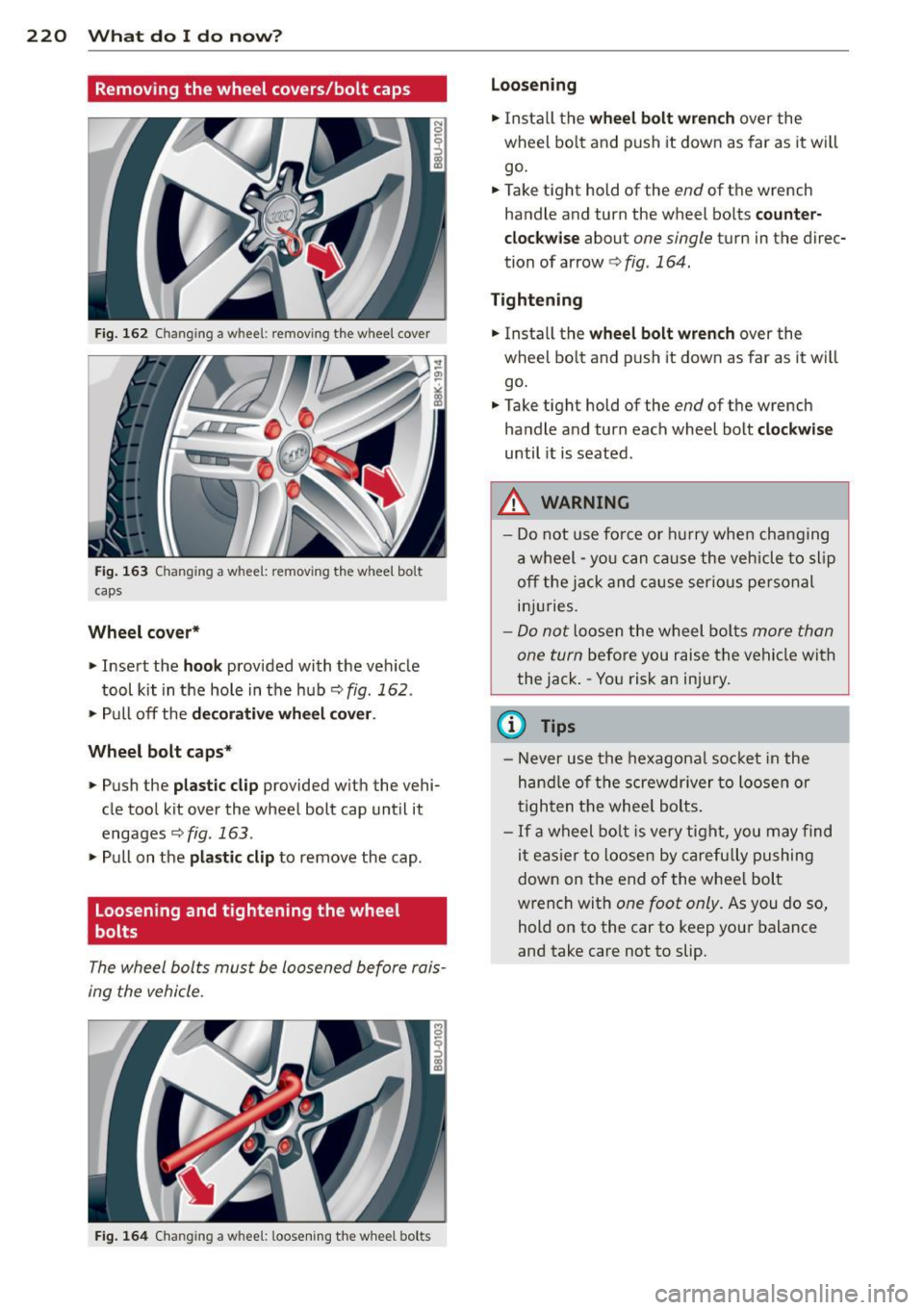
Fig. 162 Cha ng in g a w hee l: re mov ing the w heel cover
Fig. 163 Chan gin g a w hee l: re mov ing the w heel bo lt
c aps
Wheel cover*
• Insert the hook provided with the vehicle
tool kit in the hole in the hub
¢ fig. 162 .
• Pull off the decorative wheel cover .
Wheel bolt caps*
• Push the plastic clip provided with the vehi
cle tool kit over the wheel bolt cap until it
engages
¢ fig. 163 .
• Pull on the plastic clip to remove the cap.
Loosening and tightening the wheel
bolts
The wheel bolts must be loosened before rais
ing the vehicle.
Fig. 164 Chan ging a whee l: loosening th e wh eel b olts
Loosening
• Install the wheel bolt wrench over the
wheel bolt and push it down as far as it will
go .
.. Take tight hold of the
end of the wrench
handle and turn the wheel bolts
counter
clockwise
about one single turn in the direc
tion of arrow
¢ fig . 164.
Tightening
• Install the wheel bolt wrench over the
wh eel bolt and push it down as far as it will
go.
• Take tight hold of the
end of the wrench
handle and turn each wheel bolt
clockwise
until it is seated .
.&_ WARNING
=
-Do not use force or hurry when changing
a wheel - you can cause the vehicle to slip
off the jack and cause serious personal
injuries.
- Do not loosen the wheel bolts more than
one turn
before you raise the vehicle with
the jack. -You risk an injury.
(D Tips
- Never use the hexagonal socket in the
handle of the screwdriver to loosen or
tighten the wheel bolts.
-If a wheel bolt is very tight, you may find
it easier to loosen by carefully pushing
down on the end of the wheel bolt
wrench with
one foot only. As you do so,
hold on to the car to keep your balance
and take care not to slip.
Page 224 of 258
222 What do I do now?
-If work has to be done under the vehi
cle , ensure that it is safely supported
on suitable stands -risk of injury!
- Never start the engine when the vehi
cle is on the jack -risk of accident!
CD Note
Do not lift the vehicle by the si ll. Position
the vehicle jack only at the designated lift
ing points on the sill. Otherwise, your vehi
cle will be damaged.
Taking the wheel off/installing the spare
tire
Follow these instructions step-by-step for
changing the wheel.
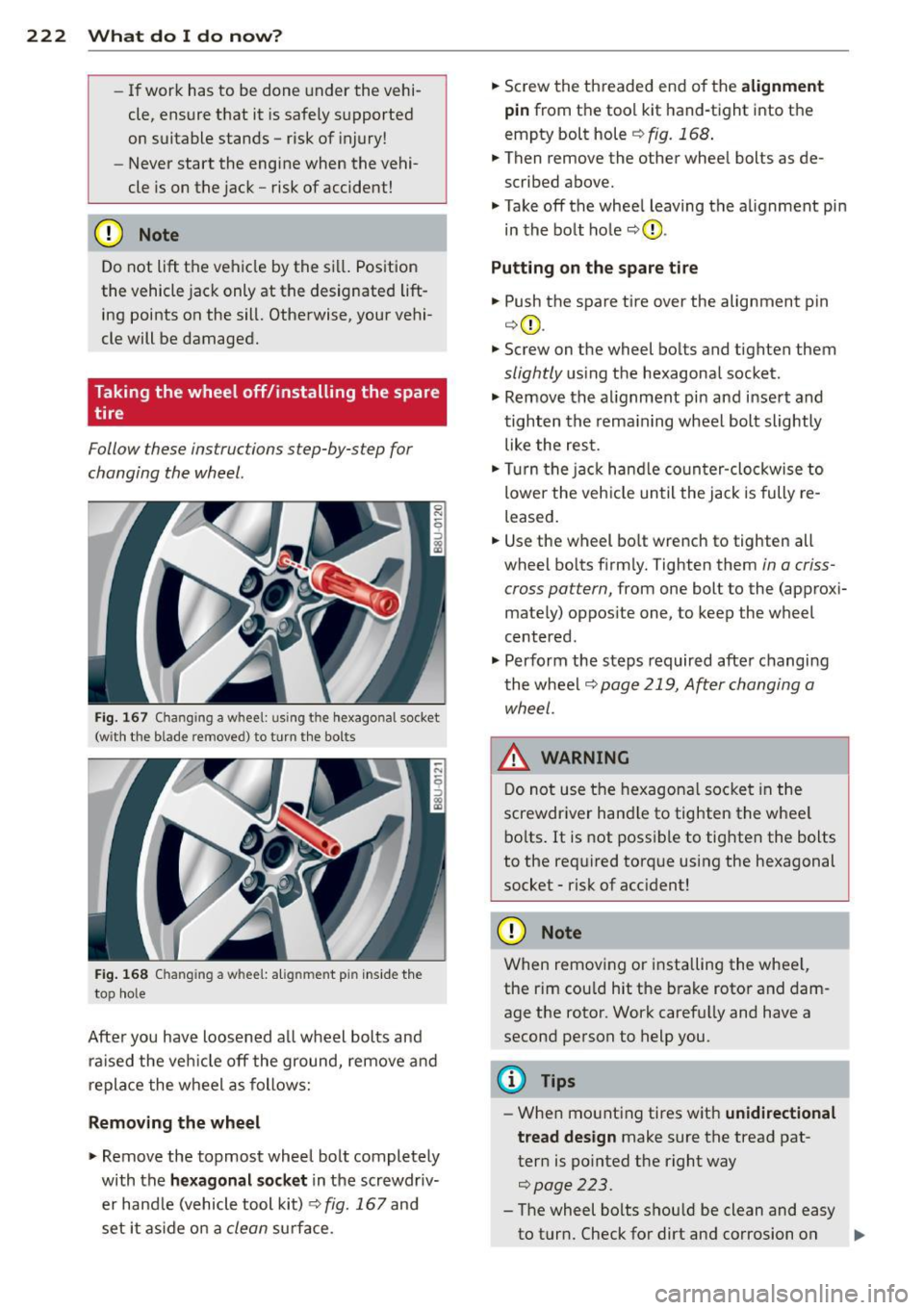
Fig. 167 Changing a whee l: u sing the hexago nal socket
(w ith the blade removed) to turn the bolts
Fig. 168 Changing a w hee l: a lignm en t pi n inside the
top hole
After you have loosened a ll wheel bolts and
ra ised the veh icle off the ground, remove and
replace the wheel as follows:
Removing the wheel
> Remove the topmost wheel bolt completely
with the
hexagonal socket in the screwdriv
er handle (vehicle tool kit)
r=;; fig. 167 and
set it as ide on a
clean su rface. >
Screw the threaded end of the
alignment
pin
from the tool kit hand-tight into the
empty bolt hole
¢ fig. 168 .
... Then remove the other whee l bolts as de
scribed above.
> Takeoff the whee l leaving the alignment pin
in the bolt hole
r=;; (D.
Putting on the spare tire
... Push the spare tire over the alignment pin
¢ CD.
... Screw on the wheel bolts and tighten them
slightly using the hexagonal socket .
> Remove the alignment pin and insert and
tighten the remaining wheel bolt slightly
like the rest.
... Turn the jack handle counter -clockwise to
lower the veh icle until the jack is fully re
leased .
... Use the wheel bolt wrench to tighten all
wheel bo lts firm ly. Tighten them
in a criss
cross pattern,
from one bolt to the (approx i
mately) oppos ite one, to keep the wheel
centered.
> Perform the steps required after changing
the wheel
¢ page 219, After changing a
wheel.
A WARNING
-
Do not use the hexagonal socket in the
screwdriver hand le to tighten the whee l
bolts. It is not possible to tighten the bolts
to the required torque using the hexagonal
socket - risk of accident!
CD Note
When removing or installing the whee l,
the rim cou ld hit the brake rotor and dam
age the rotor. Work carefu lly and have a
second person to help you.
(D Tips
-When mount ing tires with unidirectional
tread design
make sure the tread pat
tern is po inted the right way
r=;;page223.
- The wheel bolts shou ld be clean and easy
to turn. Check for dirt and corrosion on
Page 226 of 258
224 Fuses and bulbs
Fuses and bulbs
Fuses
Replacing a fuse
Fuses that have blown will have metal strips
that have burned through .
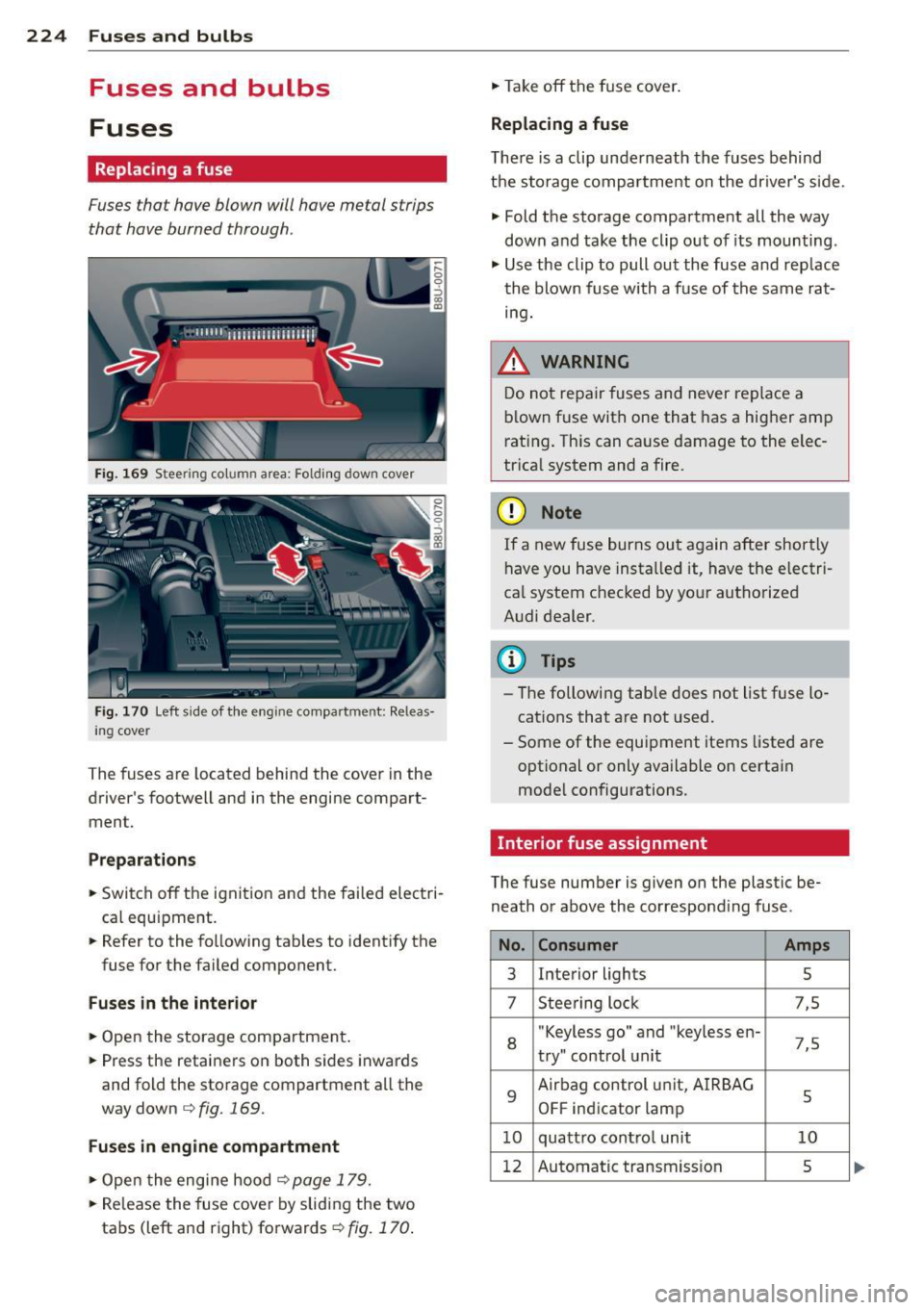
Fig . 169 Stee ring co lu m n area: Fold ing down cover
Fig . 170 Left side o f the engi ne compa rt me nt: Re leas·
i n g cove r
The fuses a re located behind the cover in the
driver's footwell and in the engine compart ment.
Preparations
• Switch off t he ignition and the fai le d elec tri
ca l equ ipme nt.
• Refer to the fo llowing tab les to ident ify the
fuse for t he failed component.
Fuses in the interior
• Open the storage compartmen t.
• Press the retainers on both s ides inwar ds
and fold the sto rage compartment a ll the
way down
q fig. 169.
Fuses in engine compartment
• Open the engine hood q page 179.
• Re lease the fuse cove r by sliding the two
tabs (left and right) fo rwards
Q fig. 170 .
• Take off the fuse cover .
Replacing a fuse
There is a clip underneath th e fuses behind
the sto rage compa rtme nt on the driver's side.
• Fold the storage compartment all the way
down and take the clip o ut of its mounting .
• Use the clip to pull out the fuse and rep lace
t he blown fu se wi th a f use of the same ra t
ing .
_& WARNING ~ -
Do not repair fuses and never re place a
b lown f use with one that has a hig her am p
rat ing . This can ca use damage to the elec
tr ica l system and a fire .
(D Note
If a new fuse burns ou t again after short ly
have you have insta lled it, have the e lectri
ca l system chec ked by yo ur autho rize d
A udi dealer .
(@ Tips
-The followi ng table does not list fuse lo
cat ions that are not used.
- Some of the equipment items listed are
optio nal or only available on certain
mode l configurations.
Interior fuse assignment
The fuse number is given on the plastic be
neath o r above the co rrespond ing fuse .
No. Consumer Amps
3 Interior lights s
7 Stee ring lock 7
,S
8
"Keyless go" and "keyless en-
7,5
t ry" control un it
9
Airbag control unit, A IRBAG
5
OFF ind icator lamp
1 0 quatt ro cont ro l unit 10
1 2
Automat ic transmiss ion s