instrument cluster AUDI R8 SPYDER 2011 User Guide
[x] Cancel search | Manufacturer: AUDI, Model Year: 2011, Model line: R8 SPYDER, Model: AUDI R8 SPYDER 2011Pages: 244, PDF Size: 59.74 MB
Page 58 of 244
56 Clear vision
shown as active in the driver information
system.
The
coming home function illuminates the
area around the vehicle when the ignition is
switched off and the driver's door is opened.
The length of time the lights remain on can be
set in the menu display
(Lights> Exterior
lights> coming home) .
The leaving home function illuminates the
area around the vehicle when unlocking it.
.&_ WARNING
- Never use daytime running lights to see
where you are going. They are not bright enough and will not let you see far
enough ahead for safety, especially at dusk or when it is dark. Be aware of
changes in outside light conditions when
you are driving and respond by switching
on your low beams.
- Automatic head- and taillight control is
only intended to assist the driver. This
feature does not relieve the driver of his
responsibility to check the headlights
and to turn them on manually according
to the current light and visibility condi
tions. For example, fog and rain cannot be detected by the light sensors. Conse
quently, always switch the headlights on
under these weather conditions and
when driving in the dark.
- Crashes can happen when you cannot see
the road ahead and when you cannot be
seen by other motorists.
-Always turn on the headlights so that you can see ahead and so that others can see your car from the back.
(D Tips
- Always observe the specific local regula
tions for your area when to use your
lights .
- Turn on low beams as evening ap
proaches or in conditions of poor visibili
ty.
- Do not attach stickers to the windshield
in front of the sensors as this can disable the automatic head- and
taillight control
and the automatic glare-dimming of the
rearview mirror(s)*.
- If you
remove the ignition from the igni
tion lock while the headlights are still
on, a buzzer will sound as long as the
driver's door is open to remind you to
turn off the lights.
- In the AUTO mode, the low beams are
turned off when the ignition is turned
off. The remaining lights are turned off
when the key is taken out of the ignition .
- In cool or damp weather conditions the
headlights may fog
over temporarily on
the inside.
- The critical factor is the temperature
difference between the interior and the
exterior of the headlight lens.
- With the main beams switched on, the
light-emitting area will be free of con
densation after a short time, however
the edges of the glass may still be fog
ged.
- This physical phenomenon has no ef
fect on the life of your vehicle's light
ing system.
Instrument panel illumination
The illumination of the instruments, displays
and the center console can be adjusted.
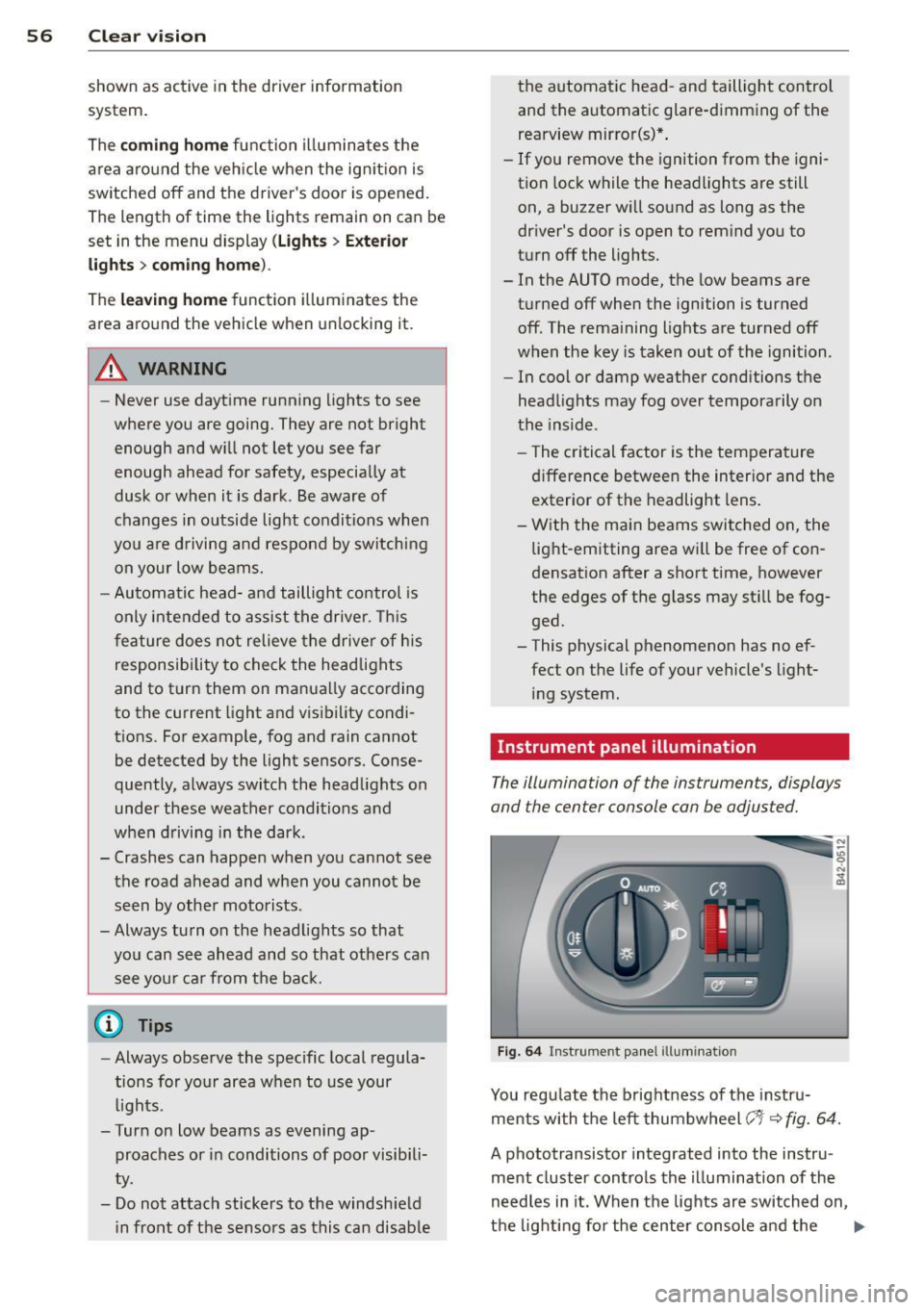
Fig. 64 Instrument panel illumination
You regulate the brightness of the instru
ments with the left thumbwheel
(-'1· ~ fig. 64.
A phototransistor integrated into the instru
ment cluster controls the illumination of the
needles in it. When the lights are switched on,
the lighting for the center console and the
llll>
Page 59 of 244
instruments (needles and dials) is automati
cally adjusted to ambient conditions. The driv
er can a lso ad just the brightness of the light
ing.
Ignition ON , light switch at @
With the ignition swi tched O N, the glow of in
strument needles
can be adjusted to appear
brighter or dimmer.
Ignition ON , light switch at coo; or gD .
With the l igh ts sw itched on, the bright ness of
in str ument cluster (i.e. needles, g auges and
disp lays) and center console i llumination can
be adjusted .
(D Note
The inst rument cl uster and cente r console
illum ination (ga uges and needles) comes
on when you switch on the ignition and the
vehicle headlights are off. Be aware of t he
following difference between mode ls built
to US or Canadian specifications:
- USA models: illumination of the inst ru
ment cluster (ga uges and needles), das h
and center console around the gearsh ift
l ever is controlled by a light senso r locat
ed in the instrument panel. The instru
m ent pane l illumination will a utomat i
call y become dimmer as t he day ligh t
fades away and eventually will go o ut
com plete ly when o utside light is ve ry
l ow. This is to rem ind you, the driver, to
switch on the headlights before it gets
too dark .
- Canada mode ls: instrument panel i llum i
nat ion will stay bright regard less of the
i ntensity of amb ient light. Always be
aware of c hanges in outside light cond i
t ions wh ile you are driving. Respond in
time to fadi ng daylight by tu rning the
l ight sw itch to posit ion
io (or "AUTO" if
you r ca r is equ ipped with th is featu re) to
turn on your hea dligh ts. Clear vi
sion 5 7
Emergency flasher
The emergency flasher makes other motorists
aware that you or your vehicle are in an emer
gency situation .
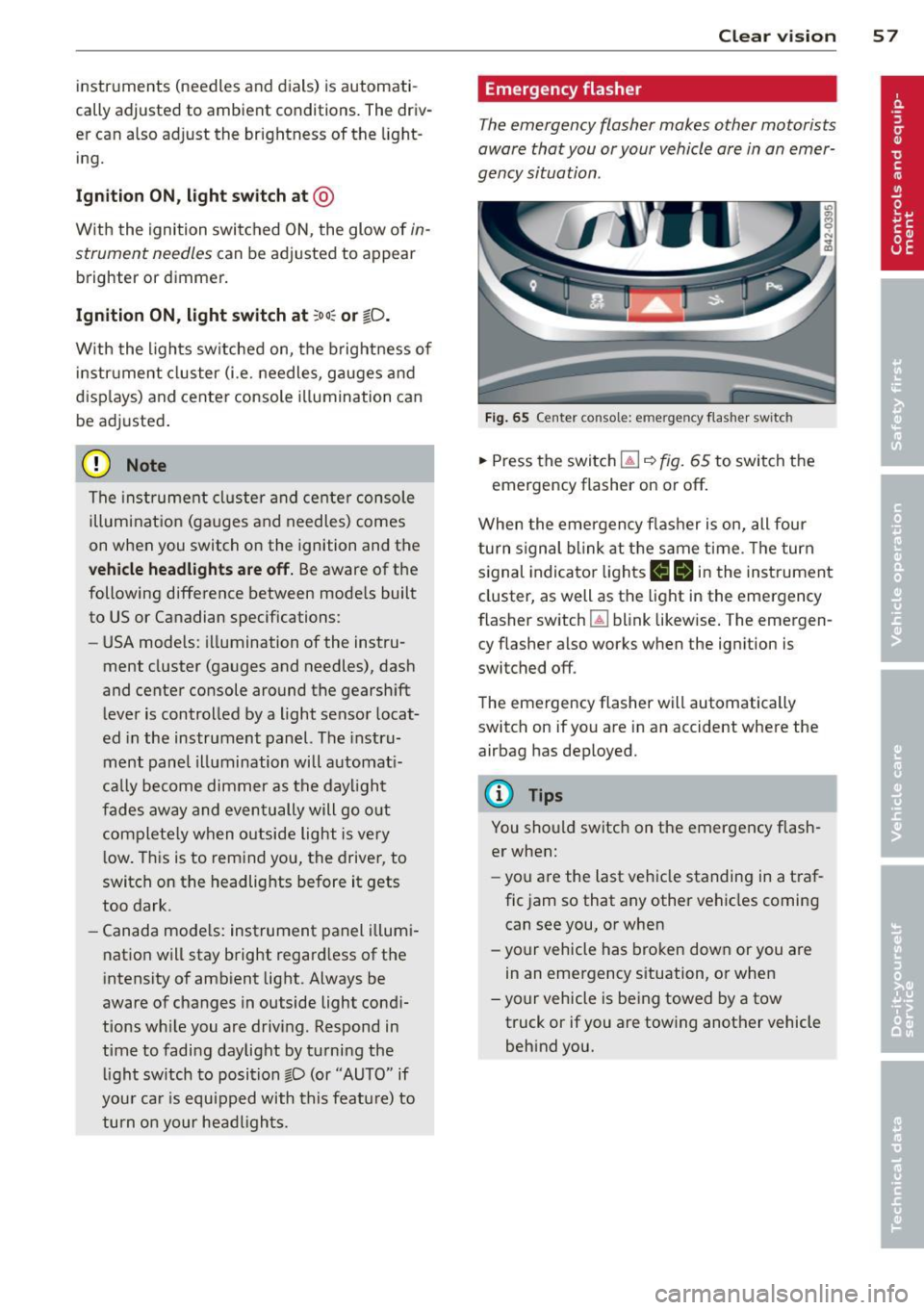
Fig. 65 Cent er consol e: eme rge ncy flas he r sw itc h
.,. Press the switc h l!J ~ fig. 65 to switch t he
emergency flasher on or off.
When the eme rgency f las her is on, all four
turn s ignal b link at t he same time . Th e turn
signal indicato r lights
1111 in t he instrument
cluster, as well as the light in the eme rgency
flasher switch ~ blink likew ise . The emergen
cy flasher also works when the ignition is
switched off .
The eme rgency flasher will automatically
switch on if you are in an accident where the
airbag has deployed.
@ Tips
You sho uld switch on the emergency flash
er when:
- you a re the last ve hicle standing in a t ra f
fic jam so that any other vehicles coming
can see you, or when
- yo ur vehicle has bro ken dow n or you are
in an eme rgency s ituation, or when
- yo ur vehicle is be ing towed by a tow
truck or if you are towing another vehicle
behind you.
Page 60 of 244
58 Clear vis ion
Turn signals and high beam lever
The lever is used to operate the turn signals
and the high beam as well as the headlight
flasher .
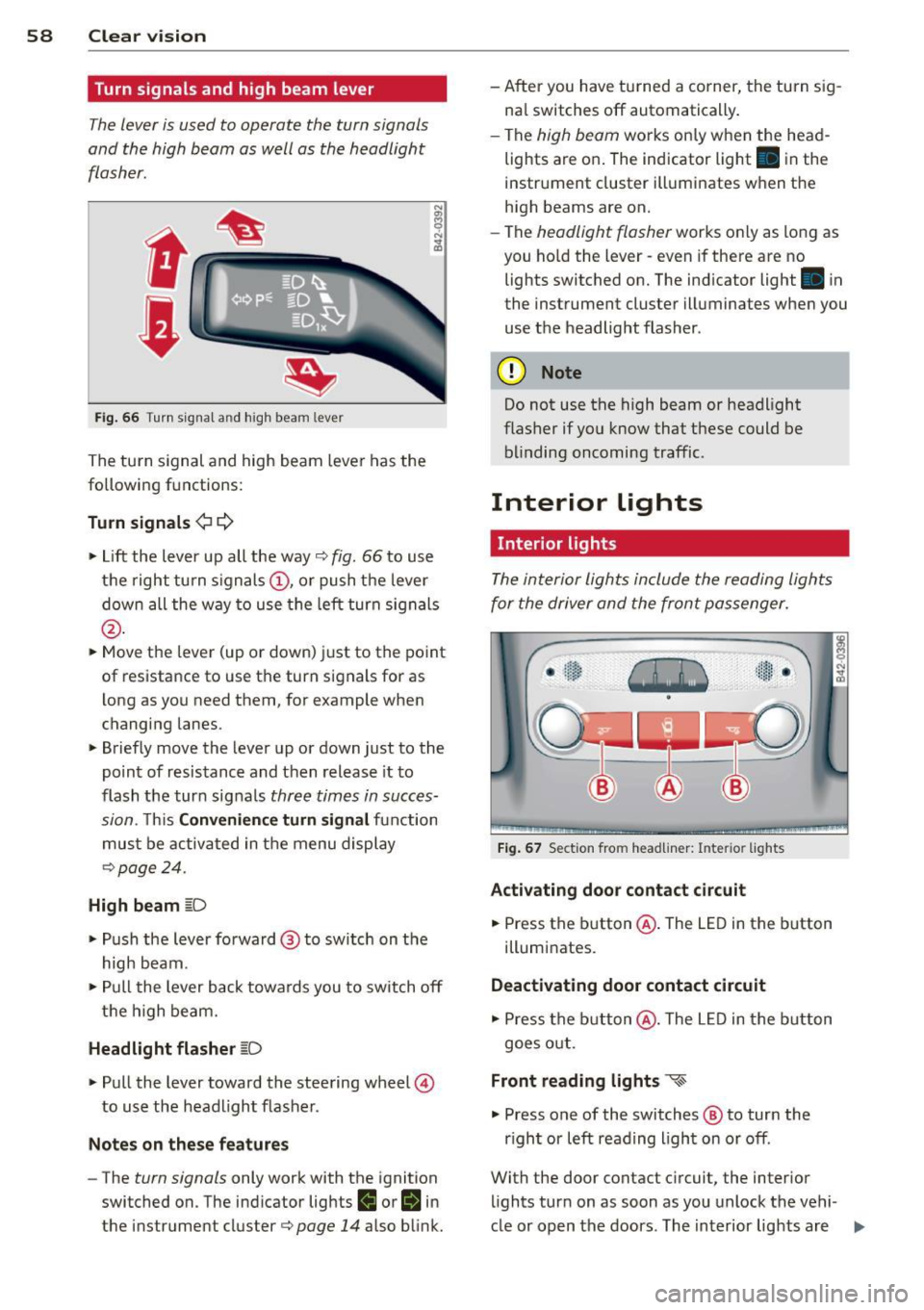
Fig. 66 Turn s igna l and high beam lever
The turn s ignal and high beam leve r has the
following functions:
Turn signals ¢ c::>
"" Lift the lever up all the way¢ fig. 66 to use
the right turn signals @, or push the lever
down all the way to use the left turn signals
@ .
""Move the lever (up or down) just to the point
of resistance to use the turn signals for as
l ong as you need them, for example when
changing lanes.
"" Briefly move the lever up or down just to the
po int of resistance and then release it to
flash the turn signals
three times in succes
sion.
T his Convenience turn signal function
must be activated in the menu display
¢ page 24.
High beam [D
"" Push the lever forward @ to switch on the
high beam.
"" Pull the lever back towards you to switch off
the high beam.
Headlight flasher [D
"" Pull the lever toward the steering wheel @
to use the headlight flasher.
Notes on these features
- The turn signals only work with the ignition
switched on. The indicator lights
II or II in
t he instrument cluster¢
page 14 also blink. - After you have turned a corner, the turn sig
na l switches off automatically .
- The
high beam works only when the head
lights are on . The indicator light. in the
instrument cluster illuminates when the
high beams are on.
- The
headlight flasher works on ly as long as
you ho ld the lever -even if there a re no
lights switched on. The indicator light . in
the instrument cluster illuminates when you
use the headlight flasher.
(D Note
Do not use the high beam or headlight
flasher if you know that these could be
blinding oncoming traffic.
Interior Lights
Interior light s
The interior lights include the reading lights
for the driver and the front passenger.
Fig. 67 Sect ion from headliner: Interior lights
Activating door contact circuit
.,. Press the button@. The LED in the button
illumi nates.
Deactivating door contact circuit
"" Press the button @. The LED in the button
goes out.
Front reading lights ~
"" Press one of the switches @ to turn the
r ight or left reading l ight on or off.
With the door contact circuit, the interior
lights tur n on as soon as you unlock the vehi-
cle or open the doors. The interior lights are
Ill>
Page 83 of 244
Cruise control
Introduction
The cruise control system keeps the speed
constant .
The cruise control system makes it possible to
drive at a constant speed over 20 mph (US
model) or 30 km/h (Canadian model). This is
true only to the extent that engine power or
engine braking effect allow . Using the system
takes the strain off the "gas peda l foot" -es
pec ial ly on long tr ips.
In the control mode, the indicator light in the
instrument cluster is lit
(Dj;(i )~i~ (US model) ,111
(Canadian model).
The cruise control system automatically
switches itself off imm ed iately under the fol
lowing cond itions:
- Pressing the brake pedal.
- Pressing the clutch pedal.
A WARNING
-Always pay attention to traffic even when
the cruise control system is switched on.
You are always responsible for your
speed and the distance between your ve hicle and other vehicles.
- For safety reasons, the cruise control sys tem shou ld not be used in the city, in
stop-and-go traffic, on twisting roads
and when road conditions are poo r (such
as ice, fog, gravel, heavy rain and hydro
planing) -risk of accident.
- Turn off the cr uise control system tem
porarily when entering turn lanes, high
way exit lanes or in construction zones.
- Please note that inadvertently "rest ing"
your foot on the accelerator peda l causes
the cruise control system not to brake .
This is because the cruise contro l system
is overridden by the driver's acceleration.
(D Note
On manual transmission vehicles: If you
shift into neutral with the cruise contro l
On th e road 81
system switched on, always depress the
clutch pedal! Otherwise the engine will
race and could be damaged as a result .
(D Tips
When driving on steep downward grades,
the cruise control system cannot keep the
speed constant. The vehicle's own weight
increases the speed. Shift into a lower gear
i n plenty of t ime or brake the vehicle with
the foot brake .
Saving the speed
The desired speed must be saved.
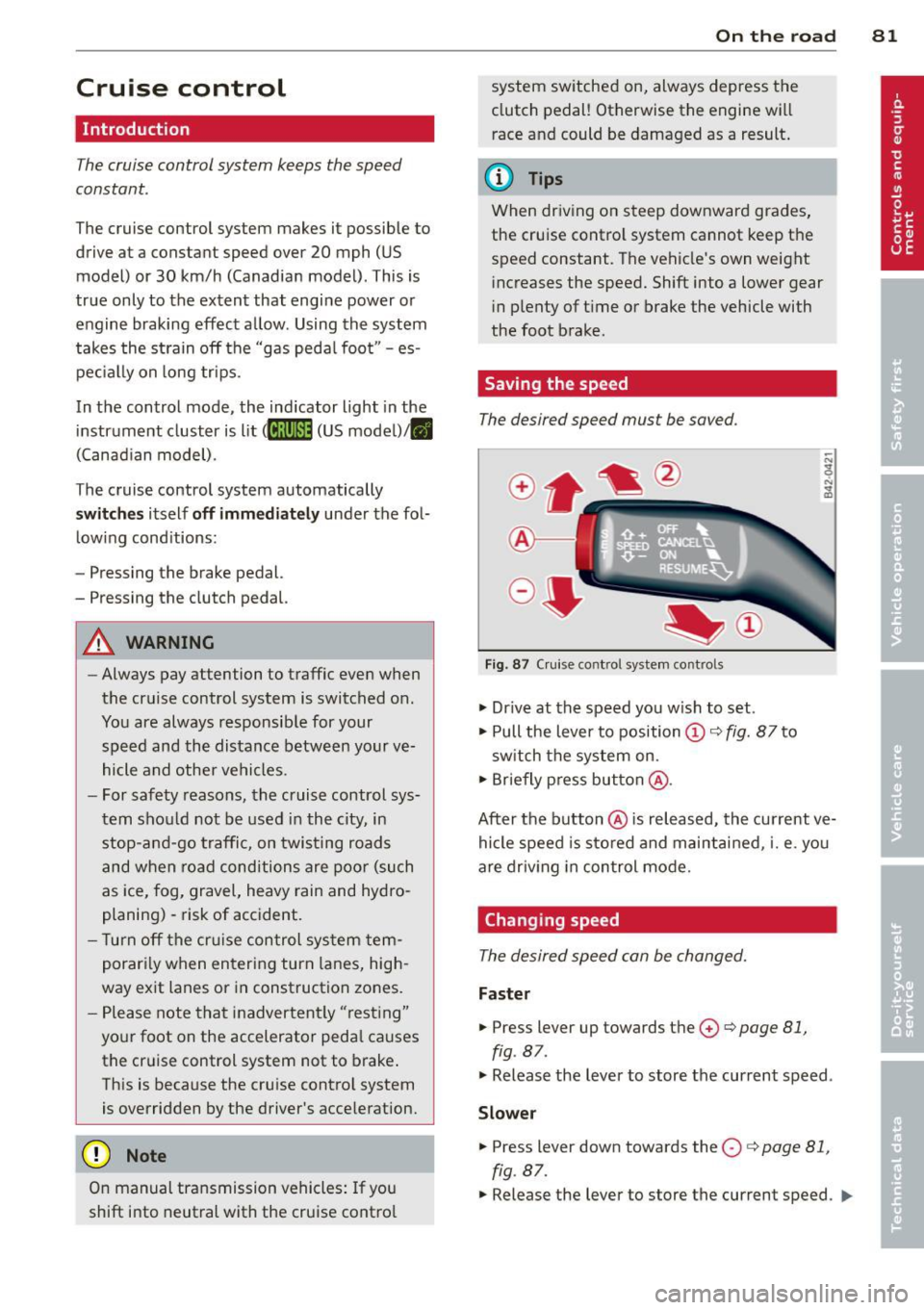
Fig. 87 C ruise control system controls
.,. Dr ive at the speed you w ish to set.
.,. Pull the lever to position
(D c:> fig. 87 to
sw itch the system on.
.,. Briefly press button @.
After the button @is released, the current ve
hicle speed is sto red and maintai ned, i.e. you
are driv ing in control mode.
Changing speed
The desired speed can be changed.
Fas ter
.,. Press lever up towards the 0 c:> page 81,
fig. 87.
.,. Release the lever to store the current speed .
Slower
.. Press lever down towards the O c:> page 81,
fig. 87.
.,. Release the lever to store the current speed. IJJl-
Page 111 of 244
Safety belts
General notes
Always wear safety belts!
Wearing safety belts correctly saves lives!
This chapte r exp lains why safety be lts a re nec
essary, how they work and how to adjust and
wear them correctly.
~ Read a ll the informat ion that fo llows and
heed all of the inst ruct ions and WARNINGS.
A WARNING
Not wearing safety belts or wearing them
imp roperly increases the risk of ser ious
personal in jury and death .
- Safety belts are the sing le most effective
means availab le to red uce the r isk of se
rious injury and death in a utomob ile acci
dents . For your prot ecti on and that of
yo ur passenge rs, always co rrec tly wear
sa fe ty bel ts when the ve hicle is mov ing.
- P re g nant women, injured, or physically
impa ired perso ns must also use safe ty
belts. L ike a ll vehicle occup ants, they are
more like ly to be ser ious ly injure d if they
do not wea r safety be lts . The best way to
protect a fet us is to protect the mother -
thro ughout the entire pregnancy.
Number of seats
Your Audi R8 has two seating posit ions in the
front. Each seating position has a safety belt.
A WARNING
Not wearing safety belts or wearing them
im proper ly increases the risk of ser ious
pe rsonal in ju ry and death.
- Never st rap more than one person, in
clu ding small ch ild ren, into any belt. It is
especially dangerous to place a safety
belt over a child s itting on yo ur lap.
- Never let mo re people ride in the ve hicle
t h an t he re are safety be lts ava ilable.
Sa fety belts 109
- Be s ure everyone riding in the vehicle is
properly restrained w ith a separate sa fe
ty belt or child restra int.
4 Safety belt warning light
Your vehicle has a warning system for the
driver and front seat passenger to remind you
about the importance of buckling up .
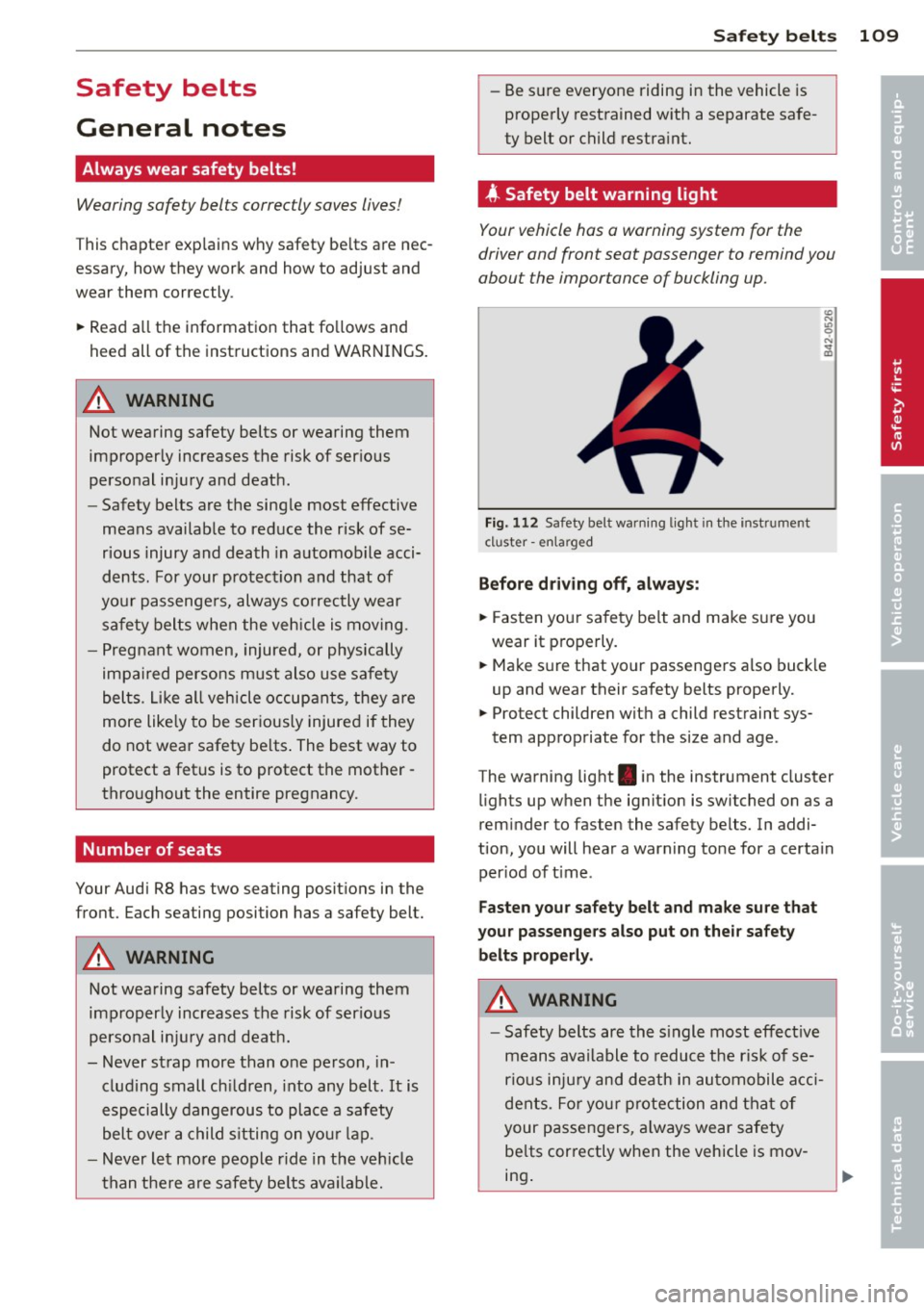
Fig. 1 12 Safety be lt warn ing lig ht in the instr ume nt
cl uster -enla rged
Befor e driv ing off, always :
~ Fasten your sa fe ty belt and make su re you
wear it p roperly.
~ Make s ure that yo ur passenge rs a lso buck le
up and wear their safety belts properly.
~ Protect children with a child rest raint sys-
tem appropriate for the size and age .
The wa rning light . in the instrument cluster
li ghts up w hen t he ig nit ion is switched on as a
rem inder to fasten the safety belts. In addi
tion , you will hear a warning tone for a certa in
per iod of t ime .
Fasten your safety belt and make sure that
your passengers also put on the ir safety
belts proper ly.
A WARNING
- Safety belts are the s ingle most effect ive
means ava ilable to reduce t he risk of se
rio us i nju ry and death in au tomobile a cci
dents. Fo r yo ur protection and tha t of
your passengers, a lways wear safety
be lts cor rectly when the vehicle is mov
ing . •
•
Page 126 of 244
124 Airbag sys te m
- Always move the passenger seat into its
rearmost position in the seat's fore and
aft adjustment range, as far away from
the a irbag as poss ible, before insta lling
the forward-facing child restraint. The backrest must be adjusted to an upr ight
posit io n.
- Make sure that the
PASSENGER AIR BAG
OFF
light comes on and stays on all the
t ime w henever the ignition is switched
on.
Advanced Airbag System components
The fron t passenger sea t in your vehicle h as a
lot of very important par ts of the Advanced
Airbag System in it. These parts include t he
weight -sensing mat, sensors, wiring, brack
ets, and more. The function of the system in
the front passenger seat is checked by the
e lectronic control u nit when the ignit ion is on.
The control unit mon itors the Advanced Air
bag System and turns the airbag indicator
l ight on when a ma lfunction in t he system
components is detected. The func tion of the
a ir bag ind icator light is described in greater
detai l be low . Because the fro nt passenger
seat contains important parts of the Ad
vanced A irbag System, you m ust take care to
prevent it from be ing damaged. Damage to
the seat may prevent the Advanced Airbag for
the front passenger seat from doing its job in
a crash .
The front Advanced Airb ag System
consists of the following:
- Crash sensors in the front of the veh icle that
measure veh icle acceleration/decele ration
to provide information to the Advanced Air
bag System abou t the seve rity of the crash.
- An e lectron ic co ntrol unit, with integ rated
c rash sensors for front and side impacts .
T he cont rol unit "dec ides " w het her to fire
the front airbags based on the information
received from the crash senso rs . The contro l
unit a lso "decides" whethe r the safety be lt
pretensioners should be activated . -
An Advanced Ai rbag w ith gas generator for
the driver inside the steering w heel hub.
- An Advanced A irbag w ith gas gene rato r in
side the inst rument panel for the front pas
senger.
- A we ight -sensing mat unde r th e upho lstery
pa dding of the front passenger seat cushion
that measures the total weight on the seat .
The informat ion registered is sent continu
ously to the electronic control unit to regu late deployment of the front Advanced Air
bag on the passenger side .
- An airbag monitoring sys tem and indicator
light in t he instrument cluster
c:> page 128 .
-The PASSENGER AIR BAG OFF light comes
on and stays on in the center of the instru
ment panel
c::> page 128, fig. 125 and tells
you when the front Advanced Airbag on the passe nger side has been tu rned off.
- A sensor below the safety be lt latch fo r the
front seat passenger to measure the t ension
on t he safety be lt. T he tension o n the safety
be lt a nd the weight regis tered by the
weigh t-sensing mat he lp the cont rol uni t
"decide" whether the front airbag for the
front passenger seat should be turned off or
not
c:> page 119, Child restraints on the
front seat -some important things to
know.
-A sensor in the safety belt latch for the driv er and for the front seat passenger that
senses whether t hat safety belt is latched or
not and transmits this information to the
electronic control un it .
_&. WARNING
D amage to the fron t passenger seat can
p revent t he fro nt airbag from wor king
proper ly.
- I mp roper repai r or d isassembly of the
front passenge r and dr ive r sea t w ill pre
vent the Advanced Air bag System from
functioning p roperly.
- Repairs to the front passenge r seat m ust
be pe rformed by qualifie d and p roperly
trained workshop person nel.
- Never remove the front passenger o r
d river seat from t he vehicle .
-
Page 131 of 244
Vehicle Safety Standard 208 with which the
Advanced Airbag System in your vehicle was
certified.
I f the front passenger seat is not occ upied,
the front airbag will not deploy, and the
PA S
SENGER A IR BAG OF F
light will stay on. Nev
er insta ll a rearward-fac ing ch ild restra int on
the front passenger seat
c:> page 119, Child
restraints on the front seat -some important
things to know
and c:> page 138, Child Safety.
If the PASSENGER AIR BAG OFF light c om es
on
when one of the conditions listed above is
met, be sure to check the light regularly to
make certa in that the
PA SS ENG ER AIR BAG
OFF
light stays on cont inuously whenever the
ign it ion is on. If the
PA SSENGER AIR BA G
OFF
l ight does not appear on and stay on a ll
the t ime, stop as soon as it is safe to do so
and
- react ivate the system by turning the ignition
off and then tu rning it on again;
- remove and reinstall the chi ld restraint .
Make sure that the child restraint is properly
insta lled and that the safety be lt fo r the
front passenger seat has been correct ly
ro uted through the child restraint as descri
bed in the chi ld restraint man ufacturer's in
structions;
- make su re that the convertible locking fea
ture on the safety be lt for the front passen
ger seat has been activated and that the
safety belt has been pulled tight. The belt must not be loose or have loops of slack so
t h at the sensor below the safety belt latch
on the seat can do its job
c:> page 146;
- make sure that th ings that may increase the
weight of the ch ild and child safety seat are
not being transported on the front passen
ger seat;
- make sure that the safety belt tension sen
sor is not b locked. Shake the safety belt
latch on the front passenge r seatbac k and
forth;
- If a st rap or tether is being used to tie the
c hild safety seat to t he fro nt passenger
seat, make s ure t hat i t is no t so tight that it
A irbag system 129
causes the weight -sensing mat to measure
more weight than is act ually on the seat.
If th e PASSENGER AIR BAG OFF li ght s till
d oes not come on
and does not stay on con
tin uous ly (when the ignition is switched on),
- take the child rest ra int off the front passen-
ge r seat and have the a irb ag sys tem inspect
ed by yo ur authorized Aud i dealer. Do not
transport children witho ut a c hil d safety
seat.
T he
PASSENGER AIR BAG OFF lig ht sho uld
NOT come on when the ignit ion is on and an
adult is s itting in a proper seating position on
the front passenger seat . If the
PASSENGER
AIR BAG OFF
light comes on and stays on or
flashes for about 5 seconds wh ile driving, un
der these c ircumstances, make sure that:
- the adult on the front passenger seat is
properly seated on the center of the seat
cushion with his or her back up aga inst the
backrest and the backrest is not recl ined
c:> page 100, Proper occupant seating posi
tions,
- the adult is not tak ing weight off the seat by
holding on to the passenger assist handle
above the front passenger door or support
ing their weight on the armrest,
- the safety belt is be ing properly worn and
that there is not a lot of s lack in the safety
be lt webbing,
- accesso ry seat covers or cushions or other
things that may cause an inco rrect reading
or impression on the weight-sensing mat
under t he upho ls tery of the sea t have been
removed from the front passenger sea t,
- a safety belt extender has not been left in
the sa fe ty belt latch for the fron t passenger
seat.
In add ition to the
PASSENGER AIR BAG OFF
l igh t in the center of the instrument panel,
the message
PASSENGER AIR BAG OFF or
PASSENGER AIR BAG ON w ill briefly appear
i n the instrument cluster disp lay. This is to in
form the dr iver of the current front passenger
airbag status.
•
•
Page 137 of 244
the passenger seat. If the airbag de
ploys, this can resu lt in serious or fatal
injuries.
- No objects of any kind should be car
ried in the footwell area in front of the
driver's or passenger's seat. Bulky ob
jects (shopping bags, for example) can hamper or prevent proper deployment
of the airbag. Small objects can be
thrown through the vehicle if the ai r
bag deploys and injure you or your pas
sengers.
- Make sure there are no cracks, deep
scratches or other damage in the area of
the instrument pane l where the knee air
bags are located.
- If children are incorrect ly seated, their
risk of injury increases in the case of an
accident ¢
page 138, Child Safety.
Side airbags
Description of side airbags
The airbag system can provide supplemental
protection to properly restrained front seat occupants.
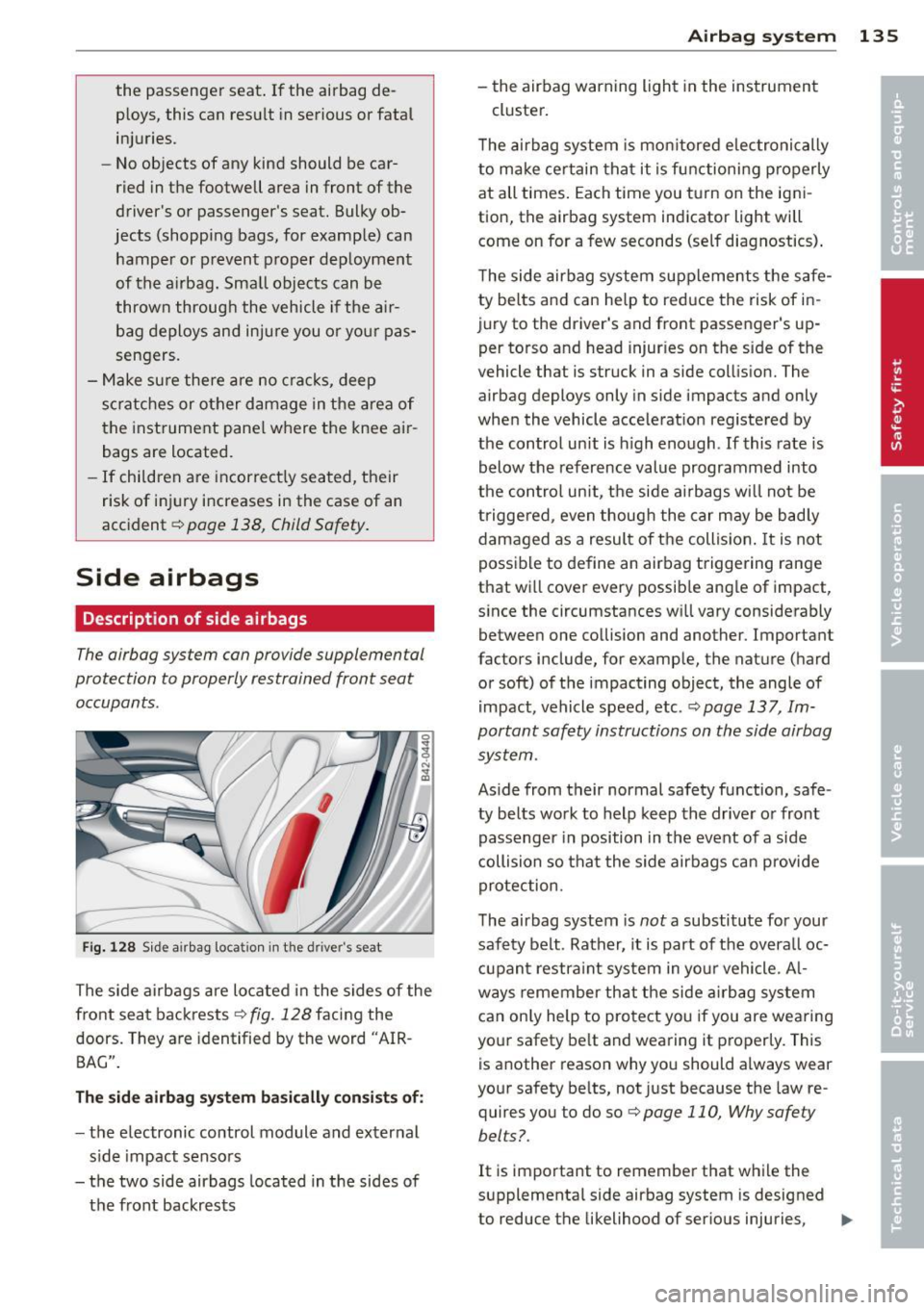
F ig . 128 Side a irbag location in t he d river 's seat
The s ide airbags are located in the sides of the
front seat backrests
r::} fig . 128 facing the
doors. They are identified by the word "AIR
BAG".
The side airbag system basically consists of:
-the electronic control module and external
side impact sensors
- the two side airbags located in the sides of
the front backrests
Airbag system 135
- the airbag warning light in the instrument
cluster.
The airbag system is mon itored electronically
to make certain that it is functioning p roperly
at all times. Each time you turn on the igni
tion, the airbag system indicator light will
come on for a few seconds (self diagnostics) .
The side airbag system supplements the safe
ty belts and can help to reduce the risk of in
jury to the driver's and front passenger 's up
per torso and head injuries on the side of the
vehicle that is struck in a side collision. The
airbag deploys only in side impacts and only
when the vehicle acceleration registered by
the control unit is high enough .
If this rate is
below the reference value programmed into
the control unit, the side airbags will not be
triggered , even though the car may be badly
damaged as a result of the collision. It is not
possible to define an airbag triggering range
that will cover every possible angle of impact,
since the circumstances will vary considerably between one collision and another. Important
factors include, for example, the nature (hard
or soft) of the impacting object, the angle of
impact, vehicle speed, etc.
¢page 137, Im
portant safety instructions on the side airbag
system .
Aside from their normal safety function, safe
ty belts work to help keep the driver or front
passenger in position in the event of a side
collision so that the side airbags can provide
protection.
The airbag system is
not a substitute for your
safety belt . Rather, it is part of the overall oc
cupan t restra int system in your vehicle. Al
ways remember that the side airbag system
can only help to protect you if you are wearing
your safety be lt and wearing it properly. This
is another reason why you should always wear
your safety be lts, not just because the law re
quires you to do so¢
page 110, Why safety
belts? .
It is important to remember that while the
supplemental side airbag system is designed
to reduce the likelihood of serious injuries,
IIJ>,
Page 158 of 244
156 Intelligent technology
Dynamic energy management
While the veh icle is be ing driven , dynamic en
e rgy management distributes the energy gen
erated according to the needs of the individu
a l components . It regu lates consumption, so
that more electrical energy is not being used
than is being generated and ensures an opti mal state of charge for the battery .
(D Tips
- But even energy management cannot
negate the limits of physics. Consider
that the power and life of a battery are li mited .
- If starting ab ility is threatened, you are
i nformed by a warn ing
<=> page 156,
Driver notification in the instrument
cluster display .
What you should know
The highest priority is given to maintaining
starting capability.
The battery is severely taxed in short-distance
driving, in city traffic and during the cold time
of year. Abu ndant electr ical energy is re
qu ired, but only a little is generated . It is also
cr itical if the engine is not running and elect ri
cal components are turned on. In th is in
stance energy is being consumed but none is
being generated .
It is in precisely these situations that you w ill
notice energy management actively regulat
ing the distrib ution of energy .
Vehicle stands for an extended period
If you do not drive your vehicle over a period
of severa l days or weeks, elect rical compo
nents are gradually cut back o r switched off .
This reduces energy consumption and main
tains starting capabi lity over a longer period.
Take into considerat ion that when you un lock
your vehi cle, some convenience functions,
such as the remote key or power seat adjust
ment, may not be available. The convenience
functions will be available again when you
turn on the ignition and start the engine. With the
engine turned off
If you listen to the radio, for examp le, w ith
the engine turned off, the battery is being dis
charged.
If starting capability is jeopardized due to en
ergy consumption , a message appea rs in the
driver information display.
You have to start the engine to charge the batte ry.
With the engine running
Although electrical energy is generated when
the vehicle is being driven, the battery can be
come discharged. This happens mostly when
little energy is being gene rated and a great
deal consumed and the battery's state of
charge is not optimal.
To bring the energy balance back into equili
brium , consume rs which requ ire espec ially
large amounts of energy are temporar ily cut
back or sw itched off. Heating systems in par
ticu lar require a great deal of energy. If you
notice, for example, that the heated seats or
the heated rear window are not heating, they
have been temporarily cut back or switched
off . These systems will be available again as
soon as the ene rgy balance has been restored.
You wi ll also notice that engine id le speed has
been increased slightly . Th is is normal and not
a cause for concern. By increasing engine idle
speed the additional energy required is gene r
ated and the battery is charged .
Driver notification in the instrument
cluster display
If battery power drops into the range where it
can limit the ability of the engine to start, this
is shown in the instrument cluster display
with the following driver message:
(•i Low battery charge: battery will be
charged while driving
T h is not ificat io n r eminds you that the start ing
capability of the engine may be lim ited. As
soon as you start driving again, the battery .,..
Page 181 of 244
The engine oil and oil filter must be changed
according to the mi leage (kilometers) and
time interva ls specified in your vehicle's War
ranty & Maintenance booklet. Do not exceed
these intervals -harmful deposits from old
engine o il can reduce engine performance and
can lead to expensive engine repairs.
Changing the o il at the recommended inter
vals is so very important because the lubricat
ing properties of oil decrease gradually during
normal vehicle use . If you are not sure when
you have your oi l changed, ask your author
i zed A udi Service Advisor.
Under some circumstances the engine o il
should even be changed more frequently.
Change o il more often if you drive mostly
short distances, ope ra te the vehicle in dusty
areas or mostly under s top-and-go traffic con
d itions, or when yo u use your vehicle whe re
temperatures stay below freezing point for
l ong periods.
D etergen t additives i n the o il w il l make fresh
oil look dark after the eng ine has been run
ning for a short time . This is norma l and is not
a reason to change the oi l more often than
recommended.
Damage or malfunction s due t o lack of
m aintenance
It is essen tial that you change your oil at the
r ecommended inte rva ls using only engine o il
that complies with A udi oil standard
VW 502 00. Yo ur Limited New Vehicle War
ranty does not cover damage or malfunctions
d ue to fai lure to fo llow recommended mainte
nance and use req uirements as set forth in
the Audi Owner's Manua l and Warranty&
Ma intenance book let . Your autho rized Aud i
deale r will have to deny warranty coverage un
l ess you present to the dealer p roof in the
fo rm of Se rvice o r Repair Orde rs t hat all
sched uled main tenance w as performed in a
time ly manner .
Checkin g and fillin g 179
Engine oil consumption
The engine in your vehicle depends on an ade
quate amount of oil to lubricate and cool all
of its moving parts .
In order to provide effective lubrication and
cooling of interna l eng ine components, all in
te rnal combust io n engines consume a certain
amount of oil. Oil consumpt io n va ries from
engine to e ngine and may change sig nifican tly
ove r the life of the engine. Typically, engines
with a spec ified break -in pe riod (see
c::> page 158) consume more oil d uri ng the
break-in pe riod than they consume afte r oi l
consumption has stabilized.
U nder normal cond itions, the rate of oi l con
s u mption depends on t he q uality and viscos ity
of the oil, the RP M (revolut ions per minute) at
which the engine is operated, the ambient
temperature and road conditions. Further fac
tors are the amount of oil dilut ion from water
condensa tion or fue l residue a nd the oxida
tion level of the oil. As any eng ine is subject to
wear as m ileage builds up, t he oil co nsump
t ion may increase over time until repla cement
of wo rn components may be come necessary.
Wi th a ll these va riab les coming into p lay, no
standard rate of oil consumpt io n can be es
t a bl is h ed o r spec ified . There is no alte rnative
to regular and frequent chec king of the o il lev
el, see
Note.
If the yellow engine o il level wa rning symbo l
i n the instrument cluster
1\11 lights up, yo u
sho uld check the oil leve l as soon as possib le
c::> page 180 . Top off the oil at your ear liest
convenience
c::> page 180 .
A WARNING
-Before you check anything in the engine
compartment, always read and heed a ll
WARNINGS
c::> & in Working in the engine
compartment on pag e 175.
(D Note
Driving w ith an insufficient o il level is like-
-
ly to cause severe damage to the engine. .,.
•
•