lock AUDI R8 SPYDER 2014 Workshop Manual
[x] Cancel search | Manufacturer: AUDI, Model Year: 2014, Model line: R8 SPYDER, Model: AUDI R8 SPYDER 2014Pages: 244, PDF Size: 61.06 MB
Page 144 of 244
142 Child Safety
-A child in a rearward-facing child safety
seat installed on the front passenger
seat will be seriously injured and can be killed if the front airbag inflates -even
with an Advanced Airbag System.
- The inflating airbag will hit the child
safety seat or infant carrier with great
force and will smash the child safety seat
and child against the backrest, door or
roof.
-Always be especially careful if you must
install a rearward facing child safety seat
on the front passenger seat in exception
al circumstances.
- A tight tether strap on a rearward-facing
child restraint attached to the front pas
senger seat can put too much pressure
on the weight-mat in the seat and regis
ter a heavier weight in the Advanced Air
bag System. The heavier weight regis
tered can make the system work as
though an adult were on the seat and de ploy the Advanced Airbag when it must
be suppressed causing serious or even
fatal injury to the child.
- Make sure that the
PASSENGER AIR BAG
OFF
light comes on and stays on all the
time whenever the ignition is switched
on.
- Never install a rearward facing child
safety seat on the front passenger seat
unless the
PASSENGER AIR BAG OFF
light comes on and stays on. If the PAS·
SENGER AIR BAG OFF
light does not
come on and stay on have the airbag sys
tem inspected immediately by your Audi
dealer.
Activating the convertible locking retractor
Use the convertible locking retractor to se
cure a child restraint .
Always heed the child safety seat manufactur
er's instructions when installing a child re
straint in your vehicle. To activate the conver
tible locking retractor: ..
Place the child restraint on a seat.
.. Slowly pull the belt
all the way out.
.. Route it around or through the child re
straint belt path
c> ,A .
.. Push the child safety seat down with your
full weight to get the safety belt really tight.
.. Insert the belt tongue into the buckle for
that seating position .
.. Guide the safety belt back into the retractor
until the belt lies flat and snug on the child
safety seat.
.. You should hear a "clicking" noise as the
belt winds back into the inertia reel. Test the
convertible locking retractor by pulling on
the belt. You should no longer be able to pull the belt out of the retractor. The con
vertible locking retractor is now activated .
.. Make sure that the red release button is fac
ing away from the child restraint so that it
can be unbuckled quickly.
.. Pull on the belt to make sure the safety belt
is properly tight and fastened so that the
seat cannot move forward or sideways more
than one inch (2.5 cm).
A WARNING ~
Using the wrong child restraint or an im-
properly installed child restraint can cause
serious personal injury or death in a crash .
- Always make sure that the safety belt re-
tractor is locked when installing a child
safety seat. An unlocked safety belt re
tractor cannot hold the child safety seat in place during normal driving or in a
crash.
- Always buckle the child safety seat firmly
in place even if a child is not sitting in it.
A loose child safety seat can fly around
during a sudden stop or in a crash.
- Always make sure the seat backrest to
which the child restraint is installed is in
an upright position. Otherwise, the seat
back with the child safety seat attached
to it could fly forward in the event of an
accident or other emergency situation.
- Always read and heed all WARNINGS
whenever using a child restrained in ave-
hicle is being used
c> page 132. Special ..,.
Page 145 of 244
precautions apply when installing a chi ld
safety seat on t he front passen ger seat
Q page 112, Child restraints on th e front
seat -some important things to know.
Deactivating the convertible locking
retractor
The convertible locking retractor for child re
straints will be deactivated automatically when the belt is wound all the way back into the retractor.
.,. Press the red button on the safety belt buck
le . The belt tongue w ill pop out of the buck
le.
.,. Gui de the safety bel t all t he way back into
i ts stowed posit ion.
A lways let the safety belt retract complete ly
i n to its stowed posit ion. The safe ty belt can
now be used as an o rd inary safety be lt wi th
ou t the convert ible lock ing retractor for chi ld
restra ints.
If t h e conver tible locking re tracto r shou ld be
a ctivated inadve rten tly , the safety bel t m ust
be unfastened and guided completely ba ck in
to its stowed position to deactivate this fea
ture. If the co nvertib le locking retractor is not
deactivated, the safety be lt will gradually be
come tighter and uncomfortable to wear.
A WARNING
Improperly installed child safety seats in
crease the risk of ser ious perso nal injury
and death in a collision.
- Never unfasten the safety belt to deacti
va te the convert ible lock ing ret ractor for
child restraints while the veh icle is mov
ing. You would not be rest rained and
co uld be ser iously injure d in an acci dent.
- Always read and heed all WARN INGS
whenever using a child rest rained in ave
hicle is being use d
Qpage 132. Spec ial
precautions apply when installing a ch ild
safety seat on the front passenger seat
Q page 112, Child restraints on the front
seat -some important things to know.
Child Sa fet y 143
Additional Information
Sources of information about child
restraints and their use
There are a number o f sources of additiona l
information abo ut child restraint se lection, in
stallation and use :
N HT SA advises t hat the bes t ch ild safety seat
is the one that fi ts your chi ld and fits in your
vehicle, and that yo u will use correct ly and
consistently.
T ry before yo u buy!
U.S National Highway Traffic Safety Admin
istration
T el.: 1 -888 -3 27-42 36 (TIY: 1-800-4 24-9153)
www. n hts a .gov
National SAFE KIDS Campaign
Tel.: (202) 66 2-0600
www.safe kids.o rg
Safety BeltSafe U .S .A
Tel.: (800) 7 45-SAFE (English)
Te l.: (800) 7 47-SANO (Span ish)
www. carseat.org
Transport Canada Information Centre
Tel.: 1 (800) 333-037 1 or call
1 (613) 998-8616 if you are in the Ottawa
area
h ttp://www.t c.gc.c a/e ng/ ro ad safe ty/
menu .htm
Audi Customer R elation s
Tel.: (800) 82 2-28 34 •
•
Page 146 of 244
144 Intelligent technology
Intelligent technology
Notice about data
recorded by vehicle
control modules
Your veh icle is not equipped with an Event Da
ta Recorde r (EDR), ins talled by some manu
facture rs fo r the express p urpose of capturing
data for retrieval after an accident or cras h
event . EDR's are sometimes ca lled "crash re
corders".
Some state laws restr ict the retr ieval or down
loading of data stored by EDR's that were in
stalled in a vehicle for the express purpose of retrieving data after an accident or crash
event without the owner's consent.
A ltho ugh yo ur vehicle is not equ ipped wit h an
EDR, it is equipped with a number of electron
ic control modules for various v ehicle systems
such as, for examp le, eng ine f unction, em is
sion control, as well as for the airbags and
sa fety belt s.
These electronic contro l modules also record
vehicle-re lated data during norma l vehicle op
erat ion for diagnostic and repa ir purposes.
T he recording capacity of the electronic con
trol modules is limited to data (no sound is re
corded) and only a small amount of data is ac
tually recorded ove r a ve ry limited pe riod of
time and stored when a sys tem faul t or o ther
cond ition is sensed by a cont ro l u nit. Some of
the data then stored may re late to vehicle
speed, direction, braking as we ll as restraint
system use and performance in the event of a
crash or other condit ion. Stored data can only
be read and downloaded w ith special equip
ment .
Electronic Stabilization
Control (ESC)
Description
ESC helps to improve road holding and vehicle
dynamics to help reduce the probability of
skidd ing and loss of ve hicle control. It works
only when the eng ine is running . ESC detects certain difficult driving situat
ions, including
when the vehicle is beginning to spin (yaw)
o ut of control and he lps you to get the veh icle
back under control by se lectively braking the
whee ls, and/or reducing eng ine power and
providing steer ing ass istance to he lp hold the
vehicle o n the dr iver's intended course . T he in
dicator light
G) in the inst rument cluster
blinks when ESC is ta king action to help yo u
control the veh icle.
ESC has limitations.
It is importa nt to remem
ber that ESC cannot overcome the laws of
physics. It wi ll not always be able to help out
under a ll cond it ions you may come up aga inst.
F or example, ESC may not always be able to
help you master situations where there is a
s u dden change in the coefficient of friction of
the road surface . When there is a section of
dry road that is sudden ly covered w ith water,
s lush or snow, ESC cannot perform the same
way it wou ld on the dry surface . If the ve hicle
hydroplanes (rides on a cushion of water in
stead of the road surface), ESC will not be
able to help you steer the vehicle because con
tact with the pavement has been in terrupted
and the vehicle cannot be braked or steered .
D uring fast cornering, particularly on winding
roads, ESC cannot always deal as effectively
with difficult driving situations as at lower
speeds.
Always adjust your speed and driving style to road , traffic and weather conditions. ESC can
not override the vehicle's physical limits, in
crease the available tract ion, or keep a ve hicle
on the road if road departure is a result of
driver inattent ion . Instead, ESC imp roves the
poss ib ility of keep ing the veh icle under con
t rol and on the road during extreme maneu
vers by using the d river 's steering inputs to
help keep the vehicle go ing in t he i nte nded di
rection . If you are t raveling at a speed tha t
ca uses you to run off the road before ESC can
provide any assistance, you may not experi
ence the benefits of ESC.
ESC includes and/o r works togethe r with the
anti- lock b rake system (ABS), brake assist sys-
tem and anti-slip reg ulation (ASR). ESC is .,..
Page 147 of 244
switched on all the time. In certain situations
when you need less traction, you can switch
off ESC by pressing the button
lru. Be sure to
switch ESC on again when you no longer need
less traction.
Anti-lock braking system (ABS)
ABS prevents the wheels from locking up
when braking . The vehicle can still be steered
even during hard braking . Apply steady pres
sure to the brake pedal. Do not pump the ped
al. A pulsing in the brake pedal indicates that
the system is helping you to brake the vehicle.
Brake assist system
The brake assist system can decrease braking
d istance. It increases braking power when the
driver presses the brake pedal quickly in emer
gency si tuations. You must press and hold the
brake pedal until the situation is over .
Anti-slip regulation (ASR)
ASR reduces engine power when the drive
wheels begin to spin and adapts the force to
the road condit ions. This makes it easier to
start, accelerate and drive up hills.
Electronic differential lock (EDL)
The EDL brakes wheels that are spinning and
transfers the drive power to the other drive
wheel or whee ls if the vehicle is equipped with
all-wheel drive*. This function is available up
to about 60 mph (100 km/h) .
In extreme cases, EDL automat ica lly switches
off to help keep the brake on the braked wheel
from overheating. EDL w ill switch on again au
tomatically when conditions have returned to
normal.
..&, WARNING
- ESC, ABS, ASR and EDL cannot overcome
th e laws of physics. This is especially im
portant on slippery or wet roads.
If the
systems begin acting to stabilize your ve
hicle, you should immediately change
yo ur speed to match the road and traffic
condit ions. Do not let the increased safe
ty provided by these systems tempt you
Intelligent technology 145
to take risks. Doing so will increase the
risk of a lo ss of vehicle control, co llision
and serious personal injuries.
- Always adapt your speed to road, traffic
and weather conditions. The risk of los
ing control of the vehicle increases when
driving too fast, especially through
curves and on slippery or wet roads, and
when driving too close to vehicles up
ahead. ESC, ABS, the brake assist sys
tem, EDL and ASR cannot prevent colli
sions.
- Always accelerate with special care on
even, smooth surfaces such as those that
are wet or covered with ice and snow.
The drive wheels can spin even with
these assistance systems that cannot al
ways he lp to reduce the risk of loss of ve
hicle control.
@ Tips
- ABS and ASR only work correct ly when
all four whee ls are equipped with identi
cal tires. D ifferent tire si zes can lead to a
reduction in engine power.
- You may hear noises when the systems
described are working.
- If the ind icator lightD] orE (USA
models)/ [iJ (Canada models) appears,
there may be a malfunction¢
page 16,
¢ page 15.
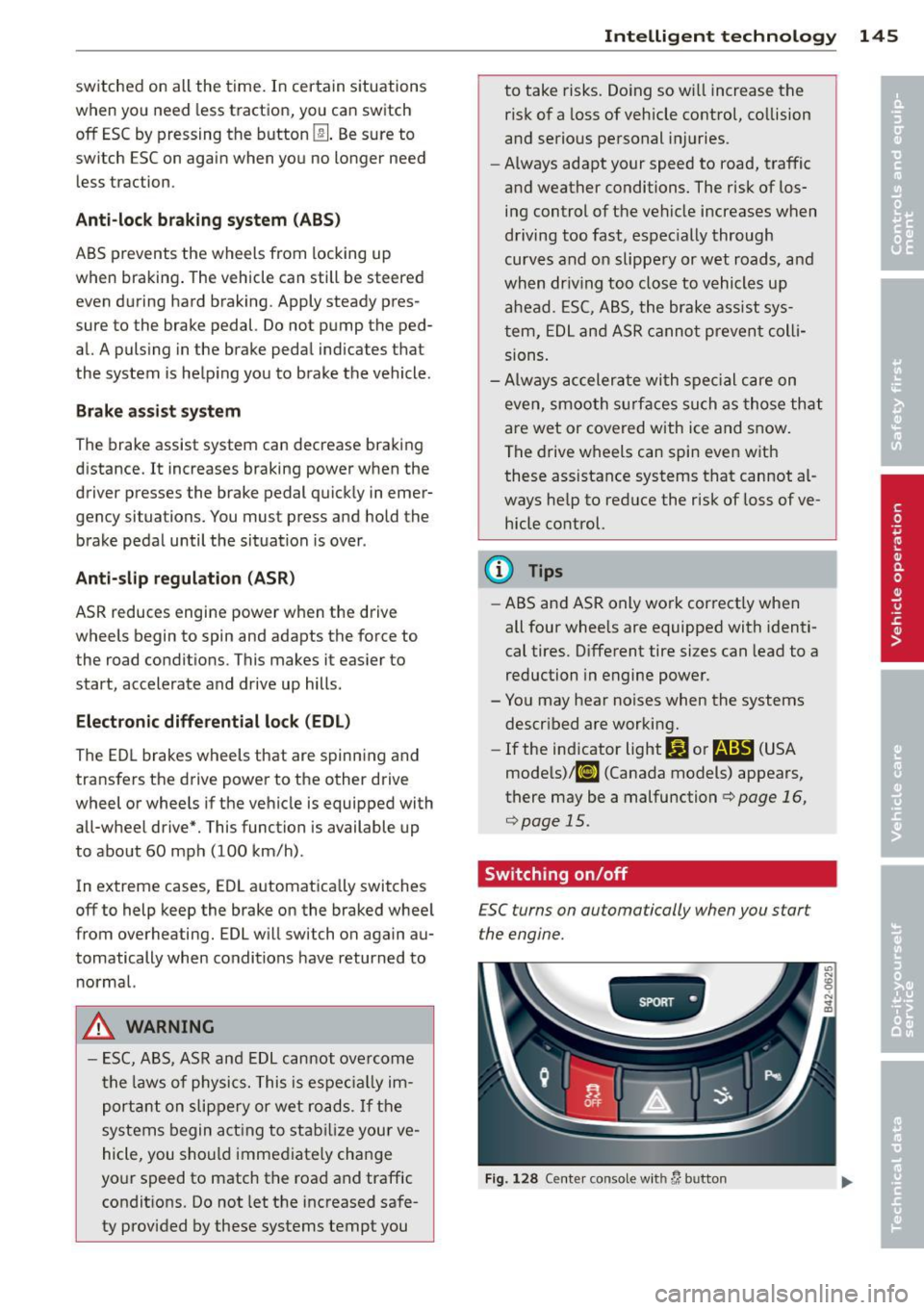
Switching on/off
£SC turns on au tomatically when you start
the engine.
-
SPORT •
Fig. 1 28 Cent er console w it h t b utton
Page 153 of 244
than is being generated and ensures an optimal state of charge for the battery.
@ Tips
- But even energy management cannot
negate the limits o f physics. Consider
that the power and life of a battery are
limited.
- If starting ability is threatened, you are
i nformed by a warning
¢ page 151,
Driver notification in the instrument
cluster display.
What you should know
The highest priority is given to maintaining
starting capability.
The battery is severely taxed in short-distance
driving, in city traffic and during the co ld time
of year. Abundant e lectrical energy is re
quired, but only a litt le is generated. It is also
cr itical if the engine is not runn ing and electri
cal components are turned on. In th is in
stance energy is being consumed but none is
be ing gene rated.
It is in precisely these situations that you w ill
notice energy management actively regulat
in g the distribution of energy .
Vehicle stands for an extended period
If you do not drive your vehicle over a period
of several days or weeks, electrical compo
nents are gradually cut back or switched off.
This reduces energy consumption and main
tains sta rting capab ility over a longer per iod.
Take into consideration that when you unlock
your veh icle, some convenience functions,
such as the remote key or power seat adjust
ment, may not be available . The convenience
functions will be ava ilable again whe n you
turn on the igni tion and star t the eng ine.
With the engine turned off
If you listen to the radio, for example, with
the eng ine turned off, the battery is being dis
charged .
Intellig ent technolog y 151
If starting capability is jeopardized d ue to en
ergy consumption, a message appears in the
drive r information d isplay .
You have to start t he engine to charge the
batte ry .
With the engine running
Although electrical energy is generated when
the ve hicl e is being driven, t he battery can be
come disc harged. This happens mostly when
li ttle energy is being generated and a great
deal consumed and the battery's state of
c h arge is not optimal.
T o b ring the energy ba lance back into equili
br ium, consumers which requ ire espec ially
large amounts of energy are temporari ly cut
back or switched off . Heating systems in pa r
ticu lar require a great deal of energy. If you
notice, for example, that the heated seats* or
the heated rear window are not heating, they
have been temporarily cut back or switched
off . These systems w ill be available again as
soon as the ene rgy balance has been restored.
You w ill also notice that engine id le speed has
been increased slightly . Th is is normal and not
a cause for concern . By increas ing engi ne idle
speed the additional energy required is gene r
ated and the battery is charged.
Driver notification in the instrument
cluster display
If battery power drops into the range where it
can limit the ability of the engine to start, this
is shown in the instrument cluster display
with the following driver message:
(•) Low battery charge: battery will be
charged while driving
T his not ificat ion reminds yo u that the start ing
capability of the engine may be limited . As
soon as you sta rt driving again, the battery
will be recharged and the not ificat ion w ill go
out. •
•
Page 164 of 244
162 Cleaning and protection
Plastic parts and imitation leather
You can clean plastic parts and imitation
l eathe r with a damp cloth .
If this does not re
move the dirt, you can treat these parts only
with specia l
sol vent-free pla st ic cleaning and
care product s.
A WARNING
So lvents can change the properties of
some plastics and make it harder for the
airbag to dep loy .
- Never clean the instrument pane l or the
surface of Airbag modules with cleaning
products that contain solvents .
- Products containing solvents w ill make
the surface of th is part porous.
- Serious injur ies can result if plastic parts
come loose when the airbag is deployed.
- Always read and heed all WARNINGS and
the informat ion
¢ page 156 .
Cleaning agents containing solvents will
attack the material and can change the
way it behaves.
Carbon-fiber parts
App lies to vehicles: with carbon-fibe r parts
The carbon-fiber parts of your vehicle have a
p a inted su rface . They do not require any spe
cial care and are cleaned like plast ic parts
¢ page 162 .
Fabrics and fabric coverings
Fab rics and fabr ic coveri ngs (e.g. seats, doo r
tr im panels, etc.) should be cleaned a t reg ular
inte rva ls with a vacu um cleaner. This removes
surface dirt particles which could become em
bedded in th e fabric thro ugh use. Steam
cleaners shou ld not be used, because the
s team tends to push the dir t deeper into the
f abric and lock i t there.
Normal cleaning
Gener ally, we re commend using a soft sponge
o r a lint -free microfibe r cloth to the clean fab
ric. Brushes s hou ld only be used for carpets
and floor mats, since other fab ric surfaces
could be harmed by b rushes.
Norma l su rface s tains can be cleane d using a
commercially availab le foam cleaner . Spread
the foam on the s urface of the fabric with a
soft sponge and work it in gently . Do not satu
rate the fabric. Then pat the foam dry us ing
absorbe nt, dry cloths (e .g. m icrofiber cloth)
and vacuum i t after it has dried completely .
Cleaning stains
Stains caused by beverag es (e .g. coffee, fr uit
j uice, etc .) can be treated with a mild deter
gen t solution. Apply the detergent solution
with a spo nge . In the case of stubborn stains,
a detergent paste can be applied directly to
the stain and worked i nto the fabric. After
wards, use copious amounts of clean wa ter to
remove the rema ining deterge nt. App ly the
wate r w ith a damp doth or sponge and pat
th e fabric dry wi th an abso rbent, dry cloth .
Stai ns from choco late or ma keup should have
de tergent pa ste (e.g. ox-gall so ap) rubbed in
to them. Afterwa rds, remove the soap wi th
water (damp sponge) .
Alcohol can be used to treat sta ins from
grease, o il, lipstick or a ballpoint pen . M elted
grease or dye mus t be patted off using a b
sorbent ma terial.
It may be necessary to re
treat the areas with detergent paste and wa
ter.
In the case of gene ral soiling of the upho ls
tery and cover material, we recommend hiring
a specia list t hat has the equipment to clean
the seat covers and other fabr ic surfaces by
shampooing and spray extraction.
A WARNING
-A lways read and heed all WARNINGS and
the information
¢ page 156.
Page 165 of 244
@ Tips
Open Velcro fasteners on your clothing can
damage the seat cover. Please make sure
that Velcro fasteners are closed.
Natural leather
App lies to vehicles: with natura l leather
Audi makes great efforts to maintain the
properties , natural look and feel of interior
leather.
G ene ra l
We offer many different types of leather on
our veh icles. Most are different types of nappa
leather, which has a smooth surface and
comes in various co lors .
The intensity of the color determines the visu
al characteristics and appearance . If the sur
face of the leather has a typical natural look,
then the leather is a nappa leather that has
been left in a relatively natural condition. This
leather offers particularly good comfort and
breathes well. F ine veins, closed grains, insect
b ites, skin folds, and subtle variations in co lor
remain visible . These cha racte ristics demon
strate that the mater ia l is na tural.
Natural nappa leather is not covered by a col
or finish .
It is therefore more sensitive to so il
ing and wear, wh ich is something you need to
consider if ch ild ren, an imals o r othe r factors
m ight prove to be particularly hard on the
l eather .
By contrast, leather types that are cove red by
a co lored finish laye r are more durable. This
h as a posit ive effect on the leather's resist
ance to wear and soiling in daily use . On the
other hand, the typical characteristics of natu
ra l leather are bare ly or not apparent. Howev
er, this does not mean that the leather itself
is of infer ior quality.
Ca re and handling
Because of the exclusive nat ure of the types of
l eather that Audi uses and their unique prop
erties (such as sensitivity to oils, grease, soi l
ing, etc.), you will need to be somewhat care-
Cleaning and protec tion 163
ful with these leathers, and a ce rtain type of
care is required. For example, dark clothing
mater ia ls can disco lor leather seats (especia l
l y if such clothing is damp and was not dyed
correctly) . Dust and dirt particles in pores,
folds, and seams can have an abrasive effect
and can damage the leather surface as well as
weaken seams .
The leather should be cleaned regularly as needed . After having been used for a relat ively
long time, your leather seats will acqu ire a
rich aged fin ish . This is a character istic of nat
ural leathe r and a s ign of true quality.
In order to maintain the value of this natural
product over the life of your ve hicle, you
shou ld follow the recommendat ions below:
(D Note
- To keep your leather from b leac hing out,
do not allow it to be exposed to bright
sunlight for long periods of time . If you
have to leave the veh icle parked outside
for long per iods, cover the leather to
protect it from direct exposure to s un
light.
- Sharp objects on clothing, such as zip
pers, rivets or sharp pieces on belts can
leave permanent sc ratches or scrape
marks on the surface of the leather .
{i) Tips
-After each time you clean the leather and
at regular intervals, use a leather preser
vative creme that contains UV-b lockers
and that works into the leather. Th is
creme will nour ish and mo isturize the
leather, helping it to breathe and stay
supple . It also helps to build up a protec
tive coating on the surface .
- Clean the leather every 2 - 3 months,
and clean any areas that get soiled.
- Remove fresh marks made by ballpo int
pens, ink, lipstick, shoe polish, etc. as
soon as poss ible.
- Preserve the color of the leather as need
ed by us ing a special colored leather care
creme to touch up areas of uneven color . •
•
Page 170 of 244

168 Fuel supply and filling your fuel tank
-Blend must contain not more than 15%
MTBE.
Seasonally adjusted gasoline
Many gasoline grades are blended to perform
especially well for winter or summer driving .
During seasonal change-over, we suggest that
you fill up at busy gas stat ions where the sea
sonal adjustment is more likely to be made in
time.
(CT) Note
- Methanol fuels which do not meet these
requirements may cause corrosion and
damage to plastic and rubber compo
nents in the fuel system.
- Do not use fuels that fail to meet the
specified criteria in this chapter.
- If you are unable to determine whether
or not a particular fuel blend meets the
specifications, ask your service station or
its fuel supplier.
- Do not use fuel for which the contents cannot be identified.
- Fuel system damage and performance
problems resulting from the use of fuels
different from those specified are not
the responsibility of Audi and are not
covered under the New Vehicle or the Emission Control System Warranties.
- If you experience a loss of fuel economy
or driveability and performance prob lems due to the use of one of these fuel
blends, we recommend that you switch
to unblended fuel.
Gasoline additives
A major concern among many auto manufac
turers is carbon deposit build-up caused by
the type of gasoline you use.
A lthough gasoline grades differ from one
manufacturer to another, they have certain
things in common. All gasoline grades contain
substances that can cause deposits to collect
on vital engine parts, such as fuel injectors
and intake valves. Although most gasoline
brands include additives to keep engine and fuel
systems clean, they are not equally effec
tive .
A udi recommends using TOP TIER Detergent
Gasoline. For more information on TOP TIER
Detergent Gasoline, please go to the official
website (www.toptiergas.com).
After an extended period of using inadequate
fuels, built-up carbon deposits can rob your
engine of peak performance.
(D Note
'
Damage or malfunction due to poor fuel
quality is not covered by the Audi New Ve
hicle Limited Warranty.
Fuel tank
Fuel filler neck
The fuel filler neck is located on the right rear
side panel behind the fuel filler flap.
If the unlocking system should fail, you can
still open the flap manually -for detailed in
structions see¢
page 170.
You can find the fuel tank capacity of your ve
hicle in
Technical Data <=>page 225.
The label on the inside of the fuel filler flap
tells you the correct fuel for your vehicle. For
more information about fuel specifications,
see ¢
page 167.
Your vehicle fuel tank has an on-board refuel
ing vapor recovery system. This feature helps
to prevent fuel vapors from escaping from the
tank and polluting the environment while you refuel your vehicle . In order to fill the tank
properly while protecting the environment,
please follow this refueling procedure careful
ly.
.8, WARNING
Under normal operating cond itions, never
carry additional fuel containers in your car.
Gas canisters and other containers used to
transport fuel can be dangerous. Such con
tainers, full or empty, may leak and could
cause a fire in a collision. If you must
Page 171 of 244
transport fuel to use for your lawn mower,
snow blower, etc., be very careful and al
ways observe local and state laws regard
ing the use, transportation and storage of
such fuel containers. Make certain the con
tainer meets industry standards (ANSI/
ASTM F8S2 -86) .
@ Note
Never drive your vehicle until the fuel tank
is completely dry. The irregular supply of
fue l can cause misfiring. Gasoline cou ld
enter into the exhaust system and damage
the catalytic converter .
Refueling
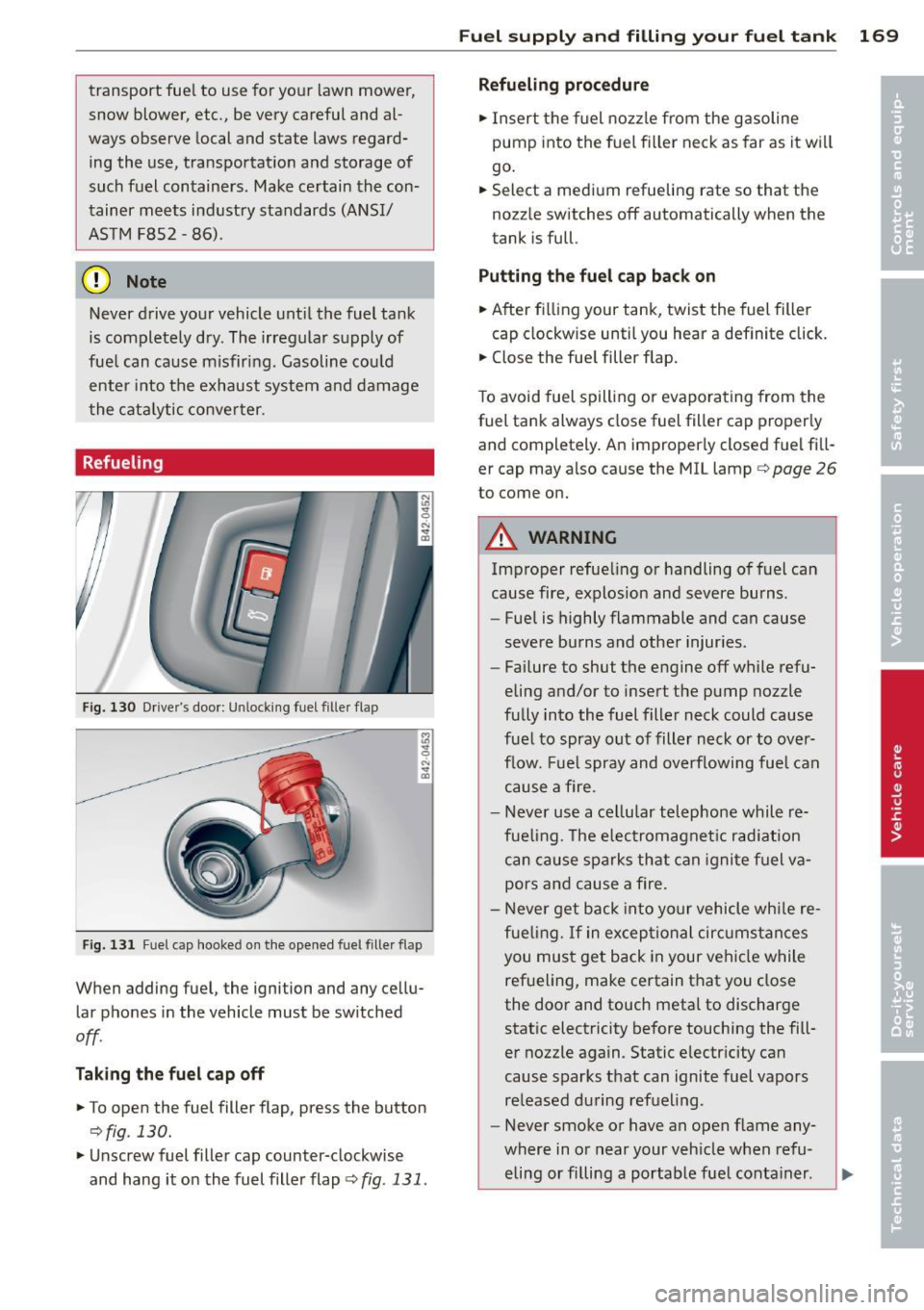
Fig. 130 Drive r's doo r: Unlock ing fuel filler flap
Fig. 131 Fu el cap hooked on the opened fuel filler flap
When adding fuel, the ignition and any cellu
lar phones in the vehicle must be switched
off .
Tak ing the fuel cap off
.. To open the fuel filler flap, press the button
9 fig . 130.
.. Unscrew fuel filler cap counter-clockwise
and hang it on the fuel filler flap ¢
fig. 131.
Fuel supply and filling your fuel tank 169
Refueling procedure
.. Insert the fuel nozzle from the gasoline
pump into the fuel filler neck as far as it will
go.
.. Select a medium refueling rate so that the
nozzle switches off automatically when the
tank is full.
Putting the fuel cap back on
.. After filling your tank, twist the fuel filler
cap clockwise until you hear a definite click.
.. Close the fuel filler flap.
To avoid fuel spilling or evaporating from the
fuel tank always close fuel filler cap proper ly
and completely. An improperly closed fuel fill
er cap may also cause the MIL lamp ¢
page 26
to come on.
A WARNING
Improper refueling or handling of fuel can
cause fire, explosion and severe burns.
- Fuel is highly flammable and can cause
severe burns and other injuries.
- Failure to shut the engine off while refu
eling and/or to insert the pump nozzle
fully into the fuel filler neck could cause
fuel to spray out of filler neck or to over
flow. Fuel spray and overflowing fuel can
cause a fire.
- Never use a cellular telephone while re
fueling. The electromagnetic radiation
can cause sparks that can ignite fuel va
pors and cause a fire.
- Never get back into your vehicle while re
fueling.
If in exceptional circumstances
you must get back in your vehicle while
refueling, make certain that you close
the door and touch metal to discharge static electricity before touching the fill
er nozzle again. Static electricity can
cause sparks that can ignite fuel vapors
released during refueling .
- Never smoke or have an open flame any
where in or near your vehicle when refu-
eling or filling a portable fuel container. ..,.
Page 172 of 244
1 70 Fuel supply and filling your fuel tank
-For your safety, we strongly recommend
that you do not travel with a portable
fuel container in your vehicle. The con
tainer, full or empty may leak and could
cause a fire, especially in a crash.
- If, under exceptional circumstances, you
must transport a portable fuel container,
please observe the following:
- Never fill a portable fuel container
while it is anywhere in or on the vehicle (for example, in the luggage compart
ment, or on the trunk). Static electrici
ty can build up while filling and can ig
nite fuel vapors causing a fire .
- Always place a portable fuel container
on the ground before filling.
-A lways keep the filler nozzle complete
ly inside the portable container before
and during filling.
- If filling a portable container made of
metal, the filler nozzle must always be
in contact with the-container. This will
help prevent static electricity from dis
charging and cause a fire .
- Never sp ill fuel inside the vehicle or
luggage compartment. Fuel vapors are
highly flammable.
- Always observe local and state/provin
cial laws regarding the use, storage
and transportation of fuel containers.
- Make certain the fuel container meets
industry standards (ANSI/ ASTM
F852-86).
(D Note
If any fuel has spilled onto the car, it
should be removed immediately to prevent
damage to the paint .
@) For the sake of the environment
As soon as the correctly operated nozzle
switches off automatically for the first
time, the tank is full. Do not try to add
more fuel because fuel may spill out. In
addition, the expansion space in the fuel
tank will be filled -causing the fuel to overflow
when it becomes warm and pol
lute the environment.
(D Tips
- Running your engine while refueling may
cause vapors to escape or even fuel to
spill out of the tank . This would then
shut off the fuel nozzle before the tank
is full.
- Do not refuel your vehicle with the ig n i
tion switched on. The fuel gauge may
otherwise not indicate the correct fuel
level after refueling .
Unlocking the fuel filler flap
by hand
You can open the fuel filler flap by hand if the
power locking system should fail.
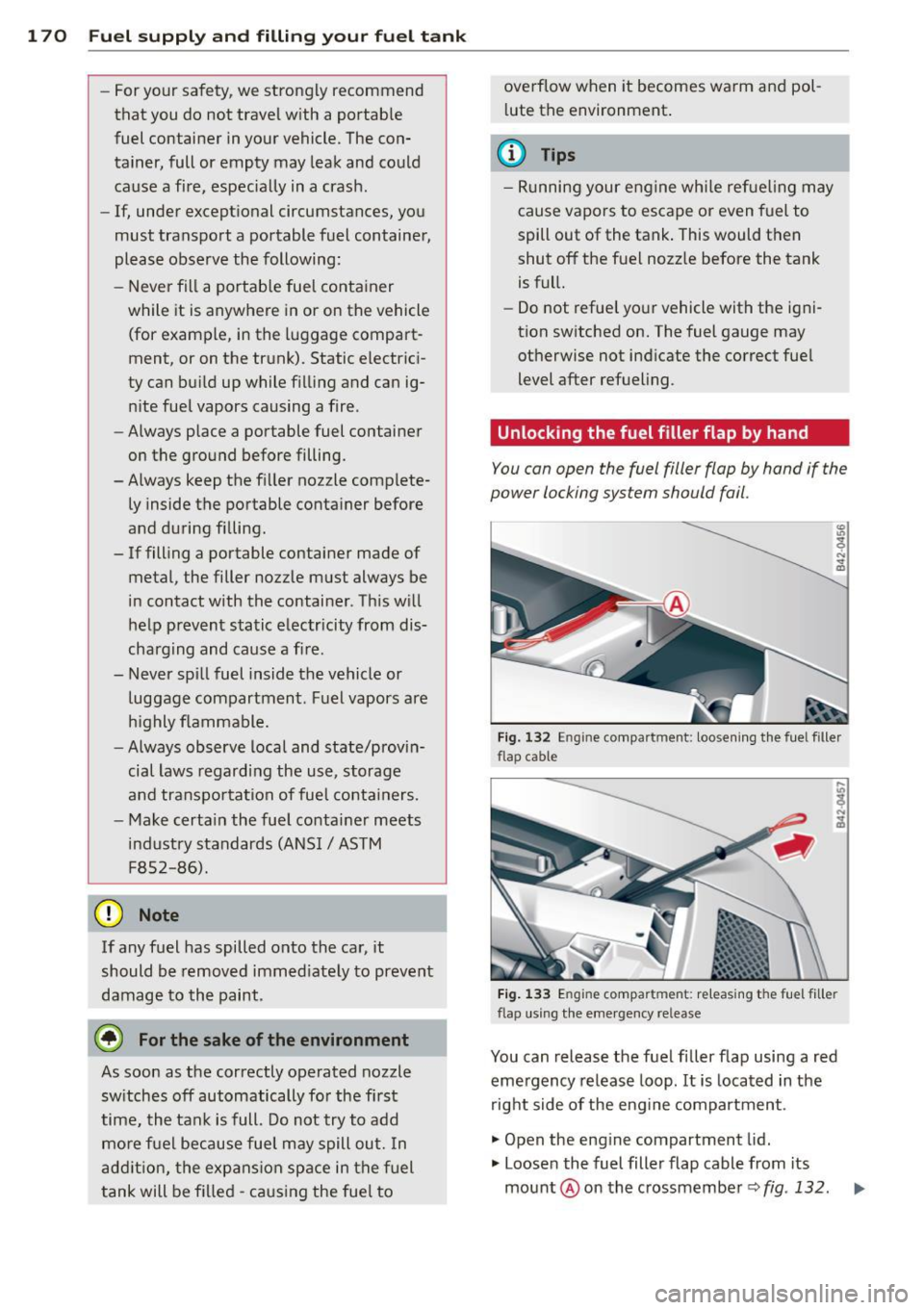
Fig. 132 Engine compart ment: loosening the fue l filler
fla p cable
Fig. 133 Engine compart ment : releas ing t he fuel fill er
flap using the emergency release
You can release the fuel filler flap using a red
emergency release loop. It is located in the
right side of the engine compartment.
.,. Open the engine compartment lid.
.,. Loosen the fuel filler flap cable from its
mount @ on the crossmember
Q fig. 132. ..,_