ignition AUDI RS5 COUPE 2015 Repair Manual
[x] Cancel search | Manufacturer: AUDI, Model Year: 2015, Model line: RS5 COUPE, Model: AUDI RS5 COUPE 2015Pages: 254, PDF Size: 64.12 MB
Page 184 of 254

Care and cleaning
A WARNING
- Only wash the vehicle when the ignition is
off and follow the instructions from the car
wash operator to reduce the risk of acci
dents.
- To reduce the risk of cuts, protect yourse lf
from sharp metal components when wash
ing the underbody or the inside of the wheel
housings.
- After washing the vehicle, the braking effect may be delayed due to moisture on the
brake rotors or ice in the winter . The brakes
must be dried first w ith a few careful brake
applications.
@ Note
- If you wash the vehicle in an automatic car
wash, you must fold the exterior mirrors in
to reduce the risk of damage to the mirrors.
Power folding exterior mirrors* must only
be fo lded in and out us ing the power folding
funct ion.
- To prevent pa int damage, do not wash the
vehicle in direct sunlight .
- To reduce the risk of damage to the surface,
do not use insect removing sponges, kitchen
sponges or similar items.
- Matte finish painted vehicle components:
- To reduce the risk of damage to the sur-
face, do not use polishing agents or hard
wax.
- Never use protective wax. It can destroy
the matte finish effect.
- Do not place any stickers or magnetic
signs on vehicle parts painted with matte
finish paint. The paint could be damaged
when the stickers or magnets are re moved.
@ For the sake of the environment
On ly wash the vehicle in facilities specially de
signed for that purpose. This will reduce the
risk of dirty water contaminated with oil from
entering the sewer system.
182
-
Placing your vehicle out
of service
If you would like to take your vehicle out of serv
ice for a longer time, contact your authorized
Audi dealer or qualified repair facility. They will
advise you of important measures, such as corro
s ion protec tion , maintenance and storage proce
dures. Also follow the information about the bat
tery
~ page 196.
Page 187 of 254

"' N
0:: loo
rl I.O
"' N
"' rl
the exhaust system and damage the catalytic
converter.
Refuelling
Fig . 155 Rig ht re ar v ehicl e sid e: Op enin g the fuel fille r flap
Fig. 156 Fuel f ill er fla p with atta ched fuel cap
When activating the central locking, the fuel fi ll
er flap is automatically un locked or locked . Re
fuel the veh icle with the ignition turned
off.
Taking the fuel cap off
~T urnoff the ignition.
~ Press the left side of the fue l filler flap to open
it
q fig. 155 -arrow -.
~ Unscrew fuel cap count er-clockw ise and hang it
on the fuel filler flap~
fig. 156.
Refuelling procedure
~ Insert the fuel nozzle from the gasol ine pump
into the fuel filler neck as far as it will go.
~ Select a medium refuelling rate so that the
nozzle switches off automat ica lly when the
tank is full.
Putting the fuel cap back on
~ After filling your tank, tw ist the f uel cap clock
wise as far as it wi ll go.
~ Close the fuel filler flap.
Fuel and Refueling
To avoid fuel spilling or evaporating from the fuel
tank always close fue l cap proper ly and com
pletely .
A WARNING
--
Improper refueling or handling of fuel can
cause fire, explosion and severe burns.
- Fuel is highly flammable and can cause se
vere burns and other injuries.
- Failure to shut the engine off while refuel
ing and/or to insert the pump noz zle fully
into the fue l filler neck could cause fuel to
spray out of filler neck or to overflow . Fuel
spray and overflowing fuel can cause a fire.
- Never use a cellular telephone while refuel
ing. The electromagnetic radiation can
cause sparks that can ignite fuel vapors and
cause a fire .
- Never get back into your vehicle while refu
eling. If in exceptional circumstances you
must get back in your vehicle whi le refuel
ing, make certain that you close the door
and touch metal to discharge static electric
ity before touching the filler nozzle again.
Static electricity can cause sparks that can ignite fue l vapors re leased during refueling.
- Never smoke or have an open f lame any
where in or near your vehicle when refueling
or filling a portable fue l conta iner .
- For your safety, we strongly recommend
that you do not travel with a portable f uel
container in your vehicle. The container, full
or empty may leak and cou ld cause a fire,
especially in a crash.
- If, under exceptional circumstances, you
must transport a portable fuel container,
ple ase observe the following:
- Never fill a portable fuel container while it
is anywhere in or on the veh icle (for exam
ple, in the luggage compartment, or on
the trunk). Static e lectricity can build up
while filling and can ignite fuel vapors
causing a f ire.
- Always place a portab le fue l container on
the ground before filling .
185
Page 188 of 254

Fuel and Refueling
-Always keep the fi ller nozzle completely
inside the portable container before and
during filling.
- If filling a portable container made of
metal, the filler nozzle must always be in
contact with the container. This will help
prevent static electricity from discharging
and cause a fire .
-Never sp ill fuel inside the vehicle or lug
gage compartment. Fuel vapors are highly
flammab le.
-Always observe local and state/provincia l
laws regarding the use, storage and trans
portat ion of fuel containers.
- Make certain the fuel container meets in
dustry standards (ANSI/ ASTM F852 -86) .
(D Note
If any fuel has spilled onto the car, it should
be removed immediately to prevent damage
to the paint .
@ For the sake of the environment
As soon as the correctly operated nozzle
switches off automatically for the first time,
the tank is full. Do not try to add more fuel
because fuel may spill out . In addition, the
expansion space in the fuel tank will be filled·
causing the fuel to overflow when it becomes
warm and pollute the environment.
(j) Tips
- Running your engine while refuelling may
cause vapors to escape or even cause fuel to
sp il l out of the tank . This wo uld then shut
off the fuel nozzle before the tank is full.
- Do not refuel your veh icle with the ignition
turned on. The fuel gauge may otherwise
not indicate the correct fuel level after refu
elling.
- The fuel filler flap of your vehicle is not
l ocked when you lock the vehicle from the
inside .
186
Unlocking the fuel filler flap by hand
You can open the fuel filler flap by hand if the
power locking system should fail .
Fig. 157 Luggage compartme nt: ope ning the side trim
Fig. 158 Luggage compartment: Emer gency open ing of
fuel fil ler flap
The emergency opening mechanism is located
behind the right side trim panel in the luggage
compartment.
Opening the side trim
.. Insert a tool such as a screwdriver ¢page 216
or the emergency key into the right side of the
upper gap¢
fig. 157.
.. Pry upward to release the trim .
Fuel filler door emergency release
.. Loosen the strap from its bracket and pull on it
¢ fig. 158. You can now open the fuel filler flap
as usual
¢page 185.
Page 189 of 254
"' N
0:: loo
rl I.O
"' N
"' rl
Checking and Filling Hood
Releasing and opening the engine hood
The engine hood is released from inside the vehi
cle.
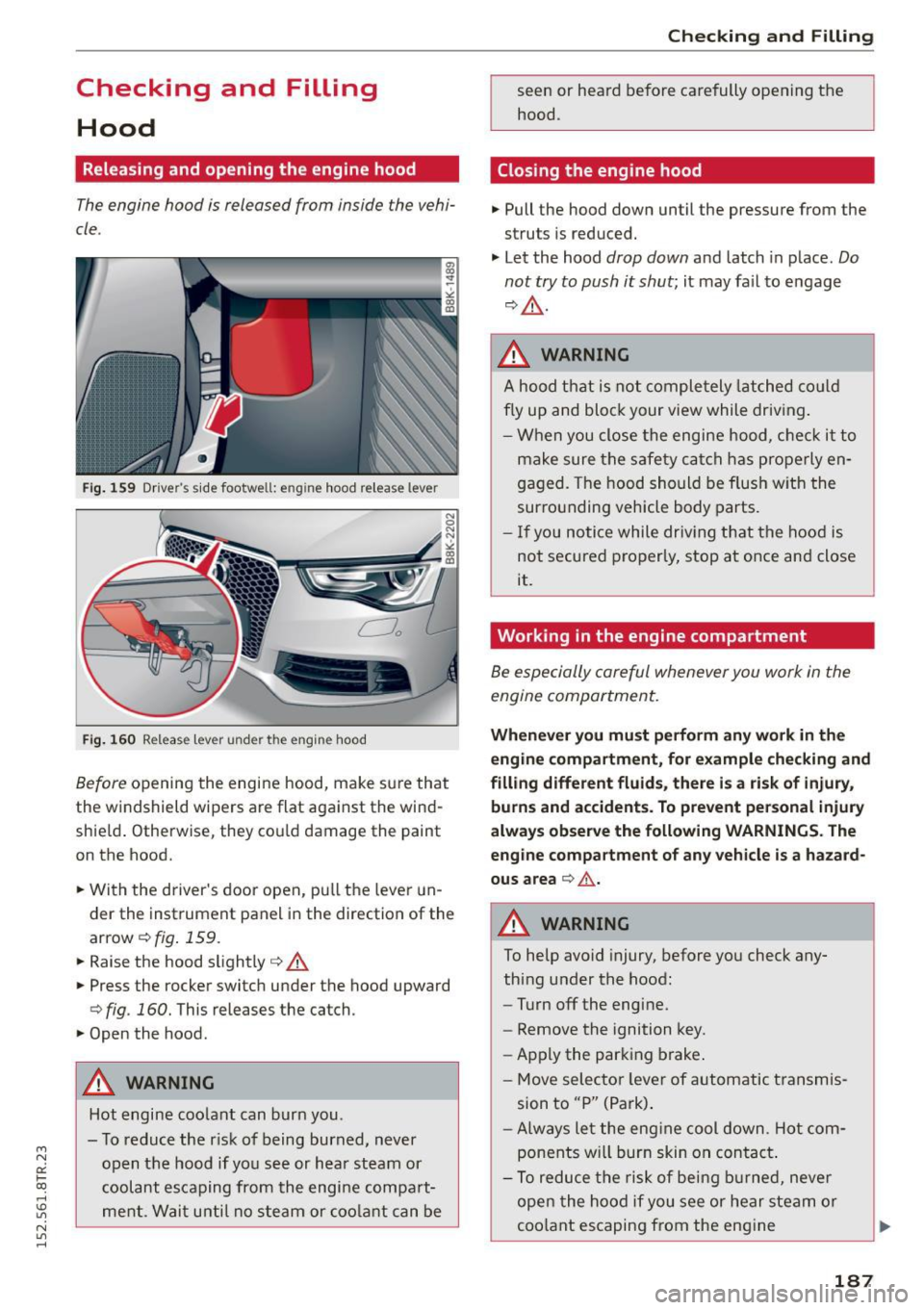
Fig. 159 Driver's side footwell: e ng in e hood release lever
Fig. 160 Releas e lev er un der t he e ngin e hood
Before opening the engine hood, make sure that
the windshield wipers are flat against the wind
shield . Otherwise, they could damage the paint
on the hood.
.. With the driver's door open, pu ll the lever un
der the instrument panel in the direction of the
arrow
c::> fig . 159.
.. Ra ise the hood slightly c::> &.
.. Press the rocker switch under the hood upward
c::> fig . 160. This releases the catch .
.. Open the hood.
A WARNING
Hot engine coolant can burn you.
- To reduce the r isk of being burned, never
open the hood if you see or hear steam or
coolant escaping from the engine compa rt
ment. Wait until no steam or coolant can be
Checking and Filling
seen or heard before carefully opening the
hood .
Closing the engine hood
.. Pull the hood down until the pressure from the
struts is reduced.
"' Let the hood
drop down and latch in place. Do
not try to push it shut;
it may fa il to engage
c::> &. -
A WARNING
A hood that is not comp letely latched could
fly up and block your view while driving.
- When you close the engine hood, check it to
make sure the safety catch has properly en
gaged . The hood should be flush with the
surrounding vehicle body parts.
- If you notice while driv ing that the hood is
not secured properly, stop at once and close
it.
Working in the engine compartment
Be especially careful whenever you work in the
engine compartment.
-
Whenever you must perform any work in the
engine compartment, for example checking and
filling different fluids , there i s a risk of injury ,
burns and accidents. To prevent personal injury
always observe the following WARNINGS . The
engine compartment of any vehicle is a hazard
ous area
c:> .&. .
A WARNING
-
To help avoid injury, before you check any-
thing under the hood:
- Turn off the engine.
- Remove the ignition key .
- Apply the parking brake.
- Move selector lever of automatic transmis-
sion to "P" (Park) .
-Always let the engine cool down. Hot com
ponents wi ll burn skin on contact .
- To reduce the risk of being burned, never
open the hood if you see or hear steam o r
coo lant escaping from the engine
187
Page 190 of 254
Checking and Filling
compartment. Wait until no steam or cool
ant can be seen or heard before carefully
opening the hood.
- Keep children away from the engine com
partment.
- Never spill fluids on hot engine compo
nents. They can cause a fire.
- Never touch the radiator fan. The auxiliary
electric fan is temperature controlled and
can switch on suddenly.
- Never open the coolant reservoir cap when
the engine is still warm . The coolant system
is pressurized and hot coolant could spray
out .
- Protect your face, hands and arm from
steam or hot engine coolant by placing a
thick rag over the cap when you open the coolant reservoir .
- Do not remove the engine cover under any
circumstances . This increases the risk of
burns .
- If work on the fuel system or the electrical
system is necessary :
= Always disconnect the battery.
- Never smoke or work near heaters or open
flames. Fluids in the engine compartment
could start a fire.
- Keep an approved fire extinguisher imme
diately available.
- To avoid electrical shock and personal injury
while the engine is running or being started,
never touch:
- Ignition cables
- Other components of the high voltage
electronic ignition system.
- If you must perform a check or repair with
the engine running:
- First, fully apply the parking brake, move
selector lever of automatic transmission
to "P" (Park) .
- Always use extreme caution to prevent
clothing, jewelry, or long hair from getting
188
caught in the radiator fan, V-belts or other
moving parts, or from contacting hot
parts. Tie back hair before starting, and do
not wear clothing that will hang or droop
into the engine.
- Minimize exposure to emission and chemi
cal hazards
¢ A .
A WARNING
California Proposition 65 Warning:
- Engine exhaust, some of its constituents,
and certain vehicle components contain or
emit chemicals known to the State of Cali
fornia to cause cancer and birth defects and
reproductive harm. In addition, certain flu
ids contained in vehicles and certain prod
ucts of component wear contain or emit
chemicals known to the State of California
to cause cancer and birth defects or other
reproductive harm.
- Battery posts, terminals and related acces
sories contain lead and lead compounds,
chemicals known to the State of California
to cause cancer and reproductive harms.
Wash hands after handling.
([) Note
When adding fluids, always make sure that
they are poured into the proper container or
filler opening, otherwise serious damage to
vehicle systems will occur.
@ For the sake of the environment
To detect leaks in time, inspect the vehicle
floor pan from underneath regularly. If you
see spots from oil or other vehicle fluids, have
your vehicle inspected by an authorized Audi dealer .
Page 193 of 254
"' N
0:: loo
rl I.O
"' N
"' rl
dealer to have the cause of your concern
properly diagnosed. Keep in mind that the
accurate meas urement of oil cons umption
requires great care and may take some time.
An authorized Audi dealer has instructions
about how to measure oil consumption ac
curately.
Checking the engine oil level
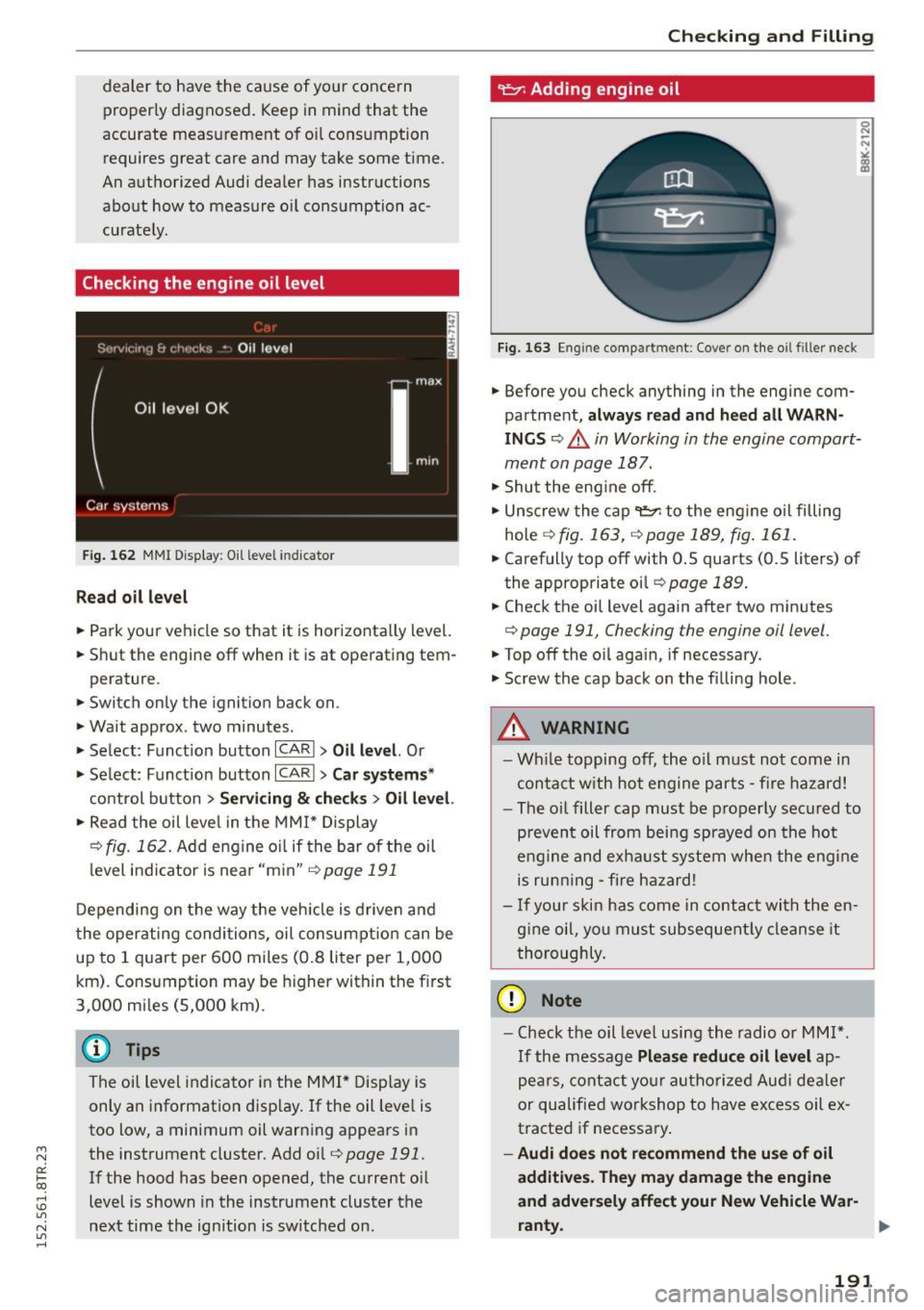
Fig. 162 MMI Disp lay: Oil leve l indicator
Read oil level
• Park your vehicle so that it is horizonta lly level.
• Shut the engine off when it is at operating tem-
perature.
• Switch only the ignition back on.
• Wait approx . two minutes.
• Select: Function button
~IC ~A ~R~I > Oil level. Or
• Se lect: Funct ion button
ICARI > Car systems*
control button > Servicing & checks > Oil level.
• Read the oil level in the MMI* Display
r:::>fig. 162. Add engine o il if the bar of the oil
level indicator is near "min"
r:::>page 191
Depending on the way the vehicle is driven and
the operating conditions, oil consumpt ion can be
up to 1 quart per 600 miles (0.8 liter pe r 1,000
km). Consumption may be higher within the f irst
3,000 mi les (5,000 km).
@ Tips
The oil level indicator in the MMI* Display is
only an information disp lay. If the oil level is
too low, a minimum oil warning appears in
the instrument cluster. Add oi l
r::;, page 191.
If the hood has been opened, the current oil
level is shown in the instrument cluster the
next time the ignition is switched on.
Checking and Filling
~ Adding engine oil
Fig. 163 En g in e compartme nt: Cover on the oil fille r neck
• Before you check anything in the engine com
partment,
always read and heed all WARN
INGS
¢ .&. in Working in the engine compart
ment on page 187.
• Shut the eng ine off.
• Unscrew the cap~ to the eng ine oil filling
hole
¢ fig. 163, ¢page 189, fig. 161.
• Carefully top off with 0 . S quarts (0.5 liters) of
the appropriate oi l
¢page 189.
• Check the oil level again after two minutes
¢ page 191, Checking the engine oil level.
• Top off the o il aga in, if necessary.
• Screw the cap back on the filling hole .
A WARNING
-
-Wh ile topping off, the o il must not come in
contact w ith hot engine parts -fire hazard!
- The oil filler cap must be properly secured to
p revent oil from being sprayed on the hot
engine and exhaust system when the engine
is running -fire hazard!
- If you r skin has come in contact with the en
g in e oi l, you must subsequently cleanse it
thoroughly.
CJ) Note
- Check the oil level using the radio or MMI* .
If the message
Please reduce oil level ap
pears, contact your authorized Audi dealer
or qualified workshop to have excess oil ex
tracted if necessary.
-Audi does not recommend the use of oil
additives. They may damage the engine
and adversely affect your New Vehicle War-
ranty.
1111-
191
Page 195 of 254
"' N
0:: loo
rl I.O
"' N
"' rl
specially conditioned water and the manufactur
er's glycol-basedcoolant additive Gl3 antifreeze
with anticorrosion add itives (50% for USA mod
els ; 60% for Canadian models) . This mixture both
assures the necessary frost protection and pro
tects metal components in the engine's cooling
system from corrosion and scaling . It also raises
the boiling point of the coolant .
Do not reduce the concentration of the coolant in
the summer by adding pla in water .
The propor
ti on of coolant additive mu st be at least 50 %
but n ot more than 60 °/o
to maintain antifreeze
p rotec tion and cooling efficiency . If the coolan t
frost protection is too low, the coolant cou ld
freeze and damage the vehicle heating and en
gine cooling system.
F or year-round driving, antifreeze is added at the
factory for temperatures dow n to:
- - 31 °F (-35 °C) USA
- - 40 °F ( - 40 °C) Canada .
If you m ust add coolant, use a m ixture of water
and coolant additive. Mixing the coolant additive
with distilled water is recommended.
A WARNING
Before you check anything in the engine com
partment, always read and heed all WARN
INGS
~ A in Working in the engine compart
ment on page 187.
(D Note
- Before winter sets in, have the coolant
checked to see if the coolant additive in your
vehicle is suffic ient to meet the climate con
dit ions . This is especially important if you
l ive in a region where the winter is ex treme-
l y co ld. I f necessary, increase the proport ion
of coo lant add itive to 60%.
- When adding coolant addit ive to your cool
ing system, remember:
- We recommend using only coolant addi
tive Gl2 ++ or Gl3 for your vehicle. This
coola nt add itive is ava ilable at authorized
Audi dea lers. Other types of ant ifreeze can
significant ly reduce corrosion protection .
Check in g and Fillin g
The resulting corrosion can cause a loss o f
coolant and serious engine damage.
- Do not add any type of rad iator leak sealant
to your vehicle's engine coolant . Adding ra
diator repair fluid may adverse ly affect the
function and performance of your cooling
system and could result in damage not cov
ered by your New Vehicle Limited Warranty .
Checking the engine coolant level and
adding coolant
Be very careful when adding engine coolant.
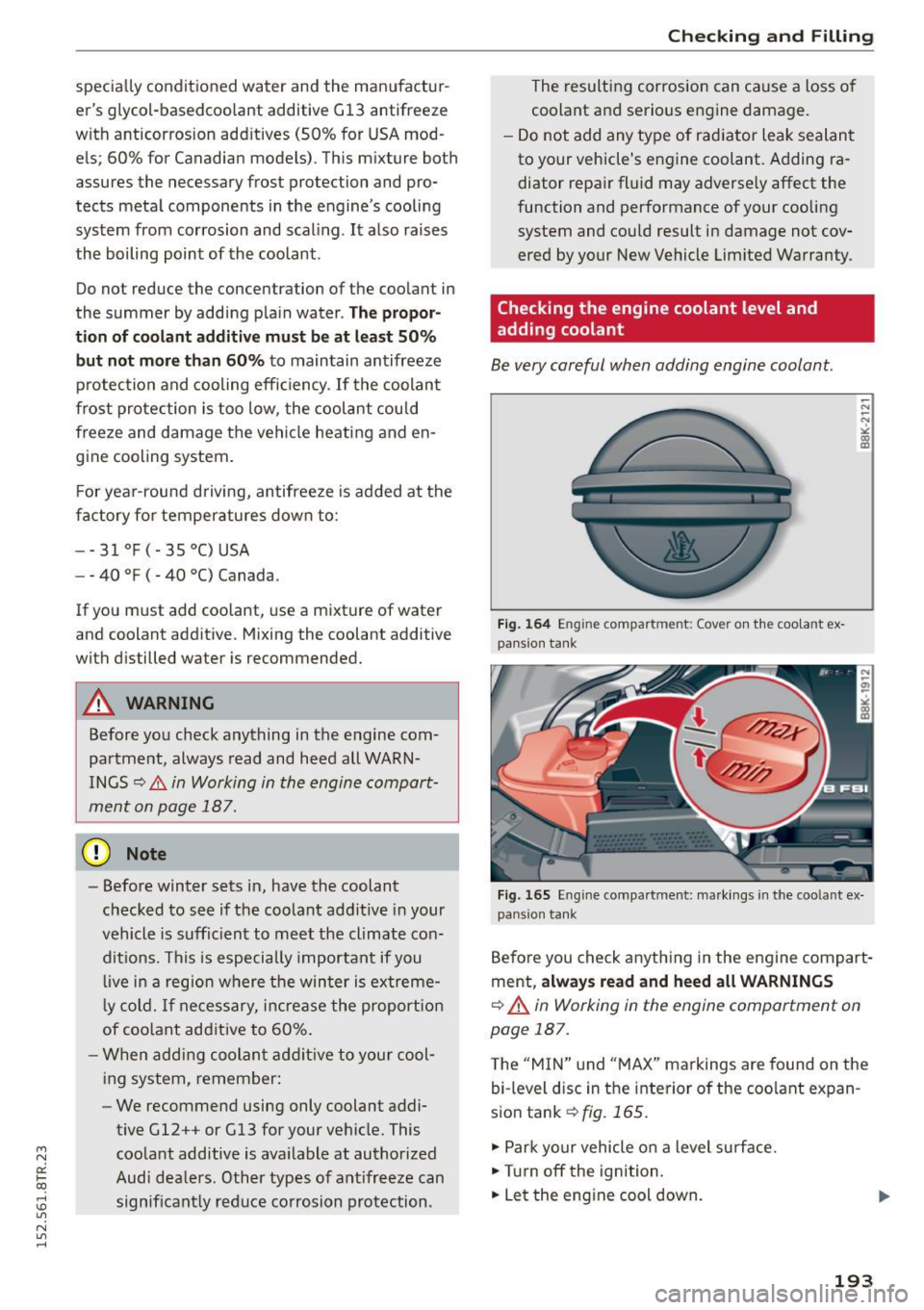
Fig . 1 64 Engine compartment: Cover on the coo lant ex
pans io n tank
Fig . 1 65 Engin e compa rtment: mark in gs in t he coo lant ex
pan sion tank
Before you check anything in the engine compart
ment,
a lwa ys read and heed all WARNINGS
~ A in Working in the engine compartment on
page 187.
The "MIN" und "MAX" markings are found on the
bi-level d isc in the interior of the coo lant expan
s ion tank~
fig. 165 .
.,. Park yo ur vehicle on a level su rface.
.,. Turn off the ignition.
.,. Let the engine cool down.
193
Page 197 of 254
"' N
0:: loo
rl I.O
"' N
"' rl
forced out through the pressure relief valve
in the cap when the engine becomes hot.
- If, in an emergency, only water can be add
ed, the correct ratio between water and an
tifreeze
q page 192 must be restored as
soon as possib le.
@ For the sake of the environment
Drained coolant should not be reused . Always
dispose of used coolant while observ ing a ll
environmental regulations.
Radiator fan
The radiator fan switches on automatically by it
self.
The radiator fan is driven by the engine via the V
be lt. The viscous clutch regulates the speed of
the fan according to the temperature of the cool
ant.
An auxiliary e lectr ic radiator fan * switches on and
off depending on coo lant temperature and other
veh icle operating conditions.
Afte r you switch the engine off, the a uxiliary fan
can cont inue running for up to 10 minutes -even
with the ignition off. It can even switch on again
l ater by itself
Q .&. , if
- the temperature of the engine coolant rises due
to the heat bui ld-up from the eng ine in the en
gine compartment, or
- the engine compartment heats up because the
vehicle is parked in intense sunlight.
_& WARNING
- To reduce the r isk of personal injury never
touch the radiator fan.
- The aux iliary e lectr ic fan is temperature con
trolled and can switch on suddenly even
when the engine is not running.
- The auxiliary radiator fan switches on auto
matically when the engine coo lant reaches a
certain temperature and will continue to run
until the coolant temperature drops.
Ch eck in g and Fillin g
Brake fluid
Checking brake fluid level
The broke fluid level con be checked with a quick
glance.
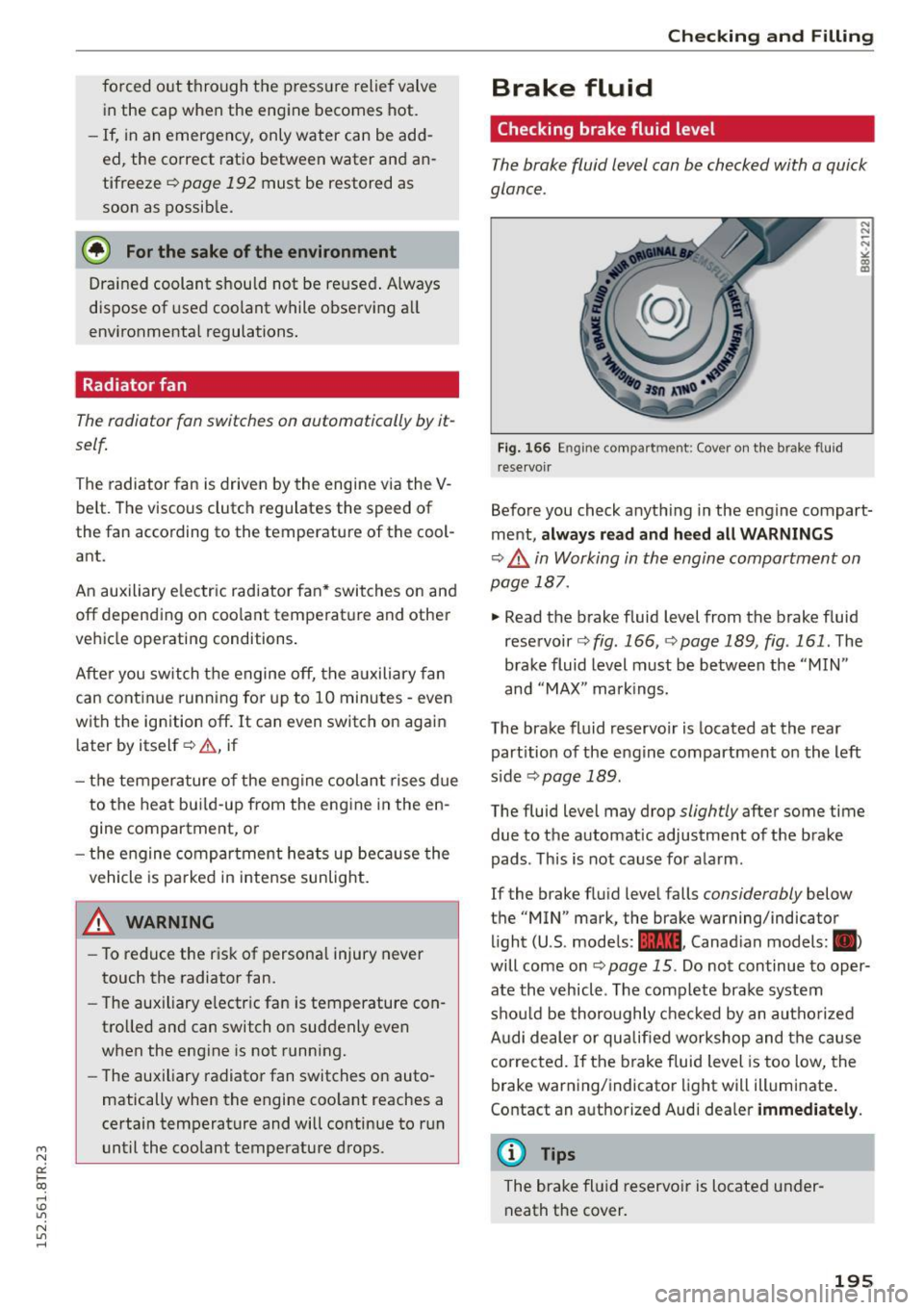
F ig . 1 66 Engine compartment: Cover on the brake fluid
r eservoir
Before you check anyth ing in the engine compart
ment,
a lw ays r ead and h eed all WARNING S
q ,& in Working in the engine compartment on
page 187.
., Read the brake fluid level from the brake fluid
reservoir
q fig. 166, r:> page 189, fig. 161. The
brake fluid level must be between the "MIN"
and "MAX" markings.
The brake fluid reservo ir is located at the rear
part ition of the engine compartment on the left
s ide
q page 189.
The fluid level may drop slightly after some time
due to the automatic adjustment of the brake
pads. This is not cause for alarm.
If the brake fluid level falls
considerably below
the "MIN" mark, the brake warning/indicator
light (U.S. models:
1111 , Canad ian models: .
will come on
Q page 15 . Do not continue to oper
ate the vehicl e. The complete brake system
shou ld be thoroughly chec ked by an autho rized
A udi dealer or qualified workshop and the cause
corrected. If the brake fluid level is too low, the
brake warning/indicator light will illuminate .
Contact an a uthorized Audi dea ler
immedi ately .
(0 Tips
The brake fl uid reservoir is located under
neath the cover.
195
Page 200 of 254
Checking and Filling
-Before work is done on the electrical sys
tem, disconnect the negative ground cable .
- Before performing any work on the electri
cal system, switch off the engine and igni
tion as well as any electrical equipment. The
negative cable on the battery must be dis
connected . If you are just going to replace a
light bulb, then it is enough to switch off
the lights.
- Before disconnecting the battery, switch off
the ant i-theft alarm system! Otherwise you
will set off the alarm.
- When disconnecting the battery, first dis
connect the negative cable and then the
positive cable.
- Before reconnecting the battery, make sure
all electrical consumers are switched off. Re
connect the positive cable first and then the
negative cable. Never interchange the ca
bles -this could start a fire!
- Never charge a frozen or a thawed-out bat
tery. It could explode! If a battery has fro
zen, then it must be replaced. A discharged
battery can freeze over at 32°F (0°C) .
- Make sure the vent hose is always attached
to the opening on the side of the battery.
- Never use batteries which are damaged.
There is the danger of an explosion! Always
replace a damaged battery.
A WARNING
California Proposition 65 Warning:
- Battery posts, terminals and related acces
sories contain lead and lead compounds,
chemicals known to the State of California
to cause cancer and reproductive problems.
Wash hands after handling.
(D Note
- Do not disconnect the vehicle battery when
the ignition is switched on or when tile en
gine is running, otherwise, you will damage
electronic components in the electrical sys
tem.
- If your vehicle is going to stand for a long
period of time without being driven, protect
the battery from "freezing", otherwise it
198
will be damaged and will then have to be re
placed.
Battery charging
Starting the engine requires a well charged bat
tery.
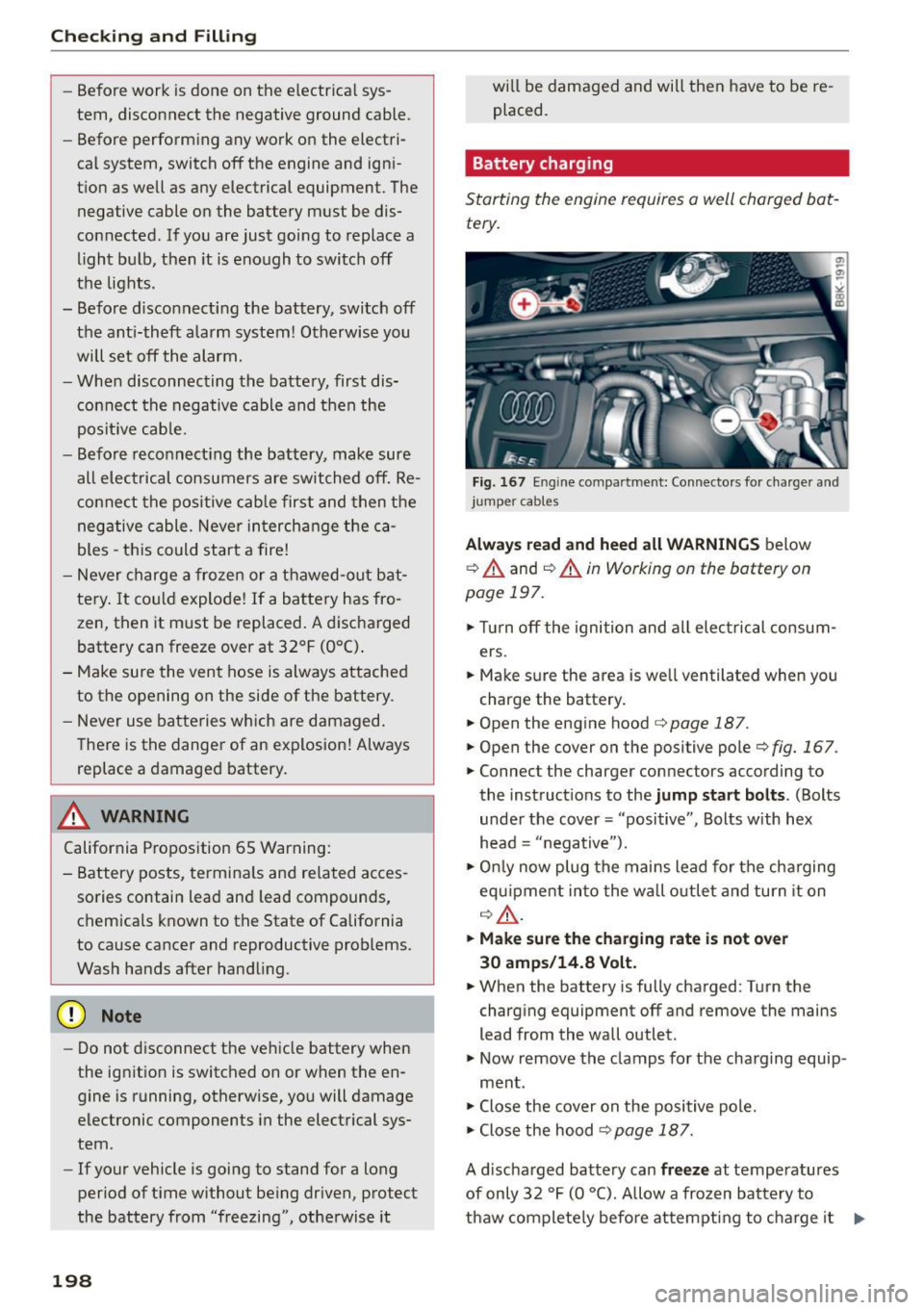
Fig. 167 Eng ine compartment: Connectors for charger and
jumper cables
Always read and heed all WARNINGS below
¢
A and ¢ A in Working on the battery on
page 197.
.,. Turn off the ignition and all electrical consum
ers.
.,. Make sure the area is well ventilated when you
charge the battery.
.,. Open the engine hood
¢ page 187.
.,. Open the cover on the positive pole¢ fig. 167.
.,. Connect the charger connectors according to
the instruct ions to the
jump start bolts . (Bolts
under the cover= "positive", Bolts with hex
head = "negative").
.,. Only now plug the mains lead for the charging
equipment into the wall outlet and turn it on
¢ &, .
.,. Make sure the charging rate is not over
30 amps/14.8 Volt.
.,. When the battery is fully charged : T urn the
charging equipment off and remove the mains
lead from the wall outlet.
.,. Now remove the clamps for the charging equip -
ment .
.,. Close the cover on the positive pole.
.,. Close the hood¢
page 187.
A discharged battery can freeze at temperatures
of only 32 °F (0 °C). Allow a frozen battery to
thaw completely before attempting to charge it
Ill>
Page 216 of 254

Wheels
Your vehicle has also been equipped with a TPMS
malfunction indicator to indicate when the sys
tem is not operating properly. The TPMS mal
function indicator is combined with the low tire
pressure telltale. When the system detects a
malfunction, the telltale will flash for approxi
mately one minute and then remain continuously
illuminated . This sequence will continue upon
subsequent veh icle start-ups as long as the mal
function ex ists.
When the malfunct ion indicator is illuminated,
the system may not be able to detect or signal low tire pressure as intended. TPMS malfunctions
may occur for a variety of reasons, incl uding the
installation of rep lacement or a lternate tires or
wheels on the vehicle that prevent the TPMS
from functioning properly. Always check the
TPMS malfunction tellta le after replacing one or
more tires or wheels on your vehicle to ensure
that the replacement or alternate tires and
wheels allow the TPMS to continue to function properly.
If the Tire Pressure Monitoring System
indicator appears
A pp lies to veh icles: w ith tire pressure moni toring sys te m
The tire pressure indicator in the instrument
cluster informs you if the tire pressure is too low
or if there is a system malfunction.
Fig. 173 In stru ment cluste r: indicator light with message
Using the ABS sensors, the tire pressure monitor
ing system compares the tire tread circumference
and vibration characteristics of the individual
tires . If the pressure changes in one or more
tires, this is indicated in the instrument cluster
d isp lay w ith an ind icator light
RE and a message.
214
If only one tire is affected, the location of that
tire will be indicated .
The tire pressures must be stored in the Infotain
ment system again each time the pressures
change (switching between partial and full load
pressure) or after changing or rep lacing a tire on
your vehicle ¢
page 215. The tire pressure moni
toring system on ly monitors the tire pressure you
have stored. Refer to the tire pressure label for
the recommended tire pressure for your vehicle
¢ page 206, fig. 172 .
Tire tread circumference and vibration character
istics can change and cause a tire pressure warn
ing if:
- the t ire pressure in one or more tires is too low .
- the tire has structural damage.
- the tir e was replaced or the tire pressure was
changed and it was not stored
¢ page 215.
Indicator lights
RE loss of pressure in at least one tire¢&. .
Check the tires and replace or r epair if necessary .
Check/correct the pressures of all four tires and
store the press ure again in the Infotainment sys
tem
¢ page 215.
mn:J (T ire Pr essure Mon itoring System) Tire pres
sure: System malfunction!. If@m
appears after
switching the ignition on or while driving and the
RE indicator light in the instrument cluster
blinks for approximately one minute and then
stays on, there is system malfunction. Try to
store the correct tire pressures
¢ page 215. If
the indicator light does turn off or turns on aga in
after a short period of time, drive to your author
i zed Audi dealer or qualified repair facility imme
diately to have the ma lfunct ion corrected.
,&. WARNING
- If the tire pressure ind icator appears in the
display, reduce yo ur speed immediately and
avoid any hard steering or braking maneu
vers. Stop as soon as possible and check the
tires and their pressure .
- The driver is responsible for maintaining the
correct tire pressure. You must check the
tire pressure regu larly. .,..