ESP AUDI TT ROADSTER 2011 Workshop Manual
[x] Cancel search | Manufacturer: AUDI, Model Year: 2011, Model line: TT ROADSTER, Model: AUDI TT ROADSTER 2011Pages: 260, PDF Size: 64.11 MB
Page 168 of 260
166 Cleaning and protection
8_ WARNING ,~
Always read and heed all WARNINGS and
other information
Q page 162 .
Plastic and vinyl
Plastics needs special care.
Use a clean, damp clo th or sponge to remove
d ust and light surface dirt . For other soil , use
a lukewarm a ll-purpose clean ing solution or a
mild saddle soap for viny l trim. Remove water
spo ts and soap traces with a clean, damp
clot h or sponge. Use a clean, soft clot h to rub
d ry .
Grease, tar or oil stains can be removed with a
clean cloth or sponge soaked w ith all-purpose
cleaner or with a solvent designed especially
to clean vinyl.
Occasionally apply a colorless vi nyl or leather
preservat ive to reta in the material's l uster
and p liability.
8, WARNING
Always read and heed all WARNINGS and
th e information ¢
page 162.
Aluminum trim
Use only neutral-pH products to remove spots
and depos its from alum in um s urfa ces.
C hrome care produ cts and alkaline cleaners
will attac k alumin um s urfaces and can dam
age them over time.
8, WARNING
Always read and heed a ll WARNINGS and
the information
¢ page 162.
Touch-up paint
Minor paint damages should be touched up
immediat ely.
,,. Use e ithe r a to uc h-up p aint s tick or spray
paint to cove r minor scratches and nic ks. Your A
udi dealer has touch -up paint for minor
scratches and sto ne chips. Scratches should
be touched up soon after they occur to pre
vent corrosion.
T he number for the o rig inal ve hicle paint can
be fo und o n the vehicle identification la bel
¢ page 237.
A WARNING
Always read and heed all WARNINGS and
the information
Qpage 162.
Windows
Clear vision to all sides.
Clean all w indows regular ly to remove road
film and carwash wax buildup .
,,. Remove snow from w indows using a b rush.
,,. Use a pla stic ice s craper to remove ice from
w indows and mi rrors.
,,. Remove othe r residue on the windows w ith
a spray-on g lass cleaner.
,,. Wipe the w indows dry with a clean piece of
cloth or kitc hen paper towel.
The best way to remove snow from windows and mirrors is to use a brush . Use a non-abra
s ive
plastic ice scraper -better still, a spray
deicer -to remove
ice from w indows and mir
rors.
T he w indows must not be cleaned with insect
remover or wax since these can inter fere w ith
the function of the windshie ld w iper blades
(chatte r) .
Oil, grease or s ilicone resid ue can be removed
with
glass cleaner or silicone remo ver . How
ever, wax res idue requires the use of a spec ial
ly formulated solve nt. Please contact your Au
di dealer for adv ice on safe products for wax
r emova l.
Windows sh ould also be cleaned on the inside
at regu lar intervals . .,.
Page 172 of 260
170 Cleaning and protection
-Serious injuries can result if plastic parts
come loose when the airbag is deployed.
- Always read and heed all WARNINGS and
the information
¢page 162.
(D Note
Cleaning agents containing solvents will
attack the material and can change the
way it behaves.
Instrument cluster glass
~ Clean the glass with a soft, damp cloth .
In order to preserve the anti-glare properties
of the instrument cluster glass, it should only
be cleaned with a soft, damp cloth.
Natural leather
Applies to vehicles: with natural leather
Audi makes great efforts to maintain the
properties , natural look and feel of interior
leather.
General
We offer many different types of leather on
our vehicles. Most are different types of nappa
leather, which has a smooth surface and
comes in various colors .
The intensity of the color determines the visu
al characterist ics and appearance. If the sur
face of the leather has a typical natural look,
then the leather is a nappa leather that has
been left in a relatively natural condition. This
leather offers par ticularly good com fort and
breathes well . Fine veins, closed grains , insect
bites, skin folds , and subtle variations in color
remain visible. These characteristics demon
strate that the material is natural.
Natural nappa leather is not covered by a col
or finish .
It is therefore more sensitive to soil
ing and wear, which is something you need to
consider if children, animals or other factors
might prove to be particularly hard on the
leather.
By contrast, leather types that are covered by
a colored finish layer are more durable. This has a positive effect on the leather's resist
ance to wear and soiling in daily us
e. On the
other hand, the typical characteristics of natu
ral leather are barely or not apparent. Howev
er, this does not mean that the leather itself
is of inferior quality .
Care and handling
Because of the exclusive nature of the types of
leather that Audi uses and their unique prop
erties (such as sensitivity to oils, grease, soil
ing, etc.), you will need to be somewhat care
ful with these leathers, and a certain type of care is required. For example, dark clothing
materials can discolor leather seats (especial
ly if such clothing is damp and was not dyed
correctly) . Dust and dirt particles in pores,
folds, and seams can have an abrasive effect
and can damage the leather surface as well as
weaken seams.
The leather should be cleaned regularly as
needed. After having been used for a relatively
long time, your leather seats will acquire a
rich aged finish. This is a characteristic of nat
ural leather and a sign of true quality .
In order to maintain the value of this natural
product over the life of your vehicle, you
should follow the recommendations below:
(D Note
- To keep your leather from bleaching out,
do not allow it to be exposed to bright
sunlight for long periods of time. If you
have to leave the vehicle parked outside
for long periods, cover the leather to
protect it from direct exposure to sun
light .
- Sharp objects on clothing, such as zip
pers, rivets or sharp pieces on belts can
leave permanent scratches or scrape
marks on the surface of the leather.
(l) Tips
-After each time you clean the leather and
at regular intervals, use a leather preser
vative creme that contains UV-blockers
and that works into the leather. This
Page 173 of 260
creme will nourish and moisturize the
l eather, helping it to b reathe and stay
supple . It also helps to b uild up a protec
tive coat ing on the surface.
- Clean the leather every 2 -3 months,
and clean any areas that get soiled.
- Remove fresh marks made by ba llpoint
pens, ink, lipstick, shoe polish, etc . as
soon as possib le.
- Preserve the color of the leather as need
ed by using a special colored leather care
creme to touch up areas of uneven color.
Cleaning and caring for leather
upholstery and trim
App lies to vehicles: with natural leather
Natural leather requires special care and at
tention .
Normal cleaning
~ Clean soi led areas with a slightly moistened
cotton or woolen cloth.
Mor e stubborn dirt
~ More stubbo rn dirt can be removed using a
cloth saturated with a mi ld soap so lution (2
tablespoons mi ld liquid soap) .
~ Never allow the soap so lution to saturate
the leather, and make certa in that no water
soaks into the seams .
~ Wipe off the soap solution with a soft, dry
cloth .
Cleaning sp ots
~ Remove fresh wa ter-b ase d spots (such as
coffee, tea, ju ices, blood) w ith an absorbent
cloth or paper towel.
~ Remove fresh gr ease or oi l-ba sed spot s
(such as butter, mayonnaise, chocolate) with
an absorbent cloth or paper towe l, or use
the cleane r from the leathe r care kit if the
spot has not yet pene trated into the surface
of the leather .
~ Use an oil/grease dissolving spray, if oil/
grea se spots h ave d ried on.
~ Remove specific kinds of spots (ballpoint
pen, felt marker, fingernail polish, water-
Cleaning and protec tion 17 1
based paint, shoe po lish, etc.) with a spot
remover specifically formu lated for leather .
Le ather car e
~ Every half year use an approved leather care
product (available from your Audi dea ler) to
care for the leathe r.
~ App ly the product very sparingly.
~ Wipe it off with a damp clot h.
If you have any questions about cleaning and
caring for the leather in your vehicle, it is best
to contact your a uthorized Audi dea ler, who
will be g lad to help you and tell you abo ut our
full range of leather care products, such as:
- Leather cleaning and care kit
- Cremes to care fo r colored lea ther
- Spot removers for ballpoint pens, shoe pol-
ish, etc.
- Oil/grease d issolving spray
- New and upcom ing products.
A WARNING
Always read and heed all WARNINGS and
the information <=) page 162.
Q) Note
-Never use chemical so lvents (e.g. lighter
fluid, tu rpentine), waxes, shoe polish or
simi lar products on the leather surfaces
in yo ur Audi .
- T o avoid damage, have stubborn sta ins
removed by a comme rcial clean ing spe
cialist.
Cleaning Alcantara ® (synthetic suede)
Applies to vehicles: with Alcantara upholstery
Removing dust and dirt
~ Moisten a cloth, squeeze out excess water
and wipe down the seat surfaces.
Removing stains
~ Moisten a cloth with lukewarm water or
w ith diluted
ethyl (rubbing ) alcohol.
~ Dab at the stain . Start at the outs ide and
work inwards . •
•
Page 174 of 260
172 Cleaning and protection
• Once the stain is no longer visib le, use a soft
dry cloth or tissu e to soak up the moisture .
Do not use leather cleaning produc ts on Al
cantara .
You may use a suitable shampoo fo r remov ing
dust and dirt.
Dust and grit in the pores and seams can
scratch and damage the surface . If the car is
l eft stand ing i n the sun fo r long pe riods, the
A lcantara should be p rotected against direc t
sun light to preven t it from f ad ing. Slig ht color
va ria tions will develop in normal use an d are
not an indication of material deterioration .
CI) Note
-Never use chemi cal solven ts (e.g. lighter
fl uid , turpentine), waxes, shoe po lish or
s imilar products on Alcantara ® sur faces.
- To avoid damage, have stubborn stains
r emoved by a commerc ia l cleaning spe
cia list.
- Do no t use br ushes, st iff sponges or sim
ilarly abrasive cleaning a ids.
Safety belts
Only well-maintained safety belts work relia
bly when ne eded .
Heavily soiled safety belts may not retr act
p rope rly.
• Keep be lts clean.
• For cleaning, use a m ild soap and wate r sol
u tio n. Le t be lts d ry thoro ughly and away
from direct s unli gh t.
• Do no t all ow ine rtia reel safety be lts to re
t ract before they are completely d ry .
• Check the condition of your safety belts
reg
ularly.
A WARNING
Damaged safety belts can break in a crash.
1l Use o nly th e co rrec t cle anin g so lu ti on s. Ne ver use gas
oli ne or d ie se l fuel.
- Anyth ing that might damage yo ur sa fety
be lts could mean that you and your pas
sengers would not be adequate ly pro
tected in an accident .
- Safety belt performance depends on co r
rect insta llation. Never remove be lts
from the veh icle to clean them .
- Do not use chemical clea ning agents,
b leach or dyes . They have corrosive prop
ert ies which wea ken the webb ing .
- When clean ing your safety be lts, inspect
them for damage . If you discover dam
age, see your Audi dea ler .
'
-Always read a nd heed a ll WARNINGS and
the information
<=;> page 162 .
Engine compartment
Be especially careful when cleaning the en
gine compar tment.
Always switch off the ignition before clean
ing the engine<=;>.&, .
Plenum panel
Remove leaves from the plenum panel in front
of the w indshield under the eng ine hood . This
preve nts the water drain holes from becomin g
block ed, and it prevents debris from enter ing
the ve hicle interio r thr ough the heating and
ventilat ion duc ts.
Corrosion protection
T he eng ine compartment and transmission
have been corrosion -protected at the factory .
G ood anti- corrosio n treatmen t is very impor
tant, par ticul arly in the w inter.
If the vehi cle
is frequently driven on salt t reated roads, the
entire engine compa rtment an d plen um panel
sho uld be thoro ughly cleaned at the end of
winter and retreated to prevent salt damage.
At the same time, the unde rside of the vehicle
shou ld be washed as well.
If the engine compa rtment is cleaned at any
time with grease remov ing solutions
1> , or if ..,.
Page 177 of 260
-Blend must contain not more than 15%
MTBE.
Seasonally adjusted gasoline
Many gasoline grades are blended to perform
espec ially we ll for winter or summer driving.
During seasonal change-over, we suggest that
you fill up at busy gas stat ions where the sea
sonal adjustment is more likely to be made in
time .
(D Note
-Methanol fuels which do not meet these
requirements may cause corrosion and
damage to plastic and rubber compo
nents in the fuel system .
- Do not use fue ls that fail to meet the
specified criter ia in this chapter.
- If you are unable to determine whether
or not a particular fue l blend meets the
specifications, ask your service station or
its fuel supp lier.
- Do not use fuel for which the contents
cannot be identified.
- Fuel system damage and performance
problems resulting from the use of fuels
different from those specified are not
the responsibility of Audi and are not
covered under the New Vehicle or the Emission Control System Warranties.
- If you experience a loss of fuel economy
or driveability and performance prob l ems due to the use of one of these fuel
blends, we recommend that you switch
to unblended fuel.
Gasoline additives
A major concern among many auto manufac
turers is carbon deposit build- up caused by
the type of gasoline you use.
Although gasoline grades differ from one manufacturer to another , they have certain
things in common. All gasoline grades contain
substances that can cause deposits to collect
on vital engine parts, such as fuel injectors
and intake valves. Although most gasoline brands include additives to keep engine and
Fuel supply and filling your fuel tank 175
fuel systems clean, they are not equally effec
tive .
A udi recommends using TOP TIER Detergent
Gasoline. For more information on TOP TIER
Detergent Gasoline, please go to the official
website (www.toptiergas.com).
After an extended period of using inadequate
fuels, built-up carbon deposits can rob yo ur
engine of peak performance.
Q) Note
Damage or malfunction due to poor fue l
quality is not covered by the Aud i New Ve
hicle Limited Warranty.
Fuel tank
Fuel filler neck
The fuel filler neck is located on the right rear
side panel behind the fuel fille r flap.
If the unlocking system should fail, you can
still open the flap manually -for detailed in
structions see ¢
page 177.
You can find the fuel tank capacity of your ve
hicle in
Technical Data ¢ page 239.
The label on the inside of the fuel fi ller flap
tells you the correct fue l for your vehicle. For
more information about fuel specifications,
see ¢
page 174.
Your vehicle fue l tank has an on -board refue l
li ng vapor recovery system. This feature helps
to prevent fuel vapors from escaping from the
tank and polluting the environment while you refuel your vehicle . In order to fill the tank
properly while protecting the environment,
please fo llow this refueling procedure careful
ly.
_&. WARNING
Under normal operating conditions, never
carry additional fue l conta iners in yo ur car.
Gas canisters and other containers used to
transport f uel can be dangero us. Such con
tainers, full or empty, may leak and could
cause a fire in a collision. If you must
•
•
Page 179 of 260
-For your safety, we strongly recommend
that you do not travel with a portable
fuel container in your vehicle. The con
tainer, full or empty may leak and could
cause a fire, especially in a crash.
- If, under exceptional circumstances, you
must transport a portable fuel container,
please observe the following:
- Never fill a portable fuel container
while it is anywhere in or on the vehicle (for example, in the luggage compart
ment, or on the trunk) . Static electrici
ty can build up while filling and can ig
nite fuel vapors causing a fire.
- Always place a portable fuel container
on the ground before filling .
-Always keep the filler nozzle complete
ly inside the portable container before
and during filling.
- If filling a portable container made of
metal, the filler nozzle must always be
in contact with the container. This will
help prevent static electricity from dis
charging and cause a fire.
- Never spill fuel inside the vehicle or
luggage compartment. Fuel vapors are
highly flammable.
- Always observe local and state/provin
cial laws regarding the use, storage
and transportation of fuel containers
- Make certain the fuel container meets
industry standards (ANSI/ ASTM
F852-86).
(D Note
If any fuel has spilled onto the car, it
should be removed immediately to prevent
damage to the paint.
@ For the sake of the environment
As soon as the correctly operated nozzle switches off automatically for the first
time, the tank is full. Do not try to add
more fuel because fuel may spill out. In
addition, the expansion space in the fuel
tank will be filled -causing the fuel to
Fuel supply and filling your fuel tank 177
overflow when it becomes warm and pol
lute the environment.
a) Tips
- Running your engine while refuelling
may cause vapors to escape or even fuel
to spill out of the tank. This would then
shut off the fuel nozzle before the tank
is full.
- Do not refuel your vehicle with the igni
tion switched on. The fuel gauge may
otherwise not indicate the correct fuel
level after refuelling.
Unlocking the fuel filler flap
by hand
You can open the fuel filler flap by hand if the
power locking system should fail .
Fig. 134 Lu ggage compartment: Cover in the right
side interior trim
If the power locking system should fail, you
can still open the flap manually:
.. Open the rear lid.
.. Open the round cover in the right-side interi
or trim .
.. Remove the red plastic knob from its retain
er.
.. Pull the plastic cord in the direction of the
arrow to unlock the fuel filler flap
~fig. 134 .
Page 180 of 260
1 78 Che cking and filling
Checking and filling
Engine hood
Releasing the engine hood
The engine hood is released from inside the
vehicle .
Fig . 135 Dr iver's side footwe ll: e ngin e hood re lease
lever
.. Open the driver's door .
.. Pull the release lever on the left under the
inst rument panel
c> fig . 135 in the direction
of the arrow .
The hood pops up s light ly under spring pres
sure.
Opening the engine hood
Fi g. 136 Release lever under the eng ine hood
Before opening the engine hood, make s ure
that the windshie ld wipers are flat against the
windshie ld. Otherwise, they co uld damage the
pa in t on the hood.
.. Lift the hood slight ly
c> .&, .
.. Pul l up on the release under the hood
c> fig . 136. This releases the catch .
.. Open the hood all the way.
A WARNING
-Hot eng ine coolant can burn you.
- To reduce the risk of being b urned, never
open the hood if you see or hear steam
or coo la nt escaping from the eng ine
compa rtment . Wait unt il no steam or
coo lant can be seen o r heard before care
fu lly openi ng the hood.
Closing the engine hood
.. Pull the hood down until the pressu re from
the struts is reduced .
.. Le t t he hood
drop down and latch in p lace .
Do not try to push it shut; it may fail to en
gage
c> .&, .
A WARNING
--
A hood that is not completely latched
could fly up and b lock your view while dr iv
i ng.
- W hen you close the engine hood, check it
to make sure the safety catch has p roper
ly engaged . The hood sho uld be flush
wit h the surrou nding vehicle body parts.
- If you notice while dr iv ing that the hood
is not s ecured properly, stop at once and
close it .
Working in the engine compartment
Be especially careful whenever you work in
the engine compartment!
Whenever you must perform an y wo rk in the
eng ine compartment, for example checking
and filling the different fluids, there is a risk
of injury, burns and a ccidents. To prevent
per sonal injury alway s obs erve the following
WARNINGS. The engin e compartm ent of an y
vehicle is a hazardou s area!
c> .&.
A WARNING
To he lp avo id injury, before yo u check any
thing under the hoo d:
- Sw itch off the engi ne .
- Remove the igni tion key.
Page 187 of 260
wooded areas, into open streams or
down sewage drains.
- Recycle used engine oil by taking it to a
used engine oil collection facility in your
area, or contact a service station.
Engine cooling system
Coolant
T he engine coolan t performs two functions: it
keeps the engine from overheating and it pro
tects the engine from freezing in the winter .
The cooling system is sealed and generally re
quires little attention .
T he cooling system has been filled at the fac
tory with a permanent coolant which does not
need to be changed . The coolan t consis ts of a
mixture of water and the manufacturer 's gly
col-basedcoolant additive G12 ++ antifreeze
with anticorrosion additives (50% for USA
models; 60% for Canad ian models). This mix
ture both assures the necessary frost protec
tion and protects metal components in the
engine 's cooling system from corrosion and
scaling. It also raises th e boiling point of the
c oolant.
Do not reduce the concentration of the coo l
ant in the summer by adding plain water .
The
proportion of coolant additive must be at
least 50% but not more than 60%
to main
tain antifree ze protection and cooling efficien
cy . If the coolant frost protection is too low,
the coolant could freeze and damage the veh i
cle heating and eng ine cooling system .
For year-round driving, an tifree ze is added at
the factory for temperatures down to:
- -31 ° F ( - 3 5 °C) USA
- -40 °F ( -40 °C) Canada.
You can mix the G12 ++ coolant addit ive with
other additives (G12+ or G12) . Always check
with your authorized Audi dealer.
& WARNING
Before you check anything in the engine
compartment, always read and heed all
-
Checkin g and fillin g 185
WARNINGS c:::> .& in Working in the engine
compartment on page 178.
(D Note
- Before winter sets in, have the coolant
checked to see if the coolant additive in
your vehicle is sufficient to meet the cli
mate conditions. This is especially impor
tant if you live in a region where the win
ter is extreme ly cold . If necessary, in
crease the proportion of coo lant add itive
to 60% .
- Whe n adding coolant additive to your
cooling system, remember :
- We recommend using only coo lant ad
ditive G12++ (check the labe l) for your
vehicle . This coolant additive is avai la
ble at authorized Audi dealers. Other
types of ant ifreeze can significantly re
duce corrosion protection . The result
ing corrosion can cause a loss of cool
ant and ser ious eng ine damage.
- Do not add any type of rad iator leak seal
ant to yo ur vehicle's engine coolant .
Add ing radiator repair fluid may adverse
ly affect the function and performance of
your cooling system and could resu lt in
damage not covered by your New Vehicle
Limited Warranty .
Checking the engine coolant level
The engine coolant level can be checked with
a quick glance.
Fig. 141 E ng ine compart men t: coo lant ex pansion t ank Ill>
Page 192 of 260
190 Checking and filling
Working on the battery
Be especially careful when working on or near
the battery!
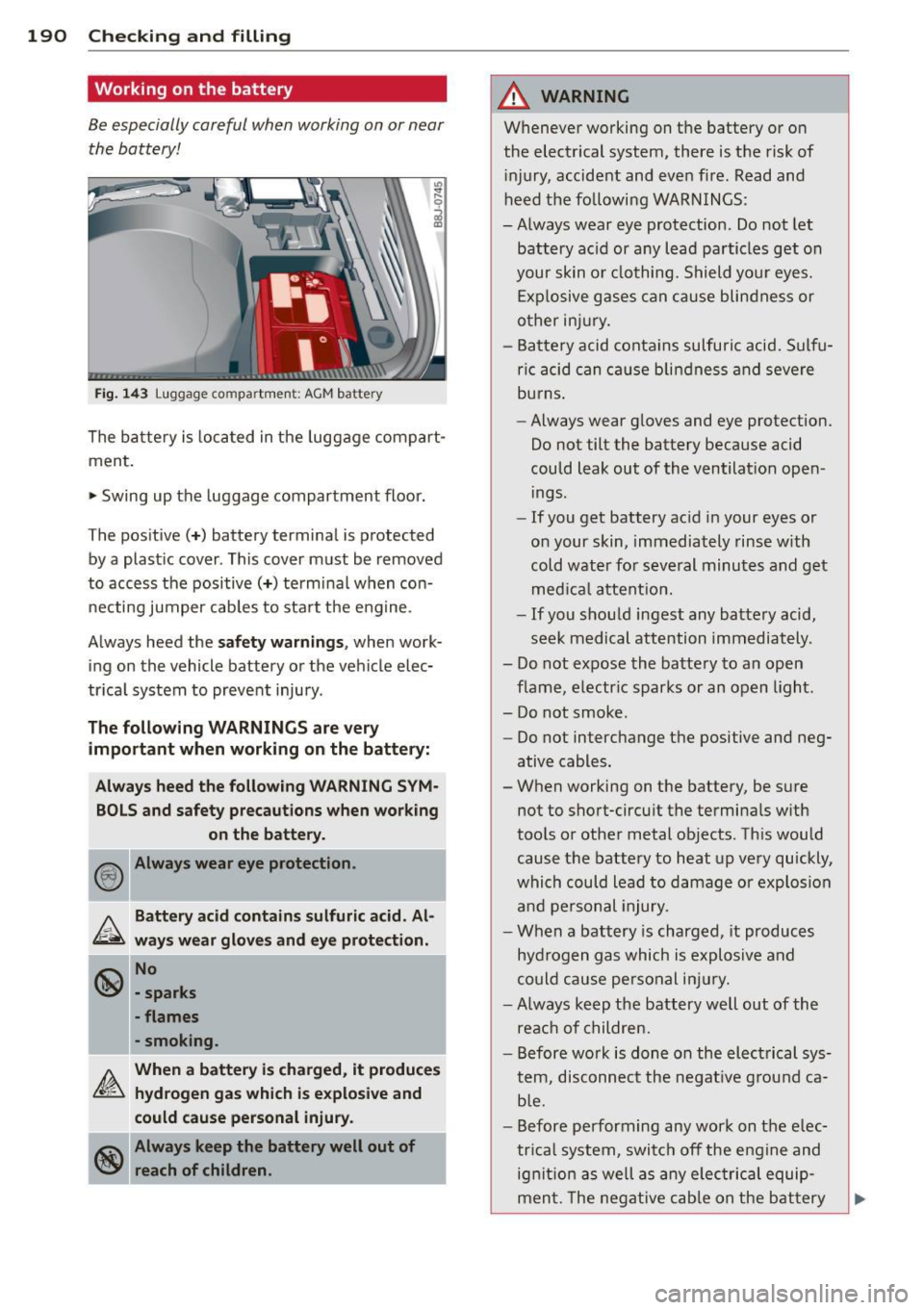
Fig . 14 3 Luggage compartment: AGM battery
The battery is loca ted in the luggage compart
ment.
~ Swing up the luggage compartment floor.
The positive( +) battery terminal is p rotected
by a plast ic cover . This cover must be removed
to access the positive( +) termina l when con
necting jumper cables to start the eng ine .
Always heed the
safe ty war nings, when work
ing on the vehicle battery or the vehicle elec
tr ica l system to prevent injury .
The following WARN INGS are ver y
import ant when w orking on the battery:
Alw ays heed t he follow ing W ARNING SYM ·
BOLS a nd safety precautions wh en working
on th e bat tery.
® Always wear eye protection .
I).. Battery acid contain s sulfuric acid. Al
~ ways wear gl oves a nd e ye prot ecti on.
I/£ No
\l:!S' -spar ks
• flames
- smoking.
When a batter y is ch arged , it pr odu ce s
h y d rogen g as which i s ex plosi ve and
could cau se personal injury.
----Always keep the battery well out of
re ach of children .
®
.&_ WARNING
Whenever working on the battery or on
the elect rical system, there is the risk of
i njury, accident and even fire. Read and
heed the fo llowing WARNINGS:
-Always wear eye protection. Do not let battery ac id or any lead particles get on
your skin o r clothing. Shield your eyes.
E xp losive gases can cause blindness or
o ther inju ry.
- Ba ttery acid conta ins sulfuric acid. Sulfu
ric acid can ca use blindness and severe
burns .
- Always wear gloves and eye protection.
Do not tilt the battery because acid
could leak out of the ventilat ion open
ings .
- If you get battery acid in your eyes or
on your skin, immediately rinse w ith
cold water for several minutes and get
medica l attent ion.
- If you shou ld ingest any battery acid,
seek medical attention immediately.
- Do not expose the battery to an open flame, e lectr ic sparks or an open light .
- Do not smoke.
- Do not interchange the positive and neg-
ative cables.
- When working on the battery, be sure
not to short-circuit the terminals with
tools or other metal objects . Th is would
cause the battery to heat up very quickly,
which could lead to damage or explosion and personal injury.
- When a battery is charged, it produces
hydrogen gas which is explos ive and
could cause pe rsonal in ju ry.
- Always keep the battery well out of the
reac h of children.
- Before work is done on the electrical sys
tem, disconnect the negat ive g round ca
b le.
- Before performing any work on the e lec
tr ica l system, switch off the engine and
ignit ion as well as any elec trical equip
ment. The negative cable on the bat tery
Page 196 of 260
194 Tire s and wheel s
Tires and wheels
Tires
General notes
Tires may be the least appreciated and most
abused parts of a motor vehicle .
Tires may be the least appreciated and most
abused parts of a motor vehicle . Tires are,
however, one of the most important parts of a
vehicle, particularly considering the compara
tive ly small patch of rubber on each tire that
assures that a ll-important contact between
you, you r vehicle and the road.
Maintaining the correct tire pressure, mak ing
sure that your veh icle and its t ires do not have
to carry mo re weight than they can safe ly han
d le, avoiding damage from roa d haza rds and
r eg ularly inspecting t ires for damage includ
ing cuts, slashes irregu la r wear and ove rall
condition are the most important things that
you can do to he lp avoid s udden tire failure in
cluding tread separat ion and blowouts.
Avoiding damage
If you have to drive over a curb or similar ob
stacle, drive very s low ly and as close as possi
b le at a right angle to the curb.
A lways keep chem ica ls incl ud ing gre ase, o il,
gasoline and b rake fluid off the t ires .
Inspect the t ir e s regularly for damage (cuts,
cracks or b listers, etc.). Remove any fo reign
bod ies embedded in the treads.
Storing tires
Mark ti res when you remove them to indicate
the direction of rotation . T his ensures you to
be ab le to mount them correctly when you re
install t hem.
When removed, the whee ls or t ires should be
stored in a cool, d ry and preferably dark place .
Store tires in a vertical pos ition if they are not
mounted on rims, in a horizontal pos it ion if
they are mounted on rims.
New tires
New t ires have to be broken in¢&,. .
T he tread depth of new t ires may vary, accord
ing to the type a nd make of t ire and the tread
pa tte rn .
Hidden damage
Damage to tires and r ims is ofte n not readily
vis ible . If you notice unusual v ibrat ion or the
vehicle p ulls to one side, th is may ind icate
t h at one of the t ires has been damaged . Th e
t ir es m ust be checked immed iate ly by an au
tho rized Aud i dea le r or q uali fied wor ks hop.
Unidirectional t ires
A un idirectional tire can be identified by ar
rows on the sid ewa ll, that po int in the direc
t ion the t ire is desig ned to rotate. You must
f ol low the specified d irec tion of rot ation . This
is necessa ry so tha t these tires can develop
their optimum characterist ics regarding grip,
road no ise, wear and hyd rop laning resistance.
For more information ¢
page 226.
A WARNING
-New tires or t ires that are o ld, worn or
damaged cannot provide maximum con
trol and braking ability .
-
-New tires tend to be slippery and must
be broken in . To reduce the risk of losing
control, a co llision and ser ious personal
in jur ies, d rive w ith special ca re fo r the
fi rst 3 50 m iles (560 km).
- Driving with worn or damaged tires can
le ad to loss of control, sudden tire fail
ure, including a blowou t and sudden de
fla tion, crashes and seriou s personal in
juries . Have wo rn or damaged t ires re
p laced immediate ly .
- Ti res age even if they are not being used
an d can fai l sudden ly, especially at high
speeds. Tires that are more than 6 years
old can only be used in an emergency
and then w ith specia l care and at low
speed.