service AUDI TT ROADSTER 2017 Repair Manual
[x] Cancel search | Manufacturer: AUDI, Model Year: 2017, Model line: TT ROADSTER, Model: AUDI TT ROADSTER 2017Pages: 314, PDF Size: 76.54 MB
Page 221 of 314
co
co
.... N
" N .... 0
" "' c:o
-Never install a rearward facing child safety
seat on the front passenger seat if the
PAS
SEN GER AIR BA G OFF ,;;
light does not
turn on and stay on. Have the system in
spected immediately by an authorized Audi
dealer or author ized Audi Service Facility .
A WARNING
-Forward-fac ing ch ild seats installed on the
front passenge r seat may inte rfere with the
deployment of the a irbag and cause serious
persona l injury to the child .
- If except ional circumstances require the use
of a forward-facing child restraint on the
front passenger's seat , the child's safety
and well-being require the following special
precautions to be taken:
- Always make sure that the forward -facing
seat has been designed and cert ified by its
manufacture r fo r use on a front passenger
seat with a front and s ide a irbag.
- Always carefully follow the manufacturer's
instructions provided with the child seat
or i nfant car rier.
- Never p ut the fo rward-facing child re
stra int up against o r very near the instru
men t panel.
- Always move the front passenger seat to
the highest posit ion in the up and down
ad justment range and move it back to the
rearmost position in the seat's fore and
aft adjustment range, as far away from
the airbag as possible, before installing
the forward-facing ch ild restraint.
- Always make sure that the safety be lt up
per anchorage is behind the child restra int
and not next to or in front of the child re
stra int so that the safety belt will be prop
erly positioned .
- Always make sure that nothing prevents
the front passenger's seat from be ing
moved to the rearmost posit ion in its fore
and aft adjustment range .
- Never place objects on the seat (such as a
laptop, CD p laye r, electronic games de
vice, powe r inverter or seat heater for
child seats). These may influence the elec-
Ch ild safety
trical capacitance measu red by the capaci
tive passenger detection system and can
also fly around in an accident and cause
serious personal injury.
- Never place or use any electrical device
(such as a laptop, CD player, electronic
games device, powe r inverter or seat heat
er for child seats) on the front passe nger
seat if the device is connected to the 12-
vo lt socket or the cigarette lighter soc ket.
- If a seat heate r has been retrofitted or
othe rw ise added to t he front passenger
seat, neve r insta ll any child res traint sys
tem on this seat.
- Make su re that there a re no wet objects
(s uch as a we t towe l) and no w ater or ot h
er liquids on the front passenger seat
cushion .
- Always m ake sure tha t the
PASSENGER
AIR BAG OFF,;;
light comes on and stays
on all the time whenever the ignition is
switched on .
- Never install a forward -facing chi ld safety
seat on the front passenger seat if the
PASSENGER AIR BAG OFF ~ ; light does
not turn on and stay on. Have the system
inspected immediately by an author ized
Audi dealer or authorized A udi Service Fa
c ility .
- Always buckle the child seat firmly in
place even if a child is not s itting in it . A
loose child seat can fly aro und during a
sudden stop or in a collision.
- Always read a nd heed all WARNINGS
whenever using a child rest raint in a vehi
cl e
9 page 189, Safety bel ts, 9 page 196,
Airbag system
and ~ page 218, Impor
tant information.
(j) Tips
A lways replace child restraints that were in
stalled in a vehicle du ring a c rash. Damage to
a child restrain t th at is not v is ible could cause
i t to fai l in another co llision situat ion .
219
Page 234 of 314
Checking and Filling
-If you a re unable to determine whether or
not a particular fuel blend meets the speci
fications, ask your service station or its fuel
supplier.
- Do not use fuel for which the contents can
not be identified.
- Fuel system damage and performance prob
lems resulting from the use of fuels differ
ent from those specified are not the respon
sibility of Audi and are not covered under
the New Vehicle or the Emission Control
System Warranties.
- If you experience a loss of fuel economy or
driveability and performance problems due
to the use of one of these fuel blends, we
recommend that you switch to unblended
fuel.
Gasoline additives
A major concern among many auto manufactur
ers is carbon deposit build-up caused by the type
of gasoline you use.
Although gasoline grades differ from one manu
facturer to another, they have certain things in
common. All gasoline grades contain substances
that can cause deposits to collect on vital engine
parts, such as fuel injectors and intake valves. Al
though most gasoline brands include additives to keep engine and fuel systems clean, they are not
equally effective .
Audi recommends using TOP TIER Detergent Gas
oline. For more information on TOP TIER Deter
gent Gasoline, please go to the official website (www .toptiergas .com).
After an extended period of using inadequate
fuels, carbon deposit build-ups can rob your en
gine of peak performance.
(D Note
Damage or malfunction due to poor fuel qual
ity is not covered by the Audi New Vehicle
Limited Warranty.
232
Refueling
' Fuel filler neck
The fuel filler neck is located on the right rear
side panel behind the fuel filler flap .
If the power locking system should fail, you can
still open the flap manually -for detailed instruc
tions see
~ page 234.
You can find the fuel tank capacity of your vehicle in
~ page 291.
The label on the inside of the fuel filler flap tells
you the correct fuel for your vehicle. For more in
formation about fuel specifications, see
~ page 231.
Your vehicle fuel tank has an on board refuelling
vapor recovery system. This feature helps to pre
vent fuel vapors from escaping from the tank and
polluting the environment while you refuel your
vehicle . In order to fill the tank properly while
protecting the environment, please follow this
refueling procedure carefully.
.8, WARNING
Under normal operating conditions, never car
ry additional fuel containers in your car. Gas
canisters and other containers used to trans port fuel can be dangerous. Such containers,
full or empty, may leak and could cause a fire
in a collision. If you must transport fuel to
use for your lawn mower, snow blower, etc .,
be very careful and always observe local and
state laws regarding the use, transportation
and storage of such fuel containers. Make cer
tain the container meets industry standards
(ANSI/ASTM F852 -86).
CI) Note
Never drive your vehicle until the fuel tank is
completely empty. The irregular supply of
fuel can cause misfiring. Gasoline could enter
the exhaust system and damage the catalytic
converter.
Page 237 of 314
co
co
.... N
" N .... 0
" "' c:o
Engine compartment
Working in the engine compartment
Special care is required if you are working in the
engine compartment
F or wo rk in th e en gine c ompar tment su ch as
ch eckin g and fi llin g flu id s, th ere is a risk of in
j u ry , sca lding , acci dent s, a nd b urn s. Fo r this
re aso n, follow all the warnin gs and ge nera l
saf ety pr eca uti ons pr ov ided in the follow in g i n·
form ation . Th e e ng ine c ompartm en t is a d an
ger ous a re a .
¢ ,&. .
A WARNING
- T urn the engine off.
- Switch the ign ition off .
- Set the parking brake .
- Place the selector lever in the P pos it ion.
- Let the engine cool down.
- Never open the hood when there is steam or coolant escaping from the eng ine compart
ment, because there is a risk that you could
be burned . Wait until no steam or coolant is
escaping .
- Keep children away from the engine com
partment .
- Never spill fluids on a hot engine. These flu
ids (such as the freeze protection contained
in the coolant) can catch fire .
- Avoid short circu its in the electrical system,
especially to the battery .
- When working in the engine compartment ,
remember that the radiator fan can sw itch
on even if the ign ition is switched off , which
increases the risk of pe rsonal injury.
- Never open the cap on the coolant expan sion tank when the eng ine is warm . The
cooling system is under pressu re .
- To protect your face, hands, and arms from
hot steam or coolant, cover the cap with a
large cloth when opening.
- Do not remove the engine cover under any
circumstances. This increases the risk of
burns.
- If tests need to be performed w ith the en
gine running, there is additional dange r due
Ch eck ing and Filling
to moving components (such as the ribbed
be lt, alternator and radiator fan) and from
the high voltage ignition system.
- Do not press the acce lerator pedal inadver
tently if a gear is selected when the vehicle
is stationary and the engine is running. Oth
erwise, the vehicle will start to move imme
diate ly and this could result in an accident .
- Pay attent ion to the following warnings list
ed when work on the fuel system or on the
electrical equipment is required.
- Do not smoke .
- Never wor k near open flames .
- Always have a working fi re extingu isher
nearby
- All work on the battery or electrical system
in your veh icle can result in inju ries, chemi
cal burns, acc idents or burns . Because of
this, all work must be performed
onl y by an
authorized Audi dealer or authorized Audi
Service Facility.
- To reduce the risk of electric shock and in
jury, never touch the following components
when the engine is running or is being start·
ed:
- Ign it ion cable
- Other components in the electronic high -
voltage ign ition system
- If you must check or perform work on the
engine wh ile it is running:
- Set the parking brake and place the selec
tor lever in the P (park) position first .
- Always proceed w ith extreme caution so
that clothing, jewelry or long hair do not
become caught in the radiator fan , fan
belt or other moving components or do
not come into contact with hot compo
nents. Tie back long hair before beginning
work and do not wear clothing that can hang down into the engine .
- Lim it your exposure to exhaust and chemi
cals to as short a time as possible
¢ ,&. .
A WARNING '"--
California Proposition 65 Warning:
235
Page 240 of 314
Check ing and F illing
Using the proper engine oil is impo rtant for the
functionality and service life of the engine. Your engine was facto ry-filled with a h igh-quality oi l
which can usually be used throughout the entire
year.
@) Note
Your Limited New Vehicle War ranty does not
cover damage or malfunctions due to failure
to follow recommended maintenance and use
requirements as set forth in the Audi Owner's
Manual and Warran ty
& Maintenance booklet.
- Use only a high quality eng ine oil t hat ex-
p ressly complies with the Audi oil qua lity
standard specified for your vehicle's engine .
Using a ny o ther oil can cause serious engine
d am age.
- D o not mix any lubricants o r other addit ives
i nto the engine oil. Doing so ca n cause en
g ine damage.
(D Tips
I f you need to add oil and there is none availa
ble t hat meets the Audi o il quality standard
your eng ine requi res , you m ay ad d a tot al of
no more than 0.5 q t (0,5
l) of a h igh-quali ty
"synthe tic"oil that meets t he following speci
fications.
- AC EA A3 o r API SM wi th a viscosity grade o f
SAE 0W-30, SAE 5W-30 or SAE 5W-40.
- F or more inform ation about engine o il that
has been approve d for your ve hicl e, please
contact eithe r you r a uthorized Audi dea le r
or A udi C ustome r Relat ions at
1 (800) 822-2834 or visit o ur web site at
www.audiusa.com or www.audicanada.ca .
Engine oil consumption
T he engine in your vehicle depends on an ade
quate amoun t of oil to lubricate and cool all of
i ts moving par ts.
In order to p rovide effective lubr ication and cool
ing of internal engine components, all interna l
combustion engines consume a cer tain amount
of oil. Oi l co nsumption varies from engine to en
g ine and may change significant ly over the life of
the eng ine . Typically, eng ines with a specified
238
b reak -in period (see q page 57) cons ume more
oi l during the break-in period than they consume
after o il consumption has stab ilized.
U nder normal cond itions, the ra te of oil con
s u mption depends on the q ua lity and viscos ity o f
the oil , the RPM (revo lutions per minute) at
which the engine is operated, the amb ient tem
perature and road condit ions. Further facto rs a re
the amount of o il di lution from wate r condensa
tion or fue l resid ue a nd the oxidation level of the
o il. As any engine is subject to wear as mileage
builds up, the o il consumption may increase ove r
ti me until replacement o f wo rn components may
become ne cessary.
With a ll these va riables coming into p lay, no
standard rate of o il consumption can be estab
li sh ed or spec ified . T he re is no alte rnative to reg
u lar and freq uen t che cki ng of the oil level , see
Note .
If the yellow engine oil level warning symbo l l!I
in the instrument clus ter lights up , you sho uld
c h eck t he o il level as soon as poss ible
q page 239 . Top off the o il at your earlies t con
venience
q page 239.
_& WARNING
Before you check a nyt hing in the en gine com
partment, always read and heed all WARN
INGS
9 page 235.
@ Note
D riving w ith an insufficient oil level is like ly to
cause severe damage to the eng ine.
(D Tips
- The oil pressure warning display. is not
an indicator of the oil level. Do not rely on
it . Instead, check the oil level in your en
gine at regular intervals , preferably each
time you refuel, and always befo re going
on a long trip .
- If you have the impress io n your engine con
sumes excessive amounts of oil, we recom
mend that yo u consult an authorized A udi
dea le r to have t he cause of your concern
properly diagnosed. Keep in mind that the .,.
Page 241 of 314
CD
CD
.... N
" N .... 0
" V, co
accurate measurement of oil consumption requires great care and may take some
time. An authorized Audi dealer has instruc
tions about how to measure oil consump
tion accurately.
Checking the engine oil level and adding
engine oil
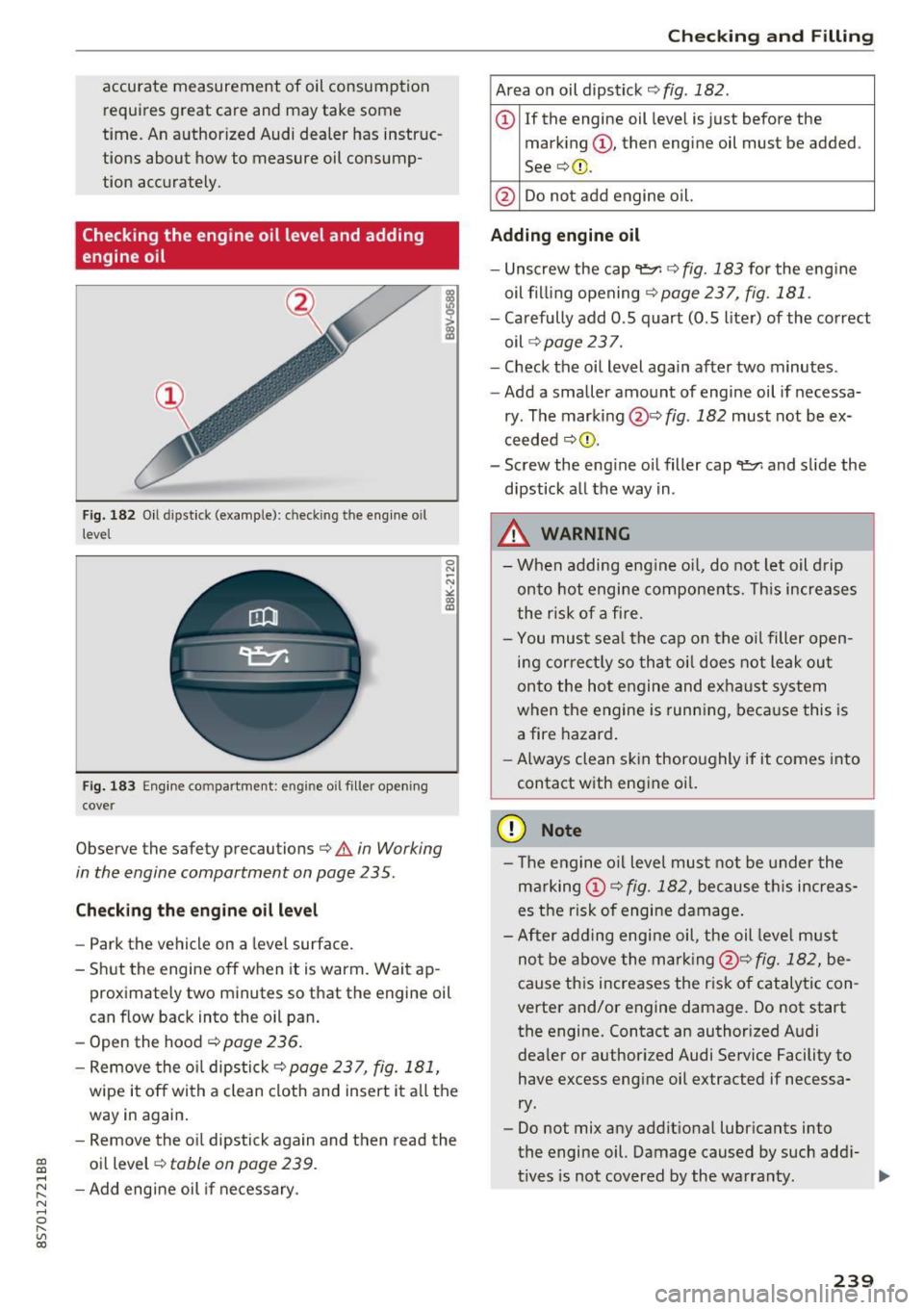
Fig. 182 Oil dips tick (exa mple): check ing the engine o il
level
Fig. 183 Engine compartment: engine oil filler opening
cover
Observe the safety precautions c> A:. in Working
in the engine compartment on page 235.
Checking the engine oil level
- Park the vehicle on a level surface.
- Shut the engine off when it is warm. Wait ap-
0
"' -"'
"' a, IX)
proximately two minutes so that the engine oil
can flow back into the oil pan.
- Open the hood c>
page 236.
-Remove the oil dipstick c> page 237, fig. 181,
wipe it off with a clean cloth and insert it all the
way in again.
- Remove the oil dipstick again and then read the
oil level ¢
table on page 239.
-Add engine oil if necessary.
Checking and Filling
Area on oil dipstick<=> fig. 182.
(D If the engine oil level is just before the
marking
(D , then engine oil must be added .
See c>@.
@ Do not add engine oil.
Adding engine oil
- Unscrew the cap~ c>
fig. 183 for the engine
oil filling opening
¢page 237, fig. 181.
-Carefully add 0.5 quart (0.S liter) of the correct
oil ¢
page 23 7.
- Check the oil level again after two minutes .
- Add a smaller amount of engine oil if necessa-
ry . The marking @¢ fig . 182 must not be ex
ceeded ¢Cl) :
- Screw the eng ine oil filler cap~ and slide the
dipstick all the way in.
,&. WARNING
i=
- When adding eng ine oi l, do not let oil drip
onto hot engine components. This increases
the risk of a fire.
- You must seal the cap on the oil filler open
ing correctly so that oil does not leak out
onto the hot engine and exhaust system
when the engine is running, because this is
a fire hazard.
-Always clean skin thoroughly if it comes into
contact with eng ine oil.
(D Note
- The engine oil level must not be under the
ma rking
(D ¢ fig. 182, because th is increas
es the risk of engine damage .
- After adding engine oil, the oil level must
not be above the marking @c>
fig. 182, be
cause this increases the risk of catalytic con
verter and/or engine damage. Do not start the engine. Contact an authorized Audi
dea ler or authorized Audi Service Facility to
have excess engine oil extracted if necessa
ry.
- Do not mix any additional lubricants into
the engine oil. Damage caused by such addi-
tives is not covered by the warranty. .,.
239
Page 242 of 314
Checking and Filling
@ For the sake of the environment
-Engine oil should never enter the sewer sys
tem or come into contact with the ground
under any circumstances.
- Pay attention to legal requirements when
disposing of empty oil containers.
(D Tips
The engine oil consumption may be up to 0.5 quart/600 miles (0.5 liter/1,000 km), de
pending on driving style and operating condi
tions. Consumption may be higher during the
first 3,000 miles (5,000 km). Because of this,
the engine oil level must be checked regular
ly .
It would be best to check each time you re
fuel your vehicle and before long drives.
Changing the engine oil
We recommend that have your oil changed by an
authorized Audi dealer or a qualified service sta
tion.
Before you check anything in the engine compart
ment, always read and heed all WARNINGS
q .&.
in Working in the engine compartment on
page 235.
The engine oil must be changed according to the
intervals specified in your Warranty
& Mainte
nance booklet. This is very important because the
lubricating properties of oil diminish gradually
during normal vehicle use.
Under some circumstances the engine oil should
be changed more frequently . Change oil more of
ten if you drive mostly short distances, operate
the vehicle in dusty areas or under predominantly
stop-and-go traffic conditions, or have your vehi
cle where temperatures remain below freezing
for extended periods.
Detergent additives in the oil will make fresh oil
look dark after the engine has been running for a
short time. This is normal and is not a reason to
change the oil more often than recommended.
Because of the problem of proper disposal, along
with the special tools and necessary expertise re
quired, we strongly recommend that you have
240
your oil changed by an authorized Audi dealer or
a qualified service station.
If you choose to change your oil yourself , please
note the following important information:
& WARNING
To reduce the risk of personal injury if you
must change the engine oil in your vehicle
yourself:
- Wear eye protection.
-
-To reduce the risk of burns from hot engine
oil, let the engine cool down to the touch.
- When removing the oil drain plug with your
fingers, stay as far away as possible. Always
keep your forearm parallel to the ground to
help prevent hot oil from running down your
arm.
- Drain the oil into a container designed for
this purpose, one large enough to hold at
least the total amount of oil in your engine.
- Engine oil is poisonous. Keep it well out of
the reach of children.
- Continuous contact with used engine oil is
harmful to your skin. Always protect your
skin by washing oil off thoroughly with soap
and water .
(D Note
Never mix oil additives with your engine oil.
These additives can damage your engine and adversely affect your Audi Limited New Vehi
cle Warranty.
@I For the sake of the environment
- Before changing your oil, first make sure
you know where you can properly dispose of
the used oil.
- Always dispose of used engine oil properly.
Do not dump it on garden soil, wooded
areas, into open streams or down sewage
drains.
- Recycle used engine oil by taking it to a used
engine oil collection facility in your area, or
contact a service station .
Page 243 of 314
co
co
.... N
" N .... 0
" "' c:o
Cooling system
Coolant
The engine cooling system is filled with a mixture
of pur ified water and coolant additive at the fac
tory. This coo lant must not be not changed.
The coolant level is monitored through the. in
dicator light
¢page 12. However , we do recom
mend occasionally check ing the coo lant level
manually.
If you must add coolant, use a mixture of water
and coolant addit ive. Mixing the coolant additive
with distilled water is recommended.
Coolant additive
The coolant additive is made of anti-freez ing and
corros ion protection agents. Only use the follow
ing coolant addit ives . These additives may be
mixed with each other.
Coolant additive Specification
G13 TL 774
J
G12++ TL 774 G
The amount of coo lant add itive that needs to be
mixed with water depends on the climate where
the vehicle will be operated. If the coolant addi tive percentage is too low, the coolant can freeze
and damage the engine.
Coolant addi- Freeze protec-
tive tion
Warm regions min. 40%, m in. -13 °F
max. 45% (-25 °C)
Cold regions min. 50%, max
. -40 °F
max. 55% (-40 °C)
(D Note
- Before the start of winter, have your author
ized Audi dealer or authorized Audi Service
Facility check if the coolant additive in your
vehicle matches the percentage appropriate
for the climate . Th is is especially important
when driving in colder climates.
- If the appropriate coolant additive is not
available in an emergency, do not add any
other additive . You could damage the en-
Checking and Filling
gine. If this happens, only use water and re
store the correct mixture ratio with the
specified coolant add it ive as soon as possi
ble.
- Only refill with new coolant .
- Radiator sealant must not be mixed with
the coolant.
Adding coolant
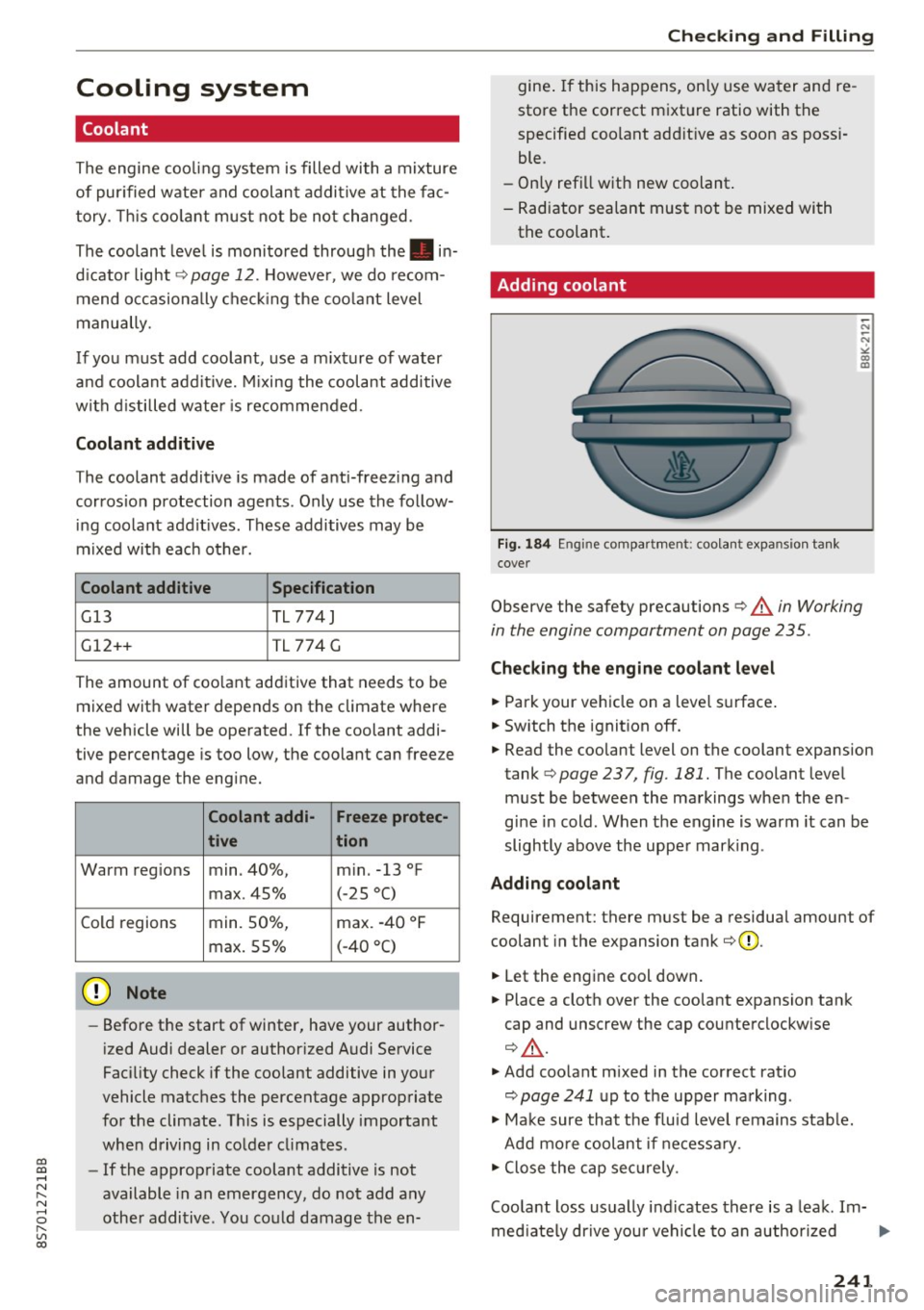
Fig. 184 Engine compartment: coolant expansio n ta nk
cover
-N
-N
"" CD co
Observe the safety precautions ¢ A in Working
in the engine comportment on page 235.
Checking the engine coolant level
.,. Park your vehicle on a leve l surface .
.,. Switch the ignition off.
.,. Read the coolant level on the coolant expansion
tank
¢ page 237, fig . 181. The coolant level
must be between the markings when the en
gine in cold . When the engine is warm it can be
slightly above the upper mark ing .
Adding coolant Requirement: there must be a residual amount of
coolant in the expansion tank
¢ (D .
.,. Let the engine cool down.
.,. Place a cloth over the coolant expansion tank
cap and unscrew the cap counterclockw ise
Q .&, .
.,. Add coolant m ixed in the correct rat io
¢ page 241 up to the upper marking .
.,. Make sure that the fluid level remains stable.
Add more coolant if necessa ry .
.,. Close the cap securely .
Coo lant loss usually indicates there is a leak. Im-
mediately drive your vehicle to an author ized .,..
241
Page 244 of 314
Checking and Filling
Audi dealer or authorized Audi Service Facility
and have the cooling system inspected. If the
cooling system is not leaking, a loss can come
from the coolant boiling through overheating
and being pushed out of the cooling system.
A WARNING
The cooling system is pressurized and can be
come very hot. To reduce the r isk of burns
from hot coolant:
- Do not open the coolant expansion tank cap when the eng ine is hot. This increases the
risk of burns.
- Stop the engine and allow it to cool.
- Protect your face, hands and arms from es-
caping coolant and steam by covering the
coolant tank cap with a large, thick cloth.
- Turn the coolant tank cap counterclockwise
slowly and keep light pressure o n the cap.
- To reduce the risk of burns, do not allow any
antifreeze or coolant to drip onto the ex haust system or hot eng ine components .
T he ethylene glycol in eng ine coolant can
catch fire under certa in circumstances.
- The coo lant add itive and the coolant can be
dange rous to your health. For this reason,
keep the coolan t in the origina l container
and away from children. There is a risk of
poisoning.
- When working in the engine compartmen t,
remember that the radiator fan can switch
on even if the ignition is switched off, which
increases the risk of inj ury.
(D Note
Do not add coolant if the exp ansion tank is
empty . Air could enter the cooling system and
damage the engine . If this is the case, do not
continue driving. See an authorized Audi deal
er or authorized Audi Service Facility for assis
tance.
242
Brake fluid
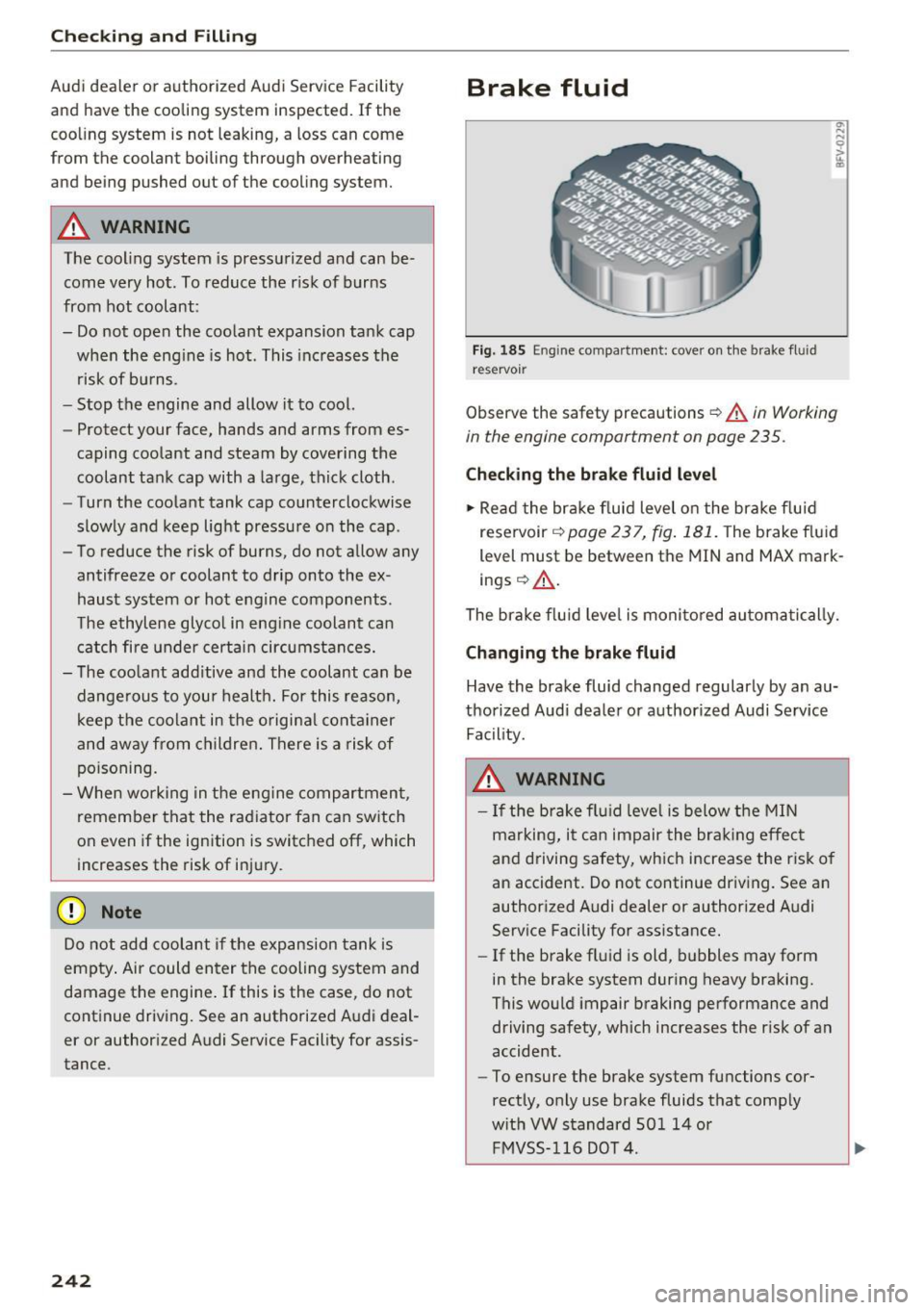
Fig. 1 85 Eng ine compa rtment: cover o n the brake fluid
reservo ir
Observe the safety precautions ¢ A in Working
in the engine compartment on page 235.
Check ing the brake fluid level
... Read the bra ke fluid level o n the bra ke flu id
reservoir
¢ page 237, fig . 181. The brake f luid
level must be between the MIN and MAX mark
ings ¢&_ .
The brake f lu id leve l is monito red au toma tically.
Changing the brake fluid
Have the brake fluid changed regularly by an au
thorized Audi dea ler or authorized Audi Service
Fac ility.
A WARNING
- I f the brake fl uid leve l is below the MIN
marking, it can impair the bra king effec t
and driving safety, which increase the risk o f
an accident . Do not continue driv ing. See a n
author ized Audi dealer or authorized A udi
Serv ice Facility for assistance.
- If the brake fl uid is old, b ubbles may form
in the brake system during heavy braking.
This would impair braking performance and
driving safety, which increases the r isk of an
accident.
- To ensure the brake system functions cor
rectly, only use brake fluids that comply
w it h VW standard SO l 14 or
FMVSS- 116 DO T 4.
Page 245 of 314
co
co
.... N
" N .... 0
" "' c:o
CD Note
-If the brake fluid level is above the MAX
mark ing, brake fluid may leak out over the
edge of the reservoir and result in damage
to the vehicle.
- Do not get any brake f luid on the vehicle
paint, because it will corrode the paint.
Battery
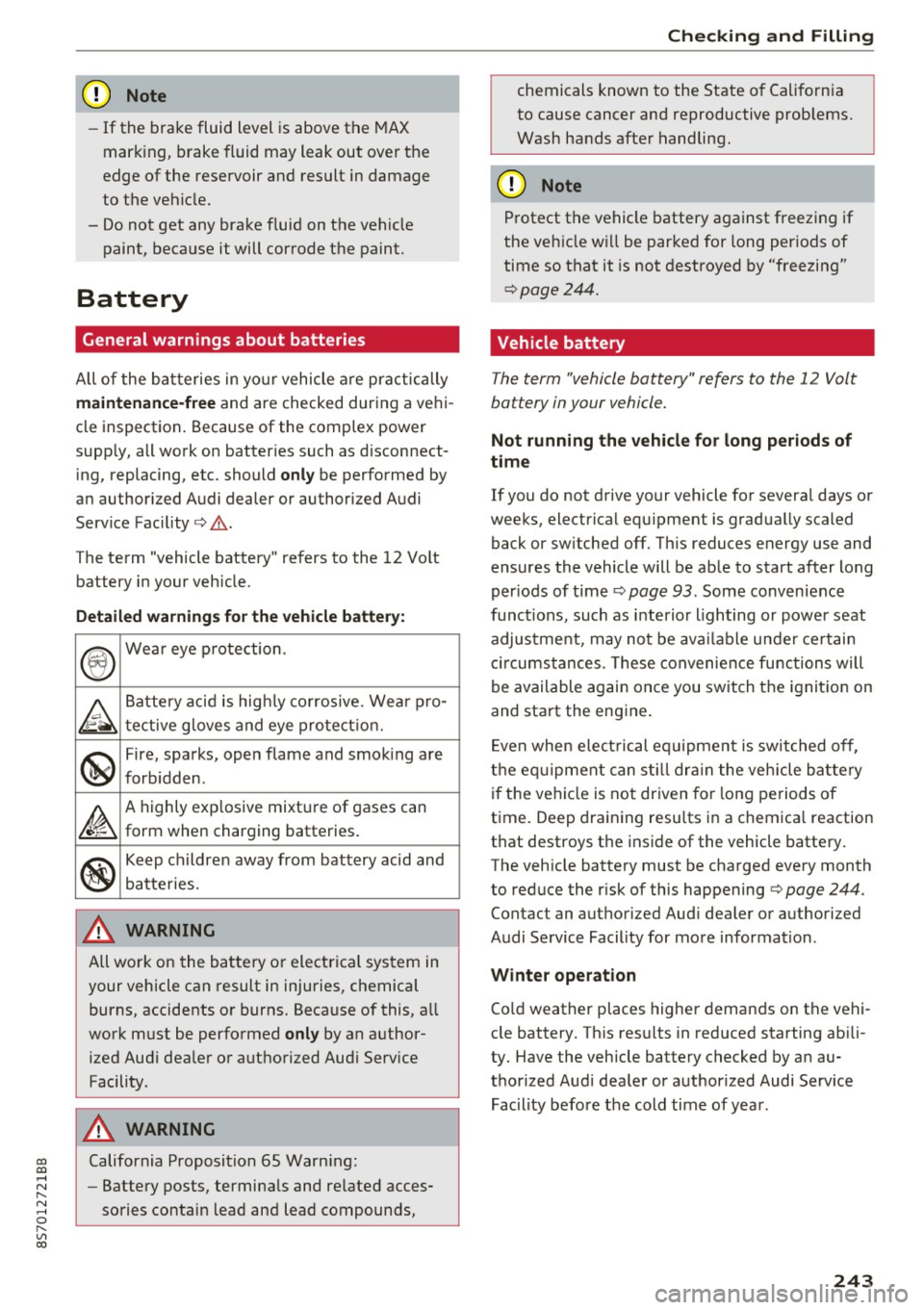
General warnings about batteries
All of the batteries in yo ur vehicle are practically
ma intenance-free and are checked during a ve hi
cle inspection . Because of the complex power
supp ly, all work on batter ies such as d isconnect
ing, replacing, etc. should
o nly be performed by
an author ized Audi dealer or authorized Audi
Service Facility
c> & -
The term "vehicle battery" refers to the 12 Vo lt
battery in your veh icle.
Detailed wa rning s for the vehicle batte ry:
®
Wear eye p rotection.
A
Battery acid is hig hly co rrosive. Wea r pro-
tective g loves and eye pro tect ion.
@
Fire, sparks, open flame and smok ing are
forb idden.
~
A highly exp losive mixtu re of gases can
form when charging batteries.
®
Keep childre n away from battery acid and
batteries.
A WARNING
All work on the battery or electrical system in
your vehicle can result in injuries, chemical
burns, accidents or burns. Because of this, a ll
work m ust be perfo rmed
only by an author
ized Aud i deale r or authorized Audi Serv ice
Facility.
A WARNING
California Proposition 65 Warn ing:
- Battery posts, terminals and re lated acces
sories contain lead and lead compounds,
Ch eck ing and Filling
chemicals known to the State of California
to cause cancer and reproductive problems.
Wash hands after handling.
CD Note
Protect the vehicle battery against freezing if
the veh icle wi ll be parked for long periods of
time so that it is not destroyed by "freezing"
c> page244.
Vehicle battery
The term "vehicle battery" refers to the 12 Volt
battery in your vehicle.
Not running the vehicl e for long periods of
time
If you do not drive your vehicle for severa l days or
weeks, electrical equ ipment is gradua lly scaled
back or sw itched off. Th is reduces energy use and
ensures the vehicle will be ab le to start after long
per iods of time
c> page 93 . Some convenience
func tions, such as i nterio r lighting o r power seat
adjus tme nt, may no t be ava ilab le unde r certain
cir cumstances . These convenience func tions will
be available again once you switch the ignit ion on
and start the engine.
E ven when elec trical equipment is switched off,
the eq uipment can sti ll dr ain the vehicle ba ttery
i f the veh icle is not dr iven for long periods of
t ime . Deep dra ining resu lts in a chemica l reaction
t h at destroys the inside of the vehicle batte ry.
The veh icle battery must be charged every month
to red uce the risk of this happening
c> page 244.
Contact an authorized Aud i dea ler or authorized
Audi Service Facility for more information .
Winter operat ion
Co ld weather places higher demands on the vehi
cle battery. Th is res ults in reduced starting ab ili
ty. Have the vehicle battery checked by an au
thorized Aud i dea ler or authorized Audi Service
Facility before the cold time of year .
243
Page 246 of 314
Checking and Filling
Charging the vehicle battery
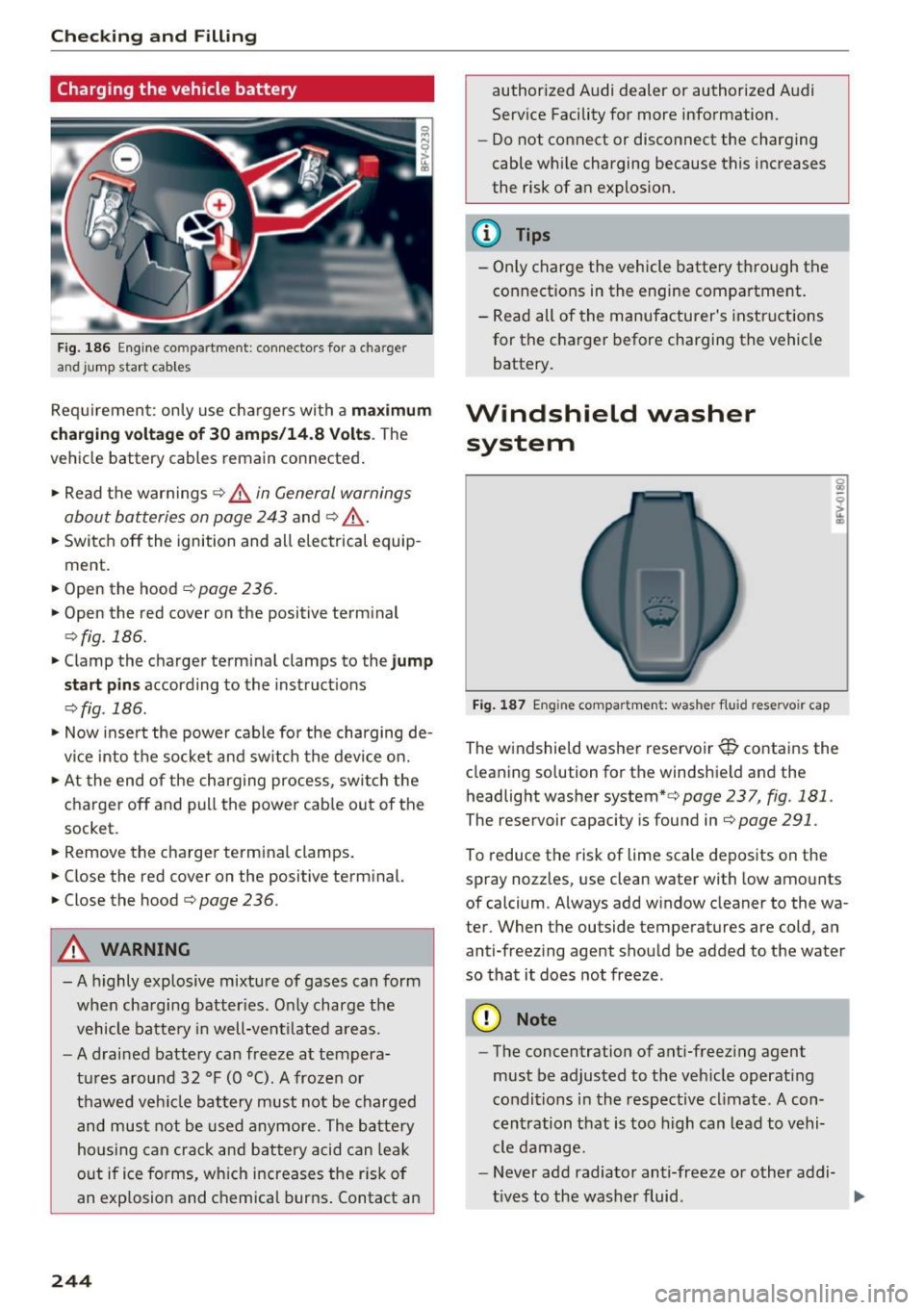
Fig. 186 Engine co mpa rtment : connec tors for a c harger
and jump start cab le s
Req uirement: only use chargers with a m aximum
c hargi ng vo lta ge of 30 amp s/14.8 Volt s.
The
vehicle battery cables remain connected .
.,. Read the warnings
c> .&. in General warnings
about batteries on page 243
and c> ,&. .
.,. Switch off the ignition and all electrical equip
ment .
.,. Open the hood ¢
page 236 .
.,. Open the red cover on the positive terminal
c> fig. 186 .
.,. Clamp the charger terminal clamps to the jump
s ta rt pin s
according to the instruct ions
c> fig . 186 .
.,. Now inse rt the powe r cable for the charging de
v ice into the socket and sw itch the device on.
.,. At the end of the charging process, switch the
charger off and pull the powe r cab le out of the
socket .
.,. Remove the charger terminal clamps.
.,. Close the red cover on the positive term inal.
.,. Close the hood¢
page 236.
A WARNING
- A highly explosive mixture of gases can form
when cha rging batter ies. Only charge the
vehicle batte ry in well-vent ilated areas.
- A drai ned battery can freeze at tempera
t ur es a round 32 °F (0 °C) . A frozen or
thawed veh icle battery must not be charged
and must not be used anymore. The batte ry
housing can crac k and battery acid can leak
o ut if ice fo rms, wh ich increases the risk of
an explosion and chemical burns . Contact an
244
author ized Audi dealer or authorized A udi
Service Facility for more information.
- Do not connect or disconnect the charging
cable whi le charging because this increases
the risk of an explos ion.
@ Tips
- Only charge the vehicle battery t hrough the
connect ions in the engine compartme nt.
- Read all of the manufacturer's instructions
for the charger before charging the vehicle
battery.
Windshield washer system
Fi g. 18 7 Engine compar tm ent: washer flui d res ervoir cap
The windshield washer reservoir~ contains the
cleaning so lu ti on for th e windshield and the
headlight washer system*c>
page 237 , fig. 181 .
The reservoir capaci ty is found in c> page 291.
To reduce the risk of lime scale depos its on the
spray nozzles, us e clean water with low amo unts
of calcium . Always add w indow cleaner to the wa
ter . When the ou tside temperatures a re cold , an
anti-freez ing agent should be added to the water
so that it does not freeze .
(D Note
-The concentration of ant i-freez ing agent
must be adjusted to the veh icle operat ing
conditions i n the respective cl imate. A con
cen tration that is too high can lead to vehi-
cle damage.
- Never add radiato r anti-freeze or other addi-
t ives to the washer fluid . ...,