wheel CADILLAC ESCALADE 2010 3.G Owner's Manual
[x] Cancel search | Manufacturer: CADILLAC, Model Year: 2010, Model line: ESCALADE, Model: CADILLAC ESCALADE 2010 3.GPages: 616, PDF Size: 39.41 MB
Page 111 of 616
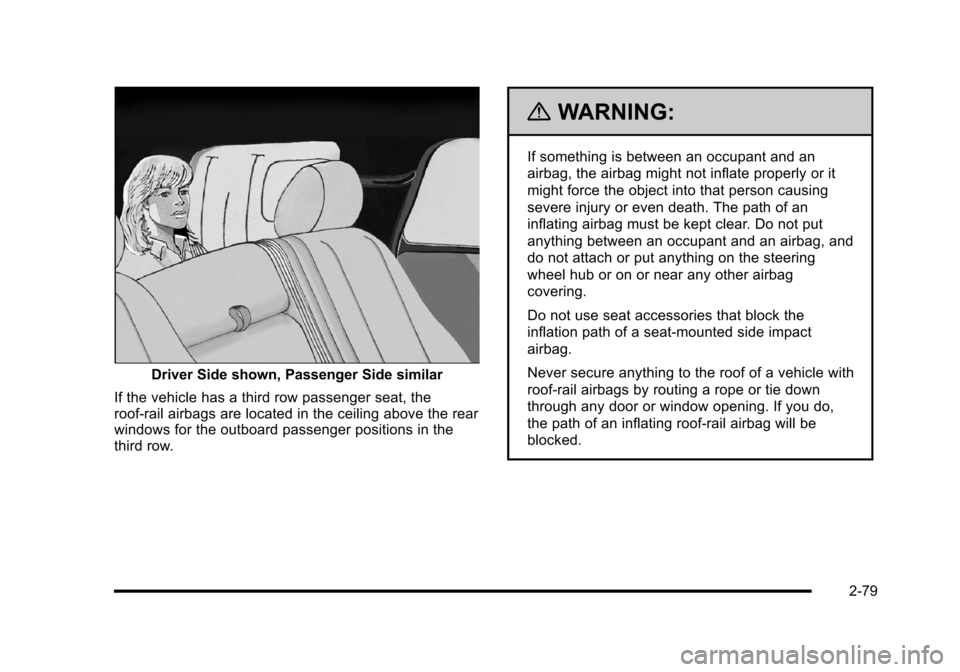
Driver Side shown, Passenger Side similar
If the vehicle has a third row passenger seat, theroof-rail airbags are located in the ceiling above the rearwindows for the outboard passenger positions in thethird row.
{WARNING:
If something is between an occupant and an
airbag, the airbag might not inflate properly or it
might force the object into that person causing
severe injury or even death. The path of an
inflating airbag must be kept clear. Do not put
anything between an occupant and an airbag, and
do not attach or put anything on the steering
wheel hub or on or near any other airbag
covering.
Do not use seat accessories that block the
inflation path of a seat-mounted side impact
airbag.
Never secure anything to the roof of a vehicle with
roof-rail airbags by routing a rope or tie down
through any door or window opening. If you do,
the path of an inflating roof-rail airbag will be
blocked.
2-79
Page 113 of 616
The vehicle may or may not have seat!mounted sideimpact airbags. The vehicle has roof-rail airbags. SeeAirbag Systemon page 2!74. Seat!mounted sideimpact airbags and roof-rail airbags are intended toinflate in moderate to severe side crashes. In addition,these roof-rail airbags are intended to inflate during arollover or in a severe frontal impact. Seat!mounted sideimpact airbags and roof-rail airbags will inflate if thecrash severity is above the system's designedthreshold level. The threshold level can vary withspecific vehicle design.
Roof-rail airbags are not intended to inflate in rearimpacts. A seat!mounted side impact airbag is intendedto deploy on the side of the veicle that is struck. Bothroof-rail airbags will deploy when either side of thevehicle is struck or if the sensing system predicts thatthe vehicle is about to roll over, or in a severe frontalimpact.
In any particular crash, no one can say whether anairbag should have inflated simply because of thedamage to a vehicle or because of what the repaircosts were. For frontal airbags, inflation is determinedby what the vehicle hits, the angle of the impact, andhow quickly the vehicle slows down. For seat!mountedside impact and roof-rail airbags, deployment isdetermined by the location and severity of the sideimpact. In a rollover event, roof-rail airbag deploymentis determined by the direction of the roll.
What Makes an Airbag Inflate?
In a deployment event, the sensing system sends anelectrical signal triggering a release of gas from theinflator. Gas from the inflator fills the airbag causing thebag to break out of the cover and deploy. The inflator,the airbag, and related hardware are all part of theairbag module.
Frontal airbag modules are located inside the steeringwheel and instrument panel. For vehicles with seat!mounted side impact airbags, there are airbagsmodules in the side of the front seatbacks closest to thedoor. For vehicles with roof-rail airbags, there are airbagmodules in the ceiling of the vehicle, near the sidewindows that have occupant seating positions.
How Does an Airbag Restrain?
In moderate to severe frontal or near frontal collisions,even belted occupants can contact the steering wheelor the instrument panel. In moderate to severe sidecollisions, even belted occupants can contact the insideof the vehicle.
Airbags supplement the protection provided by safetybelts. Frontal airbags distribute the force of the impactmore evenly over the occupant's upper body, stoppingthe occupant more gradually. Seat!mounted side impactand roof-rail airbags distribute the force of the impactmore evenly over the occupant's upper body.
2-81
Page 121 of 616

Servicing Your Airbag-Equipped
Vehicle
Airbags affect how the vehicle should be serviced.There are parts of the airbag system in several placesaround the vehicle. Your dealer/retailer and the servicemanual have information about servicing the vehicleand the airbag system. To purchase a service manual,seeService Publications Ordering Informationonpage 9!17.
{WARNING:
For up to 10 seconds after the ignition is turned off
and the battery is disconnected, an airbag can still
inflate during improper service. You can be injured
if you are close to an airbag when it inflates. Avoid
yellow connectors. They are probably part of the
airbag system. Be sure to follow proper service
procedures, and make sure the person performing
work for you is qualified to do so.
Adding Equipment to Your
Airbag-Equipped Vehicle
Q: Is there anything I might add to or change aboutthe vehicle that could keep the airbags fromworking properly?
A:Yes. If you add things that change the vehicle'sframe, bumper system, height, front end or sidesheet metal, they may keep the airbag system fromworking properly. Changing or moving any parts ofthe front seats, safety belts, the airbag sensing anddiagnostic module, steering wheel, instrument panel,roof-rail airbag modules, ceiling headliner or pillargarnish trim, overhead console, front sensors, sideimpact sensors, rollover sensor module, or airbagwiring can affect the operation of the airbag system.
In addition, the vehicle may have a passengersensing system for the right front passengerposition, which includes sensors that are part of thepassenger seat. The passenger sensing systemmay not operate properly if the original seat trim isreplaced with non-GM covers, upholstery or trim,or with GM covers, upholstery or trim designed for a
2-89
Page 122 of 616
different vehicle. Any object, such as an aftermarketseat heater or a comfort enhancing pad or device,installed under or on top of the seat fabric, couldalso interfere with the operation of the passengersensing system. This could either prevent properdeployment of the passenger airbag(s) or preventthe passenger sensing system from properly turningoff the passenger airbag(s). SeePassenger SensingSystem on page 2!84.
If you have any questions, call CustomerAssistance. The phone numbers and addresses forCustomer Assistance are in Step Two of theCustomer Satisfaction Procedure in this manual.SeeCustomer Satisfaction Procedure on page 9!2.
If the vehicle has rollover roof-rail airbags, seeDifferent Size Tires and Wheelson page 7!75foradditional important information.
Q: Because I have a disability, I have to get myvehicle modified. How can I find out whether thiswill affect my airbag system?
A:If you have questions, call Customer Assistance.The phone numbers and addresses for CustomerAssistance are in Step Two of the CustomerSatisfaction Procedure in this manual. SeeCustomer Satisfaction Procedure on page 9!2.
In addition, your dealer/retailer and the service manualhave information about the location of the airbagsensors, sensing and diagnostic module andairbag wiring.
2-90
Page 151 of 616
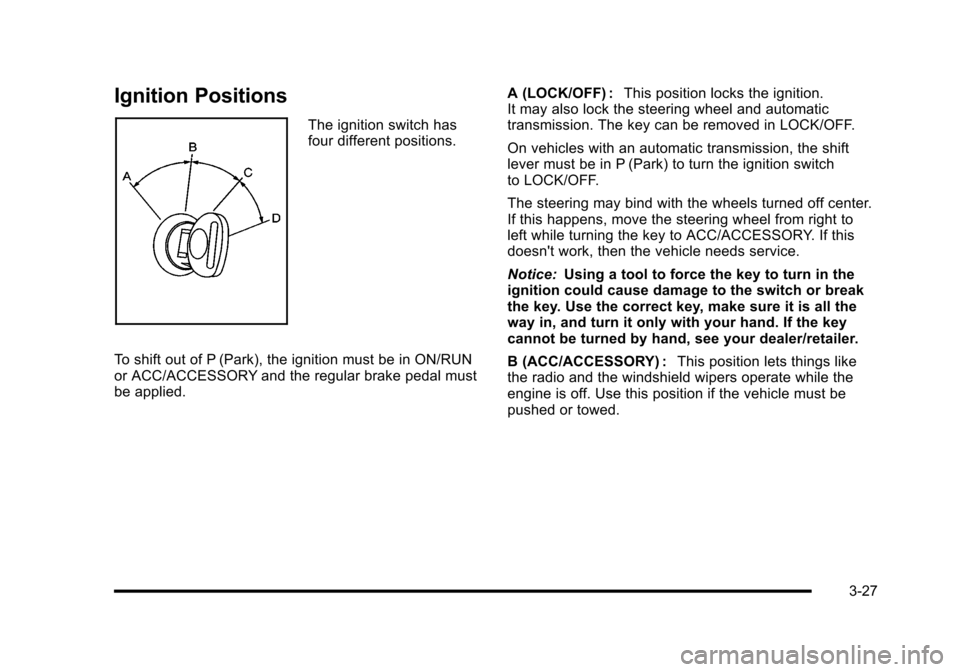
Ignition Positions
The ignition switch hasfour different positions.
To shift out of P (Park), the ignition must be in ON/RUNor ACC/ACCESSORY and the regular brake pedal mustbe applied.
A (LOCK/OFF) :This position locks the ignition.It may also lock the steering wheel and automatictransmission. The key can be removed in LOCK/OFF.
On vehicles with an automatic transmission, the shiftlever must be in P (Park) to turn the ignition switchto LOCK/OFF.
The steering may bind with the wheels turned off center.If this happens, move the steering wheel from right toleft while turning the key to ACC/ACCESSORY. If thisdoesn't work, then the vehicle needs service.
Notice:Using a tool to force the key to turn in theignition could cause damage to the switch or breakthe key. Use the correct key, make sure it is all theway in, and turn it only with your hand. If the keycannot be turned by hand, see your dealer/retailer.
B (ACC/ACCESSORY) :This position lets things likethe radio and the windshield wipers operate while theengine is off. Use this position if the vehicle must bepushed or towed.
3-27
Page 156 of 616
Active Fuel Management™
Vehicles with V8 engines may have Active FuelManagement™. This system allows the engine tooperate on either all or half of its cylinders, dependingon the driving conditions.
When less power is required, such as cruising at aconstant vehicle speed, the system will operate in thehalf cylinder mode, allowing the vehicle to achievebetter fuel economy. When greater power demands arerequired, such as accelerating from a stop, passing,or merging onto a freeway, the system will maintainfull-cylinder operation.
If the vehicle has an Active Fuel Management™indicator, seeDIC Operation and Displaysonpage 4!41for more information on using this display.
Automatic Transmission Operation
If the vehicle is a Two-mode Hybrid, see the Two-modeHybrid manual for more information.
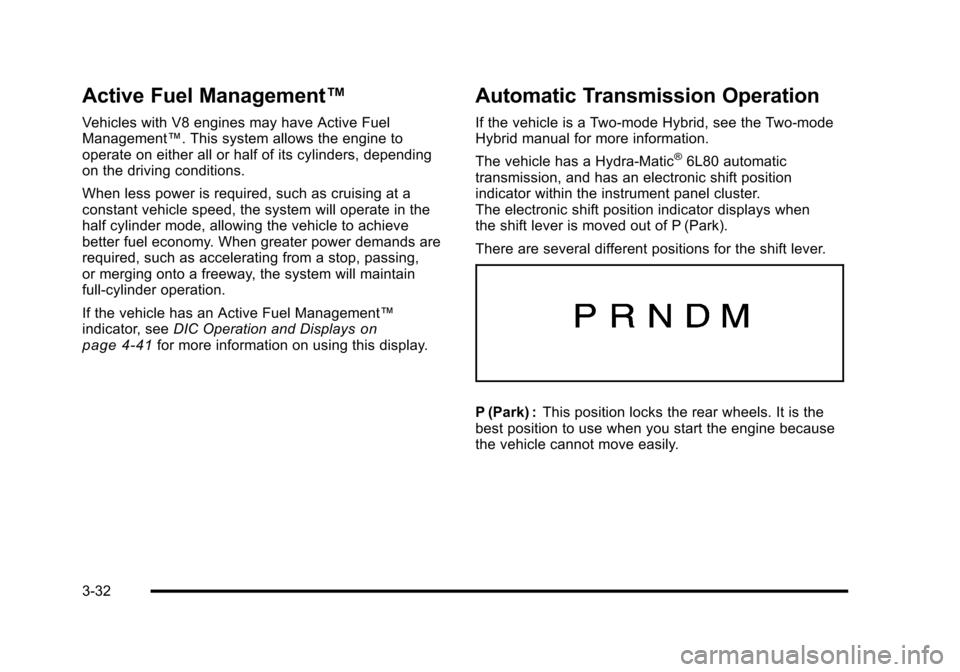
The vehicle has a Hydra-Matic®6L80 automatictransmission, and has an electronic shift positionindicator within the instrument panel cluster.The electronic shift position indicator displays whenthe shift lever is moved out of P (Park).
There are several different positions for the shift lever.
P (Park) :This position locks the rear wheels. It is thebest position to use when you start the engine becausethe vehicle cannot move easily.
3-32
Page 158 of 616
N (Neutral) :In this position, the engine does notconnect with the wheels. To restart when you arealready moving, use N (Neutral) only. Also, useN (Neutral) when the vehicle is being towed.
{WARNING:
Shifting into a drive gear while the engine is
running at high speed is dangerous. Unless your
foot is firmly on the brake pedal, the vehicle could
move very rapidly. You could lose control and hit
people or objects. Do not shift into a drive gear
while the engine is running at high speed.
Notice:Shifting out of P (Park) or N (Neutral) withthe engine running at high speed may damage thetransmission. The repairs would not be covered bythe vehicle warranty. Be sure the engine is notrunning at high speed when shifting the vehicle.
D (Drive) :This position is for normal driving. It providesthe best fuel economy. If you need more power forpassing, and you are:
.Going less than about 35 mph (55 km/h), push theaccelerator pedal about halfway down.
.Going about 35 mph (55 km/h) or more, push theaccelerator all the way down.
By doing this, the vehicle shifts down to the next gearand has more power.
D (Drive) can be used when towing a trailer, carrying aheavy load, driving on steep hills, or for off-road driving.You may want to shift the transmission to a lower gearselection if the transmission shifts too often.
Downshifting the transmission in slippery roadconditions could result in skidding, see Skidding underLoss of Control on page 6!12.
M (Manual Mode) :This position lets drivers selectthe range of gears appropriate for current drivingconditions. See Driver Shift Control (DSC) later inthis section.
Notice:Spinning the tires or holding the vehicle inone place on a hill using only the accelerator pedalmay damage the transmission. The repair will not becovered by the vehicle warranty. If you are stuck, donot spin the tires. When stopping on a hill, use thebrakes to hold the vehicle in place.
The vehicle has a shift stabilization feature thatadjusts the transmission shifting to the currentdriving conditions in order to reduce rapid upshiftsand downshifts. This shift stabilization feature isdesigned to determine, before making an upshift, ifthe engine will be able to maintain vehicle speed by
3-34
Page 189 of 616
Notice:Loading cargo on the roof rack that weighsmore than 91 kg (200 lbs) or hangs over the rear orsides of the vehicle may damage the vehicle. Loadcargo so that it rests evenly between the crossrails,making sure to fasten cargo securely.
To prevent damage or loss of cargo when driving,check to make sure crossrails and cargo are securelyfastened. Loading cargo on the roof rack will make thevehicle’s center of gravity higher. Avoid high speeds,sudden starts, sharp turns, sudden braking or abruptmaneuvers, otherwise it may result in loss of control.If driving for a long distance, on rough roads, or at highspeeds, occasionally stop the vehicle to make sure thecargo remains in its place.
Do not exceed the maximum vehicle capacity whenloading the vehicle. For more information on vehiclecapacity and loading, seeLoading the Vehicleonpage 6!32.
To prevent damage or loss of cargo, check now andthen to make sure the luggage and cargo are stillsecurely fastened.
Be sure the cargo is properly loaded.
.If small heavy objects are placed on the roof, placethe load in the area over the rear wheels (behindthe rear side door on extended models). If needed,cut a piece of 3/8 inch plywood to fit inside thecrossrails and siderails to spread the load.If plywood is used, tie it to the siderail supports.
.Tie the load to the crossrails or the siderailsupports. Use the crossrails only to keep theload from sliding. To move the crossrails, pull outon the latch release handle at each end. Slide thecrossrail to the desired position balancing the forceside to side. Push the release handle back into thelatched position and slide the crossrail back andforth slightly to be sure the latch snaps securelyinto place.
.If needed to carry long items, move the crossrailsas far apart as they will go. Tie the load to thecrossrails and the siderails or siderail supports.Also tie the load to the bumpers. Do not tie theload so tightly that the crossrails or siderailsare damaged.
.After moving a crossrail, be sure it is securelylocked into the siderail.
A Center High-Mounted Stoplamp (CHMSL) is locatedabove the glass or above the rear load doors.
If items are loaded on the roof of the vehicle, careshould be taken not to block or damage theCHMSL unit.
3-65
Page 193 of 616

Section 4 Instrument Panel
Instrument Panel Overview. . . . . . . . . . . . . . . . . . . . . . . . 4-3Hazard Warning Flashers . . . . . . . . . . . . . . . . . . . . . . . 4-3Horn . . . . . . . . . . . . . . . . . . . . . . . . . . . . . . . . . . . . . . . . . . . . 4-3Tilt Wheel . . . . . . . . . . . . . . . . . . . . . . . . . . . . . . . . . . . . . . . 4-3Heated Steering Wheel . . . . . . . . . . . . . . . . . . . . . . . . . 4-4Turn Signal/Multifunction Lever . . . . . . . . . . . . . . . . . . 4-4Turn and Lane-Change Signals . . . . . . . . . . . . . . . . . 4-5Headlamp High/Low-Beam Changer . . . . . . . . . . . . 4-5Flash-to-Pass . . . . . . . . . . . . . . . . . . . . . . . . . . . . . . . . . . . 4-6Windshield Wipers . . . . . . . . . . . . . . . . . . . . . . . . . . . . . . 4-6Windshield Washer . . . . . . . . . . . . . . . . . . . . . . . . . . . . . 4-7Rear Window Wiper/Washer . . . . . . . . . . . . . . . . . . . . 4-7Cruise Control . . . . . . . . . . . . . . . . . . . . . . . . . . . . . . . . . . 4-8Exterior Lamps . . . . . . . . . . . . . . . . . . . . . . . . . . . . . . . . . 4-11Headlamps on Reminder . . . . . . . . . . . . . . . . . . . . . . 4-15Daytime Running Lamps (DRL) . . . . . . . . . . . . . . . . 4-15Automatic Headlamp System . . . . . . . . . . . . . . . . . . 4-15Fog Lamps . . . . . . . . . . . . . . . . . . . . . . . . . . . . . . . . . . . . 4-16Instrument Panel Brightness . . . . . . . . . . . . . . . . . . . 4-16Dome Lamps . . . . . . . . . . . . . . . . . . . . . . . . . . . . . . . . . . 4-17Dome Lamp Override . . . . . . . . . . . . . . . . . . . . . . . . . . 4-17Entry Lighting . . . . . . . . . . . . . . . . . . . . . . . . . . . . . . . . . . 4-17Exit Lighting . . . . . . . . . . . . . . . . . . . . . . . . . . . . . . . . . . . 4-17
Reading Lamps . . . . . . . . . . . . . . . . . . . . . . . . . . . . . . . . 4-17Electric Power Management . . . . . . . . . . . . . . . . . . . 4-18Battery Run-Down Protection . . . . . . . . . . . . . . . . . . 4-18Accessory Power Outlet(s) . . . . . . . . . . . . . . . . . . . . . 4-19Ashtray(s) and Cigarette Lighter . . . . . . . . . . . . . . . 4-20Analog Clock . . . . . . . . . . . . . . . . . . . . . . . . . . . . . . . . . . 4-20
Climate Controls. . . . . . . . . . . . . . . . . . . . . . . . . . . . . . . . . . 4-20Dual Automatic Climate Control System . . . . . . . 4-20Outlet Adjustment . . . . . . . . . . . . . . . . . . . . . . . . . . . . . . 4-25Rear Air Conditioning and Heating System andElectronic Climate Controls . . . . . . . . . . . . . . . . . . 4-26
Warning Lights, Gages, and Indicators. . . . . . . . . . 4-27Instrument Panel Cluster . . . . . . . . . . . . . . . . . . . . . . . 4-28Speedometer and Odometer . . . . . . . . . . . . . . . . . . . 4-29Trip Odometer . . . . . . . . . . . . . . . . . . . . . . . . . . . . . . . . . 4-29Tachometer . . . . . . . . . . . . . . . . . . . . . . . . . . . . . . . . . . . . 4-29Safety Belt Reminders . . . . . . . . . . . . . . . . . . . . . . . . . 4-29Airbag Readiness Light . . . . . . . . . . . . . . . . . . . . . . . . 4-30Passenger Airbag Status Indicator . . . . . . . . . . . . . 4-31Charging System Light . . . . . . . . . . . . . . . . . . . . . . . . 4-32Brake System Warning Light . . . . . . . . . . . . . . . . . . . 4-33Antilock Brake System (ABS) Warning Light . . . 4-34
4-1
Page 194 of 616
Section 4 Instrument Panel
StabiliTrak®Indicator Light . . . . . . . . . . . . . . . . . . . . . 4-34Engine Coolant Temperature Gage . . . . . . . . . . . . 4-35Tire Pressure Light . . . . . . . . . . . . . . . . . . . . . . . . . . . . 4-35Malfunction Indicator Lamp . . . . . . . . . . . . . . . . . . . . 4-36Oil Pressure Light . . . . . . . . . . . . . . . . . . . . . . . . . . . . . 4-38Security Light . . . . . . . . . . . . . . . . . . . . . . . . . . . . . . . . . . 4-39Fog Lamp Light . . . . . . . . . . . . . . . . . . . . . . . . . . . . . . . . 4-39Lights On Reminder . . . . . . . . . . . . . . . . . . . . . . . . . . . 4-39Cruise Control Light . . . . . . . . . . . . . . . . . . . . . . . . . . . 4-39Highbeam On Light . . . . . . . . . . . . . . . . . . . . . . . . . . . . 4-40Tow/Haul Mode Light . . . . . . . . . . . . . . . . . . . . . . . . . . 4-40Fuel Gage . . . . . . . . . . . . . . . . . . . . . . . . . . . . . . . . . . . . . 4-40
Driver Information Center (DIC). . . . . . . . . . . . . . . . . . 4-41DIC Operation and Displays . . . . . . . . . . . . . . . . . . . 4-41DIC Compass . . . . . . . . . . . . . . . . . . . . . . . . . . . . . . . . . . 4-47DIC Warnings and Messages . . . . . . . . . . . . . . . . . . 4-48DIC Vehicle Customization . . . . . . . . . . . . . . . . . . . . 4-57
Audio System(s). . . . . . . . . . . . . . . . . . . . . . . . . . . . . . . . . . 4-67Bluetooth®. . . . . . . . . . . . . . . . . . . . . . . . . . . . . . . . . . . . . 4-67Rear Seat Entertainment (RSE) System(Overhead) . . . . . . . . . . . . . . . . . . . . . . . . . . . . . . . . . . 4-77Rear Seat Entertainment (RSE) System(Headrest DVD) . . . . . . . . . . . . . . . . . . . . . . . . . . . . . 4-86Rear Seat Audio (RSA) . . . . . . . . . . . . . . . . . . . . . . . 4-103Theft-Deterrent Feature . . . . . . . . . . . . . . . . . . . . . . 4-105Audio Steering Wheel Controls . . . . . . . . . . . . . . . 4-105Radio Reception . . . . . . . . . . . . . . . . . . . . . . . . . . . . . . 4-107Rear Side Window Antenna . . . . . . . . . . . . . . . . . . 4-108XM™Satellite Radio Antenna System . . . . . . . . 4-108
4-2