light CHEVROLET HHR 2009 1.G Owners Manual
[x] Cancel search | Manufacturer: CHEVROLET, Model Year: 2009, Model line: HHR, Model: CHEVROLET HHR 2009 1.GPages: 450, PDF Size: 2.49 MB
Page 389 of 450
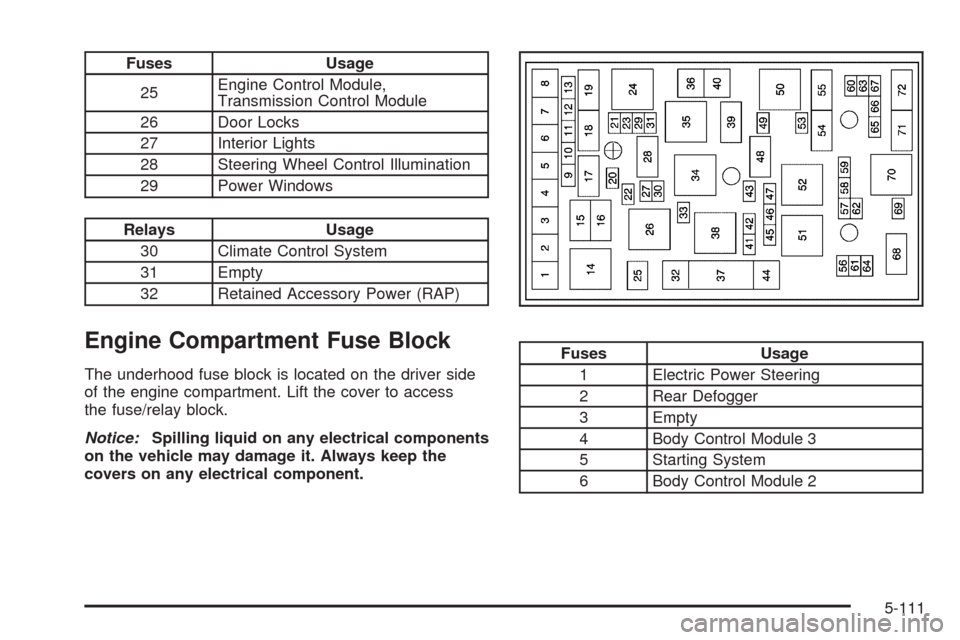
Fuses Usage
25Engine Control Module,
Transmission Control Module
26 Door Locks
27 Interior Lights
28 Steering Wheel Control Illumination
29 Power Windows
Relays Usage
30 Climate Control System
31 Empty
32 Retained Accessory Power (RAP)
Engine Compartment Fuse Block
The underhood fuse block is located on the driver side
of the engine compartment. Lift the cover to access
the fuse/relay block.
Notice:Spilling liquid on any electrical components
on the vehicle may damage it. Always keep the
covers on any electrical component.
Fuses Usage
1 Electric Power Steering
2 Rear Defogger
3 Empty
4 Body Control Module 3
5 Starting System
6 Body Control Module 2
5-111
Page 390 of 450
Fuses Usage
7Rear Power Plug (Panel Van Only),
Cooling Fan (SS only)
8 Empty
9 Air Conditioning Clutch Diode
10 Liftgate, Sunroof
11 Empty
12 Rear Power Outlet (Panel Van Only)
13 Fuel Pump
20 Rear Wiper
21 Mirror
22 Air Conditioning
23 Heated Seats (Option)
25 Fuse Puller
27 Empty
29 Cigarette Lighter
30 Power Outlet
31 Daytime Running Lamps
32 Empty
33 Emissions
36 Power WindowsFuses Usage
37 Power Seat (Option)
40 Cooling Fan
41 Engine Control Module
42 Cam Phaser (Turbo Only)
43Engine Control Module,
Transmission
44 Antilock Brake System (Option)
45 Injectors, Ignition Module
46 Backup Lamps
47 Heated Seat
49 Windshield Washer Pump
53 Fog Lamps (Option)
56Sensing and Diagnostic
Module (SDM)
57 Antilock Brake System (Option)
58 Windshield Wiper Diode
59 Windshield Wiper
60 Horn
61 Antilock Brake System (Option)
62 Instrument Panel, Ignition
5-112
Page 402 of 450
Maintenance Footnotes
(a)Visually inspect brake lines and hoses for proper
hook-up, binding, leaks, cracks, chafing, etc. Inspect
disc brake pads for wear and rotors for surface
condition. Inspect drum brake linings/shoes for wear or
cracks. Inspect other brake parts, including drums,
wheel cylinders, calipers, parking brake, etc.
(b)Visually inspect front and rear suspension and
steering system for damaged, loose, or missing parts or
signs of wear. Inspect power steering cables for
proper hook-up, binding, cracks, chafing, etc.
(c)Visually inspect hoses and have them replaced if they
are cracked, swollen, or deteriorated. Inspect all pipes,
fittings, and clamps; replace with genuine parts as
needed. To help ensure proper operation, a pressure test
of the cooling system and pressure cap and cleaning the
outside of the radiator and air conditioning condenser is
recommended at least once a year.
(d)Inspect wiper blades for wear, cracking, or
contamination. Clean the windshield and wiper blades, if
contaminated. Replace wiper blades that are worn or
damaged. See Windshield Wiper Blade Replacement on
page 5-52 and Windshield and Wiper Blades on
page 5-104 for more information.(e)Make sure the safety belt reminder light and safety
belt assemblies are working properly. Look for any
other loose or damaged safety belt system parts. If you
see anything that might keep a safety belt system from
doing its job, have it repaired. Have any torn or frayed
safety belts replaced. Also see Checking the Restraint
Systems on page 1-79.
(f)Lubricate all key lock cylinders, door hinges and
latches, hood hinges and latches, and trunk lid hinges
and latches. More frequent lubrication may be required
when exposed to a corrosive environment. Applying
silicone grease on weatherstrips with a clean cloth will
make them last longer, seal better, and not stick or
squeak.
(g)Check system for interference or binding and for
damaged or missing parts. Replace parts as needed.
Replace any components that have high effort or
excessive wear. Do not lubricate accelerator or cruise
control cables.
6-8
Page 435 of 450
A
Accessories and Modications............................ 5-3
Accessory Power............................................2-25
Accessory Power Outlets.................................3-19
Adding Equipment to Your Airbag-Equipped
Vehicle.......................................................1-78
Additional Required Services, Scheduled
Maintenance................................................. 6-7
Additives, Fuel................................................. 5-6
Add-On Electrical Equipment...........................5-108
Adjustment
Chime Level...............................................3-96
Adjustments
Headlamp Range.......................................... 1-7
Air Cleaner/Filter, Engine.................................5-23
Air Conditioning..............................................3-21
Air Filter, Passenger Compartment....................3-24
Airbag
Readiness Light..........................................3-30Airbag System................................................1-58
Adding Equipment to Your Airbag-Equipped
Vehicle...................................................1-78
How Does an Airbag Restrain?......................1-64
Passenger Sensing System...................1-66, 1-72
Servicing Your Airbag-Equipped Vehicle..........1-77
What Makes an Airbag Inate?......................1-64
What Will You See After an Airbag Inates?....1-65
When Should an Airbag Inate?....................1-63
Where Are the Airbags?...............................1-61
Airbags
Passenger Status Indicator...........................3-31
Antenna
Fixed Mast.................................................3-96
Antenna, XM™ Satellite Radio Antenna System . . . 3-96
Antilock Brake System (ABS)............................. 4-5
Warning Light.............................................3-34
Appearance Care
Aluminum or Chrome-Plated Wheels.............5-105
Care of Safety Belts...................................5-102
1
Page 436 of 450
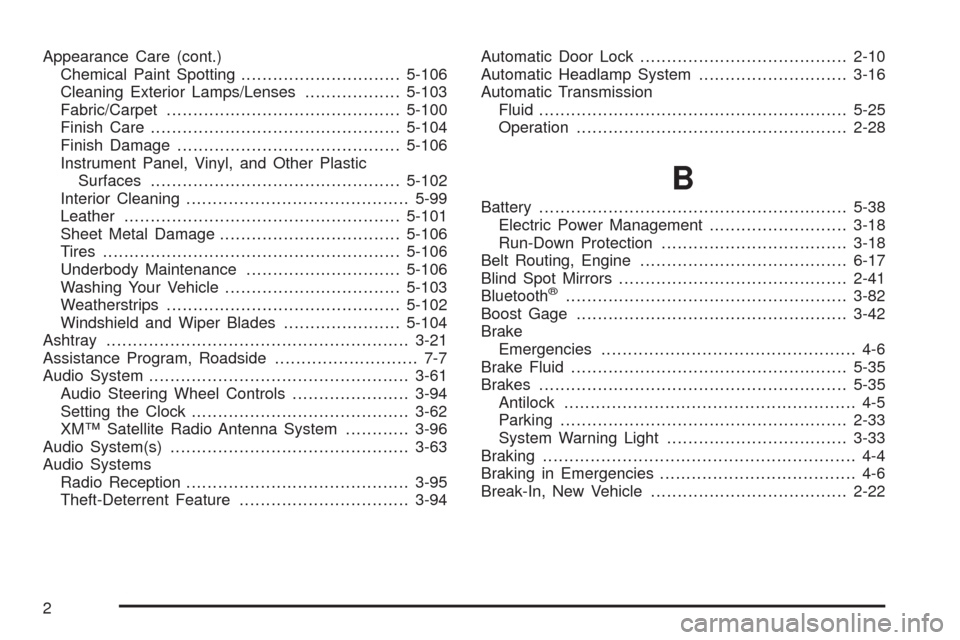
Appearance Care (cont.)
Chemical Paint Spotting..............................5-106
Cleaning Exterior Lamps/Lenses..................5-103
Fabric/Carpet............................................5-100
Finish Care...............................................5-104
Finish Damage..........................................5-106
Instrument Panel, Vinyl, and Other Plastic
Surfaces...............................................5-102
Interior Cleaning..........................................5-99
Leather....................................................5-101
Sheet Metal Damage..................................5-106
Tires........................................................5-106
Underbody Maintenance.............................5-106
Washing Your Vehicle.................................5-103
Weatherstrips............................................5-102
Windshield and Wiper Blades......................5-104
Ashtray.........................................................3-21
Assistance Program, Roadside........................... 7-7
Audio System.................................................3-61
Audio Steering Wheel Controls......................3-94
Setting the Clock.........................................3-62
XM™ Satellite Radio Antenna System............3-96
Audio System(s).............................................3-63
Audio Systems
Radio Reception..........................................3-95
Theft-Deterrent Feature................................3-94Automatic Door Lock.......................................2-10
Automatic Headlamp System............................3-16
Automatic Transmission
Fluid..........................................................5-25
Operation...................................................2-28
B
Battery..........................................................5-38
Electric Power Management..........................3-18
Run-Down Protection...................................3-18
Belt Routing, Engine.......................................6-17
Blind Spot Mirrors...........................................2-41
Bluetooth
®.....................................................3-82
Boost Gage...................................................3-42
Brake
Emergencies................................................ 4-6
Brake Fluid....................................................5-35
Brakes..........................................................5-35
Antilock....................................................... 4-5
Parking......................................................2-33
System Warning Light..................................3-33
Braking........................................................... 4-4
Braking in Emergencies..................................... 4-6
Break-In, New Vehicle.....................................2-22
2
Page 437 of 450
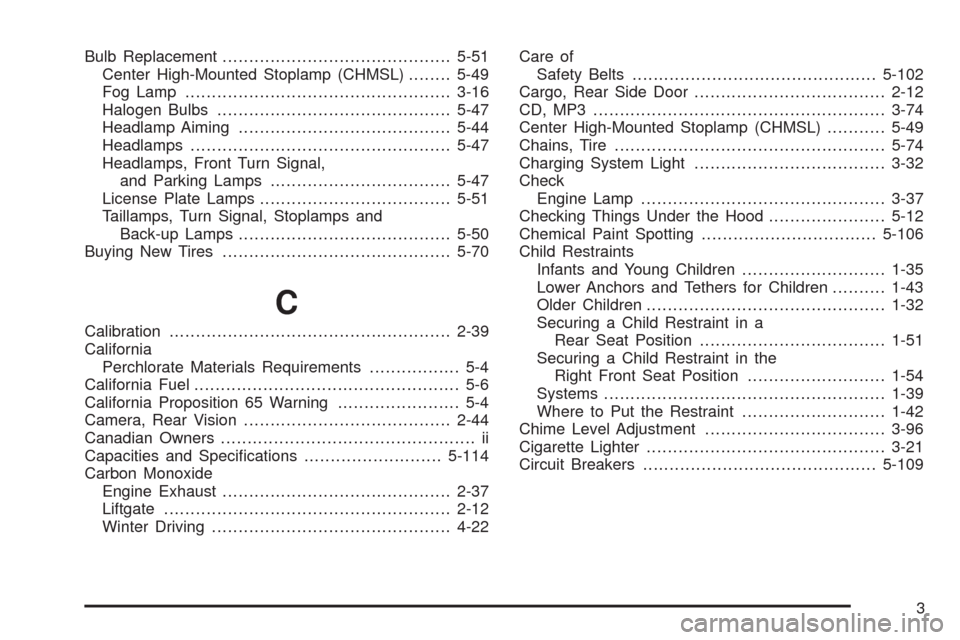
Bulb Replacement...........................................5-51
Center High-Mounted Stoplamp (CHMSL)........5-49
Fog Lamp ..................................................3-16
Halogen Bulbs............................................5-47
Headlamp Aiming........................................5-44
Headlamps.................................................5-47
Headlamps, Front Turn Signal,
and Parking Lamps..................................5-47
License Plate Lamps....................................5-51
Taillamps, Turn Signal, Stoplamps and
Back-up Lamps........................................5-50
Buying New Tires...........................................5-70
C
Calibration.....................................................2-39
California
Perchlorate Materials Requirements................. 5-4
California Fuel.................................................. 5-6
California Proposition 65 Warning....................... 5-4
Camera, Rear Vision.......................................2-44
Canadian Owners................................................ ii
Capacities and Specications..........................5-114
Carbon Monoxide
Engine Exhaust...........................................2-37
Liftgate......................................................2-12
Winter Driving.............................................4-22Care of
Safety Belts..............................................5-102
Cargo, Rear Side Door....................................2-12
CD, MP3 .......................................................3-74
Center High-Mounted Stoplamp (CHMSL)...........5-49
Chains, Tire...................................................5-74
Charging System Light....................................3-32
Check
Engine Lamp..............................................3-37
Checking Things Under the Hood......................5-12
Chemical Paint Spotting.................................5-106
Child Restraints
Infants and Young Children...........................1-35
Lower Anchors and Tethers for Children..........1-43
Older Children.............................................1-32
Securing a Child Restraint in a
Rear Seat Position...................................1-51
Securing a Child Restraint in the
Right Front Seat Position..........................1-54
Systems.....................................................1-39
Where to Put the Restraint...........................1-42
Chime Level Adjustment..................................3-96
Cigarette Lighter.............................................3-21
Circuit Breakers............................................5-109
3
Page 438 of 450
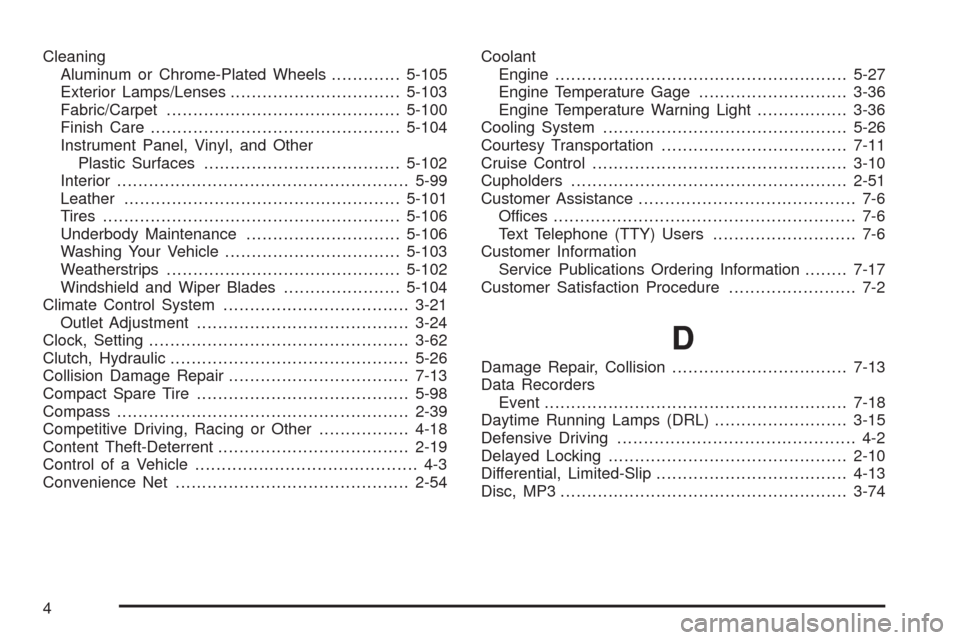
Cleaning
Aluminum or Chrome-Plated Wheels.............5-105
Exterior Lamps/Lenses................................5-103
Fabric/Carpet............................................5-100
Finish Care...............................................5-104
Instrument Panel, Vinyl, and Other
Plastic Surfaces.....................................5-102
Interior.......................................................5-99
Leather....................................................5-101
Tires........................................................5-106
Underbody Maintenance.............................5-106
Washing Your Vehicle.................................5-103
Weatherstrips............................................5-102
Windshield and Wiper Blades......................5-104
Climate Control System...................................3-21
Outlet Adjustment........................................3-24
Clock, Setting.................................................3-62
Clutch, Hydraulic.............................................5-26
Collision Damage Repair..................................7-13
Compact Spare Tire........................................5-98
Compass.......................................................2-39
Competitive Driving, Racing or Other.................4-18
Content Theft-Deterrent....................................2-19
Control of a Vehicle.......................................... 4-3
Convenience Net............................................2-54Coolant
Engine.......................................................5-27
Engine Temperature Gage............................3-36
Engine Temperature Warning Light.................3-36
Cooling System..............................................5-26
Courtesy Transportation...................................7-11
Cruise Control................................................3-10
Cupholders....................................................2-51
Customer Assistance......................................... 7-6
Offices......................................................... 7-6
Text Telephone (TTY) Users........................... 7-6
Customer Information
Service Publications Ordering Information........
7-17
Customer Satisfaction Procedure........................ 7-2
D
Damage Repair, Collision.................................7-13
Data Recorders
Event.........................................................7-18
Daytime Running Lamps (DRL).........................3-15
Defensive Driving............................................. 4-2
Delayed Locking.............................................2-10
Differential, Limited-Slip....................................4-13
Disc, MP3......................................................3-74
4
Page 439 of 450
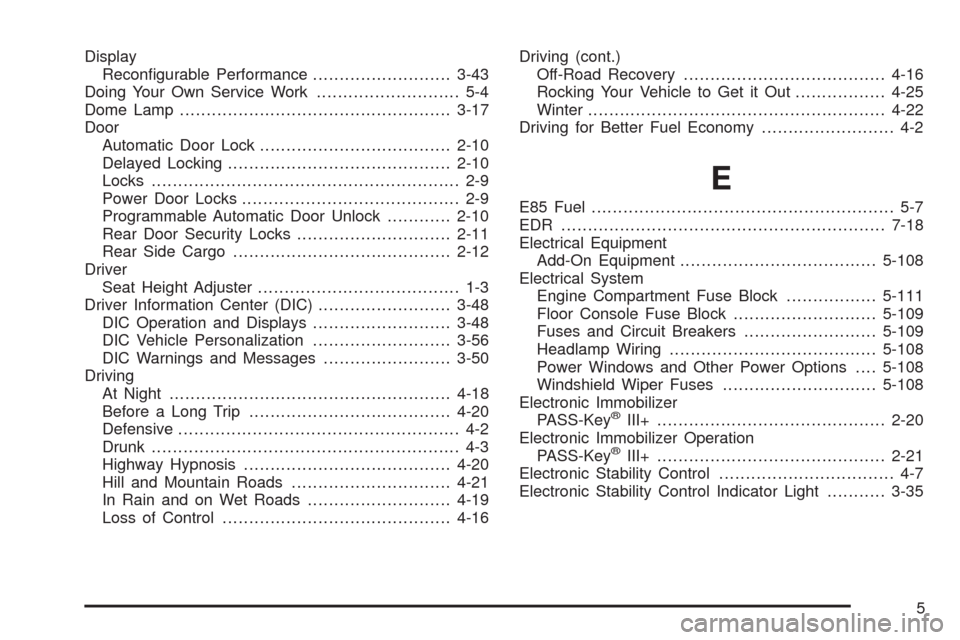
Display
Recongurable Performance..........................3-43
Doing Your Own Service Work........................... 5-4
Dome Lamp ...................................................3-17
Door
Automatic Door Lock....................................2-10
Delayed Locking..........................................2-10
Locks.......................................................... 2-9
Power Door Locks......................................... 2-9
Programmable Automatic Door Unlock............2-10
Rear Door Security Locks.............................2-11
Rear Side Cargo.........................................2-12
Driver
Seat Height Adjuster...................................... 1-3
Driver Information Center (DIC).........................3-48
DIC Operation and Displays..........................3-48
DIC Vehicle Personalization..........................3-56
DIC Warnings and Messages........................3-50
Driving
At Night.....................................................4-18
Before a Long Trip......................................4-20
Defensive..................................................... 4-2
Drunk.......................................................... 4-3
Highway Hypnosis.......................................4-20
Hill and Mountain Roads..............................4-21
In Rain and on Wet Roads...........................4-19
Loss of Control...........................................4-16Driving (cont.)
Off-Road Recovery......................................4-16
Rocking Your Vehicle to Get it Out.................4-25
Winter........................................................4-22
Driving for Better Fuel Economy......................... 4-2
E
E85 Fuel......................................................... 5-7
EDR .............................................................7-18
Electrical Equipment
Add-On Equipment.....................................5-108
Electrical System
Engine Compartment Fuse Block.................5-111
Floor Console Fuse Block...........................5-109
Fuses and Circuit Breakers.........................5-109
Headlamp Wiring.......................................5-108
Power Windows and Other Power Options....5-108
Windshield Wiper Fuses.............................5-108
Electronic Immobilizer
PASS-Key
®III+...........................................2-20
Electronic Immobilizer Operation
PASS-Key
®III+...........................................2-21
Electronic Stability Control................................. 4-7
Electronic Stability Control Indicator Light...........3-35
5
Page 440 of 450
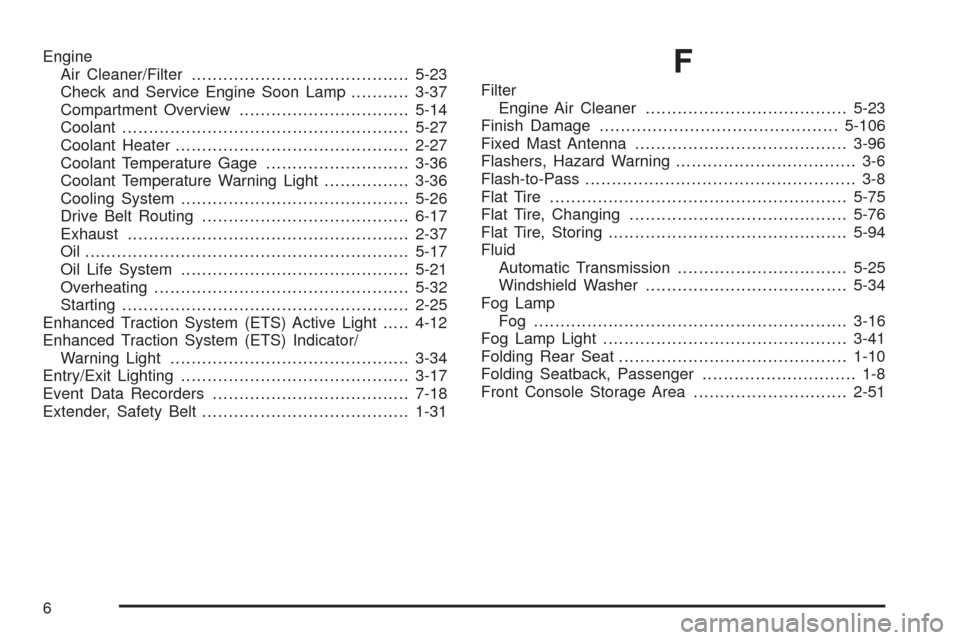
Engine
Air Cleaner/Filter.........................................5-23
Check and Service Engine Soon Lamp...........3-37
Compartment Overview................................5-14
Coolant......................................................5-27
Coolant Heater............................................2-27
Coolant Temperature Gage...........................3-36
Coolant Temperature Warning Light................3-36
Cooling System...........................................5-26
Drive Belt Routing.......................................6-17
Exhaust.....................................................2-37
Oil .............................................................5-17
Oil Life System...........................................5-21
Overheating................................................5-32
Starting......................................................2-25
Enhanced Traction System (ETS) Active Light.....4-12
Enhanced Traction System (ETS) Indicator/
Warning Light.............................................3-34
Entry/Exit Lighting...........................................3-17
Event Data Recorders.....................................7-18
Extender, Safety Belt.......................................1-31F
Filter
Engine Air Cleaner......................................5-23
Finish Damage.............................................5-106
Fixed Mast Antenna........................................3-96
Flashers, Hazard Warning.................................. 3-6
Flash-to-Pass................................................... 3-8
Flat Tire........................................................5-75
Flat Tire, Changing.........................................5-76
Flat Tire, Storing.............................................5-94
Fluid
Automatic Transmission................................5-25
Windshield Washer......................................5-34
Fog Lamp
Fog ...........................................................3-16
Fog Lamp Light..............................................3-41
Folding Rear Seat...........................................1-10
Folding Seatback, Passenger............................. 1-8
Front Console Storage Area.............................2-51
6
Page 442 of 450
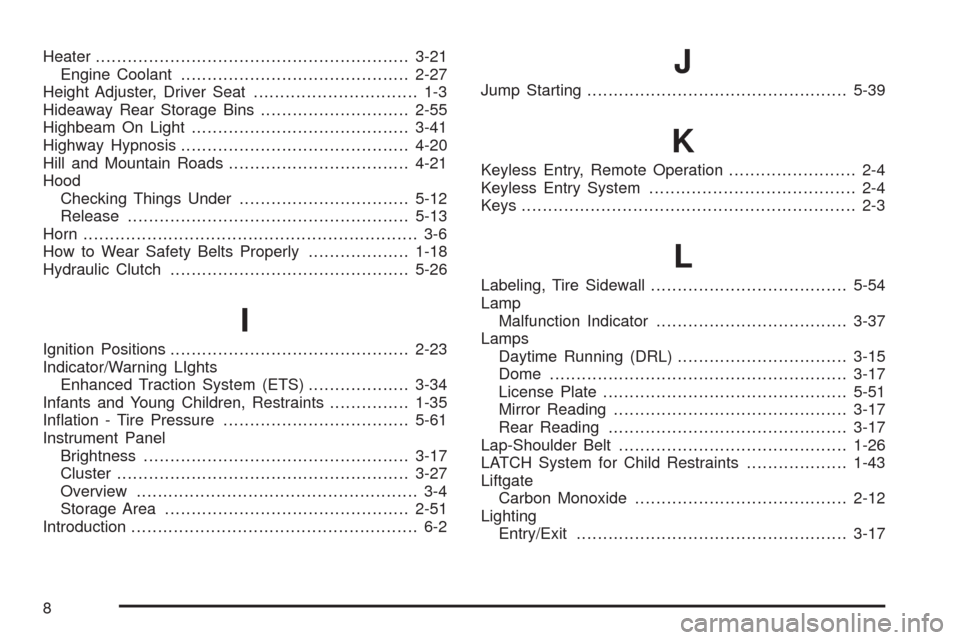
Heater...........................................................3-21
Engine Coolant...........................................2-27
Height Adjuster, Driver Seat............................... 1-3
Hideaway Rear Storage Bins............................2-55
Highbeam On Light.........................................3-41
Highway Hypnosis...........................................4-20
Hill and Mountain Roads..................................4-21
Hood
Checking Things Under................................5-12
Release.....................................................5-13
Horn ............................................................... 3-6
How to Wear Safety Belts Properly...................1-18
Hydraulic Clutch.............................................5-26
I
Ignition Positions.............................................2-23
Indicator/Warning LIghts
Enhanced Traction System (ETS)...................3-34
Infants and Young Children, Restraints...............1-35
Ination - Tire Pressure...................................5-61
Instrument Panel
Brightness..................................................3-17
Cluster.......................................................3-27
Overview..................................................... 3-4
Storage Area..............................................2-51
Introduction...................................................... 6-2
J
Jump Starting.................................................5-39
K
Keyless Entry, Remote Operation........................ 2-4
Keyless Entry System....................................... 2-4
Keys............................................................... 2-3
L
Labeling, Tire Sidewall.....................................5-54
Lamp
Malfunction Indicator....................................3-37
Lamps
Daytime Running (DRL)................................3-15
Dome ........................................................3-17
License Plate..............................................5-51
Mirror Reading............................................3-17
Rear Reading.............................................3-17
Lap-Shoulder Belt...........................................1-26
LATCH System for Child Restraints...................1-43
Liftgate
Carbon Monoxide........................................2-12
Lighting
Entry/Exit...................................................3-17
8