engine FIAT DUCATO 2012 Owner handbook (in English)
[x] Cancel search | Manufacturer: FIAT, Model Year: 2012, Model line: DUCATO, Model: FIAT DUCATO 2012Pages: 287, PDF Size: 4.5 MB
Page 207 of 287
203
KNOWING
YOUR CAR
SAFETY
STARTING
AND
DRIVING
WARNING
LIGHTS AND
MESSAGES
IN AN
EMERGENCY
MAINTENANCE
AND CARE
TECHNICAL
SPECIFICATIONS
INDEX
F0N0340mfig. 211
RAISING THE VEHICLE
If the vehicle needs to be lifted, go to a Fiat Dealership
which is equipped with arm hoists or workshop lifts.
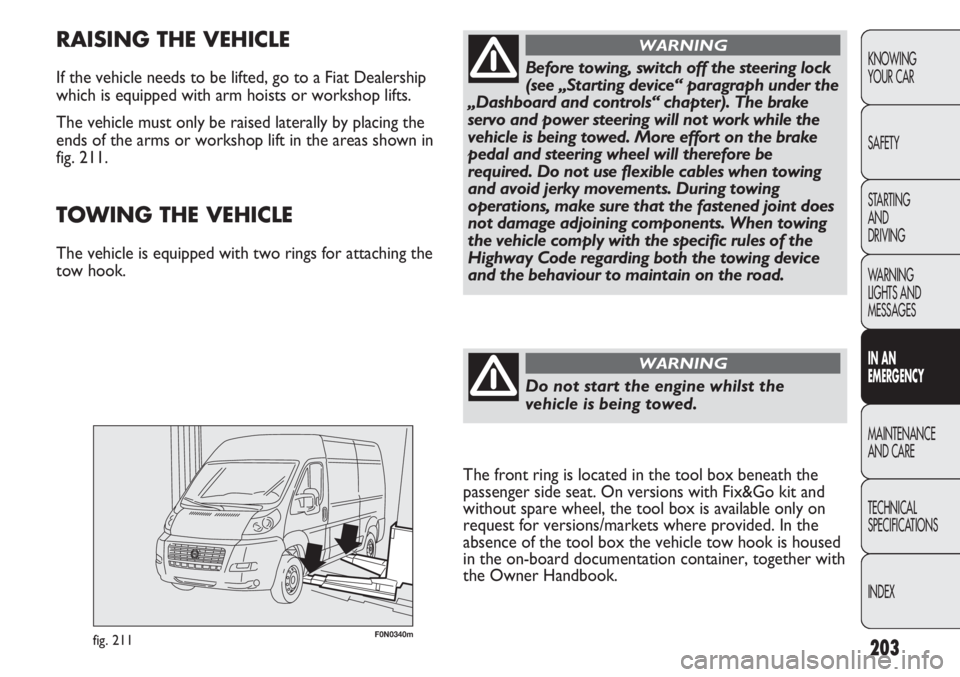
The vehicle must only be raised laterally by placing the
ends of the arms or workshop lift in the areas shown in
fig. 211.
Do not start the engine whilst the
vehicle is being towed.
WARNING
Before towing, switch off the steering lock
(see „Starting device“ paragraph under the
„Dashboard and controls“ chapter). The brake
servo and power steering will not work while the
vehicle is being towed. More effort on the brake
pedal and steering wheel will therefore be
required. Do not use flexible cables when towing
and avoid jerky movements. During towing
operations, make sure that the fastened joint does
not damage adjoining components. When towing
the vehicle comply with the specific rules of the
Highway Code regarding both the towing device
and the behaviour to maintain on the road.
WARNING
TOWING THE VEHICLE
The vehicle is equipped with two rings for attaching the
tow hook.
The front ring is located in the tool box beneath the
passenger side seat. On versions with Fix&Go kit and
without spare wheel, the tool box is available only on
request for versions/markets where provided. In the
absence of the tool box the vehicle tow hook is housed
in the on-board documentation container, together with
the Owner Handbook.
Page 210 of 287
●● ● ● ●
●● ● ● ●
●● ● ● ●
●● ● ● ●
●● ● ● ●
●● ● ● ●
●● ● ● ●
●● ● ● ●
●● ● ● ●
●● ● ● ●
●●
●●
●●●
206
KNOWING
YOUR CAR
SAFETY
STARTING
AND
DRIVING
WARNING
LIGHTS AND
MESSAGES
IN AN
EMERGENCY
MAINTENANCE
AND CARE
TECHNICAL
SPECIFICATIONS
INDEX
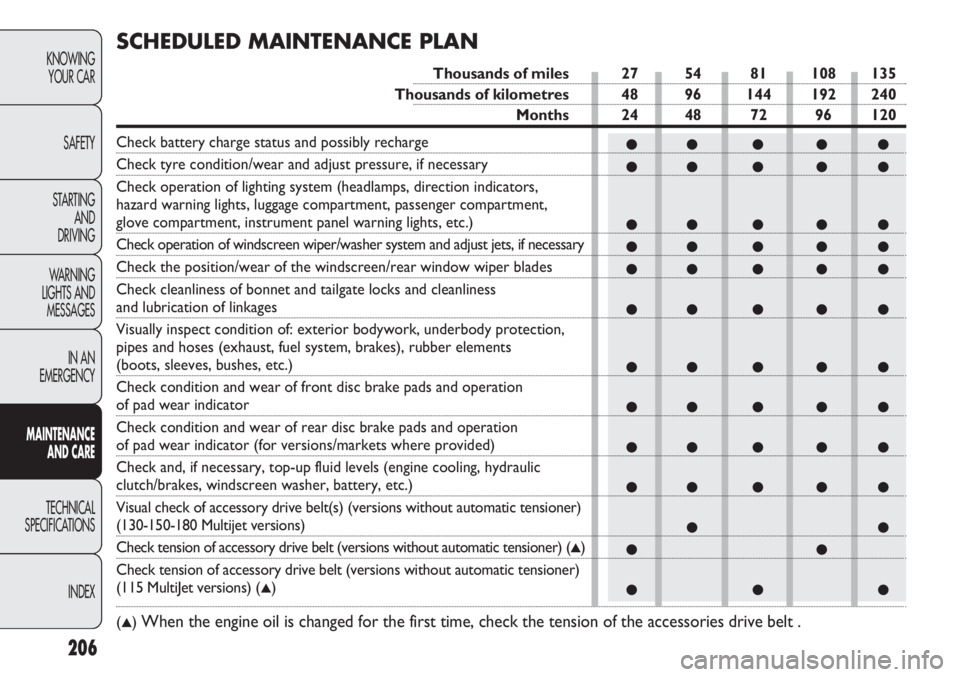
SCHEDULED MAINTENANCE PLAN
Thousands of miles 27 54 81 108 135
Thousands of kilometres 48 96 144 192 240
Months 24 48 72 96 120
Check battery charge status and possibly recharge
Check tyre condition/wear and adjust pressure, if necessary
Check operation of lighting system (headlamps, direction indicators,
hazard warning lights, luggage compartment, passenger compartment,
glove compartment, instrument panel warning lights, etc.)
Check operation of windscreen wiper/washer system and adjust jets, if necessary
Check the position/wear of the windscreen/rear window wiper blades
Check cleanliness of bonnet and tailgate locks and cleanliness
and lubrication of linkages
Visually inspect condition of: exterior bodywork, underbody protection,
pipes and hoses (exhaust, fuel system, brakes), rubber elements
(boots, sleeves, bushes, etc.)
Check condition and wear of front disc brake pads and operation
of pad wear indicator
Check condition and wear of rear disc brake pads and operation
of pad wear indicator (for versions/markets where provided)
Check and, if necessary, top-up fluid levels (engine cooling, hydraulic
clutch/brakes, windscreen washer, battery, etc.)
Visual check of accessory drive belt(s) (versions without automatic tensioner)
(130-150-180 Multijet versions)
Check tension of accessory drive belt (versions without automatic tensioner) (▲)
Check tension of accessory drive belt (versions without automatic tensioner)
(115 MultiJet versions) (▲)
(
▲)When the engine oil is changed for the first time, check the tension of the accessories drive belt .
Page 211 of 287
●
●● ● ● ●
●● ● ● ●
●● ● ● ●
●● ● ● ●
●● ● ● ●
●● ● ● ●
●
●●
●
●
●● ● ● ●
●●
●● ● ● ●
207
KNOWING
YOUR CAR
SAFETY
STARTING
AND
DRIVING
WARNING
LIGHTS AND
MESSAGES
IN AN
EMERGENCY
MAINTENANCE
AND CARE
TECHNICAL
SPECIFICATIONS
INDEX
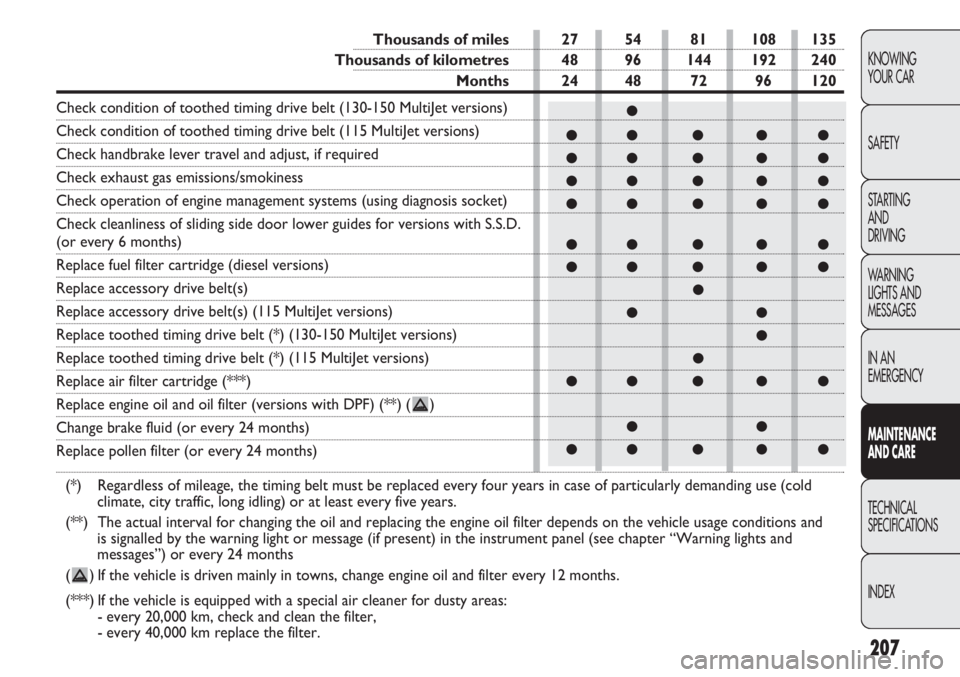
Thousands of miles 27 54 81 108 135
Thousands of kilometres 48 96 144 192 240
Months 24 48 72 96 120
Check condition of toothed timing drive belt (130-150 MultiJet versions)
Check condition of toothed timing drive belt (115 MultiJet versions)
Check handbrake lever travel and adjust, if required
Check exhaust gas emissions/smokiness
Check operation of engine management systems (using diagnosis socket)
Check cleanliness of sliding side door lower guides for versions with S.S.D.
(or every 6 months)
Replace fuel filter cartridge (diesel versions)
Replace accessory drive belt(s)
Replace accessory drive belt(s) (115 MultiJet versions)
Replace toothed timing drive belt (*) (130-150 MultiJet versions)
Replace toothed timing drive belt (*) (115 MultiJet versions)
Replace air filter cartridge (***)
Replace engine oil and oil filter (versions with DPF) (**) ( )
Change brake fluid (or every 24 months)
Replace pollen filter (or every 24 months)
(*) Regardless of mileage, the timing belt must be replaced every four years in case of particularly demanding use (cold
climate, city traffic, long idling) or at least every five years.
(**) The actual interval for changing the oil and replacing the engine oil filter depends on the vehicle usage conditions and
is signalled by the warning light or message (if present) in the instrument panel (see chapter “Warning lights and
messages”) or every 24 months
( ) If the vehicle is driven mainly in towns, change engine oil and filter every 12 months.
(***) If the vehicle is equipped with a special air cleaner for dusty areas:
- every 20,000 km, check and clean the filter,
- every 40,000 km replace the filter.
Page 212 of 287
208
KNOWING
YOUR CAR
SAFETY
STARTING
AND
DRIVING
WARNING
LIGHTS AND
MESSAGES
IN AN
EMERGENCY
MAINTENANCE
AND CARE
TECHNICAL
SPECIFICATIONS
INDEX
DEMANDING VEHICLE USE
If the vehicle is mostly used in one of the following
conditions:
❒trailer or caravan towing;
❒dusty roads;
❒short distances (less than 7-8 km) and with external
temperatures below zero;
❒frequently idling engine or long distance low speed
driving or in the case of long term inactivity;
the following checks must be carried out more often
than indicated in the Scheduled Servicing Plan:
❒check front disc brake pad conditions and wear;
❒check cleanliness of bonnet and boot locks and lever
cleanliness and lubrication;
❒visually inspect the conditions of: engine, gearbox,
transmission, pipes and tubes (exhaust – fuel
– brakes), rubber parts (boots, sleeves, bushes, etc.);
❒check battery charge and liquid level (electrolyte);
❒visual check on various drive belt conditions;
❒check and if necessary change engine oil and oil filter.
PERIODIC CHECKS
Before long journeys, check and, if necessary, restore:
❒engine coolant fluid level;
❒brake fluid level;
❒windscreen washer fluid level;
❒tyre pressure and conditions;
❒operation of lights (headlights, direction indicators,
hazard lights, etc.);
❒operation of the windscreen wiper/washer system,
position and wear of the windscreen and rear
window wiper blades.
To ensure that the vehicle is always efficient and well
maintained, it is advisable to make sure that you carry
out the above operations regularly (approximately
every 1000 km and every 3000 km for checking and
topping up engine oil is advisable).
Page 213 of 287
209
KNOWING
YOUR CAR
SAFETY
STARTING
AND
DRIVING
WARNING
LIGHTS AND
MESSAGES
IN AN
EMERGENCY
MAINTENANCE
AND CARE
TECHNICAL
SPECIFICATIONS
INDEX
CHECKING FLUID LEVELS
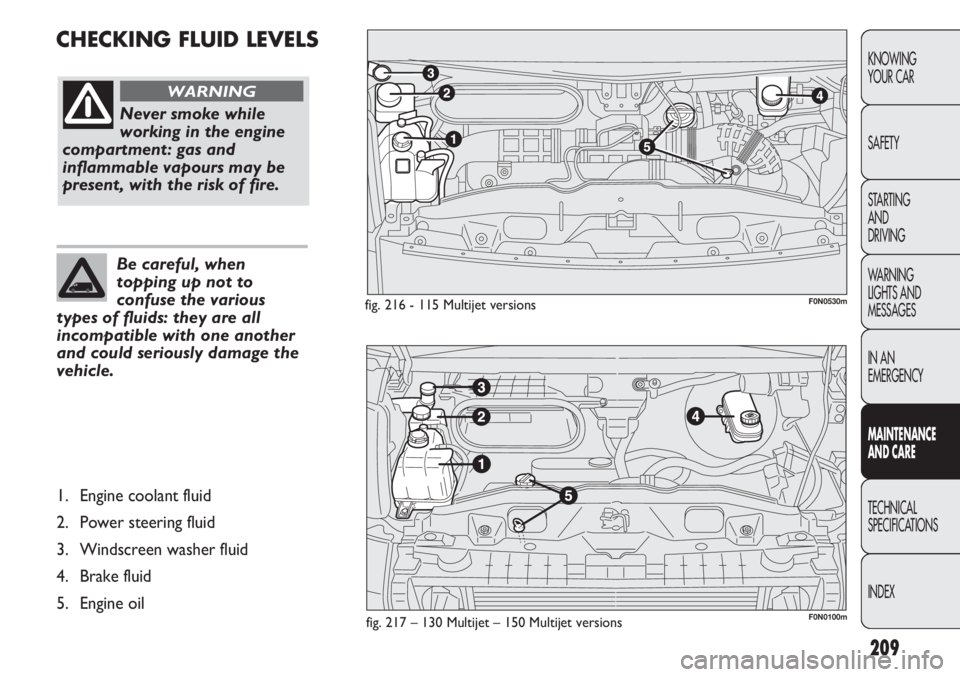
fig. 217 – 130 Multijet – 150 Multijet versions
Never smoke while
working in the engine
compartment: gas and
inflammable vapours may be
present, with the risk of fire.
WARNING
Be careful, when
topping up not to
confuse the various
types of fluids: they are all
incompatible with one another
and could seriously damage the
vehicle.
1. Engine coolant fluid
2. Power steering fluid
3. Windscreen washer fluid
4. Brake fluid
5. Engine oil
fig. 216 - 115 Multijet versionsF0N0530m
F0N0100m
Page 214 of 287
210
KNOWING
YOUR CAR
SAFETY
STARTING
AND
DRIVING
WARNING
LIGHTS AND
MESSAGES
IN AN
EMERGENCY
MAINTENANCE
AND CARE
TECHNICAL
SPECIFICATIONS
INDEX
Be careful, when
topping up not to
confuse the various
types of fluids: they are all
incompatible with one another
and could seriously damage the
vehicle.
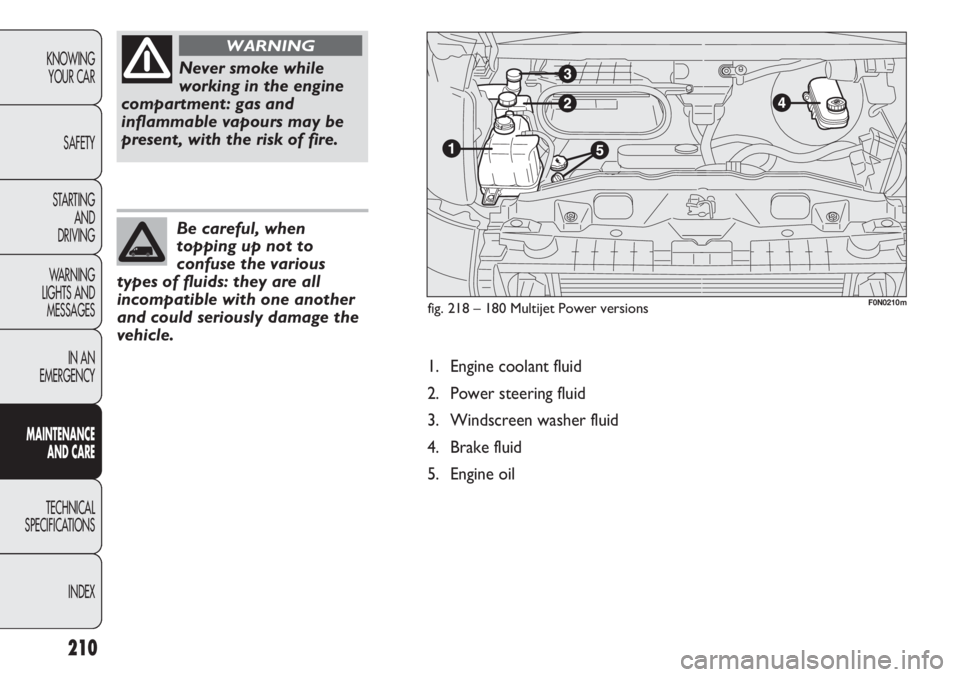
1. Engine coolant fluid
2. Power steering fluid
3. Windscreen washer fluid
4. Brake fluid
5. Engine oil
fig. 218 – 180 Multijet Power versions
Never smoke while
working in the engine
compartment: gas and
inflammable vapours may be
present, with the risk of fire.
WARNING
F0N0210m
Page 215 of 287
211
KNOWING
YOUR CAR
SAFETY
STARTING
AND
DRIVING
WARNING
LIGHTS AND
MESSAGES
IN AN
EMERGENCY
MAINTENANCE
AND CARE
TECHNICAL
SPECIFICATIONS
INDEX
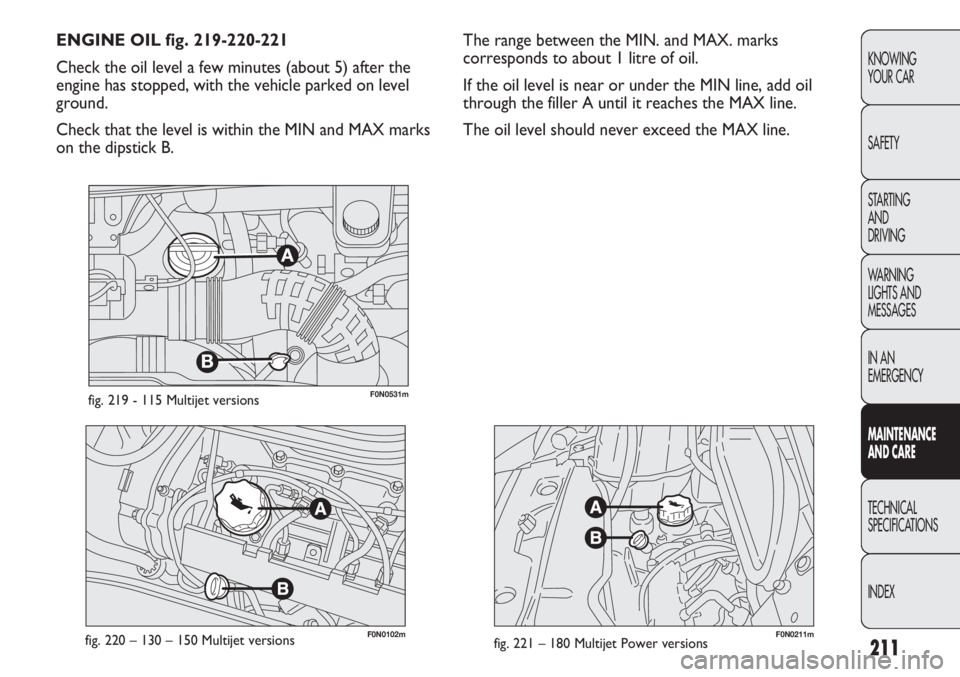
F0N0102mfig. 220 – 130 – 150 Multijet versionsF0N0211mfig. 221 – 180 Multijet Power versions
The range between the MIN. and MAX. marks
corresponds to about 1 litre of oil.
If the oil level is near or under the MIN line, add oil
through the filler A until it reaches the MAX line.
The oil level should never exceed the MAX line. ENGINE OIL fig. 219-220-221
Check the oil level a few minutes (about 5) after the
engine has stopped, with the vehicle parked on level
ground.
Check that the level is within the MIN and MAX marks
on the dipstick B.
F0N0531mfig. 219 - 115 Multijet versions
Page 216 of 287
212
KNOWING
YOUR CAR
SAFETY
STARTING
AND
DRIVING
WARNING
LIGHTS AND
MESSAGES
IN AN
EMERGENCY
MAINTENANCE
AND CARE
TECHNICAL
SPECIFICATIONS
INDEX
ENGINE OIL CONSUMPTION
The maximum engine oil consumption is usually
400 grams every 1,000 km.
When the vehicle is new, the engine needs to be run in,
therefore the engine oil consumption can only be
considered stabilised after the first 5,000 – 6,000 km.
IMPORTANT The oil consumption depends on the
driving style and the conditions under which the vehicle
is used.
IMPORTANT After adding or changing the oil, let the
engine run for a few seconds and wait a few minutes
after switching it off before checking the level.
When the engine is hot, take care when
working inside the engine compartment
to avoid burns. Remember that when the engine
is hot, the fan may cut in: danger of injury. Pay
attention to scarves, ties and other loose fitting
garments: they might get caught by moving
components.
WARNING
Do not add any oil with different
specifications to those of the existing
engine oil.
The used engine oil and the replaced oil
filter contain substances that may be
dangerous for the environment. It is
advisable to have oil and filters changed by a Fiat
Dealership where they will be disposed respecting
the environment and according to legal
regulations.
Page 217 of 287
213
KNOWING
YOUR CAR
SAFETY
STARTING
AND
DRIVING
WARNING
LIGHTS AND
MESSAGES
IN AN
EMERGENCY
MAINTENANCE
AND CARE
TECHNICAL
SPECIFICATIONS
INDEX
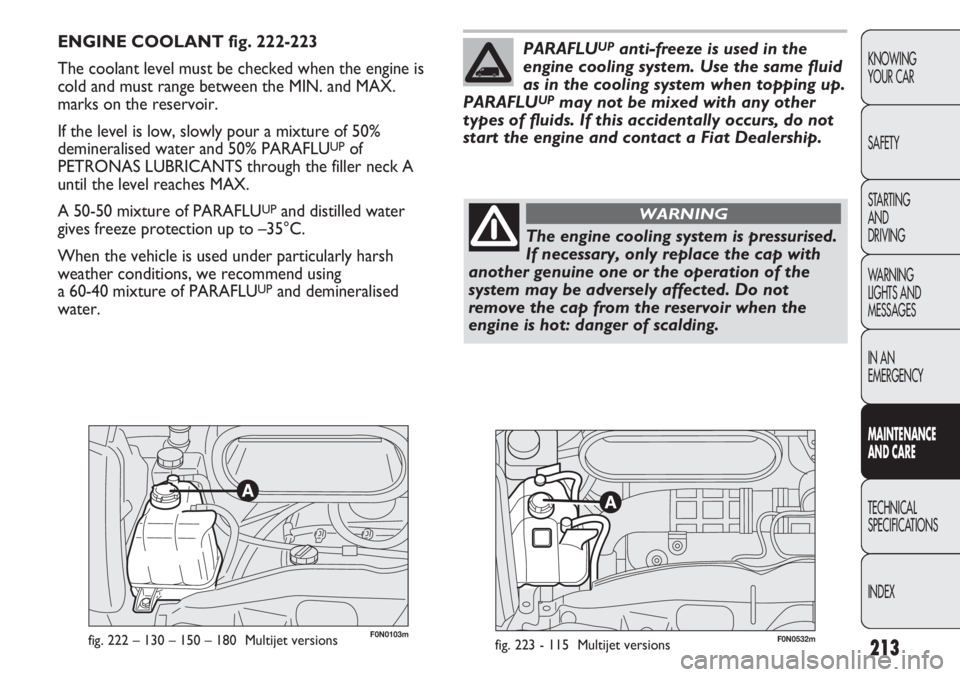
F0N0103mfig. 222 – 130 – 150 – 180 Multijet versions
ENGINE COOLANT fig. 222-223
The coolant level must be checked when the engine is
cold and must range between the MIN. and MAX.
marks on the reservoir.
If the level is low, slowly pour a mixture of 50%
demineralised water and 50% PARAFLU
UPof
PETRONAS LUBRICANTS through the filler neck A
until the level reaches MAX.
A 50-50 mixture of PARAFLU
UPand distilled water
gives freeze protection up to –35°C.
When the vehicle is used under particularly harsh
weather conditions, we recommend using
a 60-40 mixture of PARAFLU
UPand demineralised
water.
PARAFLUUPanti-freeze is used in the
engine cooling system. Use the same fluid
as in the cooling system when topping up.
PARAFLU
UPmay not be mixed with any other
types of fluids. If this accidentally occurs, do not
start the engine and contact a Fiat Dealership.
The engine cooling system is pressurised.
If necessary, only replace the cap with
another genuine one or the operation of the
system may be adversely affected. Do not
remove the cap from the reservoir when the
engine is hot: danger of scalding.
WARNING
F0N0532mfig. 223 - 115 Multijet versions
Page 218 of 287
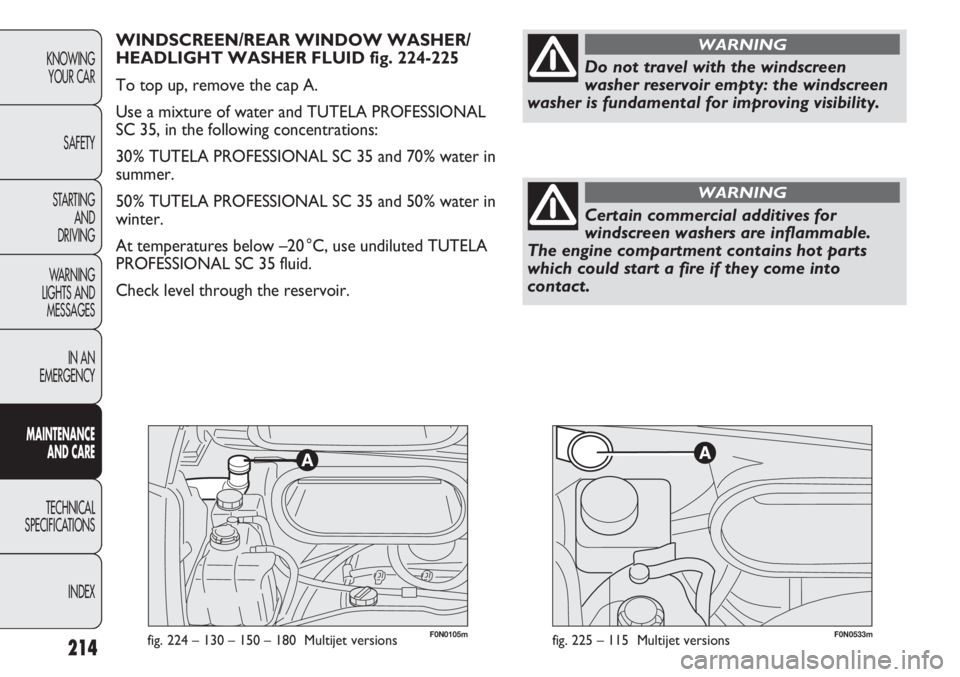
F0N0105mfig. 224 – 130 – 150 – 180 Multijet versions214
KNOWING
YOUR CAR
SAFETY
STARTING
AND
DRIVING
WARNING
LIGHTS AND
MESSAGES
IN AN
EMERGENCY
MAINTENANCE
AND CARE
TECHNICAL
SPECIFICATIONS
INDEX
WINDSCREEN/REAR WINDOW WASHER/
HEADLIGHT WASHER FLUID fig. 224-225
To top up, remove the cap A.
Use a mixture of water and TUTELA PROFESSIONAL
SC 35, in the following concentrations:
30% TUTELA PROFESSIONAL SC 35 and 70% water in
summer.
50% TUTELA PROFESSIONAL SC 35 and 50% water in
winter.
At temperatures below –20 °C, use undiluted TUTELA
PROFESSIONAL SC 35 fluid.
Check level through the reservoir.
Do not travel with the windscreen
washer reservoir empty: the windscreen
washer is fundamental for improving visibility.
WARNING
Certain commercial additives for
windscreen washers are inflammable.
The engine compartment contains hot parts
which could start a fire if they come into
contact.
WARNING
F0N0533mfig. 225 – 115 Multijet versions