open gas tank FORD FESTIVA 1991 Service Manual
[x] Cancel search | Manufacturer: FORD, Model Year: 1991, Model line: FESTIVA, Model: FORD FESTIVA 1991Pages: 454, PDF Size: 9.53 MB
Page 265 of 454
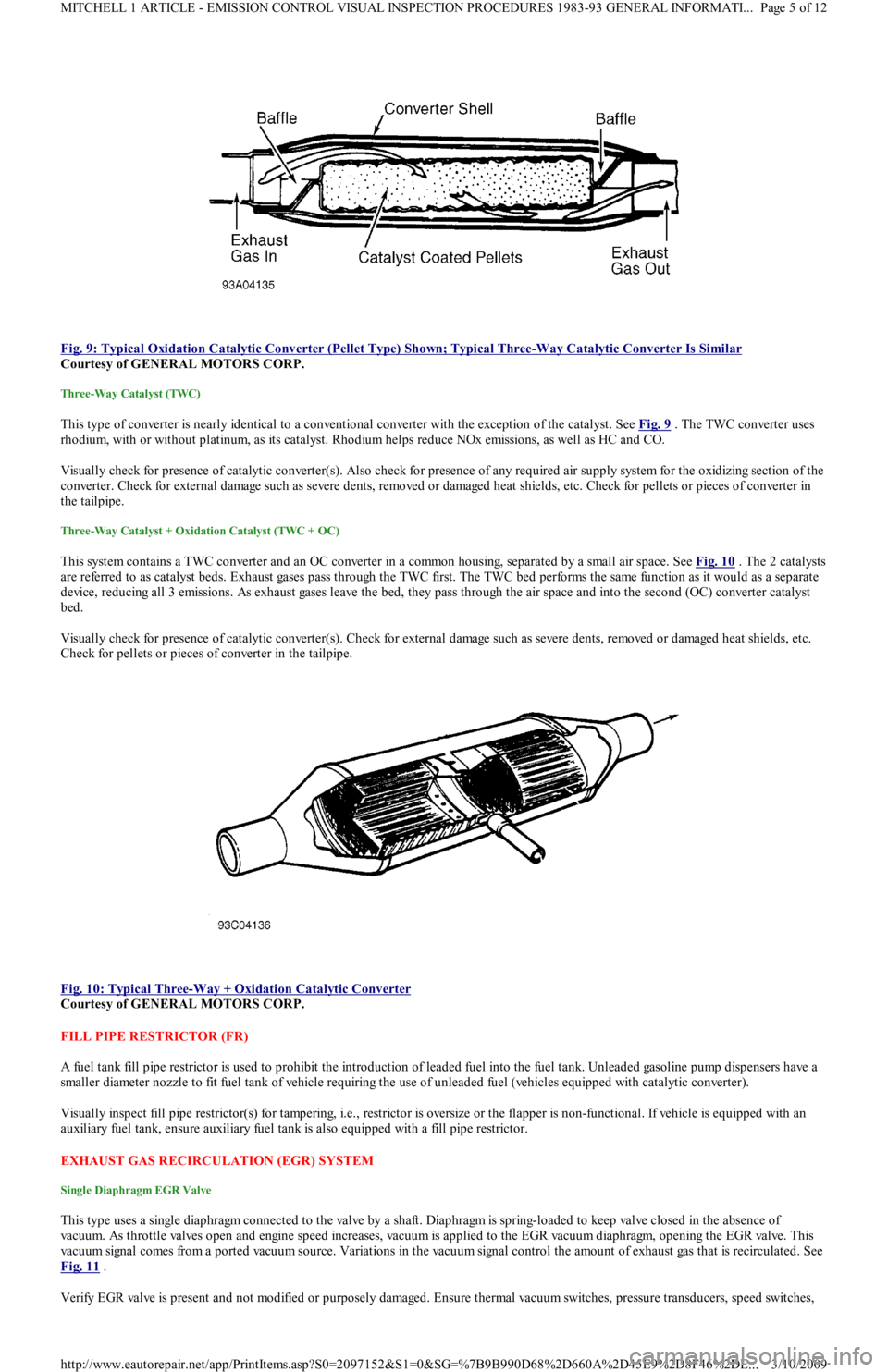
Fig. 9: Typical Oxidation Catalytic Converter (Pellet Type) Shown; Typical Three
-Way Catalytic Converter Is Similar
Courtesy of GENERAL MOTORS CORP.
Three-Way Catalyst (TWC)
This type of converter is nearly identical to a conventional converter with the exception of the catalyst. See Fig. 9 . The TWC converter uses
rhodium, with or without platinum, as its catalyst. Rhodium helps reduce NOx emissions, as well as HC and CO.
Visually check for presence of catalytic converter(s). Also check for presence of any required air supply system for the oxidizing section of the
converter. Check for external damage such as severe dents, removed or damaged heat shields, etc. Check for pellets or pieces of converter in
the tailpipe.
Three-Way Catalyst + Oxidation Catalyst (TWC + OC)
This system contains a TWC converter and an OC converter in a common housing, separated by a small air space. See Fig. 10. The 2 catalysts
are referred to as catalyst beds. Exhaust gases pass through the TWC first. The TWC bed performs the same function as it would as a separate
device, reducing all 3 emissions. As exhaust gases leave the bed, they pass through the air space and into the second (OC) converter catalyst
bed.
Visually check for presence of catalytic converter(s). Check for external damage such as severe dents, removed or damaged heat shields, etc.
Check for pellets or pieces of converter in the tailpipe.
Fig. 10: Typical Three
-Way + Oxidation Catalytic Converter
Courtesy of GENERAL MOTORS CORP.
FILL PIPE RESTRICTOR (FR)
A fuel tank fill pipe restrictor is used to prohibit the introduction of leaded fuel into the fuel tank. Unleaded gasoline pump dispensers have a
smaller diameter nozzle to fit fuel tank of vehicle requiring the use of unleaded fuel (vehicles equipped with catalytic converter).
Visually inspect fill pipe restrictor(s) for tampering, i.e., restrictor is oversize or the flapper is non-functional. If vehicle is equipped with an
auxiliary fuel tank, ensure auxiliary fuel tank is also equipped with a fill pipe restrictor.
EXHAUST GAS RECIRCULATION (EGR) SYSTEM
Single Diaphragm EGR Valve
This type uses a single diaphragm connected to the valve by a shaft. Diaphragm is spring-loaded to keep valve closed in the absence of
vacuum. As throttle valves open and engine speed increases, vacuum is applied to the EGR vacuum diaphragm, opening the EGR valve. This
vacuum signal comes from a ported vacuum source. Variations in the vacuum signal control the amount of exhaust gas that is recirculated. See
Fig. 11
.
Verify EGR valve is present and not modified or purposely damaged. Ensure thermal vacuum switches, pressure transducers, speed switches,
Page 5 of 12 MITCHELL 1 ARTICLE - EMISSION CONTROL VISUAL INSPECTION PROCEDURES 1983-93 GENERAL INFORMATI
...
3/10/2009 http://www.eautorepair.net/app/PrintItems.asp?S0=2097152&S1=0&SG=%7B9B990D68%2D660A%2D45E9%2D8F46%2DE
...
Page 335 of 454
Back To Article
1991-92 AIR CONDIT IONING & HEAT ING
A/C System General Servicing
HANDLING/SAFETY PRECAUTIONS
1. Always work in a well-ventilated, clean area. Refrigerant R-134a is colorless and is invisible as a gas. Refrigerant (R-12 or R-134a) is
heavier than oxygen and will displace oxygen in a confined area. Avoid breathing refrigerant vapors. Exposure may irritate eyes, nose
and throat.
2. The system's high pressure can cause severe injury to eyes and skin if a hose were to burst. Always wear eye protection when working
around A/C system and refrigerant. If necessary, wear rubber gloves or other protective clothing.
3. Refrigerant evaporates quickly when exposed to atmosphere, freezing anything it contacts. If liquid refrigerant contacts eyes or skin, DO
NOT rub eyes or skin. Immediately flush affected area with cool water for 15 minutes and consult a doctor or hospital.
4. Never use R-134a in combination with compressed air for leak testing. Pressurized R-134a in the presence of oxygen (air concentrations
greater than 60% by volume) may form a combustible mixture. DO NOT introduce compressed air into R-134a containers (full or
empty), A/C system components or service equipment.
5. DO NOT expose A/C system components to high temperatures, steam cleaning for example, as excessive heat will cause
refrigerant/system pressure to increase. Never expose refrigerant directly to open flame. If refrigerant needs to be warmed, place bottom
of refrigerant tank in warm water. Water temperature MUST NOT exceed 125°F (52°C).
6. Use care when handling refrigerant containers. DO NOT drop, strike, puncture or incinerate containers. Use Department Of
Transportation (DOT) approved, DOT 4BW or DOT 4BA, refrigerant containers.
7. Never overfill refrigerant containers. The safe filling level of a refrigerant container MUST NOT exceed 60% of the container's gross
weight rating. Store refrigerant containers at temperature less than 125°F (52°C).
8. R-12 refrigerant (Freon) will be sold and stored in White containers, while R-134a refrigerant will be sold and stored in 30- or 50-
pound Light Blue containers.
9. R-12 and R-134a refrigerants must never be mixed, as their desiccants and lubricants are not compatible. If the refrigerants are mixed,
system cross-contamination or A/C system component failure may occur. Always use separate servicing and refrigerant
recovery/recycling equipment.
10. Follow equipment manufacturer instructions of all service equipment to be used. The Material Safety Data Sheet (MSDS), provided by
refrigerant manufacturer/suppliers, contains valuable information regarding the safe handling of R-12 or R-134a refrigerants.
IDENTIFYING R-134A SYSTEMS & COMPONENTS
To prevent refrigerant cross-contamination, use following methods to identify R-134a based systems and components.
Fittings & "O" Rings
All R-134a based A/C systems use 1/2" - 16 ACME threaded fittings (identifiable by square threads) and quick-connect service couplings. See
Fig. 1
. Besides the use of these fittings, most manufacturers will use Green colored "O" rings in R-134a systems. CAUT ION: When discharging air conditioning system , use only approved refrigerant recovery/recycling
equipm ent. Make every attem pt to avoid discharging refrigerant into the atm osphere.
Page 1 of 6 MITCHELL 1 ARTICLE - 1991-92 AIR CONDITIONING & HEATING A/C System General Servicing
3/10/2009 http://www.eautorepair.net/app/PrintItems.asp?S0=2097152&S1=0&SG=%7B9B990D68%2D660A%2D45E9%2D8F46%2DE
...