airbag off HONDA ELEMENT 2010 1.G Owners Manual
[x] Cancel search | Manufacturer: HONDA, Model Year: 2010, Model line: ELEMENT, Model: HONDA ELEMENT 2010 1.GPages: 342, PDF Size: 5.76 MB
Page 5 of 342

Trip meter................................ 66
Gearshift Lever Positions
Automatic Transmission ....................... 219
Manual Transmission ..............217
Glove Box .................................. 100
Gross Axle Weight Rating
(GAWR) ................................. 232
Gross Vehicle Weight Rating (GVWR) .......................... 209, 232
H
Halogen Headlight Bulbs ...........261
Hatch ........................................... 81
Hazard Warning Flashers ............73
Headlights Aiming .................................... 261
Daytime Running Lights ..........72
High Beam Indicator ................61
High Beams, Turning on ..........71
Lights On Indicator ..................61
Low Beams, Turning on ...........71
Reminder Chime ......................71
Replacing Halogen Bulbs ........261 Turning on
............................... 71
Head Restraints ............................ 85
Heating and Cooling ..................104
High Altitude, Starting at ............216
Hood, Opening and Closing the .......................................... 200
Horn ........................................ 4, 69
Hydraulic Clutch ........................258
I
Identification Number, Vehicle ................................... 306
Ignition
Keys ......................................... 75
Switch ...................................... 79
Immobilizer System .....................76
Important Safety Precautions .........6
Indicators, Instrument Panel ........57
ABS (Anti-lock Brake) .......59, 226
Brake (Parking and Brake
System) ......................... 58, 297
Charging System ..............58, 295
Cruise Control .......................... 60
Cruise Main ............................. 60Door and Tailgate Open
...........61
DRL (Daytime Running
Lights) .................................. 60
High Beam ............................... 61
Key (Immobilizer System) .......60
Lights On ................................. 61
Low Fuel .................................. 61
Low Oil Pressure ..............58, 295
Low Tire Pressure .............62, 227
Maintenance Minder .........59, 243
Malfunction Indicator
Lamp ............................. 58, 296
Passenger Airbag Off ...............32
Seat Belt Reminder .............18, 58
Side Airbag Off ....................32, 59
SRS ..................................... 31, 59
TPMS ................................ 63, 228
Turn Signal and Hazard Warning ............................... 60
VSA OFF .................................. 62
VSA System ............................. 62
Washer Level ........................... 61
Individual Map Lights ..................95
Infant Restraint ............................ 40
CONTINUED
Index
V
INDEX
Page 7 of 342

Modifications............................. 206
Modifying Your Vehicle .............206
N
Neutral Gear Position .................220
New Vehicle Break-in .................198
Normal Shift Speeds ..................218
NOTICE, Explanation of ................i
Numbers, Identification .............306
O
Octane Requirement, Gasoline ................................. 198
Odometer ..................................... 65
Off-Highway Driving Guidelines .............................. 238
Off-Road Precautions ..................238
Oil Change, How to ......................252
Change, When to ....................243
Checking Engine ....................201
Life, Engine ............................. 243
Pressure Indicator .............58, 295 Selecting Proper Viscosity
Chart ................................... 251
Onboard Refueling Vapor Recovery ................................ 316
ON (Ignition Key Position) ..........79
Outside Mirrors ........................... 93
Outside Temperature Indicator ....68
Overhead Console ......................101
Overheating, Engine ..................293
Owner's Maintenance Checks ....248
Oxygenated Fuels ......................198
PPanel Brightness Control .............72
Park Gear Position .....................219
Parking ...................................... 223
Parking Brake .............................. 94
Parking Brake and Brake System Indicator ........................... 58, 297
Parking Over Things that
Burn ................................ 223, 318
Passenger Airbag Off Indicator ....32
PGM-FI System .......................... 317
Playing a Disc .....................119, 140Playing an iPod
®.........................
162
Playing a PC card .......................149
Playing a USB Flash Memory Device .................................... 173
Playing the FM/AM Radio ............................... 110, 127
Playing the XM
®Radio ........113, 132
Pollen Filter ............................... 269
Power Door Locks .......................80
Power Socket Locations .............100
Power Steering Fluid .................260
Power Windows ........................... 92
Pregnancy, Using Seat Belts ........16
Preparing to Drive ......................215
Proper Seat Belt Usage ................14
Protecting Adults and Teens ........11
Additional Safety Precautions ...16
Advice for Pregnant Women ....16
CONTINUED
Index
VII
INDEX
Page 9 of 342

Wearing a Lap/ShoulderBelt .................................. 14, 19
Seats ............................................ 83
Head Restraints ........................85
Seats, Adjusting the .....................83
Sensors Driver's Seat Position Sensor ...27
Front Passenger's Weight Sensors ................................ 27
Impact Sensors ...................22, 23
Serial Number ............................ 306
Service Intervals .........................243
Service Manual (U.S. only) ........325
Service Station Procedures ........199
Setting the Clock ........................189
Shifting the Automatic Transmission .......................... 219
Shift Lever Position Indicators ...219
Shift Lock Release ......................221
Side Airbags ................................. 28
How the Side Airbag Off
Indicator Works ...................32
How Your Side Airbags Work ..28
Side Curtain Airbags ....................30
How Your Side Curtain Airbags Work .................................... 30Side Marker Lights, Bulb
Replacement in .......................265
Signaling Turns ............................ 60
Snow Tires ................................. 275
Sound System ............................ 109
Spare Tire .................................. 282
Inflating ........................... 271, 282
Specifications .......................... 310
Spark Plugs ................................ 308
Specifications ............................. 308
Speed Control ............................ 193
Speed Limiter ......................218, 221
Speedometer ................................ 64
SRS, Additional Information .........22
Additional Safety Precautions ...34
Airbag Service .......................... 33
Airbag System Components .....22
How the Side Airbag Off Indicator Works ...................32
How the SRS Indicator Works ..31
How Your Front Airbags
Work .................................... 25
How Your Side Airbags Work ..28
How Your Side Curtain Airbags Work .................................... 30
SRS Indicator ......................... 31, 59START (Ignition Key Position)
.....79
Starting the Engine ....................216
In Cold Weather at High Altitude ................................ 216
With a Dead Battery ................291
State Emissions Testing .............319
Steam Coming from Engine .......293
Steering Wheel Adjustment ............................... 74
Anti-theft Column Lock ............79
Buttons ........................... 191, 193
Stereo Sound System .................109
Storing Your Vehicle ..................278
Sun Visor ................................... 100
Supplemental Restraint
System .............................. 9, 22
Servicing .................................. 33
SRS Indicator ...................... 31, 59
System Components ................22
Synthetic Oil .............................. 252
T
Tachometer .................................. 64
CONTINUED
Index
IX
INDEX
Page 20 of 342
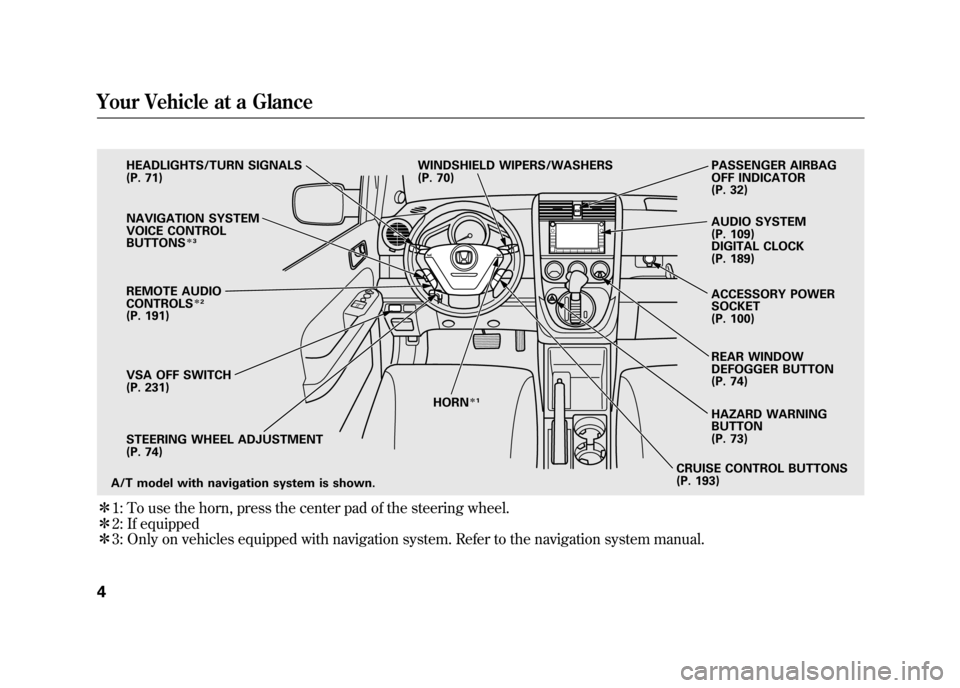
ꭧ1: To use the horn, press the center pad of the steering wheel.
ꭧ 2: If equipped
ꭧ 3: Only on vehicles equipped with navigation system. Refer to the navigation system manual.
HEADLIGHTS/TURN SIGNALS
(P. 71)
REMOTE AUDIO CONTROLS
ꭧ2
(P. 191)
A/T model with navigation system is shown. STEERING WHEEL ADJUSTMENT
(P. 74)
CRUISE CONTROL BUTTONS
(P. 193)
WINDSHIELD WIPERS/WASHERS
(P. 70)
PASSENGER AIRBAG
OFF INDICATOR
(P. 32)
AUDIO SYSTEM
(P. 109)
DIGITAL CLOCK
(P. 189)
REAR WINDOW
DEFOGGER BUTTON
(P. 74)
ACCESSORY POWERSOCKET
(P. 100)
HORN
ꭧ 1
VSA OFF SWITCH
(P. 231)
HAZARD WARNINGBUTTON
(P. 73)
NAVIGATION SYSTEM
VOICE CONTROL BUTTONS
ꭧ
3
Your Vehicle at a Glance
4
Page 21 of 342

This section gives you important
information about how to protect
yourself and your passengers. It shows
you how to use seat belts. It explains
how your airbags work. And it tells you
how to properly restrain infants and
children in your vehicle.
Important Safety Precautions.............6
Your Vehicle's Safety Features ..........7
Seat Belts ..................................... 8
Airbags ........................................ 9
Protecting Adults and Teens ...........11
1. Close and Lock the Doors ........11
2. Adjust the Front Seats .............11
3. Adjust the Seat-Backs ..............12
4. Adjust the Head Restraints ......13
5. Fasten and Position the Seat Belts .................................. 14
6. Maintain a Proper Sitting Position .............................. 15
Advice for Pregnant Women ........16
Additional Safety Precautions ......16
Additional Information About Your Seat Belts ............................... 18
Seat Belt System Components .....18 Lap/Shoulder Belt
......................19
Automatic Seat Belt Tensioners ............................. 20
Seat Belt Maintenance ................20
Additional Information About Your Airbags .................................. 22
Airbag System Components ........22
How Your Front Airbags Work ....25
How Your Side Airbags Work ......28
How Your Side Curtain Airbags Work ..................................... 30
How the SRS Indicator Works .....31
How the Side Airbag Off Indicator Works .....................32
How the Passenger Airbag Off Indicator Works .....................32
Airbag Service ............................ 33
Additional Safety Precautions ......34
Protecting Children -General
Guidelines .............................. 35
All Children Must Be
Restrained .............................. 35
All Children Should Sit in a Back Seat ....................................... 36
The Passenger's Front Airbag
Can Pose Serious Risks ...........36If You Must Drive with Several
Children ................................ 38
If a Child Requires Close Attention ................................ 38
Additional Safety Precautions ......39
Protecting Infants and Small Children ................................. 40
Protecting Infants .......................40
Protecting Small Children ...........41
Selecting a Child Seat .....................42
Installing a Child Seat .....................43
Installing a Child Seat with
LATCH .................................. 44
Installing a Child Seat with a Lap/Shoulder Belt ..................46
Installing a Child Seat with a
Tether ................................... 48
Protecting Larger Children .............49
Checking Seat Belt Fit ................49
Using a Booster Seat ...................50
When Can a Larger Child Sit in
Front ..................................... 50
Additional Safety Precautions ......51
Carbon Monoxide Hazard ...............52
Safety Labels .................................. 53
Driver and Passenger Safety
5
Driver and Passenger Safety
Page 26 of 342

The most important things you need
to know about your airbags are:●
Airbags do not replace seat belts.
They are designed to supplement
the seat belts.
●
Airbags offer no protection in rear impacts, or minor frontal or sidecollisions.
●Airbags can pose serious hazards.
To do their job, airbags must
inflate with tremendous force. So
while airbags help save lives, they
can cause minor injuries or more
serious or even fatal injuries if
occupants are not properly
restrained or sitting properly.
What you should do:Always wear
your seat belt properly, and sit
upright and as far back from the
steering wheel as possible while
allowing full control of the vehicle. A
front passenger should move their
seat as far back from the dashboard
as possible. The rest of this section gives more
detailed information about how you
can maximize your safety.
Remember however, that no safety
system can prevent all injures or
deaths that can occur in a severe
crash, even when seat belts are
properly worn and the airbagsdeploy.
Your Vehicle's Safety Features
10
Table of Contents
Page 31 of 342

Never place the shoulder portion of alap/shoulder belt under your arm or
behind your back.
This could cause
very serious injuries in a crash.
If a seat belt does not seem to work
properly, it may not protect the
occupant in a crash.
No one should sit in a seat with an inoperative seat belt.
Using a seat
belt that is not working properly can
result in serious injury or death.
Have your dealer check the belt as
soon as possible.
See page 18 for additional
information about your seat belts and
how to take care of them. 6. Maintain a Proper Sitting
Position
After all occupants have adjusted
their seats and head restraints, and
put on their seat belts, it is very
important that they continue to sit
upright, well back in their seats, with
their feet on the floor, until the
vehicle is safely parked and the
engine is off.
Sitting improperly can increase the
chance of injury during a crash. For
example, if an occupant slouches, lies
down, turns sideways, sits forward,
leans forward or sideways, or puts
one or both feet up, the chance of
injury during a crash is greatlyincreased. In addition, an occupant who is out of
position in the front seat can be
seriously or fatally injured in a crash
by striking interior parts of the
vehicle or being struck by an
inflating front airbag.Sitting improperly or out of
position can result in serious
injury or death in a crash.
Always sit upright, well back in
the seat, with your feet on thefloor.
Protecting Adults and Teens
15
Driver and Passenger Safety
Table of Contents
Page 38 of 342
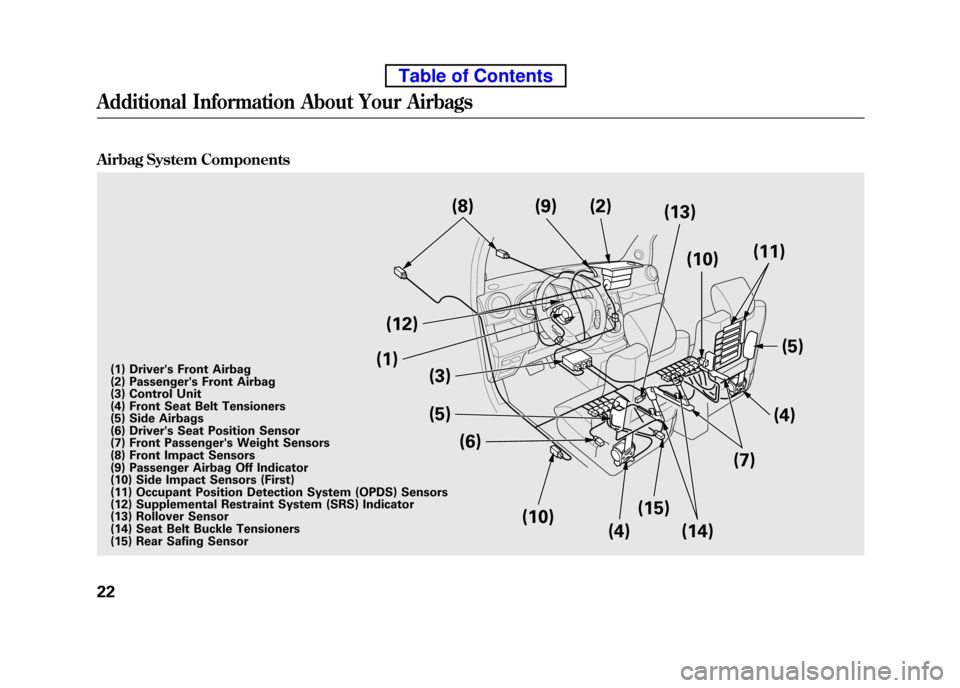
Airbag System Components
(12)
(1) (3) (5)
(6)
(10) (4) (14)(15) (7)
(4)(5)
(11)
(10)
(13)
(2)
(9)
(8)
(1) Driver's Front Airbag
(2) Passenger's Front Airbag
(3) Control Unit
(4) Front Seat Belt Tensioners
(5) Side Airbags
(6) Driver's Seat Position Sensor
(7) Front Passenger's Weight Sensors
(8) Front Impact Sensors
(9) Passenger Airbag Off Indicator
(10) Side Impact Sensors (First)
(11) Occupant Position Detection System (OPDS) Sensors
(12) Supplemental Restraint System (SRS) Indicator
(13) Rollover Sensor
(14) Seat Belt Buckle Tensioners
(15) Rear Safing Sensor
Additional Information About Your Airbags
22
Table of Contents
Page 40 of 342

●Automatic front seat belt
tensioners (see page 20).
● Sensors that can detect a moderate
to severe front impact, side impact,
or rollover.
● Sensors that can detect whether a
child is in the passenger's side
airbag path and signal the control
unit to turn the airbag off (see
page 29).
● Sensors that can detect whether
the driver's seat belt and the front
passenger's seat belt are latched or
unlatched (see page 18).
● A driver's seat position sensor that
monitors the distance of the seat
from the front airbag. If the seat is
too far forward, the airbag will
inflate with less force (see page 27). ●
Weight sensors that monitor the
weight on the front passenger's
seat. If the weight is about 65 lbs
(29 kg) or less (the weight of an
infant or small child), the
passenger's front airbag will be
turned off (see page 27).
● A sophisticated electronic system
that continually monitors and
records information about the
sensors, the control unit, the
airbag activators, the seat belt
tensioners, and driver and front
passenger seat belt use when the
ignition switch is in the ON (II)position.
● An indicator on the instrument
panel that alerts you to a possible
problem with your airbags,
sensors, or seat belt tensioners
(see page 31). ●
An indicator on the instrument
panel that alerts you that the
passenger's side airbag has been
turned off (see page 32).
● An indicator on the dashboard that
alerts you that the passenger's
front airbag has been turned off
(see page 32).
● Emergency backup power in case
your vehicle's electrical system is
disconnected in a crash.
Additional Information About Your Airbags
24
Table of Contents
Page 41 of 342
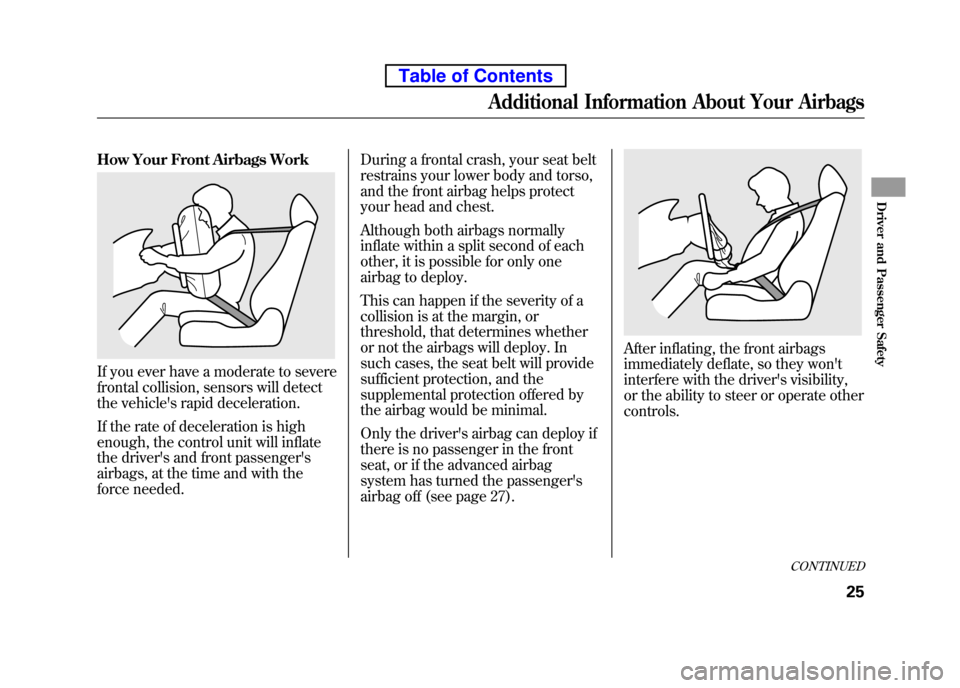
How Your Front Airbags Work
If you ever have a moderate to severe
frontal collision, sensors will detect
the vehicle's rapid deceleration.
If the rate of deceleration is high
enough, the control unit will inflate
the driver's and front passenger's
airbags, at the time and with the
force needed.During a frontal crash, your seat belt
restrains your lower body and torso,
and the front airbag helps protect
your head and chest.
Although both airbags normally
inflate within a split second of each
other, it is possible for only one
airbag to deploy.
This can happen if the severity of a
collision is at the margin, or
threshold, that determines whether
or not the airbags will deploy. In
such cases, the seat belt will provide
sufficient protection, and the
supplemental protection offered by
the airbag would be minimal.
Only the driver's airbag can deploy if
there is no passenger in the front
seat, or if the advanced airbag
system has turned the passenger's
airbag off (see page 27).
After inflating, the front airbags
immediately deflate, so they won't
interfere with the driver's visibility,
or the ability to steer or operate othercontrols.
CONTINUED
Additional Information About Your Airbags
25
Driver and Passenger Safety
Table of Contents