check engine Hyundai Ioniq Hybrid 2017 Repair Manual
[x] Cancel search | Manufacturer: HYUNDAI, Model Year: 2017, Model line: Ioniq Hybrid, Model: Hyundai Ioniq Hybrid 2017Pages: 553, PDF Size: 59.51 MB
Page 484 of 553
7-63
7
Maintenance
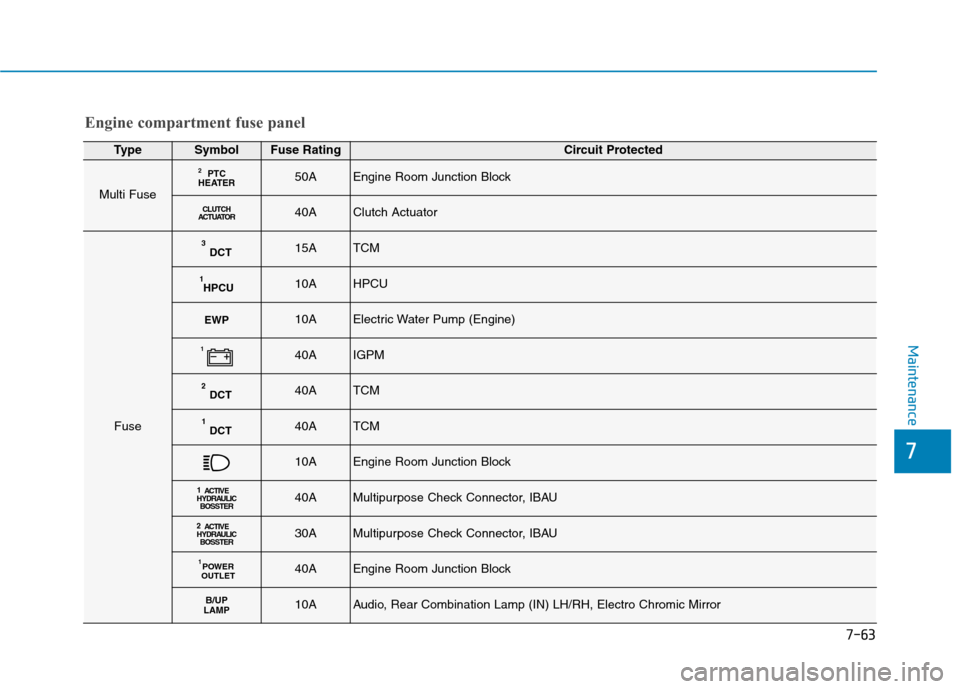
TypeSymbolFuse RatingCircuit Protected
Multi Fuse
PTC
HEATER 250AEngine Room Junction Block
CLUTCH
ACTUATOR40AClutch Actuator
Fuse
DCT
315ATCM
HPCU
110AHPCU
EWP10AElectric Water Pump (Engine)
140AIGPM
DCT
240ATCM
DCT
140ATCM
10AEngine Room Junction Block
1
ACTIVE
HYDRAULIC BO SSTER40AMultipurpose Check Connector, IBAU
2
ACTIVE
HYDRAULIC BO SSTER30AMultipurpose Check Connector, IBAU
POWER
OUTLET140AEngine Room Junction Block
B/UP
LAMP10AAudio, Rear Combination Lamp (IN) LH/RH, Electro Chromic Mirror
Engine compartment fuse panel
Page 485 of 553
7-64
Maintenance
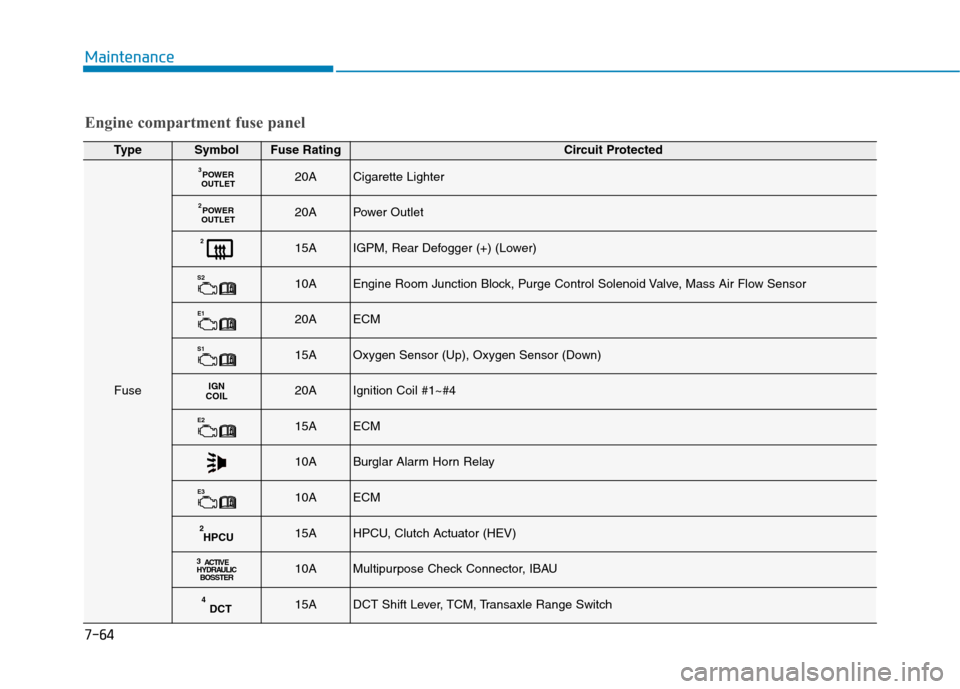
TypeSymbolFuse RatingCircuit Protected
Fuse
POWER
OUTLET
320ACigarette Lighter
POWER
OUTLET
220APower Outlet
215AIGPM, Rear Defogger (+) (Lower)
S
210AEngine Room Junction Block, Purge Control Solenoid Valve, Mass Air Flow Sensor
E120AECM
S115AOxygen Sensor (Up), Oxygen Sensor (Down)
IGN
COIL20AIgnition Coil #1~#4
E215AECM
10ABurglar Alarm Horn Relay
E 310AECM
HPCU
215AHPCU, Clutch Actuator (HEV)
3
ACTIVE
HYDRAULIC BO SSTER10AMultipurpose Check Connector, IBAU
DCT
415ADCT Shift Lever, TCM, Transaxle Range Switch
Engine compartment fuse panel
Page 497 of 553
7-76
Maintenance
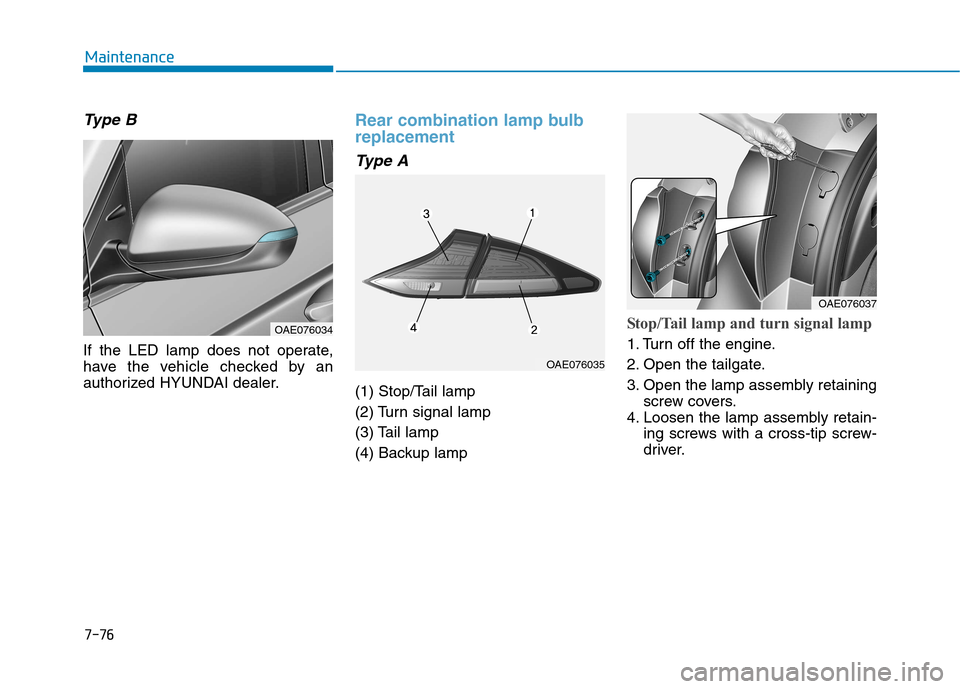
Type B
If the LED lamp does not operate,
have the vehicle checked by an
authorized HYUNDAI dealer.
Rear combination lamp bulb replacement
Type A
(1) Stop/Tail lamp
(2) Turn signal lamp
(3) Tail lamp
(4) Backup lamp
Stop/Tail lamp and turn signal lamp
1. Turn off the engine.
2. Open the tailgate.
3. Open the lamp assembly retainingscrew covers.
4. Loosen the lamp assembly retain- ing screws with a cross-tip screw-
driver.OAE076034
OAE076035
OAE076037
Page 499 of 553
7-78
Maintenance
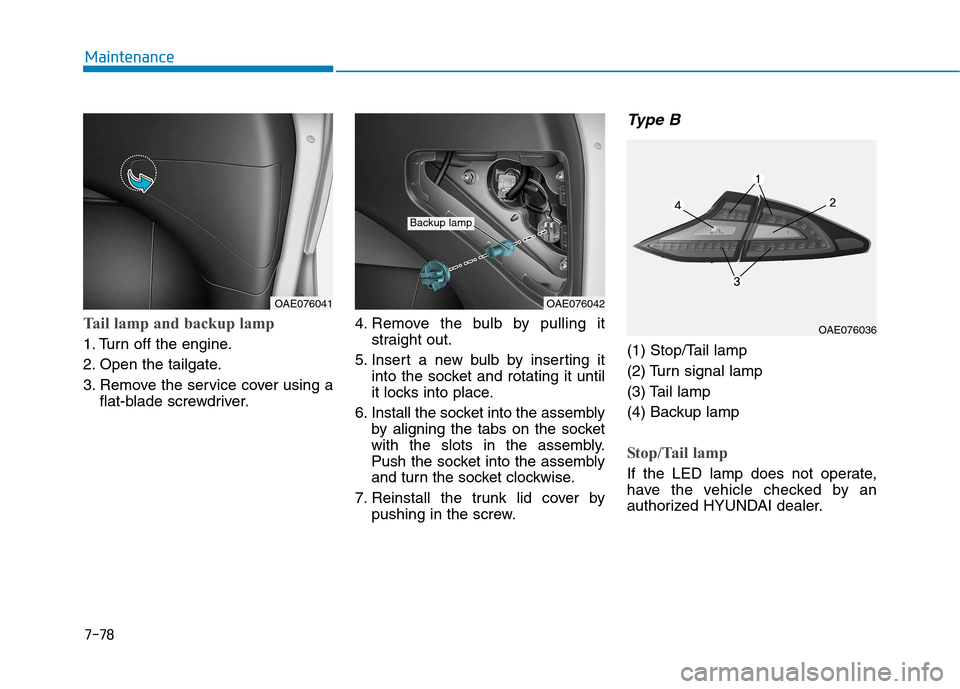
Tail lamp and backup lamp
1. Turn off the engine.
2. Open the tailgate.
3. Remove the service cover using aflat-blade screwdriver. 4. Remove the bulb by pulling it
straight out.
5. Insert a new bulb by inserting it into the socket and rotating it until
it locks into place.
6. Install the socket into the assembly by aligning the tabs on the socket
with the slots in the assembly.
Push the socket into the assembly
and turn the socket clockwise.
7. Reinstall the trunk lid cover by pushing in the screw.
Type B
(1) Stop/Tail lamp
(2) Turn signal lamp
(3) Tail lamp
(4) Backup lamp
Stop/Tail lamp
If the LED lamp does not operate,
have the vehicle checked by an
authorized HYUNDAI dealer.
OAE076036
OAE076041OAE076042
Backup lamp
Page 512 of 553
7-91
7
Maintenance
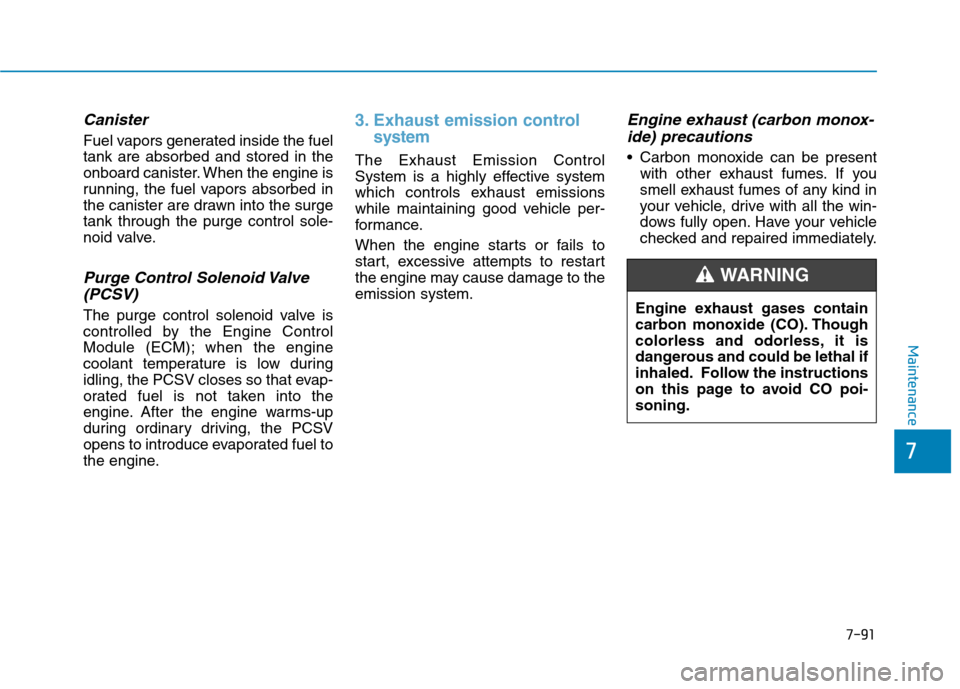
Canister
Fuel vapors generated inside the fuel tank are absorbed and stored in the
onboard canister. When the engine is
running, the fuel vapors absorbed in
the canister are drawn into the surgetank through the purge control sole-
noid valve.
Purge Control Solenoid Valve(PCSV)
The purge control solenoid valve is
controlled by the Engine Control
Module (ECM); when the engine
coolant temperature is low during
idling, the PCSV closes so that evap-
orated fuel is not taken into the
engine. After the engine warms-up
during ordinary driving, the PCSV
opens to introduce evaporated fuel to
the engine.
3. Exhaust emission control system
The Exhaust Emission Control
System is a highly effective system
which controls exhaust emissions
while maintaining good vehicle per-
formance.
When the engine starts or fails to
start, excessive attempts to restart
the engine may cause damage to theemission system.
Engine exhaust (carbon monox-
ide) precautions
Carbon monoxide can be present with other exhaust fumes. If you
smell exhaust fumes of any kind in
your vehicle, drive with all the win-
dows fully open. Have your vehicle
checked and repaired immediately.
Engine exhaust gases contain
carbon monoxide (CO). Though
colorless and odorless, it is
dangerous and could be lethal if
inhaled. Follow the instructions
on this page to avoid CO poi-soning.
WARNING
Page 521 of 553
8-7
8
Specifications & Consumer information
Recommended SAE viscosity
number
Always be sure to clean the area
around any filler plug, drain
plug, or dipstick before check-
ing or draining any lubricant.
This is especially important in
dusty or sandy areas and when
the vehicle is used on unpaved
roads. Cleaning the plug and
dipstick areas will prevent dirt
and grit from entering the
engine and other mechanisms
that could be damaged.
CAUTION
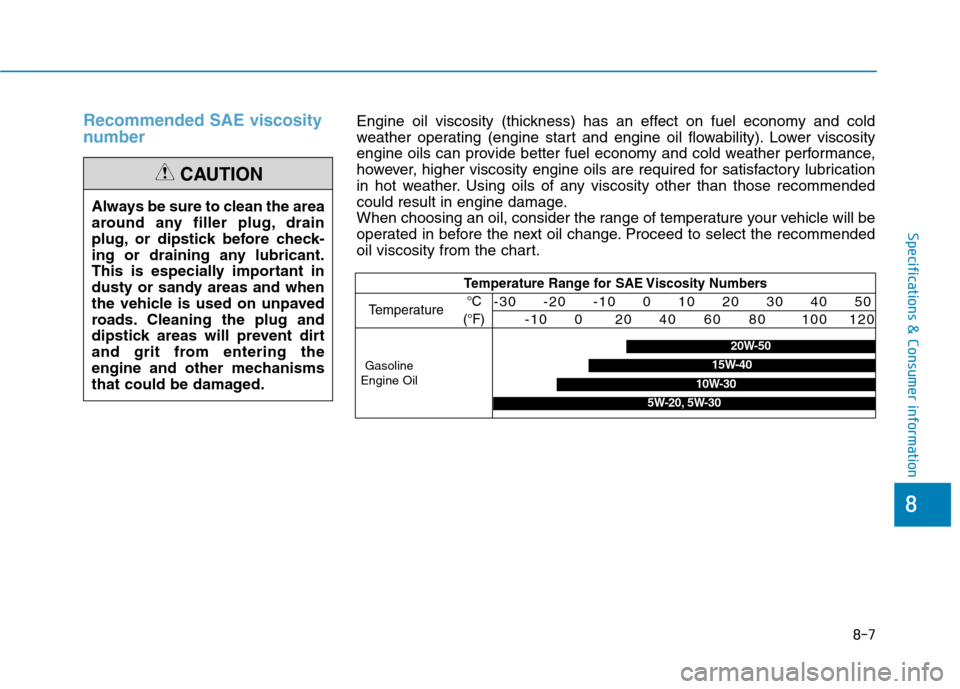
Engine oil viscosity (thickness) has an effect on fuel economy and cold
weather operating (engine start and engine oil flowability). Lower viscosity
engine oils can provide better fuel economy and cold weather performance,
however, higher viscosity engine oils are required for satisfactory lubrication
in hot weather. Using oils of any viscosity other than those recommended
could result in engine damage.
When choosing an oil, consider the range of temperature your vehicle will be
operated in before the next oil change. Proceed to select the recommended
oil viscosity from the chart.
Temperature Range for SAE Viscosity Numbers
Temperature
Gasoline
Engine Oil
°C
(°F)-30 -20 -10 0 10 20 30 40 50 -10 0 20 40 60 80 100 120
20W-50
15W-40
10W-30
5W-20, 5W-30
Page 544 of 553
I-3
Battery (12 volt) ...........................................................7-37
Battery recharging......................................................7-39
Battery cooling duct .....................................................2-24
Battery saver function...................................................3-95
Before driving .................................................................5-4
Blind spot detection (BSD) system ..............................5-38
Bluetooth ®
Wireless Technology hands-free ..................4-4
Bottle holder ...............................................................3-132
Brake fluid ....................................................................7-28
Brake system.................................................................5-25
Anti-lock brake system (ABS) ..................................5-29
Disc brakes wear indicator ........................................5-26
Electronic stability control (ESC) .............................5-31
Emergency stop signal (ESS) ....................................5-36
Good braking practices ..............................................5-37
Hill-start assist control (HAC)...................................5-36
Parking brake .............................................................5-26
Power brakes..............................................................5-25
Vehicle stability management (VSM) .......................5-34
Bulb replacement ..........................................................7-66
Daytime running lamp ...............................................7-75
Front position lamp....................................................7-67
Front turn signal lamp ...............................................7-67
Headlamp ...................................................................7-67
Headlamp aiming .......................................................7-71
High mounted stop lamp ...........................................7-81 Interior light bulb .......................................................7-81
License plate light bulb .............................................7-81
Rear combination light bulb ......................................7-76
Rear fog lamp ............................................................7-81
Side repeater lamp ....................................................7-75
Bulb wattage ...................................................................8-3
Button start/stop, see engine start/stop button................5-9
Camera (Rear view)....................................................3-104
Capacities (Lubricants) ...................................................3-6
Care
Exterior care...............................................................7-83
Interior care................................................................7-88
Tire care .....................................................................7-41
Cellular phone holder .................................................3-135
Center console storage................................................3-130
Central door lock switch...............................................3-14
Certification label ...........................................................8-8
Chains
Tire chains..................................................................5-96
Checking tire inflation pressure ...................................7-43
Child restraint system (CRS)........................................2-38 Booster seats ..............................................................2-40
Children always in the rear ........................................2-38
Forward-facing child restraint system .......................2-40
Installing a child restraint system (CRS)...................2-41
I
Index
B
C
Page 552 of 553
I-11
Sunroof .........................................................................3-33
Automatic reversal .....................................................3-34
Resetting the sunroof .................................................3-35
Sliding the sunroof.....................................................3-33
Sunroof opening and closing .....................................3-33
Sunshade ....................................................................3-35
Tilting the sunroof .....................................................3-34
Sunroof inside air recirculation ..................................3-129
Sunvisor ......................................................................3-133
Tachometer ...................................................................3-44
Tailgate .........................................................................3-38
Tailgate room lamp .......................................................3-99
Theft-alarm system .......................................................3-17
Tilt steering / Telescope steering ..................................3-21
Tire chains ....................................................................5-96
Tire load and speed capacity ..........................................8-5
Tire Mobility Kit (TMK) ..............................................6-24
Tire pressure monitoring system (TPMS) ....................6-10
Tire rotation ..................................................................7-44
Tire specification and pressure label ..............................8-9
Tires and wheels ...........................................................7-41 Checking tire inflation pressure.................................7-43
Compact spare tire replacement ................................7-46
Low aspect ratio tires.................................................7-51
Recommended cold tire inflation pressures ..............7-42 Tire care .....................................................................7-41
Tire maintenance........................................................7-47
Tire replacement ........................................................7-45
Tire rotation ...............................................................7-44
Tire sidewall labeling.................................................7-47
Tire traction................................................................7-46
Wheel alignment and tire balance .............................7-45
Wheel replacement .............................................7-46, 8-4
Towing ..........................................................................6-32
Traffic change .............................................................3-124
Trip computer ...............................................................3-86
Average fuel economy ...............................................3-87
Average vehicle speed ...............................................3-88
Digital speedometer ...................................................3-89
Distance to empty (for cluster type A) ......................3-87
Driving Info display...................................................3-89
Driving style ..............................................................3-90
Elapsed time...............................................................3-88
Energy flow................................................................3-90
Engine coolant temperature .......................................3-90
Instant fuel economy .................................................3-87
Tripmeter....................................................................3-88
Turn signals ..................................................................3-93
I
Index
T