spec VOLKSWAGEN TIGUAN 2017 Owner´s Manual
[x] Cancel search | Manufacturer: VOLKSWAGEN, Model Year: 2017, Model line: TIGUAN, Model: VOLKSWAGEN TIGUAN 2017Pages: 341, PDF Size: 9.14 MB
Page 36 of 341
If fuel in the adequate quality available Fuel and emission control?
Are the correct service fluids that comply with Volkswagen specifications available in the
destination country Service fluids and consumables?
Will the navigation function in the factory-fitted Infotainment system and the navigation
data available work in the destination country?
Are special tyres necessary for travelling in the destination country?
Is a fire extinguisher prescribed in your destination country?
Which requirements must be observed regarding reflective vests?
Windscreen washer fluid level Wipers.
Engine oil level Engine oil.
Engine coolant level Engine coolant.
Brake fluid level Brake fluid.
Tyre pressure Wheels and tyres.
Checklist
Therefore, do not do any work in the engine compartment unless you know exactly how to
carry out the jobs, are aware of the general safety procedures and have the correct
equipment, service fluids and suitable tools to hand ⇒ In the engine compartment! In any
other case all work must be carried out by a qualified workshop. Make sure that the
following are checked regularly:
Vehicle lighting Lights required for the vehicle to be roadworthy:
- Turn signals
- Side lights, dipped beam headlights and main beam headlights
- Tail light cluster
- Brake lights
- Rear fog light
- Number plate light.
Servicing the vehicle is not only about vehicle maintenance – it also ensures that your
vehicle remains roadworthy and in perfect working order. You should therefore have your vehicle
serviced according to Volkswagen guidelines. Some work may have to be carried out before the
due date of the next service if the vehicle is subjected to severe operating conditions. Severe
operating conditions are, for example, regular stop and go driving or driving in areas with high
levels of dust. Further information can be obtained from your Volkswagen dealership or a qualified
workshop.
Sitting position
Introduction
This chapter contains information on the followingsubjects:
⇒ Dangers of assuming an incorrect sitting position
⇒ Correct sitting position
Driving under the influence of alcohol, drugs, medication or narcotics can cause serious
accidents and fatal injuries.
•Alcohol, drugs, medication and narcotics can severely impair perception, reaction
times and driving safety. This could cause you to lose control of the vehicle.
WARNING
Always observe current traffic regulations and speed limits, and think ahead when driving.
Correct interpretation of a driving situation can make the difference between reaching
your destination safely and having an accident with serious injuries.
WARNING
Volkswagen is not responsible for any vehicle damage caused by low-quality fuel,
inadequate servicing work or lack of Genuine Parts.
NOTICE
Observe the instructions and information relating to vehicles with N1 approval
⇒ Information about vehicles with N1 approval (light commercial vehicle).
NOTICE
Page 37 of 341
Number of seats
The vehicle has a total of five seats: two seats at the front and three seats at the rear. Each seat is
equipped with a seat belt.
Dangers of assuming an incorrect sitting position
First read and observe the introductoryinformation and safety warnings⇒
Introduction
If the seat belts are not worn or are worn incorrectly, the risk of severe or fatal injuries increases.
Seat belts can only provide optimal protection if the seat belt routing is correct. Assuming an
incorrect sitting position considerably impairs the level of protection provided by a seat belt. This
could lead to severe or even fatal injuries. The risk of severe or fatal injuries is especially increased
when a deploying airbag strikes a vehicle occupant who has assumed an incorrect sitting position.
The driver is responsible for all occupants transported in the vehicle, especially children.
The following list contains examples of sitting positions that can be dangerous for all vehicle
occupants.
Whenever the vehicle is in motion:
•Never stand in the vehicle.
•Never stand on the seats.
•Never kneel on the seats.
•Never tilt the backrest too far to the rear.
•Never lean against the dash panel.
•Never lie on the rear bench seat.
•Never sit on the front edge of a seat.
•Never sit sideways.
•Never lean out of a window.
•Never put your feet out of a window.
•Never put your feet on the dash panel.
•Never place your feet on the seat cushion or seat backrest.
•Never travel in a footwell.
•Never sit on the armrests.
•Never travel on a seat without wearing the seat belt.
•Never travel in the luggage compartment.
Correct sitting position
Assuming an incorrect sitting position in the vehicle can increase the risk of severe or
fatal injuries during a sudden driving or braking manoeuvre, in the event of a collision or
accident, or if the airbags are triggered.
•All vehicle occupants must assume a correct sitting position before setting off and
maintain this position throughout the trip. This also applies to the fastening of seat
belts.
•The number of vehicle occupants must never exceed the number of seats with seat
belts in the vehicle.
•Always secure children in the vehicle in an authorised restraint system which is
suitable for their height and weight ⇒ Safe transport of children and ⇒ Airbag system.
•Always keep your feet in the footwell while the vehicle is in motion. Never place your
feet on the seat or dash panel, for example, and never ride with your feet out the
window. When you are sat like this, the airbag and seat belt cannot provide optimal
protection and could actually increase the risk of injury during an accident.
WARNING
Every incorrect sitting position in the vehicle increases the risk of severe or fatal injuries
in the event of an accident or sudden driving or braking manoeuvre.
•All vehicle occupants must maintain a correct sitting position and wear their seat belt
properly while the vehicle is in motion.
•Sitting in an incorrect position, not fastening the seat belt, or not leaving adequate
space between the occupants and the airbags could result in critical or fatal injuries,
especially if the airbags deploy and strike an occupant who has assumed an incorrect
sitting position.
WARNING
Page 38 of 341
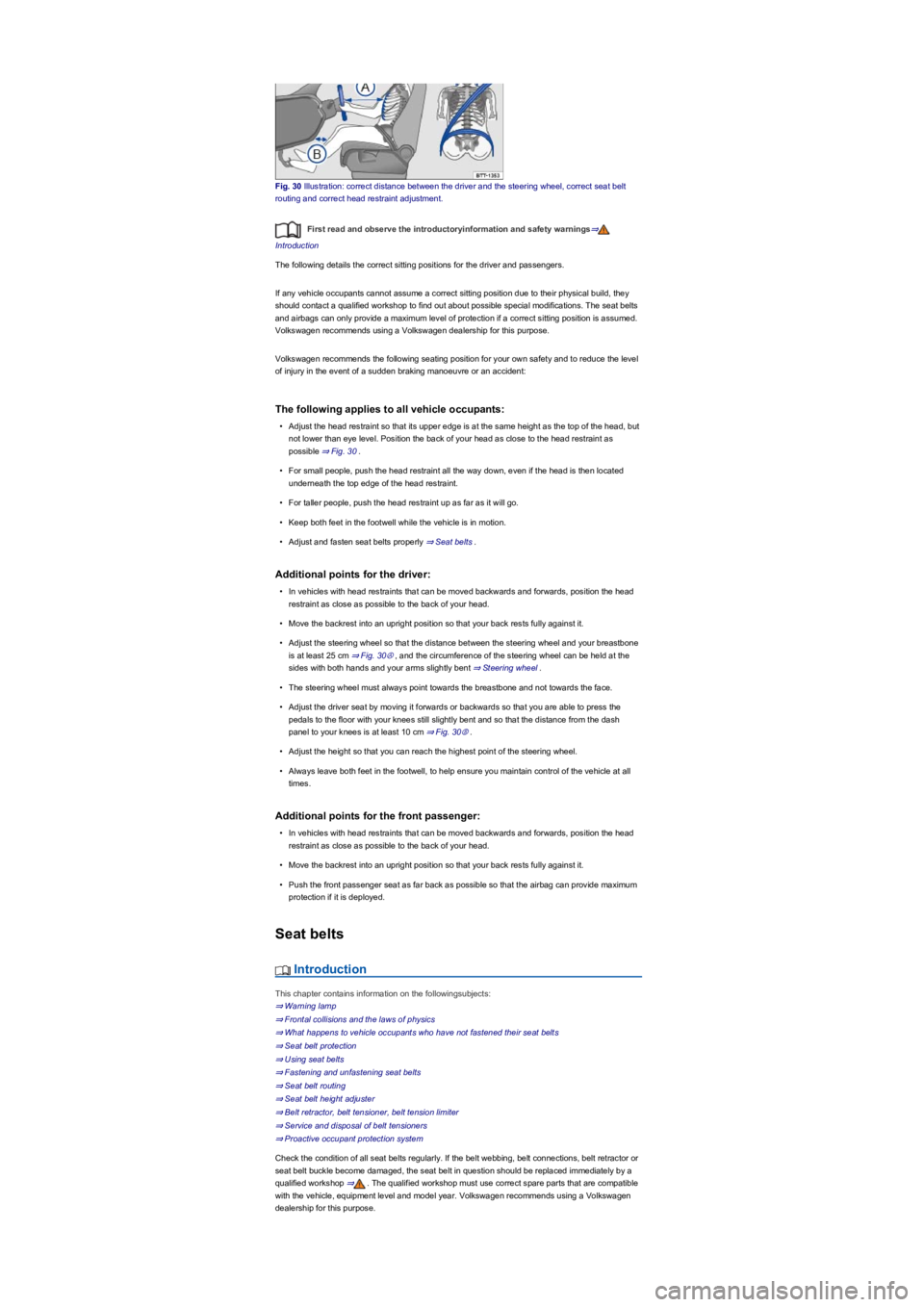
Fig. 30 Illustration: correct distance between the driver and the steering wheel, correct seat belt
routing and correct head restraint adjustment.
First read and observe the introductoryinformation and safety warnings⇒
Introduction
The following details the correct sitting positions for the driver and passengers.
If any vehicle occupants cannot assume a correct sitting position due to their physical build, they
should contact a qualified workshop to find out about possible special modifications. The seat belts
and airbags can only provide a maximum level of protection if a correct sitting position is assumed.
Volkswagen recommends using a Volkswagen dealership for this purpose.
Volkswagen recommends the following seating position for your own safety and to reduce the level
of injury in the event of a sudden braking manoeuvre or an accident:
The following applies to all vehicle occupants:
•Adjust the head restraint so that its upper edge is at the same height as the top of the head, but
not lower than eye level. Position the back of your head as close to the head restraint as
possible ⇒ Fig. 30.
•For small people, push the head restraint all the way down, even if the head is then located
underneath the top edge of the head restraint.
•For taller people, push the head restraint up as far as it will go.
•Keep both feet in the footwell while the vehicle is in motion.
•Adjust and fasten seat belts properly ⇒ Seat belts.
Additional points for the driver:
•In vehicles with head restraints that can be moved backwards and forwards, position the head
restraint as close as possible to the back of your head.
•Move the backrest into an upright position so that your back rests fully against it.
•Adjust the steering wheel so that the distance between the steering wheel and your breastbone
is at least 25 cm ⇒ Fig. 30Ⓐ, and the circumference of the steering wheel can be held at the
sides with both hands and your arms slightly bent ⇒ Steering wheel.
•The steering wheel must always point towards the breastbone and not towards the face.
•Adjust the driver seat by moving it forwards or backwards so that you are able to press the
pedals to the floor with your knees still slightly bent and so that the distance from the dash
panel to your knees is at least 10 cm ⇒ Fig. 30Ⓑ.
•Adjust the height so that you can reach the highest point of the steering wheel.
•Always leave both feet in the footwell, to help ensure you maintain control of the vehicle at all
times.
Additional points for the front passenger:
•In vehicles with head restraints that can be moved backwards and forwards, position the head
restraint as close as possible to the back of your head.
•Move the backrest into an upright position so that your back rests fully against it.
•Push the front passenger seat as far back as possible so that the airbag can provide maximum
protection if it is deployed.
Seat belts
Introduction
This chapter contains information on the followingsubjects:
⇒ Warning lamp
⇒ Frontal collisions and the laws of physics
⇒ What happens to vehicle occupants who have not fastened their seat belts
⇒ Seat belt protection
⇒ Using seat belts
⇒ Fastening and unfastening seat belts
⇒ Seat belt routing
⇒ Seat belt height adjuster
⇒ Belt retractor, belt tensioner, belt tension limiter
⇒ Service and disposal of belt tensioners
⇒ Proactive occupant protection system
Check the condition of all seat belts regularly. If the belt webbing, belt connections, belt retractor or
seat belt buckle become damaged, the seat belt in question should be replaced immediately by a
qualified workshop ⇒. The qualified workshop must use correct spare parts that are compatible
with the vehicle, equipment level and model year. Volkswagen recommends using a Volkswagen
dealership for this purpose.
Page 44 of 341
Assuming an incorrect sitting position can cause severe or fatal injuries ⇒ Sitting position.
Correct seat belt routing
•The shoulder part of the seat belt must always lie on the centre of the shoulder, never across
the neck, over or under the arm or behind the back.
•The lap part of the seat belt must always lie across the pelvis, never across the stomach.
•The seat belt must always lie flat and snugly on the body. Tighten the belt if necessary.
For pregnant women the seat belt must be positioned evenly over the chest and as low as
possible over the pelvis. It must lie flat so that no pressure is exerted on the lower body – this
applies in every stage of pregnancy ⇒ Fig. 41.
Correct seat belt routing according to height
The following equipment can be used to adjust the seat belt routing:
•Seat belt height adjuster for the front seats ⇒ Seat belt height adjuster.
•Height-adjustable front seats ⇒ Sitting position.
If a person's physical build prevents them from routing the seat belt properly, contact a
qualified workshop to find out about any special modifications so that the seat belts and airbags can
provide the optimum level of protection. Volkswagen recommends using a Volkswagen dealership
for this purpose.
Seat belt height adjuster
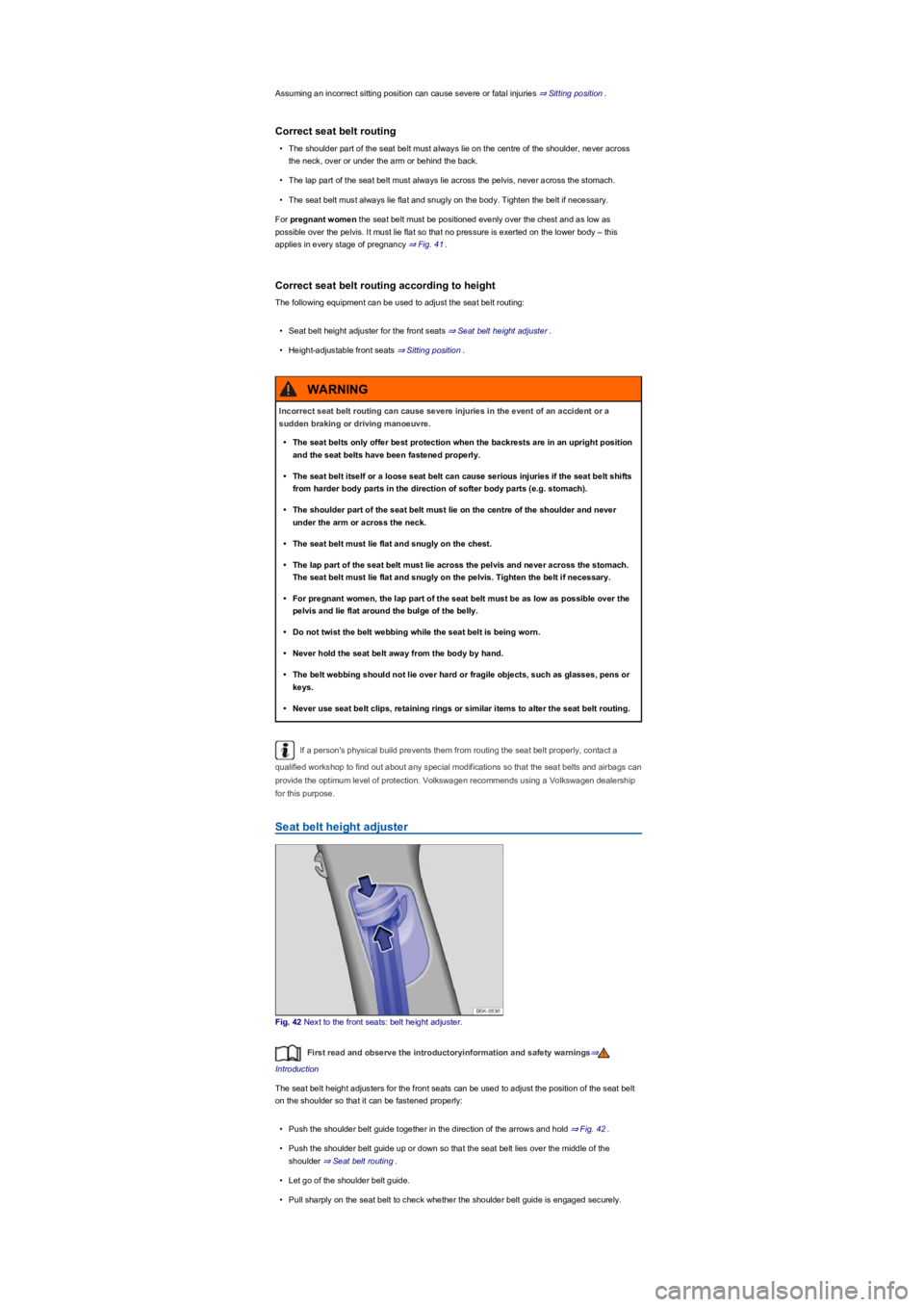
Fig. 42 Next to the front seats: belt height adjuster.
First read and observe the introductoryinformation and safety warnings⇒
Introduction
The seat belt height adjusters for the front seats can be used to adjust the position of the seat belt
on the shoulder so that it can be fastened properly:
•Push the shoulder belt guide together in the direction of the arrows and hold ⇒ Fig. 42.
•Push the shoulder belt guide up or down so that the seat belt lies over the middle of the
shoulder ⇒ Seat belt routing.
•Let go of the shoulder belt guide.
•Pull sharply on the seat belt to check whether the shoulder belt guide is engaged securely.
Incorrect seat belt routing can cause severe injuries in the event of an accident or a
sudden braking or driving manoeuvre.
•The seat belts only offer best protection when the backrests are in an upright position
and the seat belts have been fastened properly.
•The seat belt itself or a loose seat belt can cause serious injuries if the seat belt shifts
from harder body parts in the direction of softer body parts (e.g. stomach).
•The shoulder part of the seat belt must lie on the centre of the shoulder and never
under the arm or across the neck.
•The seat belt must lie flat and snugly on the chest.
•The lap part of the seat belt must lie across the pelvis and never across the stomach.
The seat belt must lie flat and snugly on the pelvis. Tighten the belt if necessary.
•For pregnant women, the lap part of the seat belt must be as low as possible over the
pelvis and lie flat around the bulge of the belly.
•Do not twist the belt webbing while the seat belt is being worn.
•Never hold the seat belt away from the body by hand.
•The belt webbing should not lie over hard or fragile objects, such as glasses, pens or
keys.
•Never use seat belt clips, retaining rings or similar items to alter the seat belt routing.
WARNING
Page 46 of 341
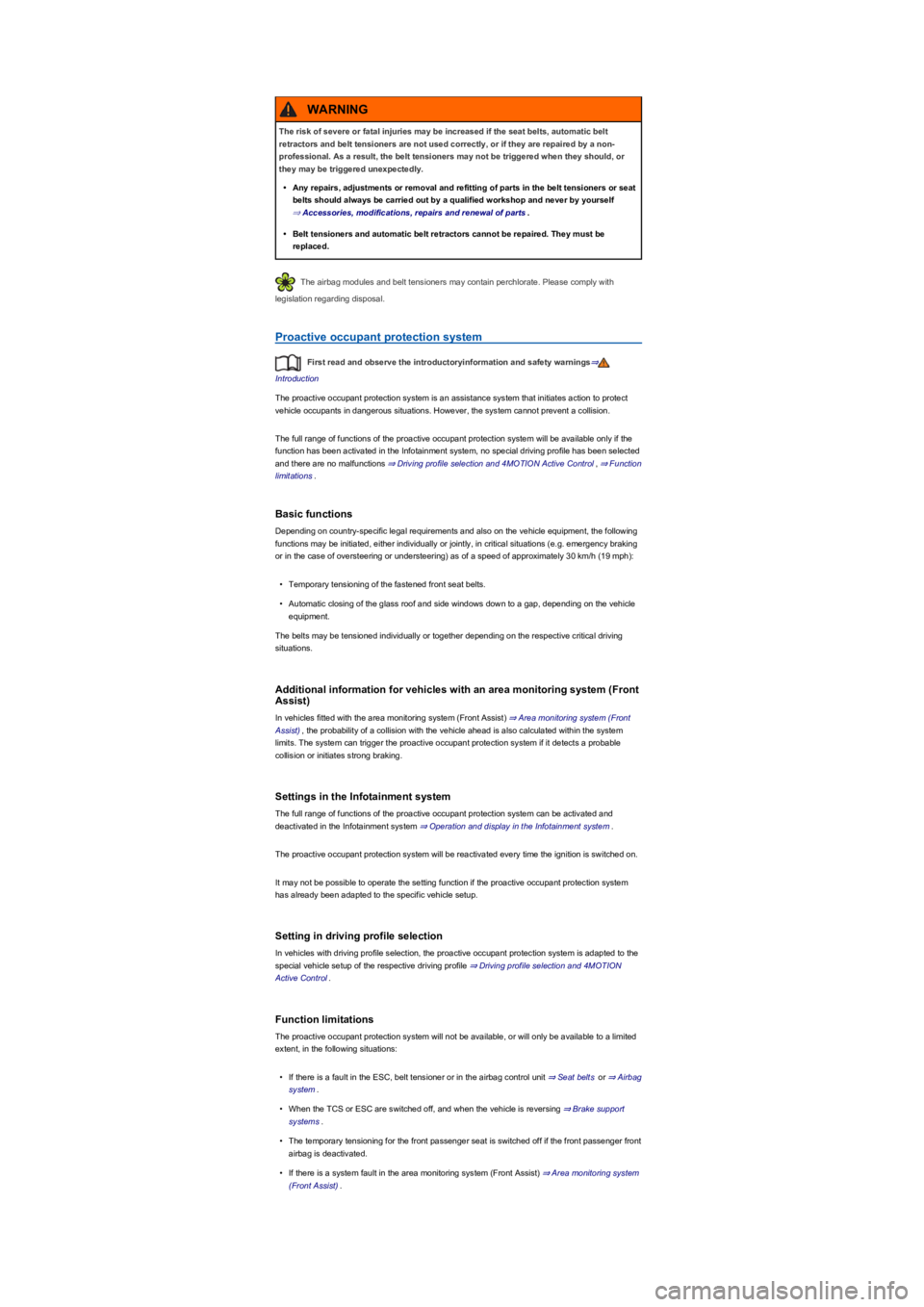
The airbag modules and belt tensioners may contain perchlorate. Please comply with
legislation regarding disposal.
Proactive occupant protection system
First read and observe the introductoryinformation and safety warnings⇒
Introduction
The proactive occupant protection system is an assistance system that initiates action to protect
vehicle occupants in dangerous situations. However, the system cannot prevent a collision.
The full range of functions of the proactive occupant protection system will be available only if the
function has been activated in the Infotainment system, no special driving profile has been selected
and there are no malfunctions ⇒ Driving profile selection and 4MOTION Active Control, ⇒ Function
limitations.
Basic functions
Depending on country-specific legal requirements and also on the vehicle equipment, the following
functions may be initiated, either individually or jointly, in critical situations (e.g. emergency braking
or in the case of oversteering or understeering) as of a speed of approximately 30 km/h (19 mph):
•Temporary tensioning of the fastened front seat belts.
•Automatic closing of the glass roof and side windows down to a gap, depending on the vehicle
equipment.
The belts may be tensioned individually or together depending on the respective critical driving
situations.
Additional information for vehicles with an area monitoring system (Front
Assist)
In vehicles fitted with the area monitoring system (Front Assist) ⇒ Area monitoring system (Front
Assist), the probability of a collision with the vehicle ahead is also calculated within the system
limits. The system can trigger the proactive occupant protection system if it detects a probable
collision or initiates strong braking.
Settings in the Infotainment system
The full range of functions of the proactive occupant protection system can be activated and
deactivated in the Infotainment system ⇒ Operation and display in the Infotainment system.
The proactive occupant protection system will be reactivated every time the ignition is switched on.
It may not be possible to operate the setting function if the proactive occupant protection system
has already been adapted to the specific vehicle setup.
Setting in driving profile selection
In vehicles with driving profile selection, the proactive occupant protection system is adapted to the
special vehicle setup of the respective driving profile ⇒ Driving profile selection and 4MOTION
Active Control.
Function limitations
The proactive occupant protection system will not be available, or will only be available to a limited
extent, in the following situations:
•If there is a fault in the ESC, belt tensioner or in the airbag control unit ⇒ Seat belts or ⇒ Airbag
system.
•When the TCS or ESC are switched off, and when the vehicle is reversing ⇒ Brake support
systems.
•The temporary tensioning for the front passenger seat is switched off if the front passenger front
airbag is deactivated.
•If there is a system fault in the area monitoring system (Front Assist) ⇒ Area monitoring system
(Front Assist).
The risk of severe or fatal injuries may be increased if the seat belts, automatic belt
retractors and belt tensioners are not used correctly, or if they are repaired by a non-
professional. As a result, the belt tensioners may not be triggered when they should, or
they may be triggered unexpectedly.
•Any repairs, adjustments or removal and refitting of parts in the belt tensioners or seat
belts should always be carried out by a qualified workshop and never by yourself
⇒ Accessories, modifications, repairs and renewal of parts.
•Belt tensioners and automatic belt retractors cannot be repaired. They must be
replaced.
WARNING
Page 51 of 341
•If the vehicle rolls over.
•If the speed in a collision is lower than the reference value specified in the control unit.
Front airbags
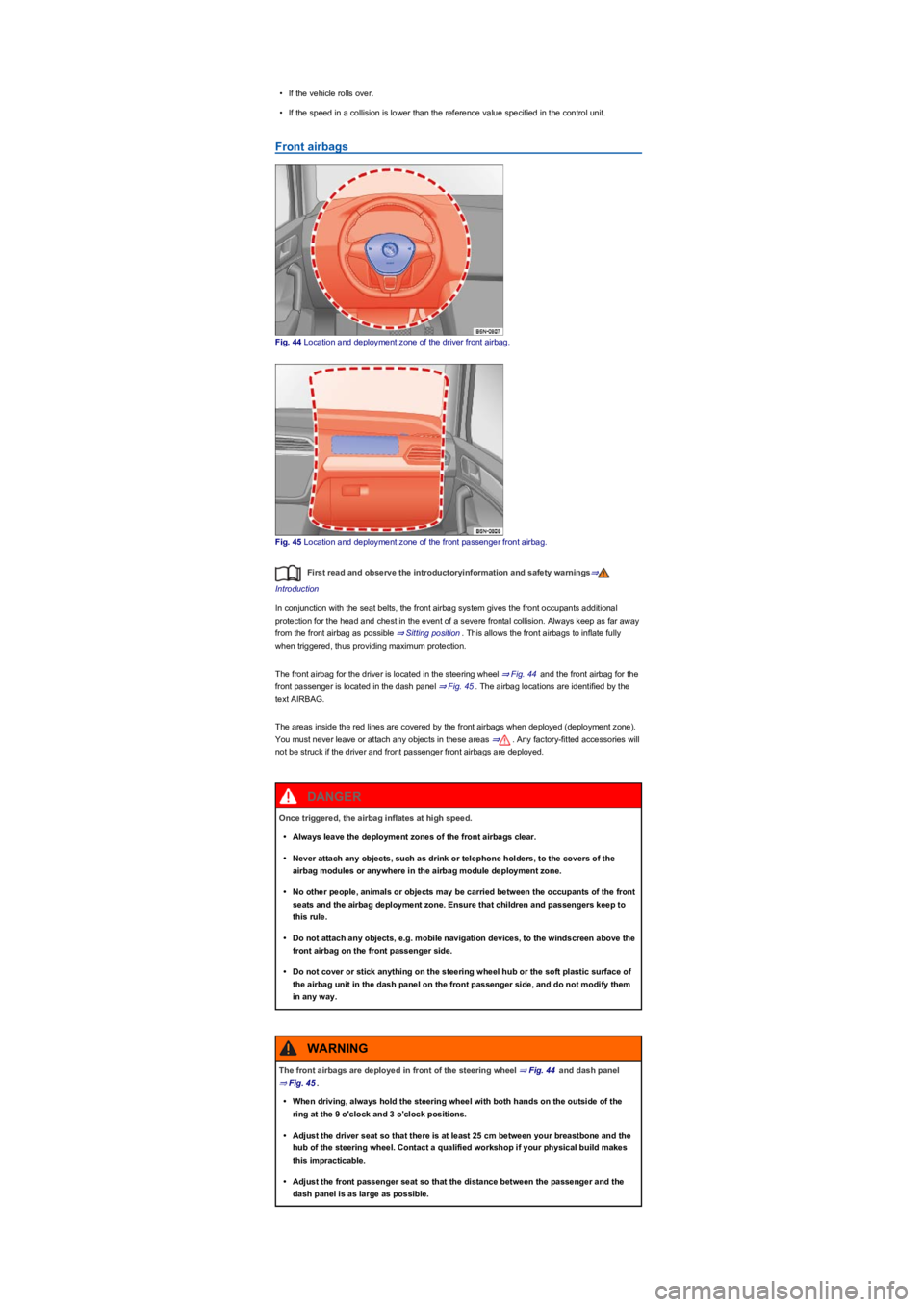
Fig. 44 Location and deployment zone of the driver front airbag.
Fig. 45 Location and deployment zone of the front passenger front airbag.
First read and observe the introductoryinformation and safety warnings⇒
Introduction
In conjunction with the seat belts, the front airbag system gives the front occupants additional
protection for the head and chest in the event of a severe frontal collision. Always keep as far away
from the front airbag as possible ⇒ Sitting position. This allows the front airbags to inflate fully
when triggered, thus providing maximum protection.
The front airbag for the driver is located in the steering wheel ⇒ Fig. 44 and the front airbag for the
front passenger is located in the dash panel ⇒ Fig. 45. The airbag locations are identified by the
text AIRBAG.
The areas inside the red lines are covered by the front airbags when deployed (deployment zone).
You must never leave or attach any objects in these areas ⇒. Any factory-fitted accessories will
not be struck if the driver and front passenger front airbags are deployed.
Once triggered, the airbag inflates at high speed.
•Always leave the deployment zones of the front airbags clear.
•Never attach any objects, such as drink or telephone holders, to the covers of the
airbag modules or anywhere in the airbag module deployment zone.
•No other people, animals or objects may be carried between the occupants of the front
seats and the airbag deployment zone. Ensure that children and passengers keep to
this rule.
•Do not attach any objects, e.g. mobile navigation devices, to the windscreen above the
front airbag on the front passenger side.
•Do not cover or stick anything on the steering wheel hub or the soft plastic surface of
the airbag unit in the dash panel on the front passenger side, and do not modify them
in any way.
DANGER
The front airbags are deployed in front of the steering wheel ⇒ Fig. 44 and dash panel
⇒ Fig. 45.
•When driving, always hold the steering wheel with both hands on the outside of the
ring at the 9 o'clock and 3 o'clock positions.
•Adjust the driver seat so that there is at least 25 cm between your breastbone and the
hub of the steering wheel. Contact a qualified workshop if your physical build makes
this impracticable.
•Adjust the front passenger seat so that the distance between the passenger and the
dash panel is as large as possible.
WARNING
Page 56 of 341
Types of child seat
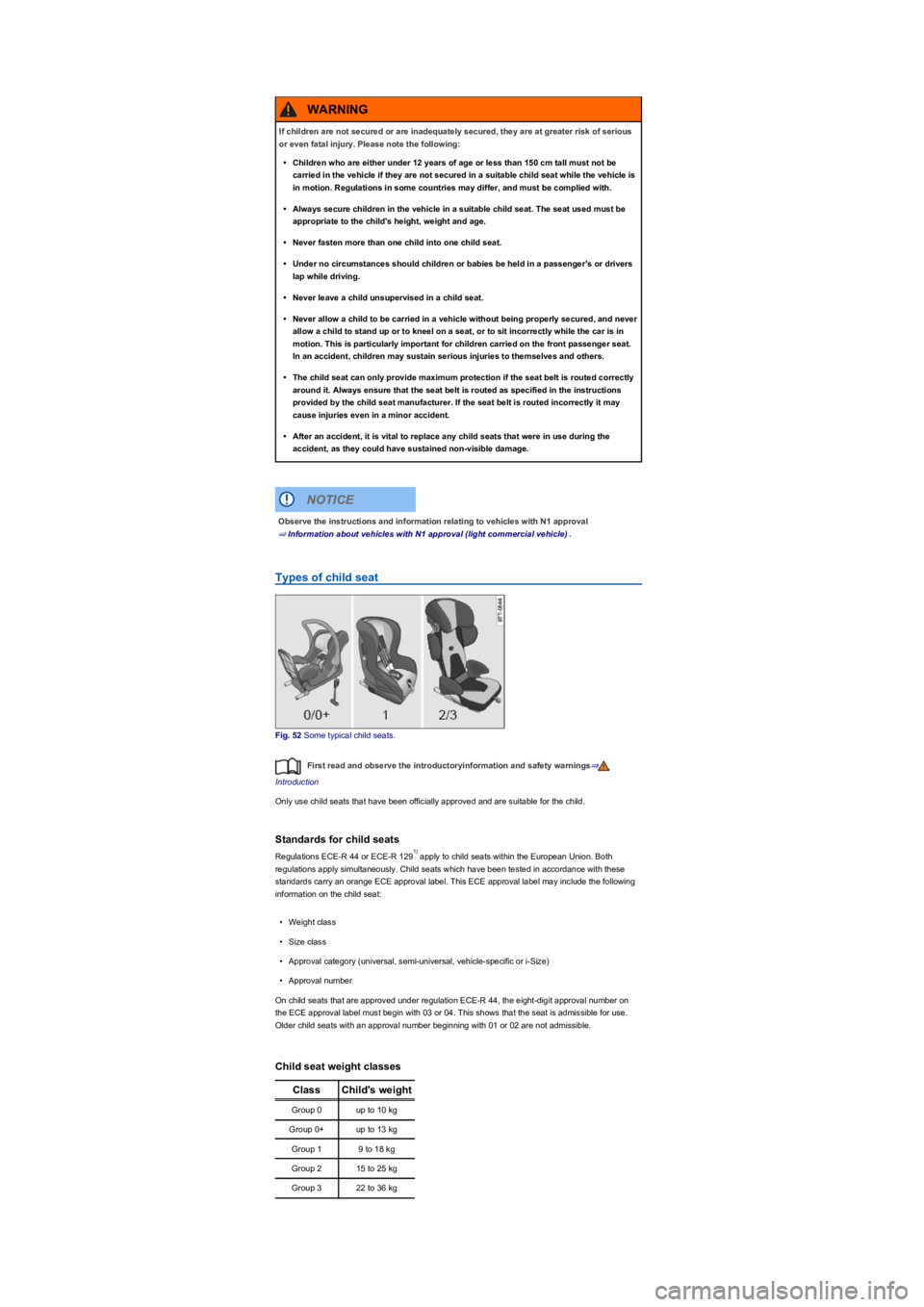
Fig. 52 Some typical child seats.
First read and observe the introductoryinformation and safety warnings⇒
Introduction
Only use child seats that have been officially approved and are suitable for the child.
Standards for child seats
Regulations ECE-R 44 or ECE-R 129 apply to child seats within the European Union. Both
regulations apply simultaneously. Child seats which have been tested in accordance with these
standards carry an orange ECE approval label. This ECE approval label may include the following
information on the child seat:
•Weight class
•Size class
•Approval category (universal, semi-universal, vehicle-specific or i-Size)
•Approval number
On child seats that are approved under regulation ECE-R 44, the eight-digit approval number on
the ECE approval label must begin with 03 or 04. This shows that the seat is admissible for use.
Older child seats with an approval number beginning with 01 or 02 are not admissible.
Child seat weight classes
ClassChild's weight
Group 0up to 10 kg
Group 0+up to 13 kg
Group 19 to 18 kg
Group 215 to 25 kg
Group 322 to 36 kg
If children are not secured or are inadequately secured, they are at greater risk of serious
or even fatal injury. Please note the following:
•Children who are either under 12 years of age or less than 150 cm tall must not be
carried in the vehicle if they are not secured in a suitable child seat while the vehicle is
in motion. Regulations in some countries may differ, and must be complied with.
•Always secure children in the vehicle in a suitable child seat. The seat used must be
appropriate to the child's height, weight and age.
•Never fasten more than one child into one child seat.
•Under no circumstances should children or babies be held in a passenger's or drivers
lap while driving.
•Never leave a child unsupervised in a child seat.
•Never allow a child to be carried in a vehicle without being properly secured, and never
allow a child to stand up or to kneel on a seat, or to sit incorrectly while the car is in
motion. This is particularly important for children carried on the front passenger seat.
In an accident, children may sustain serious injuries to themselves and others.
•The child seat can only provide maximum protection if the seat belt is routed correctly
around it. Always ensure that the seat belt is routed as specified in the instructions
provided by the child seat manufacturer. If the seat belt is routed incorrectly it may
cause injuries even in a minor accident.
•After an accident, it is vital to replace any child seats that were in use during the
accident, as they could have sustained non-visible damage.
WARNING
Observe the instructions and information relating to vehicles with N1 approval
⇒ Information about vehicles with N1 approval (light commercial vehicle).
NOTICE
1)
Page 57 of 341
•Weight class 0/0+: group 0/0+ or 0/1 rear-facing infant carriers ⇒ Fig. 52 are the best option
for the period from birth to about 18 months.
•Weight class 1: group 1 (up to about four years old) or group 1/2 (up to about seven years old)
with an integral belt system are best for children over the relevant weight limit.
•Weight classes 2/3: groups 2 and 3 include child seats with a backrest, and booster seats with
no backrest. Child seats with a backrest have integrated seat routing and side cushions, and so
provide better protection than booster seats with no backrest. Volkswagen therefore
recommends the use of child seats with a backrest. Group 2 child seats are for children up to
the age of about seven, group 3 child seats for those older than seven.
Not every child will fit in the child seat specified for their weight group. Likewise, not every seat will
fit in every vehicle. Therefore it is vital to check that the child fits properly in their child seat and that
the child seat can be securely fastened in the vehicle.
Child seat approval categories
Child seats can be classified as universal, semi-universal or vehicle-specific (all in accordance with
regulation ECE-R 44), or as i-Size (in accordance with regulation ECE-R 129).
•Universal: child seats with universal approval are approved for use in all vehicles. No type list
is required. ISOFIX child seats with universal approval must also be securing using a strap over
the top of the vehicle seat (top tether).
•Semi-universal: semi-universal approval requires other safety devices for attaching the seat
(that require additional testing) in addition to the standard requirements for universal approval.
Child seats with semi-universal approval come with a type list. The seats should only be used in
vehicles that are included on this list.
•Vehicle-specific: child seats with vehicle specific approval must have undergone dynamic
testing in each model of vehicle for which it is approved. These child seats also come with a
type list.
•i-Size: child seats classified as i-Size must conform to the installation and safety requirements
prescribed in regulation ECE-R 129. Contact the child seat manufacturer to find out which child
seats are approved for this vehicle in accordance with i-Size.
Regulation ECE-R 129 has not yet been implemented by the state authorities in all countries.
Installing and using child seats
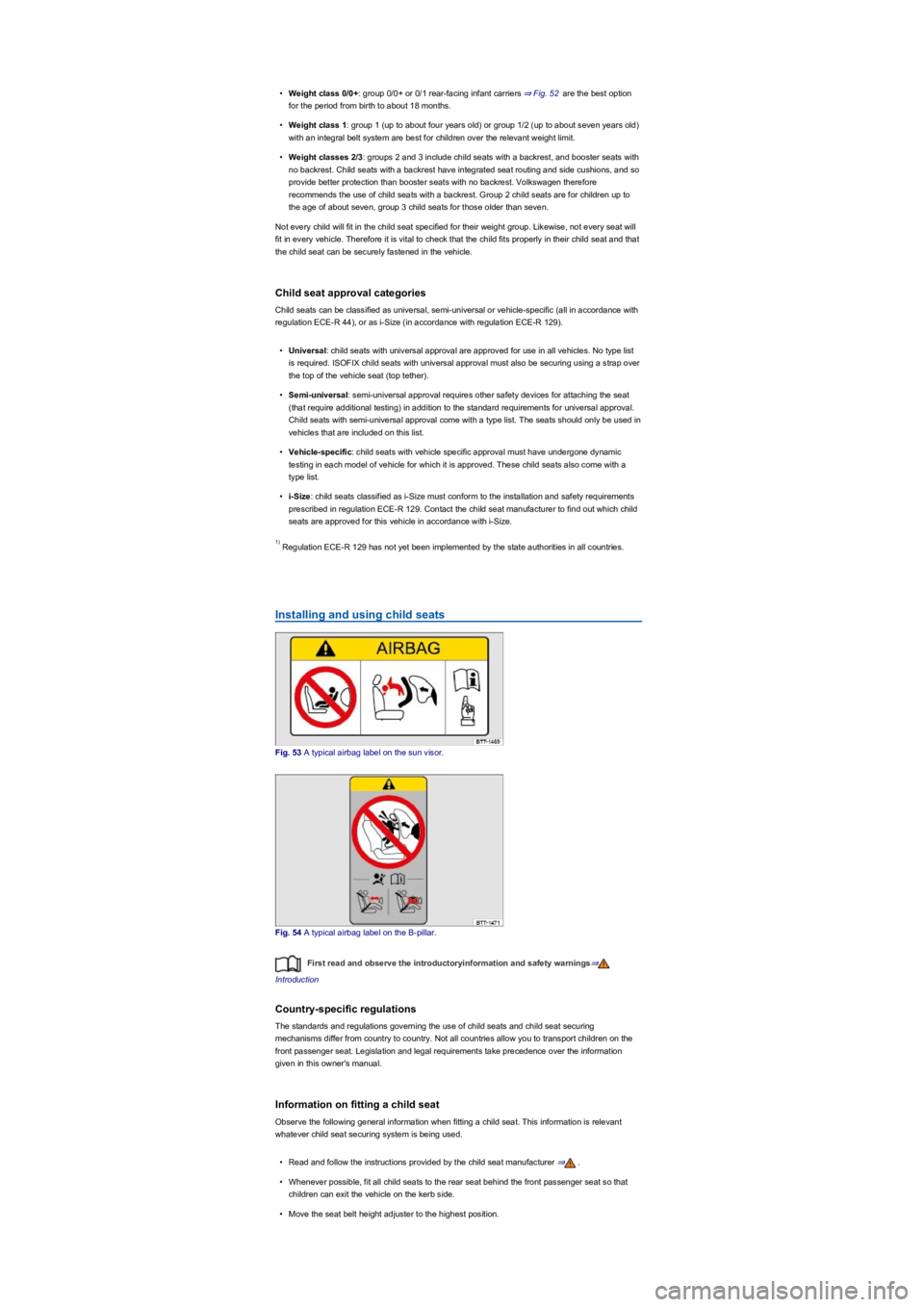
Fig. 53 A typical airbag label on the sun visor.
Fig. 54 A typical airbag label on the B-pillar.
First read and observe the introductoryinformation and safety warnings⇒
Introduction
Country-specific regulations
The standards and regulations governing the use of child seats and child seat securing
mechanisms differ from country to country. Not all countries allow you to transport children on the
front passenger seat. Legislation and legal requirements take precedence over the information
given in this owner's manual.
Information on fitting a child seat
Observe the following general information when fitting a child seat. This information is relevant
whatever child seat securing system is being used.
•Read and follow the instructions provided by the child seat manufacturer ⇒.
•Whenever possible, fit all child seats to the rear seat behind the front passenger seat so that
children can exit the vehicle on the kerb side.
•Move the seat belt height adjuster to the highest position.
1)
Page 58 of 341
•Deactivate the front passenger front airbag if fitting a rear-facing child seat on the front
passenger seat.
•When fitting on the front passenger seat, push the front passenger seat back fully and adjust
the seat to the highest position. Adjust the backrest to an upright position ⇒ Sitting position.
•When using child seats from groups 0 or 1 on the rear bench seat, push the rear bench seat
backwards as far as possible ⇒ Sitting position.
•When using child seats from groups 2 or 3 on the rear bench seat, push the rear bench seat
into a central position ⇒ Sitting position.
•Always ensure that there is enough space around the child seat. If necessary, adjust the
position of the seat in front. When doing so, ensure that the driver or front passenger can still
maintain a correct sitting position ⇒ Sitting position.
•The backrest of the child seat must lay as flat as possible against the vehicle seat backrest.
Adjust the seat backrest angle if necessary so that the child seat lies flush against the backrest.
If the child seat, once fitted, touches the vehicle head restraint so that it cannot lie flat against
the backrest, push the vehicle head restraint up as far as it will go or remove it and stow it away
safely in the vehicle ⇒ Sitting position.
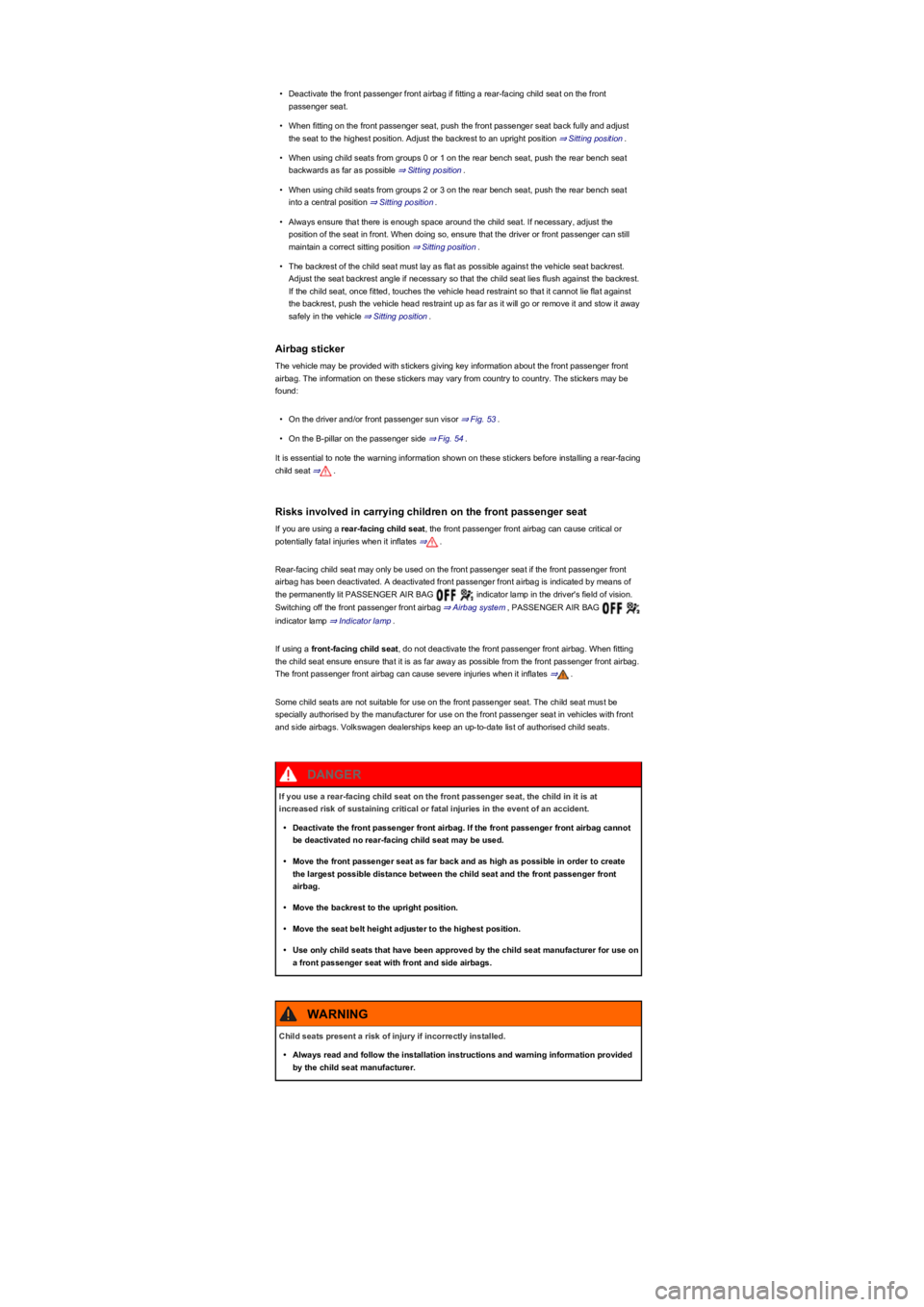
Airbag sticker
The vehicle may be provided with stickers giving key information about the front passenger front
airbag. The information on these stickers may vary from country to country. The stickers may be
found:
•On the driver and/or front passenger sun visor ⇒ Fig. 53.
•On the B-pillar on the passenger side ⇒ Fig. 54.
It is essential to note the warning information shown on these stickers before installing a rear-facing
child seat ⇒.
Risks involved in carrying children on the front passenger seat
If you are using a rear-facing child seat, the front passenger front airbag can cause critical or
potentially fatal injuries when it inflates ⇒.
Rear-facing child seat may only be used on the front passenger seat if the front passenger front
airbag has been deactivated. A deactivated front passenger front airbag is indicated by means of
the permanently lit PASSENGER AIR BAG indicator lamp in the driver's field of vision.
Switching off the front passenger front airbag ⇒ Airbag system, PASSENGER AIR BAG
indicator lamp ⇒ Indicator lamp.
If using a front-facing child seat, do not deactivate the front passenger front airbag. When fitting
the child seat ensure ensure that it is as far away as possible from the front passenger front airbag.
The front passenger front airbag can cause severe injuries when it inflates ⇒.
Some child seats are not suitable for use on the front passenger seat. The child seat must be
specially authorised by the manufacturer for use on the front passenger seat in vehicles with front
and side airbags. Volkswagen dealerships keep an up-to-date list of authorised child seats.
If you use a rear-facing child seat on the front passenger seat, the child in it is at
increased risk of sustaining critical or fatal injuries in the event of an accident.
•Deactivate the front passenger front airbag. If the front passenger front airbag cannot
be deactivated no rear-facing child seat may be used.
•Move the front passenger seat as far back and as high as possible in order to create
the largest possible distance between the child seat and the front passenger front
airbag.
•Move the backrest to the upright position.
•Move the seat belt height adjuster to the highest position.
•Use only child seats that have been approved by the child seat manufacturer for use on
a front passenger seat with front and side airbags.
DANGER
Child seats present a risk of injury if incorrectly installed.
•Always read and follow the installation instructions and warning information provided
by the child seat manufacturer.
WARNING
Page 59 of 341
Securing systems
First read and observe the introductoryinformation and safety warnings⇒
Introduction
Different countries use different securing systems for safely fitting child seats in the vehicle.
Key terms for securing systems
•ISOFIX: ISOFIX is a standardised securing system for fitting child seats in the vehicle quickly
and safely. The ISOFIX attachment system creates a rigid connection between the child seat
and the car body.
Compatible child seats have two rigid attachment arms that click into ISOFIX attachment points at
the bottom of the backrest (on the outer rear seats). The ISOFIX securing system as described
here is specific to Europe ⇒ Securing child seats with ISOFIX. An upper strap (top tether) and/or
support foot may sometimes have to be used in addition to the ISOFIX anchor points described
above.
•Three-point automatic seat belt. It is better to secure child seats using the ISOFIX system, if
available, rather than with a three-point automatic seat belt ⇒ Securing child seats with a seat
belt.
Additional securing points:
•Top tether: the strap at the top of the child seat is routed over the vehicle seat backrest and
hooked to an anchor ring on the back of the rear seats ⇒ Securing child seats with top tether
upper strap. Top tether anchor points are marked with an anchor symbol.
•Support foot: some child seats are propped up with a support foot resting on the floor of the
vehicle. This support foot helps prevent the child seat tipping forward in a crash. Child seats
with a support foot can be used only on the front passenger seat and the outer rear seats ⇒.
Recommended child seat securing systems
Volkswagen recommends that child seats are secured as follows:
•Infant carrier or rear-facing child seat: ISOFIX and support foot.
•Front-facing child seat: ISOFIX and top tether and possibly support foot also.
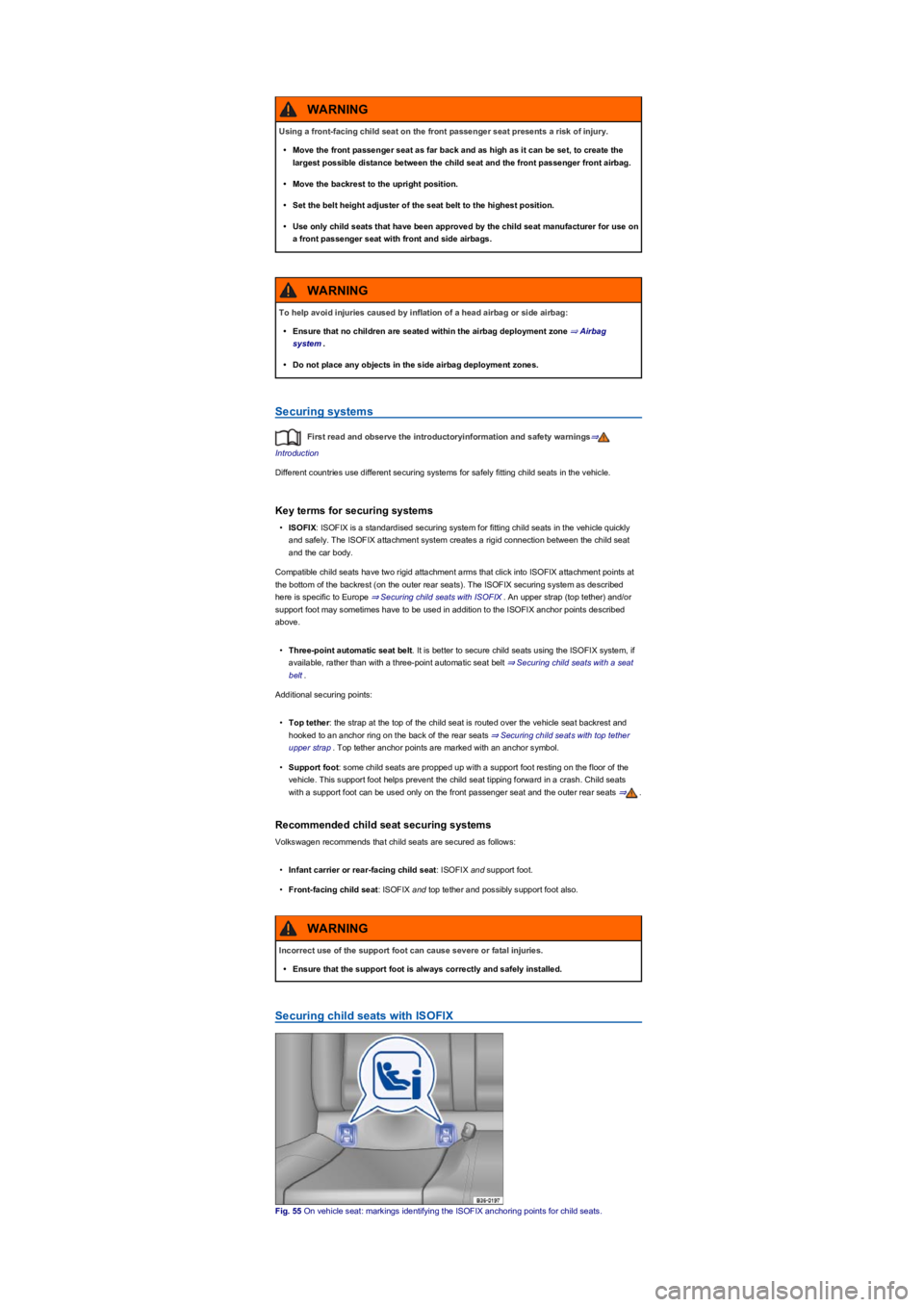
Securing child seats with ISOFIX
Fig. 55 On vehicle seat: markings identifying the ISOFIX anchoring points for child seats.
Using a front-facing child seat on the front passenger seat presents a risk of injury.
•Move the front passenger seat as far back and as high as it can be set, to create the
largest possible distance between the child seat and the front passenger front airbag.
•Move the backrest to the upright position.
•Set the belt height adjuster of the seat belt to the highest position.
•Use only child seats that have been approved by the child seat manufacturer for use on
a front passenger seat with front and side airbags.
WARNING
To help avoid injuries caused by inflation of a head airbag or side airbag:
•Ensure that no children are seated within the airbag deployment zone ⇒ Airbag
system.
•Do not place any objects in the side airbag deployment zones.
WARNING
Incorrect use of the support foot can cause severe or fatal injuries.
•Ensure that the support foot is always correctly and safely installed.
WARNING