ECU VOLKSWAGEN TIGUAN 2017 Owner´s Manual
[x] Cancel search | Manufacturer: VOLKSWAGEN, Model Year: 2017, Model line: TIGUAN, Model: VOLKSWAGEN TIGUAN 2017Pages: 341, PDF Size: 9.14 MB
Page 256 of 341
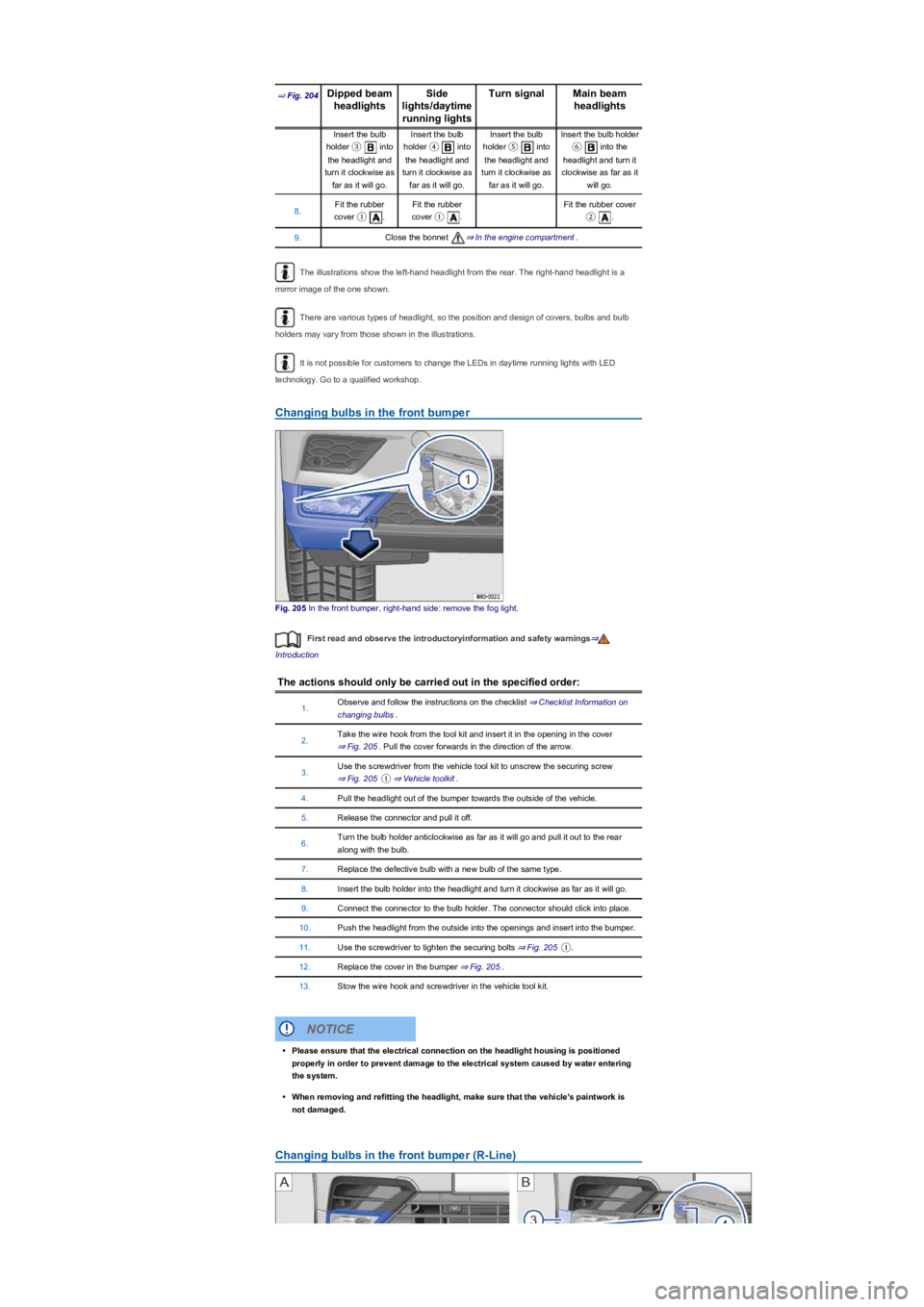
⇒ Fig. 204Dipped beam
headlights
Side
lights/daytime
running lights
Turn signalMain beam
headlights
Insert the bulb
holder ③ into
the headlight and
turn it clockwise as
far as it will go.
Insert the bulb
holder ④ into
the headlight and
turn it clockwise as
far as it will go.
Insert the bulb
holder ⑤ into
the headlight and
turn it clockwise as
far as it will go.
Insert the bulb holder
⑥ into the
headlight and turn it
clockwise as far as it
will go.
8.Fit the rubber
cover ①.
Fit the rubber
cover ①.
Fit the rubber cover
②.
9.Close the bonnet ⇒ In the engine compartment.
The illustrations show the left-hand headlight from the rear. The right-hand headlight is a
mirror image of the one shown.
There are various types of headlight, so the position and design of covers, bulbs and bulb
holders may vary from those shown in the illustrations.
It is not possible for customers to change the LEDs in daytime running lights with LED
technology. Go to a qualified workshop.
Changing bulbs in the front bumper
Fig. 205 In the front bumper, right-hand side: remove the fog light.
First read and observe the introductoryinformation and safety warnings⇒
Introduction
The actions should only be carried out in the specified order:
1.Observe and follow the instructions on the checklist ⇒ Checklist Information on
changing bulbs.
2.Take the wire hook from the tool kit and insert it in the opening in the cover
⇒ Fig. 205. Pull the cover forwards in the direction of the arrow.
3.Use the screwdriver from the vehicle tool kit to unscrew the securing screw
⇒ Fig. 205①⇒ Vehicle toolkit.
4.Pull the headlight out of the bumper towards the outside of the vehicle.
5.Release the connector and pull it off.
6.Turn the bulb holder anticlockwise as far as it will go and pull it out to the rear
along with the bulb.
7.Replace the defective bulb with a new bulb of the same type.
8.Insert the bulb holder into the headlight and turn it clockwise as far as it will go.
9.Connect the connector to the bulb holder. The connector should click into place.
10.Push the headlight from the outside into the openings and insert into the bumper.
11.Use the screwdriver to tighten the securing bolts ⇒ Fig. 205①.
12.Replace the cover in the bumper ⇒ Fig. 205.
13.Stow the wire hook and screwdriver in the vehicle tool kit.
Changing bulbs in the front bumper (R-Line)
•Please ensure that the electrical connection on the headlight housing is positioned
properly in order to prevent damage to the electrical system caused by water entering
the system.
•When removing and refitting the headlight, make sure that the vehicle's paintwork is
not damaged.
NOTICE
Page 257 of 341
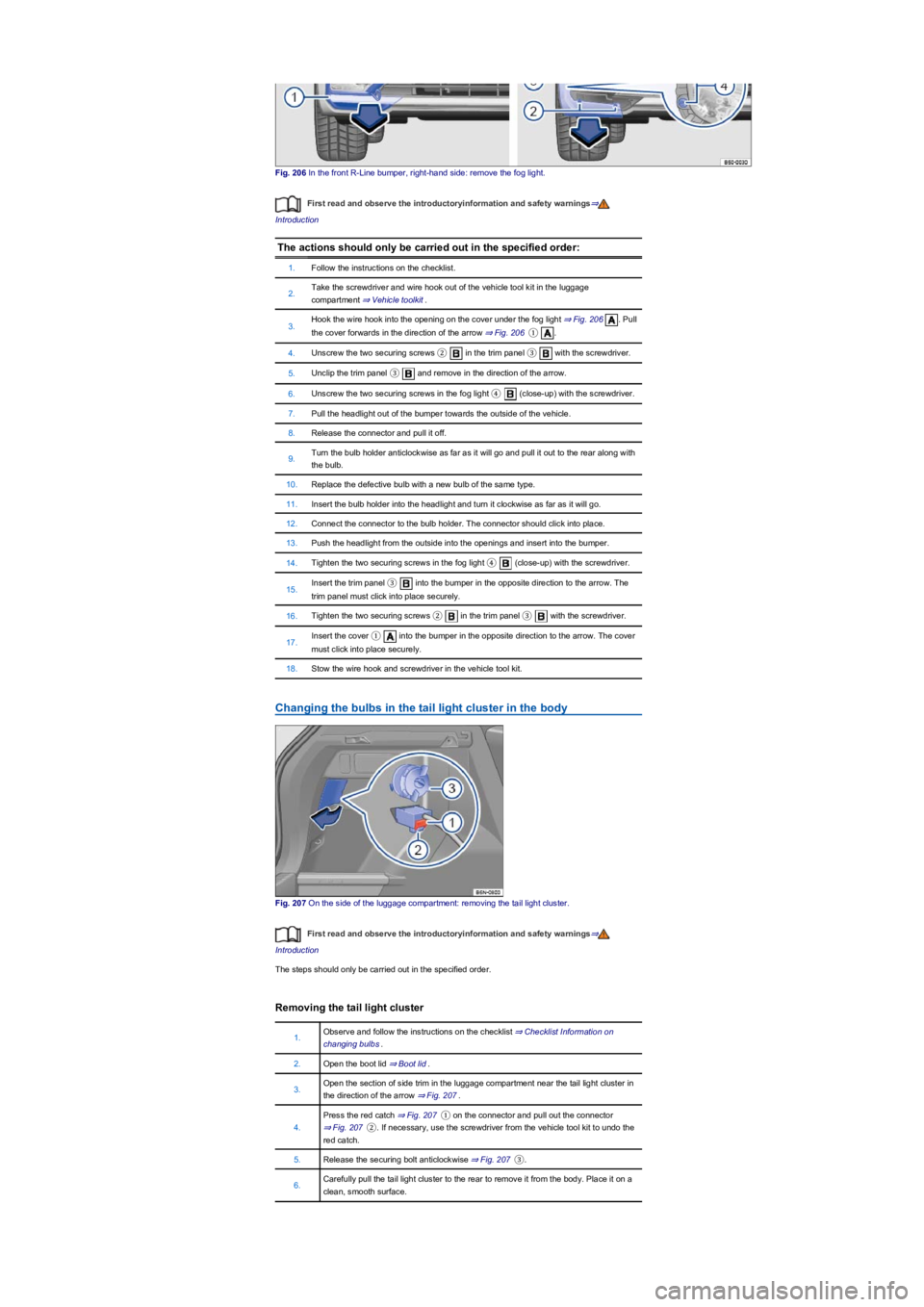
Fig. 206 In the front R-Line bumper, right-hand side: remove the fog light.
First read and observe the introductoryinformation and safety warnings⇒
Introduction
The actions should only be carried out in the specified order:
1.Follow the instructions on the checklist.
2.Take the screwdriver and wire hook out of the vehicle tool kit in the luggage
compartment ⇒ Vehicle toolkit.
3.Hook the wire hook into the opening on the cover under the fog light ⇒ Fig. 206. Pull
the cover forwards in the direction of the arrow ⇒ Fig. 206①.
4.Unscrew the two securing screws ② in the trim panel ③ with the screwdriver.
5.Unclip the trim panel ③ and remove in the direction of the arrow.
6.Unscrew the two securing screws in the fog light ④ (close-up) with the screwdriver.
7.Pull the headlight out of the bumper towards the outside of the vehicle.
8.Release the connector and pull it off.
9.Turn the bulb holder anticlockwise as far as it will go and pull it out to the rear along with
the bulb.
10.Replace the defective bulb with a new bulb of the same type.
11.Insert the bulb holder into the headlight and turn it clockwise as far as it will go.
12.Connect the connector to the bulb holder. The connector should click into place.
13.Push the headlight from the outside into the openings and insert into the bumper.
14.Tighten the two securing screws in the fog light ④ (close-up) with the screwdriver.
15.Insert the trim panel ③ into the bumper in the opposite direction to the arrow. The
trim panel must click into place securely.
16.Tighten the two securing screws ② in the trim panel ③ with the screwdriver.
17.Insert the cover ① into the bumper in the opposite direction to the arrow. The cover
must click into place securely.
18.Stow the wire hook and screwdriver in the vehicle tool kit.
Changing the bulbs in the tail light cluster in the body
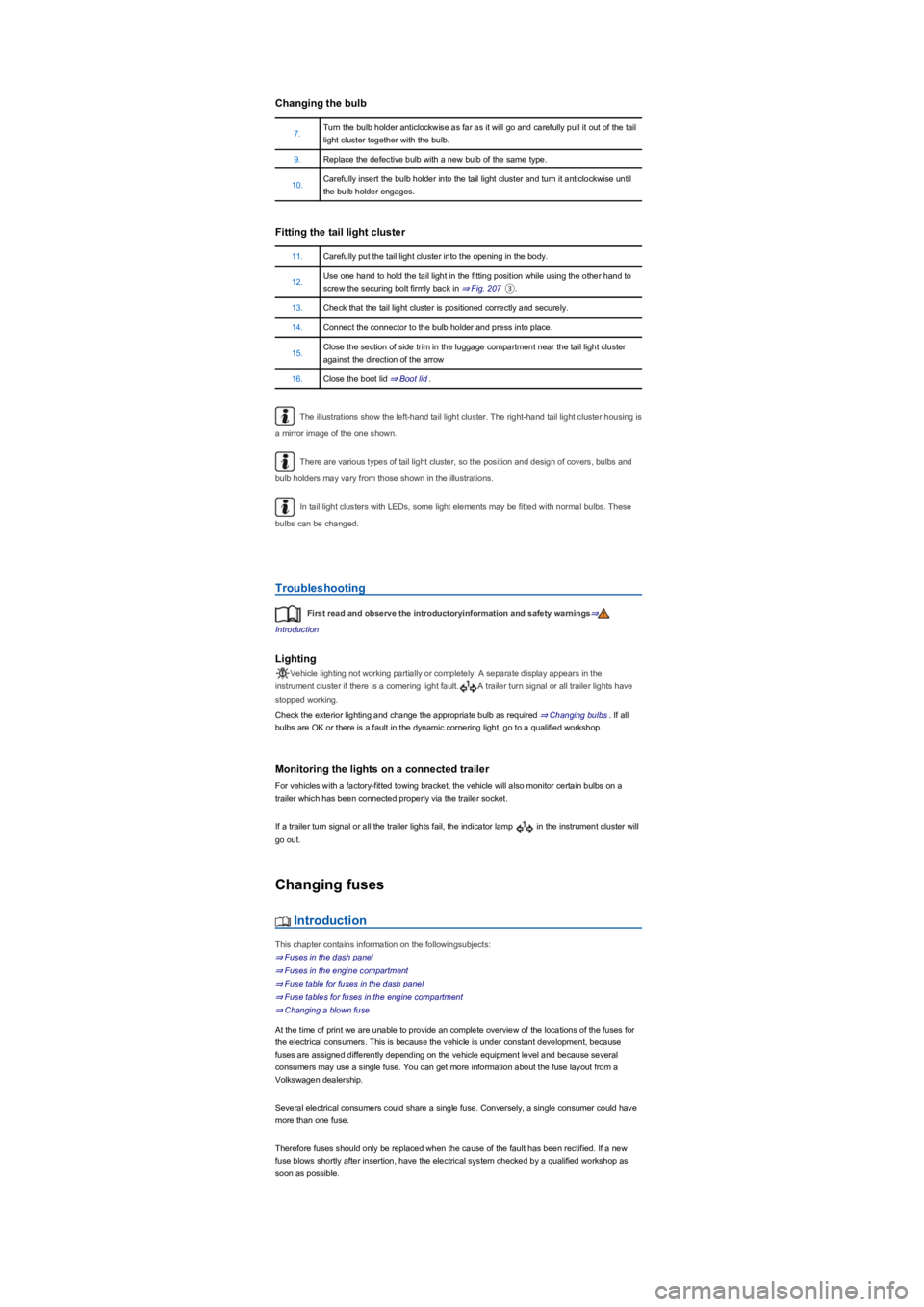
Fig. 207 On the side of the luggage compartment: removing the tail light cluster.
First read and observe the introductoryinformation and safety warnings⇒
Introduction
The steps should only be carried out in the specified order.
Removing the tail light cluster
1.Observe and follow the instructions on the checklist ⇒ Checklist Information on
changing bulbs.
2.Open the boot lid ⇒ Boot lid.
3.Open the section of side trim in the luggage compartment near the tail light cluster in
the direction of the arrow ⇒ Fig. 207.
4.
Press the red catch ⇒ Fig. 207① on the connector and pull out the connector
⇒ Fig. 207②. If necessary, use the screwdriver from the vehicle tool kit to undo the
red catch.
5.Release the securing bolt anticlockwise ⇒ Fig. 207③.
6.Carefully pull the tail light cluster to the rear to remove it from the body. Place it on a
clean, smooth surface.
Page 258 of 341
Changing the bulb
7.Turn the bulb holder anticlockwise as far as it will go and carefully pull it out of the tail
light cluster together with the bulb.
9.Replace the defective bulb with a new bulb of the same type.
10.Carefully insert the bulb holder into the tail light cluster and turn it anticlockwise until
the bulb holder engages.
Fitting the tail light cluster
11.Carefully put the tail light cluster into the opening in the body.
12.Use one hand to hold the tail light in the fitting position while using the other hand to
screw the securing bolt firmly back in ⇒ Fig. 207③.
13.Check that the tail light cluster is positioned correctly and securely.
14.Connect the connector to the bulb holder and press into place.
15.Close the section of side trim in the luggage compartment near the tail light cluster
against the direction of the arrow
16.Close the boot lid ⇒ Boot lid.
The illustrations show the left-hand tail light cluster. The right-hand tail light cluster housing is
a mirror image of the one shown.
There are various types of tail light cluster, so the position and design of covers, bulbs and
bulb holders may vary from those shown in the illustrations.
In tail light clusters with LEDs, some light elements may be fitted with normal bulbs. These
bulbs can be changed.
Troubleshooting
First read and observe the introductoryinformation and safety warnings⇒
Introduction
Lighting
Vehicle lighting not working partially or completely. A separate display appears in the
instrument cluster if there is a cornering light fault.A trailer turn signal or all trailer lights have
stopped working.
Check the exterior lighting and change the appropriate bulb as required ⇒ Changing bulbs. If all
bulbs are OK or there is a fault in the dynamic cornering light, go to a qualified workshop.
Monitoring the lights on a connected trailer
For vehicles with a factory-fitted towing bracket, the vehicle will also monitor certain bulbs on a
trailer which has been connected properly via the trailer socket.
If a trailer turn signal or all the trailer lights fail, the indicator lamp in the instrument cluster will
go out.
Changing fuses
Introduction
This chapter contains information on the followingsubjects:
⇒ Fuses in the dash panel
⇒ Fuses in the engine compartment
⇒ Fuse table for fuses in the dash panel
⇒ Fuse tables for fuses in the engine compartment
⇒ Changing a blown fuse
At the time of print we are unable to provide an complete overview of the locations of the fuses for
the electrical consumers. This is because the vehicle is under constant development, because
fuses are assigned differently depending on the vehicle equipment level and because several
consumers may use a single fuse. You can get more information about the fuse layout from a
Volkswagen dealership.
Several electrical consumers could share a single fuse. Conversely, a single consumer could have
more than one fuse.
Therefore fuses should only be replaced when the cause of the fault has been rectified. If a new
fuse blows shortly after insertion, have the electrical system checked by a qualified workshop as
soon as possible.
Page 261 of 341
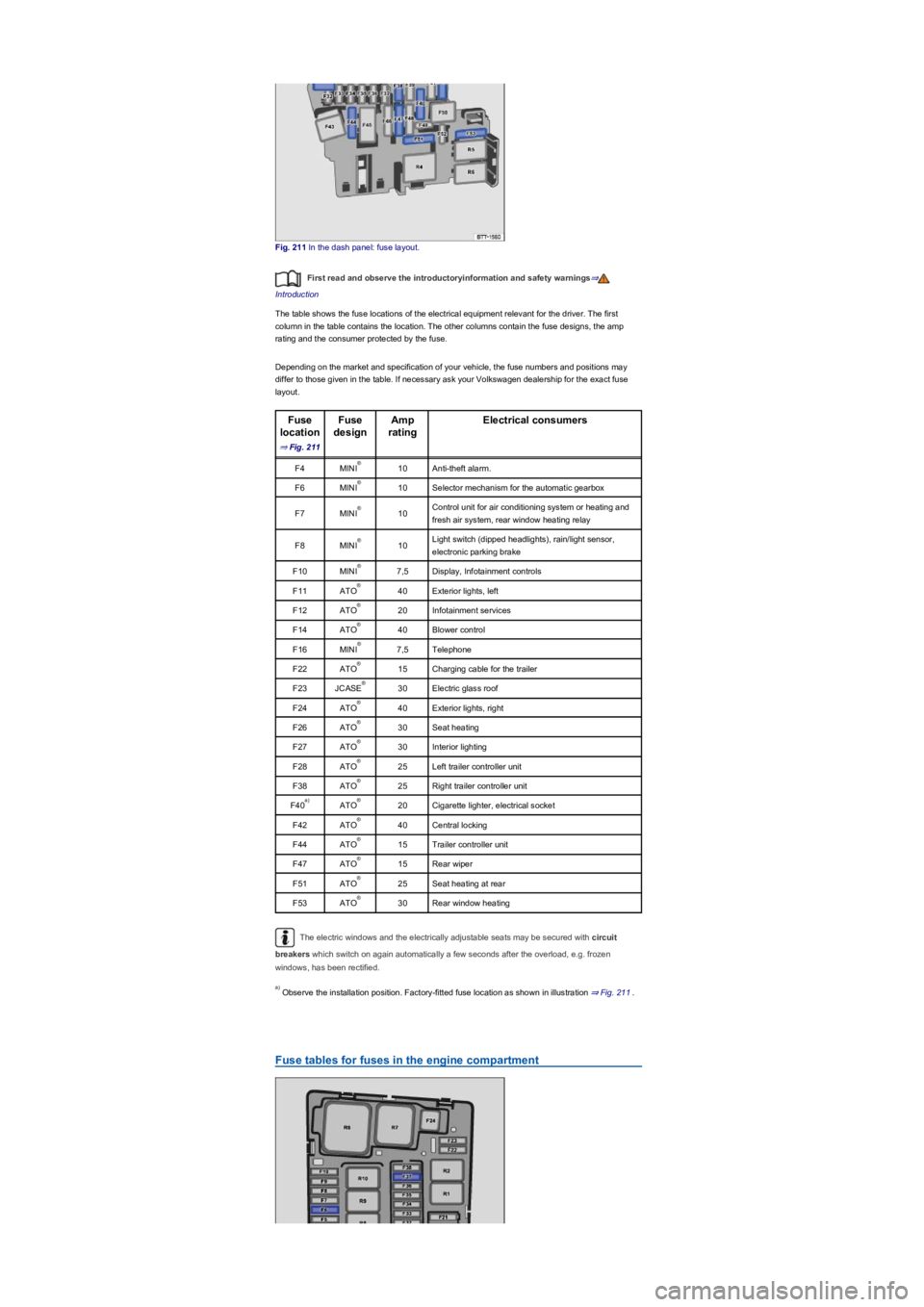
Fig. 211 In the dash panel: fuse layout.
First read and observe the introductoryinformation and safety warnings⇒
Introduction
The table shows the fuse locations of the electrical equipment relevant for the driver. The first
column in the table contains the location. The other columns contain the fuse designs, the amp
rating and the consumer protected by the fuse.
Depending on the market and specification of your vehicle, the fuse numbers and positions may
differ to those given in the table. If necessary ask your Volkswagen dealership for the exact fuse
layout.
Fuse
location
⇒ Fig. 211
Fuse
design
Amp
rating
Electrical consumers
F4MINI10Anti-theft alarm.
F6MINI10Selector mechanism for the automatic gearbox
F7MINI10Control unit for air conditioning system or heating and
fresh air system, rear window heating relay
F8MINI10Light switch (dipped headlights), rain/light sensor,
electronic parking brake
F10MINI7,5Display, Infotainment controls
F11ATO40Exterior lights, left
F12ATO20Infotainment services
F14ATO40Blower control
F16MINI7,5Telephone
F22ATO15Charging cable for the trailer
F23JCASE30Electric glass roof
F24ATO40Exterior lights, right
F26ATO30Seat heating
F27ATO30Interior lighting
F28ATO25Left trailer controller unit
F38ATO25Right trailer controller unit
F40ATO20Cigarette lighter, electrical socket
F42ATO40Central locking
F44ATO15Trailer controller unit
F47ATO15Rear wiper
F51ATO25Seat heating at rear
F53ATO30Rear window heating
The electric windows and the electrically adjustable seats may be secured with circuit
breakers which switch on again automatically a few seconds after the overload, e.g. frozen
windows, has been rectified.
Observe the installation position. Factory-fitted fuse location as shown in illustration ⇒ Fig. 211.
Fuse tables for fuses in the engine compartment
®
®
®
®
®
®
®
®
®
®
®
®
®
®
®
®
a)®
®
®
®
®
®
a)
Page 265 of 341
First read and observe the introductoryinformation and safety warnings⇒
Introduction
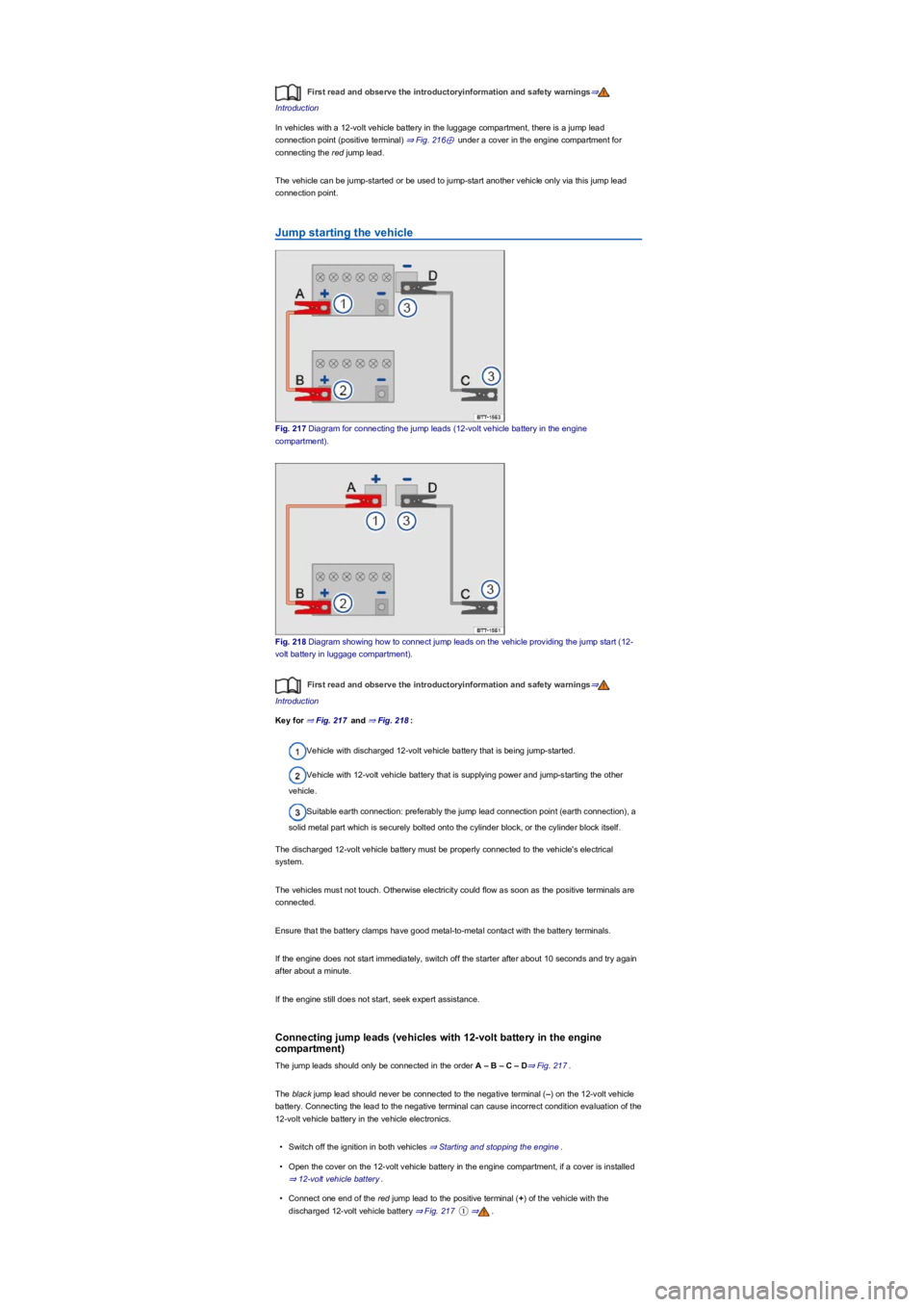
In vehicles with a 12-volt vehicle battery in the luggage compartment, there is a jump lead
connection point (positive terminal) ⇒ Fig. 216⊕ under a cover in the engine compartment for
connecting the red jump lead.
The vehicle can be jump-started or be used to jump-start another vehicle only via this jump lead
connection point.
Jump starting the vehicle
Fig. 217 Diagram for connecting the jump leads (12-volt vehicle battery in the engine
compartment).
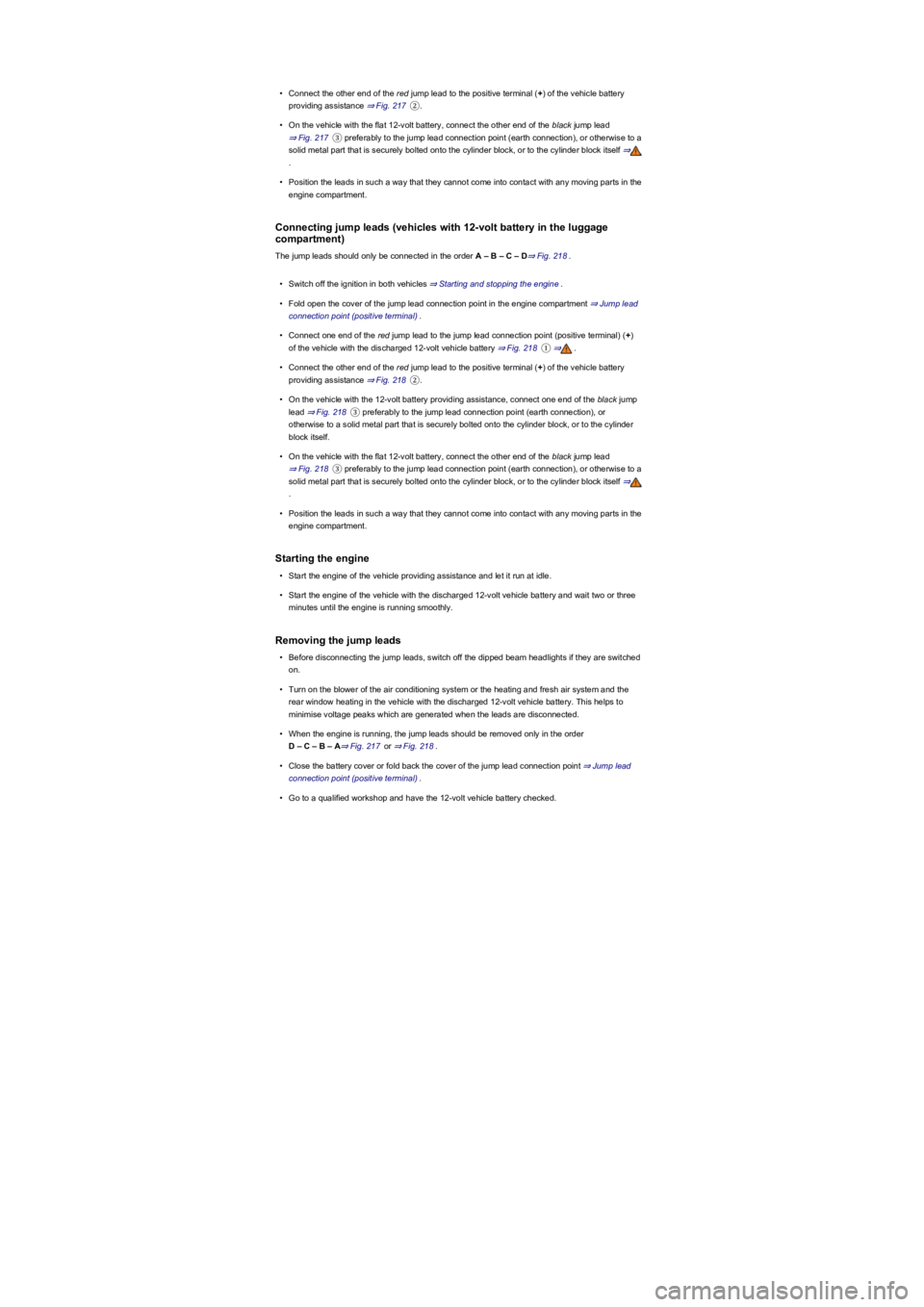
Fig. 218 Diagram showing how to connect jump leads on the vehicle providing the jump start (12-
volt battery in luggage compartment).
First read and observe the introductoryinformation and safety warnings⇒
Introduction
Key for ⇒ Fig. 217 and ⇒ Fig. 218:
Vehicle with discharged 12-volt vehicle battery that is being jump-started.
Vehicle with 12-volt vehicle battery that is supplying power and jump-starting the other
vehicle.
Suitable earth connection: preferably the jump lead connection point (earth connection), a
solid metal part which is securely bolted onto the cylinder block, or the cylinder block itself.
The discharged 12-volt vehicle battery must be properly connected to the vehicle's electrical
system.
The vehicles must not touch. Otherwise electricity could flow as soon as the positive terminals are
connected.
Ensure that the battery clamps have good metal-to-metal contact with the battery terminals.
If the engine does not start immediately, switch off the starter after about 10 seconds and try again
after about a minute.
If the engine still does not start, seek expert assistance.
Connecting jump leads (vehicles with 12-volt battery in the engine
compartment)
The jump leads should only be connected in the order A – B – C – D⇒ Fig. 217.
The black jump lead should never be connected to the negative terminal (–) on the 12-volt vehicle
battery. Connecting the lead to the negative terminal can cause incorrect condition evaluation of the
12-volt vehicle battery in the vehicle electronics.
•Switch off the ignition in both vehicles ⇒ Starting and stopping the engine.
•Open the cover on the 12-volt vehicle battery in the engine compartment, if a cover is installed
⇒ 12-volt vehicle battery.
•Connect one end of the red jump lead to the positive terminal (+) of the vehicle with the
discharged 12-volt vehicle battery ⇒ Fig. 217①⇒.
Page 266 of 341
•Connect the other end of the red jump lead to the positive terminal (+) of the vehicle battery
providing assistance ⇒ Fig. 217②.
•On the vehicle with the flat 12-volt battery, connect the other end of the black jump lead
⇒ Fig. 217③ preferably to the jump lead connection point (earth connection), or otherwise to a
solid metal part that is securely bolted onto the cylinder block, or to the cylinder block itself ⇒
.
•Position the leads in such a way that they cannot come into contact with any moving parts in the
engine compartment.
Connecting jump leads (vehicles with 12-volt battery in the luggage
compartment)
The jump leads should only be connected in the order A – B – C – D⇒ Fig. 218.
•Switch off the ignition in both vehicles ⇒ Starting and stopping the engine.
•Fold open the cover of the jump lead connection point in the engine compartment ⇒ Jump lead
connection point (positive terminal).
•Connect one end of the red jump lead to the jump lead connection point (positive terminal) (+)
of the vehicle with the discharged 12-volt vehicle battery ⇒ Fig. 218①⇒.
•Connect the other end of the red jump lead to the positive terminal (+) of the vehicle battery
providing assistance ⇒ Fig. 218②.
•On the vehicle with the 12-volt battery providing assistance, connect one end of the black jump
lead ⇒ Fig. 218③ preferably to the jump lead connection point (earth connection), or
otherwise to a solid metal part that is securely bolted onto the cylinder block, or to the cylinder
block itself.
•On the vehicle with the flat 12-volt battery, connect the other end of the black jump lead
⇒ Fig. 218③ preferably to the jump lead connection point (earth connection), or otherwise to a
solid metal part that is securely bolted onto the cylinder block, or to the cylinder block itself ⇒
.
•Position the leads in such a way that they cannot come into contact with any moving parts in the
engine compartment.
Starting the engine
•Start the engine of the vehicle providing assistance and let it run at idle.
•Start the engine of the vehicle with the discharged 12-volt vehicle battery and wait two or three
minutes until the engine is running smoothly.
Removing the jump leads
•Before disconnecting the jump leads, switch off the dipped beam headlights if they are switched
on.
•Turn on the blower of the air conditioning system or the heating and fresh air system and the
rear window heating in the vehicle with the discharged 12-volt vehicle battery. This helps to
minimise voltage peaks which are generated when the leads are disconnected.
•When the engine is running, the jump leads should be removed only in the order
D – C – B – A⇒ Fig. 217 or ⇒ Fig. 218.
•Close the battery cover or fold back the cover of the jump lead connection point ⇒ Jump lead
connection point (positive terminal).
•Go to a qualified workshop and have the 12-volt vehicle battery checked.
Page 270 of 341
Fitting the front towing eye
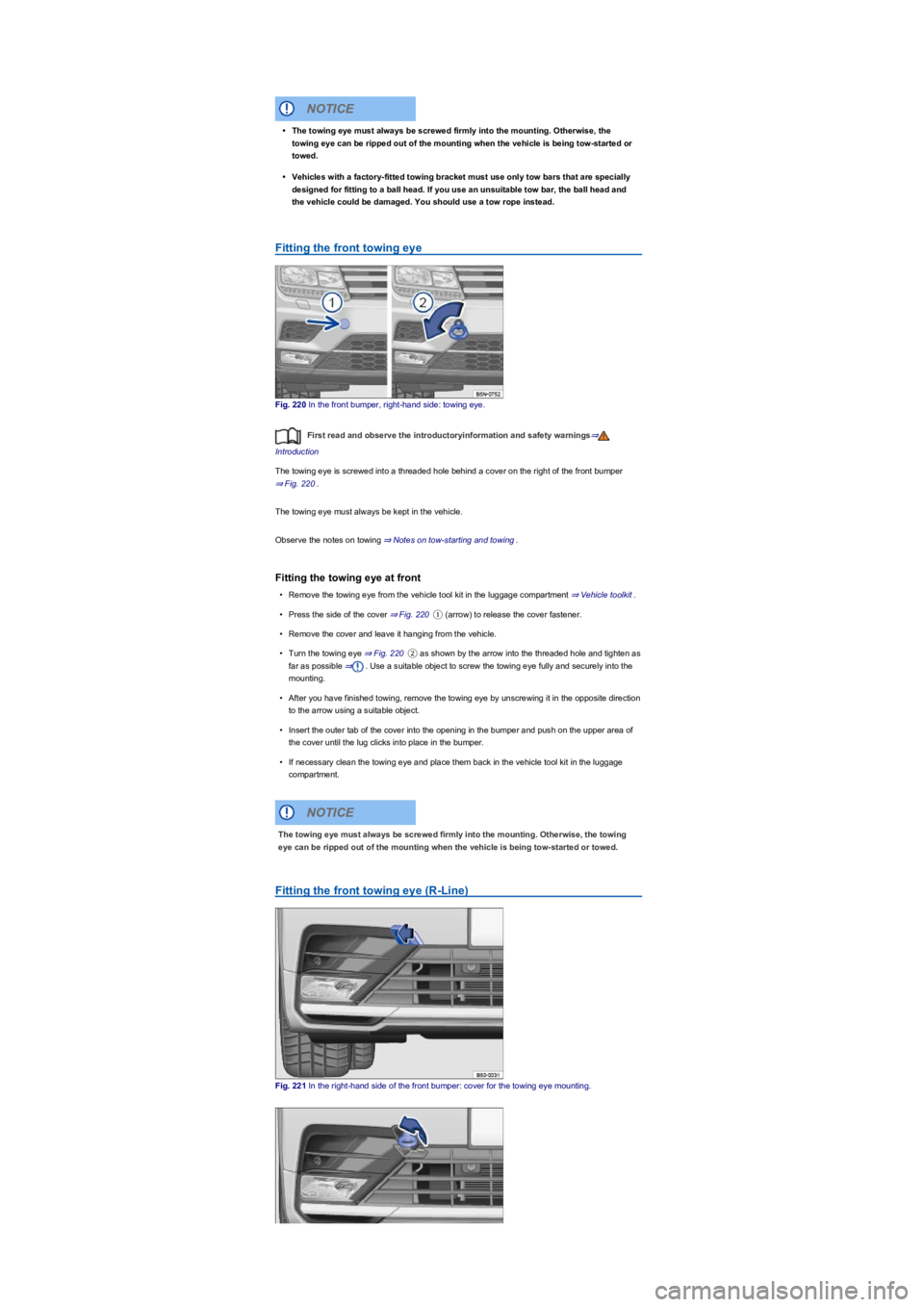
Fig. 220 In the front bumper, right-hand side: towing eye.
First read and observe the introductoryinformation and safety warnings⇒
Introduction
The towing eye is screwed into a threaded hole behind a cover on the right of the front bumper
⇒ Fig. 220.
The towing eye must always be kept in the vehicle.
Observe the notes on towing ⇒ Notes on tow-starting and towing.
Fitting the towing eye at front
•Remove the towing eye from the vehicle tool kit in the luggage compartment ⇒ Vehicle toolkit.
•Press the side of the cover ⇒ Fig. 220① (arrow) to release the cover fastener.
•Remove the cover and leave it hanging from the vehicle.
•Turn the towing eye ⇒ Fig. 220② as shown by the arrow into the threaded hole and tighten as
far as possible ⇒. Use a suitable object to screw the towing eye fully and securely into the
mounting.
•After you have finished towing, remove the towing eye by unscrewing it in the opposite direction
to the arrow using a suitable object.
•Insert the outer tab of the cover into the opening in the bumper and push on the upper area of
the cover until the lug clicks into place in the bumper.
•If necessary clean the towing eye and place them back in the vehicle tool kit in the luggage
compartment.
Fitting the front towing eye (R-Line)
Fig. 221 In the right-hand side of the front bumper: cover for the towing eye mounting.
•The towing eye must always be screwed firmly into the mounting. Otherwise, the
towing eye can be ripped out of the mounting when the vehicle is being tow-started or
towed.
•Vehicles with a factory-fitted towing bracket must use only tow bars that are specially
designed for fitting to a ball head. If you use an unsuitable tow bar, the ball head and
the vehicle could be damaged. You should use a tow rope instead.
NOTICE
The towing eye must always be screwed firmly into the mounting. Otherwise, the towing
eye can be ripped out of the mounting when the vehicle is being tow-started or towed.
NOTICE
Page 271 of 341
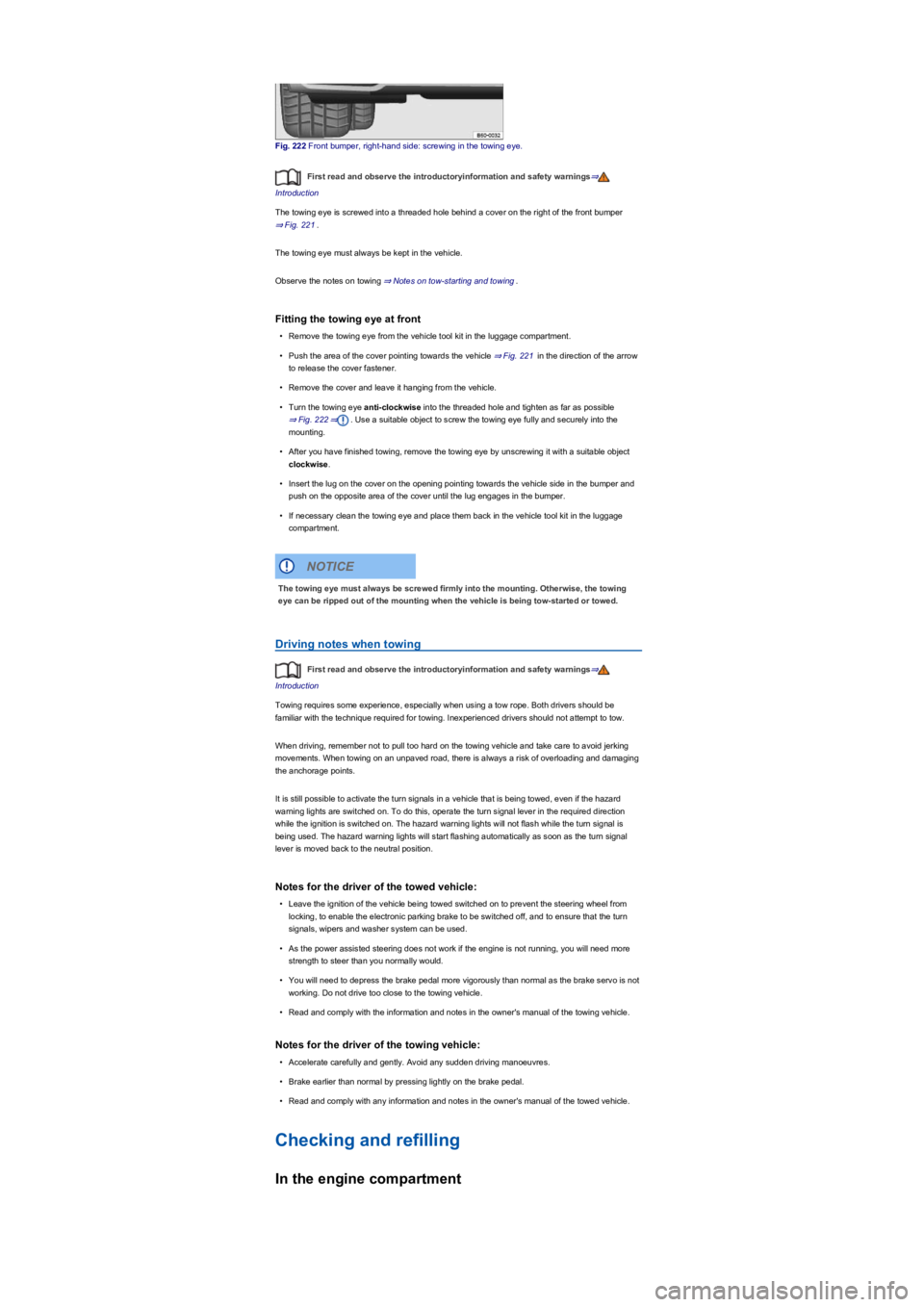
Fig. 222 Front bumper, right-hand side: screwing in the towing eye.
First read and observe the introductoryinformation and safety warnings⇒
Introduction
The towing eye is screwed into a threaded hole behind a cover on the right of the front bumper
⇒ Fig. 221.
The towing eye must always be kept in the vehicle.
Observe the notes on towing ⇒ Notes on tow-starting and towing.
Fitting the towing eye at front
•Remove the towing eye from the vehicle tool kit in the luggage compartment.
•Push the area of the cover pointing towards the vehicle ⇒ Fig. 221 in the direction of the arrow
to release the cover fastener.
•Remove the cover and leave it hanging from the vehicle.
•Turn the towing eye anti-clockwise into the threaded hole and tighten as far as possible
⇒ Fig. 222⇒. Use a suitable object to screw the towing eye fully and securely into the
mounting.
•After you have finished towing, remove the towing eye by unscrewing it with a suitable object
clockwise.
•Insert the lug on the cover on the opening pointing towards the vehicle side in the bumper and
push on the opposite area of the cover until the lug engages in the bumper.
•If necessary clean the towing eye and place them back in the vehicle tool kit in the luggage
compartment.
Driving notes when towing
First read and observe the introductoryinformation and safety warnings⇒
Introduction
Towing requires some experience, especially when using a tow rope. Both drivers should be
familiar with the technique required for towing. Inexperienced drivers should not attempt to tow.
When driving, remember not to pull too hard on the towing vehicle and take care to avoid jerking
movements. When towing on an unpaved road, there is always a risk of overloading and damaging
the anchorage points.
It is still possible to activate the turn signals in a vehicle that is being towed, even if the hazard
warning lights are switched on. To do this, operate the turn signal lever in the required direction
while the ignition is switched on. The hazard warning lights will not flash while the turn signal is
being used. The hazard warning lights will start flashing automatically as soon as the turn signal
lever is moved back to the neutral position.
Notes for the driver of the towed vehicle:
•Leave the ignition of the vehicle being towed switched on to prevent the steering wheel from
locking, to enable the electronic parking brake to be switched off, and to ensure that the turn
signals, wipers and washer system can be used.
•As the power assisted steering does not work if the engine is not running, you will need more
strength to steer than you normally would.
•You will need to depress the brake pedal more vigorously than normal as the brake servo is not
working. Do not drive too close to the towing vehicle.
•Read and comply with the information and notes in the owner's manual of the towing vehicle.
Notes for the driver of the towing vehicle:
•Accelerate carefully and gently. Avoid any sudden driving manoeuvres.
•Brake earlier than normal by pressing lightly on the brake pedal.
•Read and comply with any information and notes in the owner's manual of the towed vehicle.
Checking and refilling
In the engine compartment
The towing eye must always be screwed firmly into the mounting. Otherwise, the towing
eye can be ripped out of the mounting when the vehicle is being tow-started or towed.
NOTICE
Page 272 of 341
Safety notes for working in the engine compartment
Always park the vehicle on a level and stable surface before carrying out any work in the engine
compartment.
The engine compartment of a motor vehicle is a hazardous area. You should only carry out work on
the engine, and in the engine compartment, if you know exactly how to perform the required tasks,
are aware of the general safety procedures and have access to the correct equipment, service
fluids and suitable tools. Failing to carry out work correctly can cause serious injuries ⇒. The
work should be carried out by a qualified workshop if you are uncertain. Volkswagen recommends
using a Volkswagen dealership for this purpose.
Unintentional vehicle movements during service work can cause serious injury.
•Never work underneath a vehicle if it is not secured against rolling away. If you are
working underneath the vehicle while the wheels are on the ground, the vehicle must
be on a level, the wheels chocked, and the vehicle key removed from the ignition lock
as required.
•If you have to work underneath the vehicle, use suitable stands to provide extra
support for the vehicle. The vehicle jack is not sufficient for this task and can fail,
which can lead to serious injuries.
•The start/stop system must have been deactivated.
WARNING
The engine compartment of any motor vehicle is a dangerous area. Serious injuries can be
sustained here.
•The utmost care and attention must be paid when carrying out any work and you must
follow the general safety rules. Never take any risks.
•Never do any work on the engine or in the engine compartment unless you know
exactly how to carry it out. If you are uncertain of what to do, the work should be
carried out by a qualified workshop. Serious injuries can result from work that has not
been carried out properly.
•Never open the bonnet if you see steam or coolant escaping from the engine
compartment. Hot steam or hot coolant can cause serious burns. Always wait until you
can no longer see or hear steam or coolant coming from the engine compartment.
•Always allow the engine to cool down before opening the bonnet.
•Hot parts of the engine or exhaust system can burn the skin.
•Observe the following points before opening the bonnet once the engine has cooled
down:
- Switch on the electronic parking brake and move the selector lever to position P
or move the gear lever to the neutral position.
- Switch off the ignition and remove the vehicle key from the ignition lock.
- Always keep children away from the engine compartment and never leave the
vehicle unattended.
•The cooling system is under pressure when the engine is hot. Never open the cap of
the coolant expansion tank when the engine is hot. Coolant may spray out and cause
serious burns and other injuries.
- Slowly and carefully turn the cap on the coolant expansion tank anticlockwise
while exerting gentle downward pressure on the cap.
- Always protect the face, hands and arms from hot coolant or steam with a large,
thick cloth.
•When refilling, do not spill any service fluids on engine components or on the exhaust
system. The spilt service fluids can start a fire.
WARNING
High voltages in the electrical system can cause electric shocks, burns, serious injuries
and death!
•Never short circuit the electric system. The 12-volt battery could explode.
•Please note the following guidelines to help reduce the risk of an electric shock and
serious injuries while the engine is running or being started:
- Never touch the electrical wiring of the ignition system.
- Never touch the electrical wiring and connections of gas discharge bulbs.
WARNING
Page 275 of 341
Display
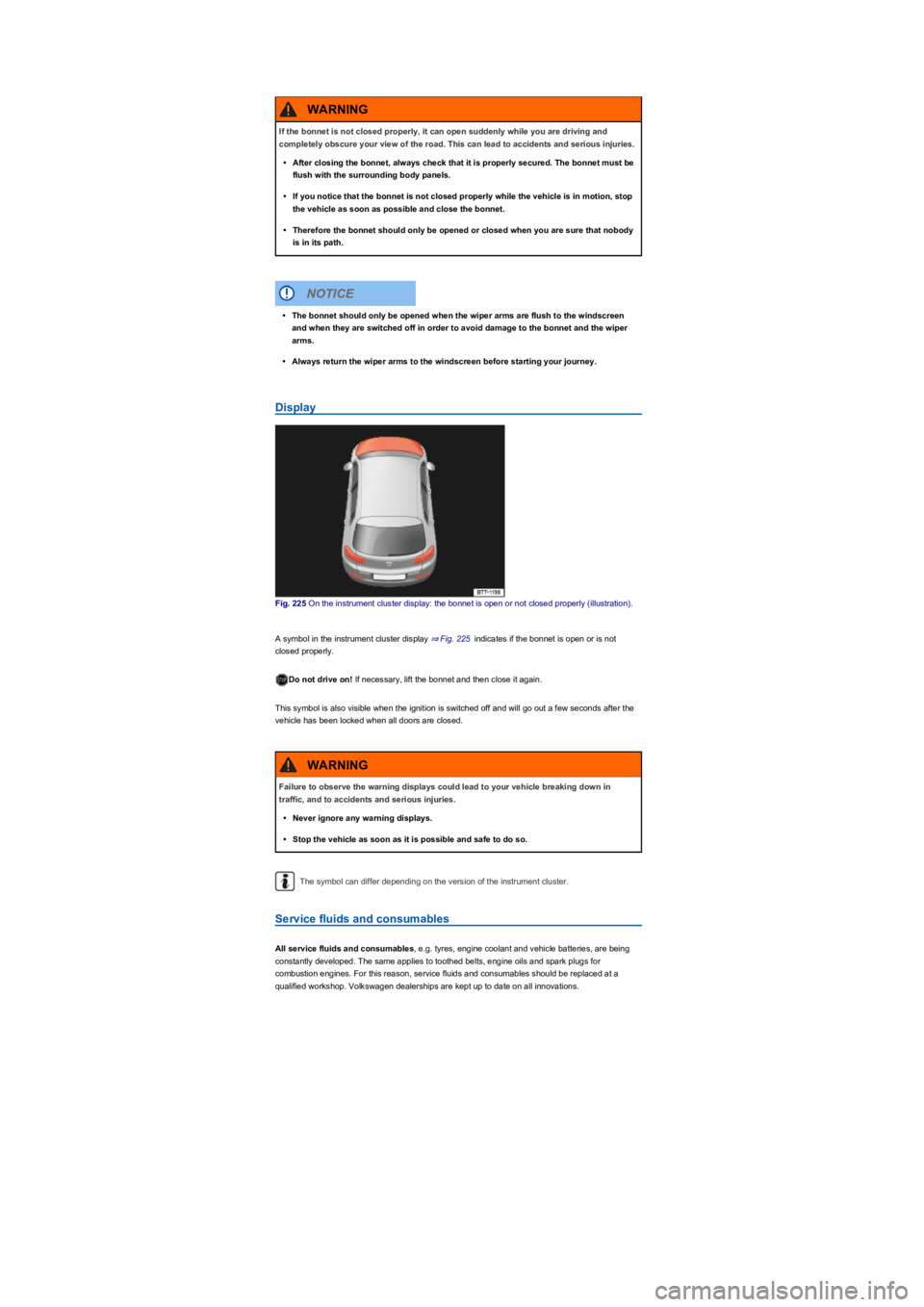
Fig. 225 On the instrument cluster display: the bonnet is open or not closed properly (illustration).
A symbol in the instrument cluster display ⇒ Fig. 225 indicates if the bonnet is open or is not
closed properly.
Do not drive on! If necessary, lift the bonnet and then close it again.
This symbol is also visible when the ignition is switched off and will go out a few seconds after the
vehicle has been locked when all doors are closed.
The symbol can differ depending on the version of the instrument cluster.
Service fluids and consumables
All service fluids and consumables, e.g. tyres, engine coolant and vehicle batteries, are being
constantly developed. The same applies to toothed belts, engine oils and spark plugs for
combustion engines. For this reason, service fluids and consumables should be replaced at a
qualified workshop. Volkswagen dealerships are kept up to date on all innovations.
If the bonnet is not closed properly, it can open suddenly while you are driving and
completely obscure your view of the road. This can lead to accidents and serious injuries.
•After closing the bonnet, always check that it is properly secured. The bonnet must be
flush with the surrounding body panels.
•If you notice that the bonnet is not closed properly while the vehicle is in motion, stop
the vehicle as soon as possible and close the bonnet.
•Therefore the bonnet should only be opened or closed when you are sure that nobody
is in its path.
WARNING
•The bonnet should only be opened when the wiper arms are flush to the windscreen
and when they are switched off in order to avoid damage to the bonnet and the wiper
arms.
•Always return the wiper arms to the windscreen before starting your journey.
NOTICE
Failure to observe the warning displays could lead to your vehicle breaking down in
traffic, and to accidents and serious injuries.
•Never ignore any warning displays.
•Stop the vehicle as soon as it is possible and safe to do so.
WARNING