centre VOLKSWAGEN TIGUAN 2017 Owner´s Manual
[x] Cancel search | Manufacturer: VOLKSWAGEN, Model Year: 2017, Model line: TIGUAN, Model: VOLKSWAGEN TIGUAN 2017Pages: 341, PDF Size: 9.14 MB
Page 234 of 341
Driving with a trailer not only places an extra load on the vehicle, but also requires increased
concentration on the part of the driver.
Vehicles with start/stop system
If the connected trailer is not recognised, or when using towing brackets that were not retrofitted by
Volkswagen, the start/stop system must be deactivated manually using the button in the
centre console before starting to tow a trailer, and must remain switched off for as long as the trailer
is being towed ⇒.
Always switch off the anti-theft alarm before a trailer is hitched or unhitched or a bicycle
carrier is loaded or unloaded ⇒ Central and manual locking. The tilt sensor could otherwise trigger
an alarm unintentionally.
With a new engine, do not tow a trailer during the first 1,000 km ⇒ Running in the engine.
Some retro-fitted towing brackets may cover the aperture for fitting the towing eye. If so, the
towing eye cannot be used for towing or tow-starting other vehicles. For this reason, the retro-fitted
towing bracket ball head should be stored in the vehicle at all times.
It is dangerous to transport people in a trailer and it may also be illegal.
DANGER
Improper use of the towing bracket can lead to a loss of vehicle control, accidents and
serious injuries.
•Only use the towing bracket if it is fitted properly and is not damaged.
•Do not carry out any alterations or repairs to the towing bracket.
•Wherever possible, swivel in or remove the ball head when a trailer is not being used in
order to reduce the risk of injury in rear-end collisions, and the risk of injury to
pedestrians and cyclists when the vehicle is parked.
•Never install a weight-distributing or load-balancing towing bracket to the vehicle. The
vehicle is not constructed for these kinds of towing brackets. The towing bracket can
fail, causing the trailer to tear loose from the vehicle.
WARNING
Towing a trailer and transporting heavy or bulky items can change the vehicle handling,
increase the braking distance and lead to accidents.
•Always secure loads properly using suitable and undamaged securing straps.
•Always adapt your speed and driving style to suit visibility, weather, road and traffic
conditions. Reduce your speed, particularly when going downhill.
•Trailers with a high centre of gravity are more likely to tip over than trailers with a low
centre of gravity.
•Always drive carefully and think ahead. Accelerate carefully and gently. Avoid abrupt
and sudden driving and braking manoeuvres.
•Take special care when overtaking. Reduce your speed immediately if the trailer shows
even the slightest sign of snaking.
•Never drive faster than 80 km/h (50 mph) when towing a trailer; also 100 km/h (60 mph)
in exceptional cases. This also applies to countries where higher speeds are permitted.
Keep to country-specific speed limits which may be lower for vehicles with trailers than
for vehicles without trailers.
•Never try to stop a trailer from snaking by increasing your speed.
•Never install a weight-distributing or load-balancing towing bracket on the vehicle.
WARNING
The start/stop system must always be switched off manually when towing a trailer using
towing brackets that have not been retrofitted by Volkswagen. Otherwise faults can occur
in the brake system, possibly resulting in accidents and serious injuries.
WARNING
Observe the instructions and information relating to vehicles with N1 approval
⇒ Information about vehicles with N1 approval (light commercial vehicle).
NOTICE
Page 237 of 341
At extremely low outside temperatures, the electric ball head might not rotate. If this
happens, it is sufficient to place the vehicle in a warmer room, e.g. a garage.
Fitting a bicycle carrier on the swivelling ball head
First read and observe the introductoryinformation and safety warnings⇒
Introduction
Mount the bicycle carrier in accordance with the manufacturer's assembly instructions.
Only carrier systems which can hold a maximum of three bicycles may be used ⇒. Position
heavy bicycles as close to the vehicle (ball head) as possible.
Maximum carrying load
The maximum permitted load (carrier system including load) on the ball coupling is 75 kg at a
distance of 300 mm. This distance refers to the gap between the centre of gravity of the bicycle
carrier and the middle of the ball head.
Volkswagen recommends that you remove all add-on parts from the bicycles before setting
off. This includes for example bicycle bags and baskets, child seats or batteries. This helps improve
the carrier system's wind load and centre of gravity.
Notes on towing a trailer
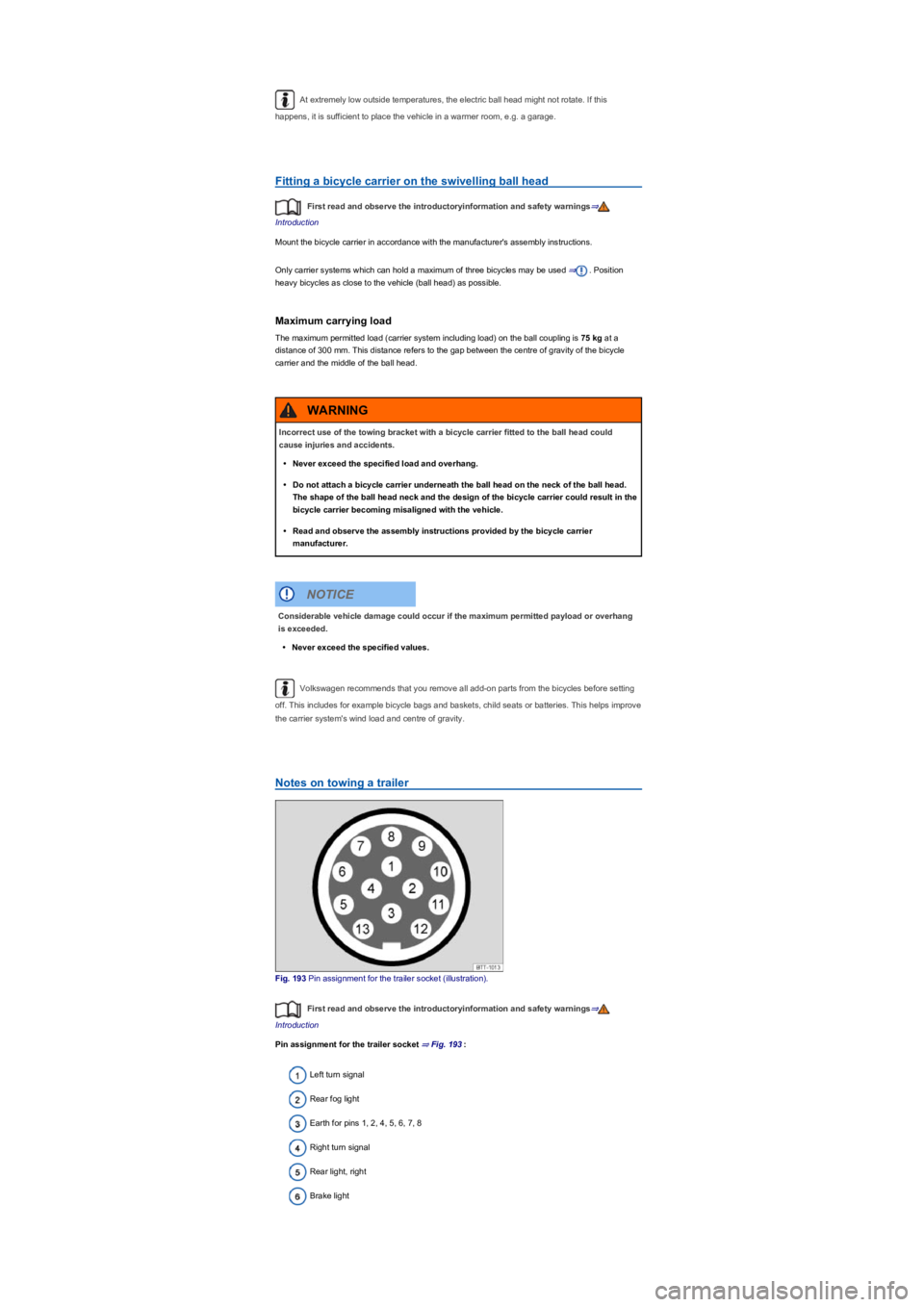
Fig. 193 Pin assignment for the trailer socket (illustration).
First read and observe the introductoryinformation and safety warnings⇒
Introduction
Pin assignment for the trailer socket ⇒ Fig. 193:
Left turn signal
Rear fog light
Earth for pins 1, 2, 4, 5, 6, 7, 8
Right turn signal
Rear light, right
Brake light
Incorrect use of the towing bracket with a bicycle carrier fitted to the ball head could
cause injuries and accidents.
•Never exceed the specified load and overhang.
•Do not attach a bicycle carrier underneath the ball head on the neck of the ball head.
The shape of the ball head neck and the design of the bicycle carrier could result in the
bicycle carrier becoming misaligned with the vehicle.
•Read and observe the assembly instructions provided by the bicycle carrier
manufacturer.
WARNING
Considerable vehicle damage could occur if the maximum permitted payload or overhang
is exceeded.
•Never exceed the specified values.
NOTICE
Page 240 of 341
Trailer towing
First read and observe the introductoryinformation and safety warnings⇒
Introduction
Headlight adjustment
Towing a trailer can raise the front end of the vehicle enough for the dipped beam to blind other
road users. Use the headlight range control to lower the light cone as required. Vehicles with
automatic headlight range adjustment are adjusted automatically.
Things to note when driving with a trailer
•If the trailer has an overrun brake, apply the brakes gently at first and then firmly. This will
prevent the jerking that can be caused by the trailer wheels locking.
•The combination weight causes the braking distance to increase.
•Engage a lower gear prior to inclines (manual gearbox or Tiptronic mode of the automatic
gearbox) to additionally make use of engine braking. The brake system could otherwise
overheat and fail.
•The vehicle's centre of gravity and, in turn, the vehicle's handling, will change because of the
trailer load and the increased combined towing weight of the vehicle and trailer.
•The weight distribution of a loaded trailer with an unladen towing vehicle is very unfavourable.
When driving in this situation, drive particularly carefully and slowly.
Pulling off on slopes when towing a trailer
A vehicle towing a trailer is liable to roll back a short distance when moving off on a slope,
depending on the angle of the slope and the total weight of the trailer and vehicle.
When towing a trailer, pull off on slopes as follows:
•Depress and hold the brake pedal.
•Press button once to switch off the electronic parking brake ⇒ Electronic parking
brake.
•Manual gearbox: depress the clutch fully.
•Select first gear ⇒ Manual gearbox: selecting a gear or selector lever position D/S⇒ DSG dual
clutch gearbox.
•Pull on the button and hold it in this position to hold the vehicle and trailer with the
electronic parking brake.
•Release the brake pedal.
•Pull away slowly. To do this, slowly release the clutch pedal for a manual gearbox.
•Only let go of the button when the engine has sufficient power to move off.
Trailer stabilisation
First read and observe the introductoryinformation and safety warnings⇒
Introduction
The trailer stabilisation function can detect if an attached trailer is starting to lurch from side to side
and can provide countersteer.
Trailer stabilisation is a subsidiary function of the Electronic Stability Control (ESC).
®
Incorrect trailer towing can cause loss of vehicle control and serious personal injury.
•Towing a trailer and transporting heavy or bulky items can change the way the vehicle
handles and increase the braking distance.
•Always drive carefully and think ahead. Brake earlier than in normal driving.
•Always adapt your speed and driving style to suit visibility, weather, road and traffic
conditions. Reduce your speed, particularly when going downhill.
•Accelerate carefully and gently. Avoid abrupt and sudden driving and braking
manoeuvres.
•Take special care when overtaking. Reduce your speed immediately if the trailer shows
even the slightest sign of snaking.
•Never try to stop a trailer from snaking by increasing your speed.
•Keep to speed limits which may be lower for vehicles with trailers than for vehicles
without trailers.
WARNING
Page 241 of 341
If a lurching motion is detected, the trailer stabilisation function automatically helps to reduce the
trailer's rocking motion using counter steering assistance.
Requirements for trailer stabilisation
•The vehicle is a factory-fitted towing bracket or a compatible towing bracket is fitted.
•Electronic Stability Control and the traction control system (TCS) are active. The indicator lamp
or in the instrument cluster is not lit up.
•The trailer is electrically connected to the towing vehicle via the trailer socket.
•The vehicle speed is higher than approximately 60 km/h (37 mph).
•The maximum drawbar load is being carried.
•The trailer must have a rigid drawbar.
•Trailers with brakes must have a mechanical overrun system.
Retrofitting a towing bracket
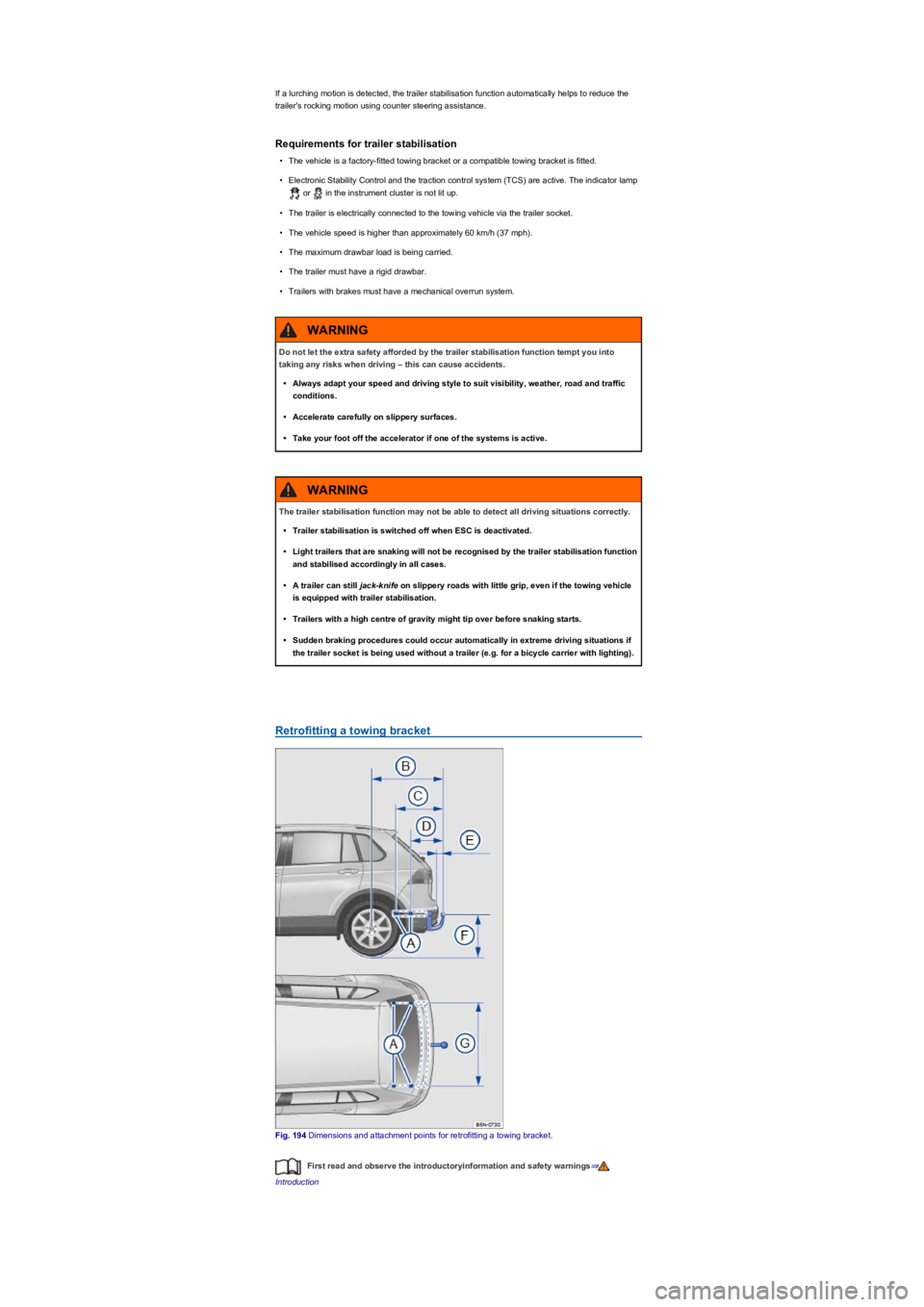
Fig. 194 Dimensions and attachment points for retrofitting a towing bracket.
First read and observe the introductoryinformation and safety warnings⇒
Introduction
Do not let the extra safety afforded by the trailer stabilisation function tempt you into
taking any risks when driving – this can cause accidents.
•Always adapt your speed and driving style to suit visibility, weather, road and traffic
conditions.
•Accelerate carefully on slippery surfaces.
•Take your foot off the accelerator if one of the systems is active.
WARNING
The trailer stabilisation function may not be able to detect all driving situations correctly.
•Trailer stabilisation is switched off when ESC is deactivated.
•Light trailers that are snaking will not be recognised by the trailer stabilisation function
and stabilised accordingly in all cases.
•A trailer can still jack-knife on slippery roads with little grip, even if the towing vehicle
is equipped with trailer stabilisation.
•Trailers with a high centre of gravity might tip over before snaking starts.
•Sudden braking procedures could occur automatically in extreme driving situations if
the trailer socket is being used without a trailer (e.g. for a bicycle carrier with lighting).
WARNING
Page 251 of 341
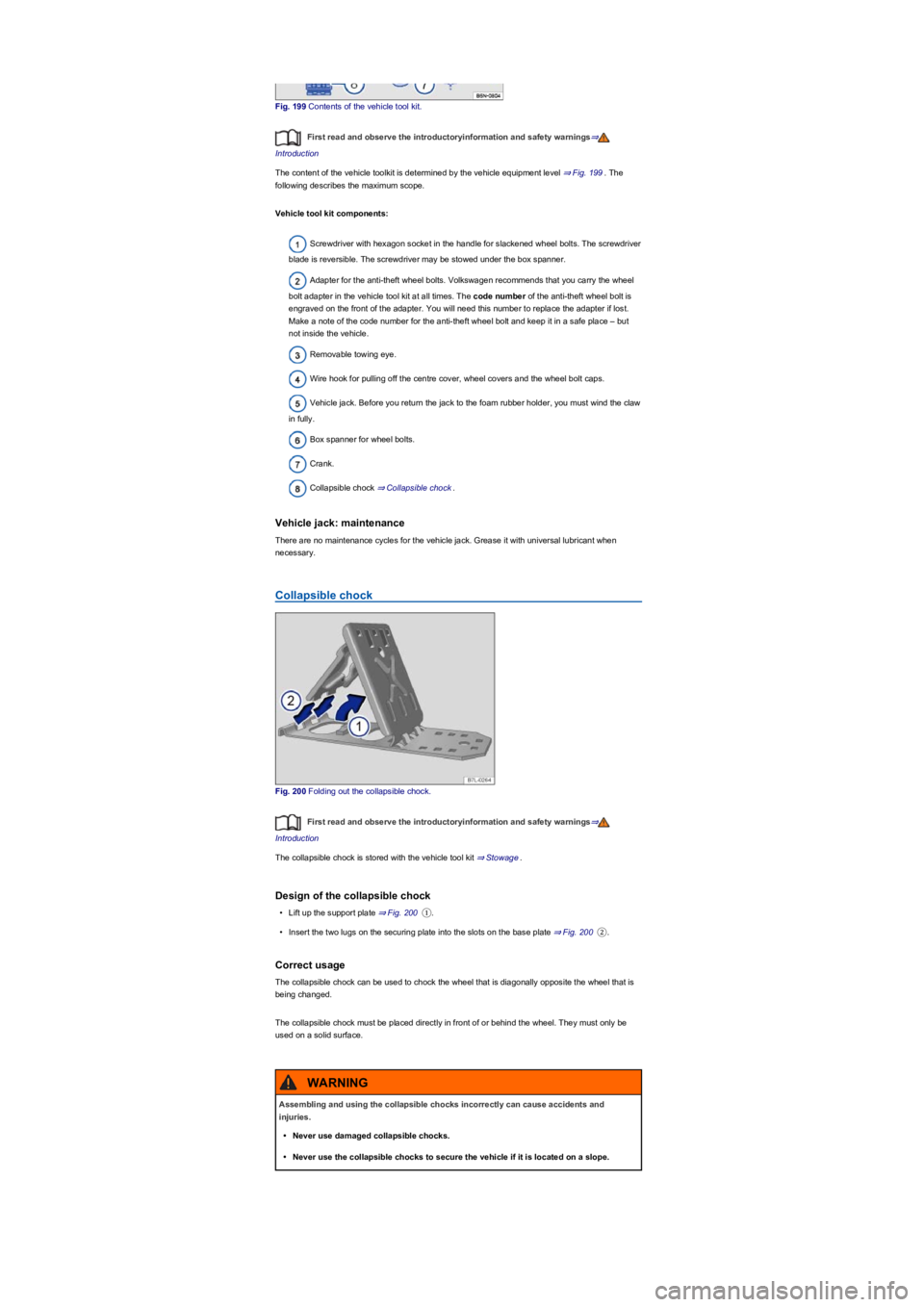
Fig. 199 Contents of the vehicle tool kit.
First read and observe the introductoryinformation and safety warnings⇒
Introduction
The content of the vehicle toolkit is determined by the vehicle equipment level ⇒ Fig. 199. The
following describes the maximum scope.
Vehicle tool kit components:
Screwdriver with hexagon socket in the handle for slackened wheel bolts. The screwdriver
blade is reversible. The screwdriver may be stowed under the box spanner.
Adapter for the anti-theft wheel bolts. Volkswagen recommends that you carry the wheel
bolt adapter in the vehicle tool kit at all times. The code number of the anti-theft wheel bolt is
engraved on the front of the adapter. You will need this number to replace the adapter if lost.
Make a note of the code number for the anti-theft wheel bolt and keep it in a safe place – but
not inside the vehicle.
Removable towing eye.
Wire hook for pulling off the centre cover, wheel covers and the wheel bolt caps.
Vehicle jack. Before you return the jack to the foam rubber holder, you must wind the claw
in fully.
Box spanner for wheel bolts.
Crank.
Collapsible chock ⇒ Collapsible chock.
Vehicle jack: maintenance
There are no maintenance cycles for the vehicle jack. Grease it with universal lubricant when
necessary.
Collapsible chock
Fig. 200 Folding out the collapsible chock.
First read and observe the introductoryinformation and safety warnings⇒
Introduction
The collapsible chock is stored with the vehicle tool kit ⇒ Stowage.
Design of the collapsible chock
•Lift up the support plate ⇒ Fig. 200①.
•Insert the two lugs on the securing plate into the slots on the base plate ⇒ Fig. 200②.
Correct usage
The collapsible chock can be used to chock the wheel that is diagonally opposite the wheel that is
being changed.
The collapsible chock must be placed directly in front of or behind the wheel. They must only be
used on a solid surface.
Assembling and using the collapsible chocks incorrectly can cause accidents and
injuries.
•Never use damaged collapsible chocks.
•Never use the collapsible chocks to secure the vehicle if it is located on a slope.
WARNING
Page 305 of 341
Snow chains
First read and observe the introductoryinformation and safety warnings⇒
Introduction
Please observe legislation and also the maximum permitted speed when driving your vehicle with
snow chains.
On icy or snow-covered roads, snow chains will improve traction and braking response.
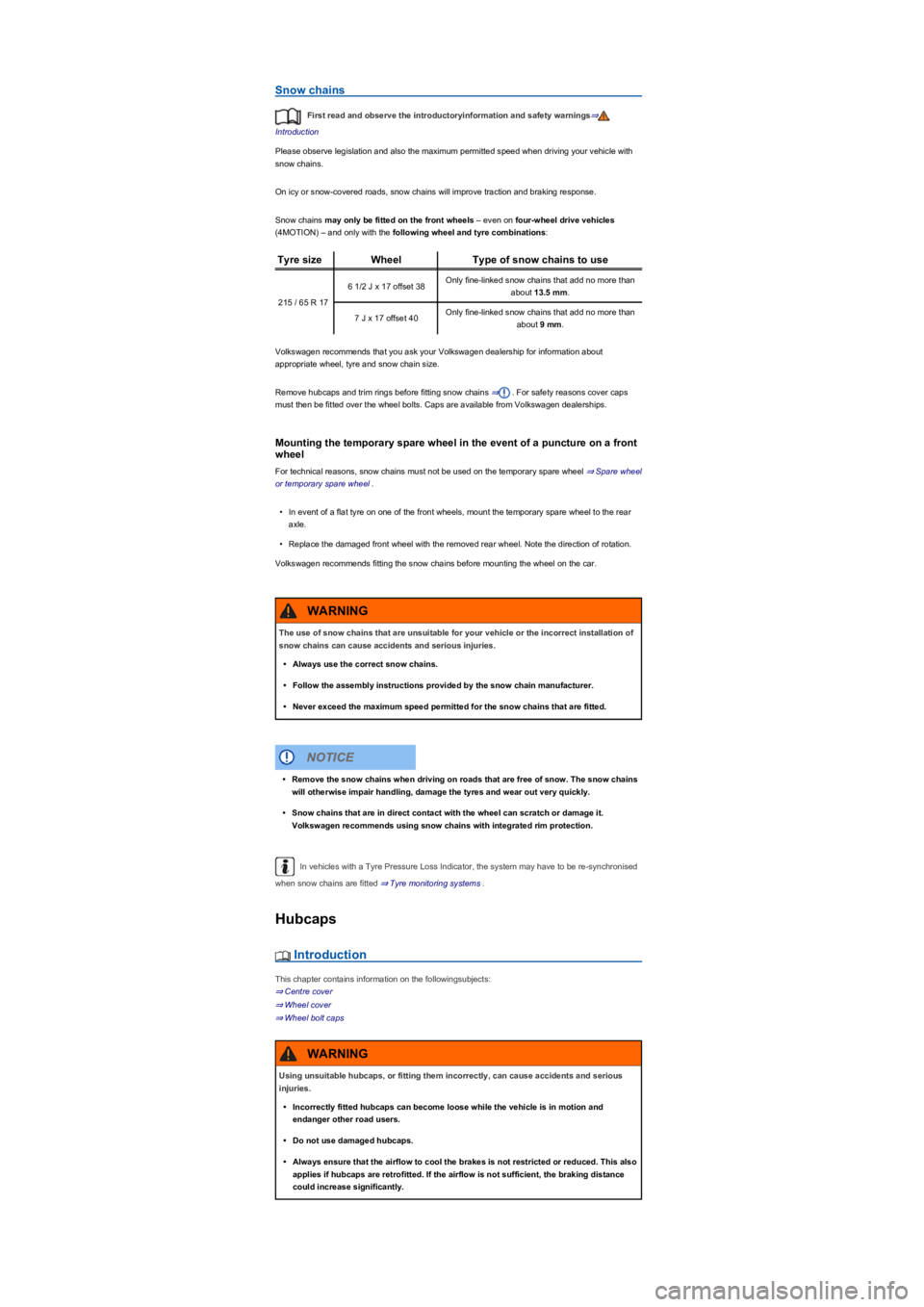
Snow chains may only be fitted on the front wheels – even on four-wheel drive vehicles
(4MOTION) – and only with the following wheel and tyre combinations:
Tyre sizeWheelType of snow chains to use
215 / 65 R 17
6 1/2 J x 17 offset 38Only fine-linked snow chains that add no more than
about 13.5 mm.
7 J x 17 offset 40Only fine-linked snow chains that add no more than
about 9 mm.
Volkswagen recommends that you ask your Volkswagen dealership for information about
appropriate wheel, tyre and snow chain size.
Remove hubcaps and trim rings before fitting snow chains ⇒. For safety reasons cover caps
must then be fitted over the wheel bolts. Caps are available from Volkswagen dealerships.
Mounting the temporary spare wheel in the event of a puncture on a front
wheel
For technical reasons, snow chains must not be used on the temporary spare wheel ⇒ Spare wheel
or temporary spare wheel.
•In event of a flat tyre on one of the front wheels, mount the temporary spare wheel to the rear
axle.
•Replace the damaged front wheel with the removed rear wheel. Note the direction of rotation.
Volkswagen recommends fitting the snow chains before mounting the wheel on the car.
In vehicles with a Tyre Pressure Loss Indicator, the system may have to be re-synchronised
when snow chains are fitted ⇒ Tyre monitoring systems.
Hubcaps
Introduction
This chapter contains information on the followingsubjects:
⇒ Centre cover
⇒ Wheel cover
⇒ Wheel bolt caps
The use of snow chains that are unsuitable for your vehicle or the incorrect installation of
snow chains can cause accidents and serious injuries.
•Always use the correct snow chains.
•Follow the assembly instructions provided by the snow chain manufacturer.
•Never exceed the maximum speed permitted for the snow chains that are fitted.
WARNING
•Remove the snow chains when driving on roads that are free of snow. The snow chains
will otherwise impair handling, damage the tyres and wear out very quickly.
•Snow chains that are in direct contact with the wheel can scratch or damage it.
Volkswagen recommends using snow chains with integrated rim protection.
NOTICE
Using unsuitable hubcaps, or fitting them incorrectly, can cause accidents and serious
injuries.
•Incorrectly fitted hubcaps can become loose while the vehicle is in motion and
endanger other road users.
•Do not use damaged hubcaps.
•Always ensure that the airflow to cool the brakes is not restricted or reduced. This also
applies if hubcaps are retrofitted. If the airflow is not sufficient, the braking distance
could increase significantly.
WARNING
Page 306 of 341
Centre cover
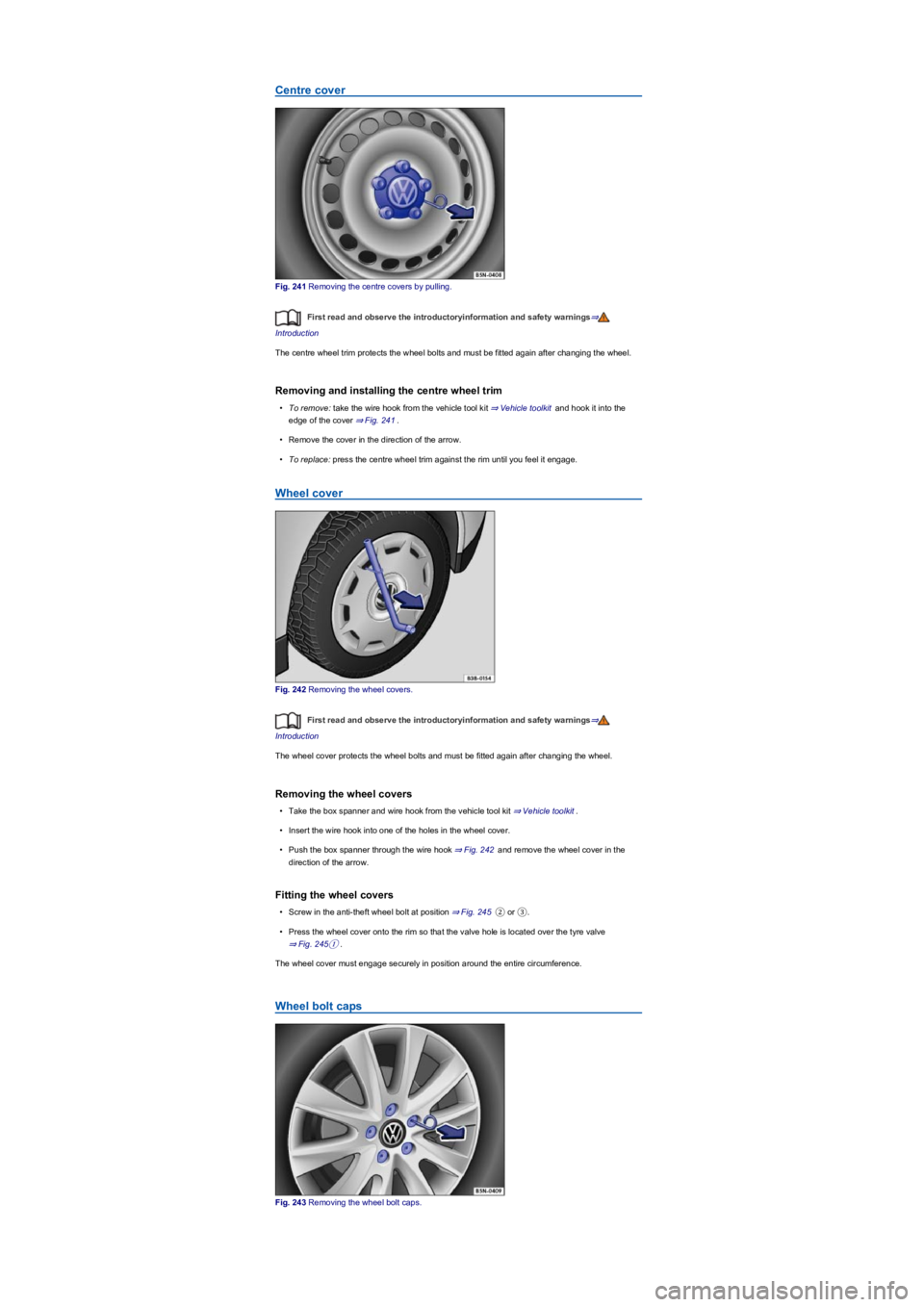
Fig. 241 Removing the centre covers by pulling.
First read and observe the introductoryinformation and safety warnings⇒
Introduction
The centre wheel trim protects the wheel bolts and must be fitted again after changing the wheel.
Removing and installing the centre wheel trim
•To remove: take the wire hook from the vehicle tool kit ⇒ Vehicle toolkit and hook it into the
edge of the cover ⇒ Fig. 241.
•Remove the cover in the direction of the arrow.
•To replace: press the centre wheel trim against the rim until you feel it engage.
Wheel cover
Fig. 242 Removing the wheel covers.
First read and observe the introductoryinformation and safety warnings⇒
Introduction
The wheel cover protects the wheel bolts and must be fitted again after changing the wheel.
Removing the wheel covers
•Take the box spanner and wire hook from the vehicle tool kit ⇒ Vehicle toolkit.
•Insert the wire hook into one of the holes in the wheel cover.
•Push the box spanner through the wire hook ⇒ Fig. 242 and remove the wheel cover in the
direction of the arrow.
Fitting the wheel covers
•Screw in the anti-theft wheel bolt at position ⇒ Fig. 245② or ③.
•Press the wheel cover onto the rim so that the valve hole is located over the tyre valve
⇒ Fig. 245①.
The wheel cover must engage securely in position around the entire circumference.
Wheel bolt caps
Fig. 243 Removing the wheel bolt caps.
Page 310 of 341
Crank the jack further until the wheel is just clear of the ground.
Changing a wheel
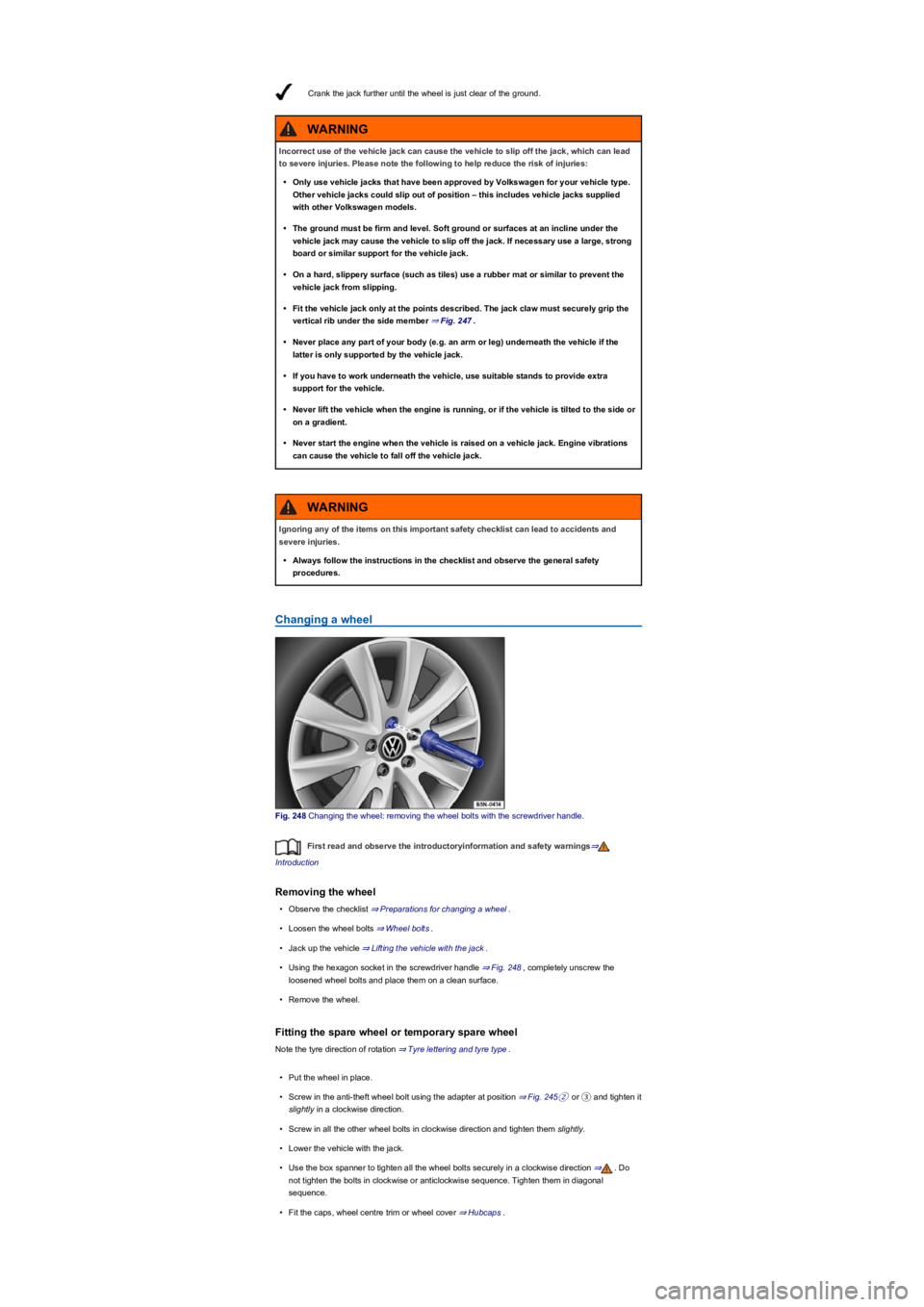
Fig. 248 Changing the wheel: removing the wheel bolts with the screwdriver handle.
First read and observe the introductoryinformation and safety warnings⇒
Introduction
Removing the wheel
•Observe the checklist ⇒ Preparations for changing a wheel.
•Loosen the wheel bolts ⇒ Wheel bolts.
•Jack up the vehicle ⇒ Lifting the vehicle with the jack.
•Using the hexagon socket in the screwdriver handle ⇒ Fig. 248, completely unscrew the
loosened wheel bolts and place them on a clean surface.
•Remove the wheel.
Fitting the spare wheel or temporary spare wheel
Note the tyre direction of rotation ⇒ Tyre lettering and tyre type.
•Put the wheel in place.
•Screw in the anti-theft wheel bolt using the adapter at position ⇒ Fig. 245② or ③ and tighten it
slightly in a clockwise direction.
•Screw in all the other wheel bolts in clockwise direction and tighten them slightly.
•Lower the vehicle with the jack.
•Use the box spanner to tighten all the wheel bolts securely in a clockwise direction ⇒. Do
not tighten the bolts in clockwise or anticlockwise sequence. Tighten them in diagonal
sequence.
•Fit the caps, wheel centre trim or wheel cover ⇒ Hubcaps.
Incorrect use of the vehicle jack can cause the vehicle to slip off the jack, which can lead
to severe injuries. Please note the following to help reduce the risk of injuries:
•Only use vehicle jacks that have been approved by Volkswagen for your vehicle type.
Other vehicle jacks could slip out of position – this includes vehicle jacks supplied
with other Volkswagen models.
•The ground must be firm and level. Soft ground or surfaces at an incline under the
vehicle jack may cause the vehicle to slip off the jack. If necessary use a large, strong
board or similar support for the vehicle jack.
•On a hard, slippery surface (such as tiles) use a rubber mat or similar to prevent the
vehicle jack from slipping.
•Fit the vehicle jack only at the points described. The jack claw must securely grip the
vertical rib under the side member ⇒ Fig. 247.
•Never place any part of your body (e.g. an arm or leg) underneath the vehicle if the
latter is only supported by the vehicle jack.
•If you have to work underneath the vehicle, use suitable stands to provide extra
support for the vehicle.
•Never lift the vehicle when the engine is running, or if the vehicle is tilted to the side or
on a gradient.
•Never start the engine when the vehicle is raised on a vehicle jack. Engine vibrations
can cause the vehicle to fall off the vehicle jack.
WARNING
Ignoring any of the items on this important safety checklist can lead to accidents and
severe injuries.
•Always follow the instructions in the checklist and observe the general safety
procedures.
WARNING
Page 326 of 341
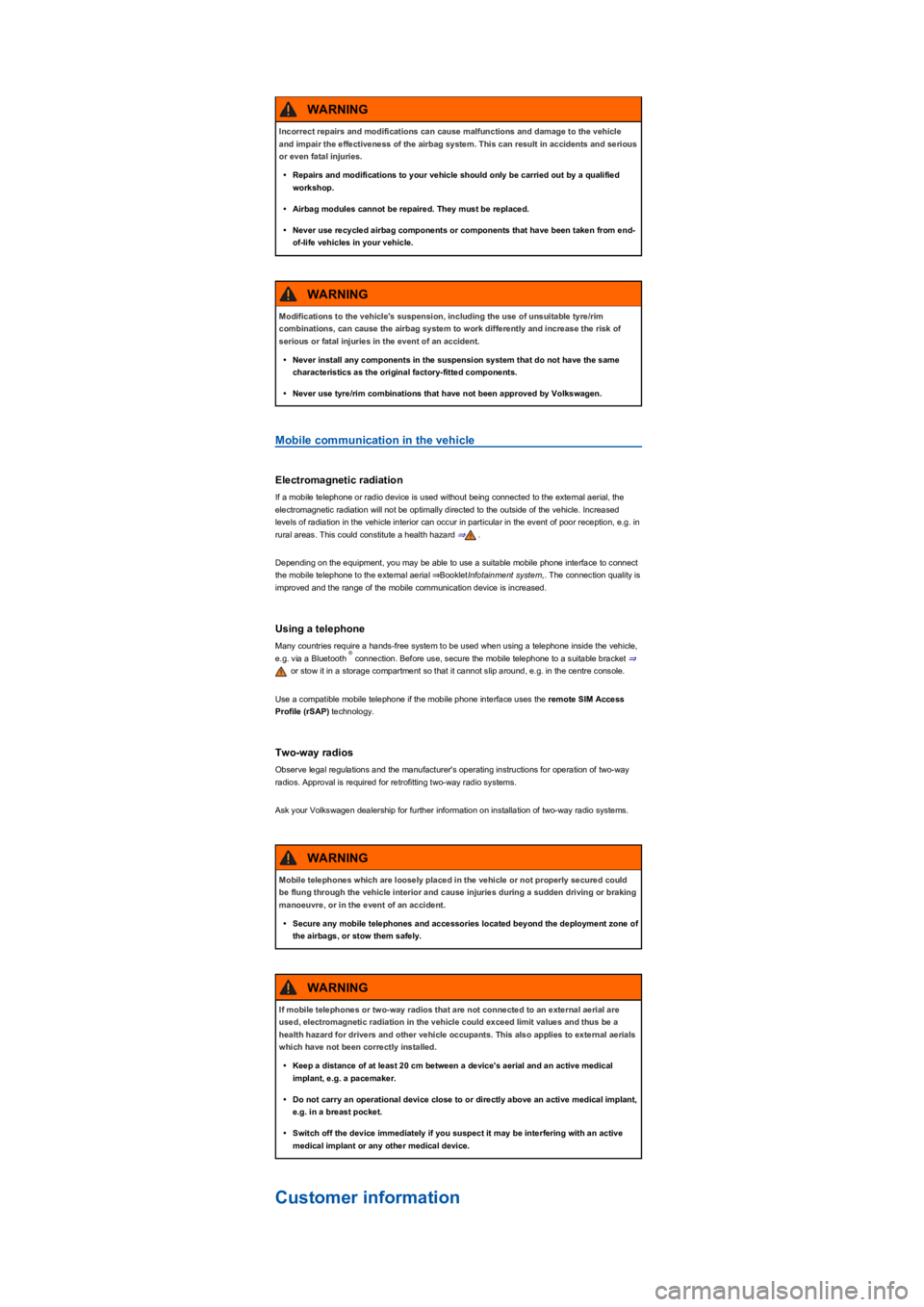
Mobile communication in the vehicle
Electromagnetic radiation
If a mobile telephone or radio device is used without being connected to the external aerial, the
electromagnetic radiation will not be optimally directed to the outside of the vehicle. Increased
levels of radiation in the vehicle interior can occur in particular in the event of poor reception, e.g. in
rural areas. This could constitute a health hazard ⇒.
Depending on the equipment, you may be able to use a suitable mobile phone interface to connect
the mobile telephone to the external aerial ⇒BookletInfotainment system,. The connection quality is
improved and the range of the mobile communication device is increased.
Using a telephone
Many countries require a hands-free system to be used when using a telephone inside the vehicle,
e.g. via a Bluetooth connection. Before use, secure the mobile telephone to a suitable bracket ⇒
or stow it in a storage compartment so that it cannot slip around, e.g. in the centre console.
Use a compatible mobile telephone if the mobile phone interface uses the remote SIM Access
Profile (rSAP) technology.
Two-way radios
Observe legal regulations and the manufacturer's operating instructions for operation of two-way
radios. Approval is required for retrofitting two-way radio systems.
Ask your Volkswagen dealership for further information on installation of two-way radio systems.
Customer information
Incorrect repairs and modifications can cause malfunctions and damage to the vehicle
and impair the effectiveness of the airbag system. This can result in accidents and serious
or even fatal injuries.
•Repairs and modifications to your vehicle should only be carried out by a qualified
workshop.
•Airbag modules cannot be repaired. They must be replaced.
•Never use recycled airbag components or components that have been taken from end-
of-life vehicles in your vehicle.
WARNING
Modifications to the vehicle's suspension, including the use of unsuitable tyre/rim
combinations, can cause the airbag system to work differently and increase the risk of
serious or fatal injuries in the event of an accident.
•Never install any components in the suspension system that do not have the same
characteristics as the original factory-fitted components.
•Never use tyre/rim combinations that have not been approved by Volkswagen.
WARNING
®
Mobile telephones which are loosely placed in the vehicle or not properly secured could
be flung through the vehicle interior and cause injuries during a sudden driving or braking
manoeuvre, or in the event of an accident.
•Secure any mobile telephones and accessories located beyond the deployment zone of
the airbags, or stow them safely.
WARNING
If mobile telephones or two-way radios that are not connected to an external aerial are
used, electromagnetic radiation in the vehicle could exceed limit values and thus be a
health hazard for drivers and other vehicle occupants. This also applies to external aerials
which have not been correctly installed.
•Keep a distance of at least 20 cm between a device's aerial and an active medical
implant, e.g. a pacemaker.
•Do not carry an operational device close to or directly above an active medical implant,
e.g. in a breast pocket.
•Switch off the device immediately if you suspect it may be interfering with an active
medical implant or any other medical device.
WARNING
Page 332 of 341
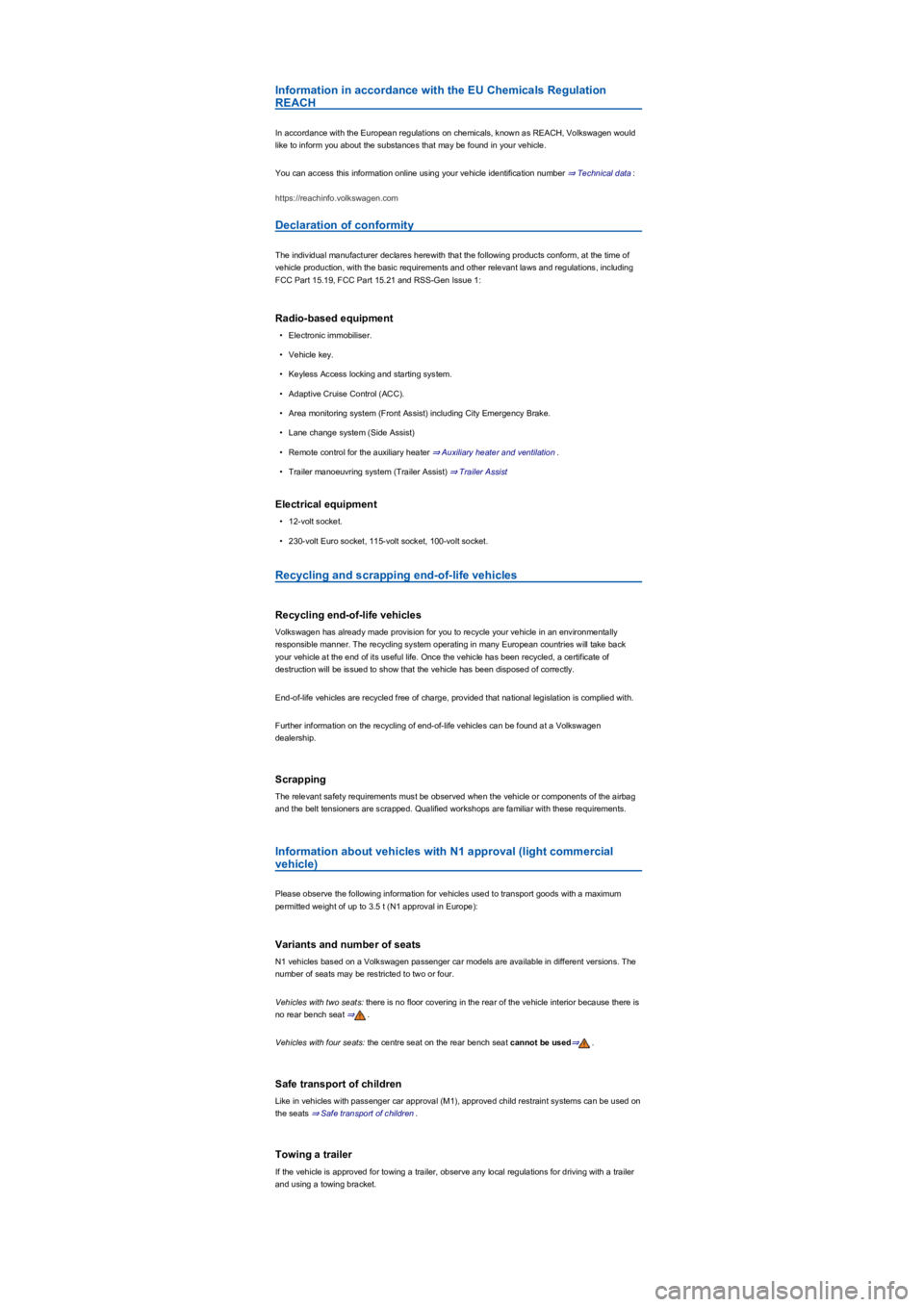
Information in accordance with the EU Chemicals Regulation
REACH
In accordance with the European regulations on chemicals, known as REACH, Volkswagen would
like to inform you about the substances that may be found in your vehicle.
You can access this information online using your vehicle identification number ⇒ Technical data:
https://reachinfo.volkswagen.com
Declaration of conformity
The individual manufacturer declares herewith that the following products conform, at the time of
vehicle production, with the basic requirements and other relevant laws and regulations, including
FCC Part 15.19, FCC Part 15.21 and RSS-Gen Issue 1:
Radio-based equipment
•Electronic immobiliser.
•Vehicle key.
•Keyless Access locking and starting system.
•Adaptive Cruise Control (ACC).
•Area monitoring system (Front Assist) including City Emergency Brake.
•Lane change system (Side Assist)
•Remote control for the auxiliary heater ⇒ Auxiliary heater and ventilation.
•Trailer manoeuvring system (Trailer Assist) ⇒ Trailer Assist
Electrical equipment
•12-volt socket.
•230-volt Euro socket, 115-volt socket, 100-volt socket.
Recycling and scrapping end-of-life vehicles
Recycling end-of-life vehicles
Volkswagen has already made provision for you to recycle your vehicle in an environmentally
responsible manner. The recycling system operating in many European countries will take back
your vehicle at the end of its useful life. Once the vehicle has been recycled, a certificate of
destruction will be issued to show that the vehicle has been disposed of correctly.
End-of-life vehicles are recycled free of charge, provided that national legislation is complied with.
Further information on the recycling of end-of-life vehicles can be found at a Volkswagen
dealership.
Scrapping
The relevant safety requirements must be observed when the vehicle or components of the airbag
and the belt tensioners are scrapped. Qualified workshops are familiar with these requirements.
Information about vehicles with N1 approval (light commercial
vehicle)
Please observe the following information for vehicles used to transport goods with a maximum
permitted weight of up to 3.5 t (N1 approval in Europe):
Variants and number of seats
N1 vehicles based on a Volkswagen passenger car models are available in different versions. The
number of seats may be restricted to two or four.
Vehicles with two seats: there is no floor covering in the rear of the vehicle interior because there is
no rear bench seat ⇒.
Vehicles with four seats: the centre seat on the rear bench seat cannot be used⇒.
Safe transport of children
Like in vehicles with passenger car approval (M1), approved child restraint systems can be used on
the seats ⇒ Safe transport of children.
Towing a trailer
If the vehicle is approved for towing a trailer, observe any local regulations for driving with a trailer
and using a towing bracket.