display VOLKSWAGEN UP! 2021 Owner´s Manual
[x] Cancel search | Manufacturer: VOLKSWAGEN, Model Year: 2021, Model line: UP!, Model: VOLKSWAGEN UP! 2021Pages: 211, PDF Size: 5.98 MB
Page 28 of 211
In some vehicles it is possible to set the screen of the portable navigation device (delivered
by Volkswagen) ⇒ Accessories, modifications, repairs and renewal of parts to display whether the
tailgate is open or not properly closed.
Opening the tailgate
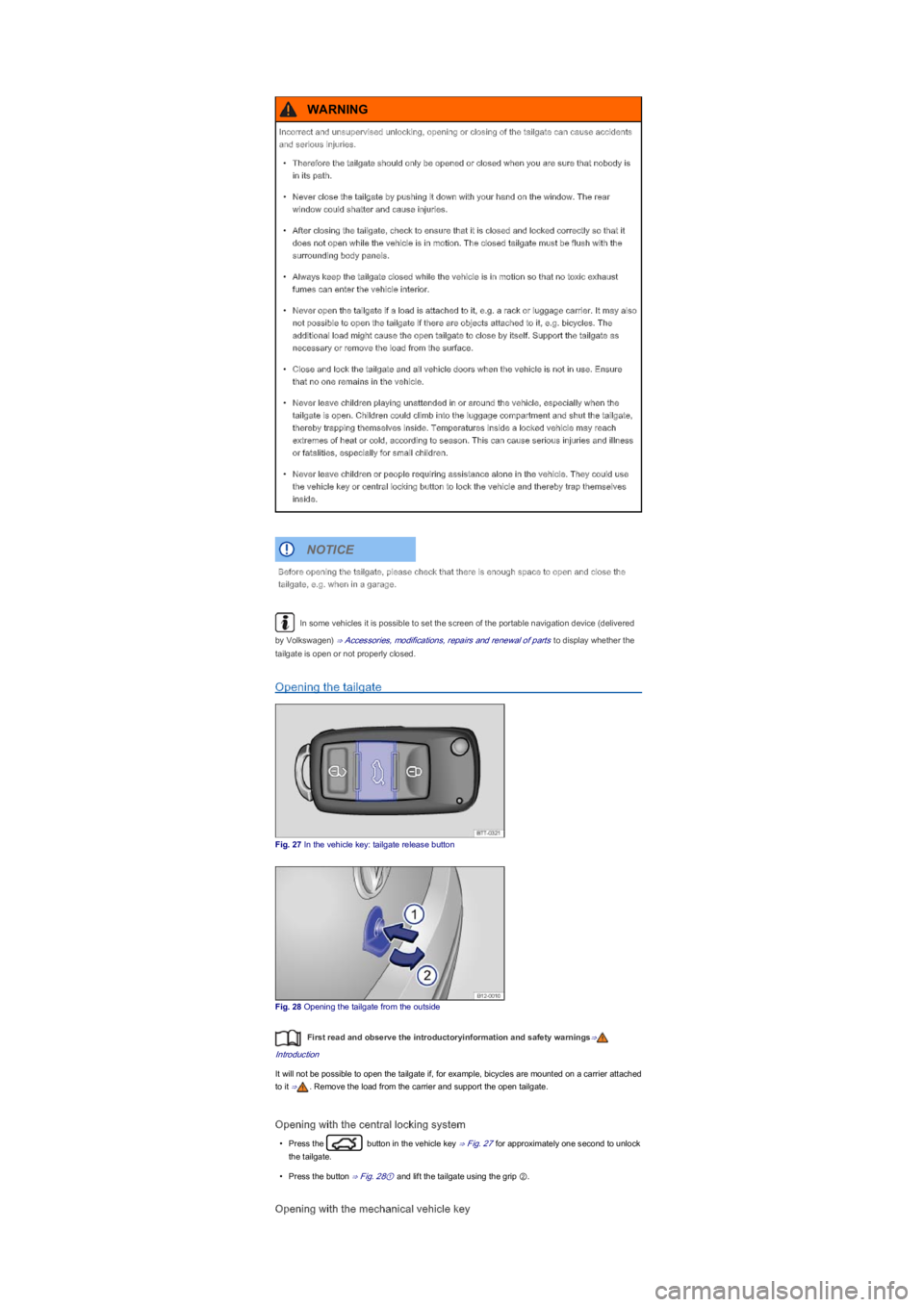
Fig. 27 In the vehicle key: tailgate release button
Fig. 28 Opening the tailgate from the outside
First read and observe the introductoryinformation and safety warnings⇒
Introduction
It will not be possible to open the tailgate if, for example, bicycles are mounted on a carrier attached
to it ⇒. Remove the load from the carrier and support the open tailgate.
Opening with the central locking system
•Press the button in the vehicle key ⇒ Fig. 27 for approximately one second to unlock
the tailgate.
•Press the button ⇒ Fig. 28① and lift the tailgate using the grip ②.
Opening with the mechanical vehicle key
Incorrect and unsupervised unlocking, opening or closing of the tailgate can cause accidents
and serious injuries.
•Therefore the tailgate should only be opened or closed when you are sure that nobody is
in its path.
•Never close the tailgate by pushing it down with your hand on the window. The rear
window could shatter and cause injuries.
•After closing the tailgate, check to ensure that it is closed and locked correctly so that it
does not open while the vehicle is in motion. The closed tailgate must be flush with the
surrounding body panels.
•Always keep the tailgate closed while the vehicle is in motion so that no toxic exhaust
fumes can enter the vehicle interior.
•Never open the tailgate if a load is attached to it, e.g. a rack or luggage carrier. It may also
not possible to open the tailgate if there are objects attached to it, e.g. bicycles. The
additional load might cause the open tailgate to close by itself. Support the tailgate as
necessary or remove the load from the surface.
•Close and lock the tailgate and all vehicle doors when the vehicle is not in use. Ensure
that no one remains in the vehicle.
•Never leave children playing unattended in or around the vehicle, especially when the
tailgate is open. Children could climb into the luggage compartment and shut the tailgate,
thereby trapping themselves inside. Temperatures inside a locked vehicle may reach
extremes of heat or cold, according to season. This can cause serious injuries and illness
or fatalities, especially for small children.
•Never leave children or people requiring assistance alone in the vehicle. They could use
the vehicle key or central locking button to lock the vehicle and thereby trap themselves
inside.
WARNING
Before opening the tailgate, please check that there is enough space to open and close the
tailgate, e.g. when in a garage.
NOTICE
Page 41 of 211
Warning lamp
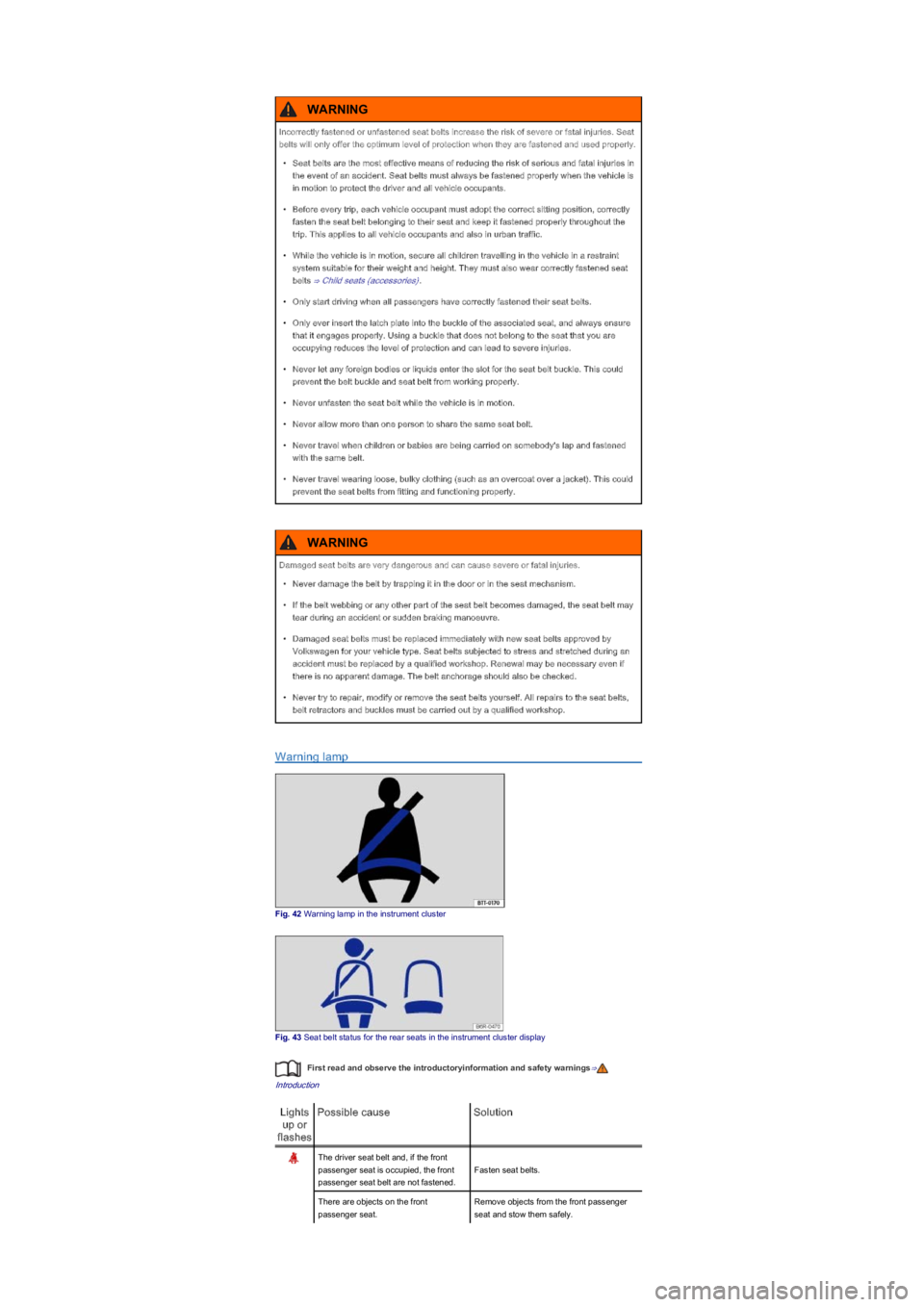
Fig. 42 Warning lamp in the instrument cluster
Fig. 43 Seat belt status for the rear seats in the instrument cluster display
First read and observe the introductoryinformation and safety warnings⇒
Introduction
Lights
up or
flashes
Possible causeSolution
The driver seat belt and, if the front
passenger seat is occupied, the front
passenger seat belt are not fastened.
Fasten seat belts.
There are objects on the front
passenger seat.
Remove objects from the front passenger
seat and stow them safely.
Incorrectly fastened or unfastened seat belts increase the risk of severe or fatal injuries. Seat
belts will only offer the optimum level of protection when they are fastened and used properly.
•Seat belts are the most effective means of reducing the risk of serious and fatal injuries in
the event of an accident. Seat belts must always be fastened properly when the vehicle is
in motion to protect the driver and all vehicle occupants.
•Before every trip, each vehicle occupant must adopt the correct sitting position, correctly
fasten the seat belt belonging to their seat and keep it fastened properly throughout the
trip. This applies to all vehicle occupants and also in urban traffic.
•While the vehicle is in motion, secure all children travelling in the vehicle in a restraint
system suitable for their weight and height. They must also wear correctly fastened seat
belts ⇒ Child seats (accessories).
•Only start driving when all passengers have correctly fastened their seat belts.
•Only ever insert the latch plate into the buckle of the associated seat, and always ensure
that it engages properly. Using a buckle that does not belong to the seat that you are
occupying reduces the level of protection and can lead to severe injuries.
•Never let any foreign bodies or liquids enter the slot for the seat belt buckle. This could
prevent the belt buckle and seat belt from working properly.
•Never unfasten the seat belt while the vehicle is in motion.
•Never allow more than one person to share the same seat belt.
•Never travel when children or babies are being carried on somebody's lap and fastened
with the same belt.
•Never travel wearing loose, bulky clothing (such as an overcoat over a jacket). This could
prevent the seat belts from fitting and functioning properly.
WARNING
Damaged seat belts are very dangerous and can cause severe or fatal injuries.
•Never damage the belt by trapping it in the door or in the seat mechanism.
•If the belt webbing or any other part of the seat belt becomes damaged, the seat belt may
tear during an accident or sudden braking manoeuvre.
•Damaged seat belts must be replaced immediately with new seat belts approved by
Volkswagen for your vehicle type. Seat belts subjected to stress and stretched during an
accident must be replaced by a qualified workshop. Renewal may be necessary even if
there is no apparent damage. The belt anchorage should also be checked.
•Never try to repair, modify or remove the seat belts yourself. All repairs to the seat belts,
belt retractors and buckles must be carried out by a qualified workshop.
WARNING
Page 42 of 211
Lights
up or
flashes
Possible causeSolution
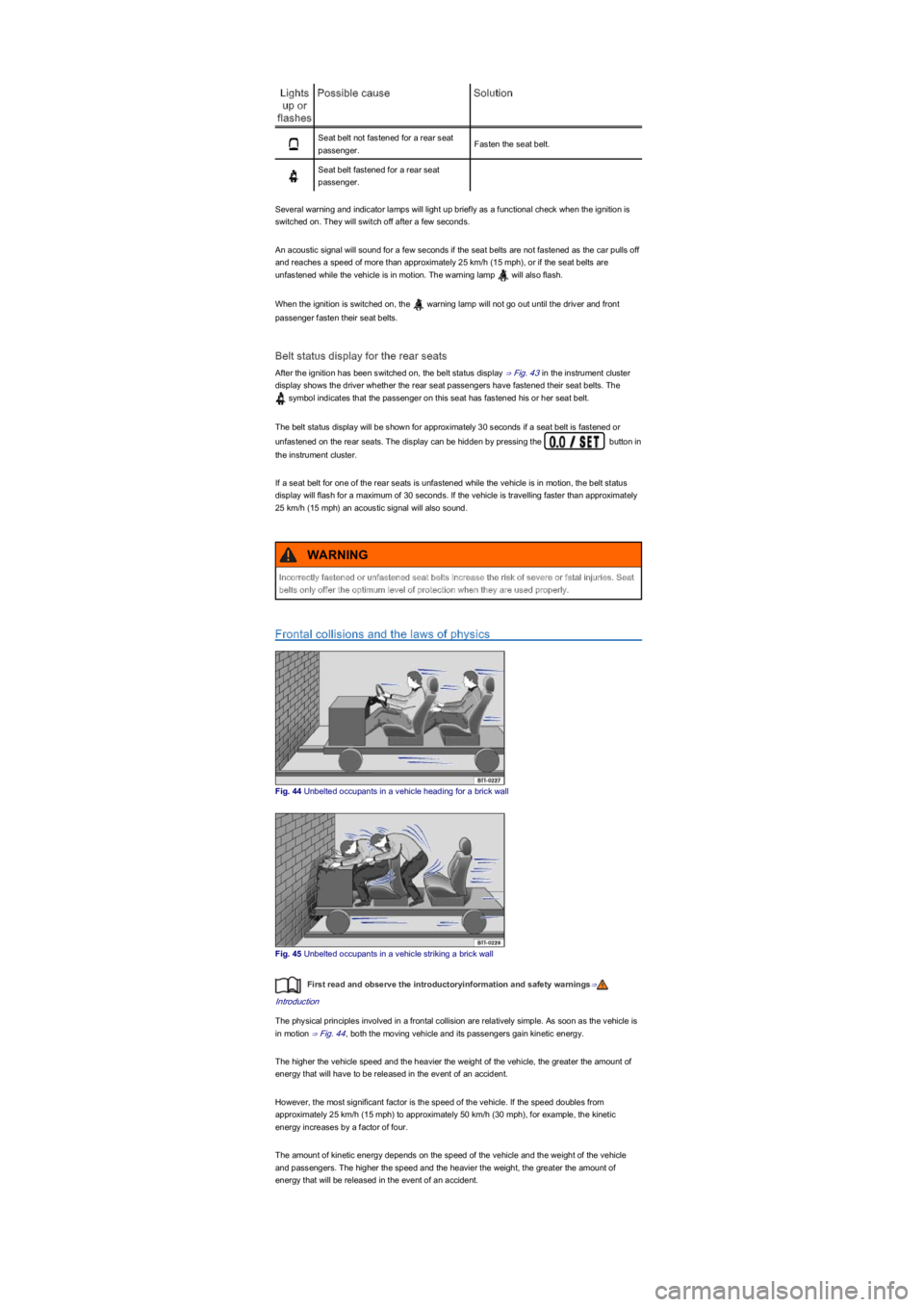
Seat belt not fastened for a rear seat
passenger.Fasten the seat belt.
Seat belt fastened for a rear seat
passenger.
Several warning and indicator lamps will light up briefly as a functional check when the ignition is
switched on. They will switch off after a few seconds.
An acoustic signal will sound for a few seconds if the seat belts are not fastened as the car pulls off
and reaches a speed of more than approximately 25 km/h (15 mph), or if the seat belts are
unfastened while the vehicle is in motion. The warning lamp will also flash.
When the ignition is switched on, the warning lamp will not go out until the driver and front
passenger fasten their seat belts.
Belt status display for the rear seats
After the ignition has been switched on, the belt status display ⇒ Fig. 43 in the instrument cluster
display shows the driver whether the rear seat passengers have fastened their seat belts. The
symbol indicates that the passenger on this seat has fastened his or her seat belt.
The belt status display will be shown for approximately 30 seconds if a seat belt is fastened or
unfastened on the rear seats. The display can be hidden by pressing the button in
the instrument cluster.
If a seat belt for one of the rear seats is unfastened while the vehicle is in motion, the belt status
display will flash for a maximum of 30 seconds. If the vehicle is travelling faster than approximately
25 km/h (15 mph) an acoustic signal will also sound.
Frontal collisions and the laws of physics
Fig. 44 Unbelted occupants in a vehicle heading for a brick wall
Fig. 45 Unbelted occupants in a vehicle striking a brick wall
First read and observe the introductoryinformation and safety warnings⇒
Introduction
The physical principles involved in a frontal collision are relatively simple. As soon as the vehicle is
in motion ⇒ Fig. 44, both the moving vehicle and its passengers gain kinetic energy.
The higher the vehicle speed and the heavier the weight of the vehicle, the greater the amount of
energy that will have to be released in the event of an accident.
However, the most significant factor is the speed of the vehicle. If the speed doubles from
approximately 25 km/h (15 mph) to approximately 50 km/h (30 mph), for example, the kinetic
energy increases by a factor of four.
The amount of kinetic energy depends on the speed of the vehicle and the weight of the vehicle
and passengers. The higher the speed and the heavier the weight, the greater the amount of
energy that will be released in the event of an accident.
Incorrectly fastened or unfastened seat belts increase the risk of severe or fatal injuries. Seat
belts only offer the optimum level of protection when they are used properly.
WARNING
Page 52 of 211
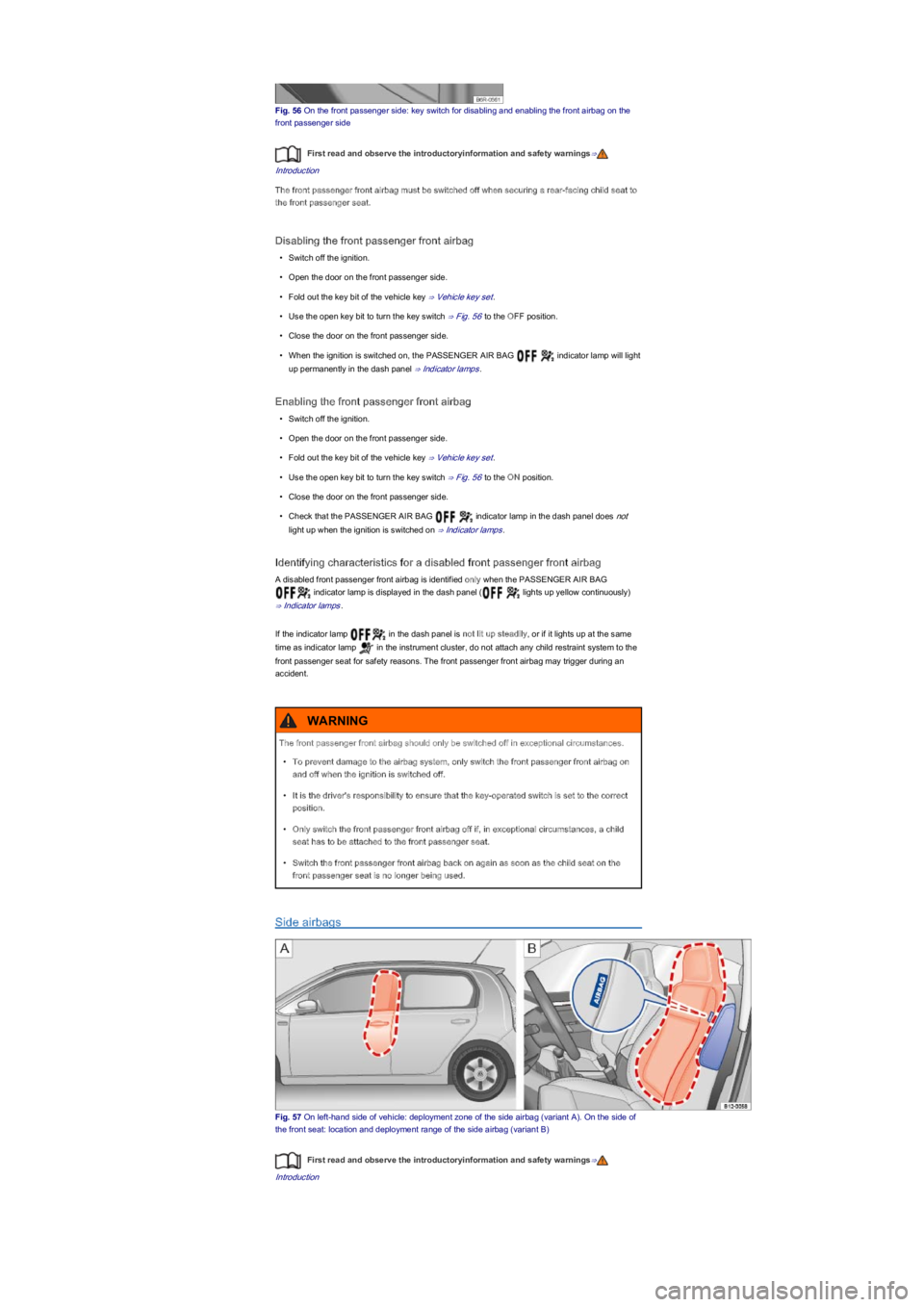
Fig. 56 On the front passenger side: key switch for disabling and enabling the front airbag on the
front passenger side
First read and observe the introductoryinformation and safety warnings⇒
Introduction
The front passenger front airbag must be switched off when securing a rear-facing child seat to
the front passenger seat.
Disabling the front passenger front airbag
•Switch off the ignition.
•Open the door on the front passenger side.
•Fold out the key bit of the vehicle key ⇒ Vehicle key set.
•Use the open key bit to turn the key switch ⇒ Fig. 56 to the OFF position.
•Close the door on the front passenger side.
•When the ignition is switched on, the PASSENGER AIR BAG indicator lamp will light
up permanently in the dash panel ⇒ Indicator lamps.
Enabling the front passenger front airbag
•Switch off the ignition.
•Open the door on the front passenger side.
•Fold out the key bit of the vehicle key ⇒ Vehicle key set.
•Use the open key bit to turn the key switch ⇒ Fig. 56 to the ON position.
•Close the door on the front passenger side.
•Check that the PASSENGER AIR BAG indicator lamp in the dash panel does not
light up when the ignition is switched on ⇒ Indicator lamps.
Identifying characteristics for a disabled front passenger front airbag
A disabled front passenger front airbag is identified only when the PASSENGER AIR BAG
indicator lamp is displayed in the dash panel ( lights up yellow continuously)
⇒ Indicator lamps.
If the indicator lamp in the dash panel is not lit up steadily, or if it lights up at the same
time as indicator lamp in the instrument cluster, do not attach any child restraint system to the
front passenger seat for safety reasons. The front passenger front airbag may trigger during an
accident.
Side airbags
Fig. 57 On left-hand side of vehicle: deployment zone of the side airbag (variant A). On the side of
the front seat: location and deployment range of the side airbag (variant B)
First read and observe the introductoryinformation and safety warnings⇒
Introduction
The front passenger front airbag should only be switched off in exceptional circumstances.
•To prevent damage to the airbag system, only switch the front passenger front airbag on
and off when the ignition is switched off.
•It is the driver's responsibility to ensure that the key-operated switch is set to the correct
position.
•Only switch the front passenger front airbag off if, in exceptional circumstances, a child
seat has to be attached to the front passenger seat.
•Switch the front passenger front airbag back on again as soon as the child seat on the
front passenger seat is no longer being used.
WARNING
Page 87 of 211
Starting the engine, changing gear and
parking
Starting and stopping the engine
Introduction
This chapter contains information on the followingsubjects:
⇒ Ignition lock
⇒ Starting the engine
⇒ Stopping the engine
⇒ Electronic immobilizer
Immobilizer display
If the vehicle key is not valid or there is a fault in the system, then may be displayed in the
instrument cluster. The engine cannot be started ⇒ Electronic immobilizer.
Push-starting or towing
For technical reasons, your vehicle must not be push-started or tow-started. Use jump leads to
start the engine instead.
Additional information and warnings:
•Vehicle key set ⇒ Vehicle key set
•Changing gear ⇒ Changing gear
•Braking, stopping and parking ⇒ Braking, stopping and parking
•Steering ⇒ Steering
•Pull-away assist systems ⇒ Pull-away assist systems
•Filling the tank ⇒ Filling the tank
•Fuel ⇒ Fuel
•Manual opening and closing ⇒ Manual opening and closing
•Starting the engine with jump leads ⇒ Starting the engine with jump leads
•Tow starting and towing ⇒ Tow-starting and towing
•Observe the operating instructions for any device that you plug into the socket.
•Never exceed the maximum power rating as this could damage the whole vehicle electrical
system.
•12-volt socket:
- Only use accessories that have been approved in accordance with the relevant
guidelines on electromagnetic compatibility.
- Never feed electricity into the socket.
NOTICE
While driving
Page 90 of 211
After the engine is switched off, the radiator fan in the engine compartment may run on for
some minutes, even if the ignition is switched off or the vehicle key has been removed. The radiator
fan will switch itself off automatically.
Electronic immobilizer
First read and observe the introductoryinformation and safety warnings⇒
Introduction
The immobilizer helps to prevent the engine from being started and driven with an unauthorised
vehicle key.
There is a chip in the key. It automatically deactivates the immobilizer when the vehicle key is
inserted into the ignition lock.
The electronic immobilizer is automatically activated when the vehicle key is removed from the
ignition lock.
The engine can only be started using a genuine Volkswagen vehicle key with the correct code.
Coded vehicle keys are available from a Volkswagen dealership ⇒ Vehicle key set.
If a non-authorised vehicle key has been used, the display in the instrument cluster will show
. The vehicle cannot be used if this occurs. Remove the non-authorised vehicle key from
the ignition lock and used an authorised vehicle key.
The vehicle cannot be operated properly if you do not have a genuine Volkswagen key.
Changing gear
Introduction
This chapter contains information on the followingsubjects:
⇒ Warning and indicator lamp
⇒ Pedals
⇒ Manual gearbox: selecting a gear
⇒ Automated manual gearbox: selecting a gear
⇒ Changing gear with Tiptronic
⇒ Driving with an automated manual gearbox
⇒ Fault in the automated manual gearbox
⇒ Gear-change indicator (manual gearbox)
The following will occur if reverse gear is selected and the ignition is
switched on:
•The reverse light comes on.
•The rear window wiper will move once when the windscreen wipers are switched on.
•The ParkPilot may switch on.
Additional information and warnings:
•Overview of the centre console ⇒ Overview of the centre console
•Instruments ⇒ Instruments
•Braking, stopping and parking ⇒ Braking, stopping and parking
•Pull-away assist systems ⇒ Pull-away assist systems
•ParkPilot ⇒ ParkPilot
•Engine management system and exhaust purification system ⇒ Engine management system
and exhaust purification system
Never switch off the engine while the vehicle is in motion. This can lead to a loss of vehicle
control, accidents and serious injuries.
•The airbags and belt tensioners will not work if the ignition is switched off.
•The brake servo will not work when the engine is switched off. More force is required on
the brake pedal to stop the vehicle.
•The power steering will not function if the engine is switched off, and more force will be
required to steer the vehicle.
•If the vehicle key is removed from the ignition, the steering lock can activate and you will
no longer be able to steer the vehicle.
WARNING
If the vehicle has been driven at high load for a long period, the engine could overheat when it
is switched off. In order to avoid damage to the engine, allow the engine to run in neutral for
approximately 2 minutes before switching it off.
NOTICE
Page 91 of 211
•Tow-starting and towing ⇒ Tow-starting and towing
Warning and indicator lamp
First read and observe the introductoryinformation and safety warnings⇒
Introduction
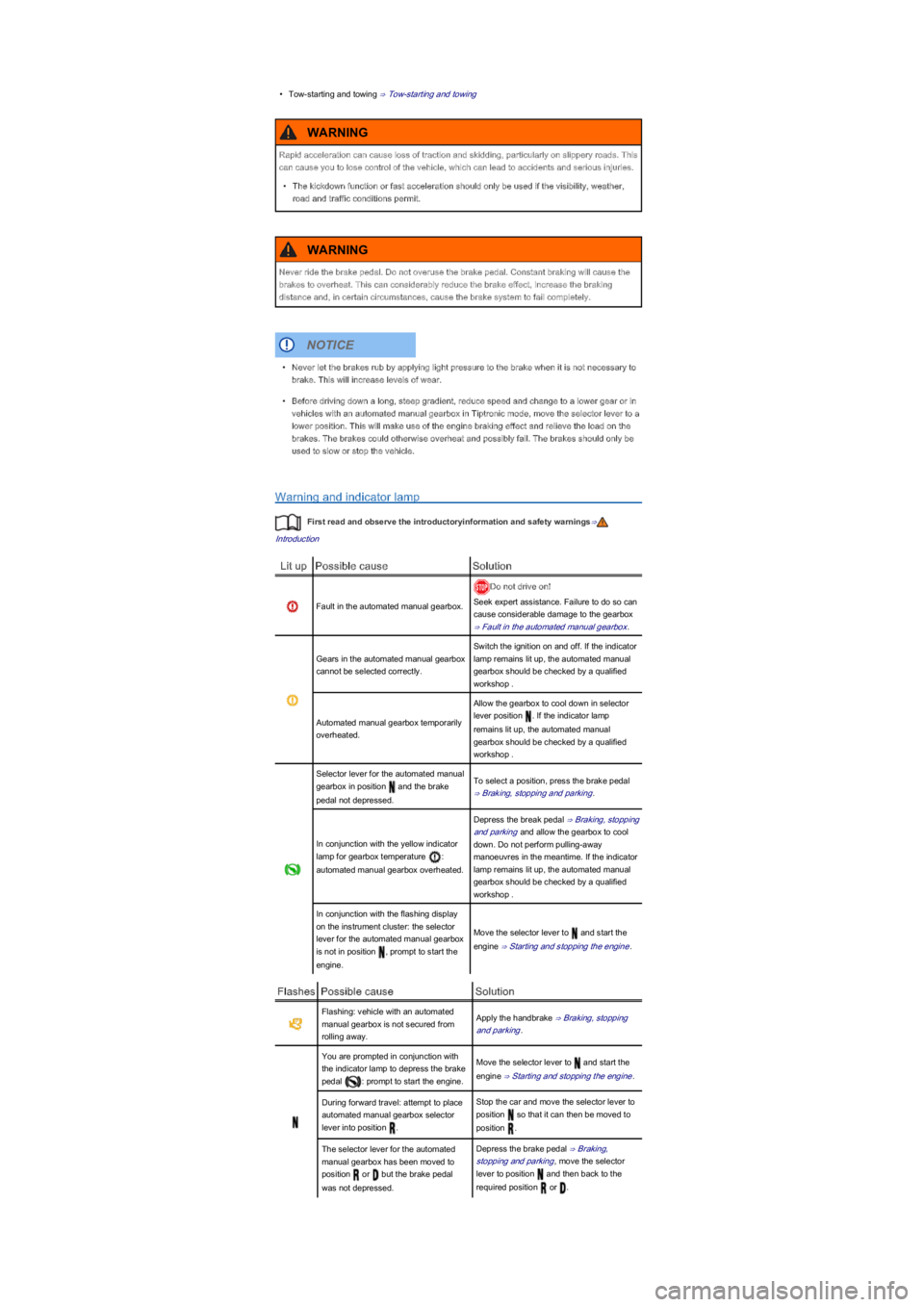
Lit upPossible causeSolution
Fault in the automated manual gearbox.
Do not drive on!
Seek expert assistance. Failure to do so can
cause considerable damage to the gearbox
⇒ Fault in the automated manual gearbox.
Gears in the automated manual gearbox
cannot be selected correctly.
Switch the ignition on and off. If the indicator
lamp remains lit up, the automated manual
gearbox should be checked by a qualified
workshop .
Automated manual gearbox temporarily
overheated.
Allow the gearbox to cool down in selector
lever position . If the indicator lamp
remains lit up, the automated manual
gearbox should be checked by a qualified
workshop .
Selector lever for the automated manual
gearbox in position and the brake
pedal not depressed.
To select a position, press the brake pedal
⇒ Braking, stopping and parking.
In conjunction with the yellow indicator
lamp for gearbox temperature :
automated manual gearbox overheated.
Depress the break pedal ⇒ Braking, stopping
and parking and allow the gearbox to cool
down. Do not perform pulling-away
manoeuvres in the meantime. If the indicator
lamp remains lit up, the automated manual
gearbox should be checked by a qualified
workshop .
In conjunction with the flashing display
on the instrument cluster: the selector
lever for the automated manual gearbox
is not in position , prompt to start the
engine.
Move the selector lever to and start the
engine ⇒ Starting and stopping the engine.
FlashesPossible causeSolution
Flashing: vehicle with an automated
manual gearbox is not secured from
rolling away.
Apply the handbrake ⇒ Braking, stopping
and parking.
You are prompted in conjunction with
the indicator lamp to depress the brake
pedal : prompt to start the engine.
Move the selector lever to and start the
engine ⇒ Starting and stopping the engine.
During forward travel: attempt to place
automated manual gearbox selector
lever into position .
Stop the car and move the selector lever to
position so that it can then be moved to
position .
The selector lever for the automated
manual gearbox has been moved to
position or but the brake pedal
was not depressed.
Depress the brake pedal ⇒ Braking,
stopping and parking, move the selector
lever to position and then back to the
required position or .
Rapid acceleration can cause loss of traction and skidding, particularly on slippery roads. This
can cause you to lose control of the vehicle, which can lead to accidents and serious injuries.
•The kickdown function or fast acceleration should only be used if the visibility, weather,
road and traffic conditions permit.
WARNING
Never ride the brake pedal. Do not overuse the brake pedal. Constant braking will cause the
brakes to overheat. This can considerably reduce the brake effect, increase the braking
distance and, in certain circumstances, cause the brake system to fail completely.
WARNING
•Never let the brakes rub by applying light pressure to the brake when it is not necessary to
brake. This will increase levels of wear.
•Before driving down a long, steep gradient, reduce speed and change to a lower gear or in
vehicles with an automated manual gearbox in Tiptronic mode, move the selector lever to a
lower position. This will make use of the engine braking effect and relieve the load on the
brakes. The brakes could otherwise overheat and possibly fail. The brakes should only be
used to slow or stop the vehicle.
NOTICE
Page 94 of 211
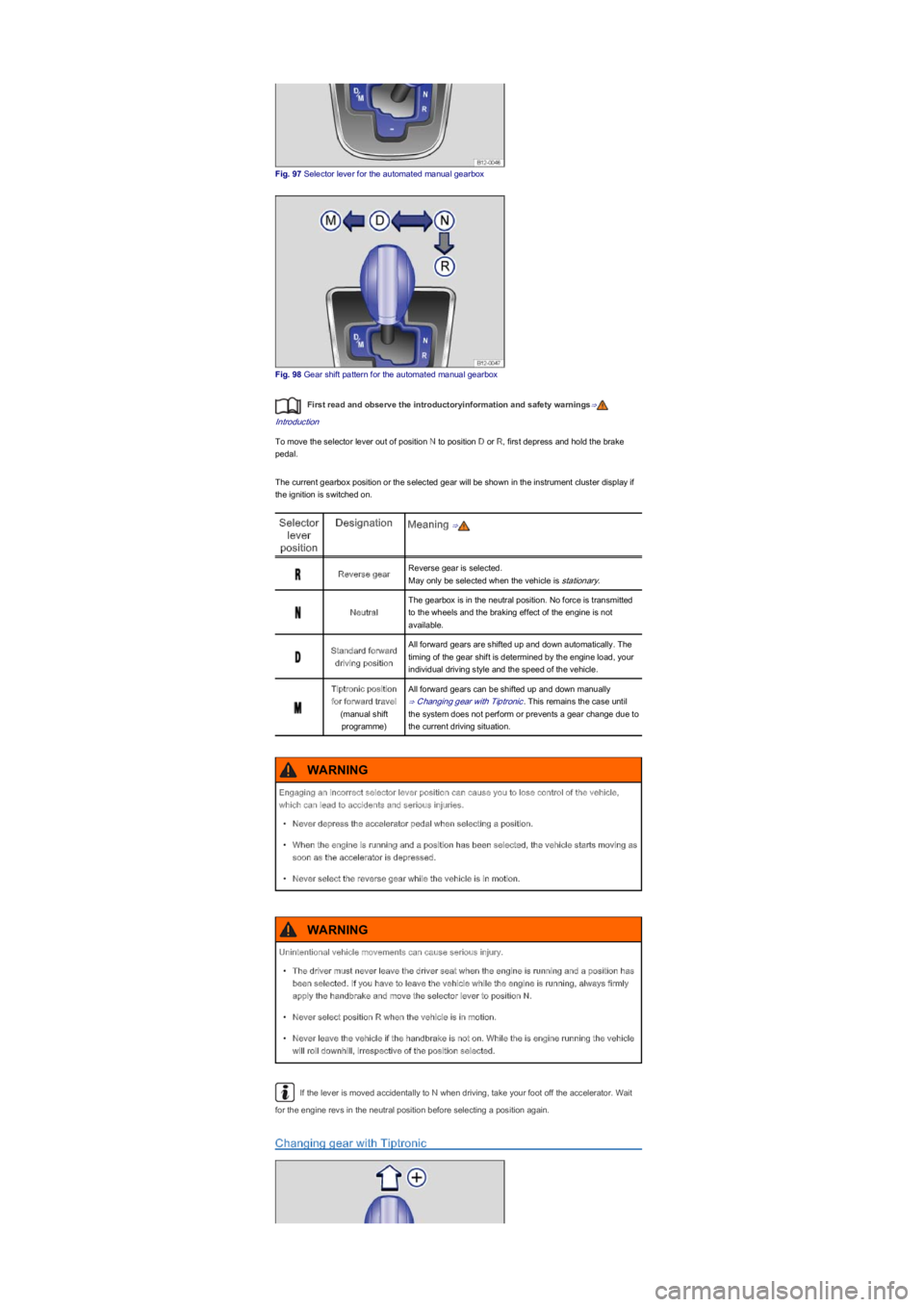
Fig. 97 Selector lever for the automated manual gearbox
Fig. 98 Gear shift pattern for the automated manual gearbox
First read and observe the introductoryinformation and safety warnings⇒
Introduction
To move the selector lever out of position N to position D or R, first depress and hold the brake
pedal.
The current gearbox position or the selected gear will be shown in the instrument cluster display if
the ignition is switched on.
Selector
lever
position
DesignationMeaning ⇒
Reverse gearReverse gear is selected.
May only be selected when the vehicle is stationary.
Neutral
The gearbox is in the neutral position. No force is transmitted
to the wheels and the braking effect of the engine is not
available.
Standard forward
driving position
All forward gears are shifted up and down automatically. The
timing of the gear shift is determined by the engine load, your
individual driving style and the speed of the vehicle.
Tiptronic position
for forward travel
(manual shift
programme)
All forward gears can be shifted up and down manually
⇒ Changing gear with Tiptronic. This remains the case until
the system does not perform or prevents a gear change due to
the current driving situation.
If the lever is moved accidentally to N when driving, take your foot off the accelerator. Wait
for the engine revs in the neutral position before selecting a position again.
Changing gear with Tiptronic
Engaging an incorrect selector lever position can cause you to lose control of the vehicle,
which can lead to accidents and serious injuries.
•Never depress the accelerator pedal when selecting a position.
•When the engine is running and a position has been selected, the vehicle starts moving as
soon as the accelerator is depressed.
•Never select the reverse gear while the vehicle is in motion.
WARNING
Unintentional vehicle movements can cause serious injury.
•The driver must never leave the driver seat when the engine is running and a position has
been selected. If you have to leave the vehicle while the engine is running, always firmly
apply the handbrake and move the selector lever to position N.
•Never select position R when the vehicle is in motion.
•Never leave the vehicle if the handbrake is not on. While the is engine running the vehicle
will roll downhill, irrespective of the position selected.
WARNING
Page 96 of 211
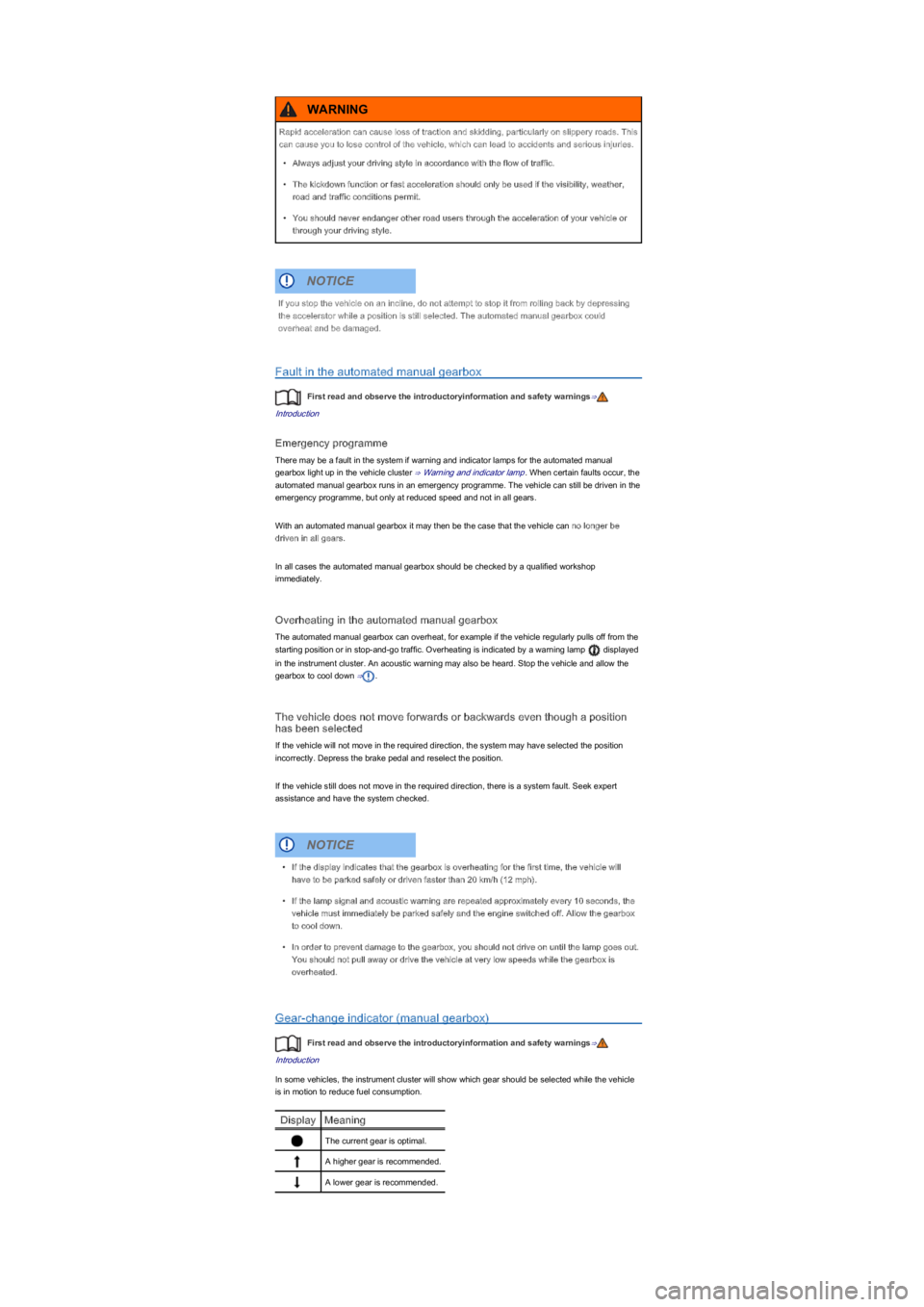
Fault in the automated manual gearbox
First read and observe the introductoryinformation and safety warnings⇒
Introduction
Emergency programme
There may be a fault in the system if warning and indicator lamps for the automated manual
gearbox light up in the vehicle cluster ⇒ Warning and indicator lamp. When certain faults occur, the
automated manual gearbox runs in an emergency programme. The vehicle can still be driven in the
emergency programme, but only at reduced speed and not in all gears.
With an automated manual gearbox it may then be the case that the vehicle can no longer be
driven in all gears.
In all cases the automated manual gearbox should be checked by a qualified workshop
immediately.
Overheating in the automated manual gearbox
The automated manual gearbox can overheat, for example if the vehicle regularly pulls off from the
starting position or in stop-and-go traffic. Overheating is indicated by a warning lamp displayed
in the instrument cluster. An acoustic warning may also be heard. Stop the vehicle and allow the
gearbox to cool down ⇒.
The vehicle does not move forwards or backwards even though a position
has been selected
If the vehicle will not move in the required direction, the system may have selected the position
incorrectly. Depress the brake pedal and reselect the position.
If the vehicle still does not move in the required direction, there is a system fault. Seek expert
assistance and have the system checked.
Gear-change indicator (manual gearbox)
First read and observe the introductoryinformation and safety warnings⇒
Introduction
In some vehicles, the instrument cluster will show which gear should be selected while the vehicle
is in motion to reduce fuel consumption.
DisplayMeaning
The current gear is optimal.
A higher gear is recommended.
A lower gear is recommended.
Rapid acceleration can cause loss of traction and skidding, particularly on slippery roads. This
can cause you to lose control of the vehicle, which can lead to accidents and serious injuries.
•Always adjust your driving style in accordance with the flow of traffic.
•The kickdown function or fast acceleration should only be used if the visibility, weather,
road and traffic conditions permit.
•You should never endanger other road users through the acceleration of your vehicle or
through your driving style.
WARNING
If you stop the vehicle on an incline, do not attempt to stop it from rolling back by depressing
the accelerator while a position is still selected. The automated manual gearbox could
overheat and be damaged.
NOTICE
•If the display indicates that the gearbox is overheating for the first time, the vehicle will
have to be parked safely or driven faster than 20 km/h (12 mph).
•If the lamp signal and acoustic warning are repeated approximately every 10 seconds, the
vehicle must immediately be parked safely and the engine switched off. Allow the gearbox
to cool down.
•In order to prevent damage to the gearbox, you should not drive on until the lamp goes out.
You should not pull away or drive the vehicle at very low speeds while the gearbox is
overheated.
NOTICE
Page 97 of 211
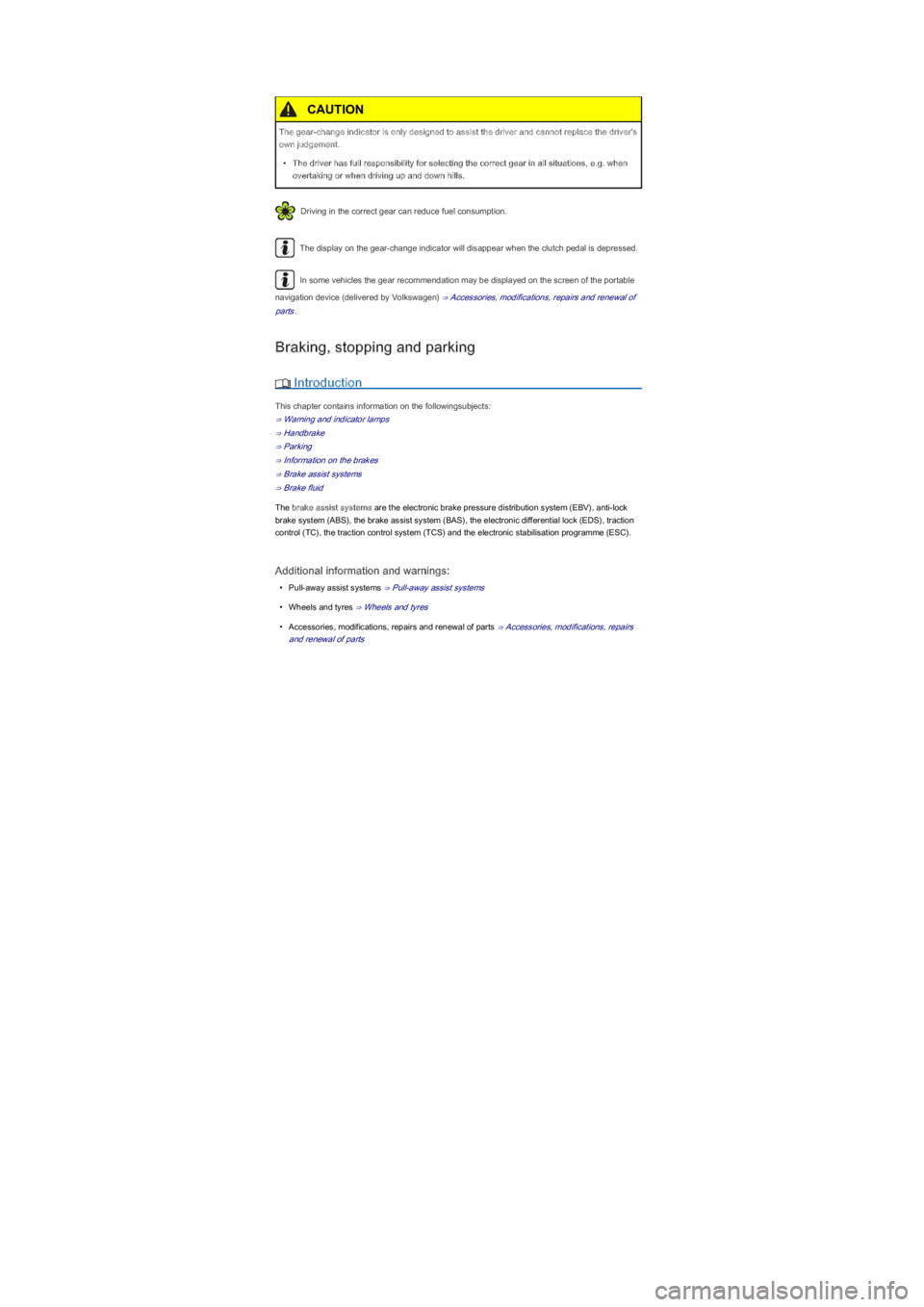
Driving in the correct gear can reduce fuel consumption.
The display on the gear-change indicator will disappear when the clutch pedal is depressed.
In some vehicles the gear recommendation may be displayed on the screen of the portable
navigation device (delivered by Volkswagen) ⇒ Accessories, modifications, repairs and renewal of
parts.
Braking, stopping and parking
Introduction
This chapter contains information on the followingsubjects:
⇒ Warning and indicator lamps
⇒ Handbrake
⇒ Parking
⇒ Information on the brakes
⇒ Brake assist systems
⇒ Brake fluid
The brake assist systems are the electronic brake pressure distribution system (EBV), anti-lock
brake system (ABS), the brake assist system (BAS), the electronic differential lock (EDS), traction
control (TC), the traction control system (TCS) and the electronic stabilisation programme (ESC).
Additional information and warnings:
•Pull-away assist systems ⇒ Pull-away assist systems
•Wheels and tyres ⇒ Wheels and tyres
•Accessories, modifications, repairs and renewal of parts ⇒ Accessories, modifications, repairs
and renewal of parts
The gear-change indicator is only designed to assist the driver and cannot replace the driver's
own judgement.
•The driver has full responsibility for selecting the correct gear in all situations, e.g. when
overtaking or when driving up and down hills.
CAUTION