lock VOLKSWAGEN UP! 2021 Owner´s Manual
[x] Cancel search | Manufacturer: VOLKSWAGEN, Model Year: 2021, Model line: UP!, Model: VOLKSWAGEN UP! 2021Pages: 211, PDF Size: 5.98 MB
Page 25 of 211
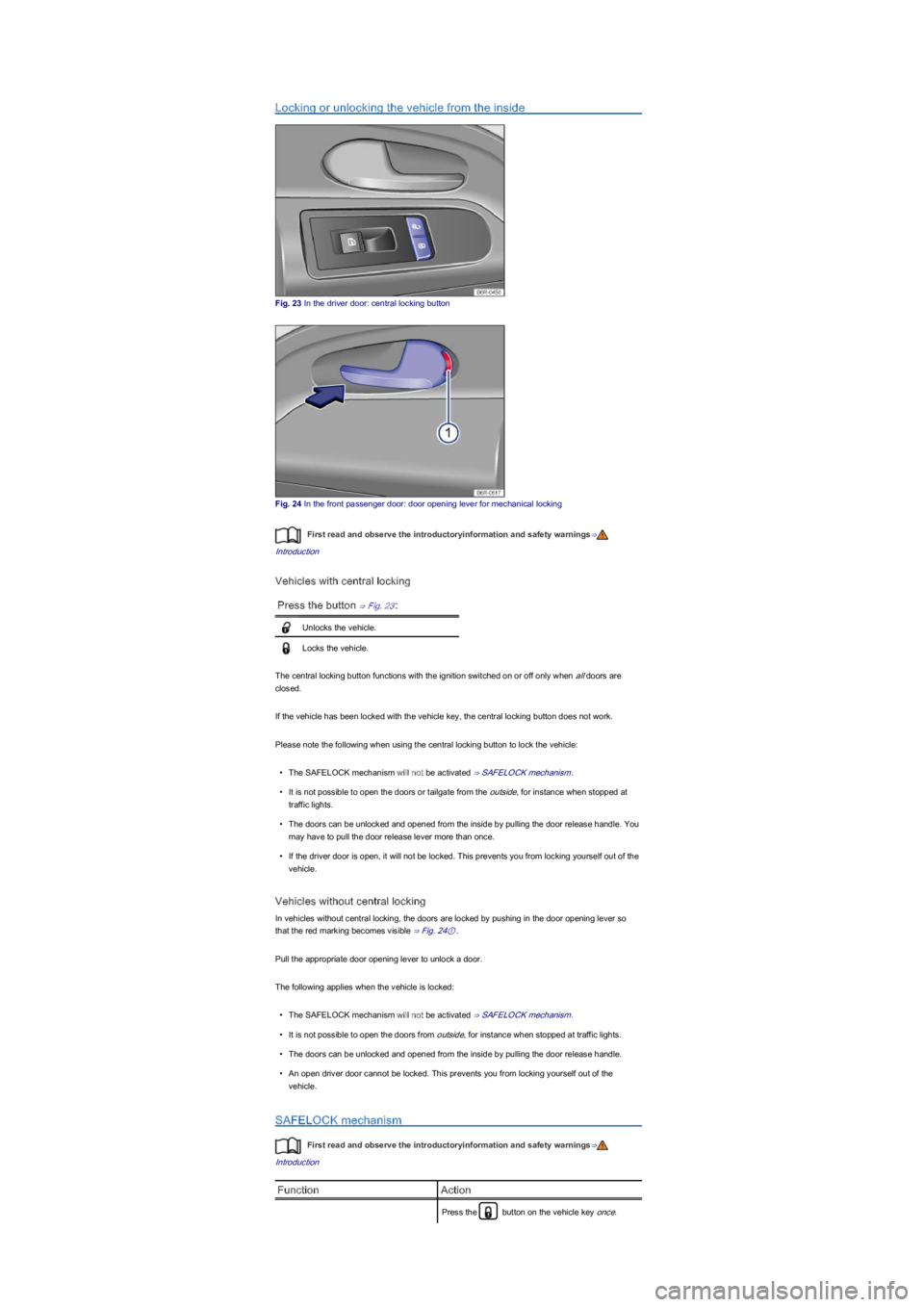
Locking or unlocking the vehicle from the inside
Fig. 23 In the driver door: central locking button
Fig. 24 In the front passenger door: door opening lever for mechanical locking
First read and observe the introductoryinformation and safety warnings⇒
Introduction
Vehicles with central locking
Press the button ⇒ Fig. 23:
Unlocks the vehicle.
Locks the vehicle.
The central locking button functions with the ignition switched on or off only when all doors are
closed.
If the vehicle has been locked with the vehicle key, the central locking button does not work.
Please note the following when using the central locking button to lock the vehicle:
•The SAFELOCK mechanism will not be activated ⇒ SAFELOCK mechanism.
•It is not possible to open the doors or tailgate from the outside, for instance when stopped at
traffic lights.
•The doors can be unlocked and opened from the inside by pulling the door release handle. You
may have to pull the door release lever more than once.
•If the driver door is open, it will not be locked. This prevents you from locking yourself out of the
vehicle.
Vehicles without central locking
In vehicles without central locking, the doors are locked by pushing in the door opening lever so
that the red marking becomes visible ⇒ Fig. 24①.
Pull the appropriate door opening lever to unlock a door.
The following applies when the vehicle is locked:
•The SAFELOCK mechanism will not be activated ⇒ SAFELOCK mechanism.
•It is not possible to open the doors from outside, for instance when stopped at traffic lights.
•The doors can be unlocked and opened from the inside by pulling the door release handle.
•An open driver door cannot be locked. This prevents you from locking yourself out of the
vehicle.
SAFELOCK mechanism
First read and observe the introductoryinformation and safety warnings⇒
Introduction
FunctionAction
Press the button on the vehicle key once.
Page 26 of 211
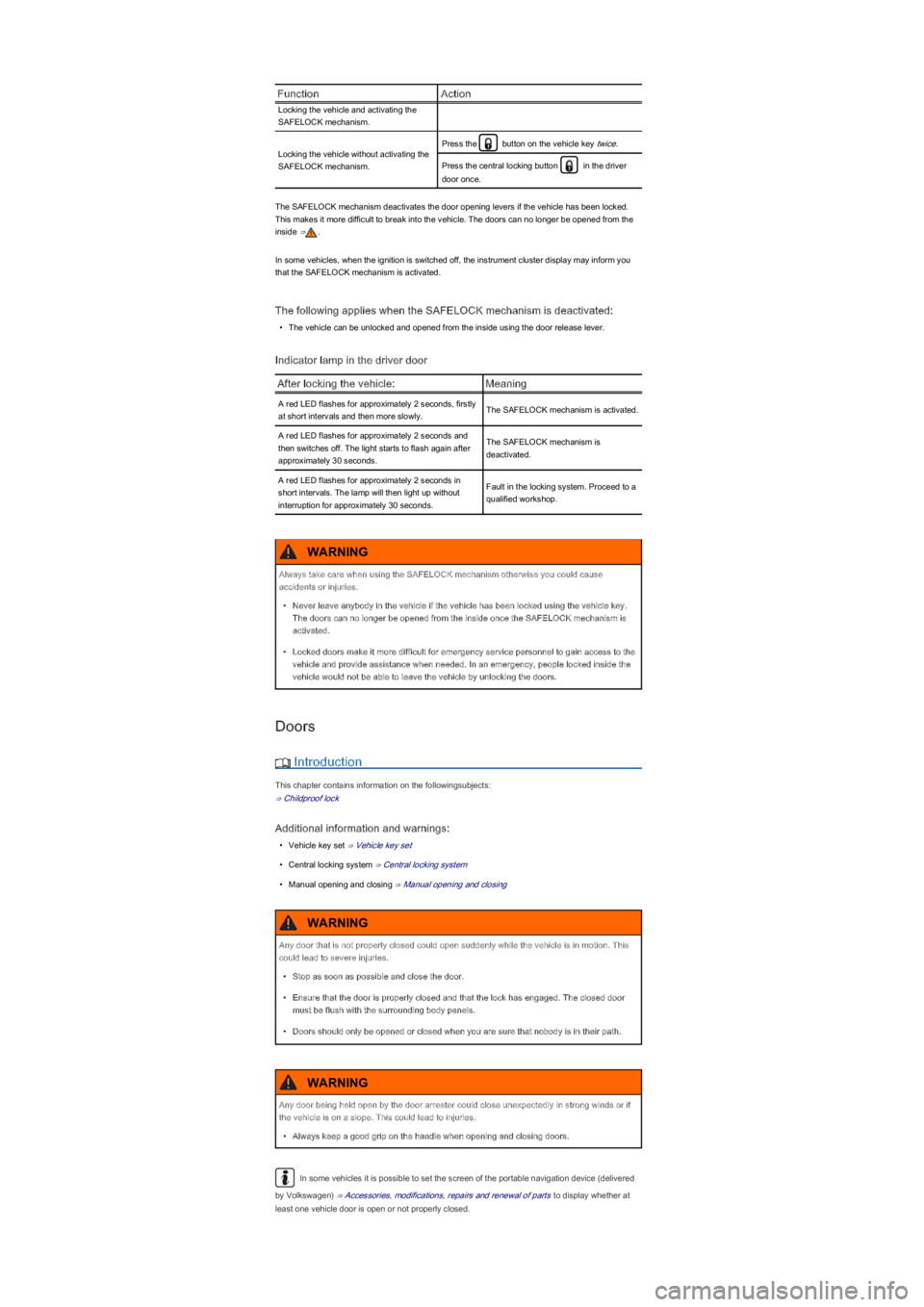
FunctionAction
Locking the vehicle and activating the
SAFELOCK mechanism.
Locking the vehicle without activating the
SAFELOCK mechanism.
Press the button on the vehicle key twice.
Press the central locking button in the driver
door once.
The SAFELOCK mechanism deactivates the door opening levers if the vehicle has been locked.
This makes it more difficult to break into the vehicle. The doors can no longer be opened from the
inside ⇒.
In some vehicles, when the ignition is switched off, the instrument cluster display may inform you
that the SAFELOCK mechanism is activated.
The following applies when the SAFELOCK mechanism is deactivated:
•The vehicle can be unlocked and opened from the inside using the door release lever.
Indicator lamp in the driver door
After locking the vehicle:Meaning
A red LED flashes for approximately 2 seconds, firstly
at short intervals and then more slowly.The SAFELOCK mechanism is activated.
A red LED flashes for approximately 2 seconds and
then switches off. The light starts to flash again after
approximately 30 seconds.
The SAFELOCK mechanism is
deactivated.
A red LED flashes for approximately 2 seconds in
short intervals. The lamp will then light up without
interruption for approximately 30 seconds.
Fault in the locking system. Proceed to a
qualified workshop.
Doors
Introduction
This chapter contains information on the followingsubjects:
⇒ Childproof lock
Additional information and warnings:
•Vehicle key set ⇒ Vehicle key set
•Central locking system ⇒ Central locking system
•Manual opening and closing ⇒ Manual opening and closing
In some vehicles it is possible to set the screen of the portable navigation device (delivered
by Volkswagen) ⇒ Accessories, modifications, repairs and renewal of parts to display whether at
least one vehicle door is open or not properly closed.
Always take care when using the SAFELOCK mechanism otherwise you could cause
accidents or injuries.
•Never leave anybody in the vehicle if the vehicle has been locked using the vehicle key.
The doors can no longer be opened from the inside once the SAFELOCK mechanism is
activated.
•Locked doors make it more difficult for emergency service personnel to gain access to the
vehicle and provide assistance when needed. In an emergency, people locked inside the
vehicle would not be able to leave the vehicle by unlocking the doors.
WARNING
Any door that is not properly closed could open suddenly while the vehicle is in motion. This
could lead to severe injuries.
•Stop as soon as possible and close the door.
•Ensure that the door is properly closed and that the lock has engaged. The closed door
must be flush with the surrounding body panels.
•Doors should only be opened or closed when you are sure that nobody is in their path.
WARNING
Any door being held open by the door arrester could close unexpectedly in strong winds or if
the vehicle is on a slope. This could lead to injuries.
•Always keep a good grip on the handle when opening and closing doors.
WARNING
Page 27 of 211
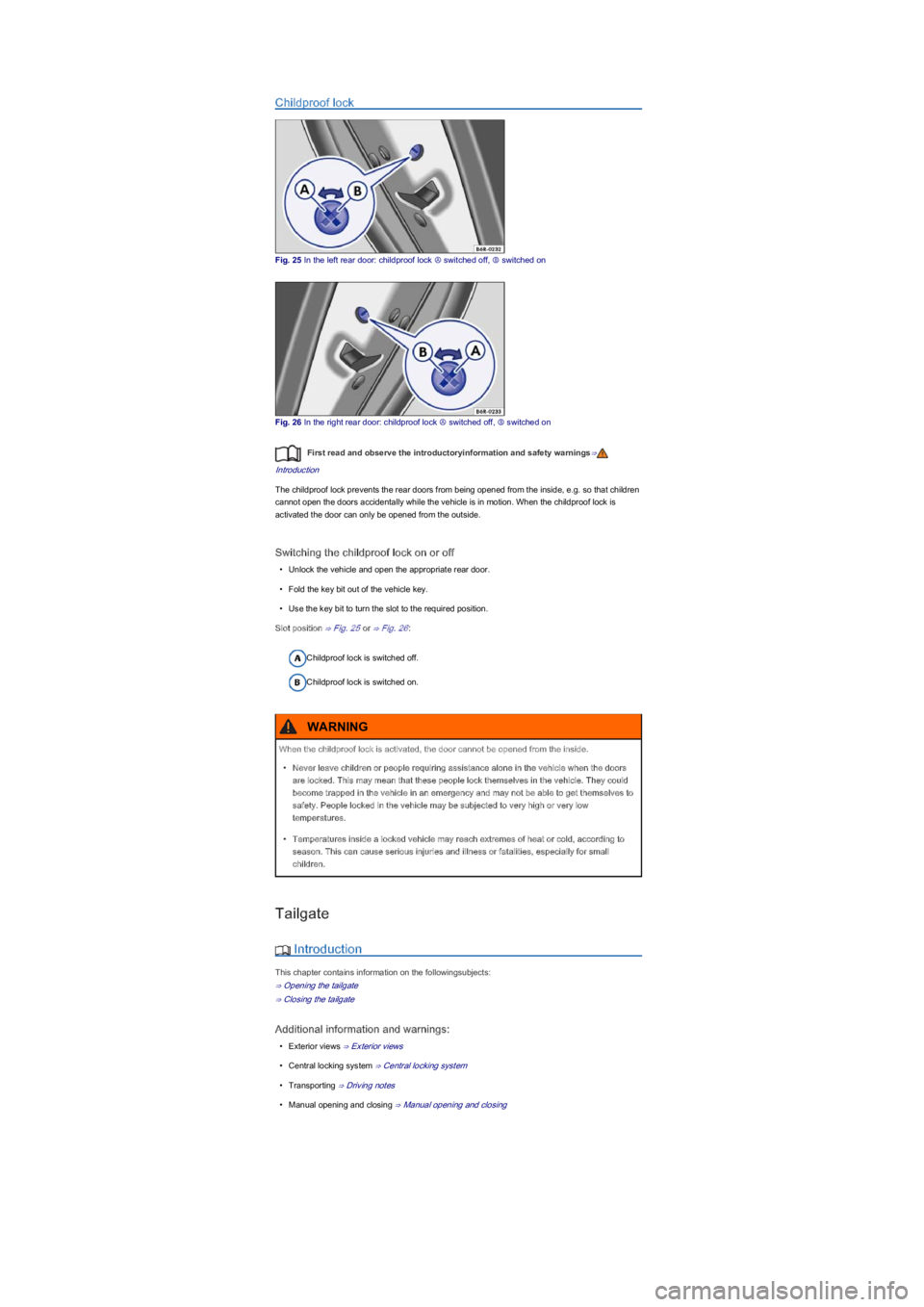
Childproof lock
Fig. 25 In the left rear door: childproof lock Ⓐ switched off, Ⓑ switched on
Fig. 26 In the right rear door: childproof lock Ⓐ switched off, Ⓑ switched on
First read and observe the introductoryinformation and safety warnings⇒
Introduction
The childproof lock prevents the rear doors from being opened from the inside, e.g. so that children
cannot open the doors accidentally while the vehicle is in motion. When the childproof lock is
activated the door can only be opened from the outside.
Switching the childproof lock on or off
•Unlock the vehicle and open the appropriate rear door.
•Fold the key bit out of the vehicle key.
•Use the key bit to turn the slot to the required position.
Slot position ⇒ Fig. 25 or ⇒ Fig. 26:
Childproof lock is switched off.
Childproof lock is switched on.
Tailgate
Introduction
This chapter contains information on the followingsubjects:
⇒ Opening the tailgate
⇒ Closing the tailgate
Additional information and warnings:
•Exterior views ⇒ Exterior views
•Central locking system ⇒ Central locking system
•Transporting ⇒ Driving notes
•Manual opening and closing ⇒ Manual opening and closing
When the childproof lock is activated, the door cannot be opened from the inside.
•Never leave children or people requiring assistance alone in the vehicle when the doors
are locked. This may mean that these people lock themselves in the vehicle. They could
become trapped in the vehicle in an emergency and may not be able to get themselves to
safety. People locked in the vehicle may be subjected to very high or very low
temperatures.
•Temperatures inside a locked vehicle may reach extremes of heat or cold, according to
season. This can cause serious injuries and illness or fatalities, especially for small
children.
WARNING
Page 28 of 211
In some vehicles it is possible to set the screen of the portable navigation device (delivered
by Volkswagen) ⇒ Accessories, modifications, repairs and renewal of parts to display whether the
tailgate is open or not properly closed.
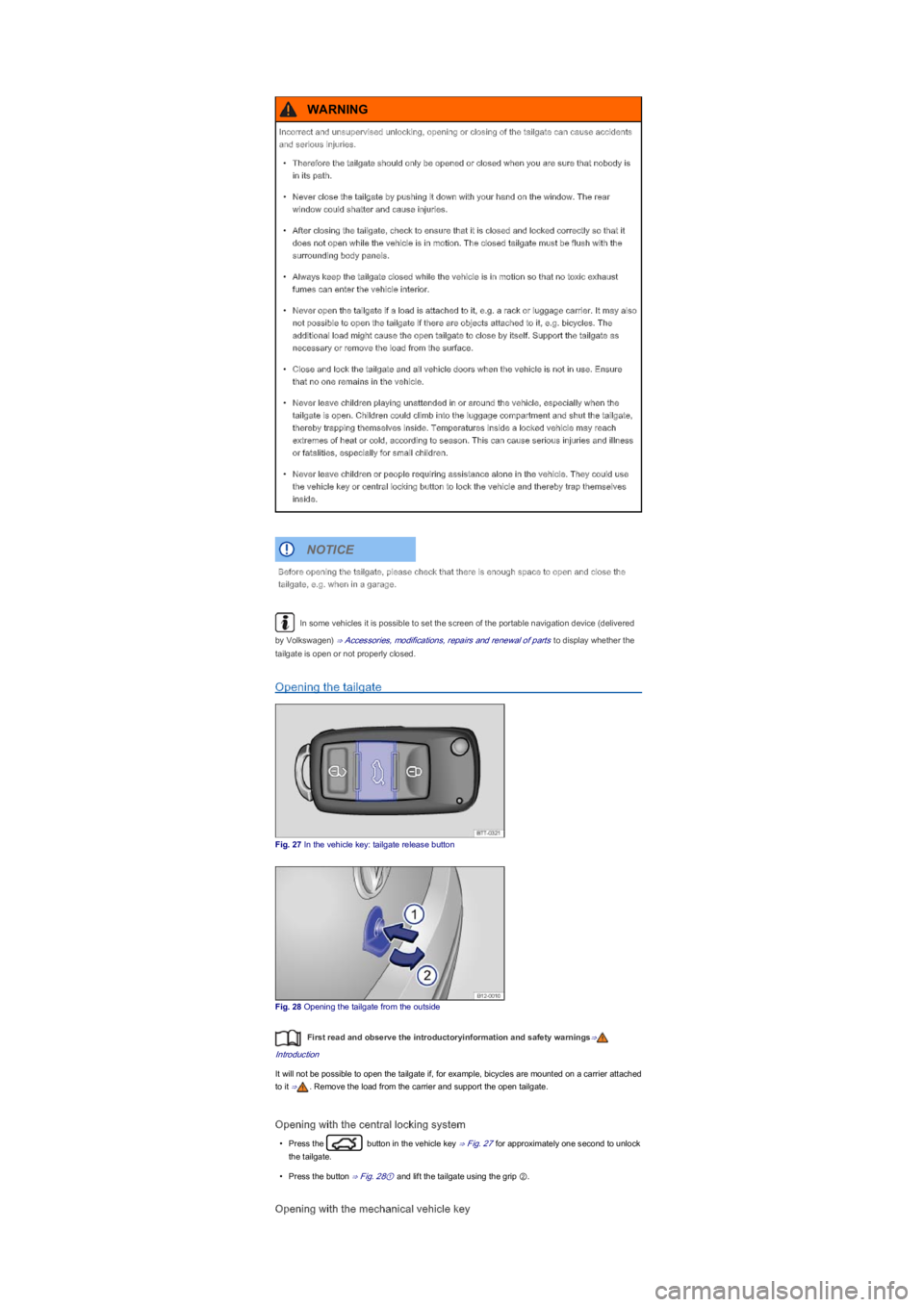
Opening the tailgate
Fig. 27 In the vehicle key: tailgate release button
Fig. 28 Opening the tailgate from the outside
First read and observe the introductoryinformation and safety warnings⇒
Introduction
It will not be possible to open the tailgate if, for example, bicycles are mounted on a carrier attached
to it ⇒. Remove the load from the carrier and support the open tailgate.
Opening with the central locking system
•Press the button in the vehicle key ⇒ Fig. 27 for approximately one second to unlock
the tailgate.
•Press the button ⇒ Fig. 28① and lift the tailgate using the grip ②.
Opening with the mechanical vehicle key
Incorrect and unsupervised unlocking, opening or closing of the tailgate can cause accidents
and serious injuries.
•Therefore the tailgate should only be opened or closed when you are sure that nobody is
in its path.
•Never close the tailgate by pushing it down with your hand on the window. The rear
window could shatter and cause injuries.
•After closing the tailgate, check to ensure that it is closed and locked correctly so that it
does not open while the vehicle is in motion. The closed tailgate must be flush with the
surrounding body panels.
•Always keep the tailgate closed while the vehicle is in motion so that no toxic exhaust
fumes can enter the vehicle interior.
•Never open the tailgate if a load is attached to it, e.g. a rack or luggage carrier. It may also
not possible to open the tailgate if there are objects attached to it, e.g. bicycles. The
additional load might cause the open tailgate to close by itself. Support the tailgate as
necessary or remove the load from the surface.
•Close and lock the tailgate and all vehicle doors when the vehicle is not in use. Ensure
that no one remains in the vehicle.
•Never leave children playing unattended in or around the vehicle, especially when the
tailgate is open. Children could climb into the luggage compartment and shut the tailgate,
thereby trapping themselves inside. Temperatures inside a locked vehicle may reach
extremes of heat or cold, according to season. This can cause serious injuries and illness
or fatalities, especially for small children.
•Never leave children or people requiring assistance alone in the vehicle. They could use
the vehicle key or central locking button to lock the vehicle and thereby trap themselves
inside.
WARNING
Before opening the tailgate, please check that there is enough space to open and close the
tailgate, e.g. when in a garage.
NOTICE
Page 29 of 211
•Unlock the vehicle or the driver door ⇒ Central locking system.
•Press the button ⇒ Fig. 28① and lift the tailgate using the grip ②.
At outside temperatures of less than 0°C (+32°F), the gas-filled struts cannot always lift the
opened tailgate automatically. The tailgate then has to be guided up by hand.
Closing the tailgate
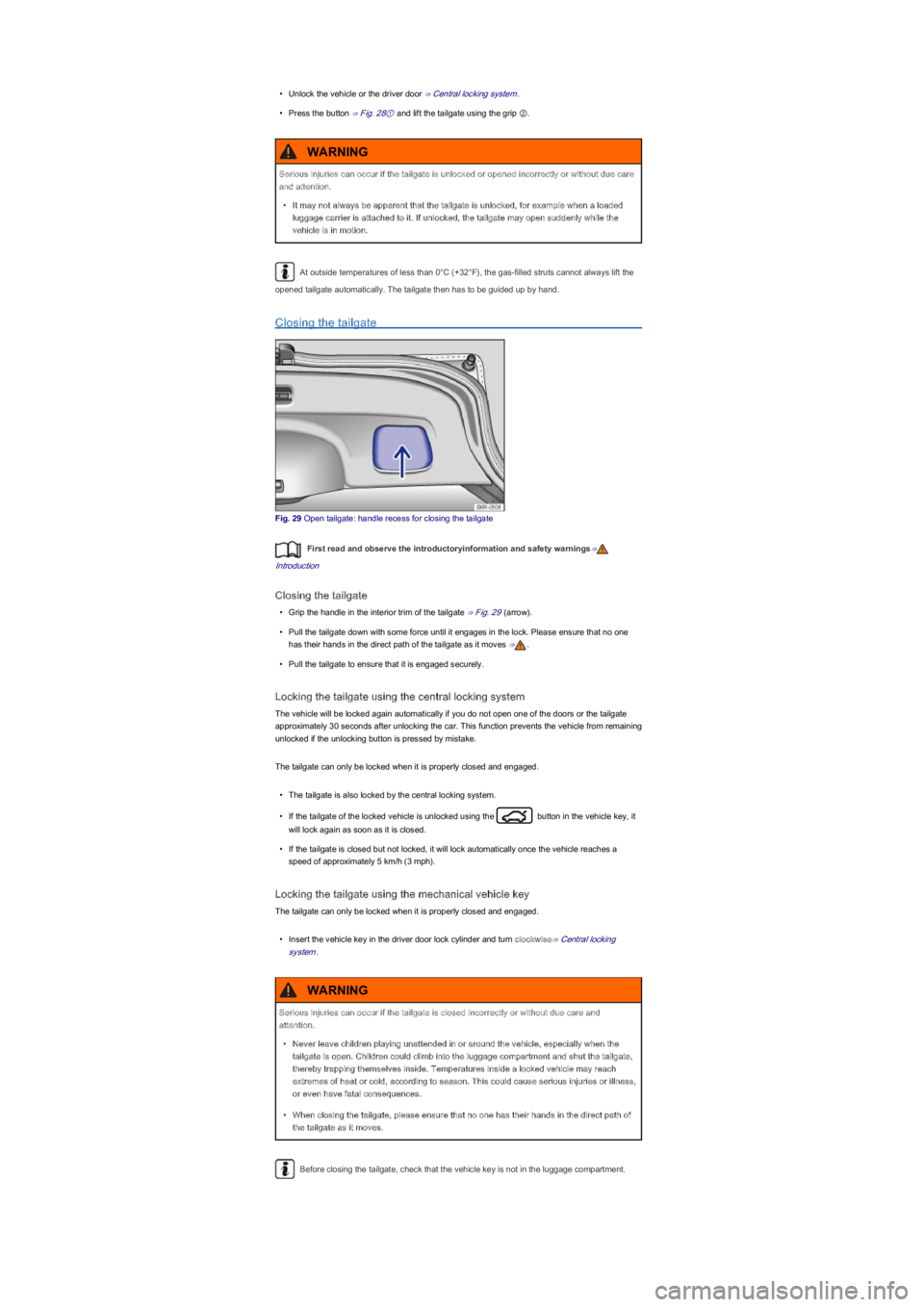
Fig. 29 Open tailgate: handle recess for closing the tailgate
First read and observe the introductoryinformation and safety warnings⇒
Introduction
Closing the tailgate
•Grip the handle in the interior trim of the tailgate ⇒ Fig. 29 (arrow).
•Pull the tailgate down with some force until it engages in the lock. Please ensure that no one
has their hands in the direct path of the tailgate as it moves ⇒.
•Pull the tailgate to ensure that it is engaged securely.
Locking the tailgate using the central locking system
The vehicle will be locked again automatically if you do not open one of the doors or the tailgate
approximately 30 seconds after unlocking the car. This function prevents the vehicle from remaining
unlocked if the unlocking button is pressed by mistake.
The tailgate can only be locked when it is properly closed and engaged.
•The tailgate is also locked by the central locking system.
•If the tailgate of the locked vehicle is unlocked using the button in the vehicle key, it
will lock again as soon as it is closed.
•If the tailgate is closed but not locked, it will lock automatically once the vehicle reaches a
speed of approximately 5 km/h (3 mph).
Locking the tailgate using the mechanical vehicle key
The tailgate can only be locked when it is properly closed and engaged.
•Insert the vehicle key in the driver door lock cylinder and turn clockwise⇒ Central locking
system.
Before closing the tailgate, check that the vehicle key is not in the luggage compartment.
Serious injuries can occur if the tailgate is unlocked or opened incorrectly or without due care
and attention.
•It may not always be apparent that the tailgate is unlocked, for example when a loaded
luggage carrier is attached to it. If unlocked, the tailgate may open suddenly while the
vehicle is in motion.
WARNING
Serious injuries can occur if the tailgate is closed incorrectly or without due care and
attention.
•Never leave children playing unattended in or around the vehicle, especially when the
tailgate is open. Children could climb into the luggage compartment and shut the tailgate,
thereby trapping themselves inside. Temperatures inside a locked vehicle may reach
extremes of heat or cold, according to season. This could cause serious injuries or illness,
or even have fatal consequences.
•When closing the tailgate, please ensure that no one has their hands in the direct path of
the tailgate as it moves.
WARNING
Page 30 of 211
Windows
Introduction
This chapter contains information on the followingsubjects:
⇒ Opening or closing the windows electrically
⇒ Opening and closing the rear hinged windows
Additional information and warnings:
•Volkswagen information system ⇒ Volkswagen information system
•Central locking system ⇒ Central locking system
Opening or closing the windows electrically
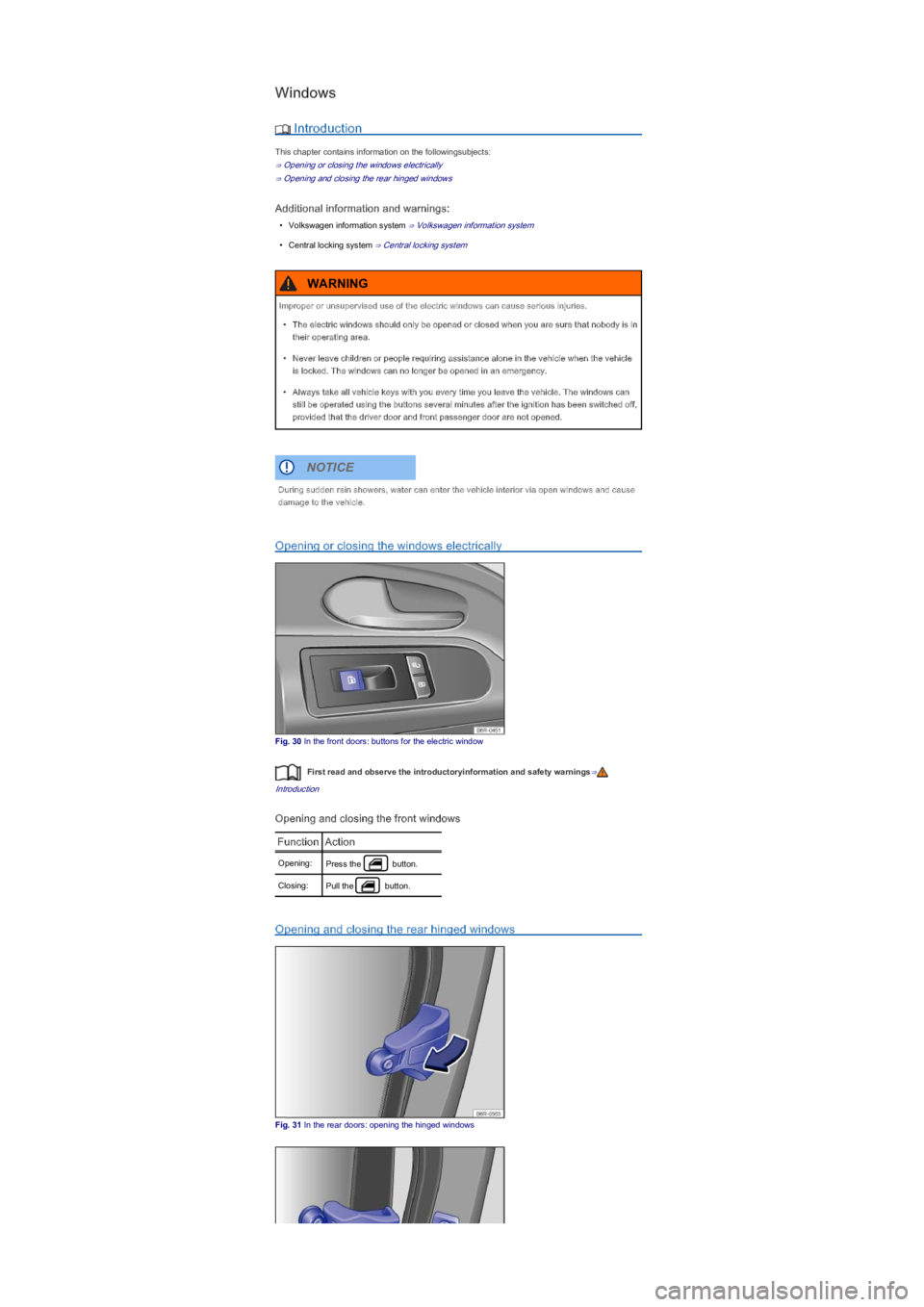
Fig. 30 In the front doors: buttons for the electric window
First read and observe the introductoryinformation and safety warnings⇒
Introduction
Opening and closing the front windows
FunctionAction
Opening:Press the button.
Closing:Pull the button.
Opening and closing the rear hinged windows
Fig. 31 In the rear doors: opening the hinged windows
Improper or unsupervised use of the electric windows can cause serious injuries.
•The electric windows should only be opened or closed when you are sure that nobody is in
their operating area.
•Never leave children or people requiring assistance alone in the vehicle when the vehicle
is locked. The windows can no longer be opened in an emergency.
•Always take all vehicle keys with you every time you leave the vehicle. The windows can
still be operated using the buttons several minutes after the ignition has been switched off,
provided that the driver door and front passenger door are not opened.
WARNING
During sudden rain showers, water can enter the vehicle interior via open windows and cause
damage to the vehicle.
NOTICE
Page 31 of 211
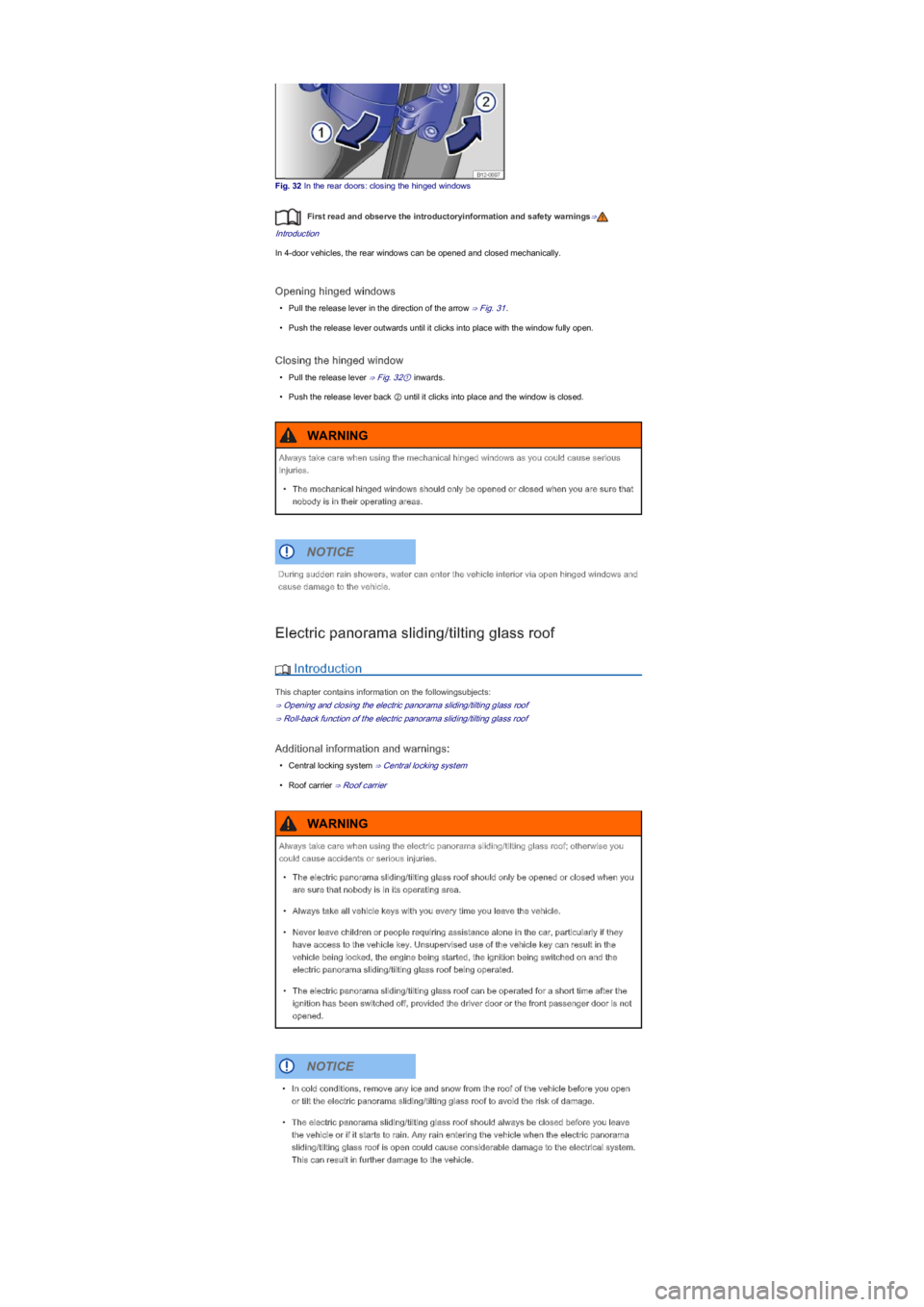
Fig. 32 In the rear doors: closing the hinged windows
First read and observe the introductoryinformation and safety warnings⇒
Introduction
In 4-door vehicles, the rear windows can be opened and closed mechanically.
Opening hinged windows
•Pull the release lever in the direction of the arrow ⇒ Fig. 31.
•Push the release lever outwards until it clicks into place with the window fully open.
Closing the hinged window
•Pull the release lever ⇒ Fig. 32① inwards.
•Push the release lever back ② until it clicks into place and the window is closed.
Electric panorama sliding/tilting glass roof
Introduction
This chapter contains information on the followingsubjects:
⇒ Opening and closing the electric panorama sliding/tilting glass roof
⇒ Roll-back function of the electric panorama sliding/tilting glass roof
Additional information and warnings:
•Central locking system ⇒ Central locking system
•Roof carrier ⇒ Roof carrier
Always take care when using the mechanical hinged windows as you could cause serious
injuries.
•The mechanical hinged windows should only be opened or closed when you are sure that
nobody is in their operating areas.
WARNING
During sudden rain showers, water can enter the vehicle interior via open hinged windows and
cause damage to the vehicle.
NOTICE
Always take care when using the electric panorama sliding/tilting glass roof; otherwise you
could cause accidents or serious injuries.
•The electric panorama sliding/tilting glass roof should only be opened or closed when you
are sure that nobody is in its operating area.
•Always take all vehicle keys with you every time you leave the vehicle.
•Never leave children or people requiring assistance alone in the car, particularly if they
have access to the vehicle key. Unsupervised use of the vehicle key can result in the
vehicle being locked, the engine being started, the ignition being switched on and the
electric panorama sliding/tilting glass roof being operated.
•The electric panorama sliding/tilting glass roof can be operated for a short time after the
ignition has been switched off, provided the driver door or the front passenger door is not
opened.
WARNING
•In cold conditions, remove any ice and snow from the roof of the vehicle before you open
or tilt the electric panorama sliding/tilting glass roof to avoid the risk of damage.
•The electric panorama sliding/tilting glass roof should always be closed before you leave
the vehicle or if it starts to rain. Any rain entering the vehicle when the electric panorama
sliding/tilting glass roof is open could cause considerable damage to the electrical system.
This can result in further damage to the vehicle.
NOTICE
Page 37 of 211
In 4-door vehicles: on the interior side of the seat only.
Adjusting the rear head restraint
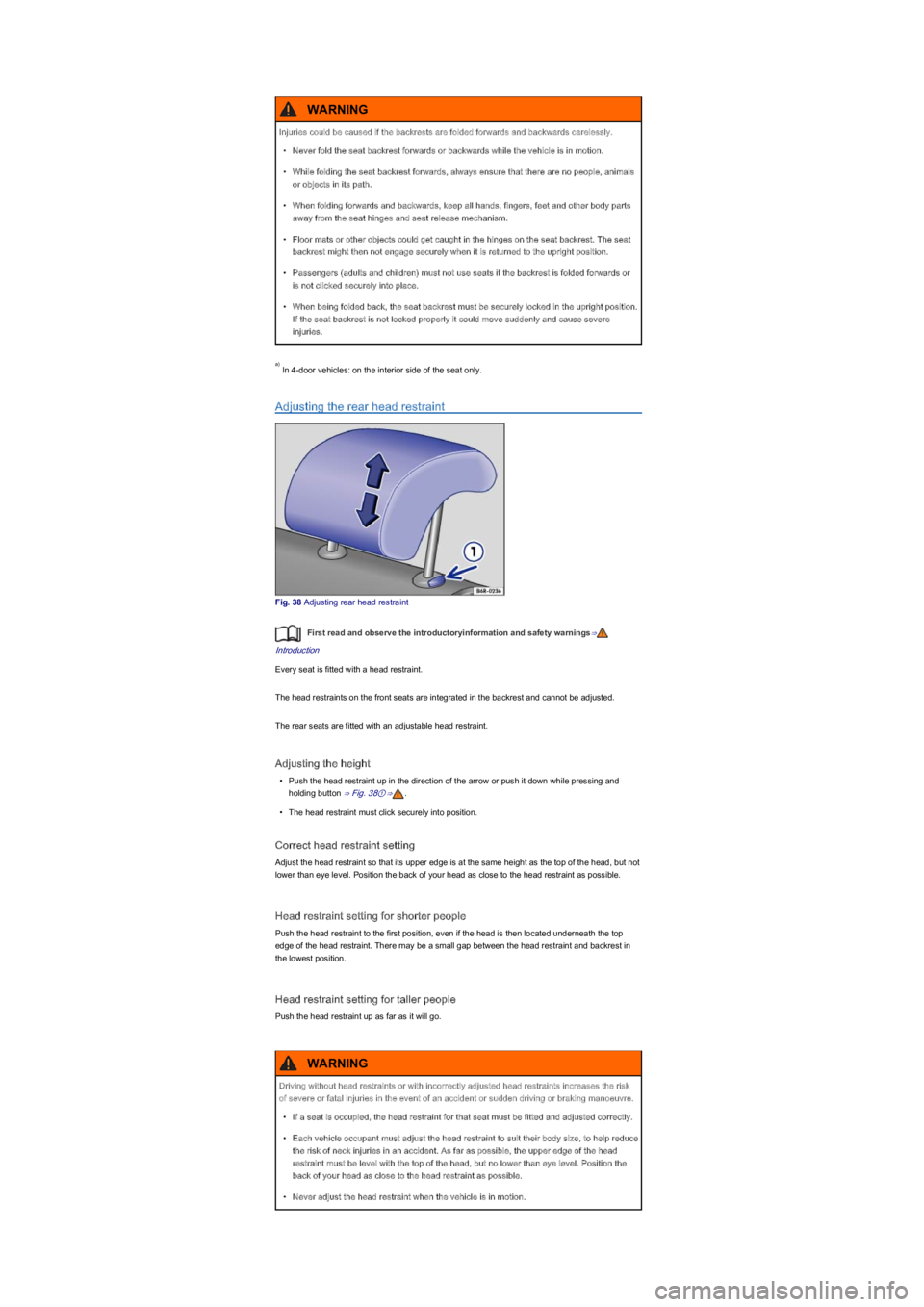
Fig. 38 Adjusting rear head restraint
First read and observe the introductoryinformation and safety warnings⇒
Introduction
Every seat is fitted with a head restraint.
The head restraints on the front seats are integrated in the backrest and cannot be adjusted.
The rear seats are fitted with an adjustable head restraint.
Adjusting the height
•Push the head restraint up in the direction of the arrow or push it down while pressing and
holding button ⇒ Fig. 38①⇒.
•The head restraint must click securely into position.
Correct head restraint setting
Adjust the head restraint so that its upper edge is at the same height as the top of the head, but not
lower than eye level. Position the back of your head as close to the head restraint as possible.
Head restraint setting for shorter people
Push the head restraint to the first position, even if the head is then located underneath the top
edge of the head restraint. There may be a small gap between the head restraint and backrest in
the lowest position.
Head restraint setting for taller people
Push the head restraint up as far as it will go.
Injuries could be caused if the backrests are folded forwards and backwards carelessly.
•Never fold the seat backrest forwards or backwards while the vehicle is in motion.
•While folding the seat backrest forwards, always ensure that there are no people, animals
or objects in its path.
•When folding forwards and backwards, keep all hands, fingers, feet and other body parts
away from the seat hinges and seat release mechanism.
•Floor mats or other objects could get caught in the hinges on the seat backrest. The seat
backrest might then not engage securely when it is returned to the upright position.
•Passengers (adults and children) must not use seats if the backrest is folded forwards or
is not clicked securely into place.
•When being folded back, the seat backrest must be securely locked in the upright position.
If the seat backrest is not locked properly it could move suddenly and cause severe
injuries.
WARNING
a)
Driving without head restraints or with incorrectly adjusted head restraints increases the risk
of severe or fatal injuries in the event of an accident or sudden driving or braking manoeuvre.
•If a seat is occupied, the head restraint for that seat must be fitted and adjusted correctly.
•Each vehicle occupant must adjust the head restraint to suit their body size, to help reduce
the risk of neck injuries in an accident. As far as possible, the upper edge of the head
restraint must be level with the top of the head, but no lower than eye level. Position the
back of your head as close to the head restraint as possible.
•Never adjust the head restraint when the vehicle is in motion.
WARNING
Page 39 of 211
•Adjust the steering wheel so that you can hold it on the outside of the ring (at the 9 o'clock and
3 o'clock positions) with both hands and slightly bent arms.
•Push the lever up firmly until it lines up with the steering column ⇒.
Adjust the correct distance between the driver and the steering wheel ⇒ Fig. 35 using the control
elements on the driver seat ⇒ Controls on the front seats.
Seat functions
Introduction
This chapter contains information on the followingsubjects:
⇒ Seat heating
Additional information and warnings:
•Adjusting the seat position ⇒ Adjusting the seat position
•Seat belts ⇒ Seat belts
•Airbag system ⇒ Airbag system
•Child seats (accessories) ⇒ Child seats (accessories)
•Exterior mirrors ⇒ Mirrors
Seat heating
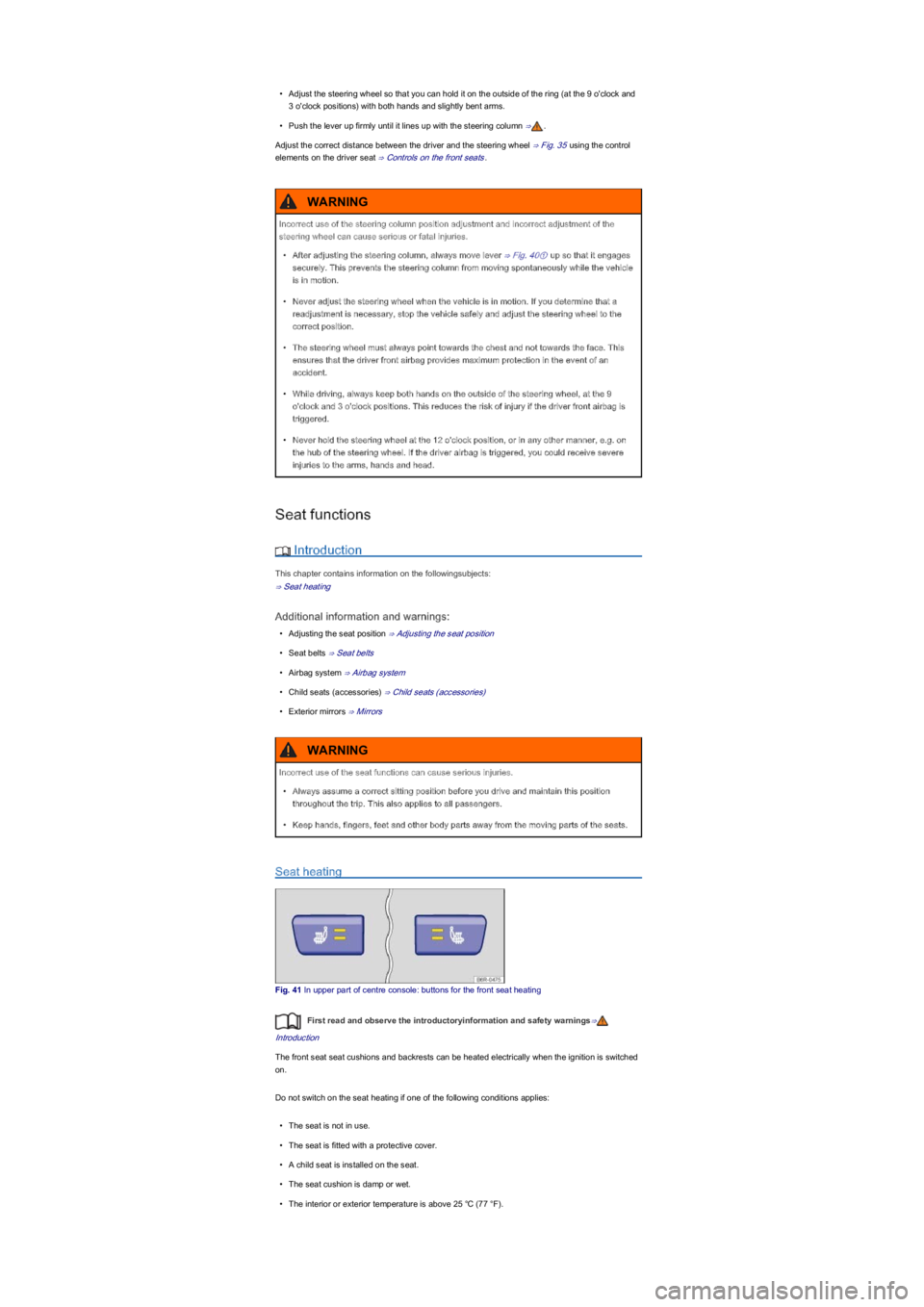
Fig. 41 In upper part of centre console: buttons for the front seat heating
First read and observe the introductoryinformation and safety warnings⇒
Introduction
The front seat seat cushions and backrests can be heated electrically when the ignition is switched
on.
Do not switch on the seat heating if one of the following conditions applies:
•The seat is not in use.
•The seat is fitted with a protective cover.
•A child seat is installed on the seat.
•The seat cushion is damp or wet.
•The interior or exterior temperature is above 25 ℃ (77 °F).
Incorrect use of the steering column position adjustment and incorrect adjustment of the
steering wheel can cause serious or fatal injuries.
•After adjusting the steering column, always move lever ⇒ Fig. 40① up so that it engages
securely. This prevents the steering column from moving spontaneously while the vehicle
is in motion.
•Never adjust the steering wheel when the vehicle is in motion. If you determine that a
readjustment is necessary, stop the vehicle safely and adjust the steering wheel to the
correct position.
•The steering wheel must always point towards the chest and not towards the face. This
ensures that the driver front airbag provides maximum protection in the event of an
accident.
•While driving, always keep both hands on the outside of the steering wheel, at the 9
o'clock and 3 o'clock positions. This reduces the risk of injury if the driver front airbag is
triggered.
•Never hold the steering wheel at the 12 o'clock position, or in any other manner, e.g. on
the hub of the steering wheel. If the driver airbag is triggered, you could receive severe
injuries to the arms, hands and head.
WARNING
Incorrect use of the seat functions can cause serious injuries.
•Always assume a correct sitting position before you drive and maintain this position
throughout the trip. This also applies to all passengers.
•Keep hands, fingers, feet and other body parts away from the moving parts of the seats.
WARNING
Page 45 of 211
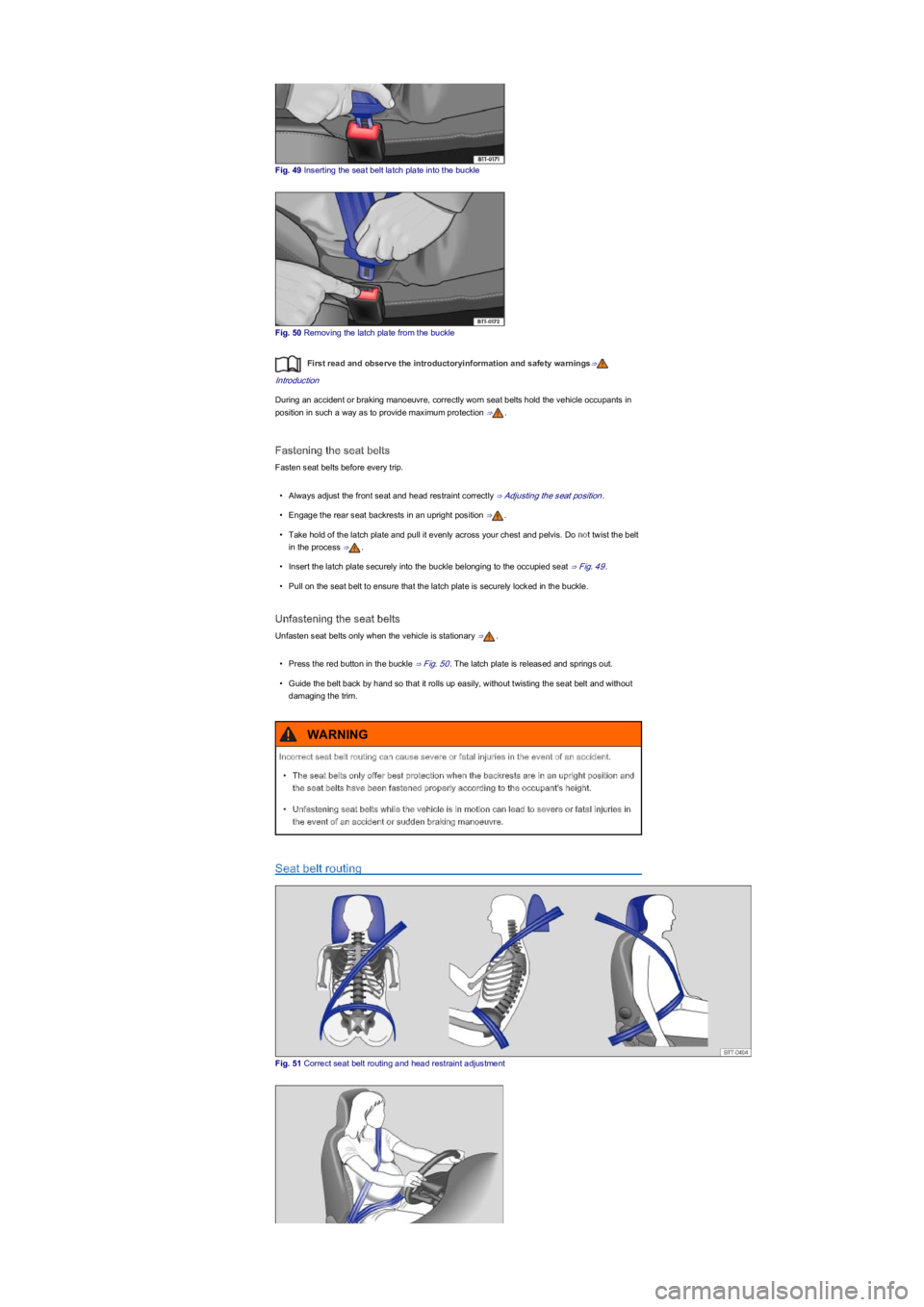
Fig. 49 Inserting the seat belt latch plate into the buckle
Fig. 50 Removing the latch plate from the buckle
First read and observe the introductoryinformation and safety warnings⇒
Introduction
During an accident or braking manoeuvre, correctly worn seat belts hold the vehicle occupants in
position in such a way as to provide maximum protection ⇒.
Fastening the seat belts
Fasten seat belts before every trip.
•Always adjust the front seat and head restraint correctly ⇒ Adjusting the seat position.
•Engage the rear seat backrests in an upright position ⇒.
•Take hold of the latch plate and pull it evenly across your chest and pelvis. Do not twist the belt
in the process ⇒.
•Insert the latch plate securely into the buckle belonging to the occupied seat ⇒ Fig. 49.
•Pull on the seat belt to ensure that the latch plate is securely locked in the buckle.
Unfastening the seat belts
Unfasten seat belts only when the vehicle is stationary ⇒.
•Press the red button in the buckle ⇒ Fig. 50. The latch plate is released and springs out.
•Guide the belt back by hand so that it rolls up easily, without twisting the seat belt and without
damaging the trim.
Seat belt routing
Fig. 51 Correct seat belt routing and head restraint adjustment
Incorrect seat belt routing can cause severe or fatal injuries in the event of an accident.
•The seat belts only offer best protection when the backrests are in an upright position and
the seat belts have been fastened properly according to the occupant's height.
•Unfastening seat belts while the vehicle is in motion can lead to severe or fatal injuries in
the event of an accident or sudden braking manoeuvre.
WARNING