lock VOLKSWAGEN UP! 2021 Owner´s Manual
[x] Cancel search | Manufacturer: VOLKSWAGEN, Model Year: 2021, Model line: UP!, Model: VOLKSWAGEN UP! 2021Pages: 211, PDF Size: 5.98 MB
Page 133 of 211
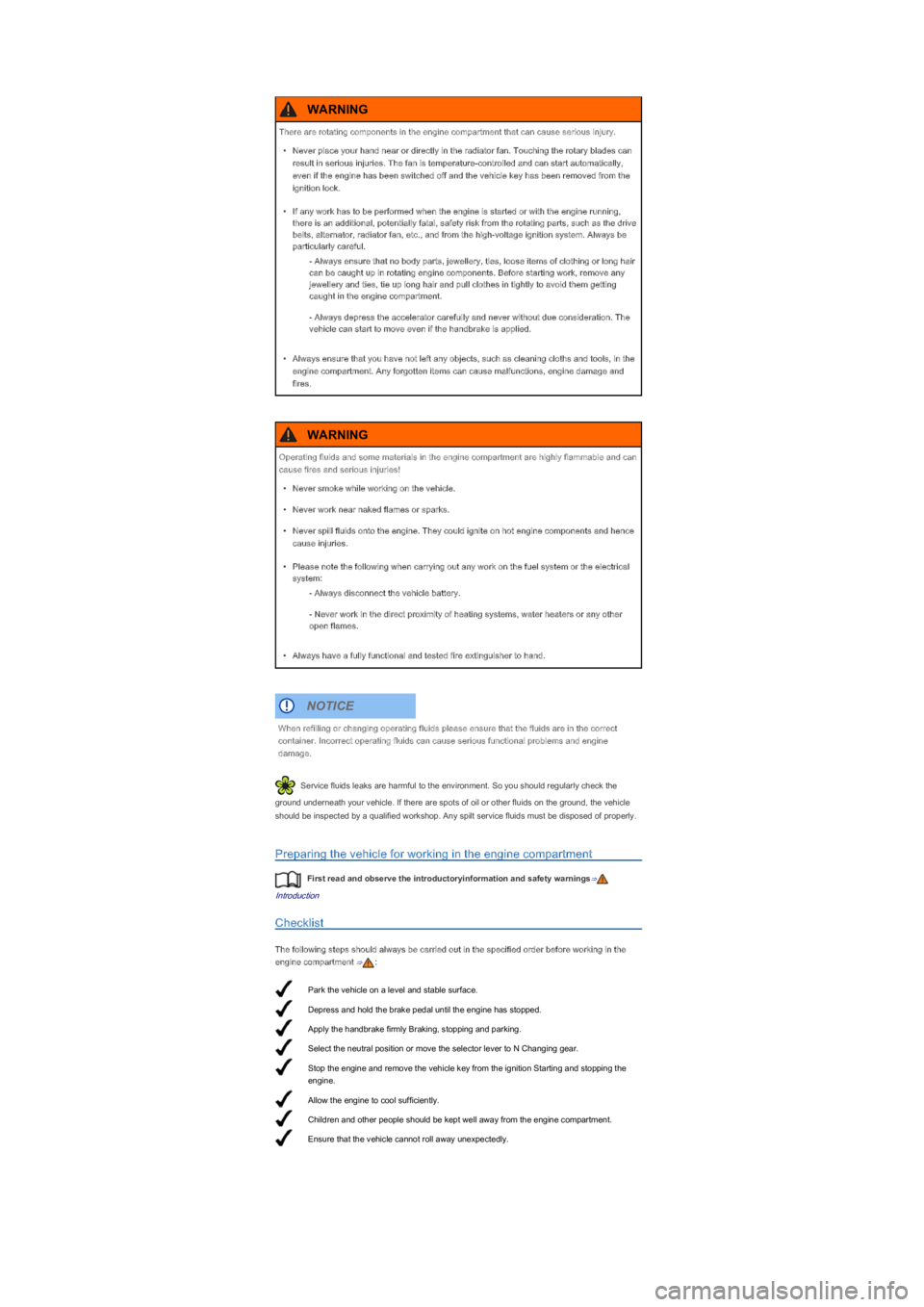
Park the vehicle on a level and stable surface.
Depress and hold the brake pedal until the engine has stopped.
Apply the handbrake firmly Braking, stopping and parking.
Select the neutral position or move the selector lever to N Changing gear.
Stop the engine and remove the vehicle key from the ignition Starting and stopping the
engine.
Allow the engine to cool sufficiently.
Children and other people should be kept well away from the engine compartment.
Ensure that the vehicle cannot roll away unexpectedly.
Service fluids leaks are harmful to the environment. So you should regularly check the
ground underneath your vehicle. If there are spots of oil or other fluids on the ground, the vehicle
should be inspected by a qualified workshop. Any spilt service fluids must be disposed of properly.
Preparing the vehicle for working in the engine compartment
First read and observe the introductoryinformation and safety warnings⇒
Introduction
Checklist
The following steps should always be carried out in the specified order before working in the
engine compartment ⇒:
There are rotating components in the engine compartment that can cause serious injury.
•Never place your hand near or directly in the radiator fan. Touching the rotary blades can
result in serious injuries. The fan is temperature-controlled and can start automatically,
even if the engine has been switched off and the vehicle key has been removed from the
ignition lock.
•If any work has to be performed when the engine is started or with the engine running,
there is an additional, potentially fatal, safety risk from the rotating parts, such as the drive
belts, alternator, radiator fan, etc., and from the high-voltage ignition system. Always be
particularly careful.
- Always ensure that no body parts, jewellery, ties, loose items of clothing or long hair
can be caught up in rotating engine components. Before starting work, remove any
jewellery and ties, tie up long hair and pull clothes in tightly to avoid them getting
caught in the engine compartment.
- Always depress the accelerator carefully and never without due consideration. The
vehicle can start to move even if the handbrake is applied.
•Always ensure that you have not left any objects, such as cleaning cloths and tools, in the
engine compartment. Any forgotten items can cause malfunctions, engine damage and
fires.
WARNING
Operating fluids and some materials in the engine compartment are highly flammable and can
cause fires and serious injuries!
•Never smoke while working on the vehicle.
•Never work near naked flames or sparks.
•Never spill fluids onto the engine. They could ignite on hot engine components and hence
cause injuries.
•Please note the following when carrying out any work on the fuel system or the electrical
system:
- Always disconnect the vehicle battery.
- Never work in the direct proximity of heating systems, water heaters or any other
open flames.
•Always have a fully functional and tested fire extinguisher to hand.
WARNING
When refilling or changing operating fluids please ensure that the fluids are in the correct
container. Incorrect operating fluids can cause serious functional problems and engine
damage.
NOTICE
Page 134 of 211
Opening and closing the bonnet
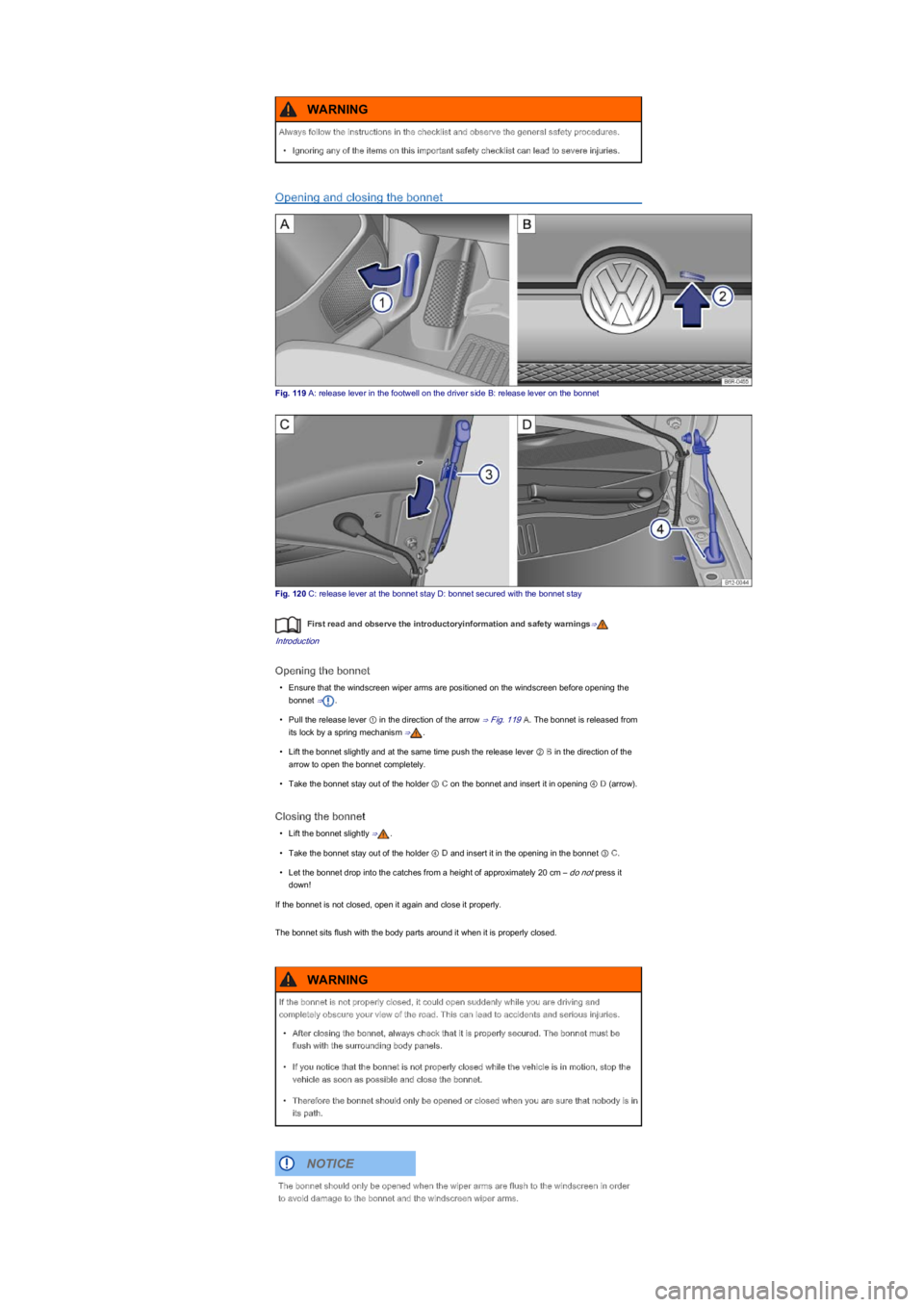
Fig. 119 A: release lever in the footwell on the driver side B: release lever on the bonnet
Fig. 120 C: release lever at the bonnet stay D: bonnet secured with the bonnet stay
First read and observe the introductoryinformation and safety warnings⇒
Introduction
Opening the bonnet
•Ensure that the windscreen wiper arms are positioned on the windscreen before opening the
bonnet ⇒.
•Pull the release lever ① in the direction of the arrow ⇒ Fig. 119A. The bonnet is released from
its lock by a spring mechanism ⇒.
•Lift the bonnet slightly and at the same time push the release lever ② B in the direction of the
arrow to open the bonnet completely.
•Take the bonnet stay out of the holder ③ C on the bonnet and insert it in opening ④ D (arrow).
Closing the bonnet
•Lift the bonnet slightly ⇒.
•Take the bonnet stay out of the holder ④ D and insert it in the opening in the bonnet ③ C.
•Let the bonnet drop into the catches from a height of approximately 20 cm – do not press it
down!
If the bonnet is not closed, open it again and close it properly.
The bonnet sits flush with the body parts around it when it is properly closed.
Always follow the instructions in the checklist and observe the general safety procedures.
•Ignoring any of the items on this important safety checklist can lead to severe injuries.
WARNING
If the bonnet is not properly closed, it could open suddenly while you are driving and
completely obscure your view of the road. This can lead to accidents and serious injuries.
•After closing the bonnet, always check that it is properly secured. The bonnet must be
flush with the surrounding body panels.
•If you notice that the bonnet is not properly closed while the vehicle is in motion, stop the
vehicle as soon as possible and close the bonnet.
•Therefore the bonnet should only be opened or closed when you are sure that nobody is in
its path.
WARNING
The bonnet should only be opened when the wiper arms are flush to the windscreen in order
to avoid damage to the bonnet and the windscreen wiper arms.
NOTICE
Page 141 of 211
•Unscrew the cap carefully ⇒.
•Refill only new coolant according to the Volkswagen specification (⇒ Coolant specification) ⇒
.
•The coolant level must be between the marks on the expansion tank ⇒ Fig. 123. Do not fill up
over the top line of the marked area⇒!
•Close the cap tightly.
•If in an emergency you do not have access to the coolant of the required specification
(⇒ Coolant specification), do not use any other coolant additive. Instead, initially refill with
distilled water⇒ only. Then add the correct proportion of coolant additive as soon as
possible ⇒ Coolant specification.
Vehicle battery
Introduction
This chapter contains information on the followingsubjects:
⇒ Warning lamp
⇒ Checking the electrolyte level of the vehicle battery
⇒ Charging, replacing, disconnecting and connecting the vehicle battery
The vehicle battery is a component of the electrical system in the vehicle.
Never carry out any work on the electrical system if you are not familiar with the necessary
procedures and the general safety requirements and only unsuitable tools are available ⇒. The
work should be carried out by a qualified workshop if you are uncertain. Volkswagen recommends
using a Volkswagen dealership for this purpose. Serious injuries can be caused if work is carried
out incorrectly.
Location of the vehicle battery
The vehicle battery is located in the engine compartment.
Hot steam or engine coolant can cause serious burns.
•Never open the bonnet if you can see or hear steam or engine coolant coming out of the
engine compartment. Always wait until no escaping steam or coolant can be seen or
heard.
•Always allow the engine to cool down completely before carefully opening the bonnet. Hot
components can burn the skin.
•Before opening the bonnet once it has cooled down:
- Apply the handbrake fully and move the selector lever to position N or move the
manual gear lever to the neutral position.
- Remove the vehicle key from the ignition lock.
- Always keep children away from the engine compartment and never leave the
vehicle unattended.
•The engine cooling system is under pressure when the engine is hot. Never open the cap
of the coolant expansion tank when the engine is hot. Coolant may spray out and cause
serious burns and injuries.
- Turn the cap slowly and very carefully anticlockwise while exerting some downward
pressure on the cap.
- Always protect the face, hands and arms from hot coolant or steam with a large,
thick cloth.
•When refilling, do not spill any service fluids on engine components or on the exhaust
system. The spilt service fluids can start a fire. In certain circumstances, the ethylene
glycol in the engine can catch fire.
WARNING
•Refill only with distilled water. All other types of water can cause corrosion in the engine
due to the chemical components contained therein. This can also lead to engine failure. If
any other type of water is refilled, the fluid in the engine cooling system should be
completely replaced immediately by a qualified workshop.
•Do not fill coolant above the top of the marked area ⇒ Fig. 123. Otherwise the excess
coolant will be pressed out of the cooling system when the engine is hot and could cause
damage.
•If a large amount of coolant has been lost, do not refill the coolant until the engine has
cooled completely. Heavy coolant loss is an indication of leaks in the engine cooling
system. The engine cooling system should be checked by a qualified workshop as soon as
possible. Failure to do so can result in engine damage.
•When refilling operating fluids, please ensure that the correct container is filled. The use of
incorrect operating fluids could result in serious malfunctions and engine damage!
NOTICE
Page 144 of 211
Charging, replacing, disconnecting and connecting the vehicle battery
First read and observe the introductoryinformation and safety warnings⇒
Introduction
Charging the battery
The vehicle battery should be charged by a qualified workshop, as the technology used in factory-
fitted batteries requires voltage-limited charging ⇒. Volkswagen recommends using a
Volkswagen dealership for this purpose.
Replacing a vehicle battery
The battery has been developed to suit the conditions of its location and has special safety
features. If a vehicle battery has to be replaced, discuss the electromagnetic compatibility, size and
necessary servicing, output and safety requirements for the new vehicle battery with a Volkswagen
dealership before purchase. Volkswagen recommends that the vehicle battery is changed by a
Volkswagen dealership.
Only maintenance-free vehicle batteries compliant with the standards TL 825 06 and VW 7 50 73
should be used. These standards must be dated April 2008 or later.
Vehicles with start/stop system ⇒ Pull-away assist systems are equipped with a special vehicle
battery. These vehicle batteries may only be replaced by a vehicle battery with the same
specifications.
Disconnecting the vehicle battery
Please note the following if the vehicle battery has to be disconnected from the electrical system in
the vehicle:
•Switch off all electrical consumers and the ignition.
•Unlock the vehicle before disconnecting the battery in order to avoid triggering the alarm.
•First disconnect the negative cable and then the positive cable ⇒.
Connecting the vehicle battery
•Switch off all electrical consumers and the ignition before reconnecting the vehicle battery.
•First reconnect the positive cable and then the negative cable ⇒.
Various indicator lamps may light up after the vehicle battery has been connected and the ignition is
switched on. They will go out if you drive a short distance at a speed of 15–20 km/h (10–12 mph). If
the indicator lamps remain lit up, the vehicle should be checked by a qualified workshop.
If the vehicle battery was disconnected for long periods, the system may not able to calculate or
correctly display the time when the next service is due ⇒ Instruments. Comply with the maximum
permissible service intervals ⇒BookletService schedule,.
Automatic switch-off for electrical consumers
The intelligent vehicle electrical system automatically implements a range of measures to prevent
the battery from discharging under high loads:
•The idling speed is increased so that the alternator provides more electricity.
•The performance of large electrical consumers may be reduced or they may be switched off
completely.
•The power supply to the 12-volt socket and the cigarette lighter is interrupted temporarily while
the engine is being started.
The vehicle electrical system cannot always prevent the vehicle battery from discharging. For
example when the ignition is switched on for an extended period with the engine off, or when the
side or parking lights are on when the vehicle is parked for an extended period.
Any work on the vehicle battery can cause serious chemical burns, explosions and electric
shocks.
•Always wear eye protection and protective gloves.
•Electrolyte is very aggressive. It can burn the skin and can cause blindness. When
working with the battery, protect your hands, arms and particularly your face from acid
spillages.
•Never tilt the vehicle battery. Electrolyte may spill out of the battery vents and cause
chemical burns.
•Never open a vehicle battery.
•If acid is splashed onto your skin or into your eye, rinse immediately for several minutes
with cold water. Then consult a doctor immediately.
•If acid is swallowed, consult a doctor immediately.
WARNING
Page 145 of 211
How the vehicle battery discharges:
•Long periods at a standstill in which the engine is not running, especially if the ignition is
switched on.
•The use of electrical consumers when the engine is switched off.
Dispose of the vehicle battery as required by legislation. Batteries may contain toxic
substances such as sulphuric acid and lead.
Electrolyte can pollute the environment. Clean up any service fluid leakages and dispose of
them properly.
Vehicle care and maintenance
Caring for and cleaning the vehicle exterior
Introduction
This chapter contains information on the followingsubjects:
⇒ Washing the vehicle
⇒ Washing the vehicle with a high-pressure cleaner
⇒ Cleaning windows and exterior mirrors
⇒ Cleaning and changing windscreen wiper blades
⇒ Waxing and polishing the vehicle
⇒ Cleaning and caring for chrome and aluminium trim parts
⇒ Cleaning wheels
⇒ Care of rubber seals
⇒ De-icing the door lock cylinders
⇒ Underseal
⇒ Cleaning the engine compartment
Regular and expert care helps to maintain the value of the vehicle. Proper maintenance may also
be one of the requirements for the approval of warranty claims in the event of corrosion or paint
defects.
Suitable care products are available from Volkswagen dealers.
Additional information and warnings:
•Preparation for working in the engine compartment ⇒ Preparation for working in the engine
compartment
•Cleaning and caring for the interior ⇒ Cleaning and caring for the interior
•Accessories, modifications, repairs and renewal of parts ⇒ Accessories, modifications, repairs
and renewal of parts
Incorrectly attaching the battery and using incorrect vehicle batteries can cause short circuits,
fire and serious injuries.
•Always use maintenance-free and leak-proof batteries that have the same properties,
specifications and dimensions as the factory-fitted vehicle battery.
WARNING
A highly explosive mixture of gases is given off when the vehicle battery is being charged.
•Vehicle batteries should only be charged in well-ventilated spaces.
•Never charge a vehicle battery once it has been frozen. Discharged vehicle batteries can
even freeze at temperatures of around 0°C (+32°F).
•A vehicle battery must be replaced if it has been frozen.
•Incorrectly connected cables can cause a short circuit. First connect the positive cable and
then the negative cable.
WARNING
•Never make or break connections between vehicle batteries if the ignition is switched on or
the engine is running. Never use a vehicle battery that does not correspond with the
vehicle's specifications. The vehicle's electrical system or electronic components could be
damaged, which could lead to electrical faults, for example in the start/stop system.
•Never connect equipment that provides electricity, such as solar panels or a battery
charger, to the 12-volt socket or to the cigarette lighter to charge the vehicle battery. This
can damage the vehicle electrical system.
NOTICE
Page 147 of 211
Washing the vehicle with a high-pressure cleaner
First read and observe the introductoryinformation and safety warnings⇒
Introduction
Follow the instructions provided by the manufacturer when cleaning your vehicle using a high-
pressure cleaner. This applies in particular to the pressure and the spraying distance⇒.
Maintain sufficient distance to soft materials such as rubber hoses, insulation, and the ParkPilot
sensors. The ParkPilot sensors are located in the rear bumper ⇒.
Never use concentrated jet nozzles or dirt blasters⇒.
Parts of the vehicle with sharp edges can cause injury.
•Protect your hands and arms from cuts on sharp parts, for example when cleaning the
underbody or the inside of the wheel housings.
WARNING
After the car has been washed, the braking effect could set in later than normal and extend
the braking distance as the brake discs and brake pads will be wet, or iced up in winter.
•You can dry and de-ice the brakes by performing careful braking manoeuvres. Ensure that
you do not endanger any other road users or violate any legal regulations when doing so.
WARNING
•The water should be no warmer than +60°C (+140°F).
•Do not wash the vehicle in direct sunlight in order to avoid damage to the vehicle
paintwork.
•Never clean with insect sponges, rough kitchen sponges or similar products as these can
damage the surface.
•Never clean the headlights with a dry cloth or sponge. Always use a wet cloth or sponge. It
is best to use soapy water.
•Washing the vehicle in cold weather: if the vehicle is rinsed with a hose, do not direct the
water into the lock cylinders or the gaps round the doors, boot, or bonnet. The locks and
seals could freeze.
NOTICE
Observe the following guidelines before driving the vehicle into an automatic car wash in order
to avoid damage to the vehicle:
•Ensure that the gap between the guide rails in the car wash is sufficient for the vehicle
track. If the track is too narrow your wheels and tyres will be damaged.
•Switch off the city emergency brake function before driving the vehicle into an automatic
car wash.
•Check that the car wash is tall and wide enough for your vehicle.
•Fold in the exterior mirrors.
•In order to prevent damage to the paintwork on the bonnet, fold the windscreen wipers
back onto the windscreen after drying the wiper blades. Do not drop the wipers onto the
glass.
•Lock the tailgate to prevent it from opening accidentally in the car wash.
NOTICE
Page 148 of 211
Cleaning windows and exterior mirrors
First read and observe the introductoryinformation and safety warnings⇒
Introduction
Cleaning windows and exterior mirrors
Moisten the windows and exterior mirrors with commercially available, alcohol-based glass cleaner.
Dry the glass surfaces with a clean chamois leather or a lint-free cloth. Chamois leathers that have
been used on painted surfaces are not suitable for use on glass surfaces. They will be soiled with
wax deposits which could smear the surfaces.
Use window cleaner or a silicone remover to clean off rubber, oil, grease and silicone deposits ⇒
.
Removing wax
Car washes and care products could leave wax deposits on the glass surfaces. Wax residue can
only be removed using a special cleaning product or cleaning cloths. Wax deposits on the
windscreen can cause the wiper blades to rub. Volkswagen recommends using a glass cleaning
cloth - G 052 522 A1 - to remove wax deposits from the windows and exterior mirrors each time the
vehicle is washed.
A window cleaner specifically for removing wax will stop the blades rubbing if added to the
windscreen wash water. Dilute the cleaner as instructed. Grease removing cleaners will not remove
wax deposits ⇒.
Special cleaners, glass cleaners and glass cleaning cloths are available from Volkswagen
dealerships.
Removing snow
Use a small brush to remove snow from the windows and exterior mirrors.
Removing ice
The best method for removing ice is to use a de-icer spray. If you use an ice scraper, do not move
it to and fro, but push it in one direction only. Moving the ice scraper backwards can cause dirt to
scratch the window.
The incorrect use of a high-pressure cleaner can cause visible and invisible long-term
damage to tyres and other materials. This can cause accidents and serious injuries.
•Maintain sufficient distance between the washer jet and the tyres.
•Never clean the tyres with concentrated jet nozzles (dirt blasters). The tyres may incur
visible and invisible damage even if cleaned briefly with the spray at a distance.
WARNING
After the car has been washed, the braking effect could set in later than normal and extend
the braking distance as the brake discs and brake pads will be wet, or iced up in winter.
•You can dry and de-ice the brakes by performing careful braking manoeuvres. Ensure that
you do not endanger any other road users or violate any legal regulations when doing so.
WARNING
•The water may be no warmer than +60°C (+140°F).
•Do not wash the vehicle in direct sunlight in order to avoid damage to the vehicle
paintwork.
•The ParkPilot sensors in the bumpers must be kept clean and free of ice to guarantee
correct function. When cleaning with pressure hoses or steam cleaners, the sensors
should only be sprayed briefly and the steam/hose nozzle must be kept more than 10 cm
away.
•Do not clean windows that are iced over or covered in snow with a high-pressure cleaner.
•Washing the vehicle in cold weather: if the vehicle is rinsed with a hose, do not direct the
water into the lock cylinders or the gaps round the doors, boot, or bonnet. The locks and
seals could freeze.
NOTICE
Page 149 of 211
Cleaning and changing windscreen wiper blades
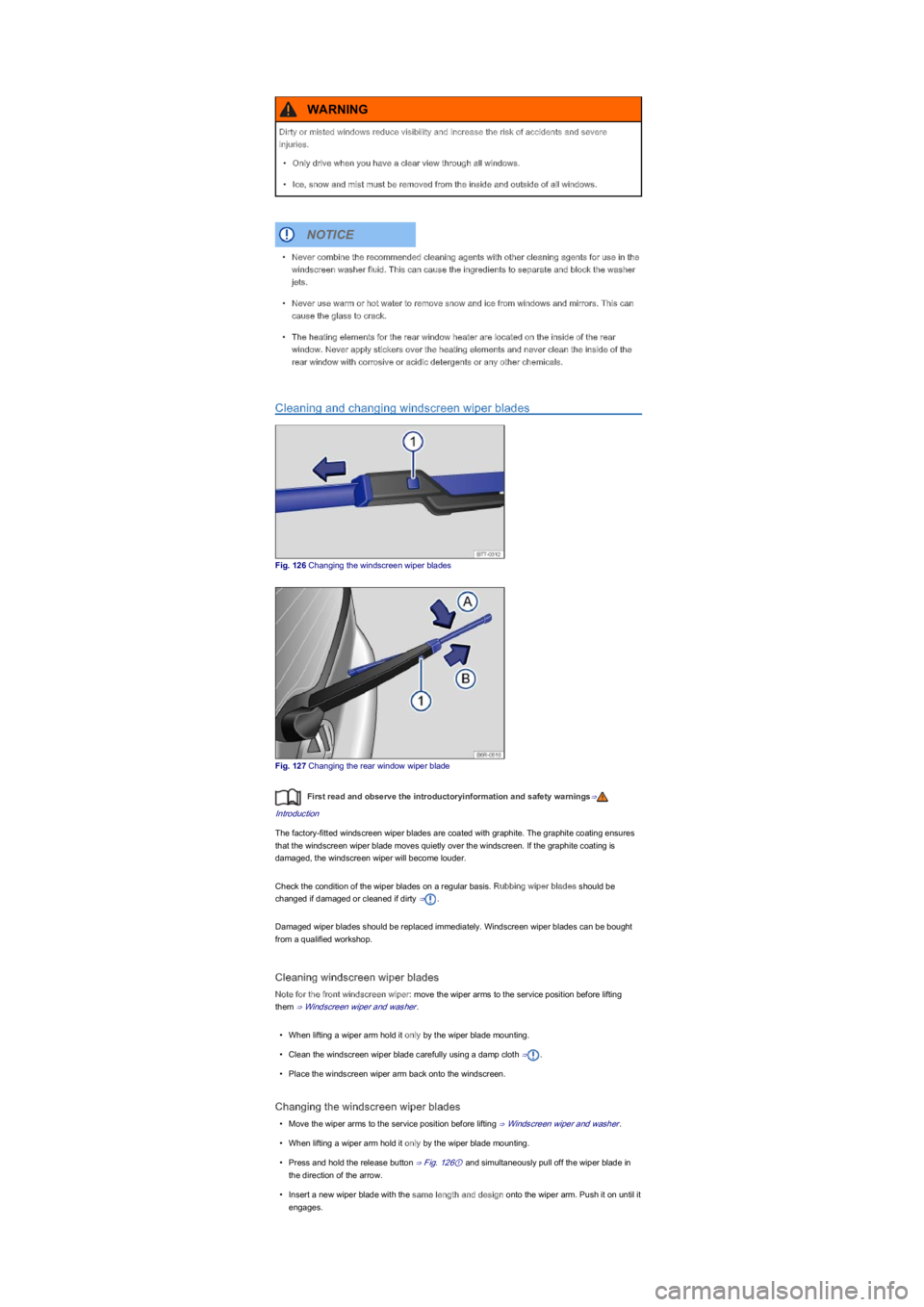
Fig. 126 Changing the windscreen wiper blades
Fig. 127 Changing the rear window wiper blade
First read and observe the introductoryinformation and safety warnings⇒
Introduction
The factory-fitted windscreen wiper blades are coated with graphite. The graphite coating ensures
that the windscreen wiper blade moves quietly over the windscreen. If the graphite coating is
damaged, the windscreen wiper will become louder.
Check the condition of the wiper blades on a regular basis. Rubbing wiper blades should be
changed if damaged or cleaned if dirty ⇒.
Damaged wiper blades should be replaced immediately. Windscreen wiper blades can be bought
from a qualified workshop.
Cleaning windscreen wiper blades
Note for the front windscreen wiper: move the wiper arms to the service position before lifting
them ⇒ Windscreen wiper and washer.
•When lifting a wiper arm hold it only by the wiper blade mounting.
•Clean the windscreen wiper blade carefully using a damp cloth ⇒.
•Place the windscreen wiper arm back onto the windscreen.
Changing the windscreen wiper blades
•Move the wiper arms to the service position before lifting ⇒ Windscreen wiper and washer.
•When lifting a wiper arm hold it only by the wiper blade mounting.
•Press and hold the release button ⇒ Fig. 126① and simultaneously pull off the wiper blade in
the direction of the arrow.
•Insert a new wiper blade with the same length and design onto the wiper arm. Push it on until it
engages.
Dirty or misted windows reduce visibility and increase the risk of accidents and severe
injuries.
•Only drive when you have a clear view through all windows.
•Ice, snow and mist must be removed from the inside and outside of all windows.
WARNING
•Never combine the recommended cleaning agents with other cleaning agents for use in the
windscreen washer fluid. This can cause the ingredients to separate and block the washer
jets.
•Never use warm or hot water to remove snow and ice from windows and mirrors. This can
cause the glass to crack.
•The heating elements for the rear window heater are located on the inside of the rear
window. Never apply stickers over the heating elements and never clean the inside of the
rear window with corrosive or acidic detergents or any other chemicals.
NOTICE
Page 151 of 211
Cleaning wheels
First read and observe the introductoryinformation and safety warnings⇒
Introduction
Cleaning steel wheels
An industrial cleaner is needed to remove accumulated brake dust. Steel wheels should therefore
be cleaned regularly with a separate sponge.
Any damage to the paint on steel wheels should be touched up before the metal starts to rust.
Caring for and cleaning alloy wheels
Wash grit and brake dust from alloy wheels approximately every 2 weeks. Then use an acid-free
detergent to clean the wheels. Volkswagen recommends applying a hard wax compound to the
wheels approximately every 3 months.
It is important to remove road salt and brake dust by washing the wheels at regular intervals,
otherwise the finish will be impaired.
Always use an acid-free detergent for alloy wheels. Car polish or other abrasive agents should not
be used on the wheels.
If the protective coating is damaged, e.g. by stone impact, the damaged area should be repaired
immediately.
Care of rubber seals
First read and observe the introductoryinformation and safety warnings⇒
Introduction
The rubber seals on the doors, windows etc. will seal better, remain flexible and last longer if they
are treated at regular intervals with a suitable care product.
Use a soft cloth to remove dust and dirt from the rubber seals.
De-icing the door lock cylinders
First read and observe the introductoryinformation and safety warnings⇒
Introduction
Volkswagen recommends the use of genuine Volkswagen spray with lubricating and anti-corrosive
properties to de-ice the lock cylinders.
Underseal
First read and observe the introductoryinformation and safety warnings⇒
Introduction
The underside of the vehicle is coated to protect it from corrosion and damage. The protective
coating on the underside of the vehicle could be damaged when driving. Volkswagen therefore
To ensure that the chrome and aluminium parts are not damaged:
•Do not clean or polish in direct sunlight.
•Do not clean or polish in sandy or dusty environments.
•Do not use any abrasive care products (e.g. cream cleaners).
•Never clean with insect sponges, rough kitchen sponges or similar products.
•Do not polish any dirty surfaces.
•Do not use solvent-based cleaning products.
•Do not use hard wax.
NOTICE
Chrome rims or wheel covers may also have an additional varnish finish and should not be
treated using chrome or aluminium cleaning agents or chrome or aluminium polish. A normal
commercially available paint cleaning product should be used instead.
NOTICE
Do not use lock de-icers containing substances that dissolve grease, as this can cause the
door lock cylinder to rust.
NOTICE
Page 160 of 211
Rims
First read and observe the introductoryinformation and safety warnings⇒
Introduction
The design of the wheel bolts is matched to the rims. If different rims are fitted, the correct wheel
bolts with the right length and correctly shaped bolt heads must be used. This ensures that the
wheels are fitted securely and that the brake system works properly ⇒ Changing a wheel.
For technical reasons, it is not generally possible to use the wheels from other vehicles. This can
also apply to wheels of the same vehicle type.
The tyres and rims approved by Volkswagen are specifically matched to the characteristics of the
vehicle and make a major contribution to good road holding and safe handling.
Wheel bolts
Wheel bolts must always be tightened with the correct tightening torque ⇒ Changing a wheel.
Rims with bolted-on rings
Rims with bolted-on rings consist of several components. These components are fastened using
special bolts and special fastening technology. This ensures that the wheel functions properly, does
not leak, remains safe and runs true. For this reason, damaged rims should be replaced. They may
only be repaired by a qualified workshop. Volkswagen recommends using a Volkswagen dealership
for this purpose ⇒.
Rims with bolted-on trims
Rims may have removable trims that are attached to the rim with self-locking bolts. Damaged trims
may only be repaired by a qualified workshop. Volkswagen recommends using a Volkswagen
dealership for this purpose ⇒.
Rims identification
In some countries, new rims are legally required to contain certain specifications on them.
Depending on the country the following specifications can appear on the rims:
•Seal of conformity
•Rim size
•Name of manufacturer or brand name
•Date manufactured (month / year)
•Country of origin
•Production number
•Raw materials batch number
•Product code
New wheels and tyres
First read and observe the introductoryinformation and safety warnings⇒
Introduction
New tyres
•Drive particularly carefully for the first 600 km with new tyres as the tyres have to be run in.
Tyres that have not been run in have reduced grip ⇒ and braking effect ⇒.
•All four wheels must be fitted with radial tyres of the same type, size (rolling circumference) and
the same tread.
The use of unsuitable or damaged rims can impair vehicle safety and cause accidents and
serious injury.
•Only use rims that have been approved for the vehicle.
•Check the rims regularly for damage and replace as necessary.
WARNING
Incorrect loosening and tightening of the bolts on rims with bolted-on rings can cause
accidents and serious injury.
•Never remove the bolts on rims with bolted-on rings.
•All work on rims with bolted-on rings must be carried out by a qualified workshop.
Volkswagen recommends using a Volkswagen dealership for this purpose.
WARNING