engine VOLKSWAGEN UP! 2021 Owner´s Manual
[x] Cancel search | Manufacturer: VOLKSWAGEN, Model Year: 2021, Model line: UP!, Model: VOLKSWAGEN UP! 2021Pages: 211, PDF Size: 5.98 MB
Page 66 of 211
The windscreen wipers will only function when the ignition is switched on.
The interval wipe for the windscreen depends on the speed of the vehicle. The wipers will
wipe more frequently as the vehicle moves faster.
The rear window wiper is switched on automatically if the front windscreen wipers are
switched on and reverse gear is engaged.
Windscreen wiper functions
First read and observe the introductoryinformation and safety warnings⇒
Introduction
Windscreen wiper response in various situations:
When the vehicle is
stationary:
When switched on, the wipers will temporarily be switched to the next
setting down.
When the interval wipe is
switched on:
The wiper intervals are adjusted depending on the vehicle speed.
The faster the vehicle is travelling, the shorter the interval.
The wiper will try to wipe away any obstacles that are on the windscreen. The wiper will stop
moving if the obstacle blocks its path. Remove the obstacle and switch the wiper back on again.
Service position for the front windscreen wipers
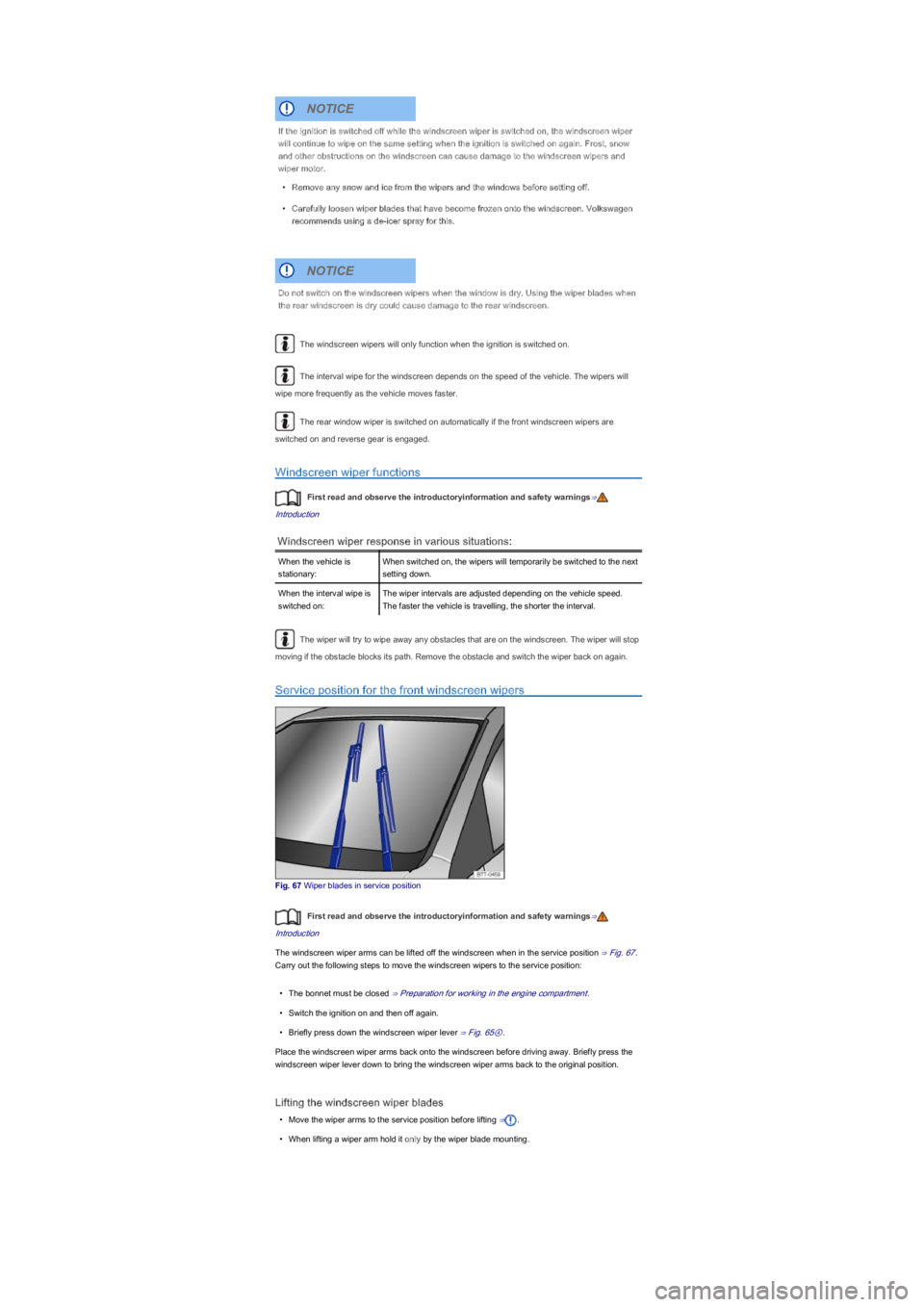
Fig. 67 Wiper blades in service position
First read and observe the introductoryinformation and safety warnings⇒
Introduction
The windscreen wiper arms can be lifted off the windscreen when in the service position ⇒ Fig. 67.
Carry out the following steps to move the windscreen wipers to the service position:
•The bonnet must be closed ⇒ Preparation for working in the engine compartment.
•Switch the ignition on and then off again.
•Briefly press down the windscreen wiper lever ⇒ Fig. 65④.
Place the windscreen wiper arms back onto the windscreen before driving away. Briefly press the
windscreen wiper lever down to bring the windscreen wiper arms back to the original position.
Lifting the windscreen wiper blades
•Move the wiper arms to the service position before lifting ⇒.
•When lifting a wiper arm hold it only by the wiper blade mounting.
If the ignition is switched off while the windscreen wiper is switched on, the windscreen wiper
will continue to wipe on the same setting when the ignition is switched on again. Frost, snow
and other obstructions on the windscreen can cause damage to the windscreen wipers and
wiper motor.
•Remove any snow and ice from the wipers and the windows before setting off.
•Carefully loosen wiper blades that have become frozen onto the windscreen. Volkswagen
recommends using a de-icer spray for this.
NOTICE
Do not switch on the windscreen wipers when the window is dry. Using the wiper blades when
the rear windscreen is dry could cause damage to the rear windscreen.
NOTICE
Page 67 of 211
Checking and refilling the windscreen washer fluid level
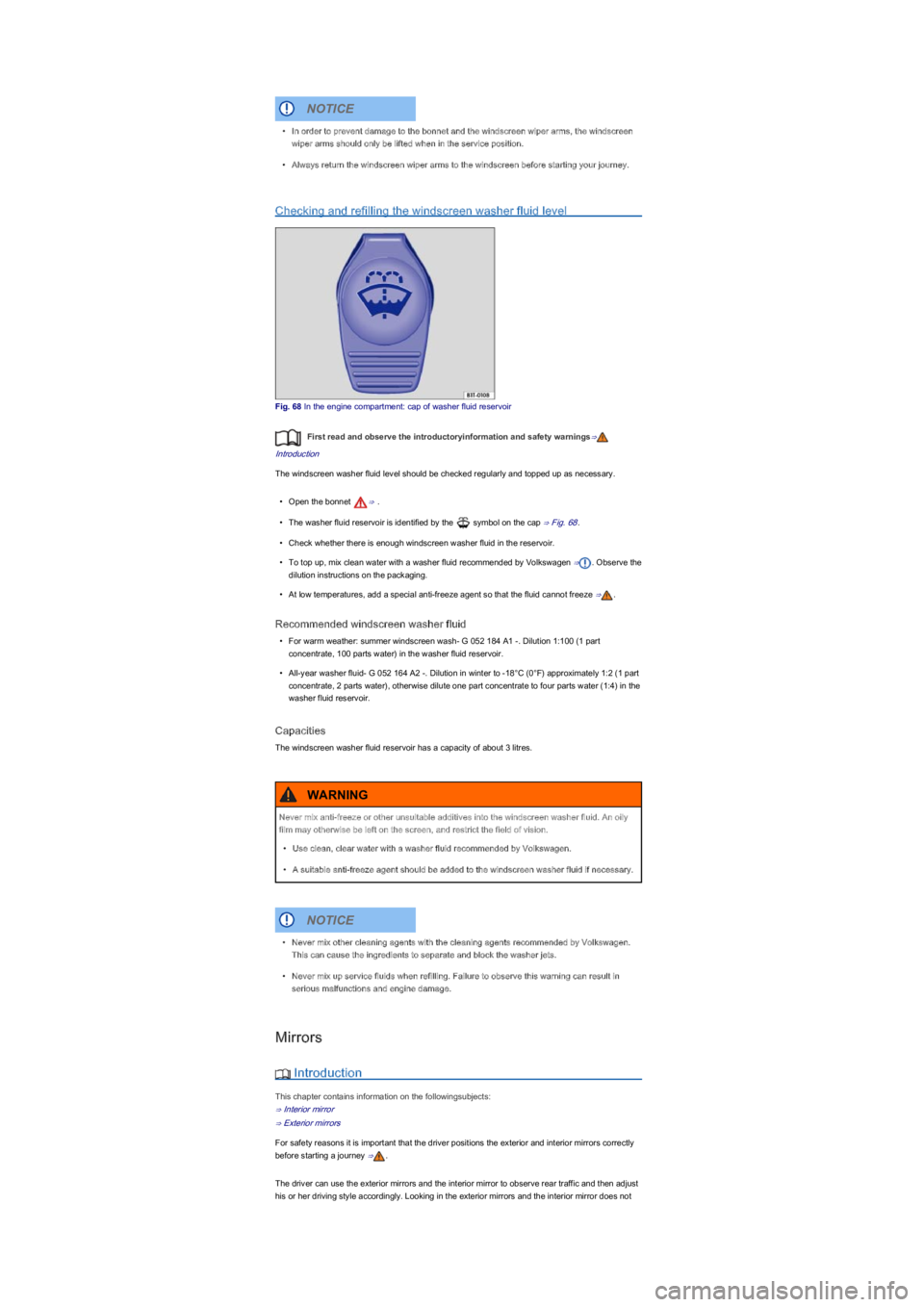
Fig. 68 In the engine compartment: cap of washer fluid reservoir
First read and observe the introductoryinformation and safety warnings⇒
Introduction
The windscreen washer fluid level should be checked regularly and topped up as necessary.
•Open the bonnet ⇒ .
•The washer fluid reservoir is identified by the symbol on the cap ⇒ Fig. 68.
•Check whether there is enough windscreen washer fluid in the reservoir.
•To top up, mix clean water with a washer fluid recommended by Volkswagen ⇒. Observe the
dilution instructions on the packaging.
•At low temperatures, add a special anti-freeze agent so that the fluid cannot freeze ⇒.
Recommended windscreen washer fluid
•For warm weather: summer windscreen wash- G 052 184 A1 -. Dilution 1:100 (1 part
concentrate, 100 parts water) in the washer fluid reservoir.
•All-year washer fluid- G 052 164 A2 -. Dilution in winter to -18°C (0°F) approximately 1:2 (1 part
concentrate, 2 parts water), otherwise dilute one part concentrate to four parts water (1:4) in the
washer fluid reservoir.
Capacities
The windscreen washer fluid reservoir has a capacity of about 3 litres.
Mirrors
Introduction
This chapter contains information on the followingsubjects:
⇒ Interior mirror
⇒ Exterior mirrors
For safety reasons it is important that the driver positions the exterior and interior mirrors correctly
before starting a journey ⇒.
The driver can use the exterior mirrors and the interior mirror to observe rear traffic and then adjust
his or her driving style accordingly. Looking in the exterior mirrors and the interior mirror does not
•In order to prevent damage to the bonnet and the windscreen wiper arms, the windscreen
wiper arms should only be lifted when in the service position.
•Always return the windscreen wiper arms to the windscreen before starting your journey.
NOTICE
Never mix anti-freeze or other unsuitable additives into the windscreen washer fluid. An oily
film may otherwise be left on the screen, and restrict the field of vision.
•Use clean, clear water with a washer fluid recommended by Volkswagen.
•A suitable anti-freeze agent should be added to the windscreen washer fluid if necessary.
WARNING
•Never mix other cleaning agents with the cleaning agents recommended by Volkswagen.
This can cause the ingredients to separate and block the washer jets.
•Never mix up service fluids when refilling. Failure to observe this warning can result in
serious malfunctions and engine damage.
NOTICE
Page 71 of 211
Driving a loaded vehicle
First read and observe the introductoryinformation and safety warnings⇒
Introduction
For good vehicle handling when driving a loaded vehicle, please observe the following:
•Stow all items of luggage securely ⇒ Stowing items of luggage.
•Accelerate carefully and gently.
•Avoid sudden braking and driving manoeuvres.
•Brake earlier than in normal driving.
•If applicable, heed the information about driving with a roof carrier ⇒ Roof carrier.
Vehicle-specific weight ratings
First read and observe the introductoryinformation and safety warnings⇒
Introduction
All data in the official vehicle documents take precedence over these data. All data in this manual
apply to the basic model. The vehicle data sticker in the service schedule and the official vehicle
documents show which engine is installed in your vehicle.
The values quoted here may differ if additional equipment is fitted, for different models or for special
vehicles.
The values for the kerb weight in the following table apply for the road-ready vehicle with driver
(75 kg), service fluids including fuel tank carrying 90% of its capacity and, if applicable, tools and
Driving with an unlocked or open tailgate can cause serious injuries.
•Always drive with the tailgate closed.
•Always stow all items in the luggage compartment securely. Loose objects can fall out of
the luggage compartment and injure other road users.
•Always drive carefully and ensure that you think ahead.
•Avoid any abrupt or sudden driving and braking manoeuvres as this can cause the open
tailgate to move unpredictably.
•Any objects protruding from the luggage compartment must be marked to ensure that they
are visible to other road users. Comply with legal regulations.
•Any objects protruding from the luggage compartment must never be held in position by
the tailgate.
•If it is necessary to drive with the tailgate open, all luggage racks and cargo stowed on the
rack must be removed from the tailgate.
WARNING
Poisonous exhaust fumes can enter the vehicle interior when the tailgate is open. This could
result in loss of consciousness, carbon monoxide poisoning, serious injury and accidents.
•Always drive with the tailgate closed in order to prevent toxic gases from entering the
vehicle.
•If exceptional circumstances require you to drive with an open tailgate, you must do the
following to reduce the quantity of toxic exhaust fumes that could enter the vehicle:
- Close the electric panorama sliding/tilting glass roof.
- Switch off air recirculation mode.
- Open all vents in the dash panel.
- Switch the blowers to the highest setting.
WARNING
The vehicle length and height are different when the tailgate is open.
NOTICE
Moving loads can severely impair the vehicle's stability and driving safety, which can cause
accidents and severe injuries.
•Secure objects properly to prevent them from sliding.
•Use suitable straps when securing heavy objects.
•Engage the rear seat backrests securely in an upright position.
WARNING
Page 72 of 211
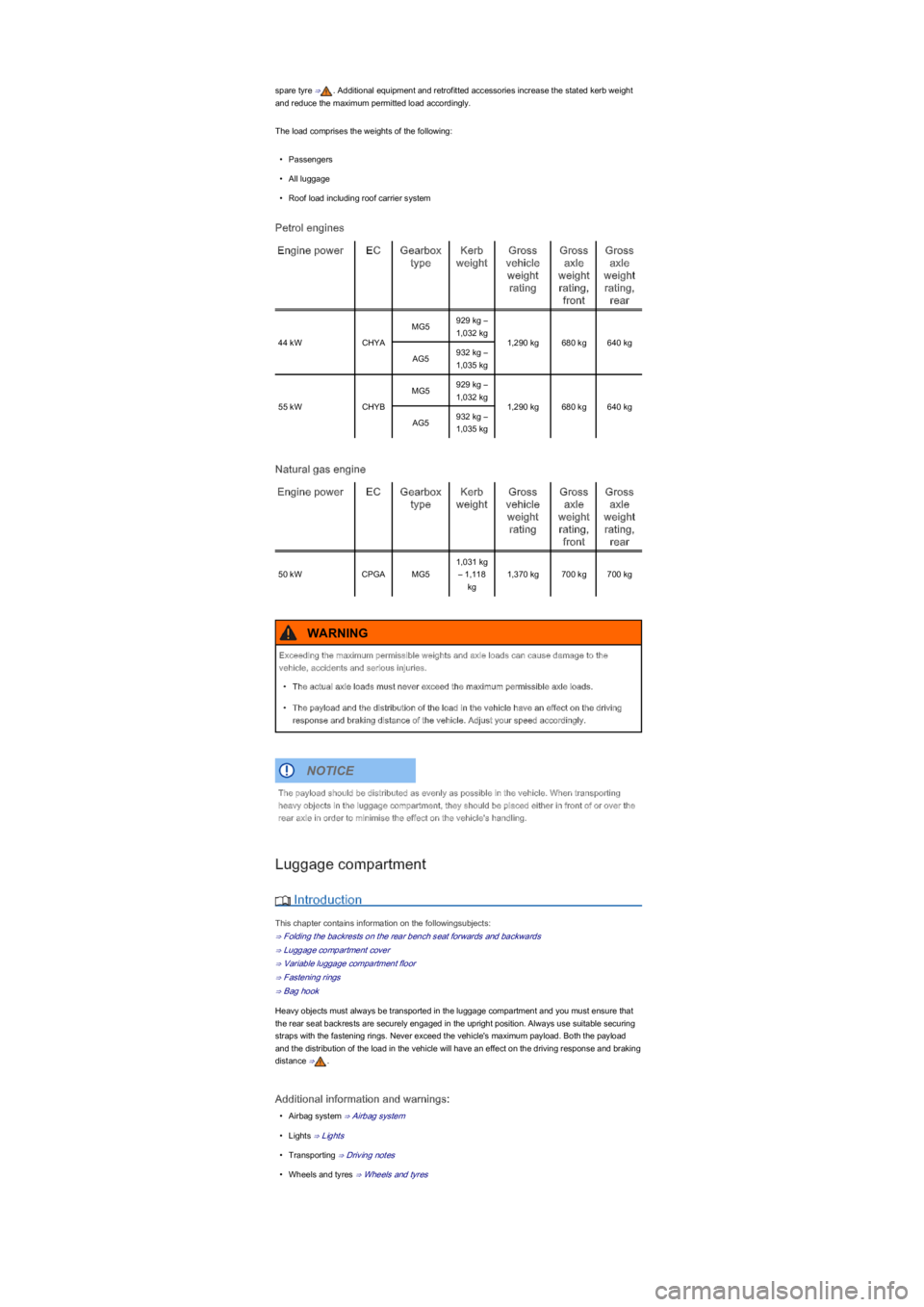
spare tyre ⇒. Additional equipment and retrofitted accessories increase the stated kerb weight
and reduce the maximum permitted load accordingly.
The load comprises the weights of the following:
•Passengers
•All luggage
•Roof load including roof carrier system
Petrol engines
Engine powerECGearbox
type
Kerb
weight
Gross
vehicle
weight
rating
Gross
axle
weight
rating,
front
Gross
axle
weight
rating,
rear
44 kWCHYA
MG5929 kg –
1,032 kg
1,290 kg680 kg640 kg
AG5932 kg –
1,035 kg
55 kWCHYB
MG5929 kg –
1,032 kg
1,290 kg680 kg640 kg
AG5932 kg –
1,035 kg
Natural gas engine
Engine powerECGearbox
type
Kerb
weight
Gross
vehicle
weight
rating
Gross
axle
weight
rating,
front
Gross
axle
weight
rating,
rear
50 kWCPGAMG5
1,031 kg
– 1,118
kg
1,370 kg700 kg700 kg
Luggage compartment
Introduction
This chapter contains information on the followingsubjects:
⇒ Folding the backrests on the rear bench seat forwards and backwards
⇒ Luggage compartment cover
⇒ Variable luggage compartment floor
⇒ Fastening rings
⇒ Bag hook
Heavy objects must always be transported in the luggage compartment and you must ensure that
the rear seat backrests are securely engaged in the upright position. Always use suitable securing
straps with the fastening rings. Never exceed the vehicle's maximum payload. Both the payload
and the distribution of the load in the vehicle will have an effect on the driving response and braking
distance ⇒.
Additional information and warnings:
•Airbag system ⇒ Airbag system
•Lights ⇒ Lights
•Transporting ⇒ Driving notes
•Wheels and tyres ⇒ Wheels and tyres
Exceeding the maximum permissible weights and axle loads can cause damage to the
vehicle, accidents and serious injuries.
•The actual axle loads must never exceed the maximum permissible axle loads.
•The payload and the distribution of the load in the vehicle have an effect on the driving
response and braking distance of the vehicle. Adjust your speed accordingly.
WARNING
The payload should be distributed as evenly as possible in the vehicle. When transporting
heavy objects in the luggage compartment, they should be placed either in front of or over the
rear axle in order to minimise the effect on the vehicle's handling.
NOTICE
Page 86 of 211
Do not leave the engine running when the vehicle is stationary.
Using electrical appliances with the engine switched off and the ignition switched on will
drain the battery.
Unshielded devices can cause interference with radio reception and vehicle electronics.
Interference with AM radio reception could occur if electrical devices are used in the vicinity
of the aerial.
Socket in the vehicle
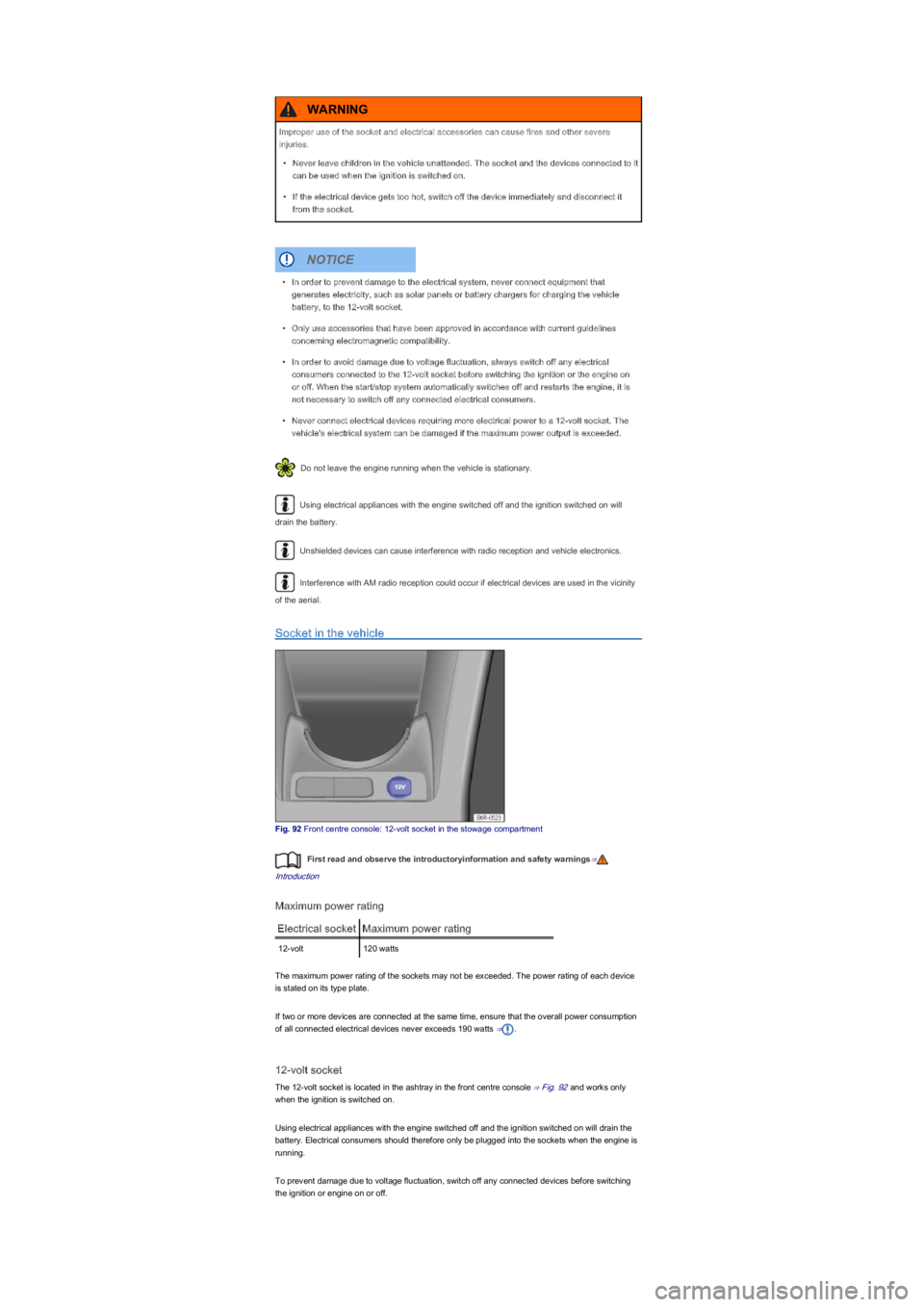
Fig. 92 Front centre console: 12-volt socket in the stowage compartment
First read and observe the introductoryinformation and safety warnings⇒
Introduction
Maximum power rating
Electrical socketMaximum power rating
12-volt120 watts
The maximum power rating of the sockets may not be exceeded. The power rating of each device
is stated on its type plate.
If two or more devices are connected at the same time, ensure that the overall power consumption
of all connected electrical devices never exceeds 190 watts ⇒.
12-volt socket
The 12-volt socket is located in the ashtray in the front centre console ⇒ Fig. 92 and works only
when the ignition is switched on.
Using electrical appliances with the engine switched off and the ignition switched on will drain the
battery. Electrical consumers should therefore only be plugged into the sockets when the engine is
running.
To prevent damage due to voltage fluctuation, switch off any connected devices before switching
the ignition or engine on or off.
Improper use of the socket and electrical accessories can cause fires and other severe
injuries.
•Never leave children in the vehicle unattended. The socket and the devices connected to it
can be used when the ignition is switched on.
•If the electrical device gets too hot, switch off the device immediately and disconnect it
from the socket.
WARNING
•In order to prevent damage to the electrical system, never connect equipment that
generates electricity, such as solar panels or battery chargers for charging the vehicle
battery, to the 12-volt socket.
•Only use accessories that have been approved in accordance with current guidelines
concerning electromagnetic compatibility.
•In order to avoid damage due to voltage fluctuation, always switch off any electrical
consumers connected to the 12-volt socket before switching the ignition or the engine on
or off. When the start/stop system automatically switches off and restarts the engine, it is
not necessary to switch off any connected electrical consumers.
•Never connect electrical devices requiring more electrical power to a 12-volt socket. The
vehicle's electrical system can be damaged if the maximum power output is exceeded.
NOTICE
Page 87 of 211
Starting the engine, changing gear and
parking
Starting and stopping the engine
Introduction
This chapter contains information on the followingsubjects:
⇒ Ignition lock
⇒ Starting the engine
⇒ Stopping the engine
⇒ Electronic immobilizer
Immobilizer display
If the vehicle key is not valid or there is a fault in the system, then may be displayed in the
instrument cluster. The engine cannot be started ⇒ Electronic immobilizer.
Push-starting or towing
For technical reasons, your vehicle must not be push-started or tow-started. Use jump leads to
start the engine instead.
Additional information and warnings:
•Vehicle key set ⇒ Vehicle key set
•Changing gear ⇒ Changing gear
•Braking, stopping and parking ⇒ Braking, stopping and parking
•Steering ⇒ Steering
•Pull-away assist systems ⇒ Pull-away assist systems
•Filling the tank ⇒ Filling the tank
•Fuel ⇒ Fuel
•Manual opening and closing ⇒ Manual opening and closing
•Starting the engine with jump leads ⇒ Starting the engine with jump leads
•Tow starting and towing ⇒ Tow-starting and towing
•Observe the operating instructions for any device that you plug into the socket.
•Never exceed the maximum power rating as this could damage the whole vehicle electrical
system.
•12-volt socket:
- Only use accessories that have been approved in accordance with the relevant
guidelines on electromagnetic compatibility.
- Never feed electricity into the socket.
NOTICE
While driving
Page 88 of 211
Ignition lock
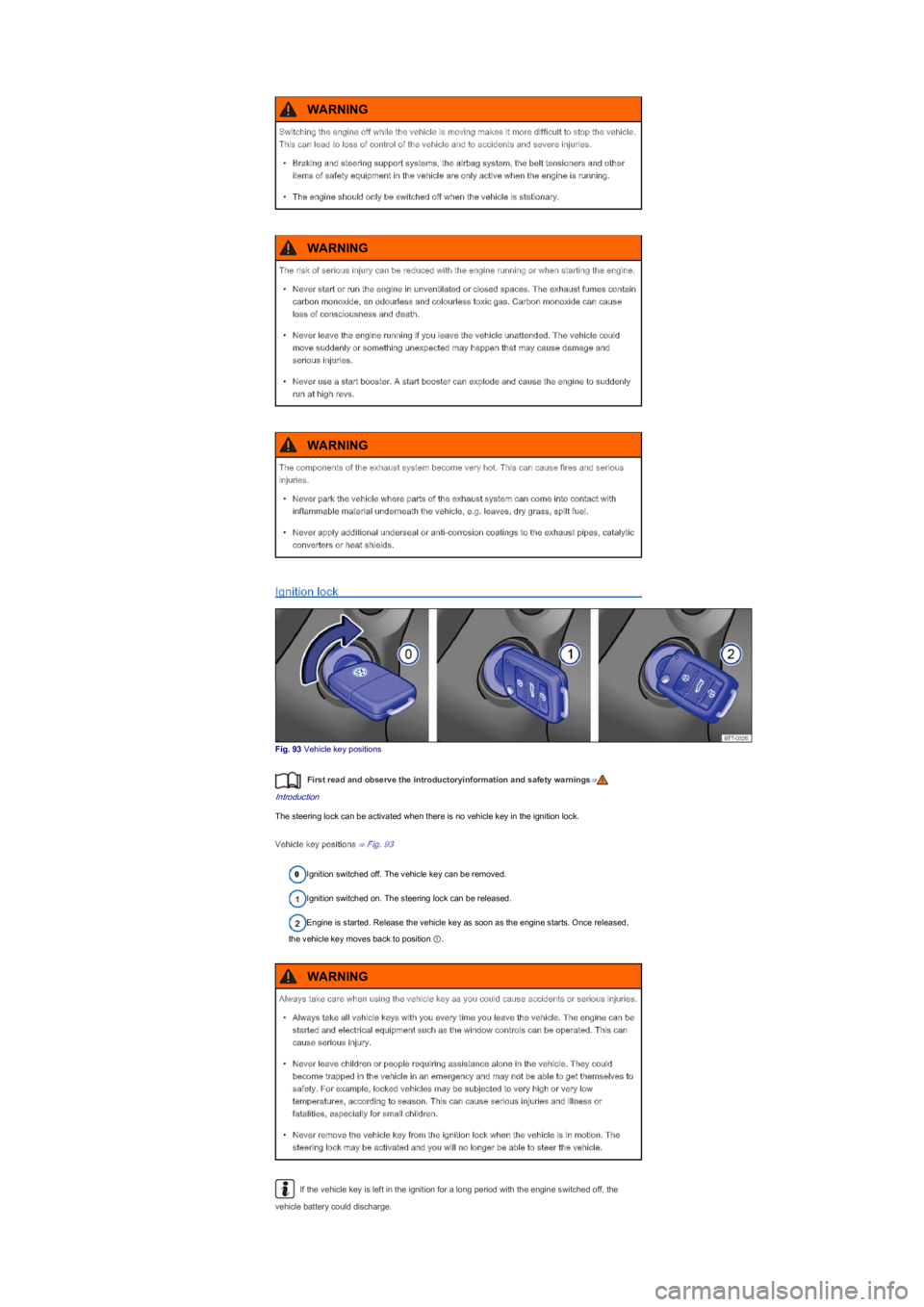
Fig. 93 Vehicle key positions
First read and observe the introductoryinformation and safety warnings⇒
Introduction
The steering lock can be activated when there is no vehicle key in the ignition lock.
Vehicle key positions ⇒ Fig. 93
Ignition switched off. The vehicle key can be removed.
Ignition switched on. The steering lock can be released.
Engine is started. Release the vehicle key as soon as the engine starts. Once released,
the vehicle key moves back to position ①.
If the vehicle key is left in the ignition for a long period with the engine switched off, the
vehicle battery could discharge.
Switching the engine off while the vehicle is moving makes it more difficult to stop the vehicle.
This can lead to loss of control of the vehicle and to accidents and severe injuries.
•Braking and steering support systems, the airbag system, the belt tensioners and other
items of safety equipment in the vehicle are only active when the engine is running.
•The engine should only be switched off when the vehicle is stationary.
WARNING
The risk of serious injury can be reduced with the engine running or when starting the engine.
•Never start or run the engine in unventilated or closed spaces. The exhaust fumes contain
carbon monoxide, an odourless and colourless toxic gas. Carbon monoxide can cause
loss of consciousness and death.
•Never leave the engine running if you leave the vehicle unattended. The vehicle could
move suddenly or something unexpected may happen that may cause damage and
serious injuries.
•Never use a start booster. A start booster can explode and cause the engine to suddenly
run at high revs.
WARNING
The components of the exhaust system become very hot. This can cause fires and serious
injuries.
•Never park the vehicle where parts of the exhaust system can come into contact with
inflammable material underneath the vehicle, e.g. leaves, dry grass, spilt fuel.
•Never apply additional underseal or anti-corrosion coatings to the exhaust pipes, catalytic
converters or heat shields.
WARNING
Always take care when using the vehicle key as you could cause accidents or serious injuries.
•Always take all vehicle keys with you every time you leave the vehicle. The engine can be
started and electrical equipment such as the window controls can be operated. This can
cause serious injury.
•Never leave children or people requiring assistance alone in the vehicle. They could
become trapped in the vehicle in an emergency and may not be able to get themselves to
safety. For example, locked vehicles may be subjected to very high or very low
temperatures, according to season. This can cause serious injuries and illness or
fatalities, especially for small children.
•Never remove the vehicle key from the ignition lock when the vehicle is in motion. The
steering lock may be activated and you will no longer be able to steer the vehicle.
WARNING
Page 89 of 211
Starting the engine
First read and observe the introductoryinformation and safety warnings⇒
Introduction
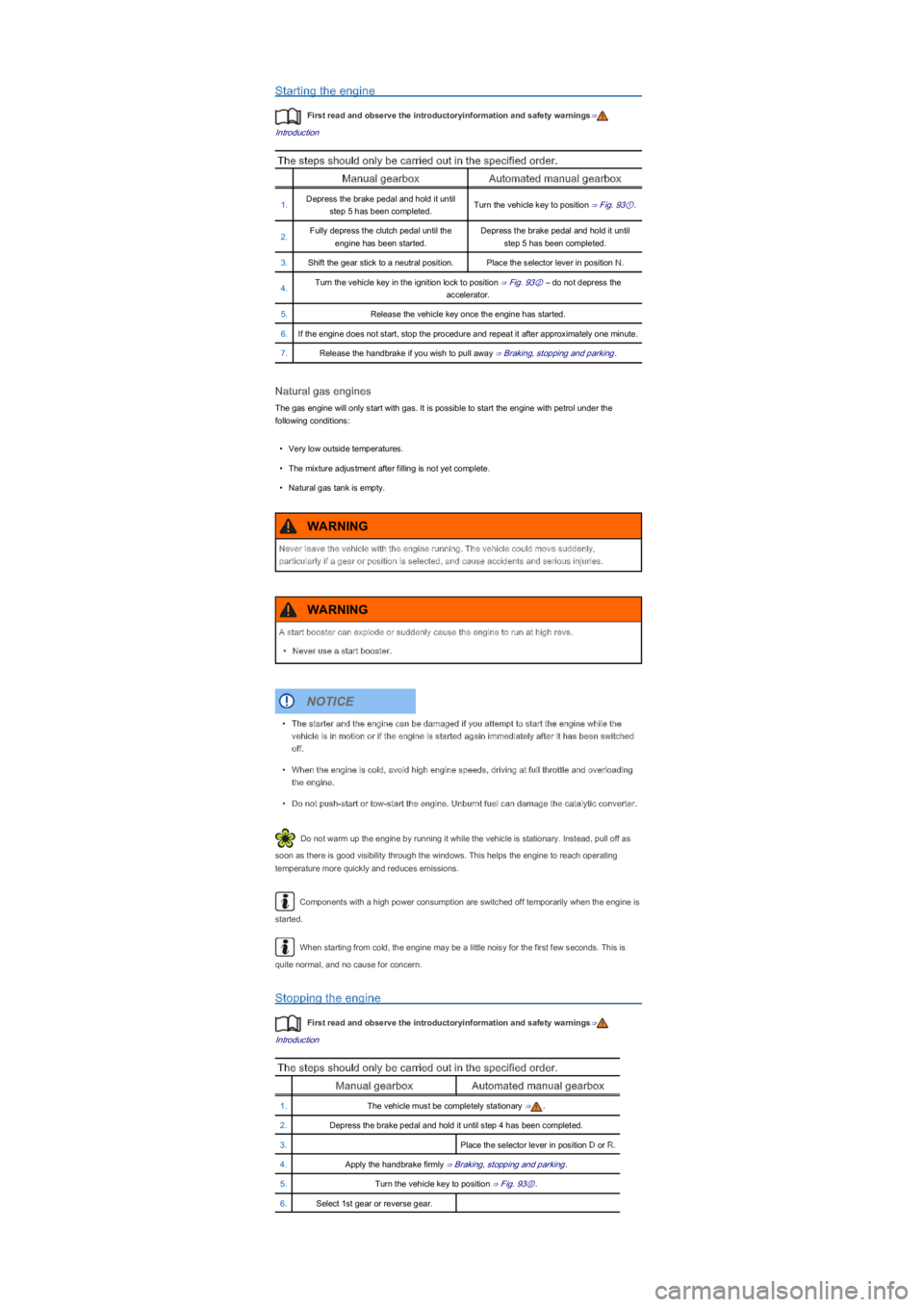
The steps should only be carried out in the specified order.
Manual gearboxAutomated manual gearbox
1.Depress the brake pedal and hold it until
step 5 has been completed.Turn the vehicle key to position ⇒ Fig. 93①.
2.Fully depress the clutch pedal until the
engine has been started.
Depress the brake pedal and hold it until
step 5 has been completed.
3.Shift the gear stick to a neutral position.Place the selector lever in position N.
4.Turn the vehicle key in the ignition lock to position ⇒ Fig. 93② – do not depress the
accelerator.
5.Release the vehicle key once the engine has started.
6.If the engine does not start, stop the procedure and repeat it after approximately one minute.
7.Release the handbrake if you wish to pull away ⇒ Braking, stopping and parking.
Natural gas engines
The gas engine will only start with gas. It is possible to start the engine with petrol under the
following conditions:
•Very low outside temperatures.
•The mixture adjustment after filling is not yet complete.
•Natural gas tank is empty.
Do not warm up the engine by running it while the vehicle is stationary. Instead, pull off as
soon as there is good visibility through the windows. This helps the engine to reach operating
temperature more quickly and reduces emissions.
Components with a high power consumption are switched off temporarily when the engine is
started.
When starting from cold, the engine may be a little noisy for the first few seconds. This is
quite normal, and no cause for concern.
Stopping the engine
First read and observe the introductoryinformation and safety warnings⇒
Introduction
The steps should only be carried out in the specified order.
Manual gearboxAutomated manual gearbox
1.The vehicle must be completely stationary ⇒.
2.Depress the brake pedal and hold it until step 4 has been completed.
3.Place the selector lever in position D or R.
4.Apply the handbrake firmly ⇒ Braking, stopping and parking.
5.Turn the vehicle key to position ⇒ Fig. 93⓪.
6.Select 1st gear or reverse gear.
Never leave the vehicle with the engine running. The vehicle could move suddenly,
particularly if a gear or position is selected, and cause accidents and serious injuries.
WARNING
A start booster can explode or suddenly cause the engine to run at high revs.
•Never use a start booster.
WARNING
•The starter and the engine can be damaged if you attempt to start the engine while the
vehicle is in motion or if the engine is started again immediately after it has been switched
off.
•When the engine is cold, avoid high engine speeds, driving at full throttle and overloading
the engine.
•Do not push-start or tow-start the engine. Unburnt fuel can damage the catalytic converter.
NOTICE
Page 90 of 211
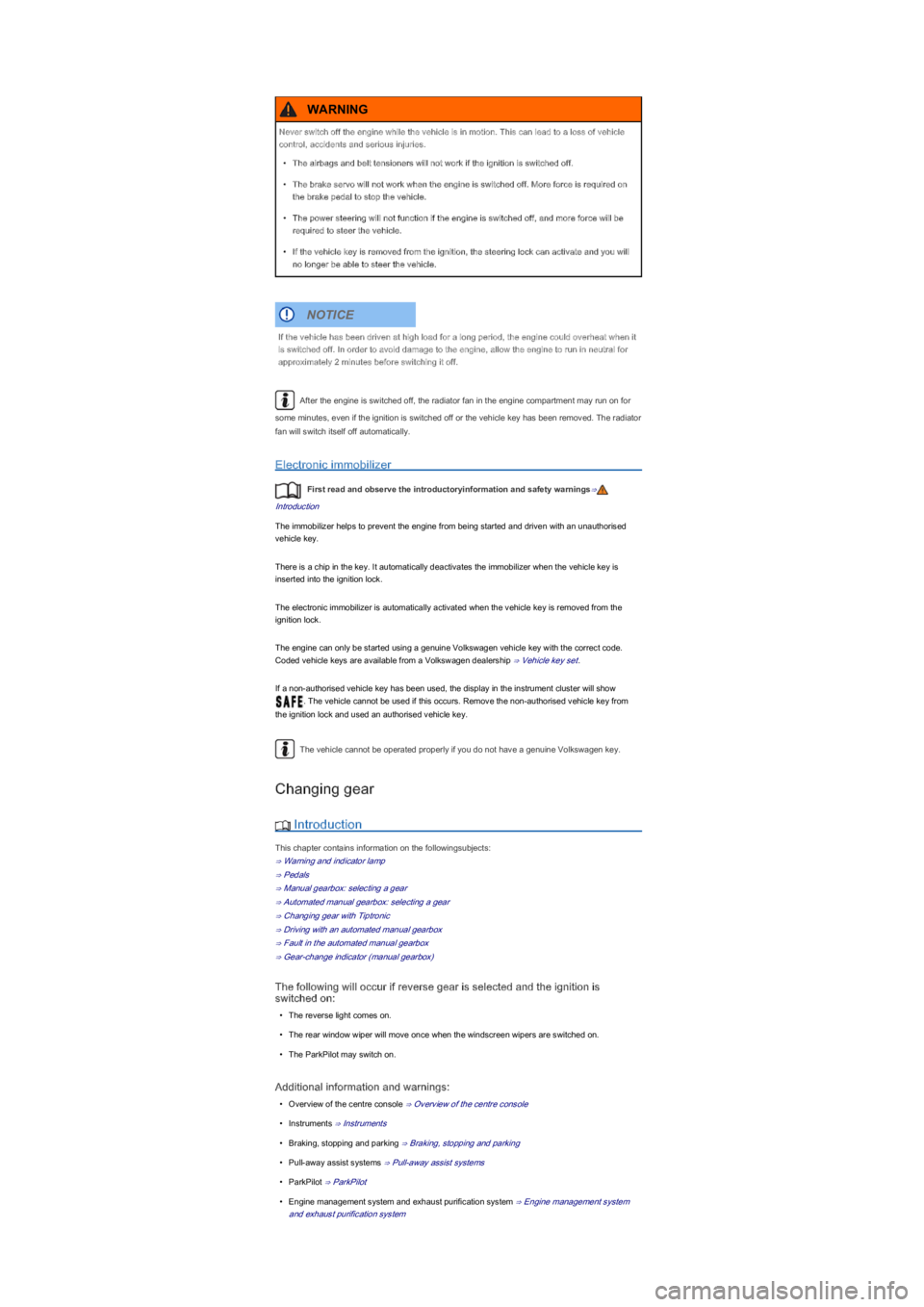
After the engine is switched off, the radiator fan in the engine compartment may run on for
some minutes, even if the ignition is switched off or the vehicle key has been removed. The radiator
fan will switch itself off automatically.
Electronic immobilizer
First read and observe the introductoryinformation and safety warnings⇒
Introduction
The immobilizer helps to prevent the engine from being started and driven with an unauthorised
vehicle key.
There is a chip in the key. It automatically deactivates the immobilizer when the vehicle key is
inserted into the ignition lock.
The electronic immobilizer is automatically activated when the vehicle key is removed from the
ignition lock.
The engine can only be started using a genuine Volkswagen vehicle key with the correct code.
Coded vehicle keys are available from a Volkswagen dealership ⇒ Vehicle key set.
If a non-authorised vehicle key has been used, the display in the instrument cluster will show
. The vehicle cannot be used if this occurs. Remove the non-authorised vehicle key from
the ignition lock and used an authorised vehicle key.
The vehicle cannot be operated properly if you do not have a genuine Volkswagen key.
Changing gear
Introduction
This chapter contains information on the followingsubjects:
⇒ Warning and indicator lamp
⇒ Pedals
⇒ Manual gearbox: selecting a gear
⇒ Automated manual gearbox: selecting a gear
⇒ Changing gear with Tiptronic
⇒ Driving with an automated manual gearbox
⇒ Fault in the automated manual gearbox
⇒ Gear-change indicator (manual gearbox)
The following will occur if reverse gear is selected and the ignition is
switched on:
•The reverse light comes on.
•The rear window wiper will move once when the windscreen wipers are switched on.
•The ParkPilot may switch on.
Additional information and warnings:
•Overview of the centre console ⇒ Overview of the centre console
•Instruments ⇒ Instruments
•Braking, stopping and parking ⇒ Braking, stopping and parking
•Pull-away assist systems ⇒ Pull-away assist systems
•ParkPilot ⇒ ParkPilot
•Engine management system and exhaust purification system ⇒ Engine management system
and exhaust purification system
Never switch off the engine while the vehicle is in motion. This can lead to a loss of vehicle
control, accidents and serious injuries.
•The airbags and belt tensioners will not work if the ignition is switched off.
•The brake servo will not work when the engine is switched off. More force is required on
the brake pedal to stop the vehicle.
•The power steering will not function if the engine is switched off, and more force will be
required to steer the vehicle.
•If the vehicle key is removed from the ignition, the steering lock can activate and you will
no longer be able to steer the vehicle.
WARNING
If the vehicle has been driven at high load for a long period, the engine could overheat when it
is switched off. In order to avoid damage to the engine, allow the engine to run in neutral for
approximately 2 minutes before switching it off.
NOTICE
Page 91 of 211
•Tow-starting and towing ⇒ Tow-starting and towing
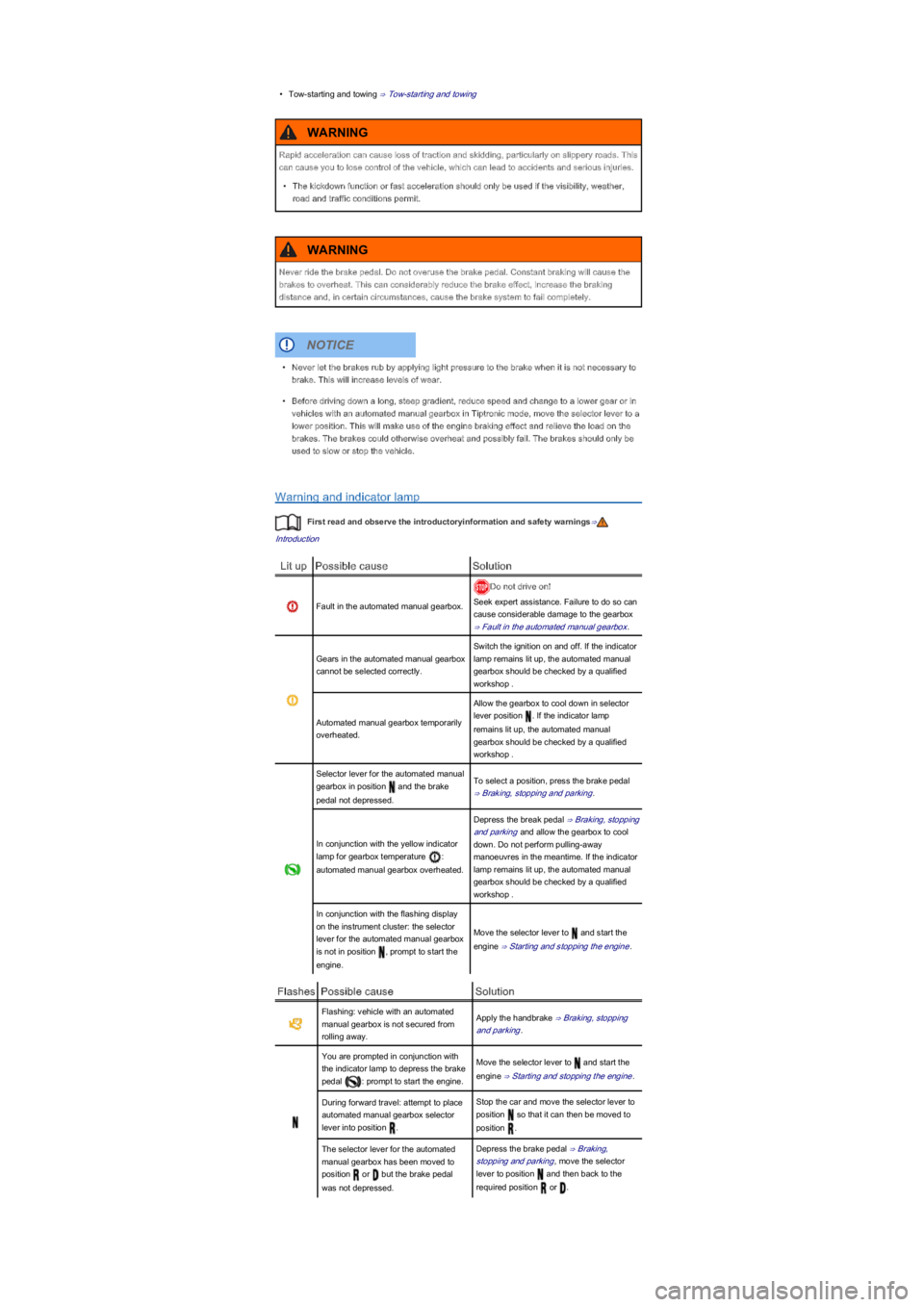
Warning and indicator lamp
First read and observe the introductoryinformation and safety warnings⇒
Introduction
Lit upPossible causeSolution
Fault in the automated manual gearbox.
Do not drive on!
Seek expert assistance. Failure to do so can
cause considerable damage to the gearbox
⇒ Fault in the automated manual gearbox.
Gears in the automated manual gearbox
cannot be selected correctly.
Switch the ignition on and off. If the indicator
lamp remains lit up, the automated manual
gearbox should be checked by a qualified
workshop .
Automated manual gearbox temporarily
overheated.
Allow the gearbox to cool down in selector
lever position . If the indicator lamp
remains lit up, the automated manual
gearbox should be checked by a qualified
workshop .
Selector lever for the automated manual
gearbox in position and the brake
pedal not depressed.
To select a position, press the brake pedal
⇒ Braking, stopping and parking.
In conjunction with the yellow indicator
lamp for gearbox temperature :
automated manual gearbox overheated.
Depress the break pedal ⇒ Braking, stopping
and parking and allow the gearbox to cool
down. Do not perform pulling-away
manoeuvres in the meantime. If the indicator
lamp remains lit up, the automated manual
gearbox should be checked by a qualified
workshop .
In conjunction with the flashing display
on the instrument cluster: the selector
lever for the automated manual gearbox
is not in position , prompt to start the
engine.
Move the selector lever to and start the
engine ⇒ Starting and stopping the engine.
FlashesPossible causeSolution
Flashing: vehicle with an automated
manual gearbox is not secured from
rolling away.
Apply the handbrake ⇒ Braking, stopping
and parking.
You are prompted in conjunction with
the indicator lamp to depress the brake
pedal : prompt to start the engine.
Move the selector lever to and start the
engine ⇒ Starting and stopping the engine.
During forward travel: attempt to place
automated manual gearbox selector
lever into position .
Stop the car and move the selector lever to
position so that it can then be moved to
position .
The selector lever for the automated
manual gearbox has been moved to
position or but the brake pedal
was not depressed.
Depress the brake pedal ⇒ Braking,
stopping and parking, move the selector
lever to position and then back to the
required position or .
Rapid acceleration can cause loss of traction and skidding, particularly on slippery roads. This
can cause you to lose control of the vehicle, which can lead to accidents and serious injuries.
•The kickdown function or fast acceleration should only be used if the visibility, weather,
road and traffic conditions permit.
WARNING
Never ride the brake pedal. Do not overuse the brake pedal. Constant braking will cause the
brakes to overheat. This can considerably reduce the brake effect, increase the braking
distance and, in certain circumstances, cause the brake system to fail completely.
WARNING
•Never let the brakes rub by applying light pressure to the brake when it is not necessary to
brake. This will increase levels of wear.
•Before driving down a long, steep gradient, reduce speed and change to a lower gear or in
vehicles with an automated manual gearbox in Tiptronic mode, move the selector lever to a
lower position. This will make use of the engine braking effect and relieve the load on the
brakes. The brakes could otherwise overheat and possibly fail. The brakes should only be
used to slow or stop the vehicle.
NOTICE