warning light AUDI Q5 2013 Owners Manual
[x] Cancel search | Manufacturer: AUDI, Model Year: 2013, Model line: Q5, Model: AUDI Q5 2013Pages: 316, PDF Size: 78.89 MB
Page 247 of 316

-Do not interchange the positive and neg
ative cables .
- When working on the battery , be sure
not to short-circuit the terminals with
tools or other metal objects. This would cause the battery to heat up very quickly,
which could lead to damage or explosion
and personal injury.
- When a battery is charged, it produces
hydrogen gas which is explosive and
could cause personal injury .
- Always keep the battery well out of the
reach of children .
- Before work is done on the electrical sys
tem, disconnect the negative ground ca
ble .
- Before performing any work on the elec
trical system , switch off the engine and
ignition as well as any electrical equip
ment. The negative cable on the battery
must be disconnected. If you are just go
ing to replace a light bulb, then it is
enough to switch off the lights.
- Before disconnecting the battery , switch
off the anti-theft alarm system! Other
wise you will set off the alarm.
- When disconnecting the battery, first
disconnect the negative cable and then
the positive cable.
- Before reconnecting the battery, make
sure all electrical consumers are switch
ed off. Reconnect the positive cable first
and then the negative cable. Never inter
change the cables - this could start a fire!
- Never charge a fro zen or a thawed-out
battery. It could explode! If a battery has
frozen, then it must be replaced. A dis
charged battery can freeze over at 32°F
(OOC) .
-Make sure the vent hose is always attach
ed to the opening on the side of the bat
tery.
- Never use batteries which are damaged.
There is the danger of an explosion! Al
ways replace a damaged battery.
Checking and filling 245
A WARNING
California Proposition 65 Warning:
- Battery posts, terminals and related ac cessories contain lead and lead com
pounds, chemicals known to the State of
California to cause cancer and reproduc
tive problems . Wash hands after han
dling.
Q) Note
- Do not disconnect the vehicle battery
when the ignition is switched on or when
the engine is running, otherwise , you will
damage electronic components in the
electrical system.
- If your vehicle is going to stand for a
long period of time without being driven,
protect the battery from "freezing", oth
erwise it will be damaged and will then
have to be replaced.
Battery charging
Starting the engine requires a well charged
battery.
Fig. 201 Engin e compart ment: Co nn ectors for charger
and j umper cab les
Always read and heed all WARNINGS below
¢ .&. and ¢,&. in Working on the battery on
page 244.
~ Hybrid drive*: read the important informa
tion concerning a dead high voltage battery
under
¢ page 105.
~ Turn off the ignition and all electrical con
sumers.
~ Make sur e the area is well ventilated when
you charge the battery . ..,.
Page 249 of 316
install batteries of the same type and manu
facture only (the same as those installed at
the t ime your vehicle was delivered) . Specifi
cations are listed on the battery housing. Your
authorized dealer must code the battery in
the energy management system to enable you
to use the energy management functions cor rectly after replacing the battery .
If it is not possible to use a battery of this
type, the new battery must have the same ca
pacity, voltage (12 volts), amperage, con
struction and plug sea ling .
When installing the battery, make sure the ig
nition and all electr ica l consumers are turned
off.
(D Note
- Make sure the ventilation hose on the
s ide of the batte ry is connected, other
wise fumes or battery acid can leak out .
- Vehicles with the Start-Stop-System* are
equipped with a special cycle-proof AGM
battery . Installing a different type of
battery can cause problems in the vehi
cle elec trical system. When replacing the
vehicle battery, always insta ll one with
the same specifications as the original
battery.
@ For the sake of the environment
Because of the problem of proper disposal
of a battery, we recommend your author
ized Audi dealer change the battery for
you. Batteries contain su lfuric acid and
lead and must always be disposed of prop
erly in compliance with all environmental
regu lations . D isposing of vehicle batteries
improperly is very dangerous to the envi
ronment .
Checkin g and fillin g 247
Windshield/headlight
washer container
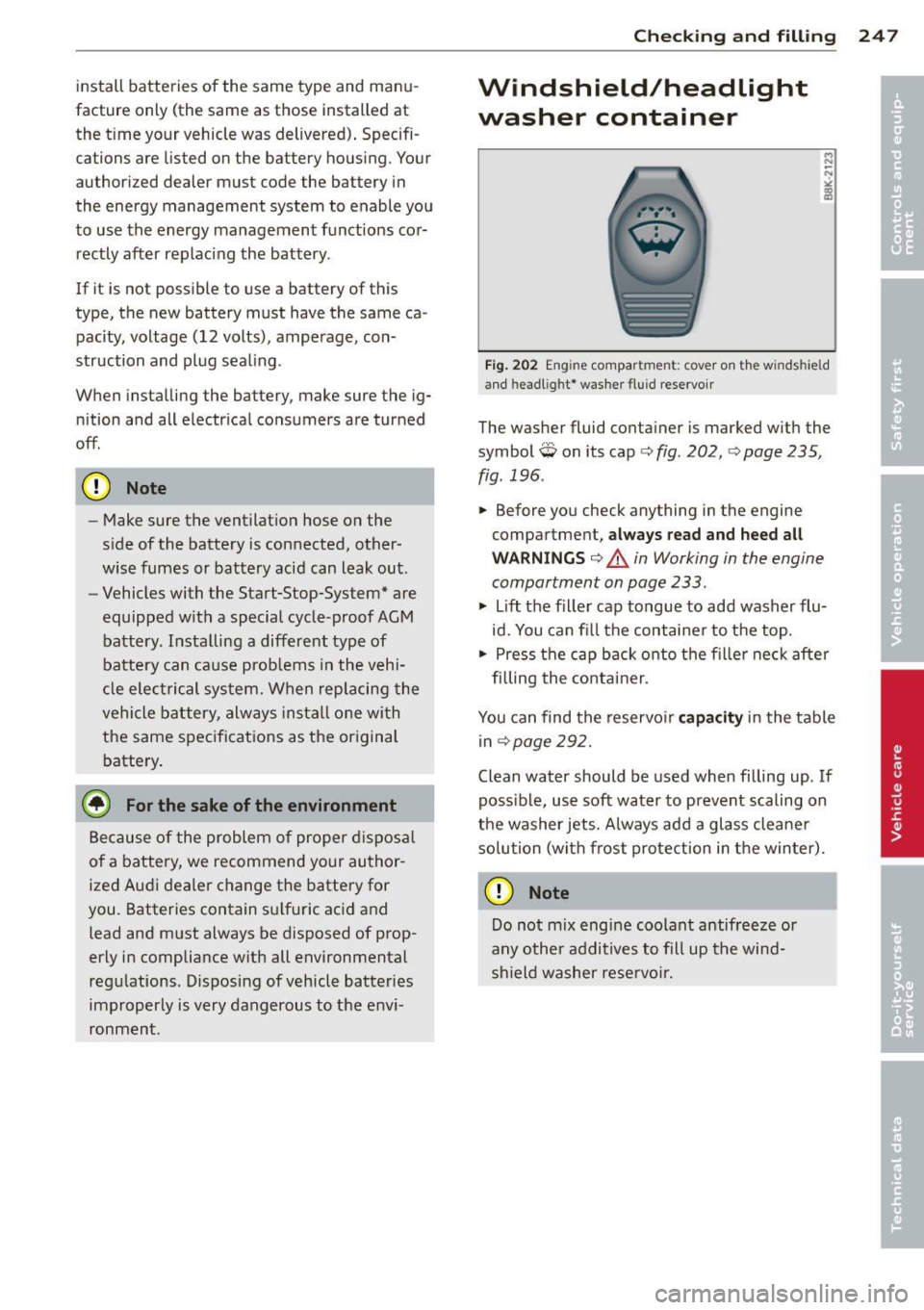
Fig. 202 Eng in e compar tment: cov er on the w inds hield
and headl ight* washe r fl uid reservoir
The washer fluid container is marked with the
symbol
Q on its cap c::> fig. 202, c::> page 235,
fig . 196 .
.., Before you check anything in the engine
compartment,
always read and heed all
WARNINGS c::> &. in Working in the engine
compartment on page 233 .
.., Lift the filler cap tongue to add washer flu
id . You can fill the container to the top.
.., Press the cap back onto the filler neck after
f illing the container.
You can find the reservoir
capacity in the table
in
c::> page 292.
Clean water should be used when filling up. If
possible, use soft water to prevent scaling on
the washer jets. A lways add a glass cleaner
solution (with frost protection in the winter).
(D Note
Do not mix engine coolant antifreeze o r
any other additives to fill up the wind
sh ield washer reservoir.
Page 269 of 316
When the malfunction indicator is illuminat
ed, the system may not be able to detect or
signal low tire pressure as intended. TPMS
malfunctions may occur for a variety of rea
sons, including the installation of replace
ment or alternate tires or whee ls on the veh i
cle that prevent the TPMS from funct io ni ng
p roperly . Always check the T PMS malfunct ion
tellta le afte r replacing one or more t ires or
wheels on your veh icle to ensure that the re
p lacement or a lternate tires and wheels allow
the TPMS to continue to function properly .
Tire pressure indicator appears
Applies to vehicles: with tire pressure monitoring system
The tire pressure indicator in the instrument
cluster informs you if the tire pressure is too
low or if there is a system malfunction.
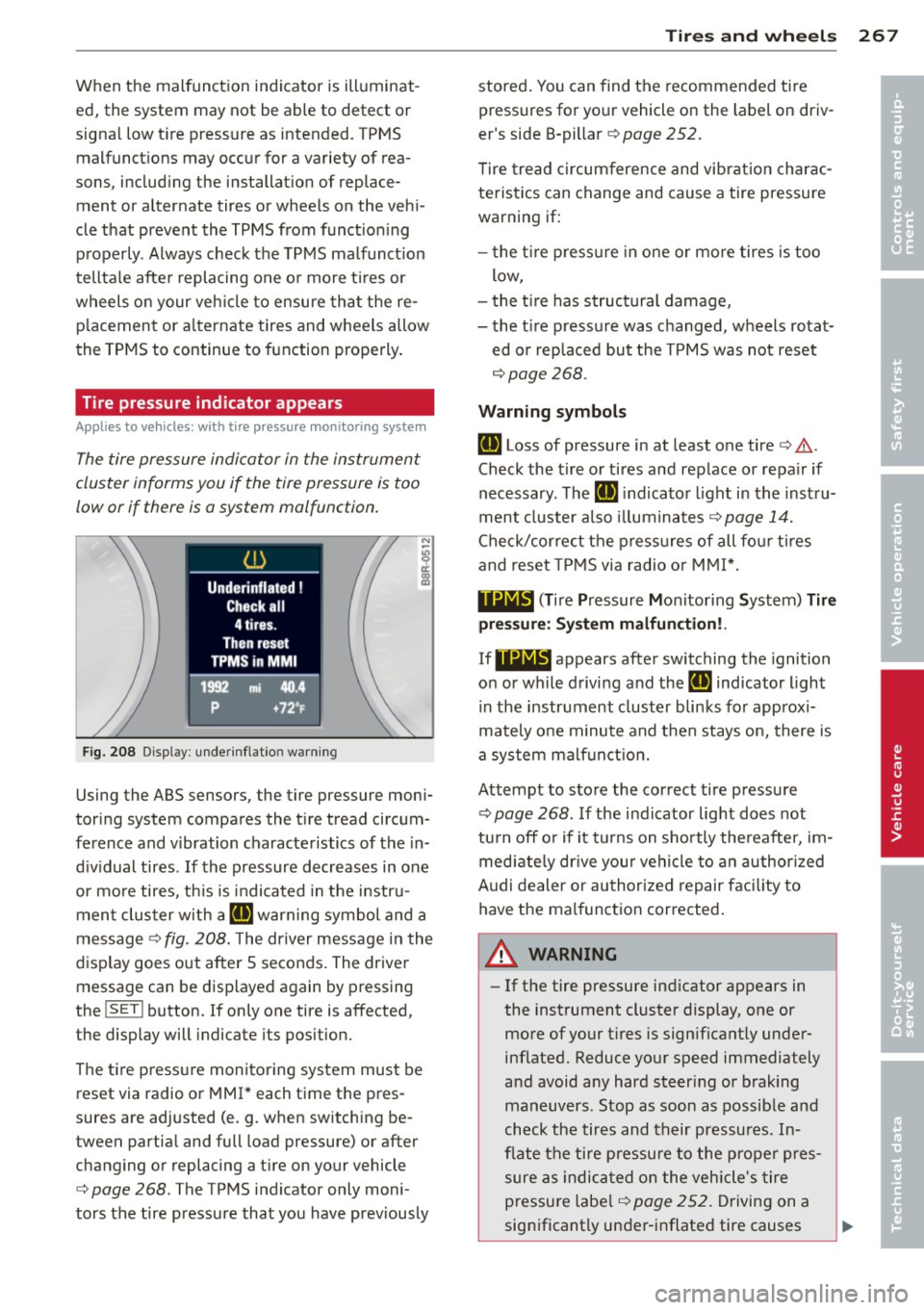
Fig. 208 Display : underinflatio n warning
Using the ABS sensors, the tire pressure moni
toring system compares the t ire tread circum
ference and vibration characteristics of the in
d iv idual tires . If the pressure decreases in one
or mo re tires, th is is indica ted in the instru
ment clus ter with a
IE warning symbol and a
message ¢
fig. 208. The driver message in the
display goes out after 5 seconds. The driver message can be displayed again by pressing
the
! SET ! button. If only one tire is affected,
the display will indicate its pos ition.
The ti re press ure monitoring system must be
reset via radio or MMI* each time the pres
sures are adjusted (e.g . when switching be
tween partia l and full load pressure) or after
changing or replacing a t ire on your vehicle
¢
page 268 . The TPMS indicator only moni
tors the tire pressure that you have prev iously
Tire s an d wheel s 267
stored . You can find the recommended t ire
pressures for yo ur vehicle on the label on driv
er's side B-pillar ¢
page 252.
Tire tread circum ference and vibration charac
teristics can change and cause a tire pressure
warning if:
- the t ire p ress ure in one or more tires is too
low,
- t he t ire has structural damage,
- the t ire pressure was changed, wheels rotat-
ed or replaced but the TPMS was not reset
¢ page 268.
Warning symbo ls
IE Loss of pressure in at least one tire¢.&,.
Check the tire or tires and replace or repa ir if
necessary. The
IE indicato r light in the inst ru
ment cluster a lso illuminates
c::!;> page 14.
Check/correct the press ures of all fou r tires
and reset TPMS via radio o r MMI*.
119;~, (T ir e Pressure Mon itoring System) Tire
pre ssure: Syst em malfun ction!.
If 11Nlf:1 appears afte r switching the ignition
on or while driving and the
IE indicator light
i n the instrument cluster blinks fo r approx i
mately one minute and then stays on, there is
a system malf unct ion.
Attempt to store the correct tire pressure
¢ page 268 . If the ind icator light does not
tu rn off o r if it turns on sho rtly the reafter, im
med iate ly dr ive your vehicle to a n author ized
Audi dealer or au thorized repair faci lity to
have the malfunc tion corrected .
A WARNING
-=
-If the tire pressure indicator appears in
the instrument cluster display, one or
more of your t ires is significant ly under
inflated. Reduce your speed immediately
and avoid any hard steer ing or braking
maneuvers. Stop as soon as possible and
check the tires and their pressures. In
flate the tire p ressure to the prope r pres
sure as indica ted on the vehicle's tire
pressu re labe l
¢page 252. Driving on a
significantly under-i nflated tire causes
•
•
Page 275 of 316
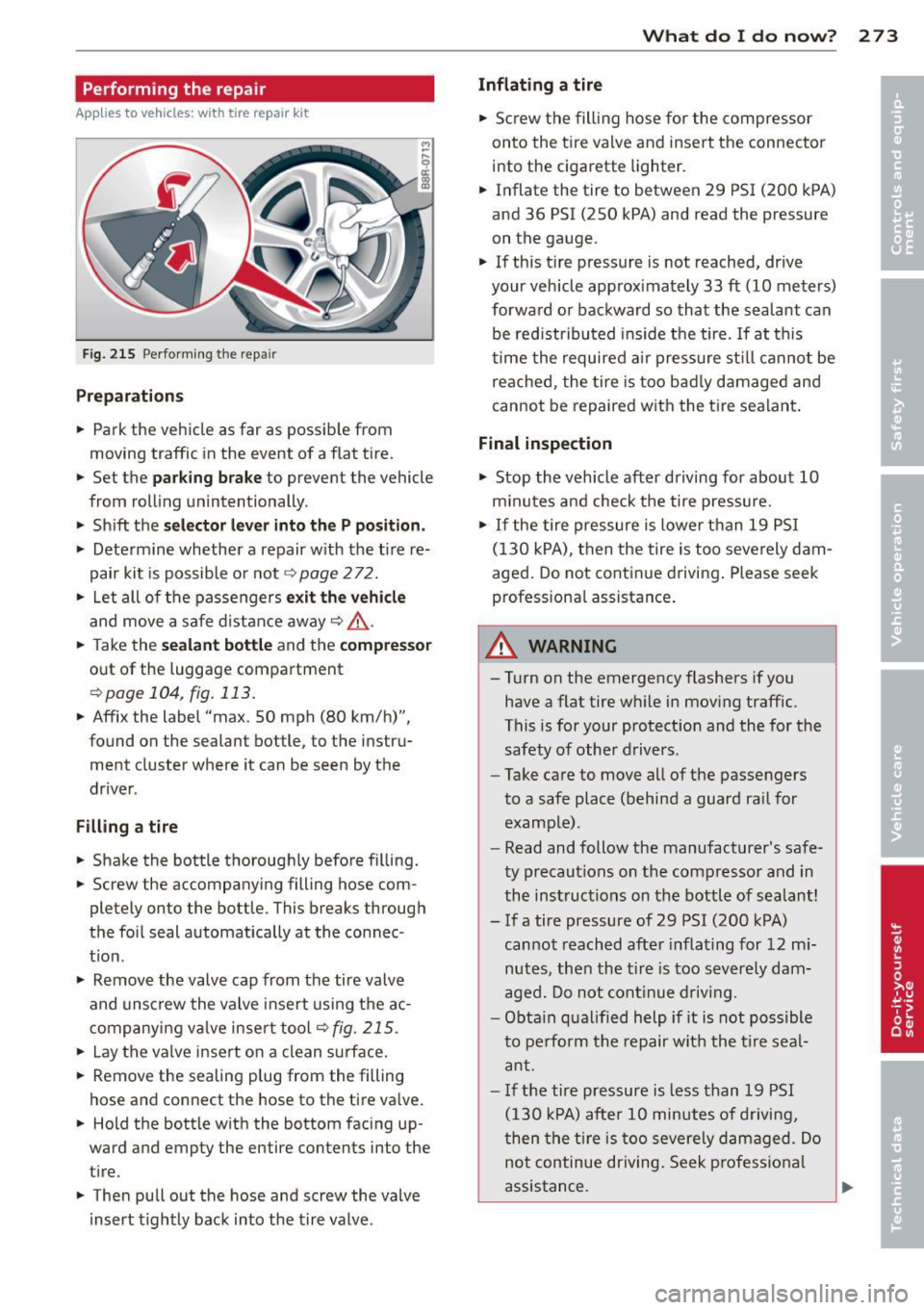
Performing the repair
Applies to vehicles: with tire repair kit
F ig. 2 15 Perform ing the repa ir
Prep arati ons
.. Park the veh icle as far as possib le from
moving traffic in the event of a flat tire.
.. Set the
park ing bra ke to prevent the vehicle
from roll ing unintentionally .
.. Sh ift the
s e le ctor l ever i nto th e P po sition .
.. Determ ine whether a repair w ith the t ire re
pair kit is possible o r not
9 page 2 72.
.. Let all of the passengers
exi t the vehicle
and move a safe distance away 9 &,. .
.. Take the sealant bottle and the compresso r
out of the luggage compartment
9page 104 , fig. 113.
.. Affix the label "max. 50 mph (80 km/h)",
found on the sealant bottle, to the instru ment cluster where it can be seen by the
driver .
Filling a tire
.. Shake the bottle thorough ly before fi lling.
.. Screw the accompanying filling hose com-
pletely onto the bottle. This breaks through
the foi l seal automatically at the connec
t ion .
.. Remove the valve cap from the tire valve
and unscrew the valve insert using the ac
companying va lve inser t tool
9 fig. 215 .
.. Lay the valve insert on a clean surface.
.. Remove the sealing plug from the filling
hose and connect the hose to the tire va lve .
.. Hold the bottle with the bottom fac ing up
ward and empty the entire contents into the
tire.
.. Then pull out the hose and screw the valve
i nsert t ightly back into the tire valve .
What do I do now ? 273
Inflating a tir e
.. Sc rew the fill ing hose for the compressor
onto the t ire valve and insert the connector
into the cigarette lighter .
.. Inflate the tire to between 29 PSI (200 kPA)
and 36 PSI (250 kPA) and read the pressure
on the gauge .
.. If this t ire pressure is not reached, dr ive
your veh icle approximately 33 ft (10 meters)
forward or backward so that the sealant can be red istributed inside the tire. If at th is
t ime the required a ir pressure st ill canno t be
reached, the tire is too bad ly damaged and
cannot be repaired w ith the t ire sea lant .
Final inspection
... Stop the vehicle aft er driving for about 10
m inutes and check the tire pressure.
... If the tire pressure is lower than 19 PSI
(130 kPA), then the tire is too severely dam
aged. Do not continue driving . Please seek
professiona l assistance .
A WARNING
-Turn on the emergency flashers if you
have a flat tire w hile in mov ing traffic .
This is for your protect ion and the for the
safety of other drivers.
- Take care to move all of the passengers
to a safe place (behind a guard ra il for
examp le) .
- Read and follow the manufacturer's safe
ty precautions on the compresso r and in
the instructions on the bottle of sealant!
- If a tire pressure of 29 PSI (200 kPA)
cannot reached afte r inflat ing for 12 m i
nutes, then the t ire is too severe ly dam
aged. Do not cont inue drivi ng.
- Obta in q ual ified help if it is not possible
to pe rform the repair wit h the tire seal
a nt .
- If the tire pressure is less than 19 PSI
(130 kPA) afte r 10 minutes of driving,
then the tire is too severely d amaged . Do
not continue dr iving. Seek p rofess ional
assistance. ..,.
Page 276 of 316
274 What do I do no w?
Special ca re is requ ired if you are repairin g
t he t ire o n a steep incline.
@ Tips
- Do not operate the compressor for more
than 12 minutes continuously, otherwise i t can overheat. Once the compressor has
cooled, you can continue to use it.
- If sealant has spi lled out, let it dry and
then you can remove it by pee ling it away
like a fo il.
- Remember to obtain a new bottle of
sealant from your authorized Audi dealer
after repairing a tire. After this, the func
tionality of the tire repair set is restored.
- Obey all laws.
Changing a wheel
Before changing a wheel
Observe the following precautions for your
own and your passenger's safety when chang
ing a wheel .
.,. After you experience a tire fa ilure, pull the
car well away from moving traffic and try to
reach
le ve l ground before yo u stop ¢&_ .
.,. All p assengers sho uld
le ave the c ar and
move to a safe location (for instance, behind
the guardrai l)¢
,A .
.,. Engage the parking brake to prevent your
vehicle from ro lling un intentionally¢ &_.
.,. Move
selecto r le ver to pos ition P ¢ ,A .
.,. If you are tow ing a trailer: unhitch the trail
er from your veh icle.
.,. Block the diagonally opposite wheel with
the fo ld ing chocks or other objects.
.,. Take the
jack * and the inflatab le spare tir e*
out o f the luggage compartmen t
¢page 269.
A WARNING
You or your passengers cou ld be injured
while changing a whee l if yo u do not fol
low these safety precautions:
-
- If you have a flat tire, move a safe d is
tance off the road. Turn off the engine,
turn the emergency flashers on and use
other warning devices to a lert other mo
torists.
- Make sure that passengers wait in a safe
place away from the vehicle and well
away from the road and traffic.
- To help prevent the vehicle from moving
suddenly a nd possib ly slipping off the
jack*, always fully set the pa rking brake
a nd b lock the wheel d iagonally opposite
t he wheel be ing c hanged w it h t he fold
ing chocks or other objec ts. When one
front wheel is lifted off the ground, plac
ing the Automatic Transmission in P
(Park) will
not prevent the vehicle from
mov ing.
- Before you change a wheel, be sure t he
ground is level and firm. If necessary,
use a sturdy board under the jack*.
- Always store the vehicle tool kit, the
jack * and the replaced tire in the luggage
compartment¢
page 145.
Changing a wheel
When you change a wheel, follow these
quence described below step-by-step and in
exactly that order.
1. Remove the decorative wheel cover* . For
more details see also ¢
page 2 75, Deco
rative wheel covers
or¢ page 2 75,
Wheels with wheel bolt caps .
2. Loosen the wheel bolts ¢ page 276 .
3. Locate the prope r mounting point fo r the
jack* and align the jack * below that point
¢ page 276.
4 .
Lift the c ar with t he jack *¢ page 2 76 .
5 . Remove the
wheel with the flat tir e and
then insta ll the
inflatable spare tire*
¢ page 277 .
6. Tighten all whee l bolts lightly.
7.
Lower the vehicle with the jack*.
8. Use the wheel bolt wrench and
firmly
t ighten all wheel bolts¢ page 276.
9. Replace the decorative
whe el cover *.
Page 283 of 316
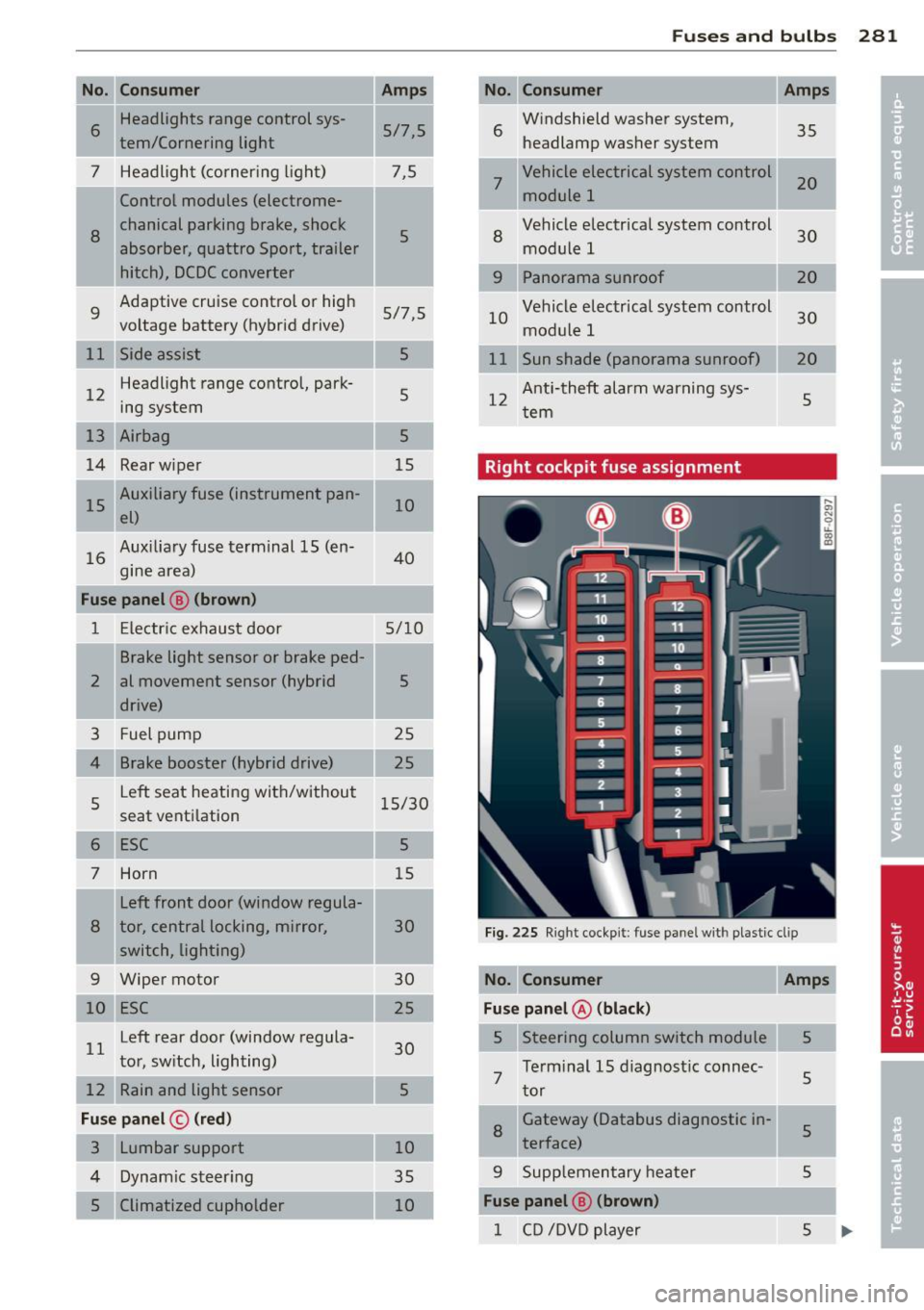
I
I
I
-No. Consumer
6
Headlights range control sys-
tern/Co rnering light
7 Headligh t (corner ing l ight)
Control modules (electrome-
8
chanical parking brake, shock
absorber, quattro Sport, trailer
hitch), DCDC converter
9 Adaptive cruise contro
l or high
voltage battery (hybrid drive)
12 Headlight range contro
l, park
ing system
13 Airbag
14 Rear wiper
15 Auxiliary fuse (ins
trument pan
el)
Auxilia ry fuse terminal 15 (en-
16 gine area)
Fuse panel
@ (brown )
1 E lectric exhaust door
2
3
4
5
6
7 Brake light sensor or brake ped
al movement sensor (hybrid
drive)
Fuel pump
Brake booster (hybrid drive)
Left seat heating with/without
seat venti
lation
ESC
Horn
Left fron t door (window regula -
8 tor, central locking, mirror,
sw itch, lighting)
-9 Wiper motor
10 ESC
Left rear door (window regula
l l tor, sw itch, light ing)
12 Rain and light sensor
Fuse panel © (red)
3 Lumbar support
4 Dynam ic ste ering
5 Climatized cupholder
-Amps
5/ 7,5
7,5
5
5/7,5
5
5
5
15
10
40
5/10
5
25
25
1 5/30
5
15
30
30
2 5
30
5
10
35 10
-
Fu se s and bulb s 281
No. Consumer
6 W
indshield washer system,
headlamp washer system 35
7
Vehicle electrical system control
module 1 20
8
Vehicle electrical system control
module 1 30
9 Panorama su
nroof
10 Vehicle elec
trical system control
30
mod ule 1
11 Sun shade (panorama sunroof)
20
12 Anti-theft alarm warning sys-
tern 5
Right cockpit fuse assignment
Fi g. 22 5 Right cockp it : fuse panel wit h plast ic cl ip
No. Consumer Amps
Fuse panel @ (black )
5 Steering column switch module 5
7 Te
rm inal 15 d iagnost ic connec-
tor
5
8 Gateway (Databus diagnostic in-5 terface)
-..
9 Supp
lementary heater 5
Fuse panel @ (brown)
1 CD /D V D p layer 5
Page 285 of 316
Bulbs
Replacing light bulbs
For your safety, we recommend that you have
your authorized Audi dealer replace burned
out bulbs for you .
It is becoming increasingly more and more
difficult to replace vehicle light bulbs since in many cases, other parts of the car must first
be removed before you are able to get to the
bu lb. This appl ies especially to the light bu lbs
in the front of your car which you can on ly
reach through the engine compartment .
Sheet metal and bulb ho lde rs can have sharp
edges that can cause ser ious cuts, and parts
must be correctly taken apart and then prop
erly put back together to help prevent break
age of parts and long term damage from wa
ter that can enter housings that have not been
properly resealed.
F or your safety, we recommend that you have
your authorized Audi dealer replace any bulbs
for you, since your dealer has the proper tools,
the correct bu lbs and the expertise.
G as disc harge la mp s (X enon li ght s)*:
Due to the high electrical voltage, have the
bu lbs rep laced by a qualified technician.
H eadlights with Xenon l ight can be ident ified
by the high voltage sticker .
A WARNING
Contact with hig h-voltage components of
the electrica l system and improper re
placement of gas discharge (Xenon) head
light bulbs can cause serious personal in
jury and death .
- Xenon bulbs are pressurized and can ex plode when be ing changed.
- Chang ing Xenon lamps requires the spe
c ial train ing, instructions and equip
ment.
- Only an authorized Aud i dea ler or other
qualified workshop should change the
bulbs in gas discharge lamps .
Fuses and bulb s 28 3
A WARNING
There are parts with sharp edges on the
openings and on the bulb holders that can
cause ser ious cuts.
- If you are uncertain about what to do,
have the work performed by an author
ized Audi dealer or other qualified work
shop. Ser ious personal i nju ry may result
from imprope rly perfo rmed wo rk.
(D Tips
- If you must replace the light bulbs your
self, always remember that the eng ine
compartment of any vehicle is a hazard
ous area to work in. A lways read and
heed a ll WARN INGS
~ page 226, Engine
compartment
q & .
-It is best to ask your authorized Audi
dealer whenever yo u need to change a
bulb .
• -
•
Page 286 of 316
284 Emergency situations
Emergency situations
General
This chapter is intended for trained emer
gency crews and working personnel who
have the necessary tools and equipment to
perform these ope rations.
Starting by pushing or
towing
Q;) Note
Vehicles with an automati c transmission
cannot be started by pushing or towing .
Starting with jumper
cables
If necessary, the engine can be started by
connecting it to the battery of another vehi
cle.
If the engine should fail to start because of a
discharged or weak battery, the battery can be
connected to the battery of
another veh icle,
using a
pair of jumper cables to start the en
g ine .
Jumper cables
Use only jumper cables of sufficiently large
cross section to carry the starter current safe
ly. Refer to the manufacturer's specifications.
Use only jumper cables with
insulated termi
na l clamps which are distinctly marked:
plus(+) cable in most cases colored red
minu s(-) cable
in most cases colored black .
A WARNING
Batteries contain electricity, ac id, and gas .
Any of these can cause very serious or fatal
inju ry. Follow the instructions below for
safe handling of your veh icle's battery.
- Always shield you r eyes and avoid lean
ing over the battery whenever possible.
- A discharged battery can freeze at tem
peratures just be low 32 °F (0 °C). Before connecting a
jumper cable, you must
thaw the frozen battery complete ly, oth
erwise it could explode.
- Do not allow battery acid to contact eyes
or skin . Flush any contacted area with
water immediately .
- Improper use of a booster battery to start a vehicle may cause an explosion.
- Vehicle batteries generate explosive gas
es. Keep sparks, flame and lighted ciga
rettes away from batteries.
- Do not try to jump start any vehicle with a low ac id level in the battery.
- The vo ltage of the booster battery must
also have a 12-Volt rating . The capacity
(Ah) of the booster battery should not be
lower than that of the discharged bat
tery . Use of batteries of d ifferent voltage
or substantially different "Ah" rating
may cause an exp losion and personal in
jury.
- Never charge a frozen batte ry. Gas trap
ped in the ice may cause an explosion.
- Never charge or use a battery that has
been frozen. The battery case may have
be weakened.
- Use of batter ies of different voltage or
substantially different capacity (Ah) rat
ing may cause an exp losion and injury.
The capacity (Ah) of the booster battery
should not be lower than that of the dis
charged battery.
- Before you check anything in the engine
compartment, always read and heed a ll
WARNINGS ¢
page 226, Engine com
partment.
«I) Note
-Applying a higher voltage booster bat
tery will cause expensive damage to sen
sitive electronic components, such as
contro l units, relays, rad io, etc .
- There must be no electrical contact be
tween the vehicles as otherwise current
could already start to flow as soon as the
positive(+) terminals are connected. ..,_
Page 302 of 316
300 Index
A
Accessories 297
AC (climate control) . . . . . . . . . . . . . . . . . . 80
Adaptive cruise control . . . . . . . . . . . . . . . 107
Cleaning sensors ......... .. .. .... . 219
Indicator lamp . . . . . . . . . . . . . . . . . . . . 109
Messages .. ..... ........... ... .. . 114
Request for dr iver intervention . . . . . . . 11 2
Setting the d istance ........ ... .. ... 111
Setting the d riving p rog ram .. .. .... . 112
Adapt ive dampers . . . . . . . . . . . . . . . . . . . 120
Adaptive light . .. . ...... ... ... ..... .. 51
Defective . . . . . . . . . . . . . . . . . . . . . . . . . 34
Adding
E . l ngine coo ant ........... .. .. .... . 241
E ng ine oi l ............... .. .. .. .. . 238
W indshie ld washer fluid ... .. .. .... . 247
Addit ional accesso ries ... ... .. .. .. .. . 297
Additives
Eng ine oil .... ........... .. .. .... .
238
Adjusting
A ir dist ribution (climate control) . .... .
80
Front seats .... .. ..... ... .. .. .... .. 6 1
Steer ing column manually . .. .. .... .. 83
Temperature (climate control) .. .. .. . . 80
A irbag system . . . . . . . . . . . . . . . . . 157, 174
Advanced Airbag System ... .. .. .... . 161
Advanced Airbag System components . 164
Care . .. .. ............... .. .. .... . 170
Chi ldren . ............... .... .... . 179
Ch'ld t .
1 res ra 1nts ........... .. .. .. .. . 180
Components (front airbags) .. .. .. .. . 164
Danger of fitting a child safety seat on
the front passenger seat . .. .. .. .... .
158
Disposa l ..... ........... .. .. .. .. . 170
Fr ont airbags . . . . . . . . . . . . . . . . 16 1, 16 2
How do the front airbags work? ..... . 166
How many airbags does my vehicle
have? ..... ... .. ..... ... .. .. .... .
164
How the Advanced Airbag System com-
ponents work together ...... .. .... .
165
Important things to know .. .. .. .. .. . 157
Ind icator light ..... ...... .. .. .. .. . 168
Monitoring . ................ ... ... 168
PASSENG ER A IR BAG OFF light .. .. .. . 168
Repa irs .. .. .. . .......... .. .. .. .. . 170
Safety ins tructions ........ .. .. .. .. . 170
S ide a irbags ..... ... .. ..... .... . .. 172
Side curtain airbags .... ..... ... .. .. 175
Warning/ind icator lights ..... ... .. .. . 15
w. ht .
e1g -sensing mat . . . . . . . . . . . . . . . 179
When must the system be inspected? . 168
Air t ransport . ..... .. ... ..... ... .. .. 106
All-wheel drive .. .. ................ . 202
Selective wheel torque co ntrol . . . . . . . 19 7
Winter tires ... .. ............. .... 2 63
Al loy wheels .... .. ... .......... .... 222
Alternator
Malfunction . . . . . . . . . . . . . . . . . . . . . . .
28
Anti-free ze
refer to E ng ine coolan t sys tem ... .. .. 2 40
Anti- lock brake system .............. . 197
Warning/ind icator lights .. ... ..... .. . 17
Anti-slip reg ulation . .. .. ..... .... . .. 197
An ti-theft a la rm warn ing system . .. .. .. . 38
El ectronic immob il iz er .......... .... . 38
Approach/depa rture angle ........... . 209
Ashtray .... .... .. .. ... .. ..... ... .. . 75
Aste risk
What does it mean when something is
ma rked wit h an as ter isk? ..... ... .. .. .. 6
Audi braking guard
refer to Braking gua rd ............. . 113
Audi drive select
Indicator lig ht . .. ............. .. ..
201
also refer to Drive select .. ...... .... 120
Audi parking system plus with rearview
camera . ... .... .. .. ... .. ..... ... ..
129
Adjusting the d isplay ............. .. 133
Adjusting the war ning tones ..... .... 133
Cleaning sensors/camera ... .... .. .. 219
Rearv iew camera -parking mode 1 ... . 132
Rea rv iew camera -parking mode 2 .. .. 132
Safety p recautio ns ............. .... 129
Swi tch ing on a nd off ........... .... 131
Tra ile r hi tch . .. .. ... .......... .... 134
Audi Serv ice Repair Manuals a nd Litera -
ture . .. ... ... .. .. .. ... ... ... .. .. ..
295
Auto-Check Contro l . . . . . . . . . . . . . . . . . . 27
A ut o locking . . . . . . . . . . . . . . . . . . . . . . . . 38
Automat ic be lt retractor . .. ... ..... .. 152
Automatic car wash
refer to Washing ... ... ..... ... .. .. 217
A utomat ic d riving light control ...... .. . 49
Page 303 of 316
Index 301
-----------------------------------.......
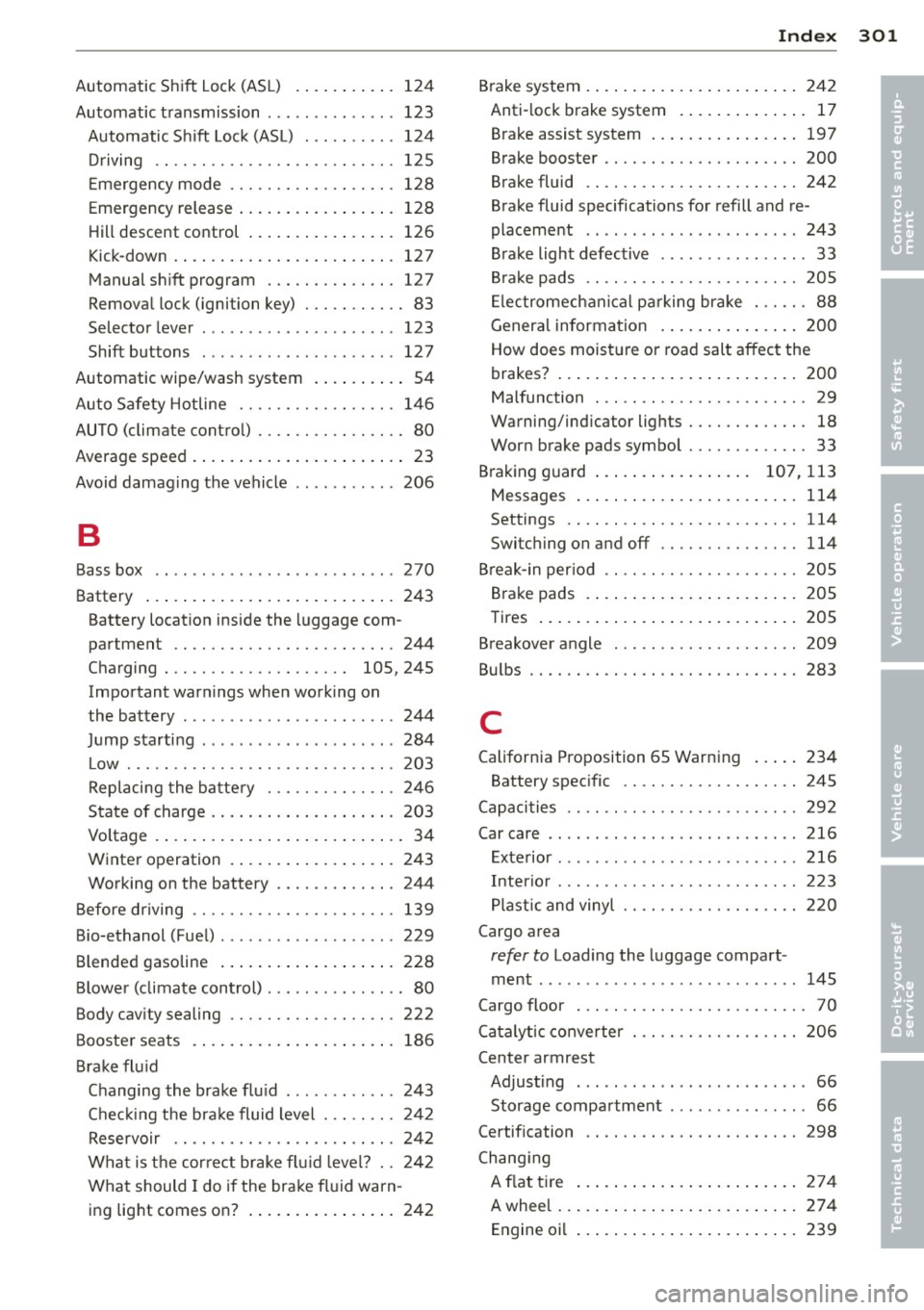
Automatic Shift Lock (ASL) . ... .. .. .. . 124
Automatic transmission .......... .... 123
Automatic S hift Lock (ASL) . .. .. .. .. . 124
Driving .. .. ............. .. .. .. ... 125
E mergency mode ......... .. .. .. .. . 128
E me rgency release . . . . . . . . . . . . . . . . . 128
Hill descent control .... ... .. .. .. .. . 126
Kick -down . ..... ...... ... .. .. .. ... 127
Manual sh ift program ..... .. .. .. .. . 127
Removal lock (ignition key) . .. .. .. .. .. 83
Selector lever ......... ...... .... .. 123
Shift buttons .... .. ...... .. .. .. .. . 127
Automatic wipe/wash system . . . . . . . . . . 54
Auto Safety Hotline ........ .. .. .. .. . 146
AUTO (climate contro l) . . . . . . . . . . . . . . . . 80
Average speed . . . . . . . . . . . . . . . . . . . . . . . 23
Avoid damag ing the vehicle ...... . ... . 206
B
Bass box .. ............ ...... .... .. 270
Battery . . . . . . . . . . . . . . . . . . . . . . . . . . . 243
Battery locat ion inside the luggage com-
partment .. ............. .... .. .. . 244
C harging . . . . . . . . . . . . . . . . . . . . 105 , 245
Important war nings when working on
the battery . . . . . . . . . . . . . . . . . . . . . . . 244
Jump starting ............... ... ... 284
L ow . .. .. .. ................. .. .. . 203
Replacing the batte ry ..... .. .. .. .. . 246
State of charge . .. ..... ... .. .. .. ... 203
Voltage .... .... ...... ... .. .. .. .... 34
Winter operation . ..... ... .. .. .. .. . 243
Working on the battery . . . . . . . . . . . . . 244
B efore driving ............. .... .. .. . 139
Bio-ethanol (Fuel) .... ...... .. .. .. .. . 229
Blended gasoline ... .... ... .. .. .. ... 228
B lower (climate control) . . . . . . . . . . . . . . . 80
Body cav ity sealing ......... .. .. .. .. . 222
B ooster seats .. .. .. .... ... .. .. .... . 186
Brake flu id
Changing the brake flu id .... ... ... .. 243
C hec kin g the bra ke fluid level . .. .. .. . 242
Reservoir .. .. ........... .. .. .. ... 24 2
Wha t is the cor rect brake flu id leve l? . . 24 2
What should I do if the brake flu id warn -
ing light comes on? .... ... .. .. .. .. . 242 Brake system .
..... ... .. .. ..... ... .. 242
Anti- lock b rake system . . . . . . . . . . . . . . 17
Brake assist system .. .. ..... ... .. .. 197
Brake booster .. .. ................. 200
Brake fluid .. .. .. .... ............. 242
B rake fluid specifications fo r refill and re
placeme nt . . . . . . . . . . . . . . . . . . . . . . . 243
B ra ke light defective . . . . . . . . . . . . . . . . 33
B ra ke pads .. .. .. .. . .............. 205
El ec tromechan ical par king br ake . .. .. . 88
General informa tion . ... .... ... .. .. 2 00
How does moist ure or road salt affect the
brakes? ... .. .. .. .. . ... ...... ... .. 200
Malfunction . . . . . . . . . . . . . . . . . . . . . . . 29
Warning/ind icator lights ............ . 18
Wor n brake pads symbol . . . . . . . . . . . . . 33
Braking guard . . . . . . . . . . . . . . . . . 107, 113
Messages . . . . . . . . . . . . . . . . . . . . . . . . 114
Settings .. .. .. .. .. ............... 114
Switching on and off ........... .. .. 114
B reak-in per iod .. .. .. . .............. 205
B rake pads .. .... .. . .. .. ..... ... .. 205
Tires ... .. .. .... .. . .. .. ..... ... .. 205
B reakove rangle . .. .... ........... .. 209
Bu lbs ........ .. ...... ............. 283
C
Californ ia Proposition 65 Warning ... .. 234
Battery spec ific . . . . . . . . . . . . . . . . . . . 245
C ap aci ties .. .. .. .. .... ........... .. 292
Car care .......... .. ..... .......... 216
E xterior . . . . . . . . . . . . . . . . . . . . . . . . . . 216
Inte rio r ... .. .. .. .. ............... 223
Plast ic and vinyl .. .... ............. 220
Cargo a rea
refer to Loading the l uggage compart -
ment . ...... .. .... .......... ..... 145
Cargo floor . . . . . . . . . . . . . . . . . . . . . . . . . 70
Cata lytic converter . .... ......... .... 2 06
Center armrest Adjusting . . . . . . . . . . . . . . . . . . . . . . . . . 66
Storage compa rtment .. .. .. ... ... .. . 66
Certification .. .. .. .. ............... 298
Changi ng
A flat t ire ... .... .. . .. .. ..... ... .. 274
A whee l ... .. .... .. . .. .. ..... ... .. 274
Engine oi l ... .... .. . .. .. ..... ... .. 239
•
•