service AUDI Q7 2017 Owner´s Manual
[x] Cancel search | Manufacturer: AUDI, Model Year: 2017, Model line: Q7, Model: AUDI Q7 2017Pages: 402, PDF Size: 100.39 MB
Page 331 of 402
u (0 ...... N r--. N ...... 0
0
:E
ly unscrew the cap to the left until you feel re
sistance ¢,&. .
.. Push the release button again and remove the
cap completely .
.. Add coolant mixed in the correct ratio
¢page 328 up to the MAX marking .
.. Make sure that the fluid level remains stable .
Add more coolant if necessary .
.,. Turn the cap to the right to secure it until yo u
feel resistance a second time.
Coolant loss usually indicates there is a leak . Im
mediately drive your vehicle to an authorized
Audi dealer or authorized Aud i Service Facility
and have the cooling system inspected. If the
cooling system is not leaking, a loss can come
from the coolant boiling through overheating
and being pushed out of the cooling system.
A WARNING
-The cooling system is under pressure. Do
not open the coolant expansion tank cap
when the eng ine is hot. This increases the
risk of burns .
- The coolant additive and the coolant can be
dangerous to your health. For this reason,
keep the coolant in the original container
and away from children. There is a risk of
poisoning.
- When working in the engine compartment,
remember that the radiator fan can switch
on even if the ign ition is switched off, which
increases the risk of injury.
CD Note
Do not add coolant if the expansion tank is
empty. There may be air in the cooling sys
tem, which increases the risk of engine dam
age . If this is the case, do not continue driv
ing . See an authorized Audi dealer or author
ized Audi Service Facility for assistance.
Checking and Filling
Brake fluid
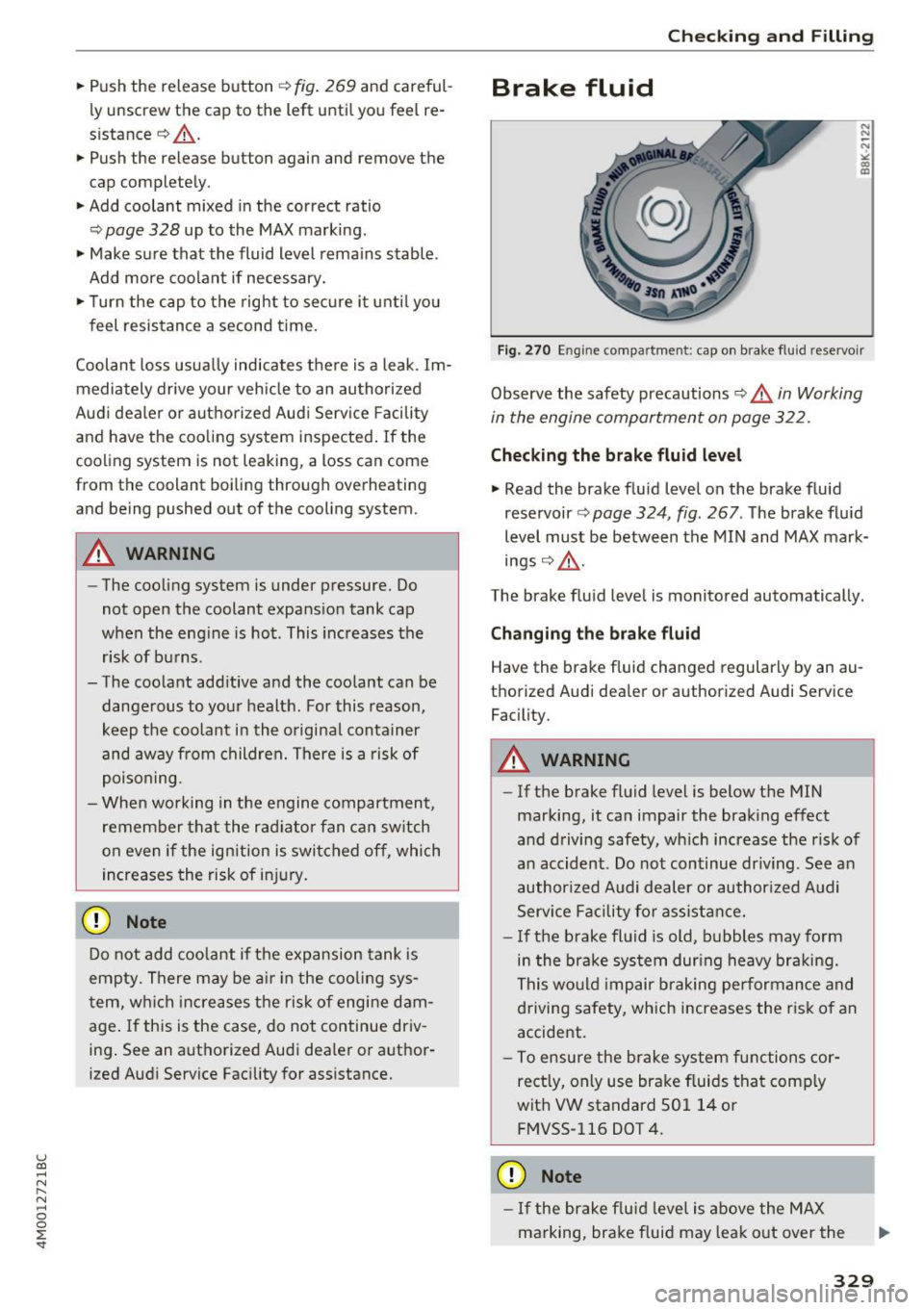
Fig. 270 Engine compartment: cap on brake fluid reservo ir
Observe the safety precautions¢ A in Working
in the engine compartment on page 322 .
Checking the brake fluid level
.. Read the brake fluid level on the brake fluid
reservoir ¢
page 324, fig . 267. The brake fluid
level must be between the MIN and MAX mark
ings ¢,& .
The brake fluid level is monitored automatically.
Changing the brake fluid
Have the brake fluid changed regularly by an au
thorized Audi dealer or authorized Audi Service Facility.
A WARNING
- If the brake flu id level is below the MIN
marking, it can impair the braking effect
and driving safety, wh ich increase the risk of
an accident. Do not continue dr iving. See an
authorized Audi dealer or authorized Audi
Serv ice Facility for assistance.
- If the brake fluid is old, bubbles may form
in the brake system dur ing heavy braking.
This would impair braking performance and
driving safety, which increases the risk of an
accident.
- To ensure the brake system functions cor
rectly, only use brake fluids that comp ly
with VW standard 501 14 or FMVSS-116 DOT 4.
CD Note
-If the brake flu id l eve l is above the MAX
marking, brake fluid may leak out over the
329
Page 332 of 402
Check ing and F illing
edge of the reservoir and result in damage
to the vehicle .
- Do not get any bra ke fluid on the ve hicle
paint, beca use it will cor rode t he pa int .
Battery
General warnings about batteries
Because of the complex power s upply, a ll wor k
on batte ries such as disconnecting, rep laci ng,
etc. s hou ld
onl y be per formed by an auth or ized
Aud i dea ler o r autho rized Aud i Serv ice Facility
c;> .&. .
The te rm "vehicle battery " refers to the 12 Vo lt
b at tery i n your veh icle.
Detailed warnings for the vehicle battery:
®
Wear eye protection .
A
Battery acid is highly corrosive. Wear p ro-
tective gloves and eye p rotection.
@
F ire, sp arks , open flame and smo king a re
forbidden.
A
A highly explosive mixtu re of gases can
form when charging ba tte ries.
®
Keep c hildren away from battery acid and
batteries.
A WARNING
All work on the batte ry o r electrical system in
your vehicle can result in injuries, chemical
burns, accide nts o r burns. Because of this, a ll
wor k mu st be perf ormed
only by an au thor
i z e d Aud i de aler o r authorized Aud i Se rv ice
Facility .
A WARNING
California Proposit io n 65 Warning:
- B attery posts, termin als and re late d a cces
so ries contai n lead and lead compounds,
chem ica ls known to the State of California
to cause cance r and rep roduct ive p roblems.
Wash hands after handling.
330
(D Note
P rotect the vehicle battery aga inst freezing if
the ve hicle wi ll be par ked for long periods of
time so t hat it is not destroyed by "freezing"
c;> page 331.
@ For the sake of the environment
'8 Batteries conta in polluting s ubstances such
as sulfur ic acid and lead. Contact an aut ho r
i zed Audi dealer or authorized A udi Service
Fac ility for more informat io n.
· Vehicle battery
The term "vehicle battery" refers to the 12 Volt
battery in your vehicle.
Not running the v ehicl e for long period s of
time
If you do not d rive your vehicle for severa l days o r
weeks, electrical equ ipment is gradually sca led
back or sw itched off . Th is reduces energy use and
ensures the vehicle will be ab le to s tart after long
per iods o f time
9 page 153. Some co nvenience
funct io ns, such as interio r lighting o r power seat
adjus tment, may not be av ail abl e un de r c ertain
c irc umstances. These convenience functions will
be available again once you switch the ignition on
and sta rt the engine .
E ven when ele ctrical eq uipment is swi tched off,
t h e eq uipment can still dra in the vehicle ba tte ry
i f the ve hicle is not driven for long periods of
time. Deep drai ning results in a chemica l reaction
that destroys the ins ide of the vehicle batte ry.
The vehicle battery must be cha rged every month
to reduce the risk of this happening
c;> page 331.
Contact an authorized Aud i dea ler or authorized
Audi Se rvice Fac il ity for more information.
Winter operation
Co ld weather places higher demands on the vehi
cle battery. T his resu lts in reduced starting abili
ty. Have the vehicle battery chec ked by an au
thorized Aud i dea ler or authorized Audi Service
Fac ility befo re t he cold ti me of year.
Page 333 of 402
u (0 ...... N r--. N ...... 0
0
:E
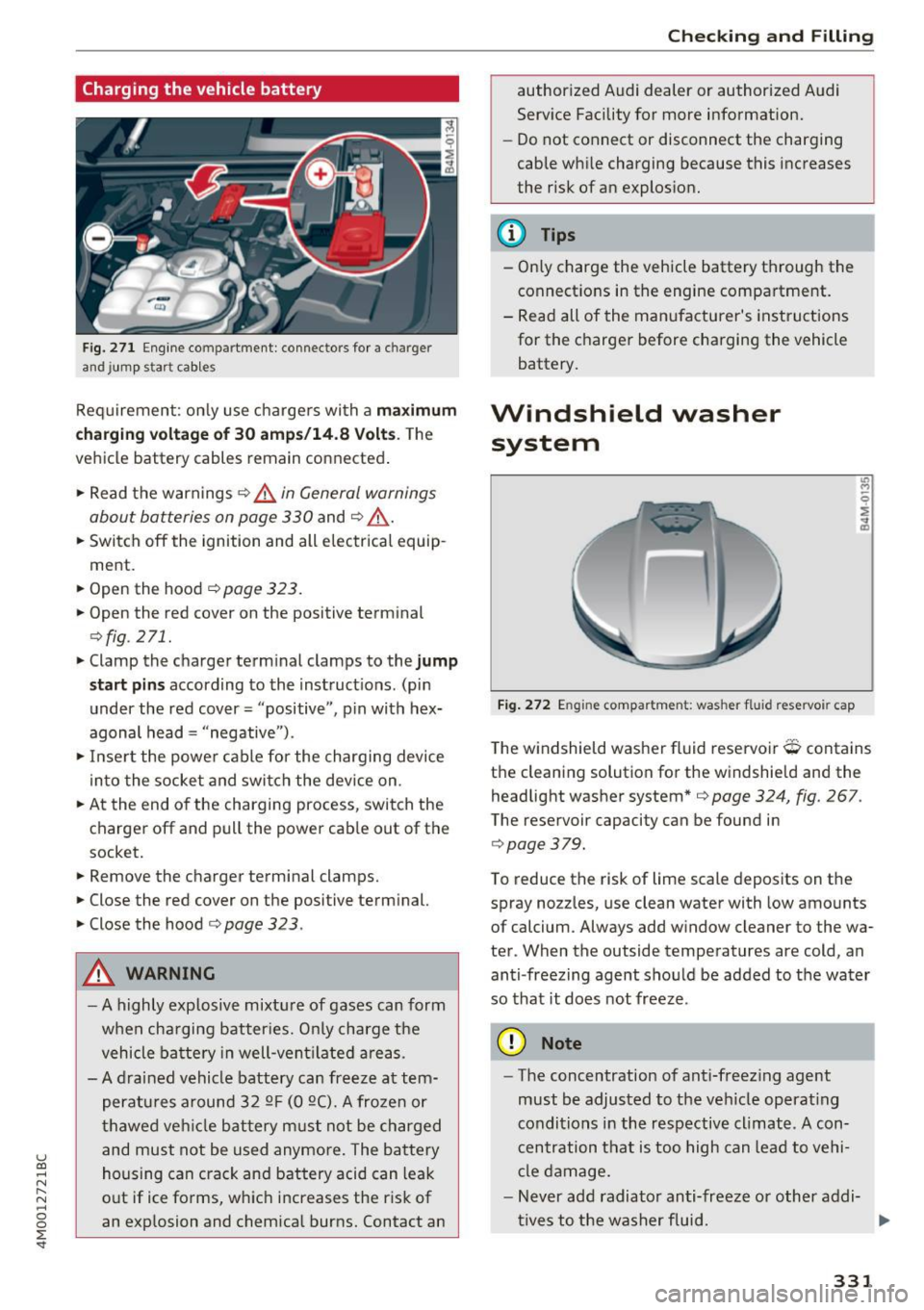
Fig. 271 Engine compartment : connec tor s for a charg er
and jump s ta rt cables
Requirement : only use chargers with a maximum
charging voltage of 30 amps/14.8 Volts.
The
vehicle battery cables remain connected .
.,. Read the warn ings ¢
& in General warnings
about batteries on page 330
and ¢ ,& .
.,. Switch off the ignition and all electrical equip
ment .
.,. Open the hood ¢
page 32 3 .
.,. Open the red cover on the positive terminal
¢ fig . 271 .
.,. Clamp the charger terminal clamps to the jump
start pins
according to the instructions . (pin
under the red cover = "positive", pin with hex
agonal head= "negative ") .
.,. Insert the power cable for the charging device
into the socket and switch the device on .
.,. At the end of the charging process, sw itch the
charger off and pull the power cable out of the
socket .
.,. Remove the charger terminal clamps.
.,. Close the red cover on the pos itive terminal.
.,. Close the hood ¢
page 323.
A WARNING
-A highly explosive mixture of gases can form
when charging batteries. Only charge the
vehicle battery in well-vent ilated areas.
-A drained vehicle battery can freeze at tem
peratures around 32 QF (0 QC). A frozen or
thawed vehicle battery must not be charged
and must not be used anymore. The battery
housing can crack and battery acid can leak
out if ice forms, which increases the risk of
an explosion and chemical burns. Contact an
Checking and Filling
authorized Audi dealer or authorized Audi
Service Facility for more information.
- Do not connect or disconnect the charging
cable while charging because this increases
the risk of an explosion.
@ Tips
- Only charge the vehicle battery through the
connections in the engine compartment.
- Read all of the manufacturer's instructions
for the charger before charging the vehicle
battery.
Windshield washer system
Fig. 272 E ngine compar tm ent: was her fluid re serv oir cap
The windshi eld washer fluid reservoir O contains
th e cleaning solution for the windshield and the
he adlight washer system*¢
page 324, fig. 26 7 .
The reservoir capacity can be found in
¢page 379.
To reduce th e risk of lime scal e deposits on the
spray no zzles, use clean water with low amounts
o f calcium. Alway s add window cleane r to the wa
ter . When the outside temperatures are cold, an
anti -freezing agent should be added to the water
so that it does not freeze.
(D Note
-The concentration of ant i-freezing agent
must be adjusted to the vehicle operating
conditions in the respective climate . A con
centration that is too high can lead to vehi-
cle damage.
- Never add radiator anti-freeze or other addi-
tives to the washer fluid. .,..
331
Page 334 of 402
Check ing and F illing
- Do not use a glass cleaner that contains
paint solvents, because this could damage
the pa int .
Service interval display
The service interval display detects when your ve
hicle is due for service.
Checking service int ervals
You can check the remaining distance or time un
til the next oil change or next inspection in the
Infotainment system .
.. Se lect in the Infotainment system: the
I MENU I
button
> Vehicle > left contro l button > Ser vice
& check s > Ser vice inte rval s.
Resetting the indicator
An author ized Audi dealer or author ized A udi
Serv ice Facility will rese t the serv ice interval d is
p lay after performing serv ice .
I f you have changed the oil yourself, you must re
set the oil change interva l.
.. Select in the Infotainment system: the!MENUI
button
> Vehicle > left contro l button > Service
& chec ks > Service interval s > Reset oil change
interval.
If an oil change or inspection is due, you can ac
cess it in the Infotainment system. The display
wo rks in two stages:
- Servic e reminde r: after a certain distance is
driven, a message appears in the inst rument
cluster d isp lay every time the ign ition is switch
ed on. The rema ining distance and t ime is d is
played br iefly.
- Service due : if your vehicle has reached a serv
ice i nterval, a message appears briefly after
swi tching the igni tion on.
(D Note
- Only reset the oil change indicato r if the oil
was changed.
- Fo llow ing the service i ntervals is c ritical to
maintain ing the service life a nd va lue of
you r vehicle, especia lly the engine. Even if
332
the mileage on the vehicle is low, do not ex
ceed the time for the next service .
Page 336 of 402

Wheels
(D Tires for passenger vehicles
(if applicable)
P indicates a tire for a passenger
vehicle. T indicates a tire desig
nated for temporary use.
@ Nominal width
Nominal width of the tire be
tween the sidewalls in millime
ters. In general: the larger the
number, the wider the tire.
@ Aspect ratio
Height/width ratio expressed as a
percentage.
@ Tire construction
R indicates a radial tire.
® Rim diameter
Size of the rim diameter in inches.
@ Load index and speed rating
The load index indicates the tire's
load-carrying capacity.
The speed rating indicates the maximum permitted speed
¢ & in
Winter tires on page 348.
"EXTRA LOAD", "xl" or "RF" indi
cates that the tire is reinforced or
is an Extra Load tire.
Speed rat- Maximum permitted speed
ing
p
up to 93 mph (150 km/h)
Q up to 99 mph (160 km/h)
334
Speed rat- Maximum permitted speed
Ing R
up t o 106 mph (170 km/h)
s up to 110 mph (180 km/h)
T up to 1 18 mph (190 km/h)
u up to 124 mph (200 km/h)
H up to 130 mph (210 km/h)
V up to 149 mph (240 km/h)al
z above 149 mph (240 km/h)al
w up to 168 mph (270 km/h)al
y up to 186 mph (300 km/h)al
a) For tires above 149 mph (240 km/h),
tire manufacturers sometimes use the
code "ZR".
(j) US DOT number (TIN) and
manufacture date
The manufacture date is listed on
the tire sidewall (it may only ap
pear on the inner side of the tire):
DOT ... 2216 ...
means, for example, that the tire
was produced in the 22nd week of
the year 2016.
@ Audi Original Tires
Audi Original equipment tires
with the designation "AO" have
been specially matched to your
Audi. When used correctly, these
tires meet the highest standards
for safety and handling. An au
thorized Audi dealer or author
ized Audi Service Facility will be
able to provide you with more in
formation.
Page 342 of 402
Wheel s
Occupant loading and distri
bution for vehicle normal load
for various designated seat ing
capacit ies
Refer to the tire inflation pres
sure label ¢
page 343, fig . 276
for the number of seating posi
tions . Refer to the table¢
table
on page 345
for the number of
people that correspond to the ve
hicle normal load .
New tires or wheels
Audi recommends having all work
on tires or wheels performed by
an authorized Audi dealer or au
thorized Audi Service Facility .
These facilities have the proper knowledge and are equipped with
the required tools and replace
ment parts.
.,. New tires do not yet have the
optimum gripping properties. Drive carefully and at moderate
speeds for the first 350 miles (500 km) with new tires .
.,. Use tires of the same construc
tion, size (rolling circumference)
and as close to the same tread pattern as poss ible on all four
wheels .
340
.,.Do not replace tires individually .
At least replace both tires on the
same axle at the same time.
.,. Audi recommends that you use
Audi Original Tires. If you would
like to use different tires, please
note that the tires may perform
differently even if they are the
same size ¢
,&..
.,. If you would like to equip your
vehicle with a tire/rim combina
tion that is different from what
was installed at the factory, con
sult with an authorized Audi
dealer or authorized Audi Service Facility before making a pur
chase ¢&, .
If the spare t ire is different from
the regular tires installed on the
vehicle -for example, if winter
tires or wide tires are installed -
then only use the spare tire tem
porarily in case of emergency and
drive carefully while it is in use. It
should be replaced with a regular
tire as soon as possible.
On
all wheel drive vehicles, all
four wheels must be equipped
with tires that are the same brand and have the same construction
and tread pattern so tha t the
drive system is not damaged by .,.
Page 344 of 402
Wheels
-Have an authorized Audi dealer or authorized Audi Service Facili
ty check the wheel alignment if
there is unusual wear .
-Have the wheels rebalanced if an
imbalance is causing noticeable
vibration in the steering wheel. If you do not, the tires and other
vehicle components could wear more quickly.
Treadwear indicator
Original equipment tires contain
treadwear indicators in the tread
pattern, which are bars that are 1/16 in (1.6 mm) high and are
spaced evenly around the tire per pendicular to the running direc
tion¢
fig . 2 74 . The letters "TWI"
or triangles on the tire sidewall indicate the location of the tread
wear indicators .
The tires have reached the mini mum tread depth
l) when they
have worn down to the treadwear
indicators. Replace the tires with
new ones ¢
..&..
Tire rotation
Rotating the tires regularly is rec
ommended to ensure the tires
1> Obey any applicable regulations in your
country.
342
wear evenly. To rotate the tires,
install the tires from the rear axle
on the front axle and vice versa .
This will allow the tires to have
approximately the same length of
service life.
For unidirectional tires, make
sure the tires are installed accord
ing to the running direction indi
cated on the tire sidewall
¢page 365.
Hidden damage
Damage to tires and rims can of
ten occur in locations that are hidden . Unusual vibrations in the
vehicle or pulling to one side may indicate that there is tire damage.
Reduce your speed immediately.
Check the tires for damage. If no
damage is visible from the out
side, drive slowly and carefully to
the nearest authorized Audi deal
er or authorized Audi Service Fa
cility to have the vehicle inspect
ed .
.&_ WARNING
Tread that has worn too low or
different tread depths on the
tires can reduce driving safety. ,..
Page 351 of 402
u co ...... N r-... N ...... 0
0
:E: '
the tire t o burst.
- Always adapt yo ur drivi ng to the road and
traff ic conditions. Drive carefully and red uce
your speed on icy or slippery roads. Even
winter tires can lose traction on black ice.
@ For the sake of the environment
Reinstall summer ti res at the appropriate
time, because they provide better handling
when roads are free of snow and ice. Summer
tires cause less road noise, t ire wear and fuel
consumption.
(D Tips
You can also use all season tires instead of
w inter tires . Please note that in some coun
tries where w inter t ires are required, only
w inter t ires with the
die. symbol may be per
m itted.
Snow chains
Snow chains no t only imp rove the driving in wi n·
t er roa d cond itions, but a lso the brak ing.
" Only insta ll snow chains o n the
front wheels .
" Check and cor rect the sea ting of the snow
chains after dr iv ing a few feet, if necess ary. Fo l
low the ins truc tions from the ma nufa cturer .
" Note the maximum pe rmit ted speed w hen driv
ing with snow chains . Do not exce ed 30 mph
(SO km/h).
Use of snow chains is only pe rm itted with certain
rim/ti re combinations due to tec hnical reasons .
Chec k with an authorized A udi d ealer or author
ized A udi Service F acili ty to see if yo u may use
snow chains.
Use
fine-mesh snow chain s. They must not add
mo re t han 0.53 in (13 .5 mm) in height , including
the chain lock .
You mus t remove the snow c hains on roads with
out snow . Otherw ise, you could impair dr iving
abi lity and damage the tir es .
Wh eel s
A WARNING
Using incorrect snow chains or install ing snow
cha ins incorrectly can resu lt in loss of veh icle
control, which increases the risk of a n acci
dent.
(D Note
- Snow chains can damage the rims/wheel
cove rs* if the chains come into direct con
t act with them . Remove the wheel covers*
first . Use coa ted snow cha ins .
- Do not install and use snow c hains if the re is
a malfu nction in the a ir suspension*, be
cause the ve hicle height w ill be very low . If
yo u dr ive w ith snow chains anyway, the
w hee l ho usings and other ve hicle compo
nents can be seve rely damaged.
(0 Tips
When us ing snow chains, it m ay be usefu l to
swi tch the offroad mode o n
q page 149.
Low-profile tires
Applies to: vehicles with low-profile tires
Your vehicle is equipped with low -profi le tires* at
the factory . Compared to other tire/rim combina
tions, low-prof ile tires offer a w ider tread surface
and a larger rim diameter with shorter tire side
walls. This results in an agile dr iv ing style. How
ever, it may reduce the level of comfort and in
c rease road noise when driving on roads in poo r
cond it ion.
Low-profile t ires can become damaged more
quickly than standard tires when dr iving over
la rge bumps, potholes , manhole covers, speed
bumps and curbs. Therefo re, it is particularly im
po rtant to mainta in the co rrect ti re pressure
q poge 343.
To reduce the risk of damage to the tires and
r ims, drive very caref ully on poor roads.
Check your wheels regu larly every 2,000 mi
(3,000 km) for damage . For example, chec k for
bulges/cracks on the tires or deformations/
c racks on the rims . .,..
349
Page 352 of 402

Wheels
After a heavy impact or damage, have the tires
and rims inspected or replaced immediately by
an authorized Audi dealer or authorized Audi
Service Facility.
Low-profile tires can wear out faster than stand
ard tires.
Summer tires are not suitable for cold weather ,
snow or black ice. If you are driving in these con
ditions, use winter or all season tires
¢ page 348.
Uniform tire quality grading
- Tread wear
-Traction AA A B C
- Temperature ABC
Quality grades can be found where applicable on
the tire side wall between tread shoulder and maximum section width
¢ page 333, fig. 273.
For example: Tread wear 200, Traction AA, Tem
perature
A .
All passenger car tires must conform to Federal
Safety Requirements in addition to these grades.
Tread wear
The tread wear grade is a comparative rating
based on the wear rate of the tire when tested
under controlled conditions on a specified
gov
ernment test course .
For example, a tire graded 150 would wear one
and one half
(1 1/2) times as well on the govern
ment course as a tire graded 100.
The relative performance of tires depends upon
the actual conditions of their use, however, and
may depart significantly from the norm due to
variations in driving habits, service practices and
differences in road characteristics and climate.
Traction
The traction grades, from highest to lowest, are
AA, A, Band
C. Those grades represent the tire 's
ability to stop on wet pavement as measured un
der controlled conditions on specified govern ment test surfaces of asphalt and concrete . A tire
350
marked C may have poor traction performance
¢_& .
Temperature
The temperature grades are A (the highest), B,
and C , representing the tire's resistance to the
generation of heat and its ability to dissipate
heat when tested under controlled conditions on
a specified indoor laboratory test wheel.
Sustained high temperature can cause the mate
rial of the tire to degenerate and reduce ti re life,
and excessive temperature can lead to sudden
tire failure ¢& .
The grade C corresponds to a level of perform
ance which all passenger car tires must meet un
der the Federal Motor Vehicle Safety Standard
No. 109. Grades Band A represent higher levels
of performance on the laboratory test wheel than
the minimum required by law.
A WARNING -
The traction grade assigned to this tire is
based on straight -ahead braking traction
tests, and does not include acceleration, cor
nering, hydroplaning or peak traction charac
teristics.
A WARNING
The temperature grade for this tire is estab
lished for a tire that is properly inflated and
not overloaded. Excessive speed, underinfla
tion, or excessive loading, either separately or
in combination, can cause heat buildup and
possible tire failure.
A WARNING
Temperature grades apply to tires that are properly inflated and not
over or underinflat
ed.
.
-
Page 354 of 402
Wheels
store the pressure again in the Infotainment
system
¢ page 352.
mm (T ir e Pr essure Monito ring System) Tire
pressure : malfunction ! See owner' s manual.
If
mm appears after switch ing the ignit ion on o r
while driving and the
[I] indicator light in the in
strument cluster blinks fo r approximately one
minute and then stays on, there is system mal
function. Try to store the correct tire pressures
¢ page 352 . In some cases, you must drive for
several minutes after storing the pressures until
the ind icator light turns off . If the i ndicator light
does t urn off o r tu rns on aga in afte r a short peri
od of time , d rive to an au tho riz ed A ud i dealer o r
author ized Audi Service Facility immed iate ly to
have the ma lfunction co rrected .
A WARNING
-If the t ire pressu re indicator appears in the
display, reduce your speed immediate ly and
avoid any hard steer ing or braking maneu
vers. Stop as soon as possib le and check the
t ires and their pressu re.
- The driver is responsib le for maintaining the
correct tire pressure. You must check the
t ire pressure regu larly.
- Under certain conditions (such as a sporty
dr iv ing style, winter cond itions o r unpaved
roads), the tire p ressure mon itoring system
indicator may be delayed.
@ Tips
- The t ire pressure monitoring system can al
so stop work ing when there is an ESC mal
funct ion.
- Using snow chains may result in a system
malfunction.
- The t ire pressure monitoring system in your
Audi was calibrated with "A udi Orig inal
Tires"
¢ page 340. Using these ti res is rec
ommended .
352
' Storing tire pressures
If the tire pressure changes or a tire is replaced,
it must be confirmed in the Infotainment sys
tem .
"Make sure before stor ing that the t ire pressures
of all four tires meet the specified values and
are adapted to the load
¢ page 343 .
"Switch the ignit io n on.
" Sele ct in the Infotainment system:
IMENU J but
ton
> V ehicle > Servi ce & checks > Tire pres
s u re monitor
> Store tire pre ssure > Ye s, store
now .
'
(D Tips
Do not store the tire pressures if snow chains
are installed .
Run-flat tires
Introduction
Applies to: vehicles with run-flat tires
A run-flat tire helps to maintain vehicle mobility
when there is a loss of pressure.
Run-flat tires have reinforced sidewalls that pro
tect the tire if there is a loss of pressure.
If the ti re pressure monitoring system indicates a
l oss of pressure in one or severa l ti res, you can
continue driving on run-flat tires fo r at least 20
miles (30 km). Drive to an authorized A udi dealer
or authorized Audi Serv ice Facility immediately to
have the problem corrected.
Continuing to d rive on run-flat tire s is no
longe r po ssible if
- there is visible damage to the tires, such as
cracks in the sidewalls .
- strong vibrat ions are felt wh ile driving, or the
tire beg ins to smoke due to a strong build-up of
heat .
- the t ire was heavily damaged, for example in an
accident There is a r isk that parts of the tire
tread will detach and damage important veh i
cle components .
- the Electron ic Stabilization Contro l (ESC) is not
working or is cont inuously running .