ignition AUDI TT ROADSTER 2018 Workshop Manual
[x] Cancel search | Manufacturer: AUDI, Model Year: 2018, Model line: TT ROADSTER, Model: AUDI TT ROADSTER 2018Pages: 310, PDF Size: 46.95 MB
Page 244 of 310
Checking and Filling
A WARNING
California Proposit ion 65 Warning:
- Battery posts, terminals and related acces sories contain lead and lead compounds, chemicals known to the State of California
to cause cancer and reproductive problems .
Wash hands after handling .
Q) Note
If the vehicle will be parked for long periods
of t ime, protect it against the cold so that it
w ill not be destroyed by "freezing"
~page 242 .
Vehicle battery
The term "vehicle battery " refers to the 12 Volt
battery in your vehicle .
Not running the vehicle for long p eriods of
t ime
If you do not drive your vehicle for several days or
weeks, electrical equipment is gradually scaled
back or switched off . This reduces energy use and
ensures the veh icle w il l be able to sta rt after long
pe riods of time
i:::> page 91. Some convenience
functions, such as interior light ing or power sea t
adjustment, may not be available under certain
circumstances . These convenience functions will
be avai lab le again once you switch the ignition on
and start the engine.
Even when electrical equipment is switched off ,
the equipment can still drain the vehicle battery if the vehicle is not driven for long periods of
time. Deep draining results in a chemical reaction
that destroys the inside of the vehicle battery.
The vehicle battery must be charged every month to reduce the risk of this happen ing
i:::> page 242.
Contact an author ized Audi dealer or authorized
Aud i Serv ice Facility for more information.
Winter operati on
Cold weather places higher demands on the vehi
cle battery . This results in reduced start ing abili
ty . Have the vehicle battery checked by an au
thori zed Audi dealer or authorized Audi Service
Facility before the co ld time of year.
242
Charging the vehicle battery
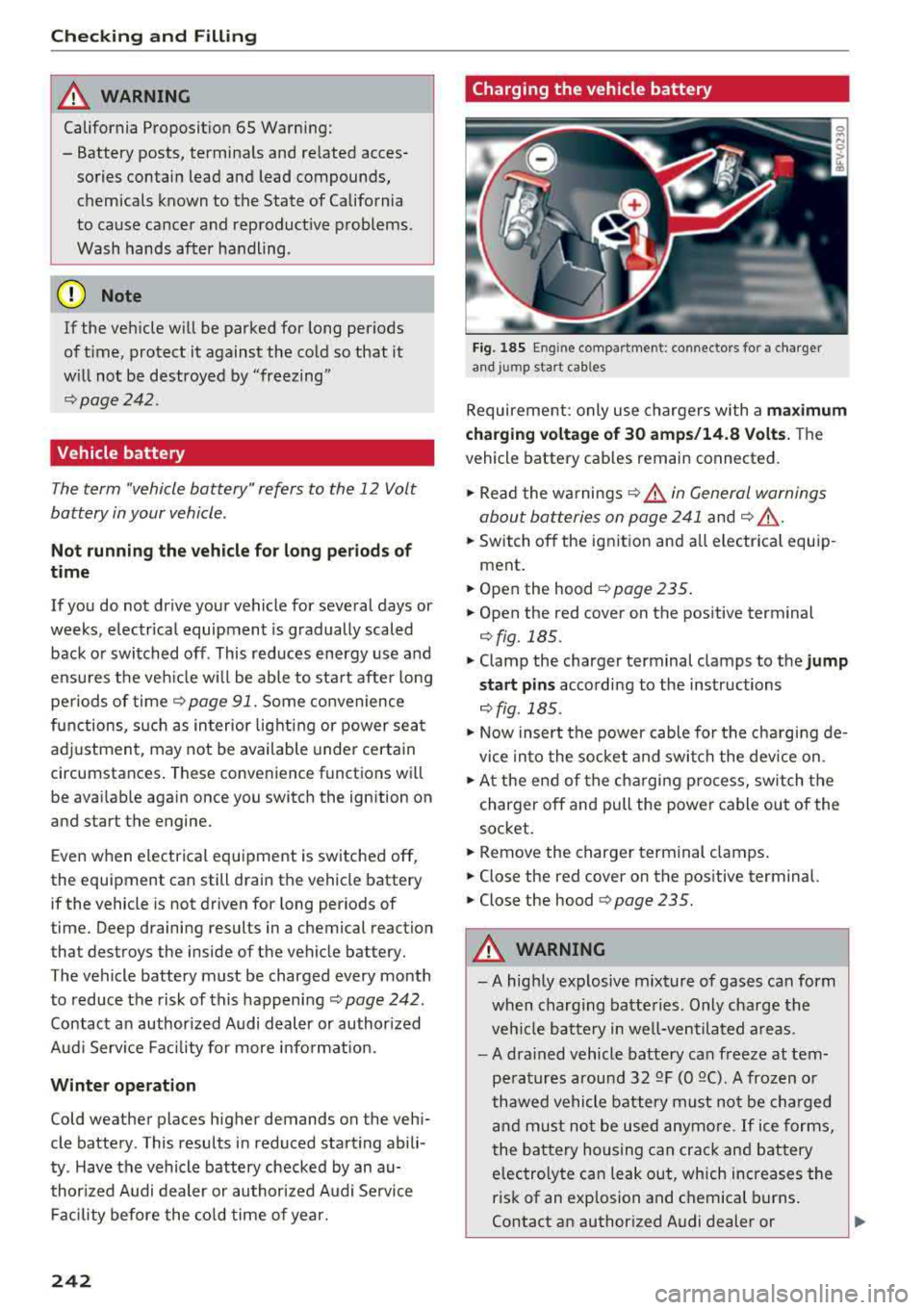
Fig. 18 5 En g in e compartmen t: co nn ectors fo r a cha rger
a n d jum p start cab les
Requireme nt: only use chargers with a maximum
charging volt age of 30 amp s/14.8 Volts.
The
vehicle battery cables remain connected.
... Read the wa rnings i:::> ,& in General warnings
about batteries on page 241
and i:::> ,& .
... Switch off the ignition and all electrica l equip
ment .
... Open the hood i:::> page 235 .
... Open the red cover on the positive terminal
¢fig. 185.
... Clamp the charger terminal clamps to the jump
s ta rt pins
according to the instructions
c::> fig . 185 .
... Now insert the power cable for the cha rging de
vice into the socket and switch the device on .
... At the end of the charging process, switch the
charger off and pull the power cable out of the
socket .
... Remove the charger terminal clamps.
... Close the red cover on the pos itive terminal.
... Close the hood i:::> page 235.
A WARNING
-A highly explosive m ixture of gases can form
when charg ing batteries . Only charge the
veh icle battery in well-ventilated areas.
-A drained vehicle battery can freeze at tem
peratures around 32
QF (0 QC) . A frozen or
thawed vehicle battery must not be charged
and must not be used anymore. If ice forms,
the battery housing can crack and battery
electrolyte can leak out, which increases the
risk of an explosion and c hemical burns .
Contact an authorized Audi dealer or
..,_
Page 245 of 310
Cl 00 .-< N r-N .-< 0 r-Vl 00
authorized Audi Service Facility for more in
formation.
- Do not connect or disconnect the charging
cable while charging because this increases
the risk of an exp losion.
(D Tips
- Only charge the vehicle battery through the
connections in the engine compartment.
- Read all of the manufacturer's instructions
for the charger before charging the vehicle
battery.
Windshield washer system
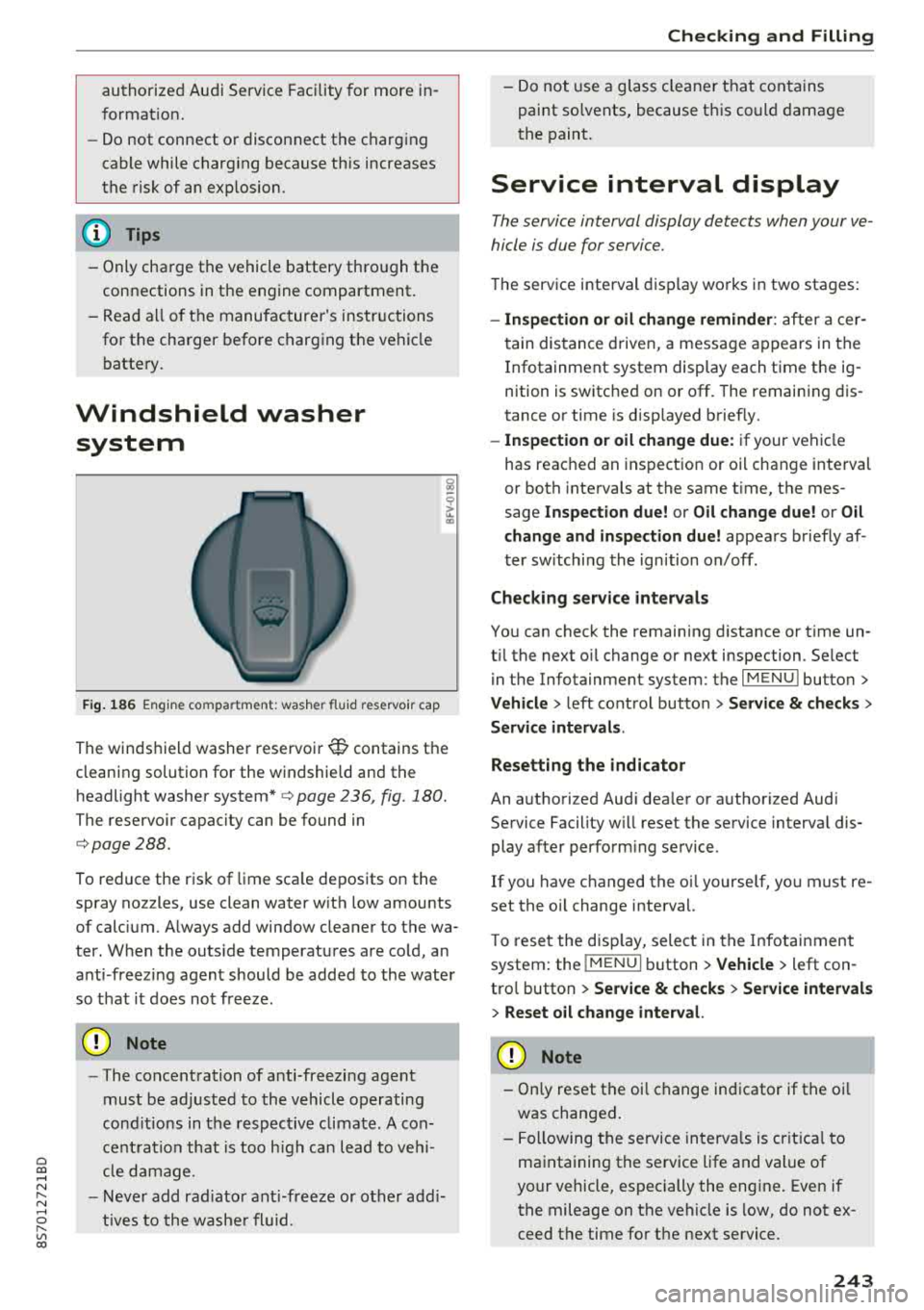
Fig. 186 Engine compa rtment: washer flu id reservo ir cap
The windshield washer reservoir W contains the
cleaning solution for the windshie ld and the
headlight washer
system* ¢ page 236, fig . 180.
The reservoir capacity can be found in
¢page 288.
To reduce the risk of lime sca le deposits on the
spray nozzles, use clean water with low amounts
of calc ium. A lways add window cleaner to the wa
ter. When the outs ide temperatures are cold, an
anti -freezing agent should be added to the water
so that it does not freeze.
@ Note
-The concentration of anti-freezing agent
must be adjusted to the vehicle operating
cond itions in the respective climate. A con
ce ntrat ion that is too high can lead to vehi
cl e damage.
- Never add radiator anti-freeze or other addi
tives to the washer fluid.
Checking and Filling
- Do not use a glass cleaner that contains
paint so lvents, because t his could damage
the paint.
Service interval display
The service interval display detects when your ve
hicle is due for service .
The service interval display works in two stages:
-Inspection or oil change reminder : after a cer-
tain distance driven, a message appears in the
In fotainment system display each time the ig
nition is switched on or off. The remaining dis
tance or time is disp layed briefly.
- Inspection or oil change due: if your vehicle
has reached an inspection or oil change interval
or both intervals at the same t ime, the mes
sage
Inspection due! or Oil change due! or Oil
change and inspection due!
appears briefly af
ter switching the ignition on/off .
Checking service intervals
You can check the remaining distance or time un
t il the next oil change or next inspection. Se lect
in the Infotainment system: the
I MENU I button>
Vehicle > left control button > Service & checks >
Service intervals .
Resetting the indicator
An authorized Audi dea ler or authorized Audi
Service Facility w ill reset the service interval dis
play after performing service.
If you have ch anged the oi l yourse lf, you must re
set the oil change interval.
T o reset the disp lay, select in the Infotainment
system: the
I MENUI button> Vehicle> left con
trol button >
Service & checks > Service intervals
> Reset oil change interval.
@ Note
-Only reset the oil change indicator if the oi l
was changed.
- Following the service intervals is crit ica l to
maintaining the service life and value of
your vehicle, especially the engi ne. Even if
the mileage on the vehicle is low, do not ex
ceed the time for the next service.
243
Page 264 of 310
Wheels
store the pressure again in the Infotainment sys
tem
i::> page 262 .
mm (Tir e Pr essure Monitoring System) Tire
pressure: malfunction! See owner's manual -
if
mm appears after switching on the ignition or
while driving and then the
[DJ indicator light in
the instrument cluster also starts to blink for
about one minute and then stays on permanen t
ly, there is a system malfunction. Try to store the
correct tire pressures
<=:> page 262 . If the indica
tor light does turn off or turns on again after a
short period of time, drive to an authorized Audi
dealer or authorized Aud i Serv ice Facility immedi
ately to have the malfunction corrected .
_& WARNING
-If the tire pressure indicator appears in the
display, reduce your speed immediately and
avoid any hard steering or braking maneu
vers. Stop as soon as possible and check the
tires and their pressure.
- The driver is responsible for maintaining the
correct tire pressures. You must check the
tire pressures regularly.
-Under certain conditions (such as a sporty
driving style, winter conditions or unpaved
roads), the pressure monitor indicator may
be delayed .
- Do not use run-flat tires on your vehicle. Us
ing them when not permitted can lead to
vehicle damage or accidents .
(D Tips
- The tire pressure monitoring system can al
so stop working when there is an ESC mal
function.
- Using snow chains may result in a system
malfunction.
- The tires with the identification
"AO"
¢page 251 have been matched with your
Audi tire pressure monitoring system . Using
these tires is recommended.
262
Storing tire pressures
Applies to: vehicles with Tire P ressure Monitoring System in
dicator
If the t ire pr essure chang es or a tire is replaced ,
it must be confirmed in the Infotainment sys
tem.
.,. Make sure before storing that the tire pressures
of all four tires meet the specified values and
a re adapted to the load
<=:>page 253.
.,. Switch the ignition on.
.,. Select in the Infotainment system : the!M ENUI
button > Vehicle > left control button > Service
& checks> Tire pressure monitoring .
(D Tips
Do not store the tire pressures if snow chains
are installed .
Tire pressure monitoring
system
ill General notes
Each tire, including the spare (if provided),
should be checked monthly when cold and inflat
ed to the inflation pressure recommended by the
vehicle manufacturer on the vehicle placard or
tire inflation pressure label. (If your vehicle has
tires of a different size than the size indicated on
the vehicle placard or tir e inflation pr essure la
bel, you should determine the proper tire infla
tion pressure for those tires).
As an added safety feature, your vehicle has been
equipped with a tire pressure monitoring system
( T PMS) that illuminates a low tire pressure tell
tale when one or more of you r tires is significant
ly under-inflated. Accordingly, when the low tire
pressure telltale illuminates, you should stop and
check your tires as soon as possible, and inflate
them to the proper pressure . Driving on a signifi
cant ly under-inflated t ire causes the tire to over
heat and can lead to tire failur e. Under-inflation
also reduces fuel efficiency and tire tread life,
and may affect the vehicle's handling and stop-
ping ability.
..,.
Page 266 of 310
Wheels
Displaying tire pressures/temperatures
Applies to: vehicles with tire pressure monitoring system
Requirement: you must be d rivi ng the veh icle .
"'Se lect in the Infotainment system: IMENU I but
ton
> Service & checks > Tire pre ssur e monitor
ing > Di splay tire pressure.
- Green:
the current tire pressure and the speci
fied t ire pressure are approximately the same .
-Yellow: the current tire pressure is too low
compared to the specified tire pressure .
The specified tire press ure is the last tire pres
sure that was stored
c> page 264.
Note that t he tire p ressure also de pends on the
temperature of the tire . The tire press ure in
creases as the engine becomes wa rmer whi le
driving.
A WARNING
Read and follow the important information
and notes
c> page 263.
(D Tips
The tire pressure or temperature is not d is
played while the veh icle is stationary and in
adaptation mode. Dashes --.--are shown in
place of the pressu re and temperature.
(D Tire pressure loss
Applies to: vehicles with tire pressure monitoring system
-
If the Rt] indicato r light turns on, the p ressure in
at least one t ire is too low o r new sensors we re
not adapted :
[I] indicator lights turns on after turning the
ignition on
The tire pressure is too low compared to the
specified p ressure.
"' Check and store the t ire pressure(s) the next
time it is poss ible
c> page 264 .
[I] indicator light turns on while dri ving
Wheels with new sensors were not adapted or
the t ire pressure has reached a critical leve l com
pared to the specified pressure .
264
"'Avoid unnecessary steering and brak ing maneu -
vers .
"'Adapt your dr iving sty le to the s ituation.
"' Stop as soon as possible and check the tire(s).
"'If it is possib le to continue driv ing, see an au-
thorized Audi dealer or authorized Aud i Service
Facility immediately and have your tire(s) re
pa ired o r rep laced .
A WARNING
Read and fo llow the impo rtant info rmation
and n otes
c>page 263.
Storing new tire pressures
Applies to: vehicles with tire pressure monitoring system
Correctly stored tire pressure specifications are
necessary for reliable tire pressure monitoring.
-
It is always necessary to store the t ire pressures
whe n the t ire pressu res a re modified, fo r exam
ple d ue to a change in load . o r when new senso rs
a re installed.
"' Before storing the t ire pressures, make su re the
tire pressures of all four t ires meet the spec i
fied va lues and are adapted to t he load
c::> page 254, fig. 190 . Only correct and store
the pressure in tires whose temperature is ap
proximate ly the same as the ambient tempera
t u re . If the temperature of the tire is higher
than the ambient air temperature, the tire pressure must be increased approximately
3.0 PSI (0.2 bar) above the value on the st icker.
"' Switch the ignit ion on .
"'Select in the Infotainment system : IMENU! but
ton
> Service & checks > Tire pressure monitor
ing > Store tire pre ssure > Ye s, store now .
Af
ter storing the t ire pressures, the t ire press ure
mon itor ing system measures the c urrent pres
sures while driving and stores them as the new
specified pressures .
"'If the changed tire pressures are not displayed
in the Infotainment system, drive the vehicle
for approximately 10 minutes so that the sen sor signa l from the wheels is received again .
During this adaptation phase, -- .- - is d isplayed
for the pressure and temperature and the tire pressure monitoring system is on ly partially
Page 267 of 310
![AUDI TT ROADSTER 2018 Workshop Manual Cl 00 .-< N r-N .-< 0 r-Vl 00
availab le . It only provides a warning if one o r
more tire pressures is be low the minimum per
mitted specif ied pressure .
If the
[I] indica to r l](/img/6/57668/w960_57668-266.png "AUDI TT ROADSTER 2018 Workshop Manual Cl 00 .-< N r-N .-< 0 r-Vl 00
availab le . It only provides a warning if one o r
more tire pressures is be low the minimum per
mitted specif ied pressure .
If the
[I] indica to r l")
Cl 00 .-< N r-N .-< 0 r-Vl 00
availab le . It only provides a warning if one o r
more tire pressures is be low the minimum per
mitted specif ied pressure .
If the
[I] indica to r lig ht turns on and the mes
sage
Tire pressure: wheel change detected .
Please check all tires and store pressures in
MMI also appears, the system has detected that
the posit ion of the sensors has changed because
of a tire rotation, or that new sensors were in
stalled . Store the new tire pressures.
A WARNING -
Read and follow the important informa tion
and notes<=;>
page 263.
Malfunctions
App lies to: ve hicles with tire press ure m onitoring system
If t he tire pressure monitoring system is not
available, the
m;i ind icat or light appears in the
in str ument cluster display along with th e mes
sage
Tire pressure: malfunction! See owner's
manual.
I f the @m in dica tor light appears after switch
ing the ignition on or while dr iv in g and the
[I] in
d icator light also blinks for approximate ly one
minute and t hen stays on, there is system ma l
function. The following are examples of sit ua
tions that cou ld cause a malfunction:
-If the message appears at the end o f the adap
tation phase, the system may not detect one or
severa l of the wheel senso rs necessa ry for pres
s ur e monitoring. This may result from one or
more wheels being installed without wheel sen
sors or with incompatible wheel sensors .
- A wheel sensor o r another component has
failed.
- Using snow cha ins can affect the f unction of
the system because of the shie lding effect of
the cha ins.
- The tire pressure monitor ing system is not
available due to a malfunction.
- Transmitters with the same frequency, such as
headphones or remote-controlled dev ices, may
cause a temporary system malfunction due to
the strong electromagnetic field .
Wheels
The m;i indicator lig ht and the message turn off
once the tire pressure monitoring system is avail
able again. If you cannot co rrect the malfunction
and
the m indicator light stays on, drive imme
diately to an authorized Audi dea ler or author
ized Audi Se rvice Facility to have the malfunct ion
repaired.
265
Page 268 of 310
Care and cleaning
Care and cleaning
General information
Regular, proper care helps to maintain your vehi
cle's value. It can also be a requirement when
submitting warranty claims for corrosion damage
and paint defects on the body.
The necessary care products can be obtained
from an authorized Audi dea ler or authorized
Audi Service Facility. Read and follow the instruc
tions for use on the packaging.
A WARNING
-Using cleaning and care products incorrectly
can be dangerous to your health.
- Always store clean ing and care products out
of reach of children to reduce the r isk of poi
sonin g.
@ For the sake of the environment
- Preferab ly purchase environmenta lly-friend
l y cleaning products.
- Do not dispose of leftover cleaning and care
products with household trash.
Car washes
The longer that deposits remain on the vehicle,
the more the surface may be damaged. High
temperatures such as those caused by sunlight increase the damaging effect .
Before washing, rinse
off heavy deposits with
p lenty of water.
Stubborn deposits such as bird droppings or tree
sap are best removed with plenty of water and a
microfiber cloth.
A lso, wash the underside of yo ur vehicle once
road sa lt stops being used for the season.
Pressure washers
When washing your veh icle w ith a pressure wash
er, always follow the operating instructions pro
vided with the press ure washer. This is espec ially
impor tant in r egard to the pressure and spraying
distance. Do not direct th e stream of water di
rect ly onto seals for the side windows, doors,
266
lug gage compartment lid or hood, or onto the
tires, rubber hoses, insulating material, sensors*
or camera lenses* . Keep a distance of at least 16
i n
(40 cm).
Do not remove snow and ice with a pressure
washer.
Never use cone nozz les or high pressure nozzles.
The water temperature must not be above
140 °F
(60 °() .
Automatic car washes
Spray off the vehicle before washing.
Make sure that the windows are closed and the
winds hield wipers are
off. Follow instructions
from the car wash operator, espec ia lly if there
are accessories attached to your veh icle.
If possible, use car washes that do not have
brushes.
Washing by hand
Clean the vehicl e starting from the top and work
in g down using a soft sponge or cl eaning br ush.
Use solvent-free cleaning products.
Washing vehicles with matte finish paint by
hand
To avoid damaging the paint when washing, first
remove dust and large part icles from you r vehi
cle. Insects, grease spots and fingerprints are
best removed with a special cleaner for matte
finish paint.
Apply t he product using a microfiber cloth. To
avoid damaging th e paint surface, do not use too
much pressure.
R inse the vehicl e thoroughly with wate r. Then
clean using a neutra l shampoo and a soft micro
f iber cloth .
Rinse the vehicl e thoroughly again and let it air
dry. Remove any water residue using a chamois.
A WARNING
-Only wash the vehicle when the ignition is
off and follow the instructions from the car
-
Page 276 of 310
Emergency assistance
Repairing tires
Applies to: ve hicles w ith tire mobility kit
Fig. 194 Compo nents of the tire mobility kit
Fig. 195 Tire mo bility kit co nnection
Requirement: the tire mobility kit must be laid
out and ready for use
¢ page 2 72.
Installing the tire mobility kit
• Open the cover @on the compressor
¢fig . 194.
• Remove the connector @) and pressure hose ®
with pressure gauge from the housing.
• Install the compressor pressure hose ® onto
the f lange ® on the tire sealant bottle
(D.
• Inse rt the sealant bottle with the flange at the
bottom into the opening @ on the compressor
cover.
• Remove the valve cap from the faulty tire.
• Install the filler hose @on the valve (j)
¢fig. 195 .
• Connect the plug @¢ fig. 194 to an outlet in
the vehicle.
• Switch the ignition on .
Inflating a tire
• Move the switch@¢ fig. 195 on the compres
sor into position
I.
274
• Inflate the tire to between 29 psi (200 kPA)
and 36 psi (250 kPA) and read the pressure on
the gauge.
• If this tire pressure is not reached, remove the
filler hose. Drive slowly approximately 33 feet (10 m) forward or in reverse so that the sealant
can be distributed in the tire. Pump up the tire
aga in ¢ ,&. .
A WARNING
-Read and follow the manufacturer's safety
precautions on the compressor and in the
instructions on the bottle of sea lant.
- If a tire pressure of 29 psi (200 kPA) cannot
reached after inflating for 6 minutes, then
the tire is too severely damaged. Do not
continue driving.
- If the tire cannot be repaired with the tire
sealant, see an authorized Audi dealer or au
thorized Audi Service Facility for assistance.
(D Tips
Do not operate the compressor for more than
six minutes continuously, or it can overheat.
Once the compressor has cooled, you can con
tinue to use it.
Completing
App lies to: vehicles wit h tire mo bility kit
• Adhere the sticker that says "max. SO mph
(max . 80 km/h)" that is provided with the tire
mobility kit within the driver's field of vision.
• Stop the vehicle after driving for about 10 mi
nutes and check the tir e pressure .
• If the tire pressure is lower than 19 psi (130
kPA), then the tire is too severely damaged. Do
not continue driving.
A WARNING
Pay attention to the following after repairing
the tire:
- Do not drive faster than SO mph (80 km/h).
- Avoid hard acceleration, braking sharply,
and fast cornering .
- The vehicle may become more difficult to
control.
Page 282 of 310
Fuses and bulbs
Fuses and bulbs
Electrical fuses
Replacing fuses
A fuse that has blown will have metal strips that
have burned through.
Fig. 20 5 Steering column area: cover
F ig. 20 6 Left side of the e ngine compartment: fuse cover
The individu al circuits are pro tec ted by safety
fuses. The fuses are located in the inter ior and in
the engine compartment .
Fuses in the interior
., Switch the ignition and all e lectr ica l equipment
off.
.. Check the following table to see which fuse be
l ongs to the
equipment ¢ page 281.
.. Remove the cover ¢ fig. 205.
.. Remove the plastic cl ip from the fuse panel
cover in the engine
compartment¢ fig. 206 .
.. Remove the fuse using the clamp.
., Replace the blow n fu se only with an identical
new one .
., Install the cover.
280
Fuses in the engine compartment
.. Switch the ignit io n and all electrical eq uipment
off .
.. Check the following table to see which fuse be
longs to th e eq uipment
¢page 282.
.. Remove the fuse pane l cover c> fig . 206.
.. Remove the plastic clip from the fuse panel
cover ¢ fig. 206 .
., Remove the fuse us ing the clamp .
.. Replace the blown fuse on ly w ith an ident ical
new one.
Fuse color identification
Color Current rating
in amps
Black 1
Purple 3
Light brown 5
Brown 7.S
Red
10
Blue 15
Yellow 20
Wh ite or transparent 25
Green 30
Orange 40
A WARNING
D o not repair fuses and neve r rep lace a blown
f u se with one tha t has a hig her amp rat ing.
T his ca n ca use damage to the e lectr ica l sys
tem and a fire .
(D Note
If a new fuse burns out again sho rtly after you
h ave insta lled it, have the e lectrical system
che cked as soon as possible by an au thori zed
A udi de aler or au tho riz ed Audi Service Fac ili
ty .
0) Tips
- Th e followi ng t able does not list fuse loca
t ions tha t are not used.
- Some of the e quipment listed in the fo llow
ing tables applies on ly to certain mo del ver
sions or certa in option al equipmen t.
Page 284 of 310
Fuses and bulbs
The power seats* are protected via circuit break
ers
that automatically switch on after a few sec
onds after the overload has been reduced.
Left engine compartment fuse assignment
F ig. 208 Engine co mpartment : fuse assignment
No. Equipment
Fl ESC control module
F2 ESC control module
F3 Engine control module
M
" 0 > a, m
Engine components, engine cooling, auxili-
F4 ary heater coil relay (1 +2), secondary air
injection pump relay
FS Engine components, tank system
F6 Brake light sensor
F7 Engine components
F8 Heat oxygen sensor
F9 Engine components, exhaust door, glow
time control module
FlO Fuel injectors, fuel control module
Fll Auxiliary heater heating e lement 2
F 12 Aux iliary heater heat ing element 3
Fl3 Automatic transmission control module
F 14 Ignition coils (5-cylinder)
282
No. Equipment
FlS Horn
Fl6 Ignition coil
Fl7 E
SC contro l module, engine control mod-
ule
Fl8 Terminal
30 (reference voltage)
Fl9 Windshield wipers
F20 Horn
F22 Terminal SO diagnosis
F23 Starter
F24 Auxiliary heater heating element 1
F31 Engine
components (5 -cylinder)
F32 LED headlights
F33 Transmission fluid pump
Bulbs
Message
Your vehicle is equipped with ma intenance-free
headlights and tail lights. However, if a light bulb
needs to be replaced, please contact an author
ized Audi dealer or authorized Audi Service Facili
ty.
Page 286 of 310
Emergency situations
@ Tips
The discharged battery must be properly con·
nected to the vehicle's electrical system .
When jump starting or charging the battery,
never connect the negative ground cable to
the battery negative post because the battery
manager system must be able to detect the
battery's state of charge. Always connect the
negat ive g round cable to the negative ground
post of the battery manager control unit.
Using the jump start
cable
Both jump start cables must be connected in the
correct order!
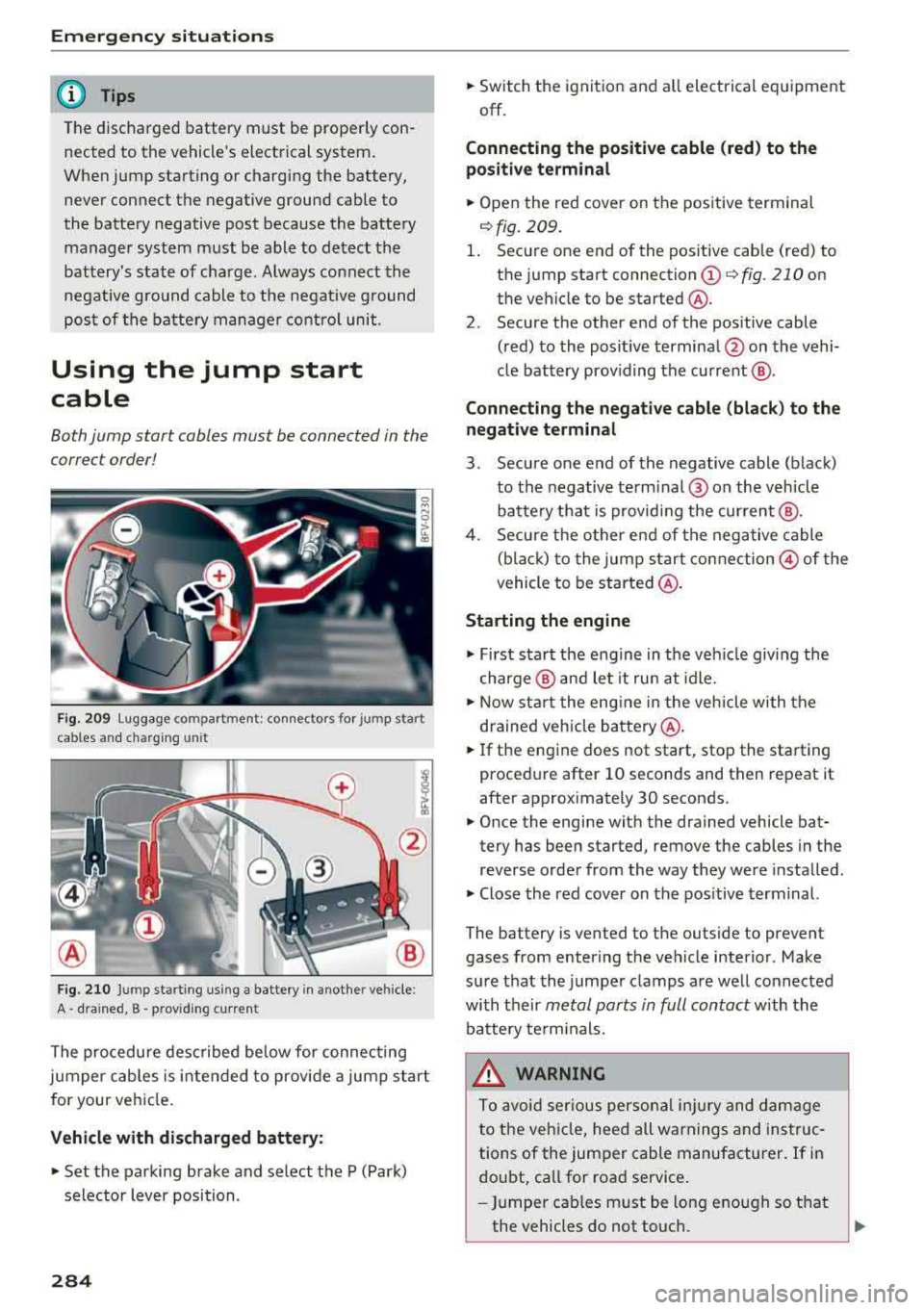
Fig. 209 luggage compartme nt: connectors for jump start
cables and charg ing unit
Fig. 210 Jump starting usi ng a battery in anot her vehicle:
A· drained, B • provid ing curren t
The procedure described below for connecting
jumper cables is intended to provide a jump start
for your vehicle.
Vehicle with discharged battery:
.. Set the parking brake and select the P (Park)
selector lever position.
284
.. Switch the ignition and all electrical equipment
off.
Connecting the positive cable (red) to the
positive terminal
.. Open the red cover on the positive terminal
<=:>fig. 209.
1. Secure one end of the positive cable (red) to
the ju mp start connection
(D c:> fig. 210 on
the vehicle to be started @.
2 . Secure the other end of the pos itive cable
(red) to the positive terminal @on the vehi·
cle battery prov iding the current @.
Connecting the negative cable (black ) to the
negative terminal
3 . Secure one end of the negative cable (black)
to the negative term inal @ on the vehicle
batte ry that is providing the current @.
4. Secure the other end of the negative cable
(black) to the jump start connection
@of the
vehicle to be started @.
Starting the engine
.,. First start the engine in the vehicle giving the
charge @ and let it run at idle .
.. Now start the engine in the vehicle with the
drained veh icle battery @.
.. If the engine does not start, stop the starting
procedure after 10 seconds and then repeat it
after approximately 30 seconds .
.. Once the engine with the drained vehicle bat·
tery has been started, remove the cables in the
reverse order from the way they were installed .
.. Close the red cover on the pos itive terminal.
The battery is vented to the outside to prevent
gases from enter ing the vehicle interior. Make
sure that the jumper clamps are well connected
with their
metal ports in full contact with the
battery termin als.
.&_ WARNING
To avoid serious personal injury and damage
to the vehicle, heed all warnings and instruc
tions of the jumper cable manufacturer. If in
doubt, call for road service .
- Jumper cables must be long enough so that
the vehicles do not touch.