exhaust CHEVROLET CAMARO 1982 Repair Guide
[x] Cancel search | Manufacturer: CHEVROLET, Model Year: 1982, Model line: CAMARO, Model: CHEVROLET CAMARO 1982Pages: 875, PDF Size: 88.64 MB
Page 423 of 875
GM – CAMARO 1982-1992 – Repair Guide (Checked by WxMax) 423
22. Fill the engine with engine oil.
23. Start the engine and
check for leaks.
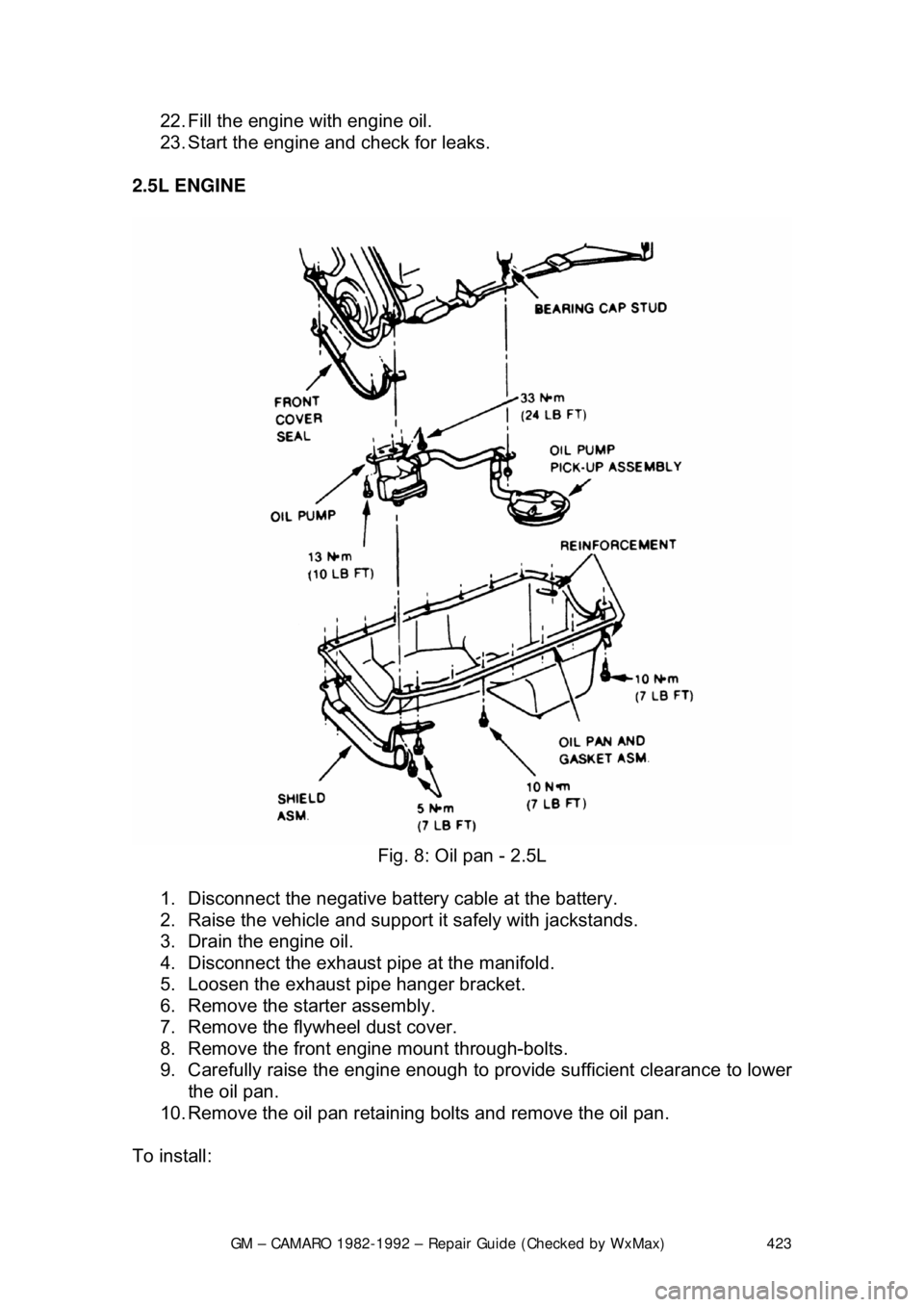
2.5L ENGINE
Fig. 8: Oil pan - 2.5L
1. Disconnect the negative batte ry cable at the battery.
2. Raise the vehicle and support it safely with jackstands.
3. Drain the engine oil.
4. Disconnect the exhaust pipe at the manifold.
5. Loosen the exhaust pipe hanger bracket.
6. Remove the starter assembly.
7. Remove the flywheel dust cover.
8. Remove the front engine mount through-bolts.
9. Carefully raise the engine enough to provide sufficient clearance to lower
the oil pan.
10. Remove the oil pan retaining bolts and remove the oil pan.
To install:
Page 424 of 875
GM – CAMARO 1982-1992 – Repair Guide (Checked by WxMax) 424
11. Clean all old RTV from the mating surfaces.
12. Install the rear gasket into the
rear main bearing cap and apply a small
amount of RTV where the gasket engages into the engine block.
13. Install the front gasket.
14. Install the side gaskets, using grease as a retainer. Apply a small amount
of RTV where the side gaskets meet the front gasket.
15. Install the oil pan.
Install the oil pan-to-timing cover bolts la st, as these holes will not align until the
other pan bolts are snug.
16. Torque the pan bolts to 53 inch lbs. (6 Nm) for 1982-1985 models and 90
inch lbs. (10 Nm) for 1986 models.
17. Lower the engine and install the fr ont mount through-bolts. Torque bolts
to 48 ft lbs. (65 Nm).
18. Install the flywheel dust cover.
19. Install the starter assembly.
20. Connect the exhaust pipe at the manifold.
21. Tighten the exhaust pipe hanger bracket.
22. Lower the vehicle.
23. Connect the negative battery cable at the battery.
24. Fill the engine with engine oil and start engine. Check for leaks.
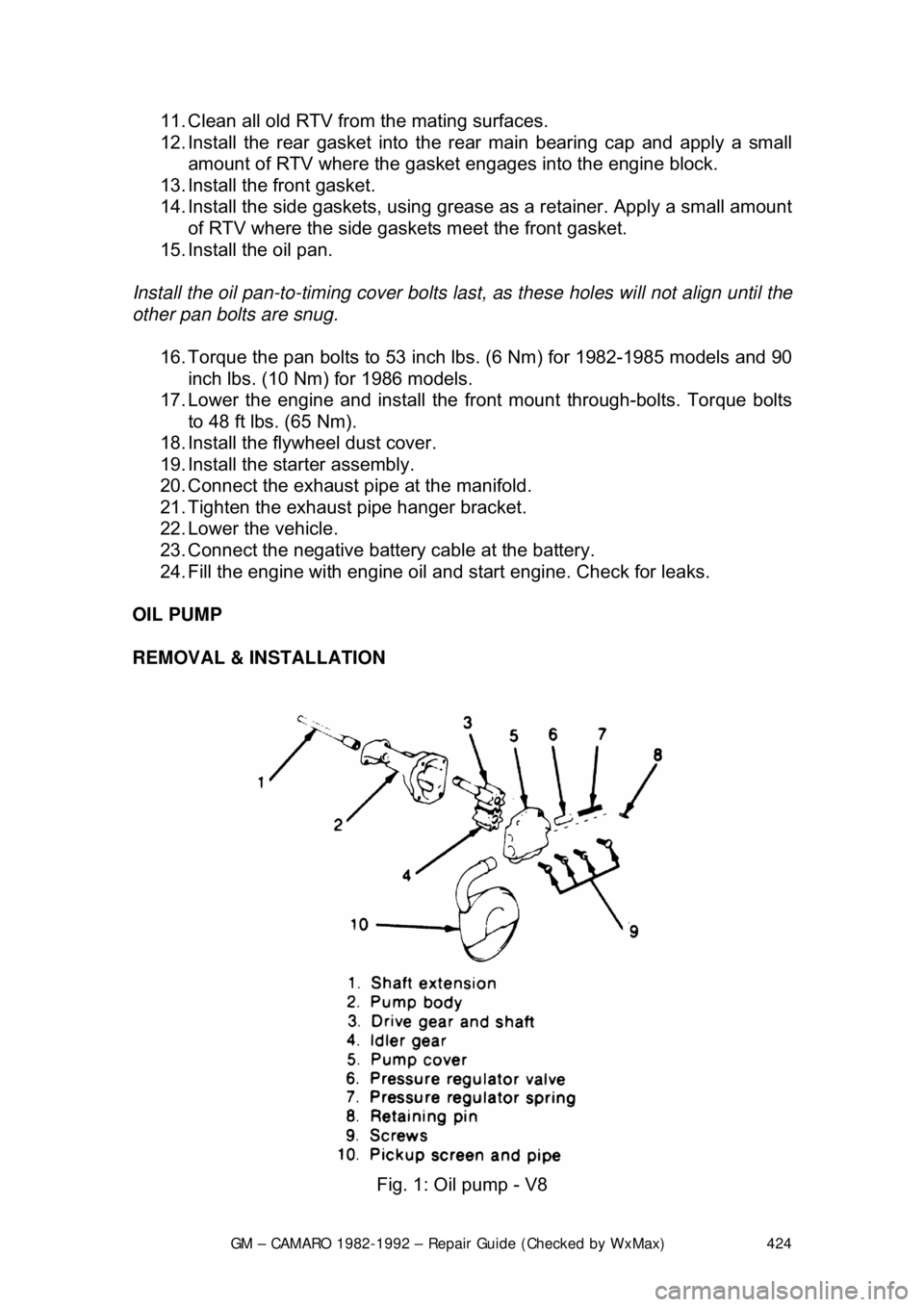
OIL PUMP
REMOVAL & INSTALLATION
Fig. 1: Oil pump - V8
Page 457 of 875
GM – CAMARO 1982-1992 – Repair Guide (Checked by WxMax) 457
EXHAUST SYSTEM
INSPECTION
Safety glasses should be worn at all
times when working on or near the exhaust
system. Older exhaust systems will almost always be covered with loose rust
particles which will shower you when dist urbed. These particles are more than a
nuisance and could injure your eye.
CAUTION - Do NOT perform exhaust repairs or inspection with the engine or
exhaust hot. Allow the system to cool completely before attempting any work.
Exhaust systems are noted for sharp edges , flaking metal and rusted bolts.
Gloves and eye protection ar e required. A healthy supply of penetrating oil and
rags is highly recommended.
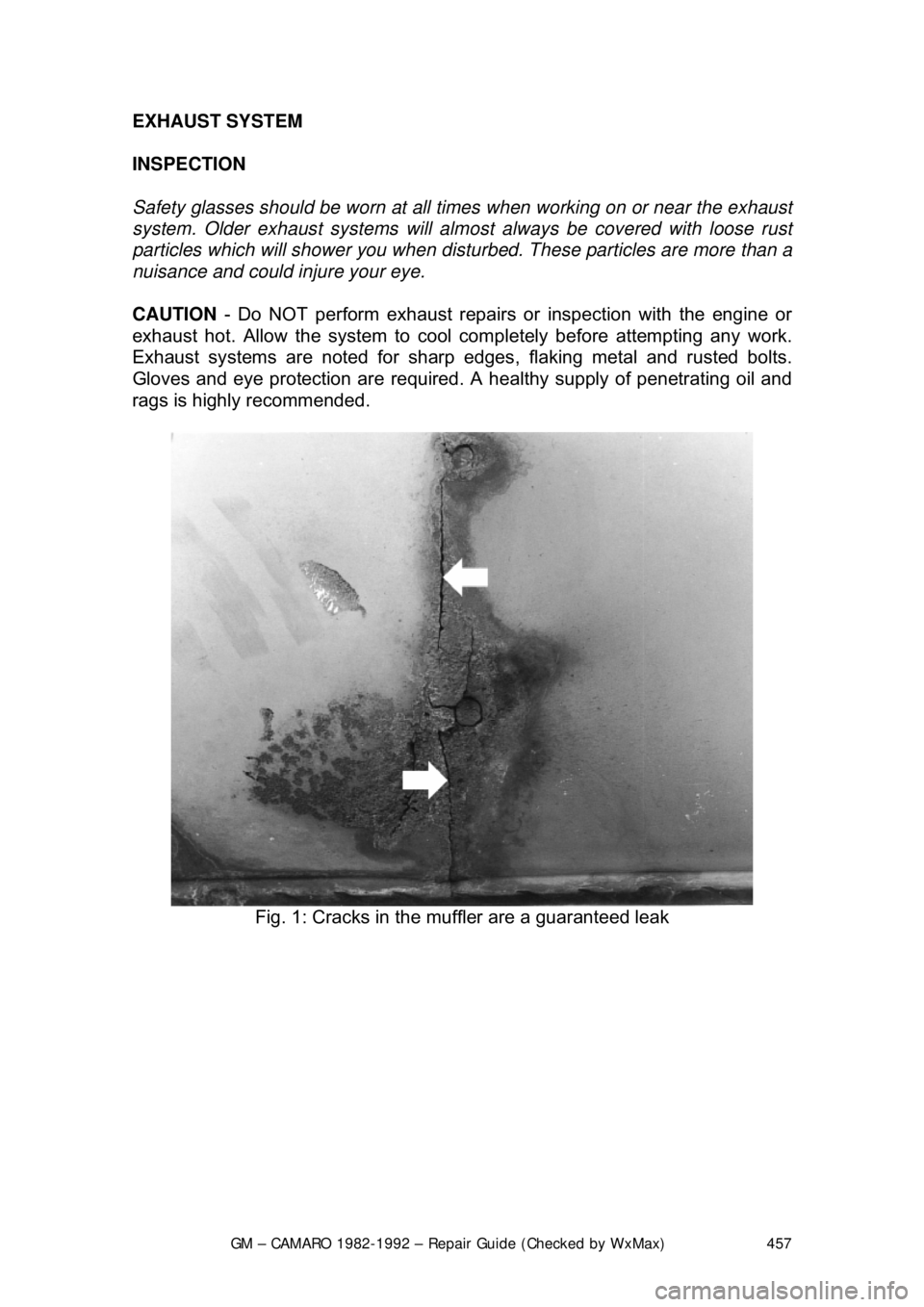
Fig. 1: Cracks in the mu ffler are a guaranteed leak
Page 458 of 875
GM – CAMARO 1982-1992 – Repair Guide (Checked by WxMax) 458
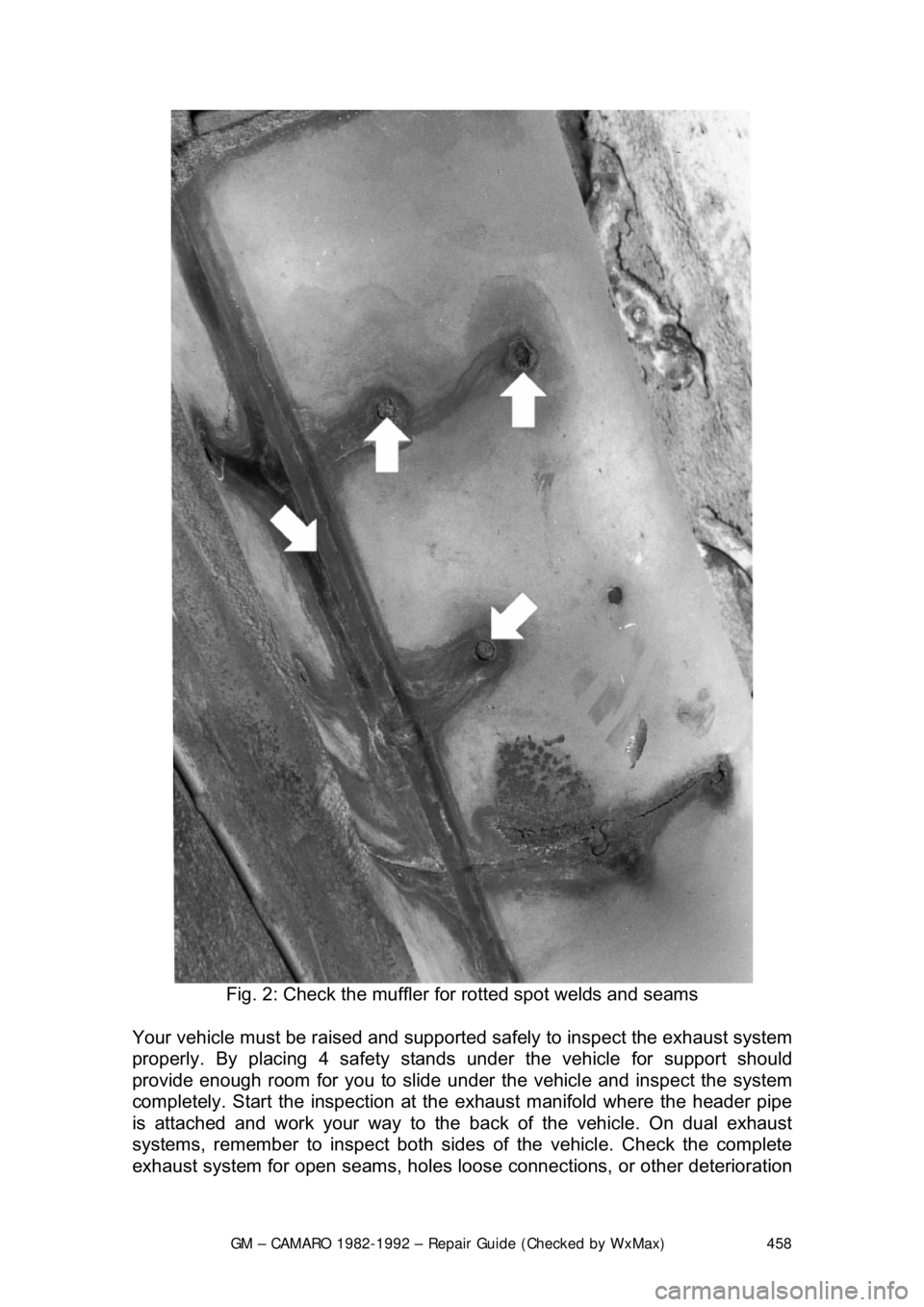
Fig. 2: Check the muffler fo r rotted spot welds and seams
Your vehicle must be rais ed and supported safely to inspect the exhaust system
properly. By placing 4 safety stands under the vehicle for support shoul\
d
provide enough room for you to slide u nder the vehicle and inspect the system
completely. Start the inspection at t he exhaust manifold where the header pipe
is attached and work your way to the back of the vehicle. On dual exhaust
systems, remember to inspect both sides of the vehicle. Check the complete
exhaust system for open seam s, holes loose connections, or other deterioration
Page 459 of 875
GM – CAMARO 1982-1992 – Repair Guide (Checked by WxMax) 459
which could permit exhaust fumes to
seep into the passenger compartment.
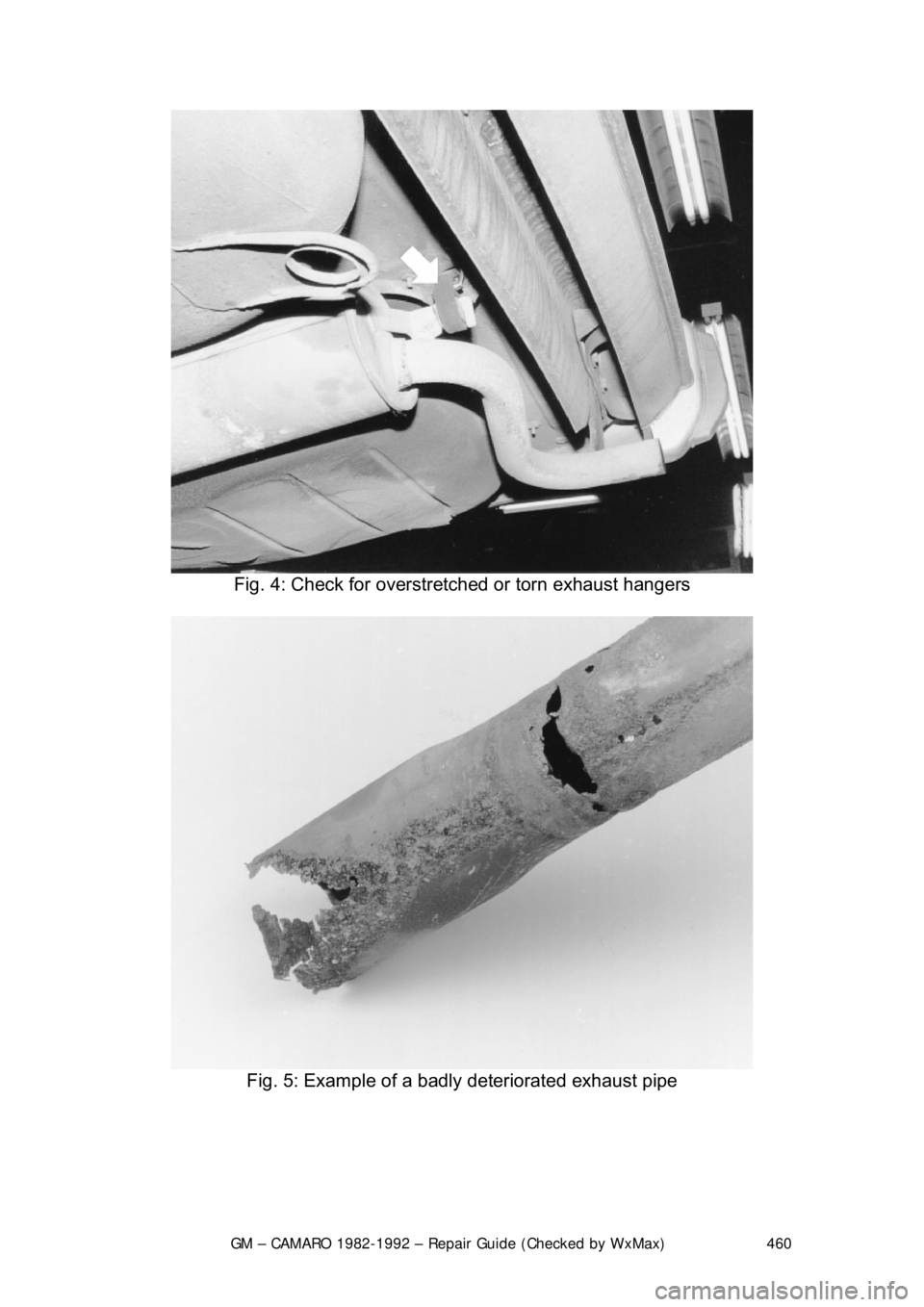
Inspect all mounting brackets and hangers for deterioration, some models may
have rubber O-rings that can be ov erstretched and non-supportive. These
components will need to be replaced if fou nd. It has always been a practice to
use a pointed tool to poke up into the exhaust system where the deterioration
spots are to see whether or not they crumble. Some models may have heat
shield covering certain parts of the ex haust system , it will be necessary to
remove these shields to have the exh aust visible for inspection also.
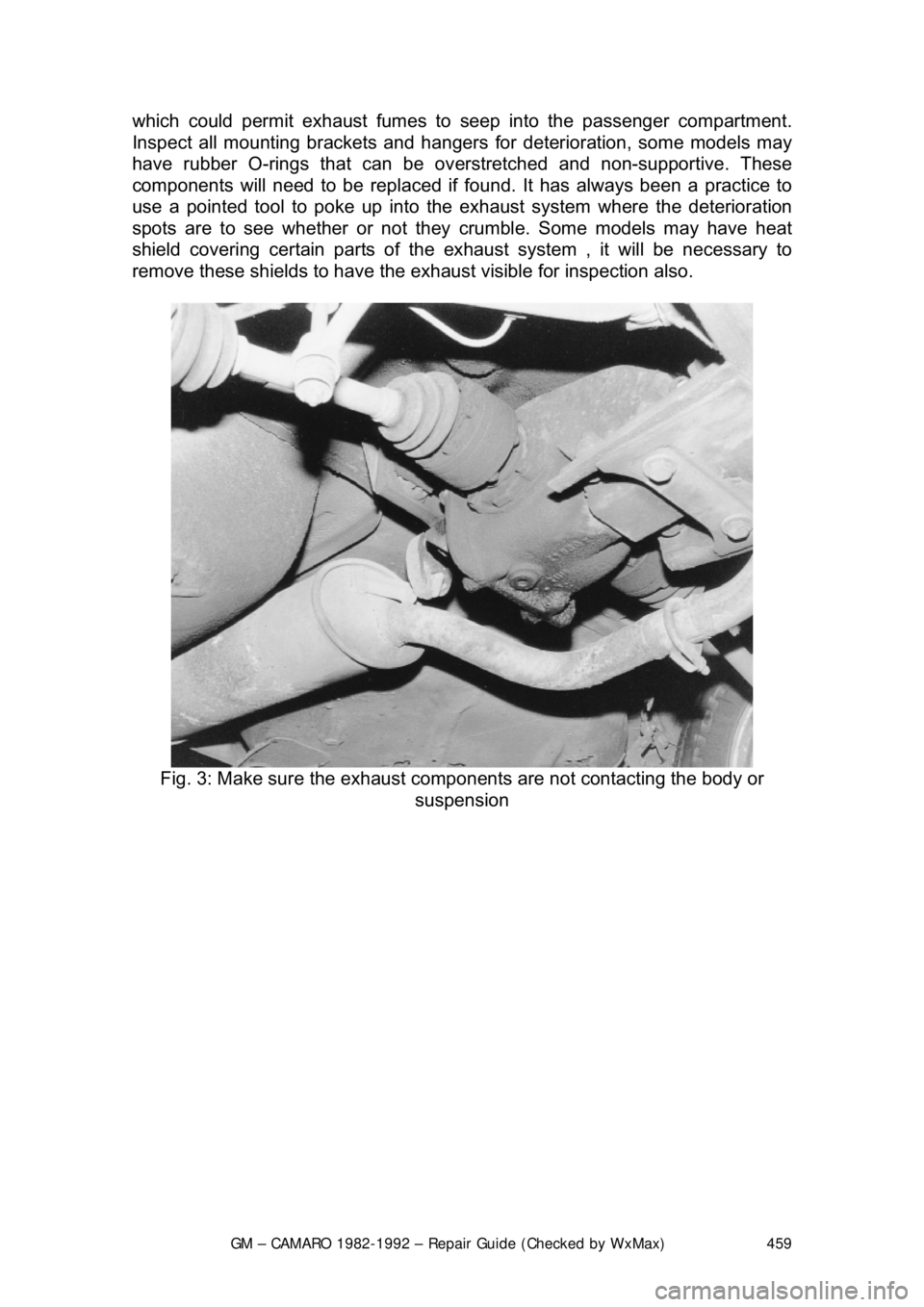
Fig. 3: Make sure the exhaust co mponents are not contacting the body or
suspension
Page 460 of 875
GM – CAMARO 1982-1992 – Repair Guide (Checked by WxMax) 460
Fig. 4: Check for overstre tched or torn exhaust hangers
Fig. 5: Example of a badl y deteriorated exhaust pipe
Page 462 of 875
GM – CAMARO 1982-1992 – Repair Guide (Checked by WxMax) 462
REPLACEMENT
There are basically two types of exhaust sy
stems. One is the flange type where
the component ends are attached with bolts and a gasket in-between. The other
exhaust system is the slip joint type. These components slip into one another
using clamps to retain them together.
CAUTION - Allow the exhaust system to c ool sufficiently before spraying a
solvent exhaust fasteners. Some solvents are highly flammable and could ignite
when sprayed on hot exhaust components.
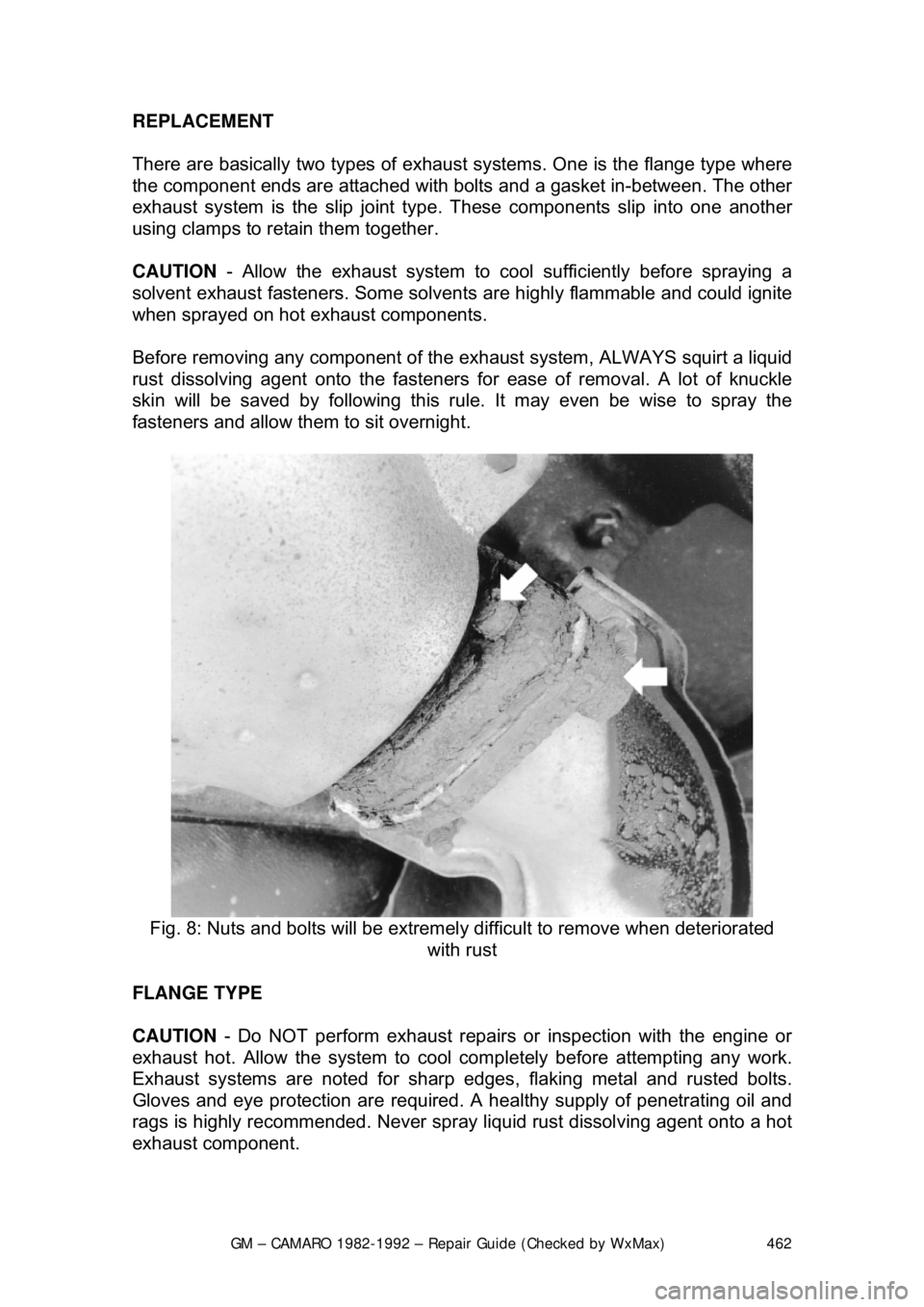
Before removing any component of the ex haust system, ALWAYS squirt a liquid
rust dissolving agent onto the fasteners fo r ease of removal. A lot of knuckle
skin will be saved by following this rule. It may even be wise to spray the
fasteners and allow them to sit overnight.
Fig. 8: Nuts and bolts will be extremely difficult to remove when deteriorated
with rust
FLANGE TYPE
CAUTION - Do NOT perform exhaust repairs or inspection with the engine or
exhaust hot. Allow the system to cool completely before attempting any work.
Exhaust systems are noted for sharp edges , flaking metal and rusted bolts.
Gloves and eye protection ar e required. A healthy supply of penetrating oil and
rags is highly recommended. Never spra y liquid rust dissolving agent onto a hot
exhaust component.
Page 463 of 875
GM – CAMARO 1982-1992 – Repair Guide (Checked by WxMax) 463
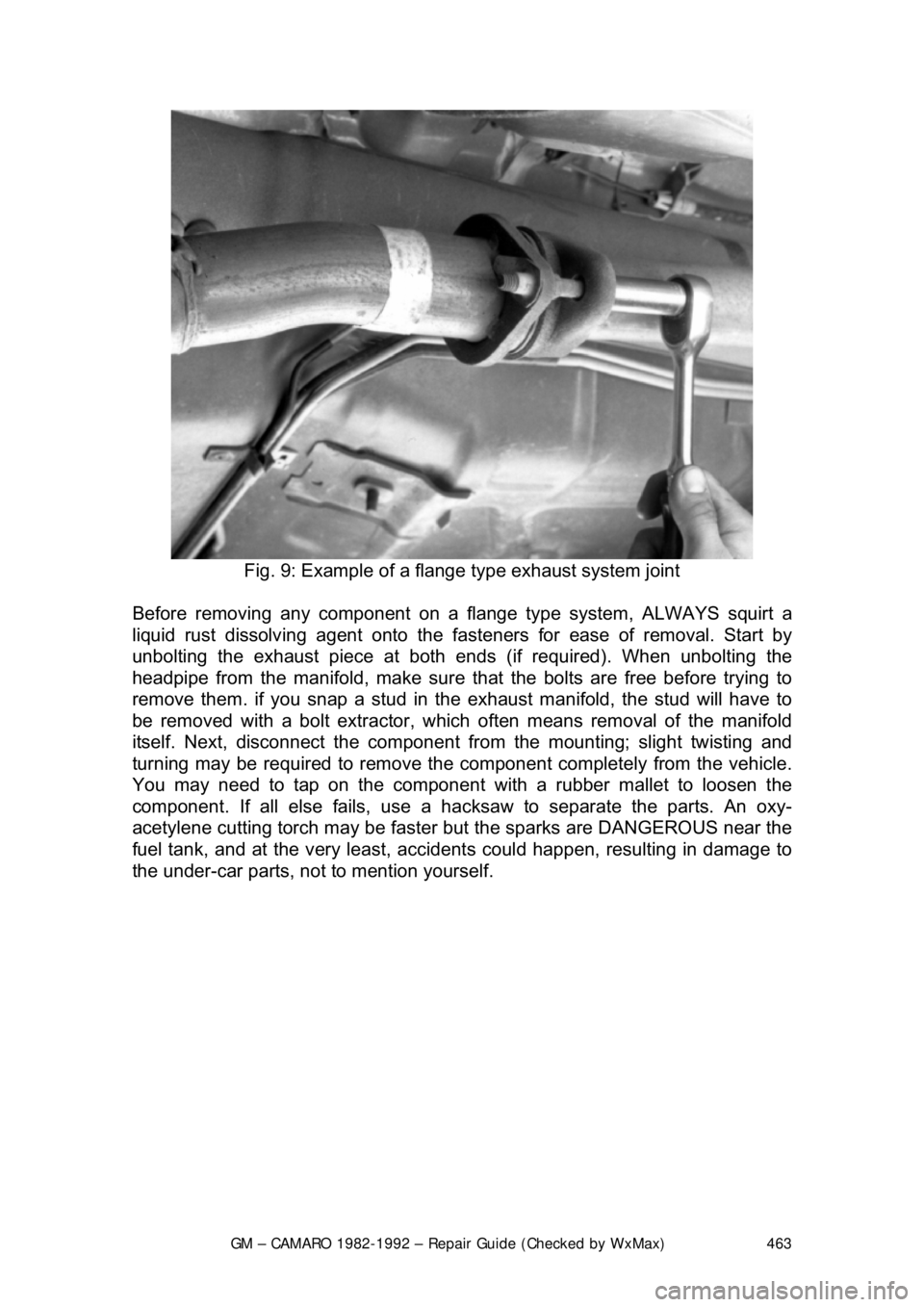
Fig. 9: Example of a fl ange type exhaust system joint
Before removing any component on a fl ange type system, ALWAYS squirt a
liquid rust dissolving agent onto the fast eners for ease of removal. Start by
unbolting the exhaust piece at both ends (if required). When unbolting the
headpipe from the manifold, make sure that the bolts are free before trying to
remove them. if you snap a stud in t he exhaust manifold, the stud will have to
be removed with a bolt extractor, which often means removal of the manifold
itself. Next, disconnect the component fr om the mounting; slight twisting and
turning may be required to remove the co mponent completely from the vehicle.
You may need to tap on the component wit h a rubber mallet to loosen the
component. If all else fails, use a hacksaw to separate the parts. An oxy-
acetylene cutting torch may be faster but the sparks are DANGEROUS near the
fuel tank, and at the very least, accident s could happen, resulting in damage to
the under-car parts, not to mention yourself.
Page 464 of 875
GM – CAMARO 1982-1992 – Repair Guide (Checked by WxMax) 464
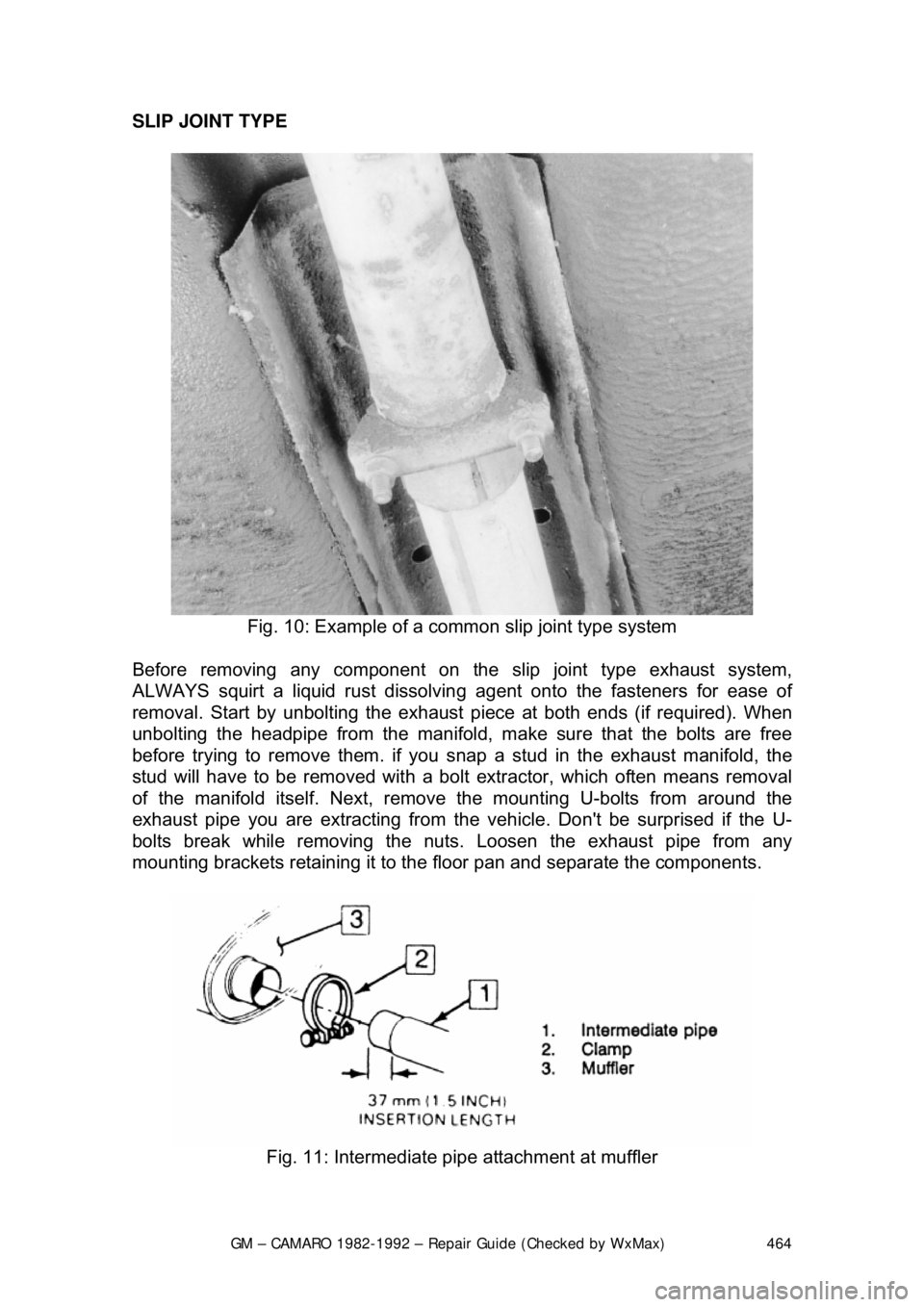
SLIP JOINT TYPE
Fig. 10: Example of a co mmon slip joint type system
Before removing any component on the slip joint type exhaust system,
ALWAYS squirt a liquid rust dissolvin g agent onto the fasteners for ease of
removal. Start by unbolting the exhaust piece at both ends (if required). When
unbolting the headpipe from the manifold, ma ke sure that the bolts are free
before trying to remove them. if you s nap a stud in the exhaust manifold, the
stud will have to be removed with a bolt extractor, which often means removal
of the manifold itself. Next, remove the mounting U-bolts from around the
exhaust pipe you are extracti ng from the vehicle. Don't be surprised if the U-
bolts break while removing the nuts. Loosen the exhaust pipe from any
mounting brackets retaining it to t he floor pan and separate the components.
Fig. 11: Intermediate pipe attachment at muffler
Page 476 of 875

GM – CAMARO 1982-1992 – Repair Guide (Checked by WxMax) 476
Before attempting to repair a threaded
hole, remove any snapped, broken or
damaged bolts or studs. Penetrating oil ca n be used to free frozen threads. The
offending item can usually be removed with locking pliers or using a screw/stud
extractor. After the hole is clear, the thread can be repaired, as shown in the
series of accompanying illustrations and in the kit manufacturer's instructions.
ENGINE PREPARATION
To properly rebuild an engine, you must fi rst remove it from the vehicle, then
disassemble and diagnose it. Ideally you should place your engine on an engine
stand. This affords you the best access to the engine components. Follow the
manufacturer's directions for using the stand with your particular engine.
Remove the flywheel or fl explate before installing the engine to the stand.
Now that you have the engine on a stand, and assuming that you have drained
the oil and coolant from the engine, it's ti me to strip it of all but the necessary
components. Before you start disassembli ng the engine, you may want to take
a moment to draw some pictures, or fabr icate some labels or containers to mark
the locations of various components and the bolts and/or studs which fasten
them. Modern day engines use a lot of littl e brackets and clips which hold wiring
harnesses and such, and these holders are often mounted on studs and/or bolts
that can be easily mixed up. The manufacturer spent a lot of time and money
designing your vehicle, and they wouldn't have wasted any of it by haphazardly
placing brackets, clips or fasteners on t he vehicle. If it's present when you
disassemble it, put it back when you asse mble, you will regret not remembering
that little bracket which holds a wire har ness out of the path of a rotating part.
You should begin by unbolting any accessories still attached to the engine, such
as the water pump, power steering pump, alternator, etc. Then, unfasten any
manifolds (intake or exhaust) which were not removed during the engine
removal procedure. Finally, remove any covers remaining on the engine such
as the rocker arm, front or timing cove r and oil pan. Some front covers may
require the vibration dam per and/or crank pulley to be removed beforehand.
The idea is to reduce the engine to the bar e necessities (cylinder head(s), valve
train, engine block, crankshaft, pistons and connecting rods), plus any other 'in
block' components such as oil pumps, balance shafts and auxiliary shafts.
Finally, remove the cylinder head(s) from the engine block and carefully place
on a bench. Disassembly instructions fo r each component follow later in this
section.
CYLINDER HEAD
There are two basic types of cylinder heads used on today’s automobiles:
the Overhead Valve (OHV) and the Over head Camshaft (OHC). The latter can
also be broken down into two subgr oups: the Single Overhead Camshaft
(SOHC) and the Dual Overhead Camshaft (DO HC). Generally, if there is only a
single camshaft on a head, it is just referred to as an OHC head. Also, an
engine with a OHV cylinder head is also known as a pushrod engine.