brake pads JAGUAR X308 1998 2.G Service Manual
[x] Cancel search | Manufacturer: JAGUAR, Model Year: 1998, Model line: X308, Model: JAGUAR X308 1998 2.GPages: 2490, PDF Size: 69.81 MB
Page 379 of 2490

6. CAUTI
ON: Always install new brake pads, irrespective of
the condition of the original pads, when renewing a brake disc.
• NOTE: Clean caliper piston to pad mating surface.
Install brake pads to caliper housing.
Remove paper backing from pads to reveal
adhesive shim.
Install brake pads, in sert clip located on back of inner pad
into caliper piston.
7. Inst
all caliper housing to caliper carrier.
1. Align housing to carrier.
2. Install and tighten gu ide pins to 25-30 Nm.
3. Install dust covers.
4. Install anti-rattle spring.
8. Repeat above procedure to inst all opposite side brake disc.
9. Fit wheels. Refer to section 204-04.
10. Remove stands and lower vehicl e. Refer to section 100-02.
11
.
CAUTION: Remove brake fl uid spillage immediately
from paint work, wi th clean water.
Check brake fluid level.
Check brak
e fluid level is
at the maximum mark.
Re
move cloth.
Fi
t cap.
12
.
Remove paint work protection covers, and close engine
compartment.
13. Start the engine and repeatedly press the brake pedal until
brake pressure is evident.
Page 380 of 2490
Rear Disc
Brake - Brake DiscVehicl
es With: High Performance Brakes
Remo
val and Installation
Remov
a
l
1.
WAR N
INGS:
BRAKE DISCS MUST ALWAYS BE REPLACED IN PAIRS.
BRAKE DUST, IF INHALED CAN DAMAGE YOUR HEALTH.
ALWAYS REMOVE BRAKE DUST USING A VACUUM BRUSH. DO
NOT USE A COMPRESSED-AIR LINE TO DISPERSE BRAKE DUST
INTO THE ATMOSPHERE.
• CAUTIONS:
Replacement of nuts and bolts: Various thread-locking
devices are used on nuts and bolts throughout the vehicle. These
devices restrict the number of ti mes a nut or bolt can be used.
See section 100-00 for information.
The Brembo caliper is aligned to the brake disc when it is
first installed to the vehicle, therefore, care must be taken not to
disturb this alignment. When removing the caliper; remove the
bolts that secure the anchor brac ket to the hub carrier only. DO
NOT loosen any other caliper bolts.
Open engine compartment and fit paint work protection covers
to fenders.
2. Ra
ise rear of vehicle and support
on stands. Refer to section
100-02.
3. Remove rear wheels. Refer to section 204-04.
4. CAUTIO
N: Remove brake flui
d spillage immediately from
paint work, with clean water.
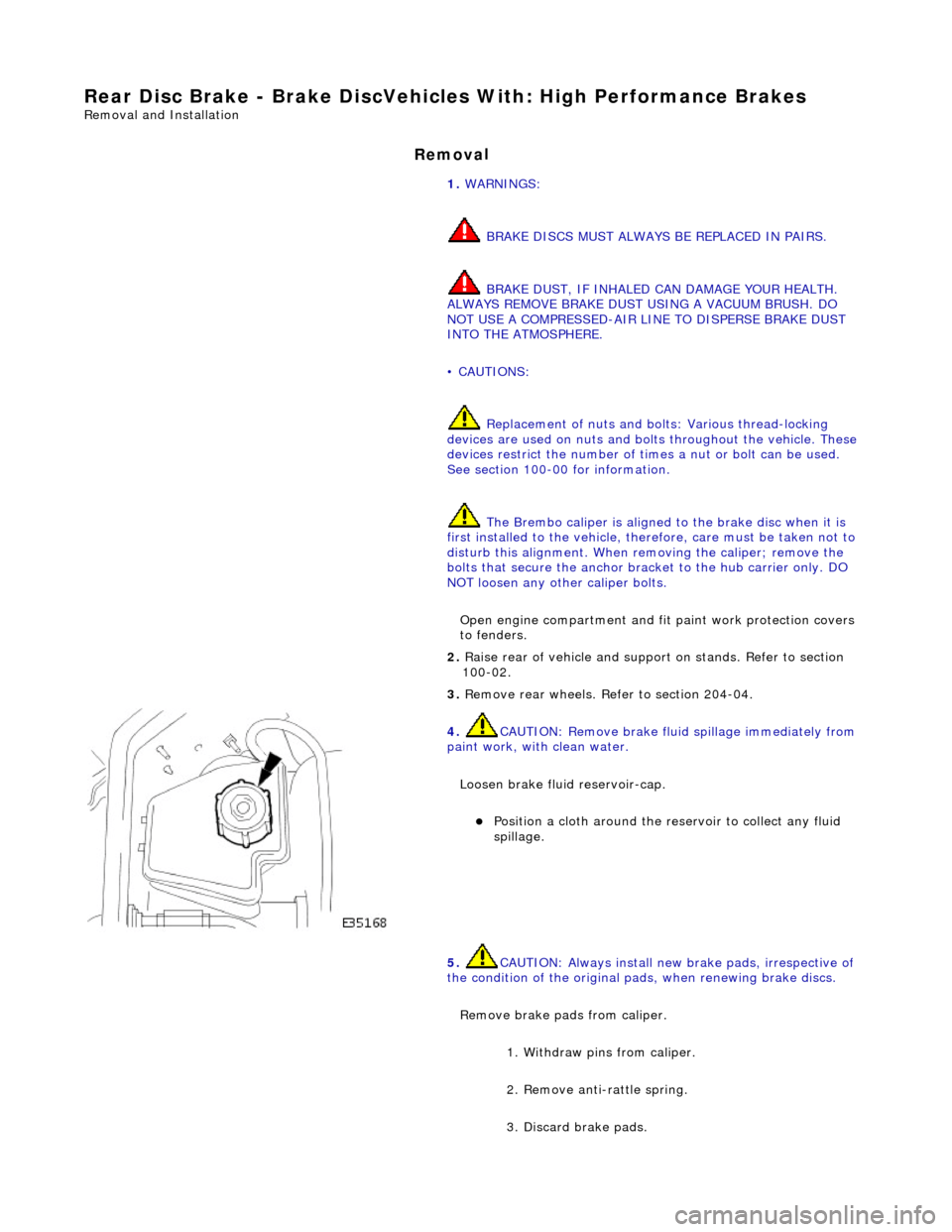
Loosen brake fluid reservoir-cap.
Position a cloth around the reser
voir to collect any fluid
spillage.
5. CAUTIO
N: Always install new brake pads, irrespective of
the condition of the original pads, when renewing brake discs.
Remove brake pads from caliper. 1. Withdraw pins from caliper.
2. Remove anti-rattle spring.
3. Discard brake pads.
Page 382 of 2490

In
stallation
10
. R
emove brake dust from calipers, and from area of parking
brake shoes, see WARNING above.
11. Repeat above procedure to remo ve opposite side brake disc.
12. Thoroughly clean the area of both hubs where they mate
against the br ake discs.
1. Inst al
l brake disc to wheel studs.
Make su
re hu
b and brake disc
access holes are aligned.
2. Set the parking brake, refer to operation 70.35.37.
3. Check brake disc run-out. Refer to General Procedures section
206-04.
4. Inst al
l caliper to hub carrier.
Install and tigh
ten bolts to 6
0 Nm.
5. CAUTIONS:
Always install new brake pads, irrespective of the condition
of the original pads, when renewing brake discs.
Retracting the caliper piston may cause the fluid reservoir
to over-flow. Remove brake flui d spillage immediately from paint
work with clean water.
Page 383 of 2490

Note the condition of pins
and replace if necessary.
Install brake pads. Refer to 70 .40.09 for anti-squeal grease
application.
Sl
owly retract caliper pistons.
1. Install pads.
2. Position anti-rattle spring.
3. Install pins - make sure pin collets are fully engaged
into caliper.
6. Repeat
above procedure to inst
all opposite side brake disc.
7. Fit wheels. Refer to section 204-04.
8. Remove stands and lower vehicl e. Refer to section 100-02.
9. CAUTI
ON: Remove brake flui
d spillage immediately from
paint work, with clean water.
Check brake fluid level.
Check brak
e fluid level is
at the maximum mark.
Re
move cloth.
Fi
t cap.
10
.
Remove paint work protection covers, and close engine
compartment.
11. Start the engine and repeatedly press the brake pedal until
brake pressure is evident.
Page 384 of 2490
Rear Di
sc Brake - Brake PadsVe
hicles With: Standard Brakes
Remo
val and Installation
Remov
a
l
W
A
RNING: BRAKE DUST, IF INHALED CAN DAMAGE YOUR
HEALTH. ALWAYS REMOVE BRAKE DUST USING A VACUUM
BRUSH. DO NOT USE A COMPRESSED-AIR LINE TO DISPERSE BRAKE DUST INTO THE ATMOSPHERE.
CAUTION: Replacement of nuts and bolts: Various thread-locking devices are used on nuts and bolts throughout the
vehicle. These devices restrict the number of times a nut or bolt can be used. See section 100-00 for information.
1. Op
en engine compartment and fit
paint work protection covers
to fenders.
2. Raise rear of vehicl e and support on stan ds. See Section 100-
02.
3. Remove both rear wheels. See Section 204-04.
4. CAUTIO
N: Remove brake flui
d spillage immediately from
paint work, with clean water.
Loosen brake fluid reservoir-cap.
Position a cloth around the reser
voir to collect any fluid
spillage.
5. CAUT
ION: Tie caliper housing aside. Do not allow the
caliper housing to hang on the hydraulic hose, as this will
damage the hose.
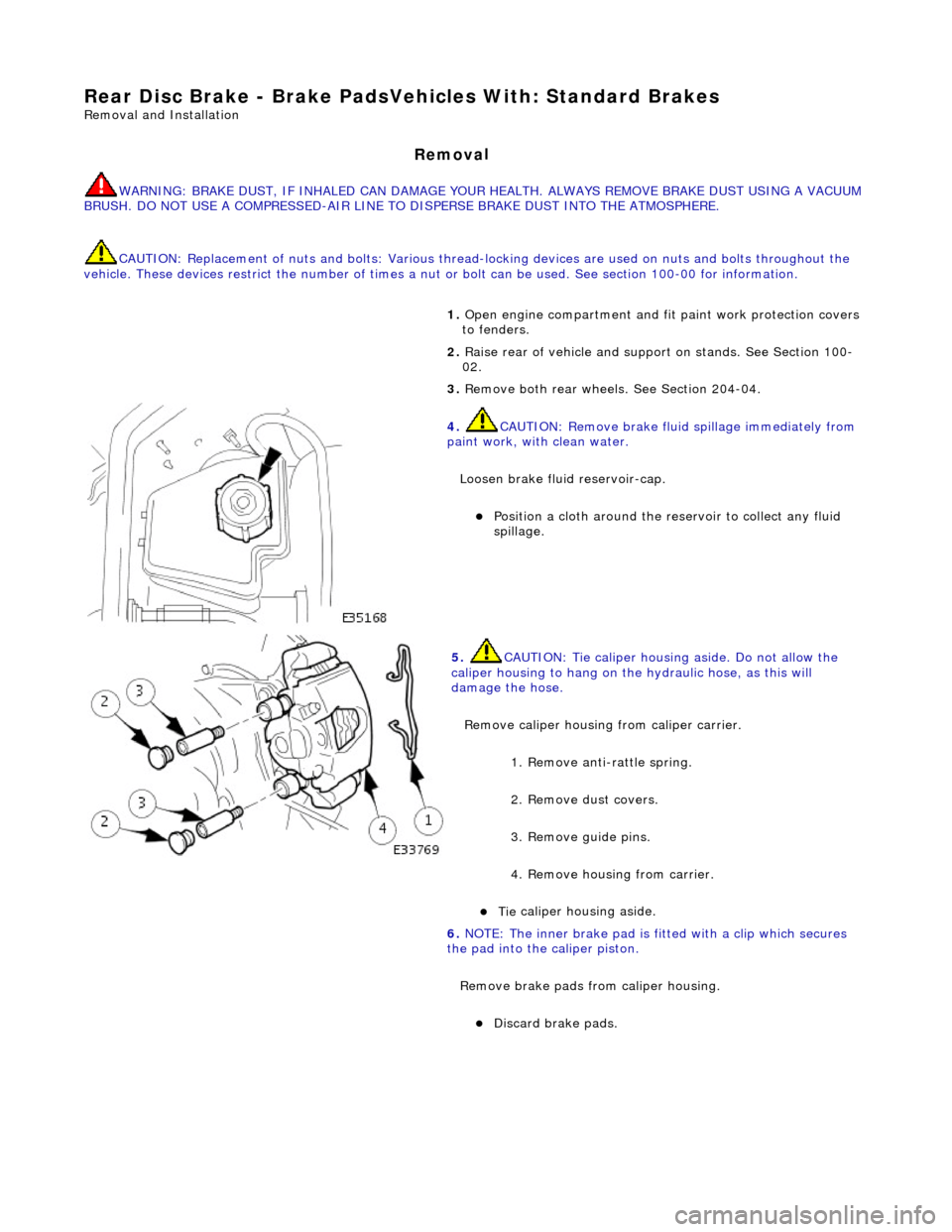
Remove caliper housing from caliper carrier.
1. Remove anti-rattle spring.
2. Remove dust covers.
3. Remove guide pins.
4. Remove housing from carrier.
Tie
caliper housing aside.
6.
NO TE
: The inner brake pad is fitt
ed with a clip which secures
the pad into the caliper piston.
Remove brake pads from caliper housing.
Discard b
rake pads.
Page 385 of 2490

I
nstallation
7.
Cl
ean all mating surfaces and re
move brake dust. See Warning
above.
8. Repeat above procedure to remo ve opposite side brake pads.
1. CAUTI
ON: Retracting the caliper piston may cause the
fluid reservoir to over-flow. Remove brake fluid spillage
immediately from paint work, with clean water.
Slowly retract piston into caliper housing.
2. NOTE
: Clean caliper piston to pad mating surface.
Install brake pads to caliper housing.
Remove paper backing from pads to reveal
adhesive shim.
Install brake pads, in sert clip located on back of inner pad
into caliper piston.
3. Inst
all caliper housing to caliper carrier.
1. Align housing to carrier.
2. Install and tighten gu ide pins to 25-30 Nm.
3. Install dust covers.
4. Install anti-rattle spring.
4. Repeat above procedure to install opposite side brake pads.
5. Fit wheels. Refer to Section 204-04.
Page 387 of 2490
Rear Dis
c Brake - Brake PadsVehicl
es With: High Performance Brakes
Re
moval and Installation
Remov
al
1.
W
ARNING: BRAKE DUST, IF INHALED CAN DAMAGE
YOUR HEALTH. ALWAYS REMOVE BRAKE DUST USING A VACUUM
BRUSH. DO NOT USE A COMPRE SSED-AIR LINE TO DISPERSE
BRAKE DUST INTO THE ATMOSPHERE. Failure to follow this
instruction may result in personal injury.
• CAUTIONS:
Brake pads must always be replaced in axle sets.
Replacement of nuts and bolts: Various thread-locking
devices are used on nuts and bolts throughout the vehicle. These
devices restrict the number of ti mes a nut or bolt can be used.
For additional information, refer to: General Service Information
(10
0-00 General Information,
Description and Operation).
The High performance brake caliper is aligned to the brake
disc when it is first installed to the vehicle, therefore, care must
be taken not to disturb this alignment. When removing the
caliper; remove the bolts that se cure the anchor bracket to the
vertical link only. DO NOT loosen any other caliper bolts.
Open engine compartment and fit paint work protection covers
to fenders.
2. R
aise rear of vehicle an
d support on stands.
For additional information, refer to: Using the Workshop Jack
(10
0-02 Jacking and Lifting, General Procedures).
3. Remove rear wheels.
For additional information, refer to: Wheel and Tire
(20
4-04
Wheels and Tires, Remo val and Installation).
4. CAUTI
ON: Remove brake flui
d spillage immediately from
paint work, with clean water.
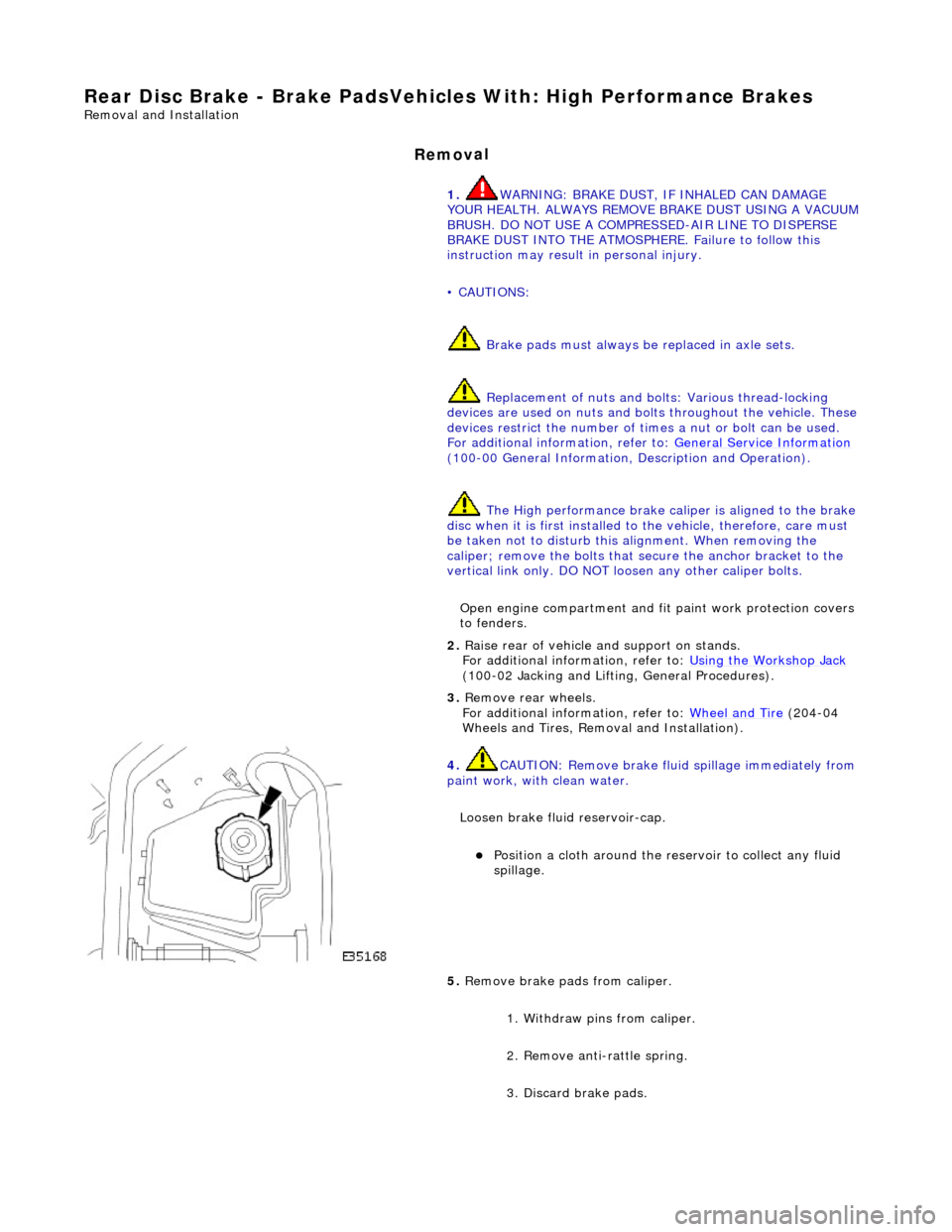
Loosen brake fluid reservoir-cap.
Position a cloth around the
reservoir to collect any fluid
spillage.
5. Remove brake
pads from caliper.
1. Withdraw pins from caliper.
2. Remove anti-rattle spring.
3. Discard brake pads.
Page 388 of 2490

In
stallation
6.
Clean all mating surfaces and remove brake du
st, see
WARNING above.
7. Repeat above procedure to remo ve opposite side brake pads.
1. CAUTIO
N: Make sure grease does not contact brake-pad
friction surface or brake disc.
To prevent brake squeal apply grease to the shoulders of the
brake-pad backplate.
For additional information, refer to: Specifications
(206-0
4 Rear
Disc Brake, Specifications).
Apply a un iform
layer of grea
se to backplate shoulders,
making sure the whole sh oulder is covered.
2. CAUTIO
N: Make sure the brake pads are fitted with the
direction arrow following the direction of wheel rotation.
Make sure the brake pads are fi tted with the direction arrow
following the direction of wheel rotation.
3. CAUTI O
NS:
Retracting the caliper piston may cause the fluid reservoir
to over-flow. Remove brake flui d spillage immediately from paint
work with clean water.
Make sure the brake pads are installed to the correct
orientation.
Make sure the brake pads ar e fitted with the direction
arrow following the direction of wheel rotation.
Note the condition of pins and replace if necessary.
• NOTE: Slowly retract caliper pistons.
Page 389 of 2490
Install brake pads.
1
. Install pads.
2. Position anti-rattle spring.
3. Install pins - make sure pin collets are fully engaged
into caliper.
4. Repeat above procedure to install opposite side brake pads.
5. Fit wheels.
For additional information, refer to: Wheel and Tire
(20
4-04
Wheels and Tires, Remo val and Installation).
6. Remove stands an d lower vehicle.
For additional information, refer to: Using the Workshop Jack
(10
0-02 Jacking and Lifting, General Procedures).
7. CAUTI
ON: Remove brake flui
d spillage immediately from
paint work, with clean water.
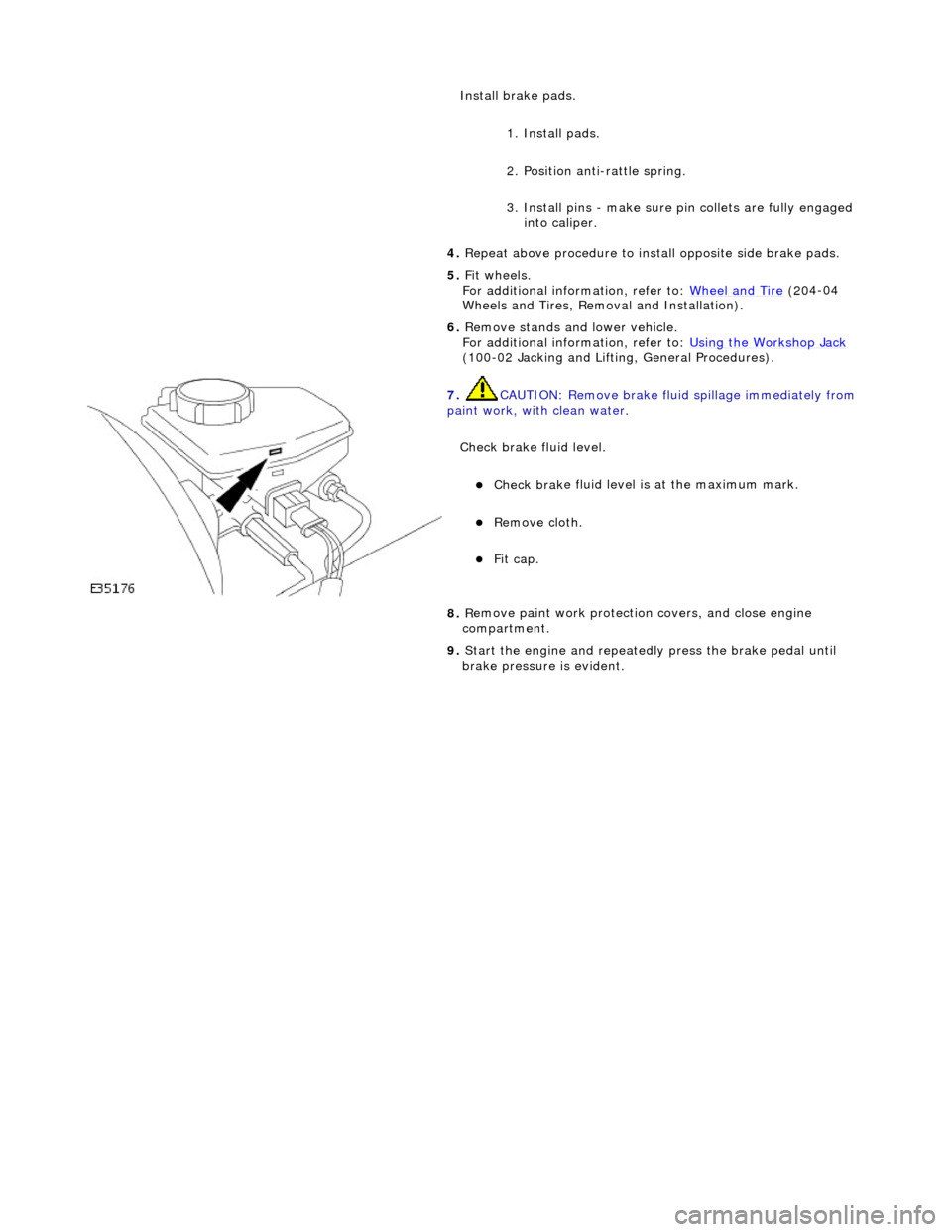
Check brake fluid level.
Check brak
e fluid level is
at the maximum mark.
Re
move cloth.
Fi
t cap.
8.
R
emove paint work protection
covers, and close engine
compartment.
9. Start the engine and repeatedly press the brake pedal until
brake pressure is evident.
Page 407 of 2490

The t
andem master cylinder contains two in
dependent pistons, fluid pressure to each brake circuit is controlled by its own
individual piston. Brake fluid is supplied to the master cylinder by the reservoir, which is divided into two sections to preve nt
total fluid loss should one of the circuits fail. A port situated at the bottom of each section of the reservoir supplies the f luid
to each piston.
The fluid reservoir has a fluid-le vel indicator switch installed, which operates when the fluid level is low, causing the brake
fluid level warning-lamp to illuminate.
Bra
ke Caliper
The brake
calipers are of the single piston
type. The caliper carrier, which is secured to the vertical link by two bolts, carr ies
the single-piston caliper housing. The cali per housing is secured to the caliper carrier by two guide-pins and an anti-rattle
spring. When the brakes are applied, the caliper-housing piston pushes the brake pad in front of it, to wards the brake disc.
This movement forces the calipe r housing to move along the guid e-pins, in the opposite direction of the piston, to apply the
second brake pad.
Br
embo Brake Caliper
The four
cylinder brake caliper is rigidly attached to the vert
ical link via an anchor bracket. The caliper is a split assembly
with each side of the caliper, housing two pistons. The two-pairs of opposed pistons act direct ly on the brake pads mounted
one each side of the disc.
Mast
er Cylinder and Reservoir