fluid VOLKSWAGEN T-ROC 2021 Owner´s Manual
[x] Cancel search | Manufacturer: VOLKSWAGEN, Model Year: 2021, Model line: T-ROC, Model: VOLKSWAGEN T-ROC 2021Pages: 502, PDF Size: 9.42 MB
Page 184 of 502

Vehicles with ignition lock: turn the vehicle key to position ⇒ Fig. 99① . The ignition is
switched on.
Vehicles with a starter button: press the starter button once. The ignition is switched on.
Vehicles with a diesel engine: during the diesel engine preheating phase, the indicator lamp
lights up in the instrument cluster.
Depress and hold the brake pedal until the electronic parking brake has been switched off.
Vehicles with manual gearbox: fully depress the clutch pedal and hold it until the engine has
been started. Move the gear lever to neutral position.
Vehicles with DSG dual clutch gearbox: move the selector lever to position P or N.
Vehicles with ignition lock: turn the vehicle key to position ⇒ Fig. 99② – do not depress the
accelerator.
Release the vehicle key once the engine has started.
Vehicles with a starter button: press the starter button ⇒ Starter button – do not depress the
accelerator. There must be a valid vehicle key in the vehicle before the engine can be started.
If the engine does not start immediately, switch off the starter and try again after about a minute.
Vehicles with starter button: perform an emergency start if necessary ⇒ No valid vehicle key
recognised .
Vehicles with starter button: the starter button is deactivated if the vehicle was locked with the
vehicle key. If you are in the vehicle and need to start the engine, unlock the vehicle first or perform
an emergency start ⇒ No valid vehicle key recognised .
Switch off the electronic parking brake if you wish to pull away.
WARNING
The risk of serious injury can be reduced with the engine running or when starting the engine.
Never start or run the engine in unventilated or enclosed spaces. The exhaust fumes contain carbon
monoxide, an odourless and colourless toxic gas. Carbon monoxide can cause people to lose
consciousness. It can also cause death.
Never start or run the engine if oil, fuel or any other highly flammable fluids are under or near the
vehicle, or are leaking out of the vehicle, e.g. as the result of damage.
Page 220 of 502

Checklist
To ensure your own safety and the safety of your passengers, observe the following points before
driving offroad:
Obtain sufficient information before driving into offroad terrain with the vehicle.
Do not plan day stages that are too long. Take increased fuel consumption for offroad driving into
account.
Fill up the tank. Fuel consumption is considerably higher offroad.
Check that your tyres are suitable for the offroad journey you have planned. Recommendation for
difficult offroad terrain: always have offroad tyres fitted to your vehicle.
Check the tyre pressure on all tyres and correct if necessary. This includes the temporary spare
wheel, if present.
Check engine oil level and refill engine oil as necessary. The engine will be supplied with engine oil
when it is driven on or across a slope only if the engine oil level is sufficient.
Completely refill the washer fluid reservoir with water and washer fluid.
Fit the towing eye at the front or rear. It is not always possible to fit the towing eye when the vehicle
is stuck.
Check the vehicle toolkit and add tools according to individual requirements Useful accessories for
offroad driving.
Stow luggage in the vehicle as evenly and as low as possible. Secure all loose items.
Before driving offroad, Volkswagen recommends attending an offroad driving course, particularly if
you have no or very little experience.
Page 223 of 502

With the correct gear selected, the vehicle will normally not have to be braked so much using the
foot brake when driving downhill as the engine braking effect will normally be sufficient.
You should only depress the accelerator as much as is required. If you accelerate too hard, the
wheels could lose traction and you could lose control of the vehicle.
DSG® dual clutch gearbox
Select position D when driving in normal, flat offroad terrain.
Adjust your speed when driving on soft or slippery ground, and select the highest suitable position
for the Tiptronic.
If driving through mud, sand, water or hilly terrain, drive with Tiptronic in the positions 3 or
2⇒ DSG® dual clutch gearbox .
Use the offroad display ⇒ Offroad display .
Driving on rough terrain
First read and observe the introductoryinformation and safety warnings⇒Introduction
Use the offroad driving profile ⇒ Setting a driving profile .
You should drive through rocky terrain at no faster than walking pace.
If you are not able to drive around a rock, drive carefully onto the rock with one front wheel and
drive over it slowly ⇒ .
NOTICE
You should never drive straight over large obstacles, e.g. boulders or tree stumps, or drive over such
obstacles with one side of the vehicle. Obstacles which require more ground clearance than is
available could damage vehicle components when you drive over them and thus cause the vehicle to
break down.
Even obstacles that are smaller than the available ground clearance could come into contact with
the vehicle underbody and thus cause damage which could lead to a vehicle breakdown. This applies
in particular if there is a hollow or soft ground either in front of or behind the obstacle. This also
applies in cases when you drive too quickly over the obstacle causing the vehicle to bounce.
Escaping engine oil and brake fluid can pollute the environment. Spilt service fluids must be
collected and then disposed of properly and in an environmentally responsible way.
Driving through water
First read and observe the introductoryinformation and safety warnings⇒Introduction
Driving through flooded terrain could damage the vehicle ⇒ Checklist before driving offroad .
Page 323 of 502

efuelling.
WARNING
Filling the tank with the wrong fuel can damage the vehicle.
uels that have been approved for the vehicle.
-approved service additives in the
approved quantity.
CAUTION
Fuel may run out of a fuel canister. This could cause fire and injuries.
Fuels can pollute the environment. Collect any service fluids that escape or are spilled and dispose of
them correctly.
The tank flap cannot be opened manually. Seek expert assistance in an emergency.
Fuel types and refuelling
Introduction
This chapter contains information on the followingsubjects:
⇒ Fuel standards
⇒ Petrol
⇒ Diesel
⇒ Refuelling
The tank flap is located at the rear right-hand side of the vehicle.
Different engines require different fuels. There is a factory-fitted sticker in the tank flap that
indicates the required fuel type for the vehicle.
Page 328 of 502

AdBlue® is a registered trademark and is also known as AUS32 or DEF (Diesel Exhaust Fluid).
The AdBlue® consumption figures depend on the driving style, operating temperature and ambient
temperature. The remaining range and refill quantity can be checked on the instrument cluster
display ⇒ Driving data display (multifunction display) .
The AdBlue® tank must never run empty ⇒ . As of a remaining range of approximately 2,400 km,
the instrument cluster display will indicate that the AdBlue® must be refilled ⇒ Troubleshooting .
CAUTION
AdBlue® is an irritant and corrosive fluid that can damage the skin, eyes and respiratory organs upon
contact.
instructions, it is not to be expected that a user will come into contact with AdBlue®.
other containers.
15 minutes and consult a doctor.
at least 15 minutes and consult a doctor in the case of skin irritations.
15 minutes. Do not induce vomiting unless instructed to do so by a doctor. Seek medical assistance
immediately.
NOTICE
If the AdBlue® level is too low, the vehicle cannot be restarted after the ignition has been switched
off. Starting with jump leads is also not possible.
approximately 1,000 km.
NOTICE
Improper use of AdBlue® may cause damage to the vehicle that is not covered by the warranty.
22241-1.
fuel or additives to the AdBlue®.
Page 362 of 502

The engine compartment of a motor vehicle is a hazardous area. Do not work on the engine and in
the engine compartment unless you are familiar with the task, aware of the general safety
procedures and have the correct equipment, service fluids and suitable tools. Serious injuries can be
caused by carrying out work incorrectly ⇒ . The work should be carried out by a qualified
workshop if you are uncertain. Volkswagen recommends using a Volkswagen dealership for this
purpose.
Always park the vehicle on a level and stable surface before carrying out any work in the engine
compartment.
WARNING
Unintentional vehicle movements during service work can cause serious injury.
underneath the vehicle while the wheels are on the ground, the vehicle must be on a level surface,
the wheels chocked, and the vehicle key removed from the ignition lock as required.
vehicle. The vehicle jack is not sufficient for this task and can fail, which can lead to serious injuries.
WARNING
The engine compartment of any motor vehicle is a dangerous area. Serious injuries can be sustained
here.
st care and attention must be paid when carrying out any work and you must follow the
general safety rules. Never take any risks.
carry it out. If you are uncertain of what to do, the work should be carried out by a qualified
workshop. Serious injuries can result from work that has not been carried out properly.
steam or hot coolant can cause serious burns. Always wait until you can no longer see or hear steam
or coolant coming from the engine compartment.
urn the skin.
P or move the gear
lever to the neutral position.
and remove the vehicle key from the ignition lock.
Page 363 of 502

unattended.
expansion tank when the engine is hot. Coolant may spray out and cause serious burns and other
injuries.
-clockwise while exerting
gentle downward pressure on the cap.
face, hands and arms from hot coolant or steam with a large, thick cloth.
spilt service fluids can start a fire.
WARNING
High voltages in the electrical system can cause electric shocks, burns, serious injuries and death!
-volt battery could explode.
started, never touch the electrical cables in the ignition system.
WARNING
There are rotating components in the engine compartment that can cause serious injury.
rotor blades can result in serious injuries. The fan is temperature-controlled and can start
automatically, even when the ignition has been switched off or the vehicle key has been removed
from the ignition lock.
e engine is started or with the engine running, there is an
additional, potentially fatal safety risk from the rotating parts, such as the poly V-belt, alternator,
radiator fan, and from the high-voltage ignition system. Always be particularly careful.
Always ensure that no body parts, jewellery, ties, loose items of clothing or long hair can be
caught up in rotating engine components. Before starting work, remove any jewellery and ties, tie
up long hair and pull clothes in tightly to avoid them getting caught on engine parts.
could move, even if the electronic parking brake is applied.
s and tools, in the engine
compartment. Any forgotten items can cause malfunctions, engine damage and fires.
WARNING
Page 364 of 502

Additional insulating materials such as blankets in the engine compartment could disrupt the
operation of the engine, start fires and lead to severe injuries.
WARNING
Service fluids and some materials in the engine compartment are highly flammable and can cause
fires and serious injuries!
ty of the engine compartment.
injuries.
tem or the electrical
system:
-volt vehicle battery. Ensure that the vehicle is unlocked when the 12-
volt vehicle battery is disconnected as otherwise the anti-theft alarm will be activated.
of heating systems, water heaters or any other open flames.
NOTICE
When filling or changing service fluids, please ensure that the correct service fluids are filled through
the correct openings. The use of incorrect service fluids could result in serious malfunctions and
engine damage.
Service fluids that leak from the vehicle are harmful to the environment. For this reason, you should
regularly check the ground underneath your vehicle. If there are spots of oil or other fluids on the
ground, the vehicle should be inspected by a qualified workshop. Any spilt service fluids must be
disposed of properly.
Preparing the vehicle for working in the engine compartment
Checklist
The following steps should always be carried out in the specified order before working in the engine
compartment ⇒ :
Park the vehicle on a level and stable surface.
Page 368 of 502
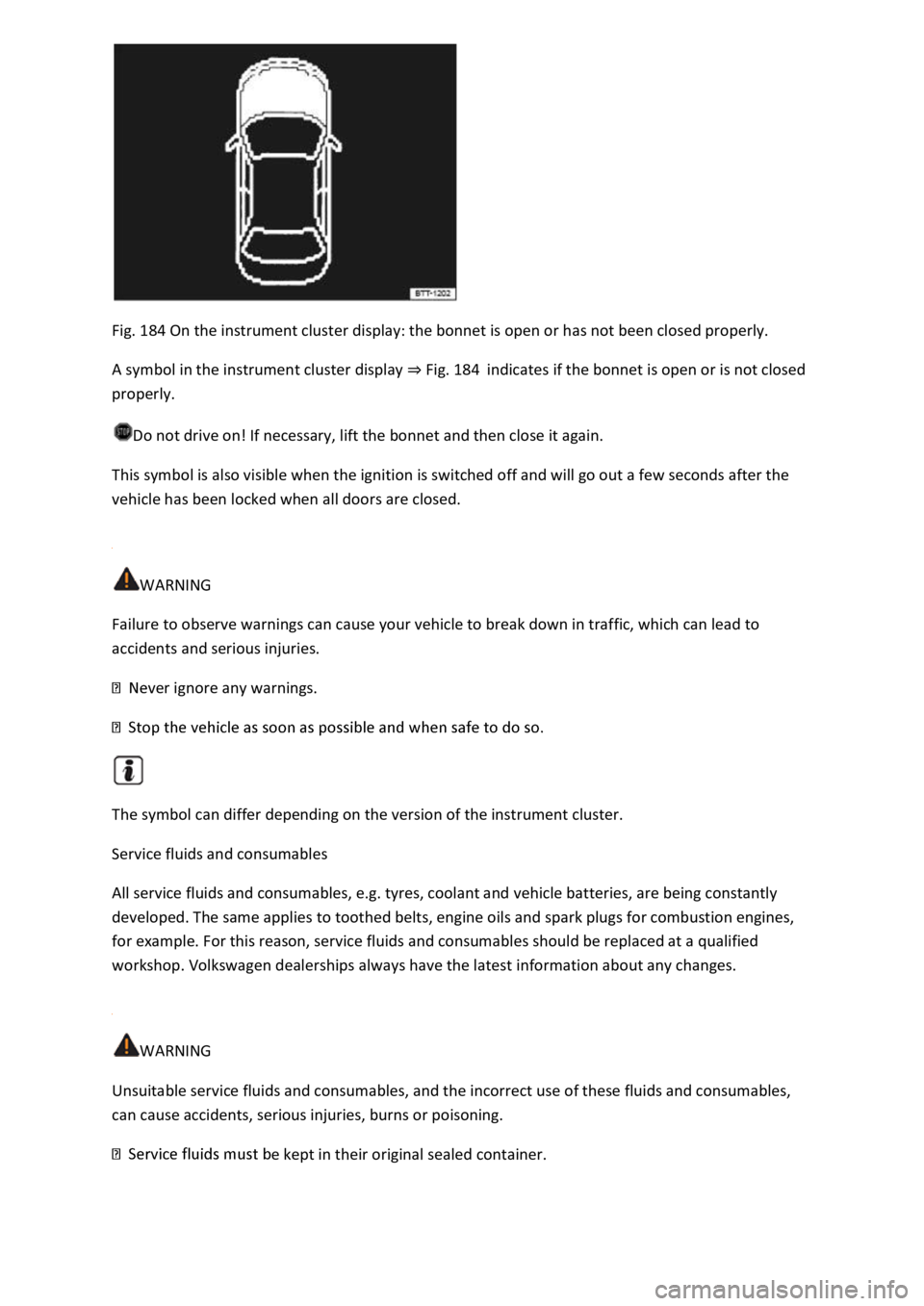
Fig. 184 On the instrument cluster display: the bonnet is open or has not been closed properly.
A symbol in the instrument cluster display ⇒ Fig. 184 indicates if the bonnet is open or is not closed
properly.
Do not drive on! If necessary, lift the bonnet and then close it again.
This symbol is also visible when the ignition is switched off and will go out a few seconds after the
vehicle has been locked when all doors are closed.
WARNING
Failure to observe warnings can cause your vehicle to break down in traffic, which can lead to
accidents and serious injuries.
ver ignore any warnings.
The symbol can differ depending on the version of the instrument cluster.
Service fluids and consumables
All service fluids and consumables, e.g. tyres, coolant and vehicle batteries, are being constantly
developed. The same applies to toothed belts, engine oils and spark plugs for combustion engines,
for example. For this reason, service fluids and consumables should be replaced at a qualified
workshop. Volkswagen dealerships always have the latest information about any changes.
WARNING
Unsuitable service fluids and consumables, and the incorrect use of these fluids and consumables,
can cause accidents, serious injuries, burns or poisoning.
e kept in their original sealed container.
Page 369 of 502
-original containers as
people finding these containers could drink them.
es.
-ventilated
area.
r or other volatile fluids for vehicle care.
These substances are toxic and highly flammable. They could cause fires and explosions.
NOTICE
this can result in serious malfunctions and engine damage.
-on parts in front of the air intake reduce the cooling effect of the
coolant. The engine may overheat at high ambient temperatures and high engine loads.
Leaking service fluids can pollute the environment. Spilt service fluids must be collected in suitable
containers and disposed of properly and with respect for the environment.
Washer fluid
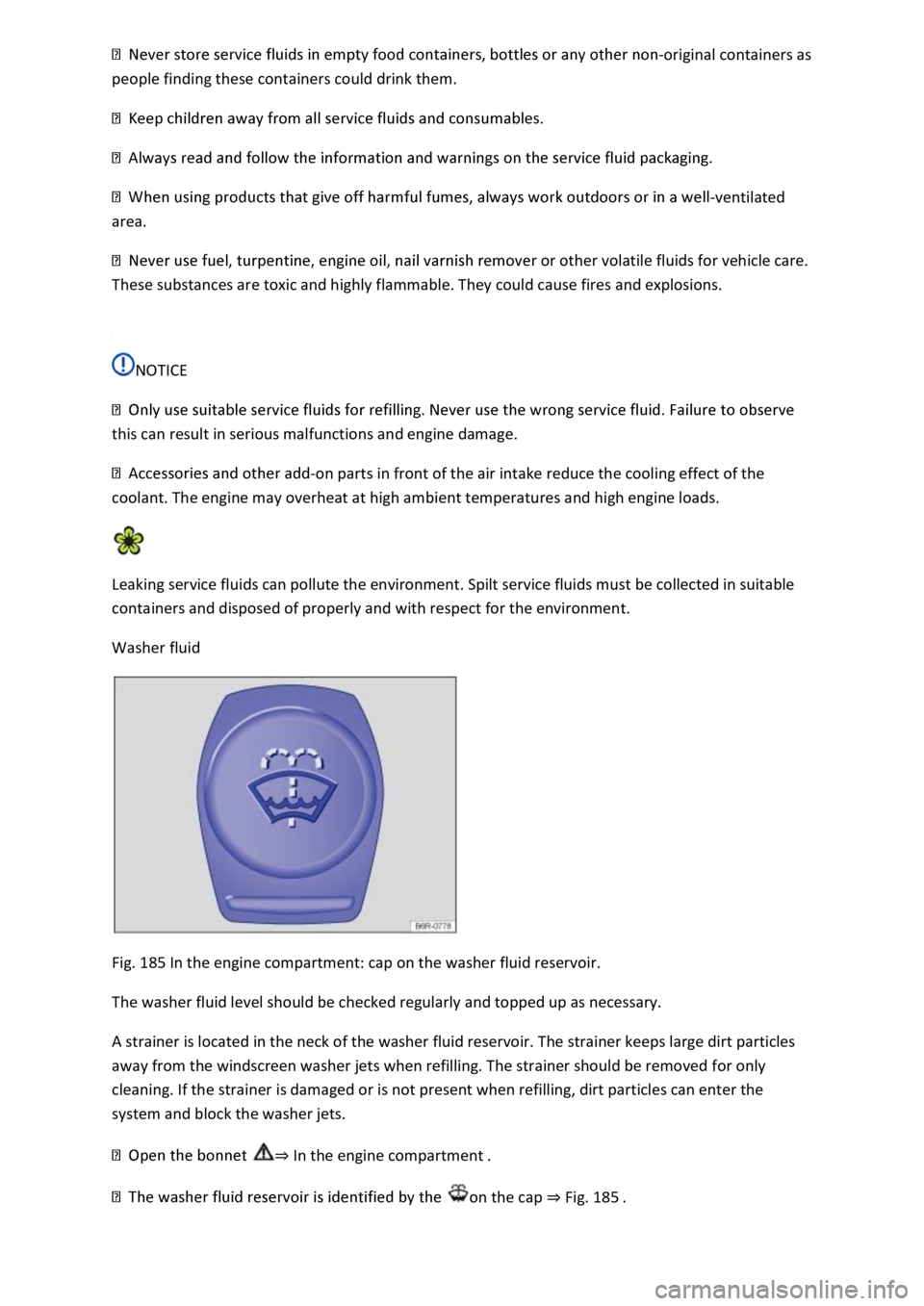
Fig. 185 In the engine compartment: cap on the washer fluid reservoir.
The washer fluid level should be checked regularly and topped up as necessary.
A strainer is located in the neck of the washer fluid reservoir. The strainer keeps large dirt particles
away from the windscreen washer jets when refilling. The strainer should be removed for only
cleaning. If the strainer is damaged or is not present when refilling, dirt particles can enter the
system and block the washer jets.
⇒ In the engine compartment .
on the cap ⇒ Fig. 185 .