ignition AUDI TT ROADSTER 2014 Workshop Manual
[x] Cancel search | Manufacturer: AUDI, Model Year: 2014, Model line: TT ROADSTER, Model: AUDI TT ROADSTER 2014Pages: 244, PDF Size: 60.87 MB
Page 127 of 244
This is just one of the reasons why an airbag is
not a substitute for the safety belt . The airbag
system works most effective ly when used with
the safety belts. Therefore, always wear your
safety belts correctly .
It is important to remember that while the
supp lemental knee a irbag system is des igned
to reduce the like lihood of serious injuries,
other injuries, for example, swel ling, bruising,
minor abrasions and friction burns can also
occur when an a irbag inflates.
The knee airb ag sy stem ba sically con sist s
of:
-The electronic contro l modu le
- Two inflatable airbags (airbag and gas gen-
erator), one for the driver and one for the
front passenger
- The airbag indicator light in the instrument
panel
The knee airbag sy stem will not d eploy :
-when the ignition is turned off
- in frontal col lisions when the dece lerat ion
measured by the control unit is too low
- in s ide collisions
- in rear-end collisions
- in rollovers
- in the event of a system malfunct ion (warn-
ing/indicator light is on)~
page 15.
A WARNING
-Safety belts and the a irbag system can
o nly prov ide protection when o ccupants
are in the proper sea ting posit ion
~page 118.
-If the airbag indicato r light comes when
t h e vehicle is being used, have the sys
tem inspected immediately by your au
thorized Audi dea ler.
-
A irba g sy stem 125
How knee airbags work
The risk of injury to the leg area can be re
duced by fully inflated knee airbags .
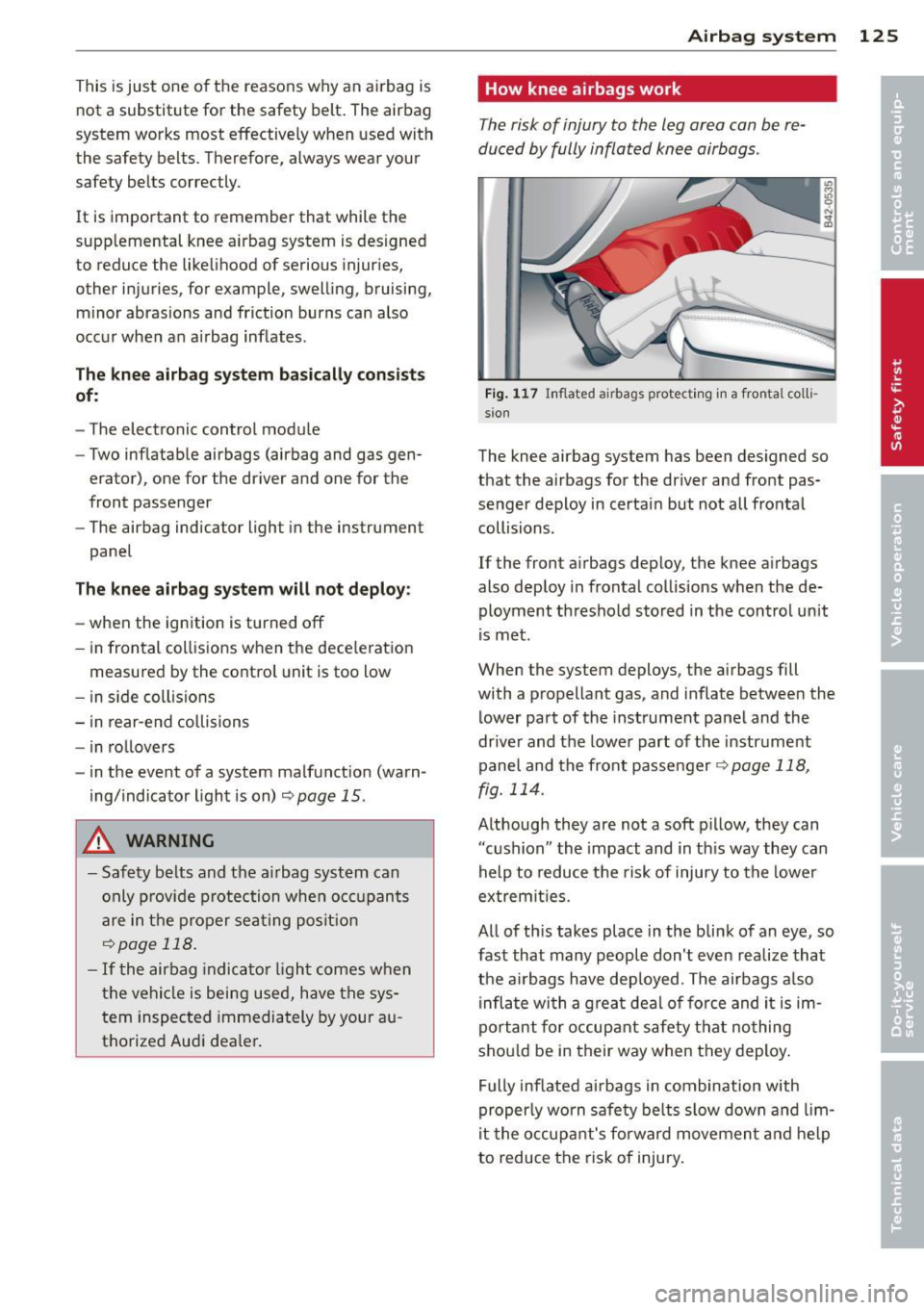
Fig . 1 17 In flated a irbags protecting in a fronta l colli
sion
The knee airbag system has been designed so
that the airbags for the driver and front pas
senger deploy in certain but not all frontal
collisions .
If the front a irbags deploy, the knee a irbags
also deploy in frontal collisions when the de
ployment threshold stored in the control unit
is met .
When the system deploys, the airbags fill
with a propellant gas, and inflate between the lower pa rt of the instrument pa nel and the
driver and the lower part of the instrument
panel and the front passenger
9 page 118,
fig. 114 .
Although they are not a soft p illow, they can
"cushion" the impact and in th is way they can
help to reduce the risk of injury to the lower
extremit ies.
All of th is takes place in the blink of an eye, so
fast that many people don't even realize that
the a irbags have deployed. The airbags a lso
inflate wi th a great deal of fo rce and it is im
portant for occupant safety t hat no thing
shou ld be in their way when they deploy .
Fully inf lated ai rbags in combination with
properly worn safe ty be lts s low down and lim
it the occupant's forward movemen t an d help
to reduce the risk of injury.
Page 133 of 244
A WARNING
-=
If, in exceptional circumstances, you must
install a forward-facing child restraint on
the front passenger's seat:
- Always make sure the forward-facing
seat has been designed and certified by
its manufacturer for use on a front seat
with a passenger front and side airbag.
-Always follow the manufacturer's in
structions provided with the child safety
seat or carrier.
- Always move the passenger seat into its
rearmost position in the seat's fore and
aft adjustment range, as far away from
the airbag as possible before installing
the child restraint. The backrest must be
adjusted to an upright position.
- Always make sure that the
PASSENGER
AIR BAG OFF light comes on and stays
on all the time whenever the ignition is
switched on.
(D Tips
Always replace child restraints that were
installed in a vehicle during a crash. Dam
age to a child restraint that is not visible
could cause it to fail in another collision
situation.
Advanced front airbag system and children
Your vehicle is equipped with an "Advanced
Airbag System" in compliance with United
States Federal Motor Vehicle Safety Standard
(FMVSS) 208 as applicable at the time your
vehicle was manufactured.
The Advanced Airbag system in your vehicle
has been certified to meet the "low-risk " re
quirements for 3- and 6-year old children on
the passenger side and small adults on the
driver side. The low risk deployment criteria
are intended to reduce the risk of injury
through interaction with the airbag that can
occur, for example, by being too close to the
steering wheel and instrument panel when
the airbag inflates. In addition, the system
Child Safety 131
has been certified to comply with the "sup
pression" requirements of the Safety Stand
ard, to turn off the front airbag for infants up
to 12 months who are restrained on the front passenger seat in child restraints that are list
ed in the Standard .
Even though your vehicle is equipped with an
Advanced Airbag system, a child should al
ways ride in the seat properly restrained for
its age and size . The airbag on the passenger
side makes the front seat a potentially dan
gerous place for a child to ride. The front seat
is not the safest place for a child in a forward
facing child safety seat .
It can be a very dan
gerous place for an infant or a larger child in a
rearward-facing seat.
Advanced Airbags and the weight
sensing mat in the front seat
The Advanced Airbag System in your vehicle
detects the presence of an infant or child in a
child restraint on the front passenger seat us
ing the weight-sensing mat in the seat cush
ion and the sensor below the safety belt latch
on the front passenger seat that measures the
tension on the safety belt.
The weight-sensing mat measures total
weight of the child and the child safety seat
and a child blanket on the front passenger
seat. The weight on the front passenger seat
is related to the design of the child restraint
and its "footprint", the size and shape of the
bottom of the child restraint as it sits on the
seat. The weight of a child restraint and its
"footprint" vary for different kinds of child re
straints and for the different models of the
same kind of child restraint offered by child restraint manufacturers.
The weight ranges for the individual types,
makes and models of child restraints that the
NHTSA has specified in the Safety Standard
together with the weight ranges of typical in
fants and typical 1 year-old child have been
stored in the control unit of the Advanced Air
bag System. When a child restraint is being
used on the front passenger seat with a
ll-
•
•
Page 135 of 244
Model Manufactured on or
after
Cosco Summit Deluxe September 25, 2007
High Back Booster
22-262
Cosco High Back September 25, 2007
Booster 22-209
Evenflo Tribute V September 25, 2007
379xxxx
Evenflo Medallion December 1, 1999
254
Evenflo Generations September 25, 200 7
352xxxx
Graco ComfortSport September 25, 2007
Graco Toddler Sa fety September 25, 2007
Seat Step 2
Graco Platinum Cargo September 25, 2007
_& WARNING
To reduce the risk of serious injury, make
sure that the
PASSENGER AIR BAG OFF
light comes on and stays on whenever a
child restraint is installed on the front pas
senger seat and the ignition is switched
on.
- Never install a rearward facing child
safety seat on the front passenger seat
unless the
PASSENGER AIR BAG OFF
light comes on and stays on. If the PAS
SENGER AIR BAG OFF
light does not
come on and stay on the inflating airbag
will hit the child safety seat o r infant car
rie r wi th great force and will smash the
child safety seat and child against the
backrest, door or roof . Have the airbag
system inspected immediately by your
Audi dealer.
@ Tips
The ch ild seats listed in categories A to C
have been statically tested by Audi only for
the Advanced Airbag function.
Child Sa fet y 133
Important safety instructions for us ing
child safety seats
Correct use of child safety seats substantially
reduces the risk of injury in an accident!
As the dr iver, you are responsible for the safe
ty of everybody in the veh icle, especially ch il
dren:
.. Always use the right child safety seat for
each child and always use it properly
r=;, page 135.
.. Always carefully fo llow the child safe ty seat
manufact urer's inst ruct ions on how to ro ute
the sa fe ty belt properly through the c hild
safety seat .
.. When using the vehicle safety belt to install
a child safety seat, you must first activate
the convertible locking retractor on the
safety belt to prevent the child safety seat
from mov ing
¢ page 138.
.. Push the ch ild safety seat down with your
full weight to get the safety be lt really tight
so that the seat cannot move fo rward o r
sideways more th an one inch
(2.5 cm).
Always remember: Even tho ugh your vehicle is
equipped with an Advan ced Airbag system, a
ch ild should always ride in the sea t properly
restrained for its age and s ize .
_& WARNING ,-= ~
Not using a child safety seat, using the
wrong child safety seat or improperly in
stalling a ch ild restraint increases the risk
of ser ious personal injury and death.
- All vehicle occupants and especially chil
dren must always be restrained properly
whenever riding i n a vehicle.
- An unrest rained or imp roper ly restrain
ed ch ild ca n be injured or killed by be
i ng th rown against the ins ide of the ve
hicle or by being e jected from it during
a sudden maneuve r or impact.
- An unrest rained or improper ly res train
ed ch ild is at much greater risk of inj ury
or death by being struck by an inflating
airbag.
•
•
Page 136 of 244
134 Child Safety
-Commercially available child safety seats
are required to comply with U.S. Federal
Motor Vehicle Safety Standard (FMVSS)
213 (in Canada CMVSS 213).
- When buying a child restraint, select
one that fits your child and the vehicle.
- Only use child restraint systems that
fully contact the flat portion of the
seat cushion. The child restraint must
not tip or lean to either side. Audi does
not recommend using child safety
seats that rest on legs or tube-like
frames. They do not provide adequate
contact with the seat.
- Always heed all legal requirements per
taining to the installation and use of
child safety seats and carefully follow
the instructions provided by the manu
facturer of the seat you are using .
- Never let more than one child occupy a child safety seat .
- Never let babies or older children ride in
a vehicle while sitting on the lap of an
other passenger .
- Holding a child in your arms is never a
substitute for a child restraint system.
- The strongest person could not hold the child with the forces that exist in
an accident. The child will strike the in
terior of the vehicle and can also be
struck by the passenger.
- The child and the passenger can also
injure each another in an accident.
- Never install a rearward facing child
safety seat on the front passenger seat
unless the
PASSENGER AIR BAG OFF
light comes on and stays on . If the PAS
SENGER AIR BAG OFF
light does not
come on and stay on the inflating airbag
will hit the child safety seat or infant car
rier with great force and will smash the
child safety seat and child against the
backrest, door or roof. Have the airbag
system inspected immediately by your
Audi dealer.
- Forward-facing child safety seats instal
led on the front passenger's seat can in- terfere with the airbag when it inflates
and cause serious injury to the child.
- If exceptional circumstances require the
use of a forward-facing child restraint on
the front passenger's seat, the child's
safety and well-being require that the
following special precautions be taken :
- Make sure the forward-facing seat has
been designed and certified by its man
ufacturer for use on a front seat with a
passenger front and side airbag.
-Always carefully follow the manufac turer's instructions provided with the
child safety seat or carrier.
- Always move the front passenger seat
into the rearmost position of the pas
senger seat's fore and aft adjustment
range, and as far away from the airbag
as possible before installing the child
restraint .
- Always make sure that nothing pre
vents the front passenger's seat from
being moved to the rearmost position
in its fore and aft adjustment range .
-Always make sure that the backrest is
in the upright position .
- Always buckle the child safety seat firmly
in place even if a child is not sitting in it.
A loose child safety seat can fly around
during a sudden stop or in a collision.
- Always read and heed all WARNINGS
whenever using a child restrained in ave
hicle is being used
¢ page 101, Safety
belts,
¢ page 109, Airbag system and
¢ page 130, Child Safety.
A WARNING
-To reduce the risk of serious injury, make
sure that the
PASSENGER AIR BAG OFF
light comes on and stays on whenever a
child restraint is installed on the front pas
senger seat and the ignition is switched
on.
- Never install a rearward facing child
safety seat on the front passenger seat
unless the
PASSENGER AIR BAG OFF
Page 140 of 244
138 Child Saf ety
,8. WARNING
Not using a booster seat, using the boos
ter seat improperly, incorrectly install ing a
booster seat or using the vehicle safety
belt improperly increases the risk of seri
ous personal injury and death in a collision
or other eme rgency s ituation. To help re
duce the risk of serious persona l injury
and/or death:
- T he shoulder belt must lie as close to the
center of the child· s collar bone as possi
ble and must lie and snug on the upper
body. It must never lie across the throat
or neck. The lap belt must lie across the
pelvis and never across the stomach or
abdomen . Make sure the belt lies flat
and snug . Pull on the belt to t ighten if
necessary .
- Failure to properly route safety belts over a ch ild's body will cause severe inju
ries in an acc ident or other emergency
situation
¢ page 101 .
-Children on the front seat of any car,
even with Advanced A irbags, can be seri
ous ly inju red or even killed when an a ir
bag inflates.
- Never let a child stand or knee l on the
seat.
- Never let a child ride in the cargo a rea of
yo ur vehicle.
- Always remember that a ch ild lean ing
forward, sitting sideways or out of posi
t ion in any way during an acc ident can be
struck by a deploying airbag. This will re
sult in serious personal injury or death.
- If you must install a booster seat on the
front passenger seat because of excep
tional circumstances the
PASSENGER
AIR BAG OFF
light must come on and
stay on, whenever the ignition is switch
ed on.
- If the
PASSENGER AIR BAG OFF light
does not come on and stay on, perform
the checks described
¢page 119, Moni
toring the Advanced Airbag System .
-If the PASSENGER AIR BAG OFF light
does not come on and stay on whenever
-
the ignition is switched on the inflating
airbag w ill hit the child safety seat or in
fant carrier with great force and will smash the child safety seat and child
aga inst the backrest, door or roof. Have
the airbag system inspected immed iately
by your Audi dea ler.
- Always read and heed all WARNINGS
whenever using a child restrained in ave
h icle is being used
¢page 101, Safety
belts,
¢ page 109, Airbag system and
¢ page 130, Important things to know .
Installing a child safety
seat
Securing a child safety seat using a
safety belt
Safety belts for the front passenger can be
locked with the convertible locking retractor
to properly secure child safety seats.
T he safety belts emergency locking retracto rs
for the front passenger's seat safety belt have
a convertible locking retracto r for child re
straints. The safety be lt must be locked so
that belt webbing cannot unreel. The retrac
tor can be activated to lock the safety belt and
prevent the safety be lt webbing from loosen
ing up during normal driving. A child safety
seat can only be properly installed when the
safety belt is locked so that the child and child safety seat wi ll stay in place .
Always remember: Even though your vehicle is
equipped with an Advanced Airbag system, a
child should always ride in the seat properly
restrained for its age and s ize.
,8. WARNING
Imp roperly installed chi ld safety seats in
crease the risk of serious personal injury
and death in a collision.
- Always ma ke sure that the safety belt re
tractor is loc ked when insta lling a child
safety seat . An un locked safety belt re -
tractor cannot hold the child safety seat ..,_
Page 141 of 244
in place during normal driving or in a
crash.
- Always buck le the child safety seat firmly
in place even if a child is not sitting in it.
A loose ch ild safety seat can fly around
dur ing a sudden stop or in a col lision
- The inflating a irbag w ill hit the child
safety seat or infant carrier w ith great
force and w ill smash the ch ild safety seat
and child against the backrest, door or
roof.
- Forward -fac ing ch ild safety seats or in
fant ca rr iers installed on the front pas
senger 's seat may inte rfe re with the de
ployment of the airbag and cause se rious
injury to the ch ild.
- Always read and heed all WARNINGS
whenever u sing a child rest rained in ave
hicle is being used~
page 130 . Special
precautions apply when installing a ch ild
safety seat on the front passenger seat
~ page 110, Child restraints on the front
seat -some important things to know.
A WARNING
-
Always take special precautions if you
must install a forward or rearward-facing
child restraint on the front passenger's
seat in except ional situat ions :
- Whenever a forward or rearward-facing
child restraint is installed on the front
passenge r seat, the
PASSENGER AIR
BAG OFF
light must come on and stay on
whenever the ignition is switched on.
- If the
PASSENGER AIR BAG OFF light
does not come on and stay on, perform
the checks described
~page 119, Moni
toring the Advanced Airbag System.
- If the PA SSENGER AIR BAG OFF light
does not come on and s tay on whenever
the ignition is switched on the inflating airbag will hit the child safety seat or in
fant carr ier with great force and wi ll
smash the ch ild safety seat and chi ld
against the backrest, door or roof. Have
the a irbag system inspected immediately
by your Audi dealer .
Child Safet y 139
-Improper installation of chi ld restraints
can reduce their effectiveness or even
prevent them from providing any protec
tion .
- An improperly installed ch ild restra int
can interfere with the airbag as it de ploys and seriously injure or even k ill the
child.
- Always carefully follow the manufactur
er 's instructions prov ided with the child
safety seat or carrier .
- Never p lace add itiona l items on the seat
that can increase the total weight reg is
tered by the weight-sensing mat and can cause injury in a crash.
A WARNING
Forward-facing child restraints:
- Always make sure the forward-facing
seat has been designed and certified by
its manufacture r for use on a front seat
with a passenger fron t and s ide a irbag.
- Never put the fo rward-facing child re
s traint up, against o r ve ry nea r the in
strument panel.
- Always move the passenge r seat into its
rearmost pos ition in the seat's fore and
aft adj ustment range, as fa r away from
the airbag as possible before installing
the forward-fac ing ch ild restraint . The
backrest must be ad justed to an upright
position.
- Make sure that the
PASSENGER AIR BAG
OFF
li ght comes on and stays on all the
time whenever the ignit ion is switched
on.
A WARNING
Rearward -facing child restraints:
- A child in a rearward-facing child safety
seat insta lled on the front passenger
seat will be seriously in ju red and can be
killed if the front airbag inflates -even
with an Advanced A irbag System .
- The inflating airbag will h it the ch ild
safety seat or infant carrier with great
force and will smas h the child safety seat .,. •
•
Page 142 of 244
140 Child Saf ety
and child against the backrest, door or
ro of.
- Always be especially careful if you mu st
ins tall a rearward facing c hild safety seat
on the front passenger seat in exception
al circumstanc es.
- Make sure that the
PA SS ENGER AIR BAG
OFF
light comes on and stays on all the
t ime w henever the ignition is switched
on.
- Never install a rearward facing child
safety seat on the front passenger seat
unless the
PASSENGER AIR BAG OFF
light comes on and stays on. If the PAS·
SENGER AIR BAG OFF
light does not
come on and stay on h ave the airbag sys
tem inspec ted immediately by your Aud i
dealer .
Activating the convertible locking
retractor
Use the convertible locking retractor to se
cure a child restraint.
A lways heed the child sa fety seat man ufactur
er's instructions when ins talling a chi ld re
straint in your vehicle . To activate the conver
tib le locking retractor:
., Place the child restrain t on a seat .
., Slow ly pull the be lt
all the wa y out.
., Route it around or through the chi ld re
stra int be lt path
c:> ,&. .
., Push the child safety seat down with your
full weight to get the safety belt rea lly t ight.
., In sert the be lt tongue into the buckle fo r
t h at seating posi tion.
., Gu ide the safety be lt back into the retracto r
u nt il the belt lies flat a nd snug on the chi ld
sa fe ty seat.
., You should hear a "clicking" noise as the
belt winds bac k into the ine rtia reel. Test the
conve rtible locking retractor by pull ing on
the be lt . You should no longer be able to
pull the belt out of the retractor. The con
vertib le lock ing retractor is now act ivated. .,
Ma ke s ure that the red release button is fac
ing away from the child rest raint so that it
can be unbuckled q uick ly .
., Pull on the belt to make sure the safety be lt
is properly tight and fastened so that the
seat ca nnot move forward or sideways more
t han one inch (2.5 cm) .
A WARNING
Using the wrong child res traint o r an i m
pr operly ins talled chi ld restraint can cause
se rious pe rsonal injury or death in a crash.
- Always ma ke sure that the safety belt re-
trac to r i s lo cked when insta lling a child
safety seat . An un locked safety bel t re
tracto r cannot hold the child safety seat
in place dur ing no rma l dr iving o r in a
crash.
- Always buckle the child safety seat firmly
in place even if a ch ild is not sitt ing in it.
A loose child safety seat can fly around
during a sudden stop or in a crash.
- Always make sure the seat backrest to
which the child restraint is installed is in
an upright pos ition. Otherw ise, the seat
back with the ch ild safety seat attached
to it could fly forward in the event of an
accident o r othe r emergency situation.
- Always read and heed all WAR NIN GS
wheneve r using a child res trained in ave
h icle is being used
c:> page 130. Special
p re ca utions apply when insta lling a child
safe ty se at on the fron t passenger seat
<=> page 110, Child restraints on the front
seat -some important things to know .
Deactivating the convertible locking
retractor
-
The convertible locking retractor for child re
straints will be deactivated automatically when the belt is wound all the way back into
the retractor.
., Press the red b utton on the safety belt buck
le . The belt tong ue will pop out of the b uck
le .
., Guide the safety be lt all the way back into
its stowed position .
Page 150 of 244
148 Intelligent technology
Battery diagnosi s
Battery diagnosis continuously determines
the state of the battery. Sensors determine
battery voltage, battery current and battery
temperature. This determines the current
state of charge and the power of the battery.
Idling current management
I dling current management reduces energy
consumption while the vehicle is standing.
With the ignition switched off, it controls the
energy supply to the various electrical compo
nents. Data from battery diagnosis is consid
ered.
Depending on the battery's state of charge,
individual consumers are gradually turned off
to prevent excessive discharge of the battery
and thus maintain starting capability.
Dynamic energy management
While the vehicle is being driven, dynamic en
ergy management distributes the energy gen
erated according to the needs of the individu
al components. It regulates consumption, so
that more electrical energy is not being used
than is being generated and ensures an opti
mal state of charge for the battery .
(D Tips
-But even energy management cannot
negate the limits of physics. Consider
that the power and life of a battery are
limited .
- If starting ability is threatened, you are informed by a warning
~page 149,
Driver notification in the instrument
cluster display.
What you should know
The highest priority is given to maintaining
starting capability .
The battery is severely taxed in short -distance
driving, in city traffic and during the cold time
of year. Abundant electrical energy is re
quired, but only a little is generated.
It is also
critical if the engine is not running and electri- cal components are turned on.
In this in
stance energy is being consumed but none is
being generated.
It is in precisely these situations that you will
notice energy management actively regulat
ing the distribution of energy.
Vehicle stands for an extended period
If you do not drive your vehicle over a period
of several days or weeks , electrical compo
nents are gradually cut back or switched off .
This reduces energy consumption and main
tains starting capability over a longer period.
Take into consideration that when you unlock
your vehicle, some convenience functions ,
such as the remote key or power seat adjust
ment, may not be available. The convenience
functions will be available again when you
turn on the ignition and start the engine.
With the engine turned off
If you listen to the radio, for example, with
the engine turned off, the battery is being dis
charged.
If starting capability is jeopardized due to en
ergy consumption, a message appears in the
driver information display.
You have to start the engine to charge the
battery.
With the engine running
Although electrical energy is generated when
the vehicle is being driven, the battery can be
come discharged. This happens mostly when
little energy is being generated and a great
deal consumed and the battery's state of
charge is not optimal.
To bring the energy balance back into equili
brium, consumers which require especially
large amounts of energy are temporarily cut
back or switched off . Heating systems in par
ticular require a great deal of energy. If you
notice, for example, that the heated seats* or
the heated rear window are not heating, they
have been temporarily cut back or switched .,.
Page 154 of 244
152 Driving and en vironm ent
the exhaust system and this could cause
the catalytic converter to overheat.
- Do not turn off the ignition while the ve hicle is moving .
- Do not continue to operate yo ur vehicle
under these conditions, as otherw ise fuel
can reach the cata lytic converter . This
could result in overheating of the con
verter, requ iring its replacement.
- To assure efficient operation of the Emis
sion Control System:
- Have your veh icle ma intained properly
and in acco rdance with the service rec
ommendations in your Wa rranty
&
Ma intenance booklet.
- La ck of proper main tenance as well as
improper use of the vehicle will impa ir
t he funct ion of the emission control
system and cou ld lead to damage.
@ For the sake of the environment
E ven when the Emission Contro l System is
operating p roperly, the exhaust gas can
have a s ulfur -like exhaust gas smell under
some operating states. This depends on
the s ulfur content o f the fue l being used.
Using a different brand of fuel may help,
or filling the tank w it h lead-free super
grade gasoline.
Shutting down vehicle
If you wou ld like your veh icle to remain inop
erat ive for a longer period of time, contact an
Aud i or other specialized dealer . T hey ca n ad
vise you on necessary precautions e.g . corro
sion prevent ion, ma intenance and storage.
Pay atten tion to add it iona l information con
cerning the batte ry . Re fer to ~
page 175.
Operate your vehicle
economically and
minimize pollution
General
Your personal style of driving will determine
the economy of your vehicle, as well as ex
haust and noise levels .
Fuel economy, environmenta l impact, and
wear on your engine, brakes and tires largely
depend on three factors:
- your personal driving style
- oper ating conditions
- technical limitat ions
If you ant ic ipate what you need to do next and
drive economically, you can easily cut your
fuel consumpt ion by 1O-lS percent . This sec
t ion w ill give you some tips on how you can
help the env ironment and your pocketbook.
@ Tips
The consumption estimates as published
by ENVIRONME NTAL PROTEC TION AG ENCY
( EP A) and Transpo rt Canada may no t corre
spond to your actual consumption on the
r oad, which will va ry depending upon vehi
cle load and speed, road and weather con
ditions, trip length, etc.
Drive smoothly and keep a lookout
ahead
Vehicles use the most fuel when they ore ac
celerating.
Avoid unnecessary acce lerating and braking .
Vehicles use the mos t fu el when they are ac
ce le rat ing. If yo u ant icipate what is going to
happen next, you will need to brake less and,
t hu s, acce le rate less . Let the vehicle coast
whenever possible -for examp le when you see
that the next traff ic light is red.
Page 155 of 244
Avoid full throttle
Driving at moderate speeds saves fuel and
improves your mileage.
""Try and keep well below your car's maximum
speed.
Accelerating gently reduces fuel consump
tion, engine wear, and does not disturb the
environment.
Fu el consumption, exhaust emissions and en
g ine noise increase disproportionately at high
speeds. If you drive at approximately three
quarters of top speed, fuel consumption will
be reduced by one half. Never drive faster
than the posted speed limit and weather con
ditions permit .
Reducing unnecessary idling
Even when your car is just idling it burns up
fuel.
""Shut the engine off when you are not driving
the vehicle.
""Do not warm up the vehicle by letting the
engine run at idle .
It makes sense to shut
off the engine in traff ic
jams, when waiting for trains to pass at ra il
road crossings, or at traffic lights that have
l ong wa its on red. Turning the engine
off for
just
30-40 seconds saves more fue l than is
burned starting the engine again .
It takes a long time for the engine to warm up
fully when it is running at idle. However, wear
and noxious emissions are especially high
when the engine is warming up. So you should
drive away as soon as you start the engine and
avoid running at high RPMs whi le the engine
is sti ll warming up .
(D Note
Do not leave engine idling unattended af
ter starting . If warning lights should come
on to indicate improper operation, they
would go unheeded. Extended idling also
produces heat, which could result in over-
Driving and environment 153
'
heating or othe r damage to the vehicle or
other property.
Regular maintenance
A badly tuned engine unnecessarily wastes a
lot of fuel.
""H ave your veh icle serviced at regular inter-
vals.
By having your vehicle regu larly serviced by an
Audi dealer helps to ensu re that it runs prop
erly and economically. The condition of your
vehicle not only affects its safety and ability to
hold its value, it also affects
fuel consump
tion.
Check your oil each time you fill your tank.
The amount of o il used is related to engine
load and speed.
It is normal for the oil consumption of a new
engine to reach its lowest value after a certain
mileage has been driven.
You must drive your vehicle about 3,000 miles
(5,000 kilometres) before you can properly
assess oil consumpt ion.
This also app lies to fue l consumption and en
gine output.
(U) Note
- Have your vehicle maintained properly
and in accordance with the service rec
ommendations in your Warranty
& Main
tenance booklet. Lack of proper mainte
nance as well as improper use of the ve
hicle will impair the function of the
emission control system and could lead
to damage.
- Do not alter or remove any component of
the Emission Control System unless ap
proved by the manufacturer.
- Do not alter or remove any device, such
as heat shields, switches, ignition wires,
valves, which are designed to protect
your vehicle's Emission Control System
and other important vehicle compo
nents .
•
•