service VOLKSWAGEN T-ROC 2021 Owner´s Manual
[x] Cancel search | Manufacturer: VOLKSWAGEN, Model Year: 2021, Model line: T-ROC, Model: VOLKSWAGEN T-ROC 2021Pages: 502, PDF Size: 9.42 MB
Page 295 of 502
absence of the ⇒ Fig. 144 symbol in the vehicle does not mean that the control unit is not
transmitting the current position or speed of the vehicle.
Personal data
Volkswagen collects, processes and uses the user's personal data in accordance with statutory
requirements. You can access the current data protection policy on the Volkswagen homepage.
Deactivating Car-Net services
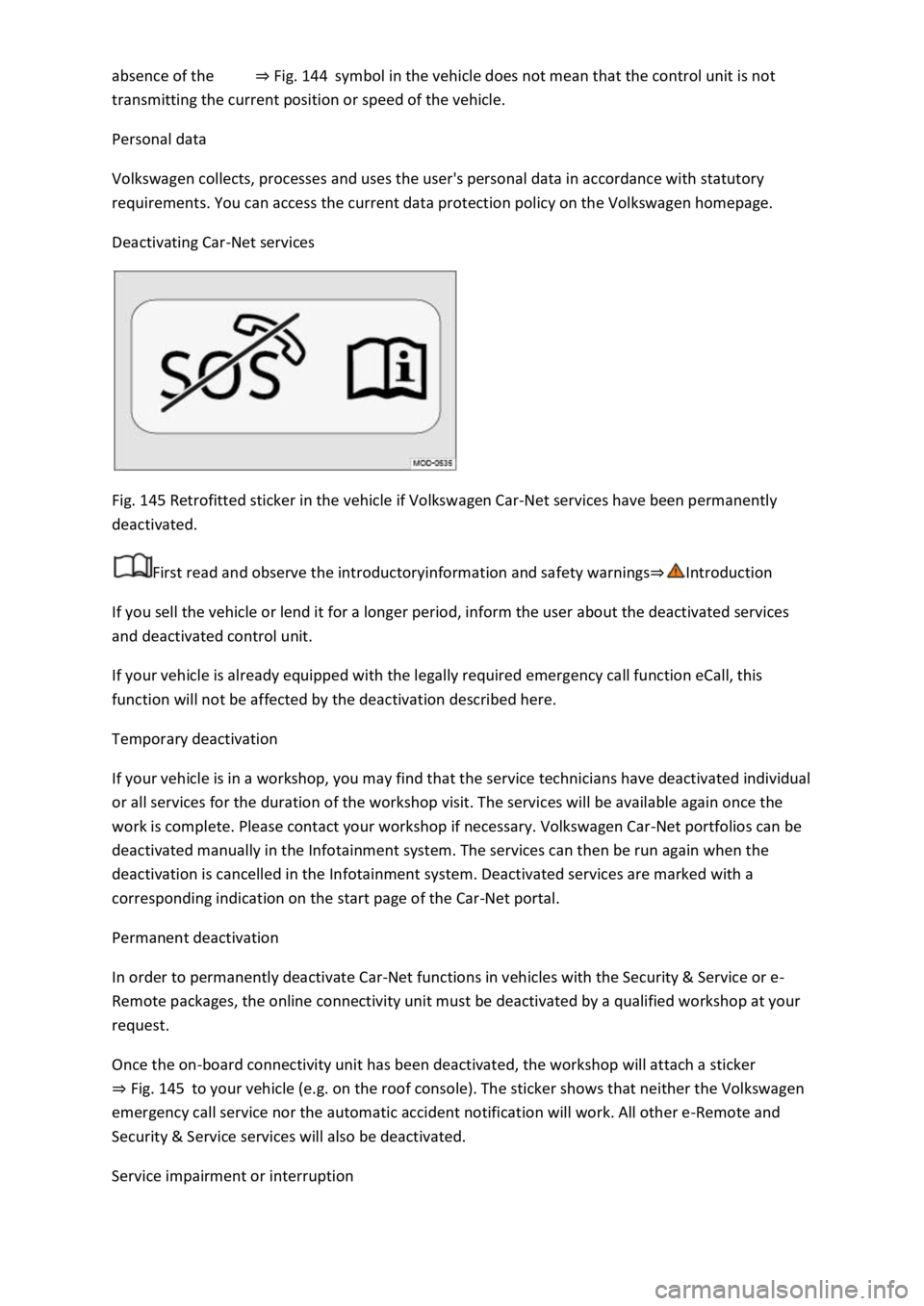
Fig. 145 Retrofitted sticker in the vehicle if Volkswagen Car-Net services have been permanently
deactivated.
First read and observe the introductoryinformation and safety warnings⇒Introduction
If you sell the vehicle or lend it for a longer period, inform the user about the deactivated services
and deactivated control unit.
If your vehicle is already equipped with the legally required emergency call function eCall, this
function will not be affected by the deactivation described here.
Temporary deactivation
If your vehicle is in a workshop, you may find that the service technicians have deactivated individual
or all services for the duration of the workshop visit. The services will be available again once the
work is complete. Please contact your workshop if necessary. Volkswagen Car-Net portfolios can be
deactivated manually in the Infotainment system. The services can then be run again when the
deactivation is cancelled in the Infotainment system. Deactivated services are marked with a
corresponding indication on the start page of the Car-Net portal.
Permanent deactivation
In order to permanently deactivate Car-Net functions in vehicles with the Security & Service or e-
Remote packages, the online connectivity unit must be deactivated by a qualified workshop at your
request.
Once the on-board connectivity unit has been deactivated, the workshop will attach a sticker
⇒ Fig. 145 to your vehicle (e.g. on the roof console). The sticker shows that neither the Volkswagen
emergency call service nor the automatic accident notification will work. All other e-Remote and
Security & Service services will also be deactivated.
Service impairment or interruption
Page 296 of 502

First read and observe the introductoryinformation and safety warnings⇒Introduction
Even when the above-mentioned requirements for using the services are met, the functionality of
the Car-Net services can be impaired or interrupted due to factors that lie outside the control of
Volkswagen AG. Such factors include in particular:
Maintenance, repairs, software updates and technical changes to your service provider’s
telecommunication systems, satellites, servers and databases.
The telecommunications provider has changed the mobile telecommunication standard for
transferring mobile data, e.g. from UMTS to EDGE or GPRS
An existing mobile telecommunications standard has been shut down by the telecommunications
provider.
Impairment or interruption to mobile and GPS reception, e.g. due to high speeds, solar storms,
weather, landscape, interfering devices or intensive use of the mobile network in the relevant cells.
Restricted availability, completeness or correctness of information provided by third parties, e.g.
maps.
Countries where Volkswagen Car-Net services are not available.
Apps
First read and observe the introductoryinformation and safety warnings⇒Introduction
The Volkswagen Car-Net app can execute Volkswagen Car-Net services in the vehicle and provide
information.
Volkswagen App-Connect allows content from Volkswagen apps and third party apps on mobile
devices to be shown on the Infotainment system screen.
There may be problems with compatibility with third party apps.
A wide range of applications may be available and they may be vehicle-specific and country-specific
⇒ . Content, range and provider of applications can vary. Some applications also depend on
availability of services offered by third parties.
We are unable to guarantee that the available apps can be run on all mobile devices and all
operating systems.
Applications offered by Volkswagen can be changed, discontinued, deactivated, reactivated and
expanded without prior notice.
Transporting items
Stowing luggage and loads
Cargo and luggage can be transported in the vehicle, on a trailer ⇒ Technical requirements and on
the roof ⇒ Roof carrier . Always observe the legal regulations.
Stowing luggage safely in the vehicle
Always distribute any loads in the vehicle as evenly as possible.
Page 307 of 502

Before driving through an automatic car wash.
The vehicle height exceeds the required clearance height, e.g. in a garage.
NOTICE
Always remove the roof carrier before driving through an automatic car wash.
The height of the vehicle is changed by the installation of a roof carrier and the load secured to it.
Check and compare the height of the vehicle with clearance heights, e.g. for underpasses and garage
doors.
The roof carrier and its load must not obstruct you from opening and closing the glass roof and the
boot lid. The roof aerial must also remain unaffected.
Driving with a fitted roof carrier will increase air resistance and thus increase fuel consumption.
Trailer towing
Introduction
This chapter contains information on the followingsubjects:
⇒ Technical requirements
⇒ Fitting the removable ball head
⇒ Removing the ball head
⇒ Notes on towing a trailer
⇒ Loading the trailer
⇒ Driving with a trailer
⇒ Trailer stabilisation
⇒ Retrofitting a towing bracket
The vehicle can be used to tow a trailer if it has the required technical equipment for this. The
additional trailer load will affect the amount of wear, fuel consumption and performance of the
vehicle and, in certain circumstances, could shorten the service intervals.
Driving with a trailer not only places an extra load on the vehicle, but also requires increased
concentration on the part of the driver.
Vehicles with start/stop system
When using towing brackets that were not retrofitted by Volkswagen, the start/stop system must be
deactivated manually using the button in the centre console before towing a trailer, and it must
remain deactivated for as long as a trailer is being towed ⇒ .
Page 311 of 502
The vehicle electronics system may be damaged if the trailer's power consumption is too high.
Never connect the trailer's electrical system directly to the electrical connections of the tail light
clusters or to other power sources. Use only suitable connectors to supply power to the trailer.
Towing a trailer places additional demands on the vehicle. Volkswagen recommends additional
services between the normal inspection intervals if the vehicle is used frequently for towing a trailer.
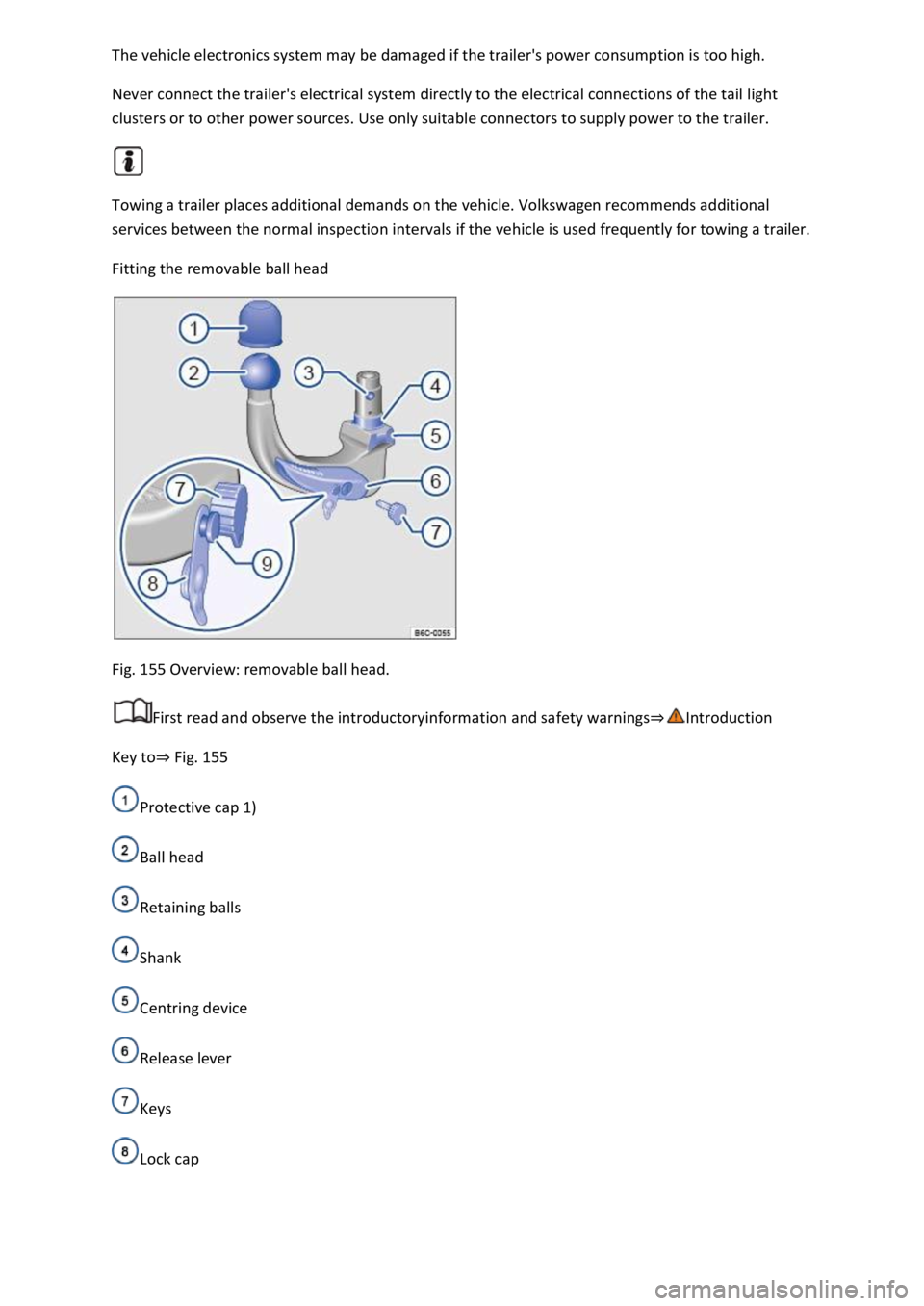
Fitting the removable ball head
Fig. 155 Overview: removable ball head.
First read and observe the introductoryinformation and safety warnings⇒Introduction
Key to⇒ Fig. 155
Protective cap 1)
Ball head
Retaining balls
Shank
Centring device
Release lever
Keys
Lock cap
Page 323 of 502

efuelling.
WARNING
Filling the tank with the wrong fuel can damage the vehicle.
uels that have been approved for the vehicle.
-approved service additives in the
approved quantity.
CAUTION
Fuel may run out of a fuel canister. This could cause fire and injuries.
Fuels can pollute the environment. Collect any service fluids that escape or are spilled and dispose of
them correctly.
The tank flap cannot be opened manually. Seek expert assistance in an emergency.
Fuel types and refuelling
Introduction
This chapter contains information on the followingsubjects:
⇒ Fuel standards
⇒ Petrol
⇒ Diesel
⇒ Refuelling
The tank flap is located at the rear right-hand side of the vehicle.
Different engines require different fuels. There is a factory-fitted sticker in the tank flap that
indicates the required fuel type for the vehicle.
Page 324 of 502

Information on warning and indicator lamps that light up can be found in the section
Troubleshooting ⇒ Troubleshooting .
Fuel standards
First read and observe the introductoryinformation and safety warnings⇒Introduction
Petrol
EN 228
DIN 51626-1
Diesel
EN 590
EN 590
Where fuel complying with the specified standard is not available, your Volkswagen dealership or a
qualified workshop will have information on which available fuels are suitable for the vehicle.
NOTICE
Using fuel that does not comply with these standards may reduce performance and cause damage to
the engine and fuel system.
and engine failure.
Petrol
First read and observe the introductoryinformation and safety warnings⇒Introduction
Fill vehicles with a petrol engine only with unleaded petrol or petrol with a maximum ethanol
content of 10 % (E10) ⇒ .
Fuel grades differ according to the octane number. The vehicle may be filled with petrol that has a
higher octane number than the engine requires. However, this does not provide any advantage in
terms of fuel consumption or engine output.
The fuel quality affects the running properties, performance and service life of the engine. Refuel
with fuel that already contains suitable service additives ⇒ .
Information on the fuel standards can be found in the chapter on fuel standards ⇒ Fuel standards .
NOTICE
Errors during refuelling or unsuitable fuel additives may cause damage to the vehicle.
Page 325 of 502

pecified on the pump meets the vehicle's
requirements.
-approved service additives in the approved quantity.
emergency, you have to use petrol with an octane number lower than the recommended number,
drive at medium engine speeds and avoid high engine loading. Avoid high engine speeds and heavy
engine loads. Refuel with petrol with the correct octane number as soon as possible.
Diesel
First read and observe the introductoryinformation and safety warnings⇒Introduction
Fill vehicles with a diesel engine only with diesel or diesel with a maximum RME fuel content of 7 %
⇒ .
If you use diesel with a high sulphur content, the service intervals are shorter. Information on
countries where the diesel has a high sulphur content is available from your Volkswagen dealership
or a qualified workshop.
The fuel quality affects the running properties, performance and service life of the engine. Refuel
with fuel that already contains suitable service additives ⇒ .
Information on the fuel standards can be found in the chapter on fuel standards ⇒ Fuel standards .
Winter-grade diesel fuel and filter preheater system
Winter-grade diesel fuel, which can be used at temperatures below -20°C (-4°F), is available during
the cold months. In countries with different climates, diesel with a different temperature behaviour
is offered. Information is available from your Volkswagen dealership, qualified workshops and filling
stations in the respective country.
Diesel vehicles are equipped with a filter preheater system. When using winter-grade diesel fuel, the
fuel system is safe for operation at temperatures down to around -24°C (-11°F). In order to ensure
that the vehicle can also be started at low outside temperatures, Volkswagen recommends parking
the vehicle in a location that is protected from the whether, e.g. in a garage ⇒ Troubleshooting .
Misfuelling prevention device
The tank filler neck in diesel vehicles may be fitted with a misfuelling prevention device. This is
intended to help ensure that the vehicle is refuelled only using diesel filler nozzles.
If the nozzle cannot be inserted correctly into the tank filler neck, first check whether you are using a
diesel filler nozzle. When you have made sure that you are using the correct filler nozzle, move the
diesel filler nozzle to and fro slightly with light pressure. This can open the misfuelling prevention
device and make it possible to refuel the vehicle. If the misfuelling prevention device still remains
closed, go to a qualified workshop and have the system checked.
If it is necessary to refuel the vehicle using a fuel canister in the event of an emergency, the
misfuelling prevention device will not open. In order to nevertheless fill the tank with fuel, pour the
diesel into the tank extremely slowly in very small quantities.
Page 326 of 502
WARNING
Incorrect refuelling can lead to fire, serious injuries and vehicle damage.
requirements.
-approved service additives in the approved quantity.
At cold temperatures, louder noises may occur in the diesel engine and the exhaust gas may be
tinged blue.
Refuelling
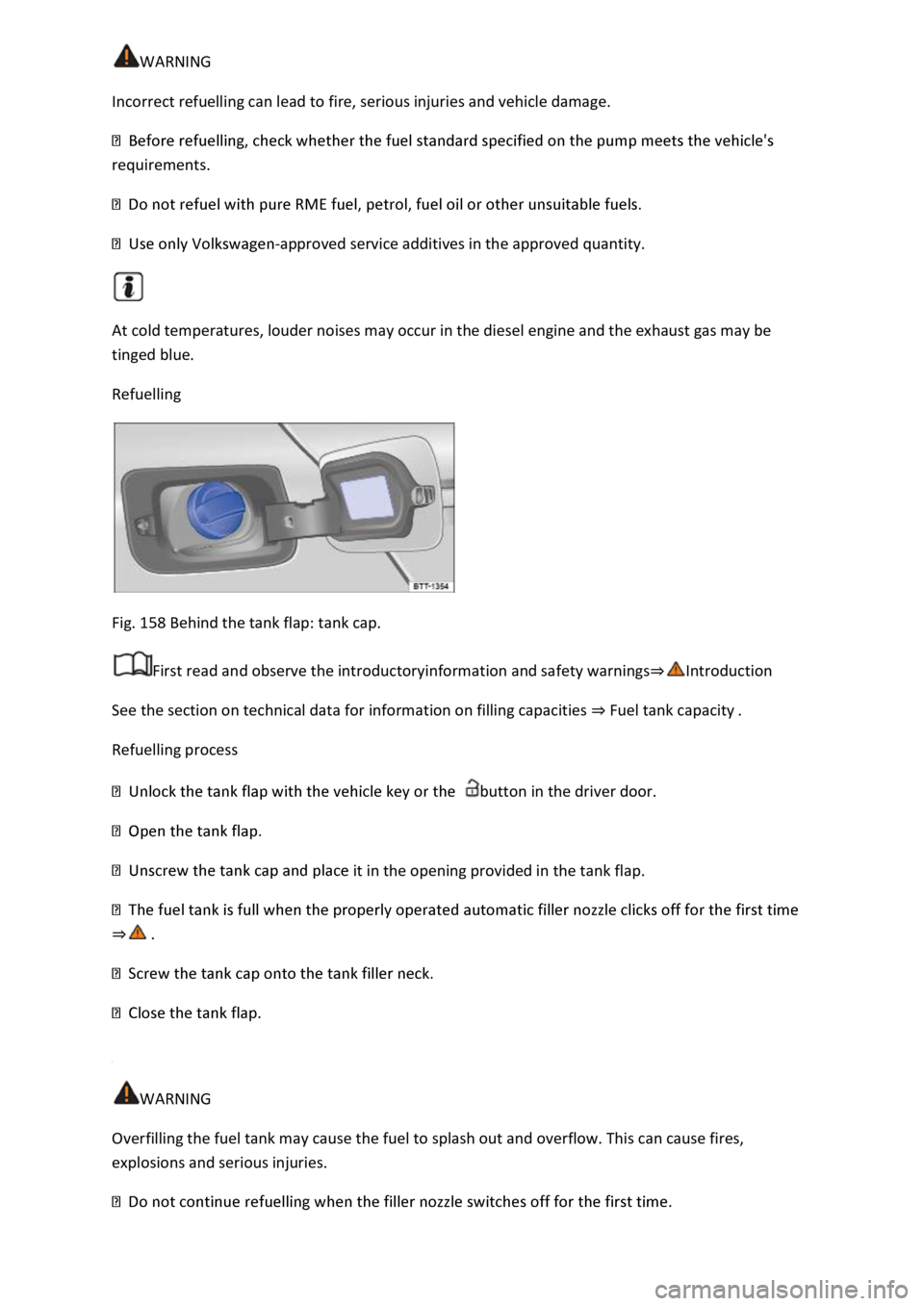
Fig. 158 Behind the tank flap: tank cap.
First read and observe the introductoryinformation and safety warnings⇒Introduction
See the section on technical data for information on filling capacities ⇒ Fuel tank capacity .
Refuelling process
button in the driver door.
it in the opening provided in the tank flap.
⇒ .
WARNING
Overfilling the fuel tank may cause the fuel to splash out and overflow. This can cause fires,
explosions and serious injuries.
Page 335 of 502
The content of the vehicle toolkit varies according to the vehicle equipment level ⇒ Fig. 162 . The
following describes the maximum scope.
Key to ⇒ Fig. 162 :
Screwdriver with hexagon socket in the handle for unscrewing or tightening slackened wheel
bolts. The screwdriver blade is reversible. The screwdriver may be stowed under the box spanner.
Adapter for the anti-theft wheel bolt. Volkswagen recommends that you carry the wheel bolt
adapter in the vehicle toolkit at all times. The code number of the anti-theft wheel bolt is engraved
on the front of the adapter. You will need this number to replace the adapter if lost. Make a note of
the code number for the anti-theft wheel bolt and keep it in a safe place – but not inside the vehicle.
Removable towing eye.
Wire hook for pulling off the centre wheel trims, wheel covers and the wheel bolt caps.
Vehicle jack. Before you repack the jack, you must fully wind in the claw.
Box spanner for wheel bolts.
Crank.
Vehicle jack: maintenance
There are no maintenance cycles for the vehicle jack. Grease it with universal lubricant when
necessary.
Wiper blades
Service position
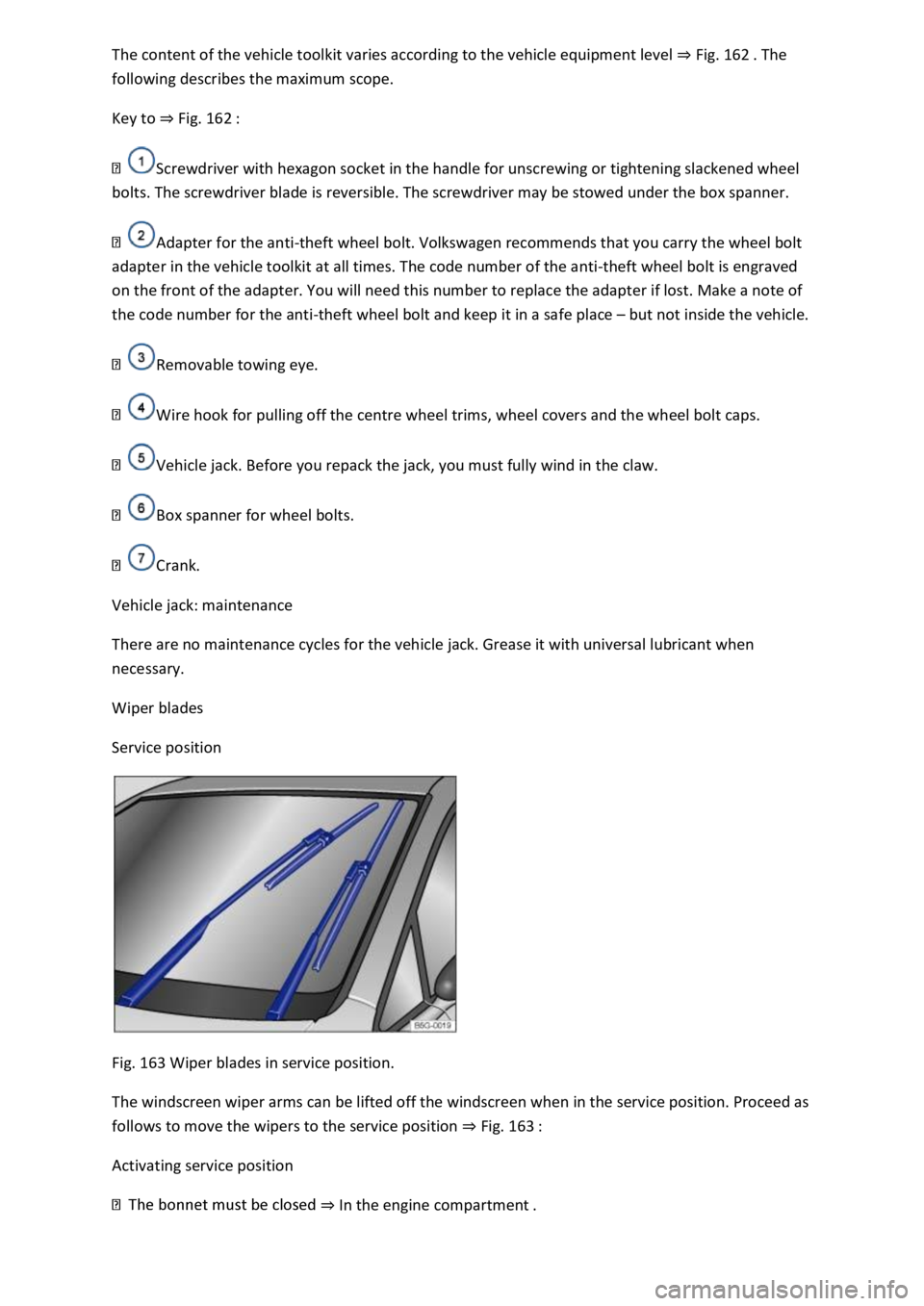
Fig. 163 Wiper blades in service position.
The windscreen wiper arms can be lifted off the windscreen when in the service position. Proceed as
follows to move the wipers to the service position ⇒ Fig. 163 :
Activating service position
⇒ In the engine compartment .
Page 336 of 502
Switch the ignition on and then off again.
Lifting the windscreen wiper arms
⇒ .
lade mounting.
Place the windscreen wiper arms back onto the windscreen before driving away. With the ignition
switched on, briefly press the windscreen wiper lever down to bring the windscreen wiper arms back
to the original position.
NOTICE
r to prevent damage to the bonnet and the windscreen wiper arms, the windscreen wiper
arms should be lifted only when in the service position.
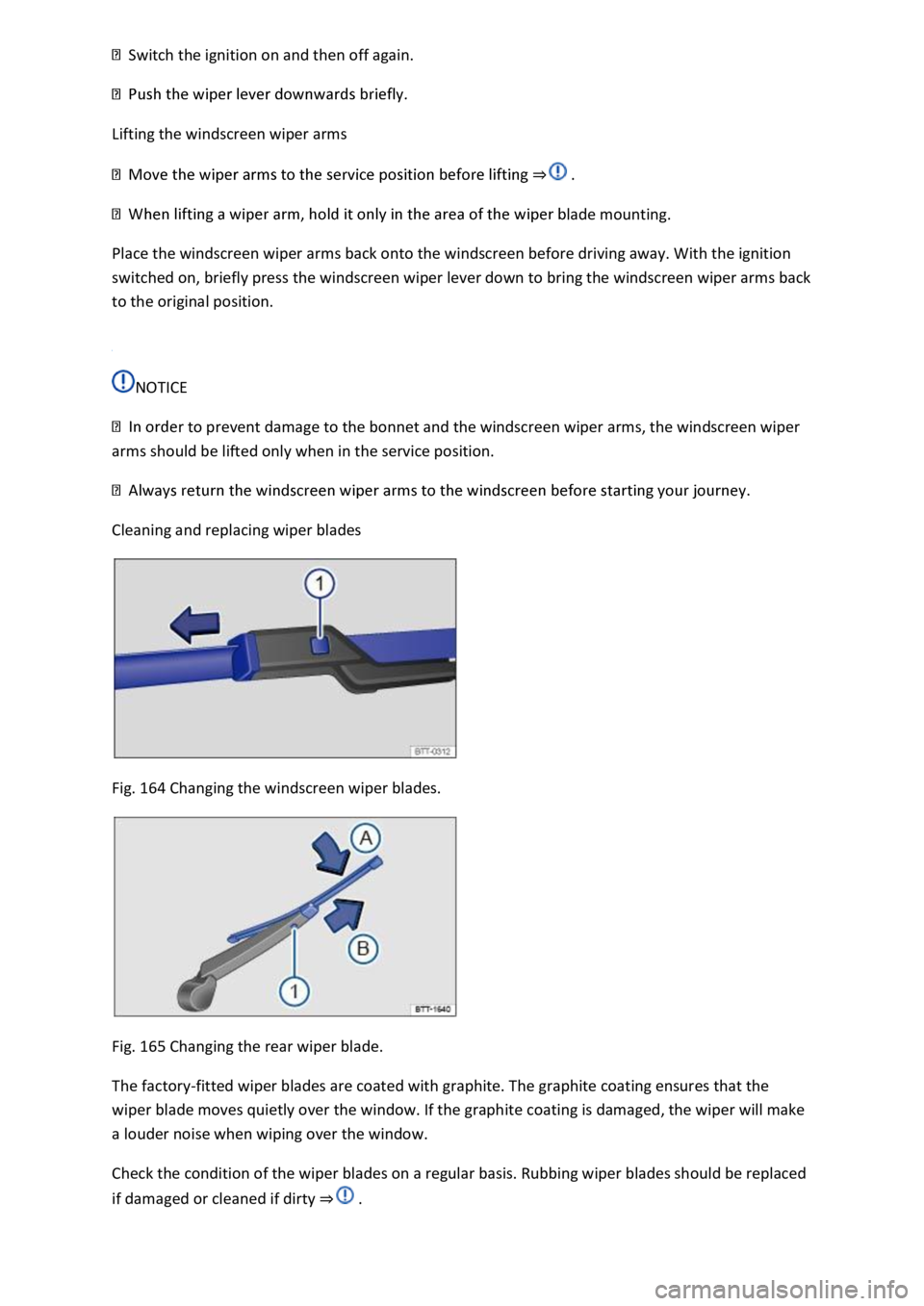
Cleaning and replacing wiper blades
Fig. 164 Changing the windscreen wiper blades.
Fig. 165 Changing the rear wiper blade.
The factory-fitted wiper blades are coated with graphite. The graphite coating ensures that the
wiper blade moves quietly over the window. If the graphite coating is damaged, the wiper will make
a louder noise when wiping over the window.
Check the condition of the wiper blades on a regular basis. Rubbing wiper blades should be replaced
if damaged or cleaned if dirty ⇒ .