service VOLKSWAGEN T-ROC 2021 Owner´s Manual
[x] Cancel search | Manufacturer: VOLKSWAGEN, Model Year: 2021, Model line: T-ROC, Model: VOLKSWAGEN T-ROC 2021Pages: 502, PDF Size: 9.42 MB
Page 337 of 502

Damaged wiper blades should be replaced immediately. Wiper blades are available from a qualified
workshop.
Cleaning wiper blades
Note for the front windscreen wipers: move the wiper arms to the service position before lifting
them ⇒ Service position .
only in the area of the wiper blade mounting.
⇒ .
Changing the windscreen wiper blades
fting ⇒ Service position .
⇒ Fig. 164 ① and simultaneously pull off the wiper blade in
the direction of the arrow.
r blade with the same length and design onto the wiper arm. Push it on until it
engages.
Changing the wiper blade for the rear window
iper blade mounting.
⇒ Fig. 165 ①.
⇒ Fig. 165 (arrow Ⓐ) and pull it off in the
direction of the arrow Ⓑ at the same time. You may need to use some force to do this.
direction of the arrow. Push it on until it engages ⇒ Fig. 165 Ⓑ. The wiper blade must be in the
folded back position ⇒ Fig. 165 (arrow Ⓐ).
WARNING
Worn or dirty wiper blades reduce visibility and increase the risk of accidents and serious injuries.
nd no longer clean the windows
properly.
Page 362 of 502

The engine compartment of a motor vehicle is a hazardous area. Do not work on the engine and in
the engine compartment unless you are familiar with the task, aware of the general safety
procedures and have the correct equipment, service fluids and suitable tools. Serious injuries can be
caused by carrying out work incorrectly ⇒ . The work should be carried out by a qualified
workshop if you are uncertain. Volkswagen recommends using a Volkswagen dealership for this
purpose.
Always park the vehicle on a level and stable surface before carrying out any work in the engine
compartment.
WARNING
Unintentional vehicle movements during service work can cause serious injury.
underneath the vehicle while the wheels are on the ground, the vehicle must be on a level surface,
the wheels chocked, and the vehicle key removed from the ignition lock as required.
vehicle. The vehicle jack is not sufficient for this task and can fail, which can lead to serious injuries.
WARNING
The engine compartment of any motor vehicle is a dangerous area. Serious injuries can be sustained
here.
st care and attention must be paid when carrying out any work and you must follow the
general safety rules. Never take any risks.
carry it out. If you are uncertain of what to do, the work should be carried out by a qualified
workshop. Serious injuries can result from work that has not been carried out properly.
steam or hot coolant can cause serious burns. Always wait until you can no longer see or hear steam
or coolant coming from the engine compartment.
urn the skin.
P or move the gear
lever to the neutral position.
and remove the vehicle key from the ignition lock.
Page 363 of 502

unattended.
expansion tank when the engine is hot. Coolant may spray out and cause serious burns and other
injuries.
-clockwise while exerting
gentle downward pressure on the cap.
face, hands and arms from hot coolant or steam with a large, thick cloth.
spilt service fluids can start a fire.
WARNING
High voltages in the electrical system can cause electric shocks, burns, serious injuries and death!
-volt battery could explode.
started, never touch the electrical cables in the ignition system.
WARNING
There are rotating components in the engine compartment that can cause serious injury.
rotor blades can result in serious injuries. The fan is temperature-controlled and can start
automatically, even when the ignition has been switched off or the vehicle key has been removed
from the ignition lock.
e engine is started or with the engine running, there is an
additional, potentially fatal safety risk from the rotating parts, such as the poly V-belt, alternator,
radiator fan, and from the high-voltage ignition system. Always be particularly careful.
Always ensure that no body parts, jewellery, ties, loose items of clothing or long hair can be
caught up in rotating engine components. Before starting work, remove any jewellery and ties, tie
up long hair and pull clothes in tightly to avoid them getting caught on engine parts.
could move, even if the electronic parking brake is applied.
s and tools, in the engine
compartment. Any forgotten items can cause malfunctions, engine damage and fires.
WARNING
Page 364 of 502

Additional insulating materials such as blankets in the engine compartment could disrupt the
operation of the engine, start fires and lead to severe injuries.
WARNING
Service fluids and some materials in the engine compartment are highly flammable and can cause
fires and serious injuries!
ty of the engine compartment.
injuries.
tem or the electrical
system:
-volt vehicle battery. Ensure that the vehicle is unlocked when the 12-
volt vehicle battery is disconnected as otherwise the anti-theft alarm will be activated.
of heating systems, water heaters or any other open flames.
NOTICE
When filling or changing service fluids, please ensure that the correct service fluids are filled through
the correct openings. The use of incorrect service fluids could result in serious malfunctions and
engine damage.
Service fluids that leak from the vehicle are harmful to the environment. For this reason, you should
regularly check the ground underneath your vehicle. If there are spots of oil or other fluids on the
ground, the vehicle should be inspected by a qualified workshop. Any spilt service fluids must be
disposed of properly.
Preparing the vehicle for working in the engine compartment
Checklist
The following steps should always be carried out in the specified order before working in the engine
compartment ⇒ :
Park the vehicle on a level and stable surface.
Page 368 of 502
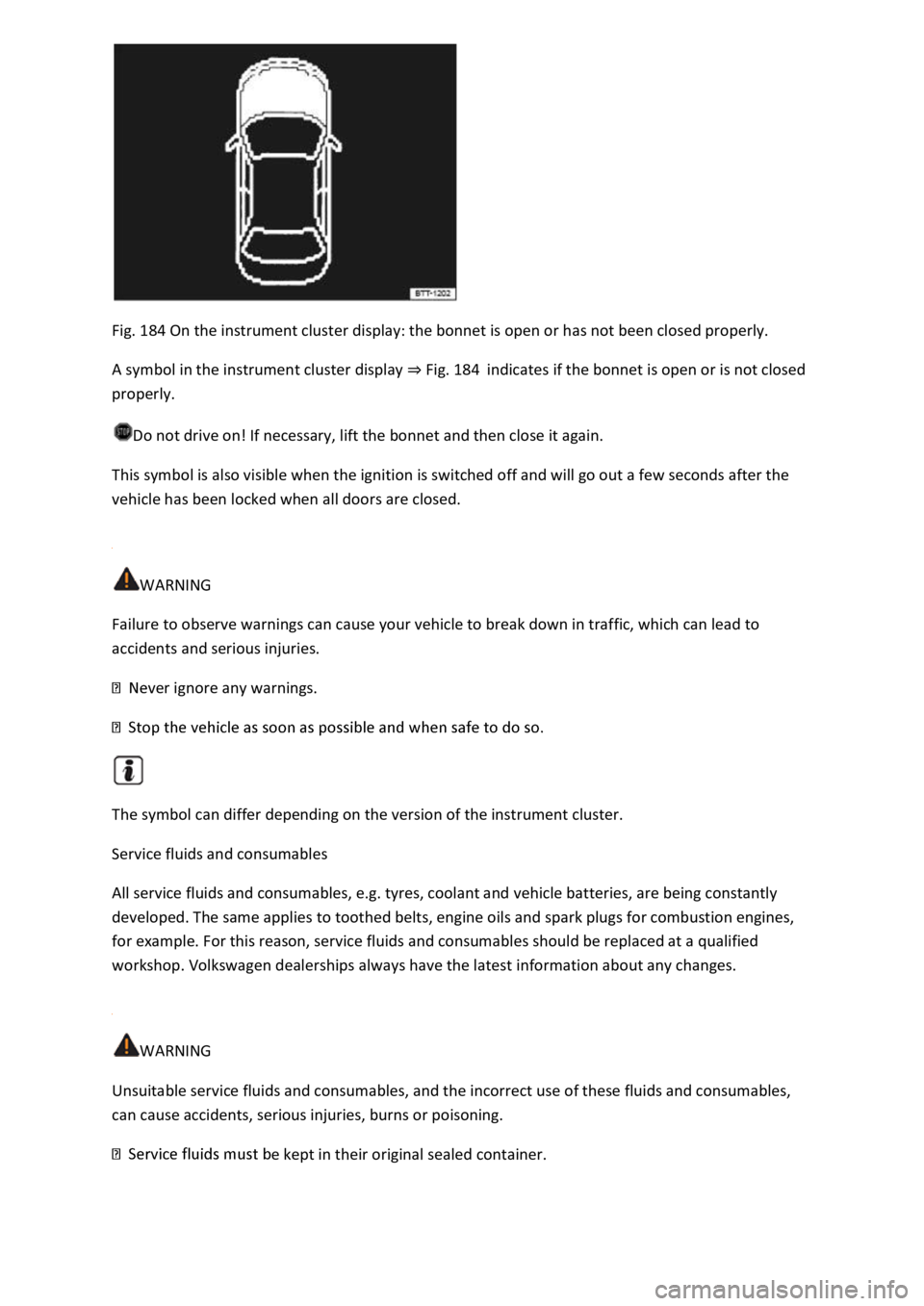
Fig. 184 On the instrument cluster display: the bonnet is open or has not been closed properly.
A symbol in the instrument cluster display ⇒ Fig. 184 indicates if the bonnet is open or is not closed
properly.
Do not drive on! If necessary, lift the bonnet and then close it again.
This symbol is also visible when the ignition is switched off and will go out a few seconds after the
vehicle has been locked when all doors are closed.
WARNING
Failure to observe warnings can cause your vehicle to break down in traffic, which can lead to
accidents and serious injuries.
ver ignore any warnings.
The symbol can differ depending on the version of the instrument cluster.
Service fluids and consumables
All service fluids and consumables, e.g. tyres, coolant and vehicle batteries, are being constantly
developed. The same applies to toothed belts, engine oils and spark plugs for combustion engines,
for example. For this reason, service fluids and consumables should be replaced at a qualified
workshop. Volkswagen dealerships always have the latest information about any changes.
WARNING
Unsuitable service fluids and consumables, and the incorrect use of these fluids and consumables,
can cause accidents, serious injuries, burns or poisoning.
e kept in their original sealed container.
Page 369 of 502
-original containers as
people finding these containers could drink them.
es.
-ventilated
area.
r or other volatile fluids for vehicle care.
These substances are toxic and highly flammable. They could cause fires and explosions.
NOTICE
this can result in serious malfunctions and engine damage.
-on parts in front of the air intake reduce the cooling effect of the
coolant. The engine may overheat at high ambient temperatures and high engine loads.
Leaking service fluids can pollute the environment. Spilt service fluids must be collected in suitable
containers and disposed of properly and with respect for the environment.
Washer fluid
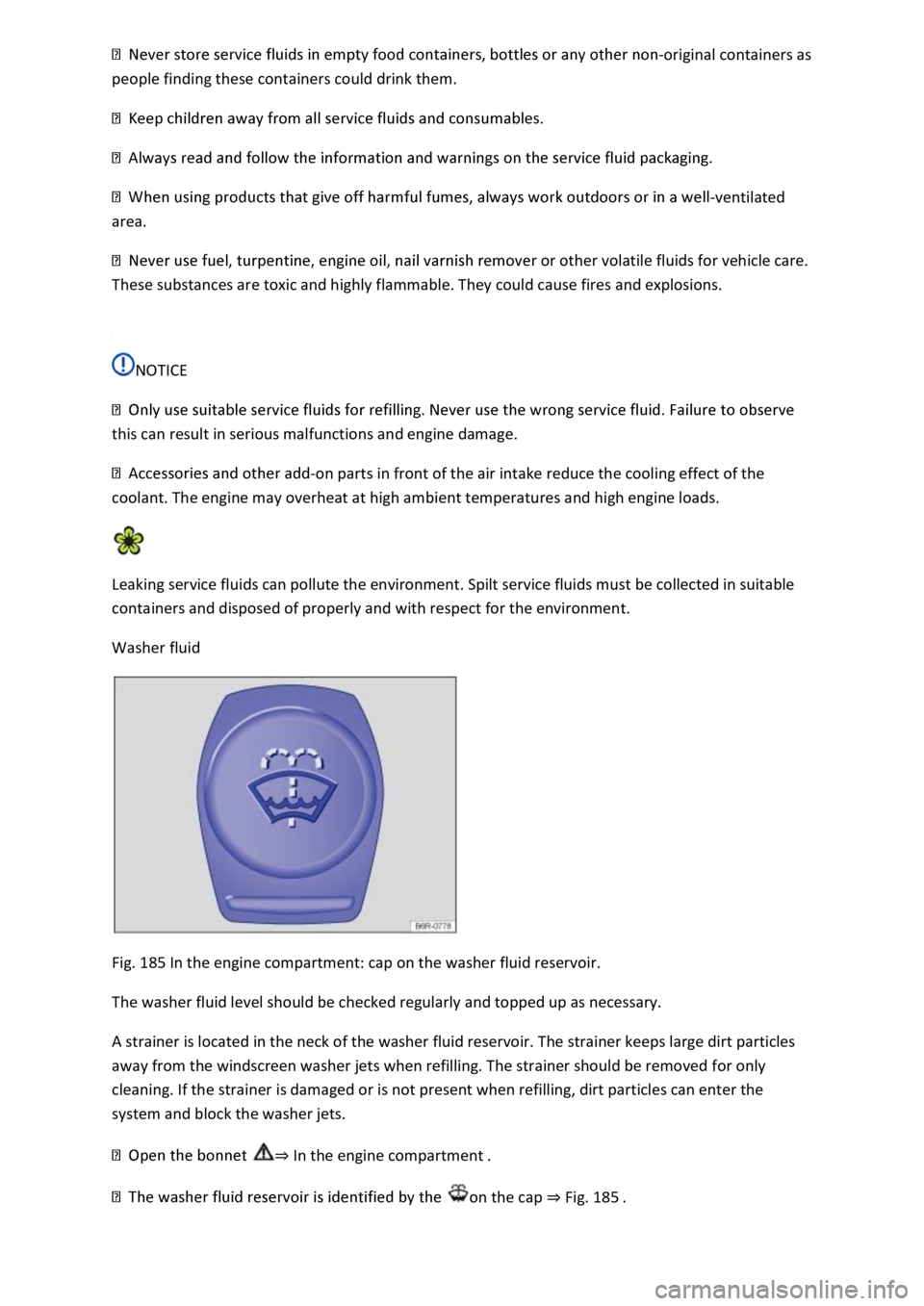
Fig. 185 In the engine compartment: cap on the washer fluid reservoir.
The washer fluid level should be checked regularly and topped up as necessary.
A strainer is located in the neck of the washer fluid reservoir. The strainer keeps large dirt particles
away from the windscreen washer jets when refilling. The strainer should be removed for only
cleaning. If the strainer is damaged or is not present when refilling, dirt particles can enter the
system and block the washer jets.
⇒ In the engine compartment .
on the cap ⇒ Fig. 185 .
Page 370 of 502

⇒ . Observe the dilution instructions on the packaging.
peratures, add a special anti-freeze agent so that the fluid cannot freeze ⇒ .
The windscreen washer fluid reservoir has a capacity of about 3.0–7.5 litres, according to the vehicle
equipment.
WARNING
Never mix coolant additive or other unsuitable additives into the washer fluid. These may leave an
oily film on the screen, restricting the field of vision.
-freeze agent should be added to the washer fluid if necessary.
NOTICE
cause the ingredients to flocculate and block the washer jets.
rrect service fluids are filled through the
correct openings. The use of incorrect service fluids could result in serious malfunctions and engine
damage.
Engine oil
Introduction
This chapter contains information on the followingsubjects:
⇒ Engine oil standards
⇒ Changing engine oil
⇒ Engine oil consumption
⇒ Checking the engine oil level and refilling the engine oil
⇒ Troubleshooting
The engine oils are not only tailored to the requirements of engines and exhaust gas treatment
systems, but also to fuel quality. Due to the way in which a combustion engine works, engine oil
always comes into contact with combustion residues and fuel, which has corresponding effects on
the ageing process of the oil. The correct engine oil is important for the function and service life of
the engine. A special multigrade high-lubricity oil has been filled at the factory and this can normally
be used as an all-season oil.
Page 371 of 502

Engine oils are constantly being developed and improved. Volkswagen dealerships always have the
latest information about any changes. Volkswagen therefore recommends having engine oil changes
done by a Volkswagen dealership.
Information for warning and indicator lamps lit up can be found in the troubleshooting at the end of
the chapter ⇒ Troubleshooting .
WARNING
Incorrect handling of engine oil can cause serious burns and other injuries.
original container. This also applies to used oil until it is
disposed of.
may then drink the engine oil.
skin. Skin that has been in contact with engine oil
should be washed thoroughly with water and soap.
allow the engine to cool down.
Leaking or spilt engine oil can pollute the environment. Spilt service fluids must be collected and
then disposed of properly and in an environmentally responsible way.
Engine oil standards
First read and observe the introductoryinformation and safety warnings⇒Introduction
If possible, use only Volkswagen-approved engine oil ⇒ . To comply with the requirements of the
flexible oil change service, use only approved flexible service engine oil that complies with the
corresponding VW standard.
Since the quality of fuels can vary greatly between individual markets, this must be taken into
account when selecting the correct engine oil.
The use of engine oils compliant with the VW 504 00, VW 507 00 and VW 508 00 specifications
requires a fuel quality compliant with EN 228 (petrol) and EN 590 (diesel), or fuel of an equivalent
quality. Engine oils compliant with VW 504 00, VW 507 00 and VW 508 00 are therefore unsuitable
for use in a large number of markets.
If the engine has been filled with engine oil in accordance with the standards W 502 00, VW 504 00
and VW 507 00, a sticker with the relevant information will be located on the lock carrier in the
engine compartment. Observe this information!
Page 372 of 502

Service identification
You can check whether your vehicle is equipped for the Flexible Service QI6 (Longlife) or Fixed
Service QI1, QI2, QI3, QI4, QI7 (dependent on time or mileage) in the vehicle data ⇒ Technical data
or on the inside cover of this owner's manual.
Permitted engine oil standards
Petrol engineswith particulate filter1)
Flexible ServiceVW 508 00 or alternatively VW 504 002)Fixed ServiceVW 502 00
Petrol engineswithout particulate filter
Flexible ServiceVW 508 00 or alternatively VW 504 00Fixed ServiceVW 502 00
Diesel engineswith particulate filter1)
Flexible ServiceVW 507 00Fixed ServiceVW 507 00
Diesel engineswithout particulate filter
Flexible ServiceVW 507 00Fixed ServiceVW 505 01
Volkswagen recommends engine oils.
NOTICE
additives is not covered by the warranty.
Using other engine oils can cause engine damage.
d engine oils are not
available. To avoid damaging the engine, a maximum quantity of 0.5 litres of the following engine oil
may be used only once until the next oil change:
SN (API SM).
ards ACEA C3 or API CJ-4.
1) Check with a qualified workshop if you are unsure whether your vehicle is equipped with a
particulate filter. Volkswagen recommends using a Volkswagen dealership for this purpose.
2) Using VW 504 00 instead of VW 508 00 may cause the vehicle's emissions values to increase
slightly.
Changing engine oil
First read and observe the introductoryinformation and safety warnings⇒Introduction
Page 373 of 502

The engine oil must be changed on a regular basis. Always observe the service intervals applicable to
your vehicle ⇒ Service .
The engine oil and filter change should be carried out by a qualified workshop due to the special
tools and knowledge required, this also applies to the disposal of used oil. Volkswagen recommends
using a Volkswagen dealership for this purpose.
More details on the service intervals can be found in the chapter on service ⇒ Service .
Additives in the engine oil can cause new engine oil to discolour quickly. This is normal and does not
mean that the engine oil should be changed more frequently.
WARNING
If, in exceptional cases, you have to carry out an oil change yourself, please observe the following:
al when removing the oil drain plug with your fingers to help prevent oil
from running down your arm.
engine filling quantity.
l in empty food containers, bottles or any other non-original containers as
people finding these containers may not know that they contain engine oil.
Before changing the engine oil, first find out where old oil can be disposed of properly near you.
Used oil must be disposed of in accordance with regulations governing the protection of the
environment. Never dispose of used oil in locations such as gardens, woods, sewerage systems, on
streets and roads, or in rivers and waterways.
Engine oil consumption
First read and observe the introductoryinformation and safety warnings⇒Introduction
Engine oil consumption can vary from engine to engine and can change during the service life of an
engine.
The vehicle may consume up to 1.0 litre of engine oil per 2,000 km, depending on your driving style
and the conditions in which the car is used. In new vehicles, consumption may be higher for the first
5,000 km. The engine oil level must therefore be checked at regular intervals, preferably each time
the vehicle is refuelled and before long journeys.